
Reviewed · NARA TOURS
E-Bike Nara Highlights – Todaiji, Knives, Deer, Shrine, and Gems
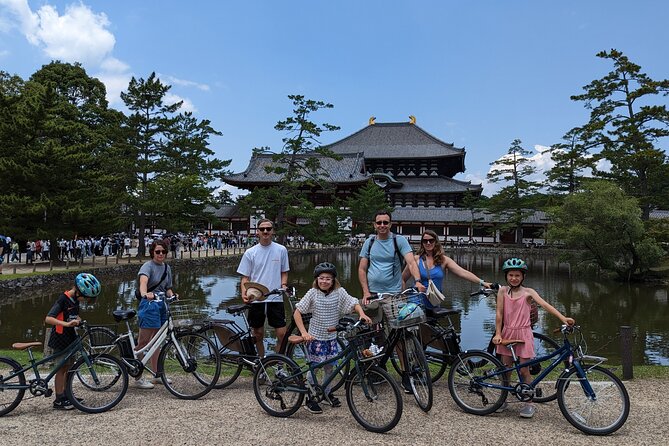
Nara’s best sights spread across a large park, and this 3.5-hour e-bike tour lets you link them without spending the day walking uphill between temples, deer-filled paths, and shrines. You’ll see the giant Buddha at Todaiji, learn about Japanese knives, feed deer cookies, and finish at the quiet pond pavilion of Ukimido.
I like two things here. First, the e-bike makes a tight schedule realistic, especially in hot weather or when your legs are already tired from touring Japan. Second, the route mixes famous sights with local flavor: the Kikuichi knife shop and Ukimido give you more than the standard temple stop. The main consideration is that this is a shared tour, so English takes priority and a French-speaking guide cannot be promised unless arranged ahead of time.
Key points at a glance
- Six stops in 3.5 hours: Cover Nara Park, Todaiji’s South Gate and temple, Kikuichi knife shop, Kasuga Grand Shrine, and Ukimido.
- E-bikes save time and effort: Ride between sights that can feel surprisingly far apart on foot, including some uphill sections.
- Todaiji admission is included: Enter the temple hall to see Nara’s huge bronze Buddha and try the famous Buddha’s nostril opening.
- A practical look at Japanese knives: Kikuichi offers an introduction to Japanese cutlery and advice if you are considering a purchase.
- Small maximum group: The tour accepts no more than 12 people, though the exact group size can vary.
- Useful extras: You receive deer cookies, use of the e-bike, entrance tickets, and souvenir photos made available online.
Why an e-bike works so well in Nara Park
Nara looks compact on a map, but the park area covers enough ground to make walking between every stop tiring. The e-bike changes the rhythm. You can ride from one part of the park to another, then park and spend your energy at the temples and shrine rather than on the pavement.
The route follows paths intended to provide a better cycling experience and avoid much of the traffic. That matters in Nara, where the deer, pedestrians, bicycles, and vehicles share a busy sightseeing area. Your guide leads the way, helps you keep a safe pace, and allows time for breaks.
The bikes also help on the few hills and in warm weather. Several guides, including Robert, Christophe, Jean-Yves, and Remi, have been praised for keeping the ride comfortable while explaining the sights. The tour is not presented as a hard cycling challenge. It is a way to cover more ground with less strain.
You should still be comfortable riding a bicycle and paying attention around other people and animals. The tour is outdoors and depends on good weather, so rain can affect the schedule.
More bike days around Nara:
- E-Bike Nara Highlights – Todaiji, Knives, Deer, Shrine
★ 4.8 · 186 reviews - Nara – Highlights Bike Tour
★ 4.5 · 89 reviews - Nara: Bike Tour in Ancient Capital UNESCO World Heritage
★ 5.0 · 43 reviews
Nara Park: deer, open space, and a gentle start
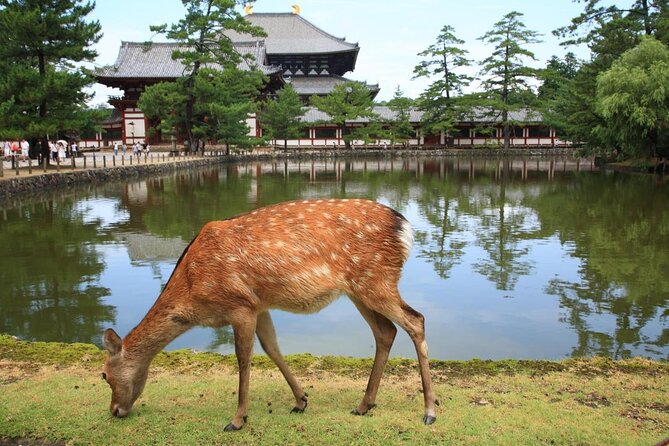
The first half hour takes you through Nara Park, where the city and the deer meet in an unusual way. You are not simply being driven past the park. You are moving through it under your own power, with time to notice the changing atmosphere as streets give way to open paths and temple grounds.
Deer cookies are included for the group. Use them carefully and follow your guide’s instructions around the animals. The deer are a major part of the Nara experience, but they are still animals with their own habits and moods. A guide can help you enjoy the encounter without turning it into a frantic feeding session.
This opening section also lets you get used to the bike before the main temple visits. I like that the tour begins with movement rather than dropping you straight into a long historical talk. You get a feel for the park first, then stop at the major sites when you are ready to explore on foot.
The tradeoff is that thirty minutes passes quickly. If your main goal is extended time with the deer, you may want to return to the park after the tour.
Todaiji’s South Gate and its fierce guardians
The next stop is Todaiji’s Grand South Gate, or Namdaimon. The gate is an impressive entry point to the temple grounds, with a scale that prepares you for the enormous hall beyond it.
The gate’s two guardian figures are a major reason to pause here. They are fierce, dramatic, and closely tied to the protective role of Buddhist temple architecture. Your guide explains the site and its design, giving you more to look for than simply a large wooden entrance.
The thirty-five-minute stop is useful because it separates the gate from the main temple visit. You can appreciate the entrance, the guardians, and the approach before moving on. It also gives you a natural place to take photographs.
This is one section where group timing matters. You will have enough time to look around, but not unlimited time for detailed photography or a long independent visit. If you want to study every carving, you will need to do that on another visit.
Todaiji Temple and the giant bronze Buddha

Todaiji is the centerpiece of the tour. Inside the Daibutsuden, you see the country’s largest bronze Buddha statue, a sight that deserves a slower look than a quick photograph.
The temple’s scale can be hard to grasp until you are standing inside. The hall, statue, and long approach work together to create the sense of a major religious center rather than just another sightseeing stop. Your guide provides historical context and explains what you are seeing, which is especially helpful if this is your first Buddhist temple visit in Japan.
Admission is included, so you do not need to handle an extra ticket during the tour. You also get the chance to pass through the opening said to match the size of the Buddha’s nostril. It is a playful moment in an otherwise solemn place, and it can attract a queue.
The scheduled visit lasts forty-five minutes. That is enough for the main hall and a focused explanation, but it is not a full afternoon at Todaiji. If you want to explore every corner of the grounds, browse nearby shops, or return for more photographs, plan separate time.
More e-bike rides in Nara:
- Hidden Kyoto E-Biking tour
★ 5.0 · 1,843 reviews - Tokyo Top Highlights 3h Guided E-bike Tour
★ 5.0 · 714 reviews - 3h Tokyo E-Bike Tour: Hidden Gems, and Local Life with guide
★ 5.0 · 670 reviews - 5 Top Highlights of Kyoto Full Day Bike Tour (E-bike option)
★ 5.0 · 511 reviews
Kikuichi: from katana making to kitchen knives

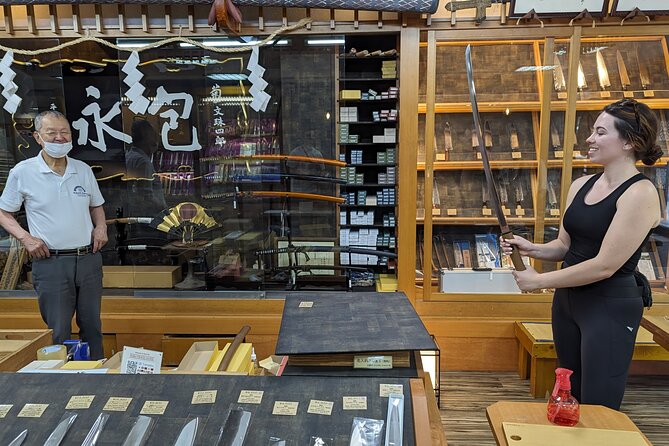
Kikuichi Monju Shiro Kanenaga gives the tour a welcome change of pace. This original shop belongs to a prestigious knife-making company with roots in katana production. Instead of seeing only old buildings and religious monuments, you get an introduction to a craft that still matters in daily Japanese life.
You can ask for advice about Japanese knives, which makes this stop useful for shoppers who want more than a souvenir chosen at random. A good knife can be a practical purchase, but different blades suit different cooking styles and levels of care. The shop visit gives you a chance to ask questions before buying.
The stop lasts about thirty-five minutes. That is enough to learn about the cutlery and look around, but the tour does not include shopping. Any knife or other souvenir costs extra, and purchases may be difficult to fit into your luggage, so consider your plans before buying a large or valuable item.
I especially like this part of the route because it connects Nara’s past with a living local business. The visit is not just an intermission between temples. It gives you a more grounded view of Japanese craftsmanship.
Kasuga Grand Shrine and the lantern path
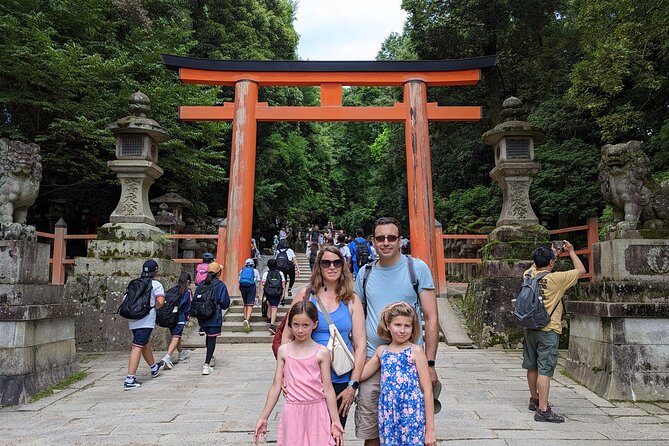
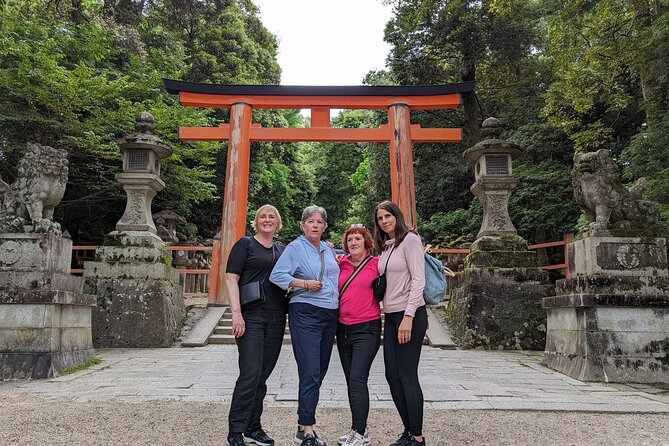
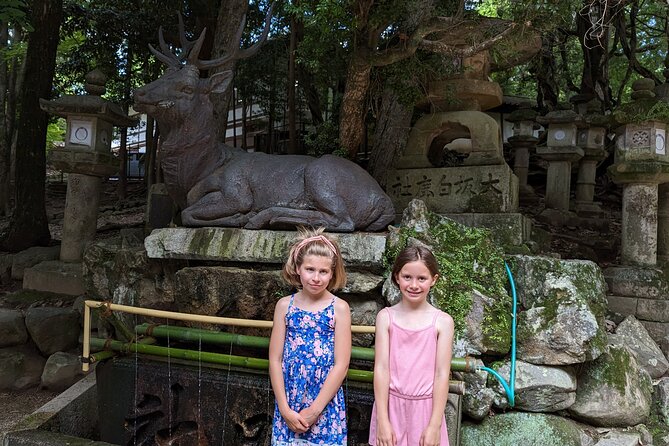
Kasuga Taisha introduces Shinto and the spiritual idea of Kasuga, described during the tour through a connection with nature. The shrine’s approach and lantern-lined paths create a different mood from the large Buddhist complex at Todaiji.
Your guide offers a general introduction to Shinto, helping you understand the customs and setting without turning the visit into a dense lecture. The forty-minute stop gives you time to admire the lanterns and take in the wooded shrine grounds.
This contrast is one of the tour’s strengths. Todaiji presents monumental Buddhist architecture and a huge bronze image. Kasuga feels more tied to the natural surroundings and ritual approach of Shinto. Seeing both in one outing helps you compare two important parts of Japanese religious culture.
As with Todaiji, the scheduled time is focused. You will see the main visual highlights, but you may not have time for a long private prayer, detailed shrine photography, or every side path. If Kasuga is a personal priority, you may want to return independently.
Ukimido, a quiet finish away from the crowds
The final stop is Ukimido, a wooden pavilion reached by a bridge over the pond at the southern end of Nara Park. It is known as a photo location for weddings, but its main appeal is the calm setting.
After the crowds and scale of Todaiji, Ukimido provides a softer ending. You can walk onto the bridge, pause beside the water, and take photographs in a peaceful part of the park. The twenty-five-minute stop is short, but the pace is appropriate. This is a place to slow down rather than collect more facts.
I like that the route finishes here instead of ending at the busiest temple. It gives the tour a change in mood and leaves you with a quieter memory of Nara. If you prefer major monuments at every stop, this section may feel less essential. If you appreciate space and a good photograph, it is a smart addition.
Guides, language, and the feel of the group
The experience includes a bilingual local guide, and the guide names associated with past tours include Christophe, also called Chris, Jean-Yves, Robert, and Remi. The guide’s role is important because the value of the tour comes from linking the stops and explaining why they matter, not just escorting you from one place to another.
The strongest guide traits reported across the experience are patience, safety awareness, a friendly manner, and clear explanations. That combination matters on a bike tour. You need someone who can manage a route and also answer questions at the temples, shrine, and knife shop.
The maximum group size is 12 people. That is small enough to feel organized without promising a private outing. Single guests can book, but the tour requires at least two participants to operate. If that minimum is not reached, the provider may cancel and offer another date, another experience, or a full refund.
For French speakers, French service is not guaranteed on a shared tour because several nationalities may be mixed and English becomes the priority. Contact the provider ahead of time if a French-speaking guide is essential.
What the $92.24 price buys you
At $92.24 per person, this is not the cheapest way to enter Nara Park. The value comes from combining transport, guiding, several stops, and the Todaiji admission in one compact outing.
You receive the e-bike, a bilingual guide, entrance tickets, deer cookies, and souvenir photos taken during the tour and made available online. You still pay for your own food, drinks, and shopping. The knife shop is a visit and introduction, not a free product session.
I would judge the price against your schedule. If you have only part of a day in Nara, the bike can help you see the main sights without sacrificing the energy needed to enjoy them. If you have a full day and enjoy walking slowly, you could visit much of the same area independently for less.
The tour is especially good value for first-time visitors who want orientation, cultural context, and efficient movement. It is less compelling for experienced Nara visitors who already know the park and prefer to set their own pace.
Timing, meeting point, and practical details
The tour begins at Nara Rent-a-Cycle, 2115-1 Takamaichicho, Nara, postal code 630-8238. It ends back at the same meeting point, so you do not need to arrange a separate pickup after the ride.
The activity lasts about three and a half hours. It is near public transportation, and most people can participate. Confirmation arrives at booking, and the mobile ticket makes it easy to keep the reservation on your phone.
Try to arrive ready to ride and allow enough time to find the rental shop. You will spend part of the outing on a bicycle and part walking around major religious sites, so practical clothing and comfortable shoes make sense. Food and drinks are not included, so plan around the tour if you need a meal.
Cancellation is free up to 24 hours before the start time for a full refund. Changes or cancellations inside that window are not accepted for a refund. Poor weather or failure to meet the minimum group size can also cancel the activity, with a different date or a full refund offered.
Who should book this Nara bike tour?
I would choose this tour if you want to see Nara’s main sights in one organized block, especially if heat, hills, or a busy Japan itinerary make a long walking route unappealing.
It suits first-time visitors, couples, families with confident cyclists, and anyone interested in both temples and Japanese craft. It also works well for people who want a guide to explain Buddhist and Shinto sites instead of simply taking photographs and moving on.
I would think twice if you dislike fixed schedules, want extended time at Todaiji or Kasuga, cannot comfortably ride a bicycle, or need a guaranteed French-speaking guide. The shared format also means you will follow the group’s pace rather than stopping wherever you like.
Should you book it?
Book it if you want an efficient, active introduction to Nara with a strong mix of deer, religious sites, craft, and scenery. The e-bike is the main advantage. It lets you cover ground that would otherwise cost you time and energy, while the guide adds context and handles the route.
Skip it if your ideal Nara day is slow walking, long temple visits, and spontaneous wandering. For most first visits, though, the combination of Todaiji, Kasuga, Kikuichi, and Ukimido makes the $92.24 cost reasonable, particularly when entrance fees, deer cookies, photos, and bike use are included.
FAQ
How long does the Nara e-bike tour last?
The tour lasts approximately 3 hours and 30 minutes.
Where does the tour start?
It starts at Nara Rent-a-Cycle, 2115-1 Takamaichicho, Nara, 630-8238, Japan.
Where does the tour end?
The activity ends back at the meeting point.
What sights are included?
The route includes Nara Park, Todaiji’s Grand South Gate, Todaiji Temple, Kikuichi Monju Shiro Kanenaga knife shop, Kasuga Grand Shrine, and Ukimido.
Is the Todaiji entrance fee included?
Yes. Entrance tickets are included in the tour price.
What else is included?
You receive use of an e-bike, a bilingual local guide, deer cookies, and souvenir photos taken during the tour that are made available online.
Is a French-speaking guide guaranteed?
No. French cannot be guaranteed on a shared tour. You should contact the provider ahead of time if you need a French-speaking guide.
What happens if the weather is poor or the group minimum is not met?
The tour may be canceled. You will be offered another date or experience, or a full refund.
Just added around Nara
- All must-sees in 3 hours – Nara Park Classic Tour! From JR Nara!★ 5.0 · 108 reviews
- Private Nara Tour and Sake Tasting (Departing from Kyoto/Nara)★ 5.0 · 40 reviews
- Hammer a Pattern on Your Ring Workshop★ 5.0 · 57 reviews
- Nara World Heritage PRIVATE TOUR★ 4.5 · 15 reviews
- Nara Sake Tasting Tour at Local Brewerie(tasting fee included)★ 5.0 · 12 reviews
- Nara Private Tour: Flexible Pickup from Kyoto, Osaka, or Nara★ 5.0 · 17 reviews
- Nara Highlight Walking Tour with Furoshiki Experience with Lunch★ 5.0 · 73 reviews
- Nara – Heart of Nature Cross Bike Tour★ 5.0 · 19 reviews
Nara Tours, compared.
World Heritage Kyoto & Nara Uji Authentic Matcha Experience
Read our review →
Nara Half Day Trip Walking Tour (Private Option Available)
Read our review →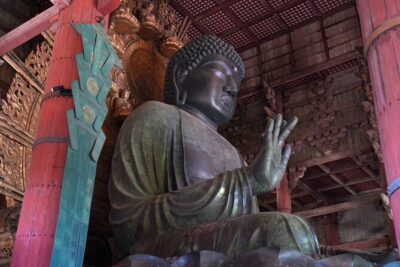
Nara Early Morning Tour (Kyoto or Osaka Departure Available)
Read our review →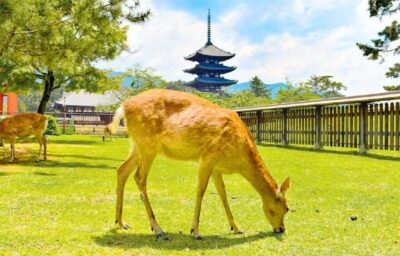
Nara and Uji Day Trip with Deer Park and Hot Spring
Read our review →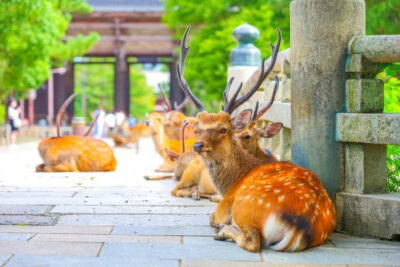
Kyoto/Osaka: Kinkakuji, Bamboo Forest, and Nara Deer Park
Read our review →
Nara 6hr Private Tour with Government-Licensed Guide
Read our review →
E-Bike Nara Highlights – Todaiji, Knives, Deer, Shrine
Read our review →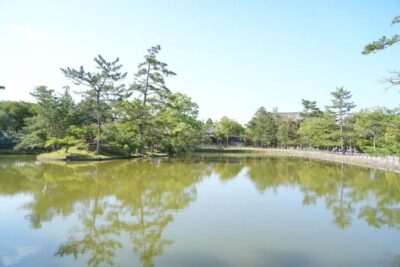
Nara Early Bird Tour (Kyoto Departure Option Available)
Read our review →Browse the lists this tour appears in