
Reviewed · TOKYO TOURS
Tokyo: Authentic Japanese Dance Show ticket by professionals
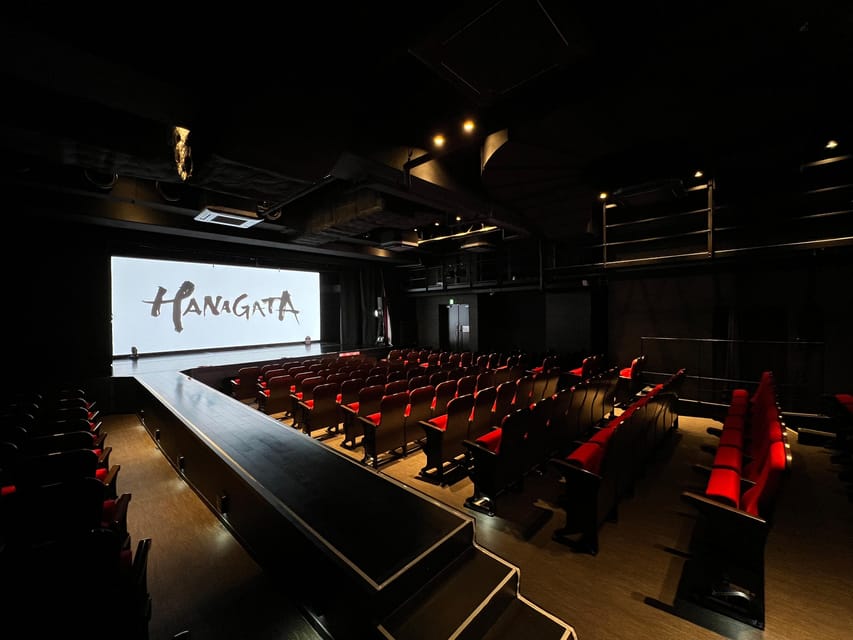
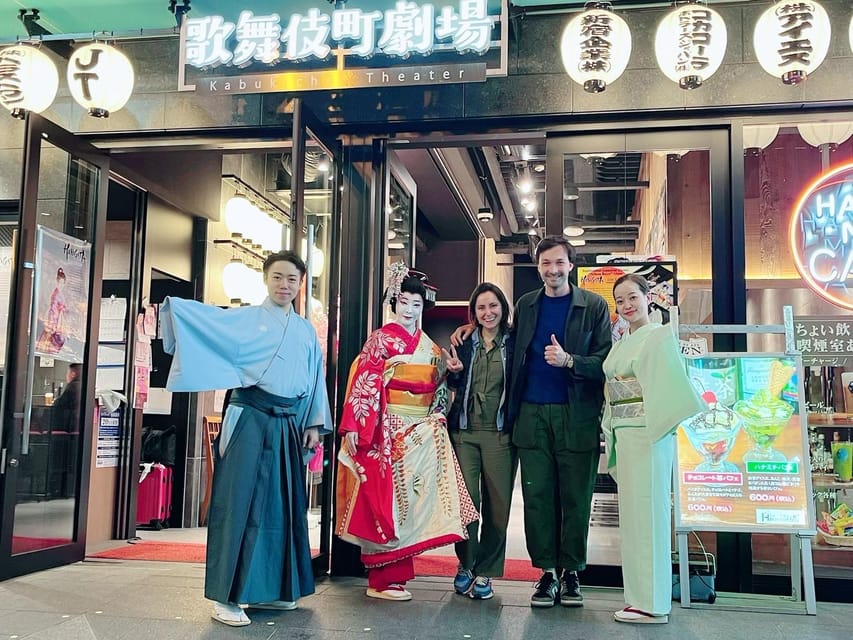
Japanese dance is best seen close enough to catch a dancer’s smallest expression, the quiet turn of a wrist, and the careful movement of a kimono sleeve. This Shinjuku performance brings a 400-year-old art form into an intimate setting, with award-winning Japanese dancers just a short distance away.
I like the close-up view, which helps you notice details that can disappear in a large theater. I also like the cultural explanations between performances, since they give you a way into an art form that may feel unfamiliar at first. The main consideration is that photography is forbidden during the show, and the experience is conducted in Japanese, although English information is provided between performances.
Key points to know before you book
- Award-winning Japanese dancers: The performers have received awards at Japanese dance competitions.
- A 400-year-old art form: The show connects dance, music, kimono, history, and Japanese aesthetics.
- Close views in Shinjuku: You can watch expressions, hand movements, costumes, and decorations at short range.
- English information between performances: The show is in Japanese, but explanations help international visitors follow along.
- Photos after the performance: Cameras stay away during the dances, then a picture-taking period follows.
- Flexible booking: You can reserve now and pay later, with a full refund available when you cancel at least 24 hours ahead.
Why this Shinjuku dance show is worth your evening
Japanese dance can seem hard to read if you have never seen it before. The movements may be restrained, the music unfamiliar, and the stories less obvious than those in a Western stage show. This performance helps by putting the art close in front of you and adding cultural information between sections.
I like that the show does not rely only on spectacle. Its appeal comes from details: a controlled step, a change in facial expression, the angle of a fan or sleeve, and the way a dancer carries a kimono. You are not simply watching people move across a stage. You are seeing a formal art shaped over more than 400 years.
The Shinjuku setting adds practical value. You can fit this experience into a day spent in central Tokyo without making a long trip to a theater in another district. That makes it useful for a first visit, especially if you want a traditional performance but have limited time.
The price is $54 per person. That is not a bargain-basement ticket for a short cultural stop, but it can be fair value if you care about Japanese arts and want something more focused than a general dinner show. Your ticket covers admission only, so you should budget separately for food and drinks.
More shows in Tokyo:
- Mt Fuji & Hakone Cruise, Drum Show Bullet Train 1 Day from Tokyo
★ 4.0 · 7,413 reviews - Tokyo: Sumo Show Experience with Chicken Hot Pot and a Photo
★ 4.8 · 6,678 reviews - Tokyo: Sumo Show and Dining Experience
★ 4.8 · 2,742 reviews
Arriving in the heart of Shinjuku
The location is one of the easiest parts of the experience. The show takes place in Shinjuku, a central Tokyo district with excellent access, so you can pair it with sightseeing, shopping, or a meal nearby.
No hotel pickup is included. You will need to make your own way to the venue, but that also keeps the booking simple and independent. Since the experience is in a well-connected part of Tokyo, it works well as an evening plan rather than a full-day commitment.
The exact performance length is not provided, so do not build a tight connection or timed dinner around it unless you have confirmed the schedule. Give yourself enough time to arrive calmly. Traditional performances are easier to enjoy when you are not rushing through Tokyo’s busy streets at the last minute.
What you see before and during the performance
The central attraction is authentic Japanese dance performed by Japanese professionals. The dancers have won awards in Japanese dance competitions, which gives you a chance to see trained performers rather than a casual cultural demonstration.
The art is built on control. You might notice a dancer holding a posture longer than expected, making a small turn carry emotional weight, or using a costume movement as part of the story. The effect can be quiet rather than dramatic, but that restraint is part of the form.
The close seating matters here. From a distance, a slow gesture can look simple. Up close, you can see the expression on the dancer’s face and the precise handling of the costume. The provided information describes the performers as close enough for you to feel each breath and movement, which is especially useful in a style where small actions matter.
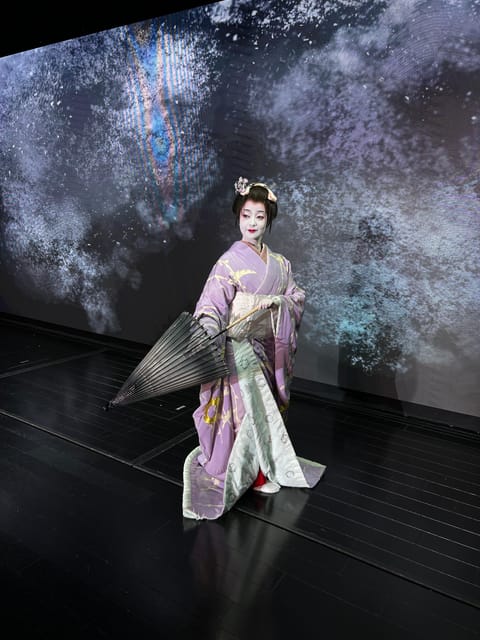
Kimono are another major part of the experience. Their colors, fabric, sleeves, and decorative details are not just clothing placed on top of the dance. They shape the silhouette and affect how the body moves. A turn can make a sleeve extend like a brushstroke, while a careful step keeps the costume controlled.
The music also helps establish the mood. You may not understand every cultural reference, but the combination of sound, movement, and costume gives you a clear sense that this is a formal Japanese art rather than a modern stage routine.
English explanations make the art easier to follow
The performance language is Japanese. That is important to know before booking, particularly if you expect a fully English-language show.
At the same time, English information is provided between performances. This gives you useful background without trying to translate every movement in real time. You can learn about Japanese dance culture, then watch the next section with a better sense of what to notice.
I consider this one of the show’s strongest features. Cultural performances can lose some visitors when there is no context. Here, the explanations help bridge the gap between what you see and what the dance means.
Do not expect a Western theater production with a long plot explained scene by scene. The value lies in learning how Japanese dance communicates through gesture, posture, costume, and music. The teaching portions appear to be short enough to support the performance rather than replace it.
The staff and dancers can also speak with visitors before and after the show, and English communication has been available during those interactions. That may appeal to you if you want to ask a simple question about the dance, kimono, or Japanese language. One visitor even practiced Japanese with the performers and found them welcoming.
A few more Tokyo half-days to weigh up
- Mt Fuji and Hakone 1-Day Bus Tour Return by Bullet Train
★ 5.0 · 26,383 reviews - 1-Day Tokyo Bus Tour
★ 5.0 · 14,250 reviews - Tokyo: TOKYO SKYTREE® Admission ticket
★ 4.5 · 11,192 reviews - Tokyo: teamLab Planets TOKYO Digital Art Museum Entry Ticket
★ 4.6 · 9,779 reviews
A closer look at the 400-year tradition
The performance presents Japanese dance as an art that has developed over four centuries. That long timeline gives the show weight, but you do not need prior knowledge to appreciate it.
Think of the dance as a record of Japanese taste and discipline. Its beauty often comes from economy rather than speed. A modest movement can suggest a character, mood, season, or story. The music and costume help complete that suggestion.
This is also why the show may suit you better than a larger cultural spectacle. Large productions can offer more noise and visual variety, but they often place you farther from the performers. Here, the focus stays on the dancer’s technique and presence.
The show can feel unfamiliar at first. That is not a flaw, but it does mean you should arrive ready to observe rather than demand an instant explanation for every gesture. The cultural information between sections helps, but the art rewards patience.
If you enjoy museums, traditional crafts, theater, or Japanese history, you will likely find plenty to watch. If you mainly want a fast-moving entertainment show, the controlled pace may feel slow.
The kimono and small gestures are part of the lesson
The costumes deserve more than a quick glance. The kimono worn by the dancers are described as beautiful and carefully decorated, and the close setting lets you see their detail.
Pay attention to how the dancers work with the clothing. Sleeves, hems, and layered fabric can change the shape of a gesture. A dancer’s posture must remain precise while managing garments that are part of the visual language of the performance.
This gives the show value beyond the dance itself. You are also seeing an example of Japanese clothing design used in motion. The costumes are not simply there to make attractive photographs after the show. They help create the mood and identity of each performance.
The decorations may be especially appealing if you have visited Japan’s textile shops or craft museums and want to see traditional design used on stage. Since photography is prohibited during the dances, you will need to rely on your eyes and memory until the final photo period.
What happens after the dancing
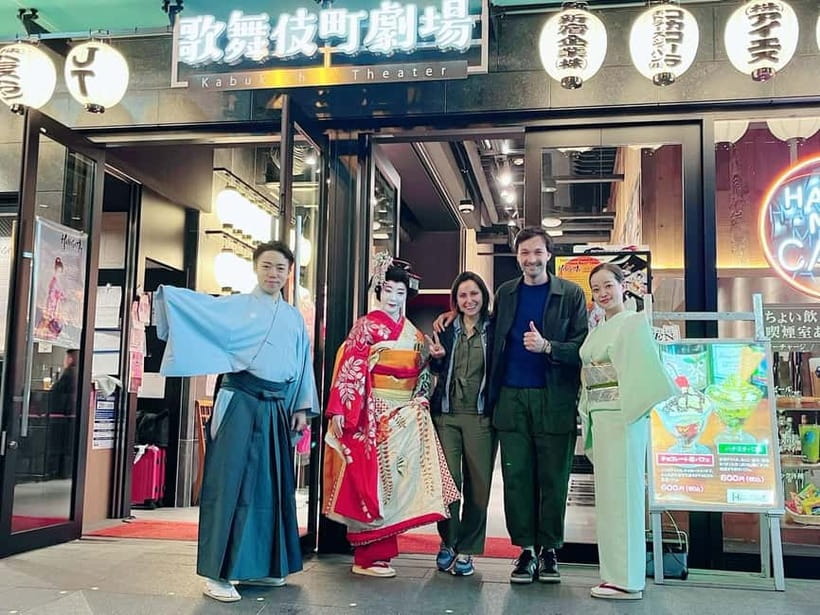
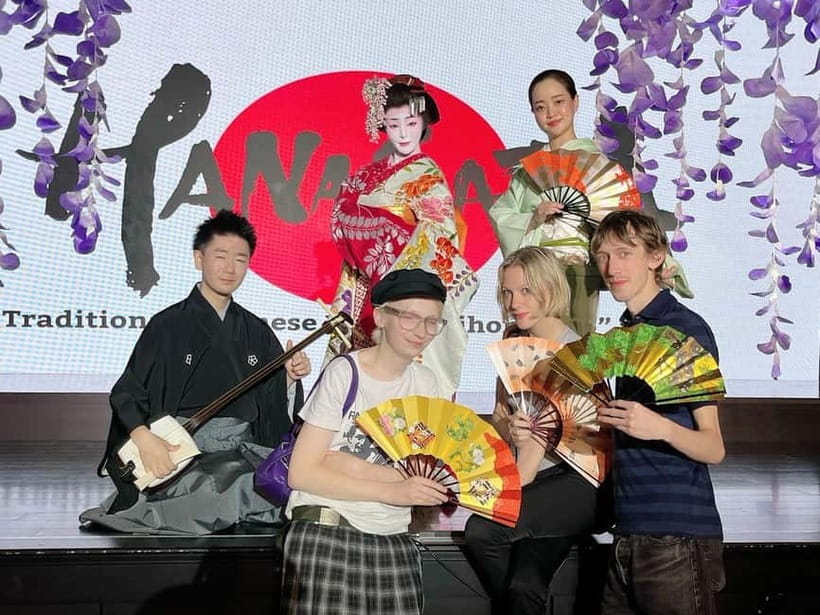
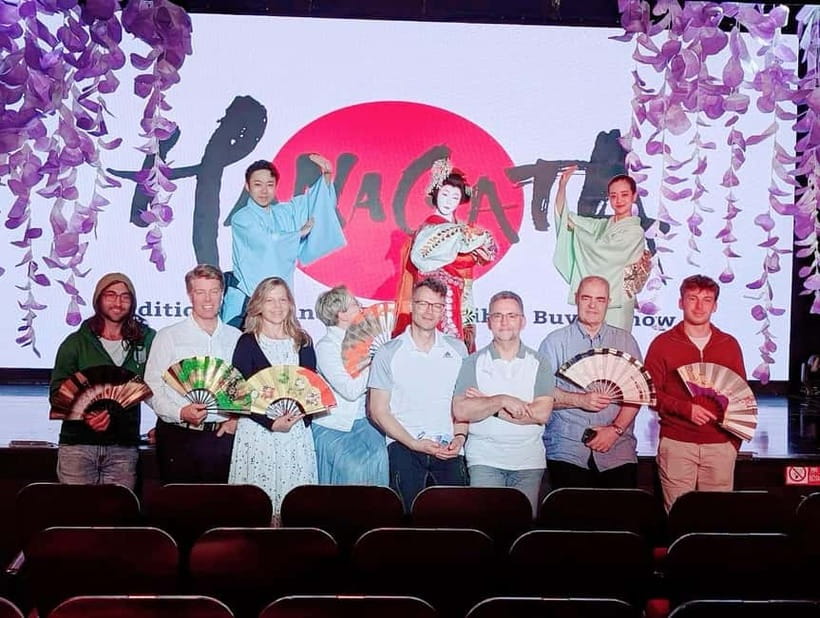
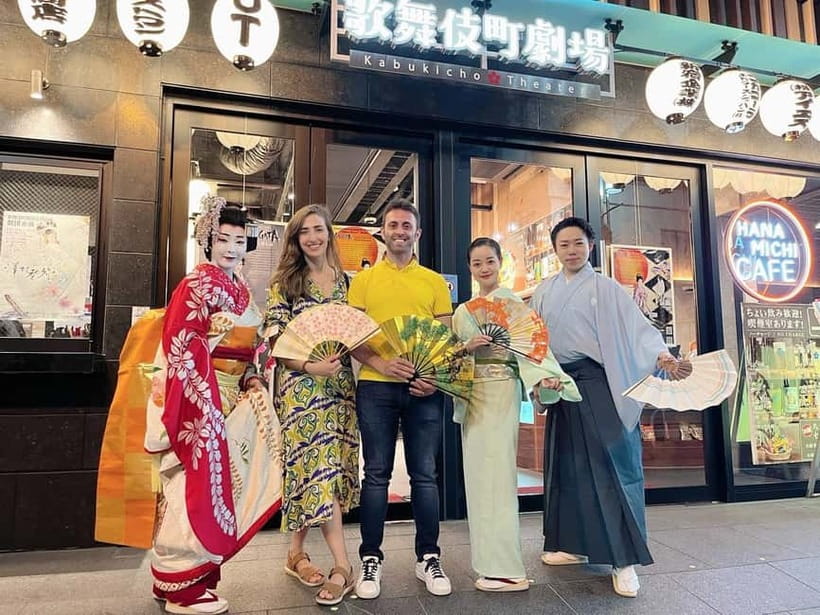
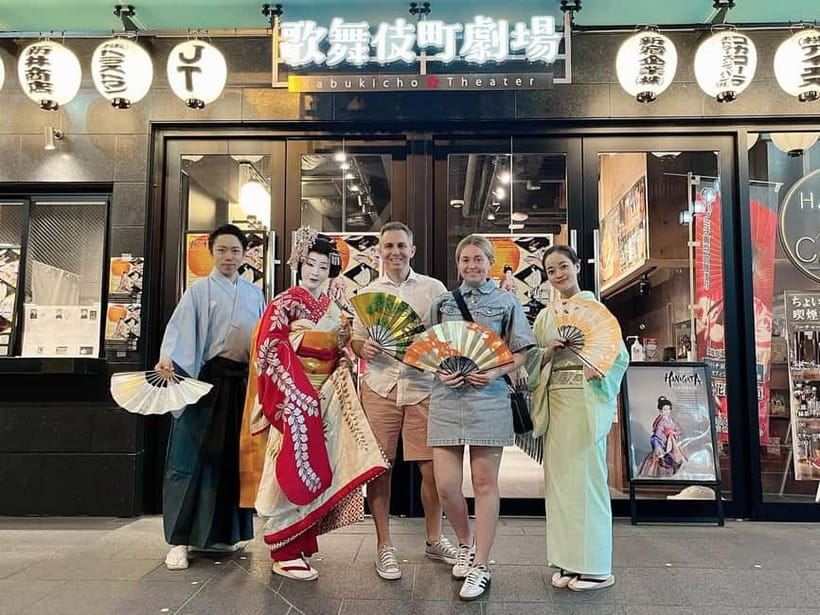
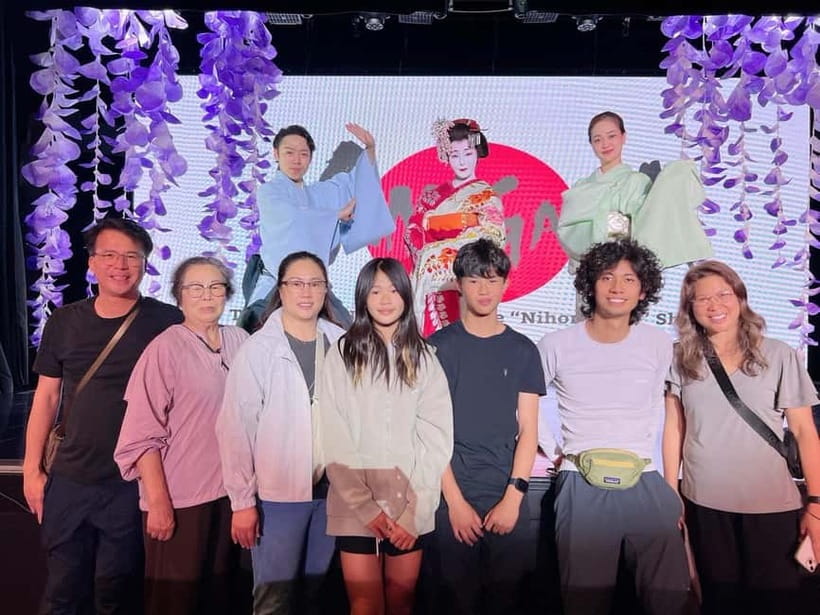
At the end of the performance, there is time to take pictures. This is a practical touch because it respects the show itself while still giving you a chance to record the occasion.
During the performance, photography is not allowed inside. Keep your phone and camera put away so the audience can concentrate and so flashes or raised screens do not distract the dancers.
The final photo opportunity also gives you a chance to see the performers and costumes in a more relaxed setting. Staff and dancers have been friendly and willing to speak with visitors, and English communication is available in these interactions. If you have a respectful question, the end of the show is the right time to ask it.
The welcome can include small gifts, according to the experience details provided by previous attendees. Since these extras are not listed as a guaranteed inclusion, treat them as a possible courtesy rather than part of the ticket’s promised value.
Who will get the most from the $54 ticket
At $54, this is best for someone who wants a focused cultural experience, not simply another item on a Tokyo checklist. You are paying for professional performers, an intimate view, cultural explanations, and access to a traditional art that can be difficult to encounter in a clear, visitor-friendly setting.
I would recommend it for:
- First-time visitors who want to see traditional Japanese performance
- People interested in kimono, Japanese theater, music, or dance
- Couples looking for a distinctive evening activity in Shinjuku
- Families with older children who can sit quietly during the show
- Visitors who prefer a small cultural performance to a large entertainment production
It may be less suitable if you need a meal included, hotel transportation, or a performance conducted entirely in English. Food and drinks are not included, and the show itself is in Japanese.
Childcare can be arranged through the provider’s separate kids program. This is not listed as part of the dance ticket, so you must make a separate reservation if you need that service. The provider can also arrange experiences for children through the same program.
Booking flexibility and practical planning
You can reserve the experience and pay later, which is useful if your Tokyo schedule is still changing. A full refund is available if you cancel at least 24 hours in advance.
Because no performance duration is given, check the confirmed booking details before arranging dinner or another timed activity. Shinjuku offers plenty of places to eat, but meals are not part of this ticket.
Plan to arrive with enough time to find the venue and settle in. The show depends on concentration, so it is better to be seated and ready than to enter while the dancers are performing.
You should also set your expectations about photos. You can take pictures after the performance, but not during it. If collecting images is a major reason you book cultural events, this restriction may matter. If your main goal is to watch without distraction, it is a welcome rule.
Should you book this Japanese dance show?
Book it if you want an intimate look at a traditional Japanese art and are willing to watch with patience. The award-winning dancers, detailed kimono, close seating, and English explanations between performances give the $54 ticket a clear purpose.
Skip it if you are looking for a large, fast-paced production, a dinner package, or full English narration throughout. For everyone else, this is a thoughtful way to spend part of a Tokyo evening, especially if you want to understand more than the usual postcard version of Japan.
FAQ
Where does the Japanese dance show take place?
The performance takes place in Shinjuku, in Tokyo on Honshu Island.
How much does the ticket cost?
The listed price is $54 per person.
What does the ticket include?
The ticket includes entrance to the Japanese dance performance.
Are food and drinks included?
No. Food and beverages are not included in the ticket price.
Is hotel pickup provided?
No. Hotel pickup is not included, so you must arrange your own transportation to Shinjuku.
What language is the show in?
The show is conducted in Japanese. English information is provided between performances.
Can I take pictures during the performance?
No. Photography is prohibited during the performance.
Can I take pictures after the show?
Yes. A photo-taking period is provided at the end of the performance.
Can I reserve now and pay later?
Yes. The booking option allows you to reserve your place and pay later.
What is the cancellation policy?
You can receive a full refund if you cancel at least 24 hours in advance.
Is childcare available?
Childcare and children’s experiences can be arranged through the provider’s separate kids program. A separate reservation is required.
Just added around Tokyo
- Private Arrival Transfer : Narita International Airport to Central Tokyo City★ 4.5 · 12 reviews
- Narita Airport(NRT): Private Transfer to Tokyo/Yokohama 1-9pax★ 5.0 · 47 reviews
- Private Transfer from Narita Airport to Yokohama Port and City★ 4.5 · 17 reviews
- [Narita Airport Terminals 1, 2] 40-60km Sawara Itako Historic Bike Tour★ 5.0 · 13 reviews
- 3 Day Japan Highlights Tour: Tokyo, Mt.Fuji, Nara, Kyoto, Osaka★ 5.0 · 22 reviews
- Small Town in the Big City: Tasting Tokyo’s Kichijoji★ 5.0 · 195 reviews
- Small Town in the Big City: Tasting Tokyo’s Kichijoji★ 5.0 · 16 reviews
- The 10 Tastings of Tokyo With Locals: Private Street Food Tour★ 5.0 · 48 reviews
Tokyo Tours, compared.

Mt Fuji and Hakone 1-Day Bus Tour Return by Bullet Train
Read our review →

teamLab Planets TOKYO Digital Art Museum Entry Ticket
Read our review →
Mt Fuji & Hakone Cruise, Drum Show Bullet Train 1 Day from Tokyo
Read our review →
Sumo Show Experience with Chicken Hot Pot and a Photo
Read our review →
Shinjuku Food Tour (13 Dishes at 4 Local Eateries)
Read our review →
Tokyo Mt Fuji 5th St & Hakone Cruise Bus Tour w/Bullet Train
Read our review →