
Reviewed · TOKYO TOURS
Tokyo: Japanese Archery (Kyudo) Experience
Japanese archery is not a quick lesson in pointing, pulling, and firing. Kyudo is controlled movement, quiet focus, and a formal sequence that makes each arrow feel important. This 150-minute session takes you into an official Kyudo hall with a real competition range, not a short tourist setup.
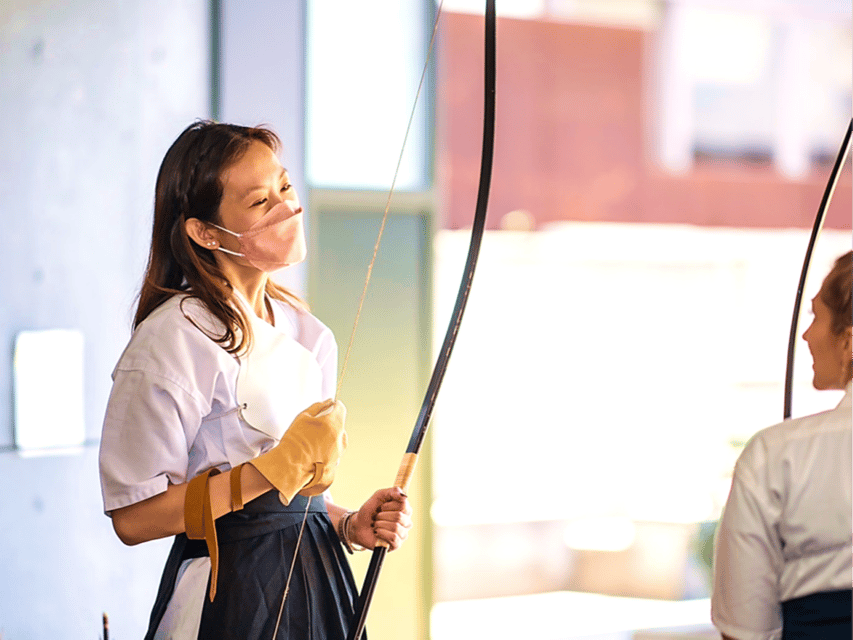
I like two things right away: you wear a genuine traditional uniform, and you get dozens of attempts rather than one brief turn. The small group, limited to five people, also gives the English-speaking instructor time to correct your stance and hand position.
The main drawback is that Kyudo is harder than it looks. You may not hit the target on your first day, and the meeting point changes by date, so you must watch for the final location and arrive early. Late arrivals cannot join and receive no refund.
Key points to know before booking
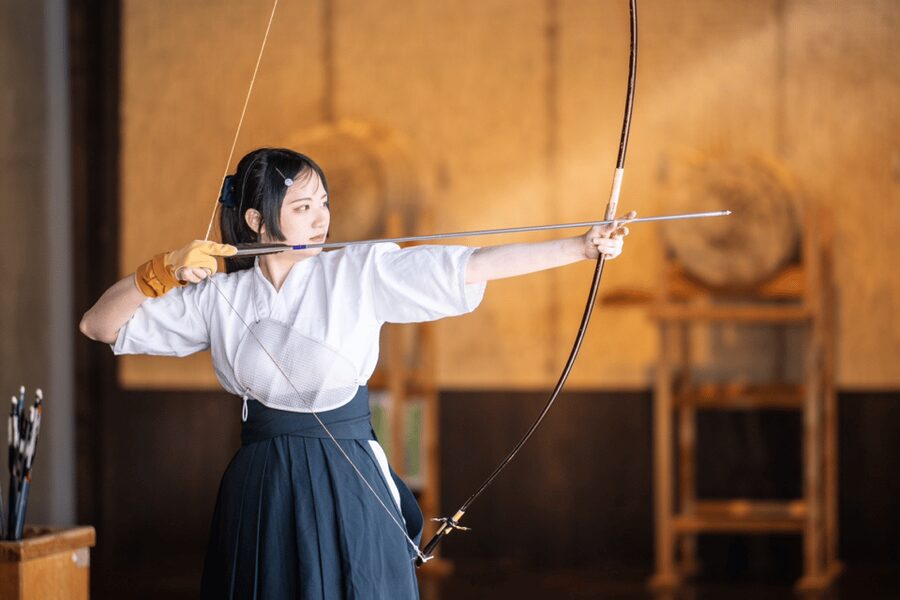
- Shoot at a real competition-distance range: You practice inside an official Kyudo hall rather than at a short recreational target.
- Wear traditional Kyudo clothing: A dōgi and a complete rental set of bow and arrows are included.
- Get many turns to improve: The session allows dozens of attempts, giving you time to apply corrections.
- Learn from a dan-ranked Japanese instructor: The shooting motion is explained step by step in English.
- Keep the group small: No more than five participants means more room for personal advice.
- Plan carefully for the meeting point: The venue changes on different days and is not Tokyo Station.
Why this Kyudo session feels different from ordinary archery
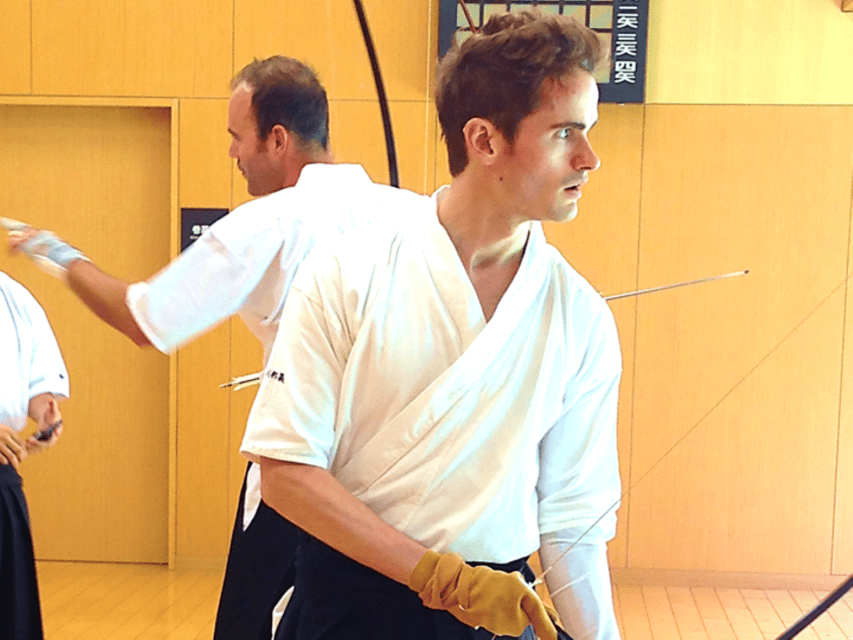
I like this experience because it treats Kyudo as a martial art, not simply as a target game. The bow, the clothing, the posture, and the order of movements all matter. You are not just trying to send an arrow toward a bullseye. You are learning to make the same calm motion again and again.
Kyudo is often described in Japan as dynamic Zen meditation. That does not mean you will sit quietly for two and a half hours. It means the shooting process asks you to settle your mind while your body follows a precise form. The arrow’s release is only one part of the lesson.
The activity is presented as Tokyo’s only genuine Japanese archery experience of this kind. Its setting is a working official hall, with a full competition range and, at times, regular local archers using the facility. That setting matters. You get a look at how Kyudo is practiced in Japan, rather than a performance designed only for tourists.
There is also a useful shortcut here. In a regular Japanese Kyudo hall, beginners generally practice for months before they are allowed to shoot at a target. This program lets you try target shooting during your first visit, while still giving you an introduction to the correct movement.
That makes it a good choice for curious first-timers. It also makes the session more demanding than a casual arcade-style archery activity.
A few more Tokyo half-days to weigh up
- Mt Fuji and Hakone 1-Day Bus Tour Return by Bullet Train
★ 5.0 · 26,383 reviews - 1-Day Tokyo Bus Tour
★ 5.0 · 14,250 reviews - Tokyo: TOKYO SKYTREE® Admission ticket
★ 4.5 · 11,192 reviews
Your first moments in the official hall
Your meeting location is sent after booking, usually a few days before the activity. Do not go to Tokyo Station unless your instructions specifically say so. Different facilities are used on different days, and the program leaves exactly on time.
That changing location is the biggest practical nuisance. Tokyo is a large city, and a last-minute dash across town is not a good way to begin a concentration-based activity. I would save the meeting details, check the route the night before, and arrive with plenty of time.
At the hall, you receive the equipment included in the $122 price: the experience fee, facility use, and a complete set of rented Kyudo tools. The instructor matches the bow and arrows to your body. This is important because Kyudo equipment is not one-size-fits-all in the way a basic tourist bow might be.
You then change into a traditional Kyudo training uniform, called a dōgi. This is part of the experience, not just a costume photo opportunity. The uniform helps you understand that Kyudo has its own etiquette and discipline, and it makes the session feel connected to the setting around you.
There is one clothing limitation to keep in mind. The dōgi is made for the Japanese body type. People with larger arms or a body weight above 150 kilograms may find that the uniform does not fit and may need to take part in regular clothing.
Learning the formal shooting sequence
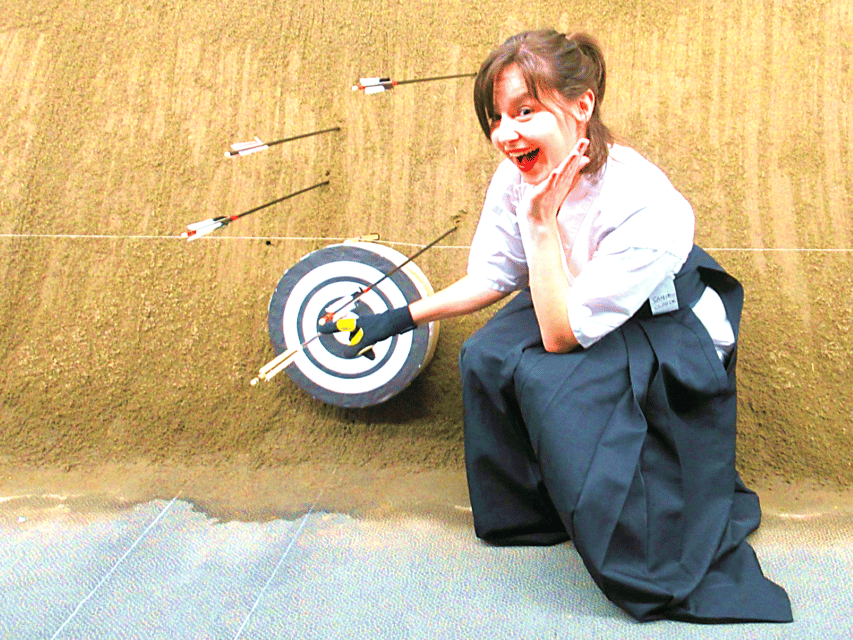
The instructor explains the movement in stages, beginning with the basic posture and handling of the bow. You learn how to stand, how to place your feet, how to raise and draw the bow, and how to keep your mind quiet as the sequence unfolds.
The aim is not to rush toward the release. Kyudo rewards attention to the process. A small change in posture or grip can affect the arrow, so the instructor watches your motion and offers corrections as you practice.
English instruction is provided, and the format has been refined for people who have never tried Kyudo. The instructor is a Japanese dan master, and the class is designed to remain approachable even though the art itself takes years to master.
One repeat participant found the instructor’s energy especially memorable, even when not every word was understood. That is useful context for you: the instruction is in English, but physical demonstrations, encouragement, and repeated practice are also central to the teaching. One participant specifically named Jun as an attentive and energetic instructor, though the instructor may vary by session.
The class is not built around a long lecture. You spend enough time moving and trying the technique to understand why Kyudo requires dedication, focus, and discipline. It may look simple from across the hall. Once you hold the bow and try to repeat the form, you quickly see the challenge.
Dozens of arrows, not just a single attempt
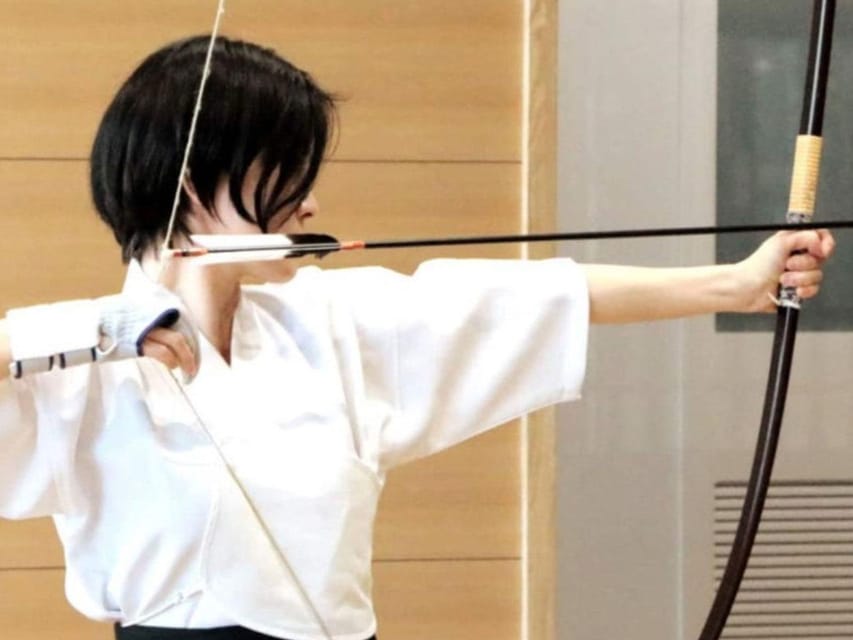
The strongest practical feature is the amount of practice. You are given dozens of chances to shoot, not merely one or two arrows for a photo. That changes the mood of the session.
Your first attempt may be awkward. Your second may show a small improvement. After the instructor adjusts your stance or explains the release again, you can immediately test the advice. This cycle of trying, listening, and trying again is where the value lies.
You should not book this expecting a guaranteed bullseye. The activity clearly allows for the possibility that you will miss the target all day. You may get lucky once or twice, but the real goal is to understand the movement and improve it.
That is also why the small group matters. With a maximum of five participants, the instructor can pay attention to individual form. One person may need help with foot placement, while another needs to work on a steady draw or a quiet release.
The session has enough time for practice without becoming a full beginner course. If you find yourself wishing for more shooting time, that is a fair reaction. Kyudo’s learning curve is steep, and 150 minutes only introduces the art. Still, the repeated attempts give you a much better first taste than a short demonstration.
Same base, a completely different sort of day:
- Tokyo: teamLab Planets TOKYO Digital Art Museum Entry Ticket
★ 4.6 · 9,779 reviews - Mt Fuji & Hakone Cruise, Drum Show Bullet Train 1 Day from Tokyo
★ 4.0 · 7,413 reviews - Tokyo: Sumo Show Experience with Chicken Hot Pot and a Photo
★ 4.8 · 6,678 reviews - Tokyo: Shinjuku Food Tour (13 Dishes at 4 Local Eateries)
★ 5.0 · 6,603 reviews
The real range adds weight to the experience
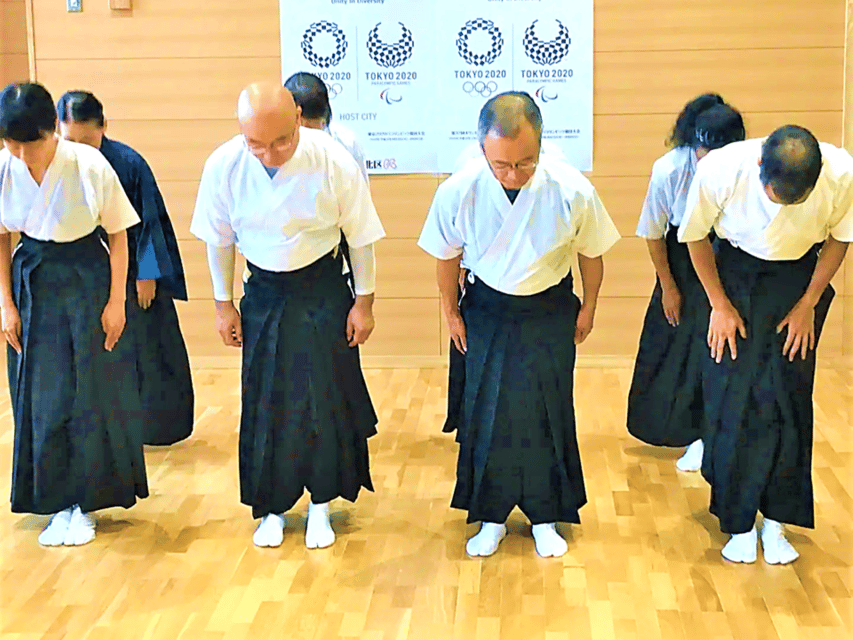
A full competition range changes your sense of distance. A short indoor target lets almost anyone feel successful. A proper Kyudo range asks you to control your whole body and trust the technique over a longer shot.
The venue is an official hall, and the range is used for real competition practice. Regular archers may also be present. That can make the experience feel less like a staged activity and more like an opening into a local Japanese sporting tradition.
You will need to respect the hall’s rules. Photography and video recording are restricted in the archery facility, so do not assume you can film every stage of the session. Follow the guide’s instructions about when, where, and if you may take pictures.
This restriction may disappoint anyone hoping for a constant stream of photos in traditional clothing. I see it as a reasonable trade for using a genuine training hall. The focus stays on the practice, and the space remains a working place for Kyudo rather than a photo studio.
What the $122 price gets you
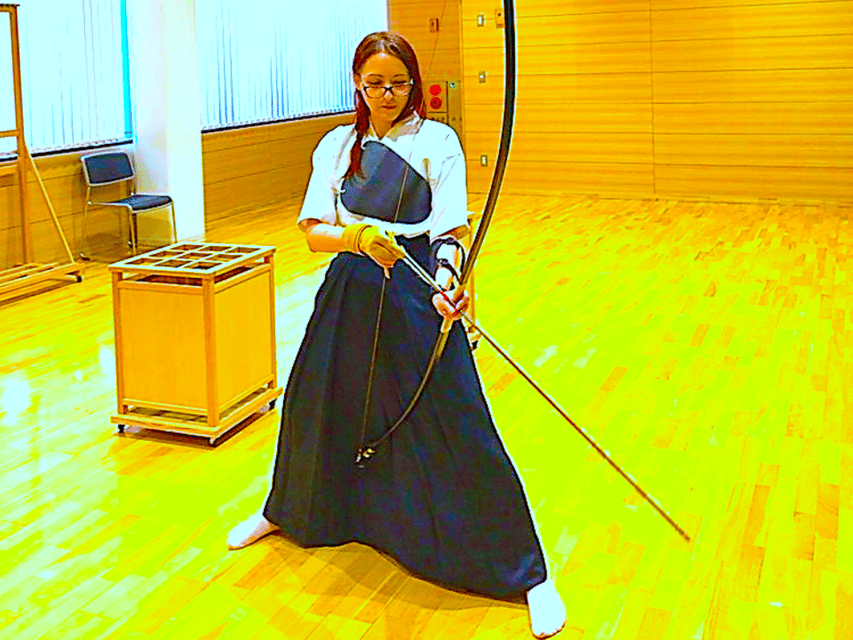
At $122 per person, this is not Tokyo’s cheapest cultural activity. The price makes more sense when you count what is included: the instructor, hall use, traditional uniform, bow and arrows, and a full 150 minutes of guided practice.
You are also paying for access to a facility that ordinary visitors may not enter casually. A short tourist archery session might cost less, but it would not necessarily offer the same range, clothing, equipment matching, or repeated instruction.
The small group improves the value. A five-person limit gives the instructor a chance to work with you directly rather than teaching from the front of a crowded room. If you want a private class, this is not one, but the group is still compact.
I would book it if you value an authentic setting and hands-on instruction more than a guaranteed successful shot. I would skip it if your main goal is to hit a target quickly, take lots of photographs, or enjoy a relaxed activity with little physical or mental discipline.
The experience fee does not include any extra payment for people who enter the venue without participating. Nonparticipants must be declared when requesting the booking and pay an additional fee. That rule is easy to miss, so anyone accompanying you should check this in advance.
Who should choose this experience
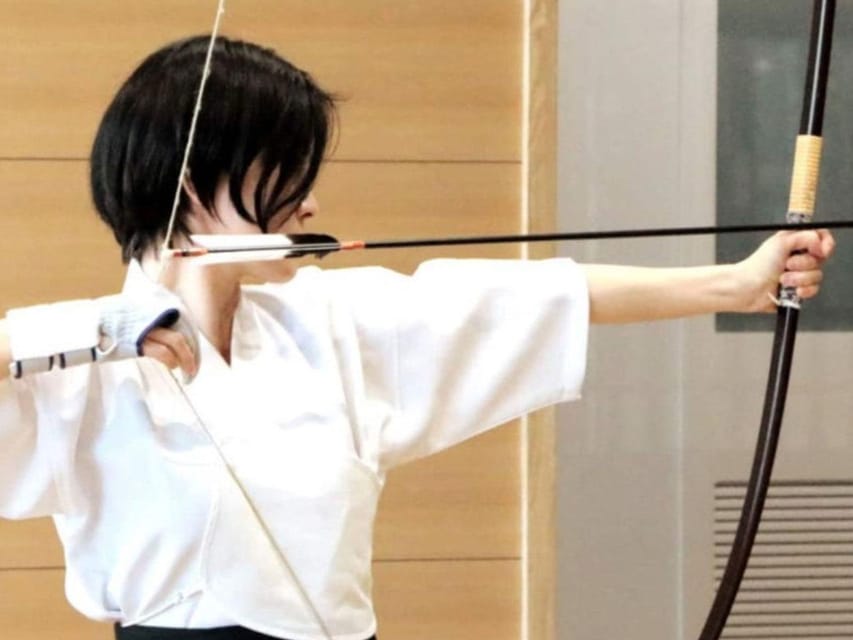
This session suits adults and children aged 13 or older who want a cultural activity with real practice rather than a staged display. It is beginner-friendly, but beginner-friendly does not mean effortless.
You should enjoy it if you like learning a form carefully, receiving corrections, and repeating a movement until it starts to make sense. It also suits anyone curious about Japanese martial arts, traditional clothing, or the quieter side of Tokyo culture.
It may inspire you to find a Kyudo club at home. That is a sign of the activity’s appeal: you get enough instruction to see the depth of the art without pretending that two and a half hours will make you proficient.
You should reconsider if you have a cold or feel unwell. People who are intoxicated or under the influence of alcohol cannot participate and will not receive a refund. Wheelchair users cannot take part, and the uniform may not fit some larger participants.
The age limit is firm. Children under 13 are not permitted.
Meeting details that can make or break the day
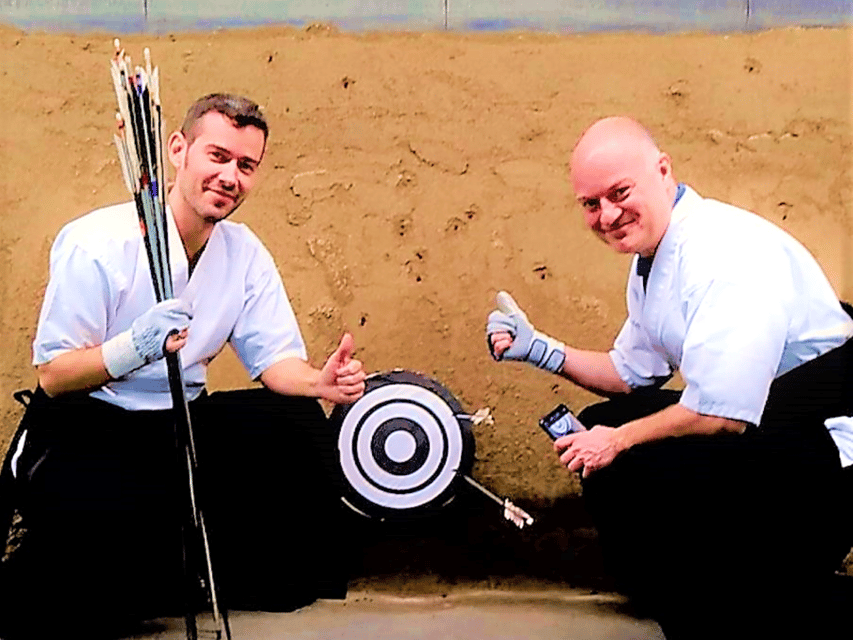
The meeting point is not fixed at Tokyo Station. The operator uses different halls on different days, and you receive the exact location after reserving. Treat that message as essential trip information, not a minor update.
The program departs on time. If you arrive late, you cannot join, and there is no refund. In practical terms, plan to reach the area early enough to deal with a wrong turn, a busy station, or a confusing final walk.
The cancellation rule is fair for a fixed appointment: cancel at least seven days ahead for a full refund. Inside that period, the strict late-arrival and no-show rules matter more. This is not an activity to squeeze between two tightly scheduled Tokyo attractions.
Allow the whole 150 minutes, plus your travel time to the hall. The booking page provides starting times based on availability, so check the date and hour before building the rest of your day.
What past participants found most useful
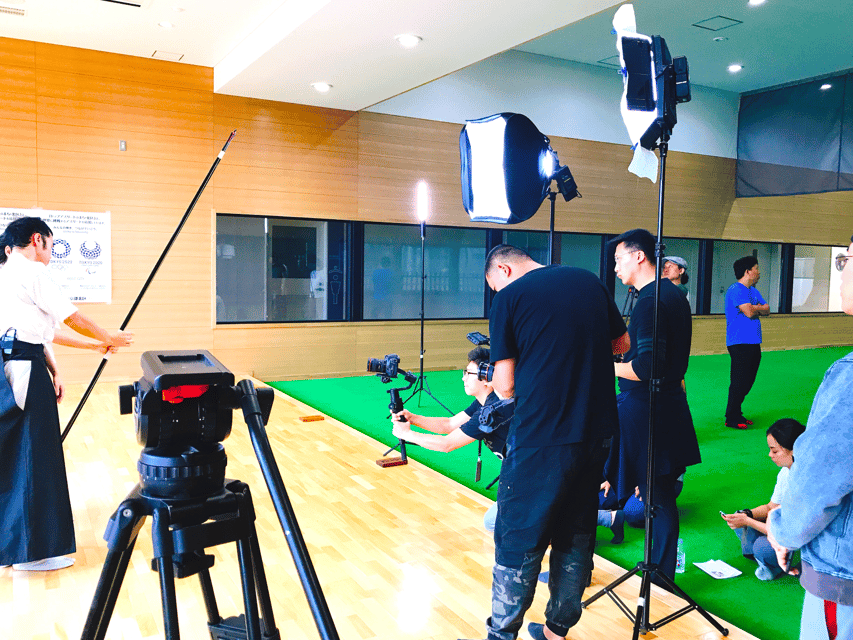
The repeated praise centers on the instructor’s patience, energy, and clear explanation. Christian from Germany appreciated the full progression from clothing and sport basics to shooting, while Hector from the United States found the class friendly to beginners and appreciated the large amount of target practice.
Katherine from the United States liked the graceful, old-world quality of the art and wished she could practice it weekly. That captures the appeal well. Kyudo is beautiful when performed correctly, but the beauty comes from discipline rather than decoration.
Several people singled out the quality of the range and the instructor’s personal attention. Patrick appreciated one-on-one explanations, and Alexander found the gear and introductory teaching both enjoyable. Jonas from Brazil liked the range but wished he had been able to shoot even more, a useful reminder that keen beginners may want a longer follow-up course.
There was one note of caution about scheduling. An initial problem did not ruin the session, but it shows why you should confirm the meeting details and leave extra time. Once the class began, the instructor named Jun was described as attentive and helpful.
The overall rating is 5 out of 5 from 78 reviews. That high score fits the strongest features, though you should still judge the activity by its real demands: strict timing, limited photography, a changing venue, and no promise that your arrow will hit the target.
Should you book this Tokyo Kyudo experience?
Book it if you want to practice Japanese archery in a genuine official hall, wear traditional Kyudo clothing, and receive repeated instruction in a small group. The real range and dozens of attempts make this far more substantial than a quick tourist photo stop.
It is especially worthwhile for visitors who enjoy cultural activities that ask for patience. You will probably leave with a better sense of why Kyudo is linked with quiet concentration, even if your arrows do not consistently reach the center.
Think twice if you need an easy win, flexible arrival time, extensive photography, or step-free access. For everyone else, the $122 fee buys a rare chance to try a formal Japanese art in the place where it is actually practiced, with enough time to make mistakes and improve.
FAQ
How long does the Kyudo experience last?
The activity lasts 150 minutes, or two and a half hours.
Where is the meeting point?
The meeting point is not Tokyo Station. Different facilities are used on different days, and the exact meeting place is provided a few days after booking.
Is the instructor able to teach in English?
Yes. English instruction is provided.
How many people can join the group?
The group is limited to five participants.
Is Kyudo equipment included?
Yes. The experience fee includes rental of a complete set of Kyudo tools and the facility use fee.
Do I get to shoot at a real target?
Yes. You shoot at a target on a real competition range. The program gives you dozens of attempts, but hitting the target is not guaranteed.
What is the minimum age?
Participants must be at least 13 years old. Children under 13 cannot take part.
Can I cancel for a full refund?
Yes. You can cancel up to seven days in advance for a full refund. Late arrivals cannot participate and will not receive a refund. People who are unwell or under the influence of alcohol are also not permitted to join and will not receive a refund.
Just added around Tokyo
- Narita Airport(NRT): Private Transfer to Tokyo/Yokohama 1-9pax★ 5.0 · 47 reviews
- Private Transfer from Narita Airport to Yokohama Port and City★ 4.5 · 17 reviews
- Private Arrival Transfer : Narita International Airport to Central Tokyo City★ 4.5 · 12 reviews
- [Narita Airport Terminals 1, 2] 40-60km Sawara Itako Historic Bike Tour★ 5.0 · 13 reviews
- 3 Day Japan Highlights Tour: Tokyo, Mt.Fuji, Nara, Kyoto, Osaka★ 5.0 · 22 reviews
- Small Town in the Big City: Tasting Tokyo’s Kichijoji★ 5.0 · 195 reviews
- Small Town in the Big City: Tasting Tokyo’s Kichijoji★ 5.0 · 16 reviews
- The 10 Tastings of Tokyo With Locals: Private Street Food Tour★ 5.0 · 48 reviews
Tokyo Tours, compared.

Mt Fuji and Hakone 1-Day Bus Tour Return by Bullet Train
Read our review →

teamLab Planets TOKYO Digital Art Museum Entry Ticket
Read our review →
Mt Fuji & Hakone Cruise, Drum Show Bullet Train 1 Day from Tokyo
Read our review →
Sumo Show Experience with Chicken Hot Pot and a Photo
Read our review →
Shinjuku Food Tour (13 Dishes at 4 Local Eateries)
Read our review →
Tokyo Mt Fuji 5th St & Hakone Cruise Bus Tour w/Bullet Train
Read our review →