Reviewed · TOKYO TOURS
Tokyo: Asakusa and Tokyo’s Oldest Temple Senso-ji Tour
Asakusa gives you Tokyo at its most traditional, and this two-hour walking tour puts its grandest sights into a clear, easy route. You begin at Kaminarimon, pass beneath its huge red lantern, follow Nakamise Street, and finish at Senso-ji and Asakusa Shrine. I like the local detail, especially the explanations of prayer customs, temple etiquette, food, and souvenirs. I also like the small group size, which makes it easier to hear the guide and stay together in the crowds.
The main consideration is time. Two hours is enough for a strong introduction, but not enough to explore all of Asakusa’s shops, museums, back streets, and restaurants. The temple area can also be packed, so expect a steady walking pace and plenty of people around you.
Key points to know before booking
- Senso-ji is the centerpiece: Learn about Tokyo’s oldest temple area, its Buddhist traditions, and the legends tied to its origins.
- The route is compact and useful: Kaminarimon, Nakamise Street, Senso-ji, and Asakusa Shrine fit into a two-hour walk.
- Guides add practical local advice: Shino, Embla, Nicolas, Joe, Aska, and other English-speaking guides have explained food, customs, shopping, and Tokyo life.
- Groups stay small: With no more than 10 participants, it is easier to ask questions and keep up through crowded streets.
- You get more than the postcard view: The walk includes stories about geisha districts, hidden shrines, Edo-era Tokyo, and post-war recovery.
- The price is modest: At $14 per person, this is a low-cost way to understand the area before returning on your own.
Why Asakusa makes a smart first Tokyo walk
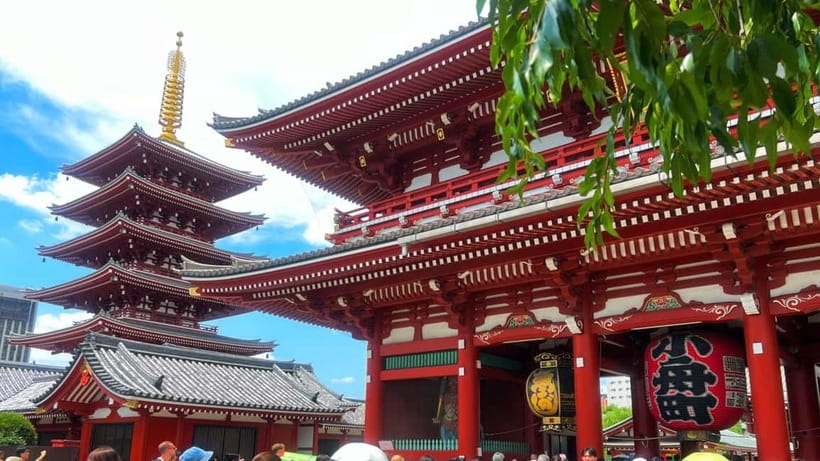
Tokyo can feel enormous on your first day. Its train lines, tall buildings, neon districts, and endless shopping streets can leave you wondering where the older city went. Asakusa answers that question. This district preserves a strong sense of old Tokyo, known as Edo before the city took its modern name.
The route focuses on the area around Senso-ji, founded in the seventh century. That gives you a useful introduction to Japanese Buddhist traditions without asking you to spend half a day in a museum or sit through a long lecture.
I see this tour as a get your bearings fast experience. You learn what makes a temple different from a shrine, how to approach the main hall, and why certain gates, lanterns, statues, and rituals matter. Guides also explain how Asakusa changed from an Edo-era entertainment district to a major sightseeing area, then rebuilt after wartime destruction.
The human side matters here. Guides including Shino, Embla, Nicolas, Joe, Aska, Naoya, Ryota, and Yota have led this experience. The strongest feedback centers on guides who explain clearly, answer questions patiently, and adjust the pace when needed. Shino, who was born and raised in Tokyo, has offered local suggestions for food and meaningful souvenirs. Nicolas has been praised for explaining Buddhism and the history of Tokyo in a lively way. Joe has brought an informal, friendly tone, while Embla has been careful about organization and keeping a small group together.
That range is worth noting. Your exact guide will shape the mood, but the activity is designed around English commentary and personal interaction rather than a recorded script.
A few more Tokyo half-days to weigh up
- Mt Fuji and Hakone 1-Day Bus Tour Return by Bullet Train
★ 5.0 · 26,383 reviews - 1-Day Tokyo Bus Tour
★ 5.0 · 14,250 reviews - Tokyo: TOKYO SKYTREE® Admission ticket
★ 4.5 · 11,192 reviews
Meeting near Asakusa Station
The meeting point is in front of the Starbucks closest to Asakusa Station, at coordinates 35.7119461, 139.7979446. The tour returns to the same Starbucks, which makes the start and finish simple to manage.
Download WhatsApp before you arrive. The organizer asks you to use it so the guide and group can meet smoothly. This is particularly useful in Asakusa, where several station exits, shopping streets, and large temple gates can make a first meeting less obvious than expected.
Allow a few extra minutes to find the correct Starbucks and do not rely only on the station name. Keep your phone charged, since group communication takes place through WhatsApp. The meeting location is convenient, but the tour itself is entirely on foot.
Kaminarimon and the first look at old Tokyo
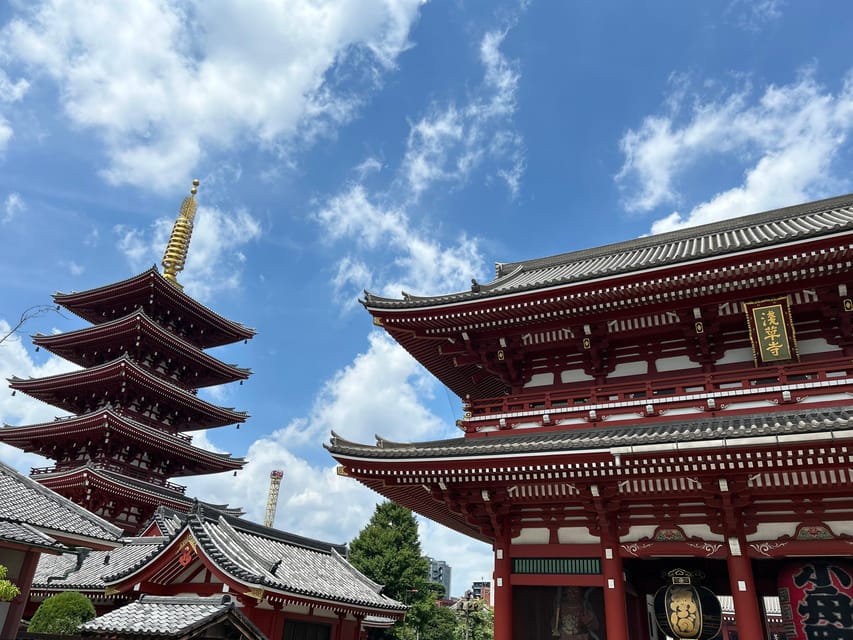
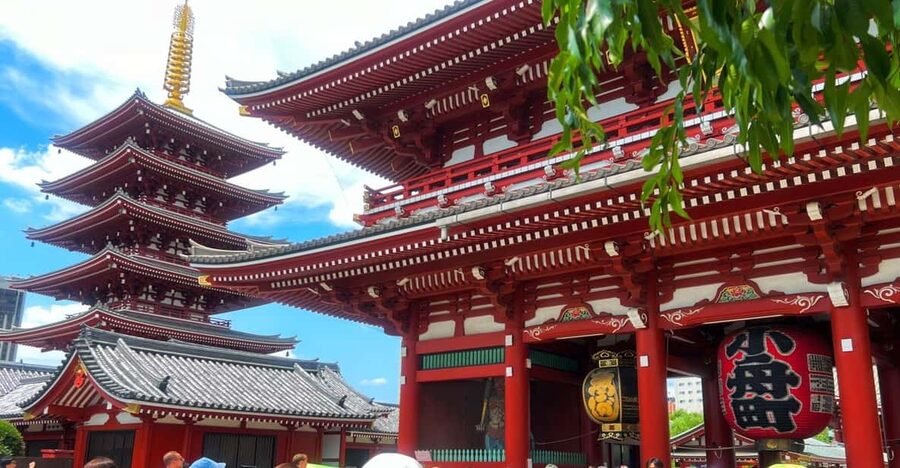
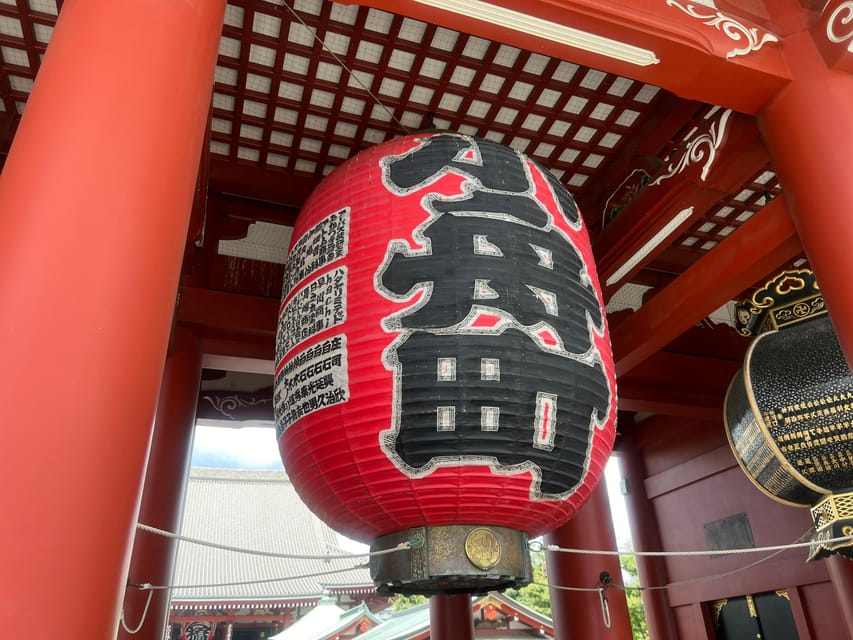
The first formal stop is Kaminarimon, the Thunder Gate. You have about 30 minutes for a guided visit and photographs, which gives the guide time to explain the gate rather than simply point it out and move on.
The giant red lantern is the obvious attraction, but the gate also sets up the story of Senso-ji. You will hear about the temple grounds, the religious figures associated with the entrance, and the way visitors traditionally approach the complex.
This is one of the best points for photographs, though it is also one of the busiest. Keep close to the guide and listen for meeting instructions. One guide, Connie, was especially careful about checking that nobody was left behind in the crowd. That kind of attention is useful here, since the gate attracts people stopping for pictures from every direction.
Your guide may also begin discussing everyday customs at this point. That makes the stop more useful than a quick photo break. You start to understand that the temple is not just an old building, but an active religious place with expected behavior.
Nakamise Street, snacks, and souvenir choices
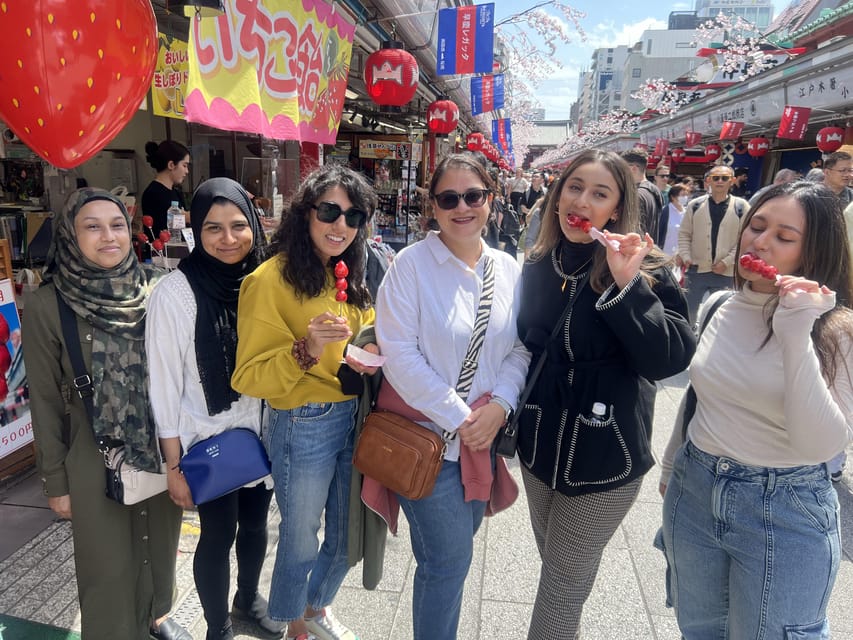
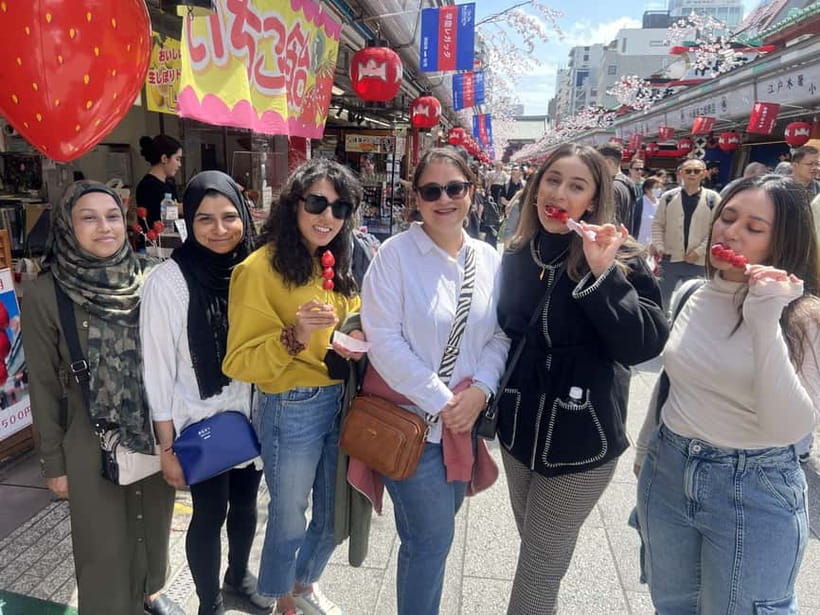
From Kaminarimon, the group continues along Nakamise Shopping Street for roughly 20 minutes. This straight approach to Senso-ji is lined with traditional shops, colorful lanterns, sweets, snacks, and small souvenirs.
Nakamise is a pleasant place to see familiar Japanese designs in one concentrated stretch. You might find local sweets, small gifts, and food associated with Asakusa. A guide can help explain what you are looking at and point out specialties you might otherwise pass without noticing.
Past participants have particularly valued food advice, including recommendations for red bean-filled ningyo-yaki, a small traditional snack often associated with Asakusa. Spelling and fillings can vary by shop, so this is exactly the sort of detail that is more helpful in person than in a general guidebook.
The drawback is that Nakamise can feel crowded and commercial. This is not a quiet Edo alley, especially during popular visiting hours. The tour gives you context and a first look, but you may want to return later if you plan to shop, compare prices, or eat at a relaxed pace.
Use the 20-minute stop as an introduction, not a shopping session. Make a mental note of what catches your eye, then come back after the tour. Yota has also directed people toward pottery shopping after the walk, showing how a guide’s local suggestions can help you build the rest of your day.
Same base, a completely different sort of day:
- Tokyo: teamLab Planets TOKYO Digital Art Museum Entry Ticket
★ 4.6 · 9,779 reviews - Mt Fuji & Hakone Cruise, Drum Show Bullet Train 1 Day from Tokyo
★ 4.0 · 7,413 reviews - Tokyo: Sumo Show Experience with Chicken Hot Pot and a Photo
★ 4.8 · 6,678 reviews - Tokyo: Shinjuku Food Tour (13 Dishes at 4 Local Eateries)
★ 5.0 · 6,603 reviews
Senso-ji, Tokyo’s oldest temple area
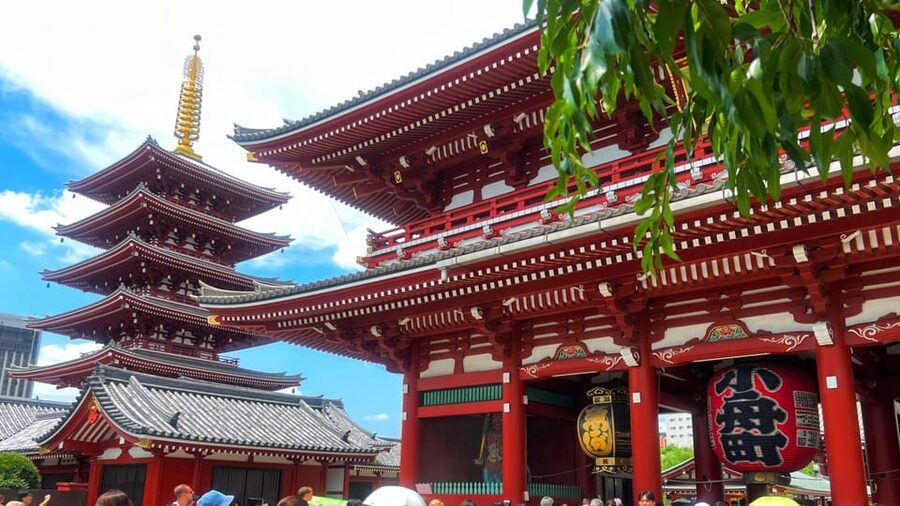
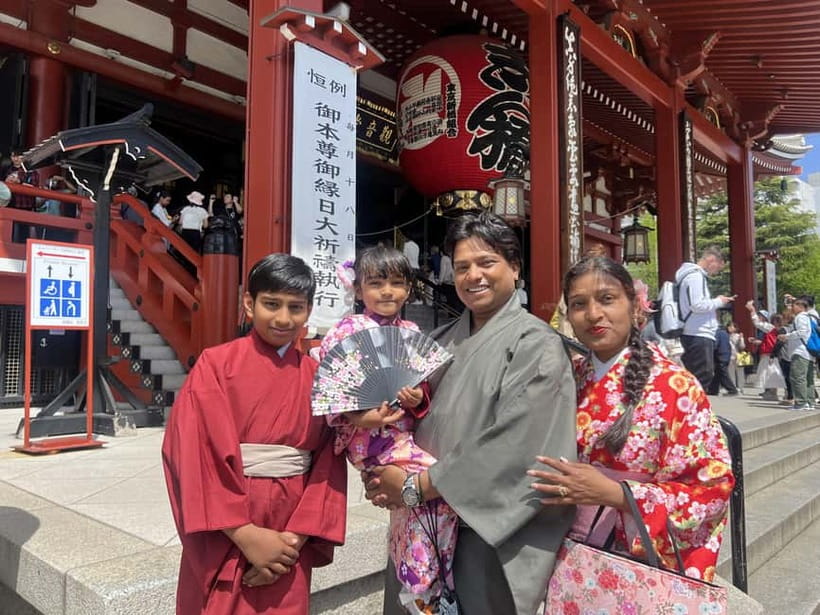
Senso-ji receives about 30 minutes of guided attention and is the core of the experience. The temple was founded in the seventh century and is widely described as Tokyo’s oldest temple. Its age gives the guide plenty to explain, from the origin story to the meaning of the buildings and rituals.
You will pass through the temple grounds and have time for a photo stop, a walk, and commentary. The value here is not simply seeing the main hall. It is learning how to behave in the space and what you are seeing.
Several guides have taught participants how to approach the temple and pray according to local custom. You can also learn about Buddhist ideas, the role of temple buildings, and the difference between religious practice and sightseeing. Nicolas, in particular, has been praised for making Buddhist traditions understandable without turning the visit into a heavy academic lesson.
You may choose to draw an omikuji fortune at the temple. One of the pleasures of this custom is that an unfavorable fortune is not treated as a disaster. You can tie it at the temple and leave it behind. Ask your guide about the process if you are unsure, since the small steps are easy to miss when the area is crowded.
Senso-ji is visually impressive, but it is not a secluded sanctuary. Tour groups, worshippers, school groups, and people taking photographs all share the grounds. The guide helps you focus on the details, yet you should expect noise and movement around you.
The 30-minute time limit also means you will not study every building or wander every corner. That is a fair trade for a short introductory tour, but anyone with a strong interest in Buddhist art or architecture should plan extra time in Asakusa afterward.
Asakusa Shrine and the stories behind the district
The final major stop is Asakusa Shrine, with about 30 minutes for photographs and guided explanation. This shrine sits close to Senso-ji, but it represents Shinto rather than Buddhism. Having both places in one walk helps you see how the two traditions can exist side by side in Japan.
The guide explains local customs and the correct way to pray at a shrine. This practical instruction is one of the strongest reasons to choose a guided visit. Many first-time visitors can copy what others are doing, but still wonder why they bow, clap, wash their hands, or make an offering. A clear explanation turns a confusing ritual into a respectful exchange.
The stop also brings the neighborhood’s stories into focus. Your guide may discuss geisha districts, lesser-known shrines, old alleys, and the changes Asakusa went through from samurai-era Tokyo to the post-war period. These details give the surrounding streets a human shape.
Aska has been praised for showing lesser-known corners and explaining local traditions, while other guides have helped participants understand the religious meaning of both the shrine and the temple. That combination is useful because you are not only collecting photographs. You are learning how the places function.
After the shrine, the group walks back to the Starbucks near Asakusa Station. There is no long transfer to another neighborhood, so you can continue with lunch, shopping, or more sightseeing nearby.
What the two-hour format does well
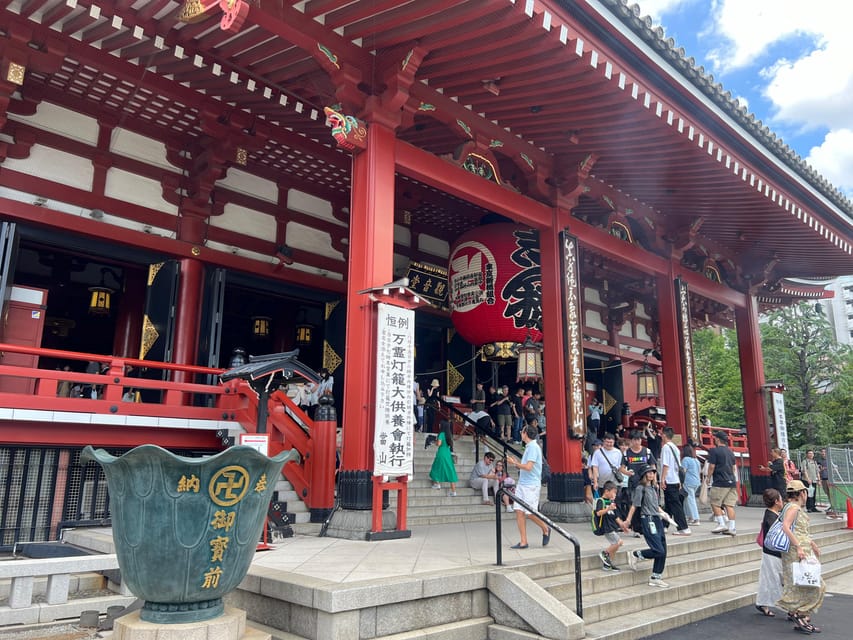
The timing is tight but sensible. The route divides the morning or afternoon into four clear parts: 30 minutes at Kaminarimon, 20 minutes on Nakamise Street, 30 minutes at Senso-ji, and 30 minutes at Asakusa Shrine. The schedule leaves little room for wandering, but it prevents the outing from becoming tiring or unfocused.
I would choose this format if you are new to Tokyo, short on time, or unsure how to read the customs at temples and shrines. It also works well for solo visitors who want company without joining a large coach group. One solo booking became a group of only two participants, while another group had seven people. The official limit is 10.
Small groups make a real difference in Asakusa. You can usually hear the guide more easily, ask follow-up questions, and keep the group together near the gates. Still, the streets remain crowded, and one account noted that slow participants and people talking over the guide can affect the pace. Your experience may depend partly on group behavior.
Wear comfortable shoes and expect to stand and walk for the full two hours. The tour does not include a meal, so treat the food advice as guidance for later rather than part of a tasting program.
Is $14 a fair price?
At $14 per person, the value is strong if you want interpretation rather than a self-guided photo walk. The main sights do not require an expensive admission ticket, so you are paying mostly for the English-speaking guide, route planning, historical context, and help with customs.
That is important in Asakusa. You can certainly visit Kaminarimon, Nakamise, Senso-ji, and Asakusa Shrine on your own. What you cannot easily reproduce is a local explanation of why the sites matter, how to pray, which foods are associated with the district, and how the area changed over time.
The price is less compelling if you already know Senso-ji well or prefer to move at your own pace. The tour gives you a fixed route and limited time at each stop. For most first visits, though, $14 is a small outlay for a useful orientation.
Free cancellation up to 24 hours before the start and the option to reserve now and pay later add flexibility. Check the available starting times when booking, since the schedule varies.
Who should book this Asakusa walk?
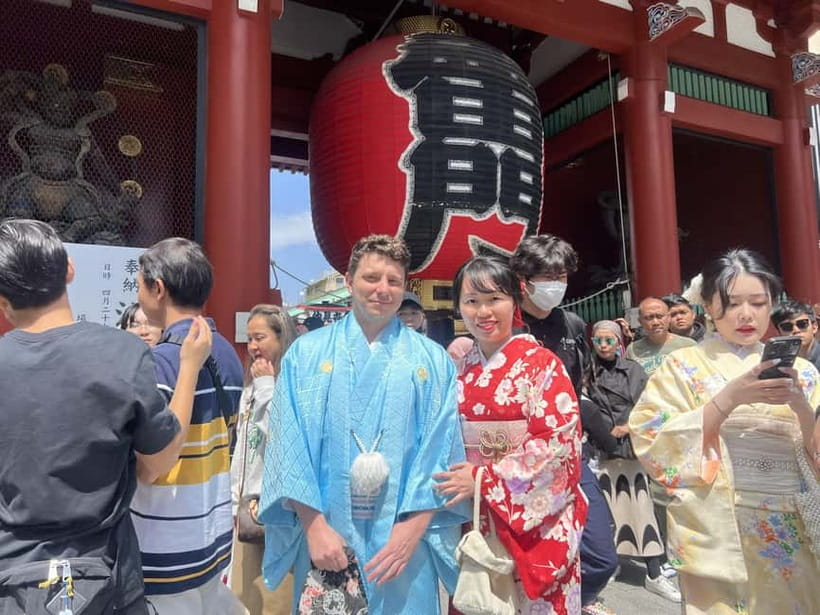
I would recommend it to first-time visitors who want a gentle introduction to traditional Tokyo. Families, solo visitors, couples, and small groups can all benefit from the compact route and straightforward English explanations.
It suits you especially well if you want to:
- Learn temple and shrine etiquette before visiting other religious sites
- Understand the difference between Buddhist and Shinto spaces
- Hear local stories that go beyond basic guidebook facts
- Get food and souvenir suggestions from a Tokyo-based guide
- See the main Asakusa sights without planning the route yourself
- Continue exploring the district independently afterward
I would be more cautious if you want a quiet spiritual experience, long photography stops, or a full-day tour of Asakusa. The main streets are crowded, and two hours goes quickly.
Should you book it?
Book this tour if you want Senso-ji and Asakusa to make sense, not just appear in your camera roll. The low price, small groups, practical etiquette guidance, and return to Asakusa Station make it an easy addition to a Tokyo itinerary.
The strongest reason to choose it is the guide. Shino, Embla, Nicolas, Joe, Aska, and the other listed guides bring different personalities, but the experience depends on clear English, local knowledge, and the ability to manage crowds. If you want a calm, detailed exploration of every corner, go back on your own after the tour. If you want an efficient first look with useful cultural context, this is a smart buy.
FAQ
How long does the Asakusa and Senso-ji tour last?
The tour lasts two hours, with time at Kaminarimon, Nakamise Shopping Street, Senso-ji Temple, and Asakusa Shrine.
Where does the tour meet?
Meet in front of the Starbucks closest to Asakusa Station. The coordinates provided are 35.7119461, 139.7979446.
Where does the tour finish?
The walk returns to the Starbucks near Asakusa Station, the same general location as the meeting point.
Is the tour conducted in English?
Yes. The activity includes a live English-speaking guide.
How large is the group?
The tour is a small-group experience limited to 10 participants.
Can I cancel for a refund?
Yes. You can cancel up to 24 hours before the tour for a full refund. You can also reserve now and pay later.
Just added around Tokyo
- Private Arrival Transfer : Narita International Airport to Central Tokyo City★ 4.5 · 12 reviews
- Narita Airport(NRT): Private Transfer to Tokyo/Yokohama 1-9pax★ 5.0 · 47 reviews
- Private Transfer from Narita Airport to Yokohama Port and City★ 4.5 · 17 reviews
- [Narita Airport Terminals 1, 2] 40-60km Sawara Itako Historic Bike Tour★ 5.0 · 13 reviews
- 3 Day Japan Highlights Tour: Tokyo, Mt.Fuji, Nara, Kyoto, Osaka★ 5.0 · 22 reviews
- Small Town in the Big City: Tasting Tokyo’s Kichijoji★ 5.0 · 195 reviews
- Small Town in the Big City: Tasting Tokyo’s Kichijoji★ 5.0 · 16 reviews
- The 10 Tastings of Tokyo With Locals: Private Street Food Tour★ 5.0 · 48 reviews
Tokyo Tours, compared.

Mt Fuji and Hakone 1-Day Bus Tour Return by Bullet Train
Read our review →
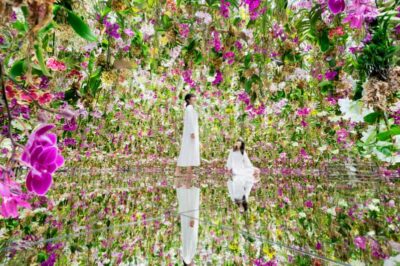
teamLab Planets TOKYO Digital Art Museum Entry Ticket
Read our review →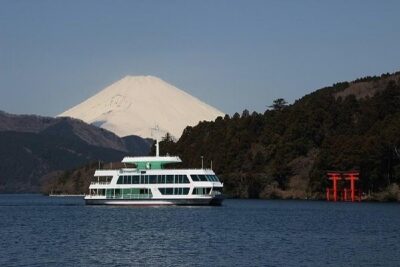
Mt Fuji & Hakone Cruise, Drum Show Bullet Train 1 Day from Tokyo
Read our review →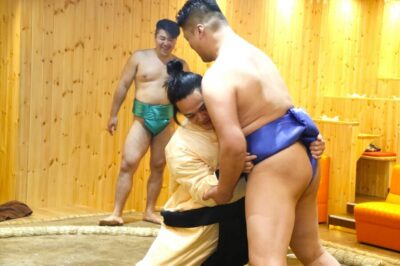
Sumo Show Experience with Chicken Hot Pot and a Photo
Read our review →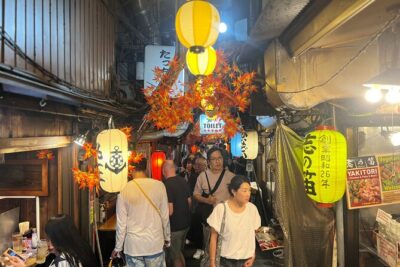
Shinjuku Food Tour (13 Dishes at 4 Local Eateries)
Read our review →
Tokyo Mt Fuji 5th St & Hakone Cruise Bus Tour w/Bullet Train
Read our review →