
Reviewed · TOKYO TOURS
Tokyo: Asakusa Sightseeing Tour by Rickshaw
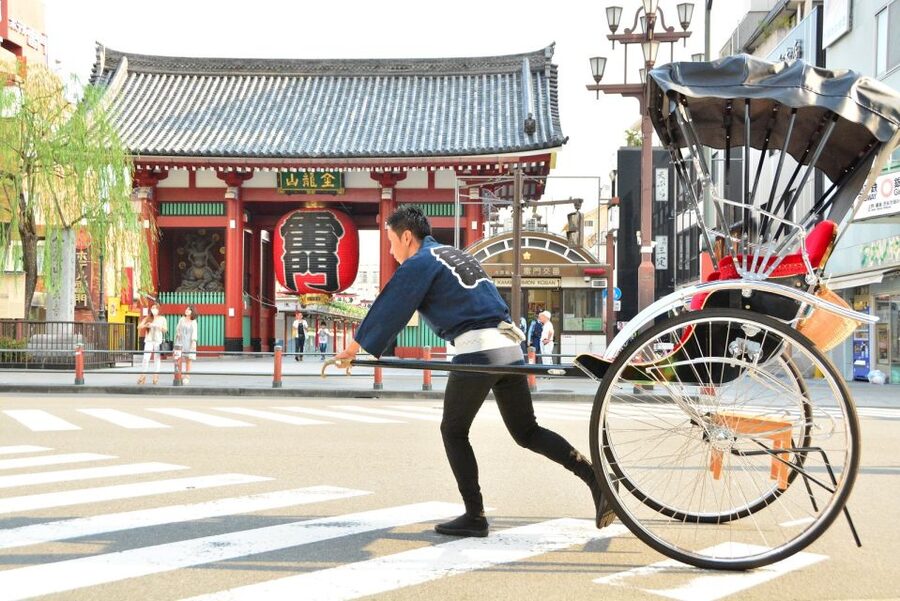
Asakusa is one of the few parts of Tokyo where a rickshaw ride feels like more than a novelty. You roll past temples, shrines, old shopping streets, gardens, and the Sumida River while your guide points out details you could easily miss on foot. The best part is the human contact: guides such as Masa, Kazu, Shima, and Taku bring stories, jokes, local tips, and plenty of energy.
I like the private format, which lets you ask questions and shape the route around your interests. I also like the photo stops, since guides regularly take pictures for you instead of leaving you to manage a camera from the seat. The main consideration is physical: the rickshaw is only 74 centimeters wide, and some people may prefer their own carriage rather than sharing.
Key points to know before you book
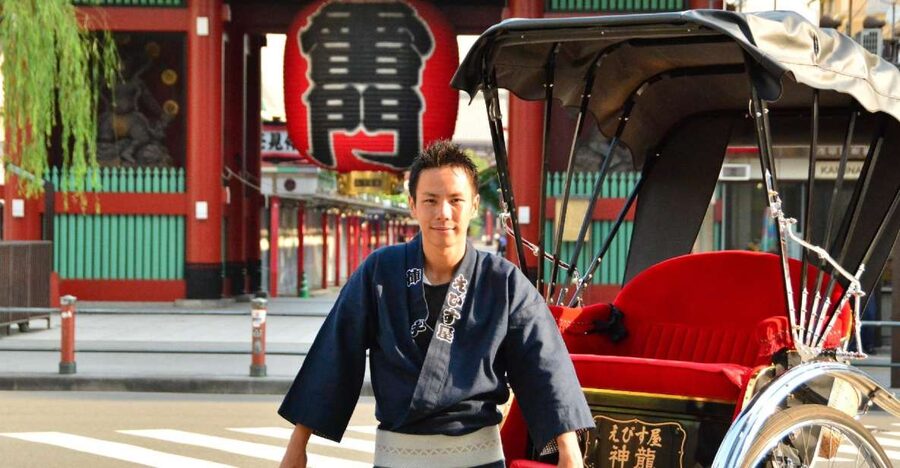
- See old Asakusa from a raised seat: The rickshaw gives you a clear view above street traffic and lets you cover more ground than walking.
- The guide makes the difference: English-speaking guides explain shrine rituals, temple customs, local streets, and everyday Tokyo life.
- Private rides can be customized: You can ask to focus on temples, gardens, anime-related spots, photography, or other interests.
- Choose your duration carefully: A 30-minute ride is a fun introduction, while 70 to 190 minutes gives you time for quieter streets and smaller religious sites.
- Spring adds cherry blossoms: Sumida Park is especially appealing when its many cherry trees are in bloom.
- Mind the seating rules: Children age 5 and under ride free on an adult’s lap, while children needing their own seat pay the adult price.
Why a rickshaw works so well in Asakusa
Asakusa is easy to visit on foot, but it is also spread across a mix of temple grounds, shopping lanes, riverfront paths, residential streets, and old entertainment districts. A rickshaw connects these pieces without the stop-and-start feel of a walking tour.
You sit back while the driver pulls the carriage through the neighborhood. That gives you a different view of Tokyo. You are close enough to notice shop signs and small shrines, yet high enough to see over pedestrians. The pace is slow enough for conversation and quick enough to make a short tour useful.
I would not book this as a substitute for spending time inside Sensoji or Asakusa Shrine. Instead, use it to get your bearings, learn what you are seeing, and reach corners that you might not otherwise find. The ride works particularly well on your first day in Tokyo, or during a short layover when you want an introduction without committing to a long walking route.
The guides are a major part of the experience. Many speak English well, and several have been praised for combining cultural explanation with humor. Shima is described as both a skilled driver and a lively guide, while Masa is especially good at taking photographs and keeping the tour personal. Some guides adjust their style for children, even singing pop songs or making anime references to keep younger passengers interested.
A few more Tokyo half-days to weigh up
- Mt Fuji and Hakone 1-Day Bus Tour Return by Bullet Train
★ 5.0 · 26,383 reviews - 1-Day Tokyo Bus Tour
★ 5.0 · 14,250 reviews - Tokyo: TOKYO SKYTREE® Admission ticket
★ 4.5 · 11,192 reviews
From Asakusa Station to the temple district
The meeting point is the rickshaw stand just outside Exit 1 of Asakusa Station on the Tokyo Metro Ginza Line. This detail matters because Asakusa has several stations with the same name on different subway lines, and the exits are not close together.
You still need to walk a few meters from the map pin to the stand. Give yourself extra time, especially if you are carrying luggage or meeting a larger family group. One group reached the wrong exit and needed help finding the correct place, so check the station line and exit before you set out.
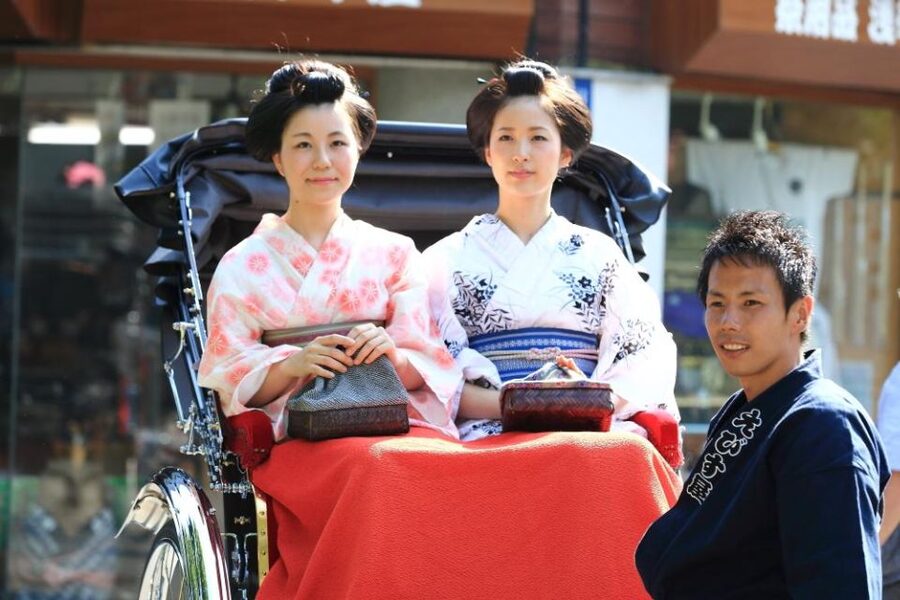
Once seated, your guide takes you into the Asakusa district. The ride is private, with a maximum of two adults per rickshaw. Two adults can share comfortably if you do not mind sitting close. Since the carriage is narrow, individual rickshaws may be more comfortable for each passenger, especially if you want room for a child or simply prefer space.
The carriage is wheelchair and stroller friendly. The activity is not recommended during the first 16 weeks of pregnancy, and pregnancy is listed as a reason not to take the tour. Selfie sticks are not allowed, which makes sense in narrow streets where drivers need to keep a clear view.
Asakusa Shrine and the city’s oldest temple
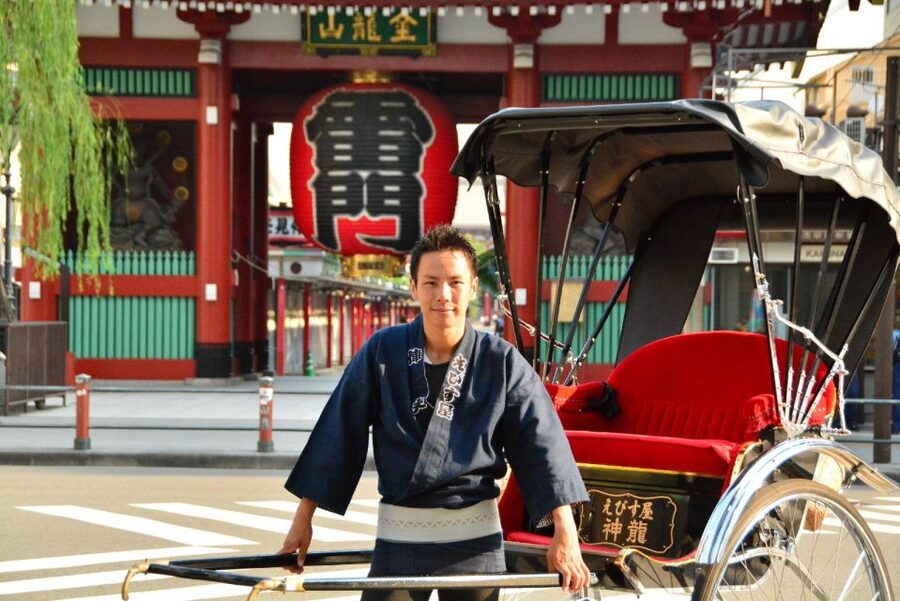
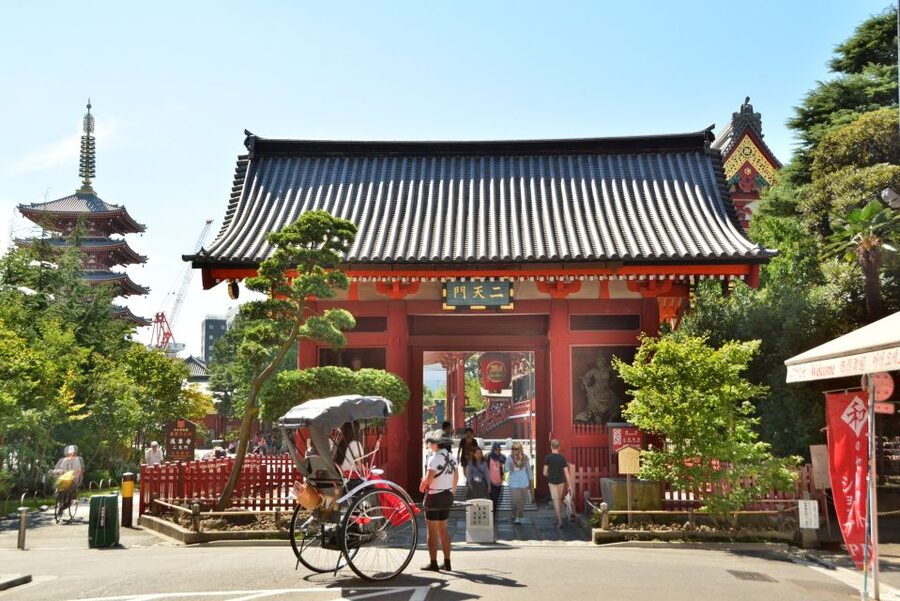
The temple and shrine area is the heart of the ride. Here you see Asakusa Shrine beside the city’s oldest temple, a useful pairing because it shows how Buddhist and Shinto traditions sit side by side in Japan.
Your guide can explain the proper sequence at a religious site. That may include washing your hands and mouth, handling the water container, and using incense. The incense is not simply decoration. You may be shown how people draw the smoke toward their bodies, a familiar ritual that makes more sense once someone explains its purpose.
This is one of the strongest parts of the tour. A quick visit on your own can leave you wondering what everyone is doing and which steps matter. The guide gives you enough context to observe respectfully without turning the stop into a lecture.
Bentendo Hall and smaller temples can add a quieter note to the route. The exact path can vary, since the activity can be customized, but the longer options allow more time for smaller religious sites away from the main crowds. One popular choice is a modest Buddhist shrine where the atmosphere is calmer than around Sensoji.
You should still expect the main temple district to be busy at times. The rickshaw does not make the crowds disappear. It simply helps you move through the area while someone familiar with the streets handles the navigation.
Hanakawado, shoe shops, and Sumida Park
The route can continue toward Hanakawado, known for shoe shopping. This is a practical stop if you want to see a part of Asakusa tied to everyday local commerce rather than only major sights.
The ride then reaches Sumida Park, one of the most attractive sections of the outing. The park follows the Sumida River and offers a break from the tighter streets. Trees and gardens give the ride a more open feel, and the river adds a useful change of scenery.
Spring is the special season here, when thousands of cherry trees bloom. Early-blooming trees have also been spotted outside the main spring period, but you should not book a particular date expecting blossoms. The park is worthwhile at other times too, especially if you want greenery and river views after the temple lanes.
Summer can be hot and humid. The moving air is pleasant once the carriage gets underway, but the driver is doing the hard work, not you. Guides have kept passengers comfortable with blankets and heated seats during cold-weather rides, while warm weather calls for water and sun protection.
Snacks and drinks are not included, so plan to eat before or after the ride. Asakusa is a good place to make that a separate part of your day, but you should not expect refreshments from the rickshaw operator.
Same base, a completely different sort of day:
- Tokyo: teamLab Planets TOKYO Digital Art Museum Entry Ticket
★ 4.6 · 9,779 reviews - Mt Fuji & Hakone Cruise, Drum Show Bullet Train 1 Day from Tokyo
★ 4.0 · 7,413 reviews - Tokyo: Sumo Show Experience with Chicken Hot Pot and a Photo
★ 4.8 · 6,678 reviews - Tokyo: Shinjuku Food Tour (13 Dishes at 4 Local Eateries)
★ 5.0 · 6,603 reviews
Tanuki-doori and the old Rokku Ward
The tour becomes more unusual as it reaches Tanuki-doori and the historic Rokku district. This is where Asakusa’s old entertainment side comes into view.
Rokku includes adult theaters, so this section may not suit every family or every visitor. The district is part of Asakusa’s past and present, but the subject matter is more suggestive than the temple stops. If you are traveling with children, ask your guide about adjusting the route.
Tanuki-doori adds a quirky street-level contrast. Instead of grand gates and sacred grounds, you see a neighborhood with its own personality. This is the kind of stretch that makes the rickshaw useful: you can pass through and learn what you are looking at without needing to research every side street beforehand.
Hanayashiki, Japan’s oldest amusement park, is another memorable landmark along the way. The ride usually provides a chance to take souvenir photographs rather than an admission visit. That distinction matters. You are seeing the park from outside and adding it to a photo record of Asakusa, not taking a separate amusement-park tour.
Guides often take pictures with your own phone or camera. This small service makes a real difference for couples, families, and solo visitors. You can enjoy the ride without constantly asking strangers to take a picture.
Denpoin Street and Nishi Shitamachi
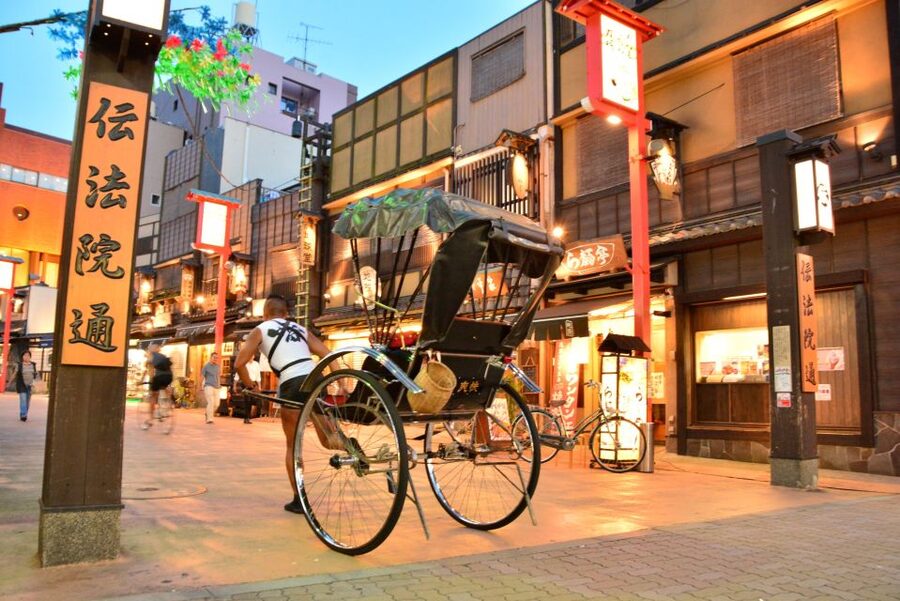
Denpoin Street offers one of the clearest links to older Asakusa. Much of the street has changed little since World War II, giving it a different feel from Tokyo’s modern shopping and office districts.
The rickshaw moves slowly enough for you to look at the shopfronts and street details. A walking visit lets you stop longer, but the carriage gives you a guided view and saves your legs. The guide can point out what is old, what is connected with local life, and what deserves a closer look later.
Nishi Shitamachi adds more of the traditional low-rise neighborhood character associated with eastern Tokyo. The ride is not only about famous buildings. It is also about the spaces between them, including lanes, trees, small religious sites, and ordinary streets.
The longer you book, the more these quieter sections make sense. A 30-minute ride will likely feel like an introduction around the central sights. The 70-minute option gives you a useful middle ground. The 90-minute and two-hour choices leave more room for side streets, smaller temples, photo stops, and conversation.
The longest option lasts up to 190 minutes. That is a serious commitment for a vehicle powered by the driver, but it suits visitors who want a broad Asakusa tour and time to request a special route. For most people, 70 to 120 minutes should provide a good balance between coverage and comfort.
What the guides add to the ride
A rickshaw driver needs strength, street awareness, and people skills. The carriage passes through streets with cars and pedestrians, and the driver must keep the ride smooth while talking and watching the road.
That combination is why the guide matters more than the vehicle itself. Kazu, Koko, Yusuke, Nene, Yukie, Hitomi, and others have been praised for clear explanations, humor, and care with photographs. You may get a guide who focuses more on history and rituals, or one who leans into jokes, music, and family conversation.
English ability can vary. Most of the supplied experiences describe smooth communication, but one rating specifically asked for stronger English and more explanation of Asakusa’s past. If detailed English commentary is essential to you, mention that when booking or ask what language support is available.
The route can also be tailored. You might request more temples, gardens, anime-related locations, shopping streets, or photo opportunities. Do not assume every named place will fit into the shortest ride. Tell the guide what matters most before departure.
Is $35 a good value?
At a starting price of $35 per person, this is reasonably priced for a private experience in central Tokyo, though the value depends heavily on the duration you select. A short ride is best seen as a fun orientation and photo experience. A longer ride gives you more sightseeing, explanation, and customization.
You are paying for three things at once: transport through Asakusa, a local guide, and a private group setting. The ride also saves time when you want to cover several areas without walking between each one.
The cost is less compelling if you only want a quick look at Sensoji. You can reach the temple district independently and spend nothing on a carriage. It becomes better value if you want a guide to explain rituals, find less obvious streets, take photos, and connect the temples with Hanayashiki, Sumida Park, Rokku, and Denpoin Street.
The three-hour option includes a choice of a commemorative Hello Kitty doll or an original T-shirt. That gift should not be the reason to book the longest ride, but it is a pleasant extra if you already want a full Asakusa tour.
Comfort, families, and timing
Children age 6 and over pay the adult price. Children age 5 and under can ride free on an adult’s lap, with one child per adult. If a 5-year-old needs their own seat, that child must be booked at the full adult fare.
The two-adult limit per rickshaw is straightforward, but family groups may need several carriages. The narrow 74-centimeter width can also affect comfort. If you are tall, carrying bulky bags, or simply want a relaxed seat, consider booking separate rickshaws.
The tour is listed as wheelchair and stroller friendly. Still, confirm your exact needs at booking, since the carriage width and boarding arrangement may matter for particular equipment.
Cold weather can be manageable because blankets and heated seats have been provided. Rain and even snow have not necessarily stopped the ride, but conditions will affect comfort. In summer, the breeze helps, though the heat can still be tiring. The activity is not recommended for pregnant women, particularly during the first 16 weeks.
Free cancellation is available up to 24 hours before the start, and you can reserve now and pay later. Those terms help if your Tokyo schedule is still shifting, but the key choice remains the length of the ride.
Should you book the Asakusa rickshaw ride?
I would book it if you want a friendly introduction to Asakusa, enjoy local stories, or need a fun way to see several districts in one outing. It is especially good for first-time visitors, families, couples, solo visitors who want photos, and anyone with limited time.
Choose the 30-minute option only if you want a taste of the experience. I would favor 70 to 120 minutes for most trips. That gives you time for the temple district, river or park scenery, old streets, and a few stops without making the ride feel too long.
Skip it if you prefer to explore every temple at your own pace, dislike being seated in a narrow carriage, or want a fully self-guided day. Also think twice if the Rokku area would be uncomfortable for your group, and remember that drinks and snacks are not included.
For many visitors, this is one of the most enjoyable ways to begin an Asakusa visit. You get the major sights, but also the smaller details, local customs, odd corners, and personal recommendations that make the district more than a temple stop.
FAQ
Where does the rickshaw tour meet?
It meets at the rickshaw stand just outside Exit 1 of Asakusa Station on the Tokyo Metro Ginza Line. You need to walk a few meters from the map location to the stand.
Are there multiple Asakusa stations?
Yes. Asakusa has stations with the same name on different subway lines. Make sure you go to the Tokyo Metro Ginza Line station and use Exit 1.
How long is the tour?
Available durations range from 30 to 190 minutes. Starting times depend on availability.
Is the rickshaw private?
Yes. The tour is offered as a private group experience. A maximum of two adults may ride in one rickshaw.
Can children ride for free?
Children age 5 and under can ride free while sitting on an adult’s lap, with one child per adult. A child age 5 who needs their own seat must pay the adult fare.
Is the rickshaw wheelchair and stroller friendly?
Yes, the activity is listed as wheelchair and stroller friendly. Each rickshaw is 74 centimeters wide, so check whether your equipment and seating needs will fit comfortably.
Is the tour available in English?
Yes. Live guides are available in English and Japanese. English ability and the amount of explanation may vary by guide.
Can I cancel the booking?
You can cancel up to 24 hours before the activity for a full refund. The reserve-now, pay-later option is also available.
Just added around Tokyo
- Private Arrival Transfer : Narita International Airport to Central Tokyo City★ 4.5 · 12 reviews
- Narita Airport(NRT): Private Transfer to Tokyo/Yokohama 1-9pax★ 5.0 · 47 reviews
- Private Transfer from Narita Airport to Yokohama Port and City★ 4.5 · 17 reviews
- [Narita Airport Terminals 1, 2] 40-60km Sawara Itako Historic Bike Tour★ 5.0 · 13 reviews
- 3 Day Japan Highlights Tour: Tokyo, Mt.Fuji, Nara, Kyoto, Osaka★ 5.0 · 22 reviews
- Small Town in the Big City: Tasting Tokyo’s Kichijoji★ 5.0 · 195 reviews
- Small Town in the Big City: Tasting Tokyo’s Kichijoji★ 5.0 · 16 reviews
- The 10 Tastings of Tokyo With Locals: Private Street Food Tour★ 5.0 · 48 reviews
Tokyo Tours, compared.

Mt Fuji and Hakone 1-Day Bus Tour Return by Bullet Train
Read our review →

teamLab Planets TOKYO Digital Art Museum Entry Ticket
Read our review →
Mt Fuji & Hakone Cruise, Drum Show Bullet Train 1 Day from Tokyo
Read our review →
Sumo Show Experience with Chicken Hot Pot and a Photo
Read our review →
Shinjuku Food Tour (13 Dishes at 4 Local Eateries)
Read our review →
Tokyo Mt Fuji 5th St & Hakone Cruise Bus Tour w/Bullet Train
Read our review →