
Reviewed · TOKYO TOURS
Tokyo: Calligraphy on Kanji Fan & Scroll with Drink
Japanese calligraphy becomes much more memorable when you leave with something you made yourself. At Shodo Cafe 7557, near the National Art Center Tokyo, you learn basic brush strokes, choose a meaningful kanji character or translated name, and put it on a traditional fan and hanging scroll. The personal artwork is the heart of the experience.
I like the calm pace and the patient, hands-on teaching from instructors including Kana, Kanako, and Tomi. I also like the generous souvenir bundle, which includes your handmade pieces, a hiragana hanko stamp, tote bag, keychain, coaster, and pouch. The only real consideration is timing: although the experience is advertised at 80 minutes, the actual session can run from 60 minutes to two hours, so leave some room in your schedule.
Key points to know before you book
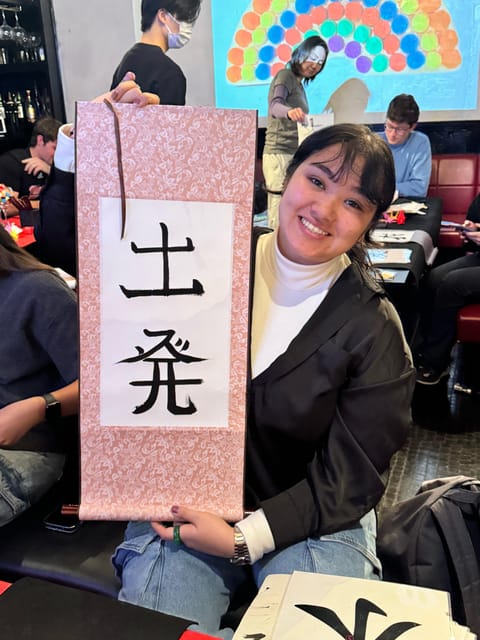
- Make two useful keepsakes: Paint your chosen kanji on a traditional uchiwa fan and a kakejiku hanging scroll.
- Your name gets special treatment: Send participant names in English ahead of time for a prepared kanji meaning sheet and animated name video.
- A drink is included: Choose matcha latte, green tea, coffee, soda, or beer during the lesson.
- The teaching is beginner-friendly: English-speaking instructors patiently demonstrate stroke order and guide repeated practice.
- The location is easy to reach: Shodo Cafe 7557 is about three minutes from Roppongi Station Exit 7, on the second floor of Crest Roppongi Building.
- You take home a full souvenir set: The package includes a personalized hanko, kanji goods, and your original calligraphy.
A quiet art lesson in the middle of Roppongi
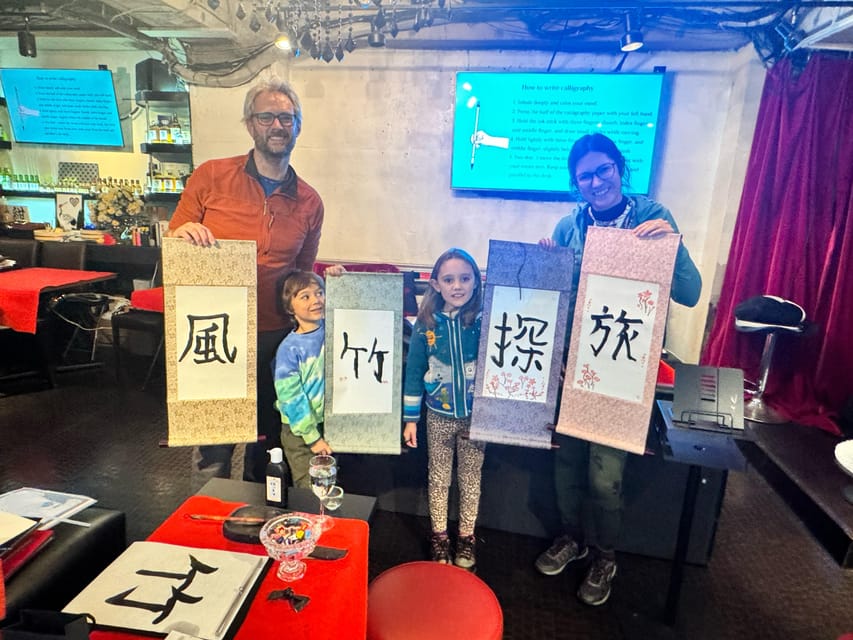
Roppongi is known for museums, restaurants, and late-night energy. This activity gives you a different side of the district: a seated cultural lesson where the main sound is the brush moving across paper.
The studio is only a short walk from Roppongi Station, but finding the building still requires attention. From Toei Oedo Line Exit 7, cross toward Family Mart and walk right toward the National Art Center Tokyo along Bijutsukan Dori. Look for the large crane sign on the left, then go to the second floor of the Crest Roppongi Building.
That clear landmark matters. Roppongi has plenty of large buildings and side streets, so I would save the map location before leaving your hotel. Searching for Shodocafe7557 on Google Maps is also recommended.
Once inside, you can settle in with a drink before handling the brushes. The activity is not simply a quick demonstration followed by a souvenir purchase. You get instruction, practice paper, calligraphy tools, and time to improve before making the final pieces.
A few more Tokyo half-days to weigh up
- Mt Fuji and Hakone 1-Day Bus Tour Return by Bullet Train
★ 5.0 · 26,383 reviews - 1-Day Tokyo Bus Tour
★ 5.0 · 14,250 reviews - Tokyo: TOKYO SKYTREE® Admission ticket
★ 4.5 · 11,192 reviews
What you learn before touching the final fan
The lesson starts with the basics of shodō, the Japanese art of calligraphy. Your instructor explains the purpose of the brushes, ink, and calligraphy board, then shows how the brush is held and moved.
This matters because Japanese characters are built through a set order of strokes. A line is not just a line. The pressure, direction, speed, and finish all affect the look of the character. You do not need to know Japanese, but you do need to pay attention to the sequence.
Expect to practice several times before working on the final artwork. That practice is one of the strongest parts of the session. You can get a feel for how much ink to use, how to keep the brush steady, and how to create thick and thin marks.
The instructors are described as patient and encouraging, which is useful here. Calligraphy can feel awkward at first, especially if you are used to writing with a ballpoint pen. The goal is not perfect penmanship on your first try. It is to understand the basic movement and then produce something personal.
The English instruction also helps you connect the visual character with its meaning. You can write a favorite kanji or have your name translated into a suitable Japanese form. If you provide all participant names in English when booking, the studio can prepare information about the names and their meanings, along with an animated video. This may be shown during the lesson or sent afterward.
Choosing a kanji character with meaning
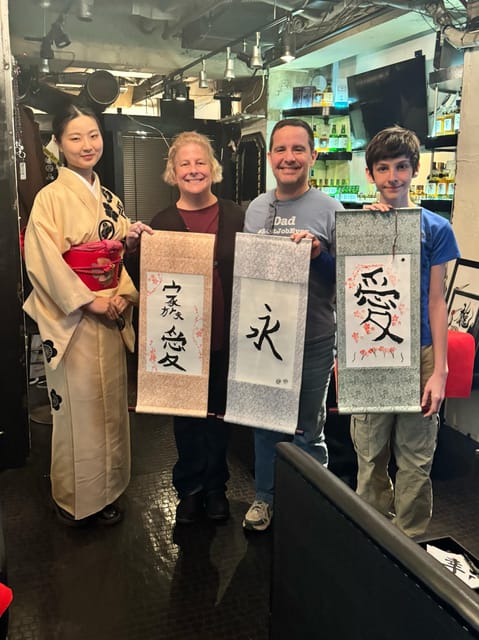
If you already have a favorite kanji, you can ask to work with it. If you do not, the instructors can help with a translated name or another word that fits your interests.
This is a good chance to think beyond appearance. A character may look beautiful, but its meaning is what gives the finished fan or scroll personal value. You might choose an idea connected with family, courage, peace, happiness, strength, or another quality that matters to you. The exact available choices and translation process are not specified in advance, so send a preferred word or name ahead of time if you have one.
One practical tip is to use the booking follow-up wisely. The studio may ask for the other participant’s name or for a different word to prepare. If you want something other than your first name, say so clearly.
The name preparation is a thoughtful touch, but it is also worth checking the spelling of every participant’s name before sending it. A personalized item is more useful when the source information is correct.
Painting the uchiwa fan and kakejiku scroll
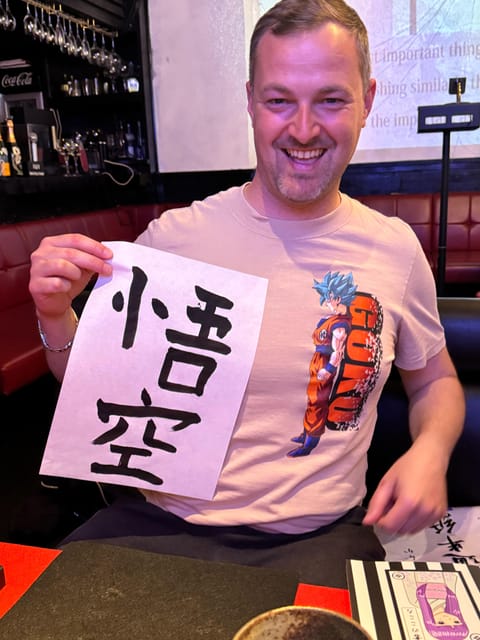
The main creative section gives you two formats for your calligraphy. The first is an uchiwa, a traditional Japanese paper fan. Its shape makes it an especially appealing souvenir because it is both decorative and recognizable as a Japanese craft item.
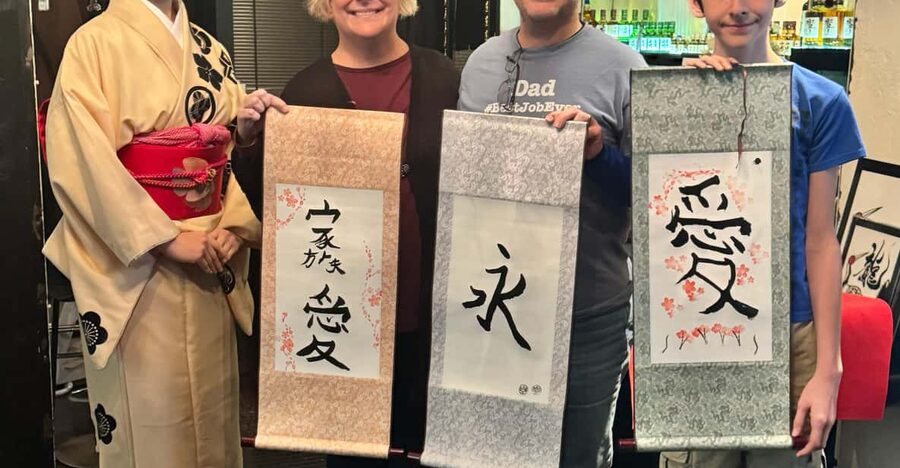
The second is a kakejiku, or hanging scroll. This gives your character a more formal presentation and works well as a wall decoration. You create the calligraphy yourself rather than receiving a generic printed item.
The order is sensible. You practice on paper, receive corrections, and then transfer the chosen character to the final surface. This reduces the pressure of having only one chance, although you should still accept that handmade art has small imperfections. That is part of its appeal.
I would not book this expecting a polished piece that looks like professional temple calligraphy. You are learning a traditional art in a short session. The finished work will reflect your skill on the day. The instructors’ guidance helps, but the result remains your own.
The activity also includes a calligraphy board and folding fan, or a hanging scroll, in the included materials. The description presents both the fan and scroll as part of the workshop, so confirm the exact setup when you arrive if the booking wording gives you a choice.
Same base, a completely different sort of day:
- Tokyo: teamLab Planets TOKYO Digital Art Museum Entry Ticket
★ 4.6 · 9,779 reviews - Mt Fuji & Hakone Cruise, Drum Show Bullet Train 1 Day from Tokyo
★ 4.0 · 7,413 reviews - Tokyo: Sumo Show Experience with Chicken Hot Pot and a Photo
★ 4.8 · 6,678 reviews - Tokyo: Shinjuku Food Tour (13 Dishes at 4 Local Eateries)
★ 5.0 · 6,603 reviews
Designing a personal hanko stamp
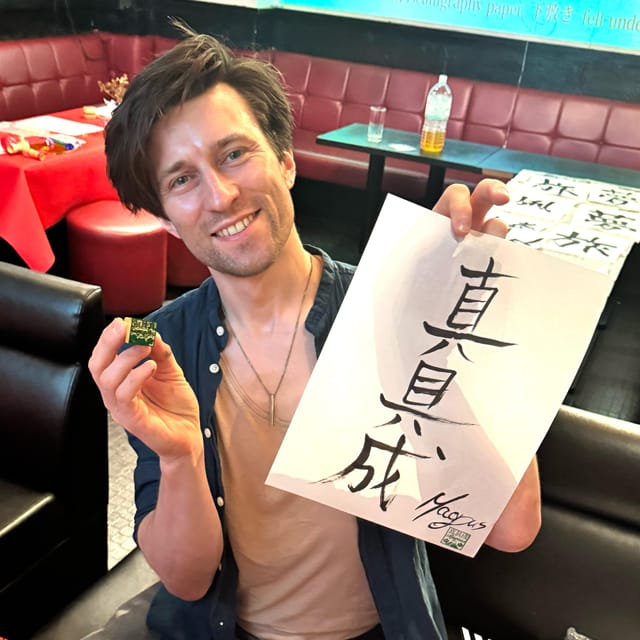
The personalized hanko stamp adds a second kind of Japanese writing tradition to the lesson. Hanko are name seals used in Japan, and here you receive one with your name in hiragana.
This is not the same as making a large calligraphy character. The stamp is a compact souvenir, and its connection to your name makes it more personal than a standard keychain or coaster.
The included stamp also gives you another way to display your name after the workshop. You can use it with your artwork or keep it as a small memento. Since the activity is designed for beginners, the important part is the guidance and the finished keepsake, not prior experience with carving or seal-making.
The drink break adds to the calm mood
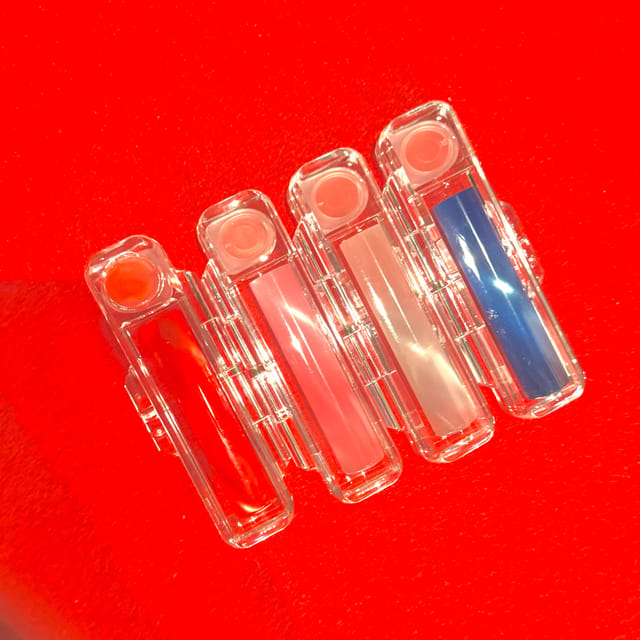
Your booking includes one drink: matcha latte, green tea, coffee, soda, or beer. The matcha latte fits the setting best, but the choice makes the activity easier for people who do not care for green tea.
The drink is not the main event, and I would not book this as a café stop with a short craft add-on. Its value is that it gives you a relaxed pause while you learn. Calligraphy is easier to enjoy when you are not rushing from one instruction to the next.
Food and additional drinks are not included. Keep that in mind if you are planning the session around lunch or dinner. The workshop lasts about 80 minutes in its standard description, but the actual length can vary from one to two hours, so do not schedule a tight restaurant reservation immediately afterward.
Beer is listed as an option, but this is still a hands-on art lesson. If you choose it, use the same care with the brush and ink that you would use with any other drink.
The souvenir bundle is a major part of the value
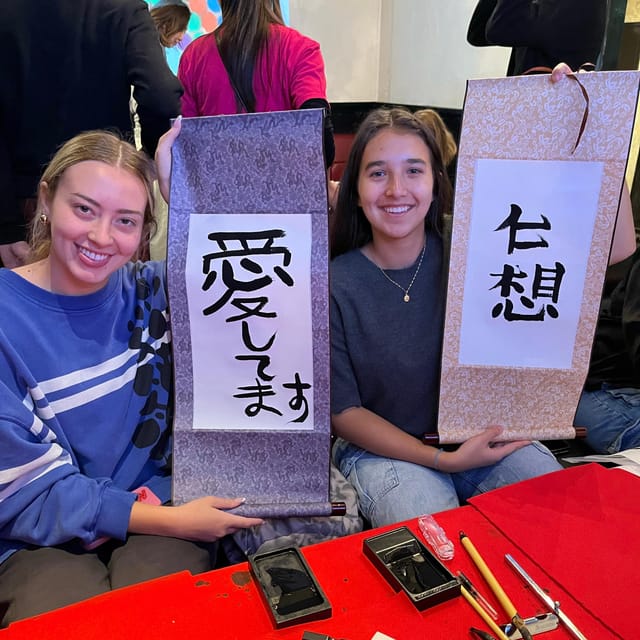
At $53 per person, the activity costs more than a simple museum entry or a casual craft class. The price makes more sense when you count what is included and consider the instruction.
You receive:
- A calligraphy lesson and use of the tools
- A calligraphy board
- A traditional folding fan and hanging scroll
- A hiragana hanko stamp with your name
- A kanji tote bag
- A kanji keychain
- A kanji coaster
- A kanji pouch
- One included drink
- Your original calligraphy artwork
The exact duplicate listing of the kanji keychain in the supplied details does not mean you should expect two separate keychains. Plan on one unless the studio confirms otherwise.
The tote bag, pouch, coaster, and keychain are ready-made items, while the fan, scroll, and hanko give you a stronger personal connection to the lesson. In practical terms, you leave with several gifts for yourself or family, but the real value comes from the time spent learning how the writing works.
If you are trying to keep souvenir costs down, the bundle may be more than you need. If you want one meaningful activity in Tokyo and prefer a keepsake over another purchased trinket, the package is a fair deal.
Who will enjoy this 80-minute workshop
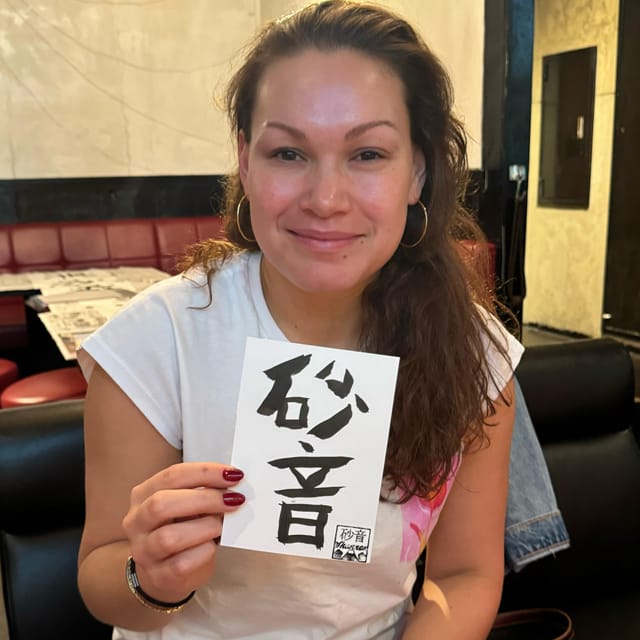
This is a good fit for first-time visitors who want more than sightseeing photos. You do not need to read Japanese or have artistic training. The lesson is designed for beginners, and the teaching is in English.
It also works well for families and mixed-age groups. The activity welcomes all ages and skill levels, although it is not suitable for people over 95 according to the booking information. The wheelchair accessibility note is useful for visitors who need that option, though you should still confirm any personal access requirements before booking.
Children may appreciate the fan, colorful goods, and name stamp. Adults may enjoy the slow, focused practice. Kanji enthusiasts will get more from the meaning and stroke-order explanations, especially if they arrive with a particular character in mind.
Couples, parents and children, and friends can each make different characters and compare the results. The experience is also suitable for a rainy day or a holiday when many other businesses are closed. One session took place on New Year’s Day, when the workshop provided a dependable cultural activity.
Who may want a different Tokyo activity
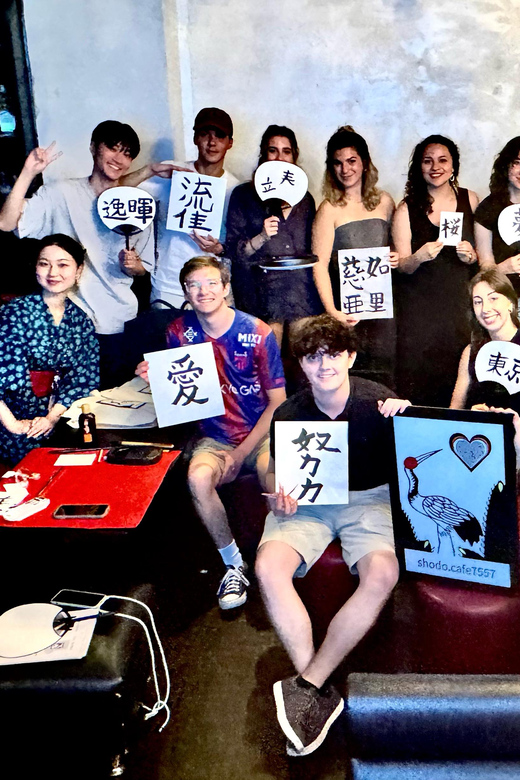
This is not the best choice if you want a fast, highly polished attraction with little participation. You will spend time practicing, and your first attempts may look uneven. That is normal, but it can frustrate anyone who wants an instant perfect souvenir.
You should also allow flexibility around the advertised duration. The standard time is 80 minutes, but the activity can last anywhere from 60 minutes to two hours. The instructors may give extra guidance or allow more practice, so this is a benefit for some people and a scheduling issue for others.
The experience is based in a studio near Roppongi Station, not in a historic temple or traditional village. You get cultural instruction and handmade artwork, but not a tour of old Tokyo architecture. Pair it with the National Art Center Tokyo or another Roppongi stop if you want a fuller day in the district.
Getting there without losing time
Use the Toei Oedo Line and get off at Roppongi Station. Exit 7 is the recommended exit.
After leaving the station, cross the pedestrian crossing toward Family Mart. Keep right and walk toward the National Art Center Tokyo along the museum street, Bijutsukan Dori. The large crane sign should be on your left. Shodo Cafe 7557 is on the second floor of the Crest Roppongi Building at 7-9-3 Roppongi, Minato-ku, Tokyo.
For a taxi, show the driver the destination as Shodocafe7557 in the Crest Roppongi Building near the National Art Center Tokyo. I would arrive with the address and map pin ready, since the studio is inside a larger building rather than presented as a major street-front attraction.
The meeting point is the studio itself. Hotel pickup and drop-off are not included.
Booking details that affect your plans
The experience has English instruction, and you can reserve now while paying later, which helps if your Tokyo schedule is still shifting. Free cancellation is available up to 24 hours in advance for a full refund.
Give the names of all participants in English when booking. This is not just an administrative request. The studio uses the names to prepare the special kanji meaning material and animated video.
Check the available start times before you commit, since the workshop does not list one fixed daily schedule. Also protect your arrival time. Being three minutes from a station does not mean the building will be instantly obvious on your first visit.
The activity has a rating of 5 from 210 reviews in the supplied information, with repeated praise for the patience of Kana, Kanako, Tomi, and the other instructors. The strongest pattern is clear: the teaching style is calm, personal, and generous with practice time. That matters more here than a fancy room or a long lecture.
Should you book Shodo Cafe 7557?
Book it if you want to slow down, learn a small but meaningful part of Japanese culture, and take home artwork that carries your name or chosen character. The included drink, English instruction, personalized hanko, and large souvenir bundle make $53 reasonable for a hands-on activity rather than a short demonstration.
I would especially recommend it for families, first-time visitors, couples, and anyone looking for an indoor activity near Roppongi’s museums. Send your names in advance, bring a preferred word if you have one, and allow up to two hours even though the listed duration is 80 minutes.
Skip it if your schedule is packed or if you dislike making imperfect handmade items. For everyone else, this is a practical, personal way to remember Tokyo, with a fan, scroll, and stamp that tell a better story than a standard shop purchase.
FAQ
Where does the calligraphy activity take place?
It takes place at Shodo Cafe 7557, also called Shodocafe7557, in the Crest Roppongi Building, 2F, at 7-9-3 Roppongi, Minato-ku, Tokyo.
How do I get to Shodo Cafe 7557 by train?
Take the Toei Oedo Line to Roppongi Station and use Exit 7. Cross toward Family Mart, turn right, and walk toward the National Art Center Tokyo along Bijutsukan Dori. Look for the large crane sign on the left and enter the Crest Roppongi Building.
How long does the workshop last?
The listed duration is 80 minutes. The activity information also says it can last between 60 minutes and two hours, so leave extra time in your schedule.
Is the lesson taught in English?
Yes. Instruction and guidance are provided in English.
What drink is included?
You can choose one included drink from matcha latte, green tea, coffee, soda, or beer. Additional drinks and food are not included.
What artwork will I make?
You will learn basic brush strokes and create calligraphy on a traditional uchiwa folding fan and a kakejiku hanging scroll. The activity also includes calligraphy tools and a calligraphy board.
What souvenirs are included?
The package includes a hiragana hanko stamp with your name, kanji tote bag, keychain, coaster, pouch, and your original calligraphy artwork.
Should I provide participant names when booking?
Yes. Provide all participant names in English. The studio can use them to prepare a special souvenir with the names in kanji, including an animated video and information about their meanings.
Just added around Tokyo
- Private Arrival Transfer : Narita International Airport to Central Tokyo City★ 4.5 · 12 reviews
- Narita Airport(NRT): Private Transfer to Tokyo/Yokohama 1-9pax★ 5.0 · 47 reviews
- Private Transfer from Narita Airport to Yokohama Port and City★ 4.5 · 17 reviews
- [Narita Airport Terminals 1, 2] 40-60km Sawara Itako Historic Bike Tour★ 5.0 · 13 reviews
- 3 Day Japan Highlights Tour: Tokyo, Mt.Fuji, Nara, Kyoto, Osaka★ 5.0 · 22 reviews
- The 10 Tastings of Tokyo With Locals: Private Street Food Tour★ 5.0 · 48 reviews
- Small Town in the Big City: Tasting Tokyo’s Kichijoji★ 5.0 · 195 reviews
- Small Town in the Big City: Tasting Tokyo’s Kichijoji★ 5.0 · 16 reviews
Tokyo Tours, compared.

Mt Fuji and Hakone 1-Day Bus Tour Return by Bullet Train
Read our review →

teamLab Planets TOKYO Digital Art Museum Entry Ticket
Read our review →
Mt Fuji & Hakone Cruise, Drum Show Bullet Train 1 Day from Tokyo
Read our review →
Sumo Show Experience with Chicken Hot Pot and a Photo
Read our review →
Shinjuku Food Tour (13 Dishes at 4 Local Eateries)
Read our review →
Tokyo Mt Fuji 5th St & Hakone Cruise Bus Tour w/Bullet Train
Read our review →