
Reviewed · TOKYO TOURS
Private Harajuku Omotesando Architecture Tour
Harajuku and Omotesando make an unusual architecture walk because the grandest buildings sit beside ordinary homes, narrow lanes, youth fashion, and busy shopping streets. I like the way this tour connects big-name buildings such as Prada, Dior, Louis Vuitton, and Sunny Hills with the quieter side streets that explain how people actually live here. I also like the private format, since guides can adjust the walk to your interests, as Fuki did for visitors who wanted to focus on certain buildings.
The main drawback is the walking time. Three hours and 30 minutes gives you a lot of ground to cover, but this is not a quick photo stop between shopping appointments. You need comfortable shoes, and anyone hoping to study every building in detail may find the route pleasantly full rather than leisurely.
Key points to know before booking
- Architecture with a fashion connection: See why major designers and architects chose Omotesando for flagship stores.
- A private, flexible walk: Your English-speaking guide can shape the route around your interests.
- A useful contrast: Compare Harajuku’s youthful shopping streets and back lanes with polished Omotesando and Ginza.
- More than famous storefronts: The route includes Meiji Shrine, Yoyogi Gymnasium, contemporary buildings, and residential side streets.
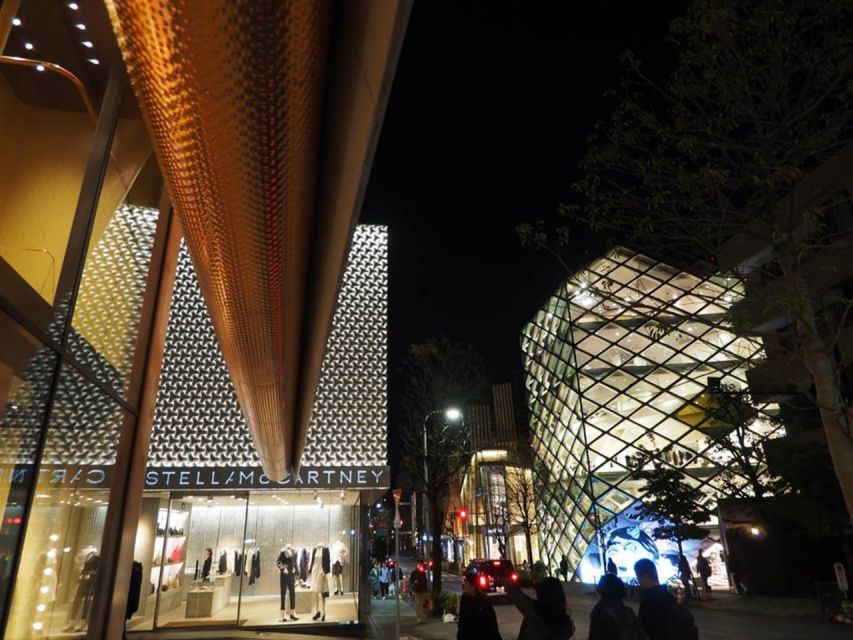
- Day or night appeal: Evening light gives buildings such as Prada and Dior a different look.
- A drink break is included: You can pause at a cafe during the walk, while meals and transport to the area are not included.
Why Harajuku and Omotesando work so well for an architecture tour
At first glance, Harajuku and Omotesando may seem to offer two separate Tokyo experiences. Harajuku is linked with youthful fashion, colorful shops, and the road leading to Meiji Shrine. Omotesando feels more polished, with wide sidewalks, luxury labels, and carefully designed storefronts.
Walk a little farther, though, and the two areas begin to make sense together. The contrast between old and new, private and commercial, quiet and crowded, is the point. This tour helps you read the neighborhood instead of simply passing through it on the way to a shop.
Omotesando attracts famous architects partly because a flagship store is more than a place to sell clothes. The building itself becomes part of the brand. A glass wall, a sharp geometric frame, or an unusual facade can draw attention from people who have no interest in entering the store.
That makes this experience useful even if you are not an architecture specialist. Your guide explains what you are looking at, who designed it, and why it matters. Several guides have professional backgrounds that suit the subject. Taka, for example, is a retired urban planner who graduated from MIT. Another guide previously worked in the industry, while Fuki is described as especially passionate about architecture.
A few more Tokyo half-days to weigh up
- Mt Fuji and Hakone 1-Day Bus Tour Return by Bullet Train
★ 5.0 · 26,383 reviews - 1-Day Tokyo Bus Tour
★ 5.0 · 14,250 reviews - Tokyo: TOKYO SKYTREE® Admission ticket
★ 4.5 · 11,192 reviews
Starting at Meiji Shrine’s wooden gate
The meeting point is Café Mori no Terrace, in the large open area in front of the big wooden entrance gate to Meiji Shrine. This detail matters because there is another cafe with a similar name inside the shrine grounds.
From JR Harajuku Station, leave through the Omotesando Exit and walk toward the forest. You do not go through a Shinto gate to reach the cafe from the station. That makes the meeting point fairly simple, but you should check the name and location before setting off so you do not wander into the shrine grounds looking for the wrong cafe.
Starting here gives the tour a useful sense of place. Meiji Shrine’s wooded setting feels far removed from the designer stores ahead. You begin with one of Tokyo’s important religious and civic spaces, then move toward buildings that use glass, concrete, steel, and bold commercial design to attract attention.
A short walk from the shrine also helps you see why Harajuku is not just a shopping district. The area shifts quickly from forest to transport hub, from broad streets to narrow lanes, and from traditional Japan to international fashion.
Yoyogi Gymnasium from a distance
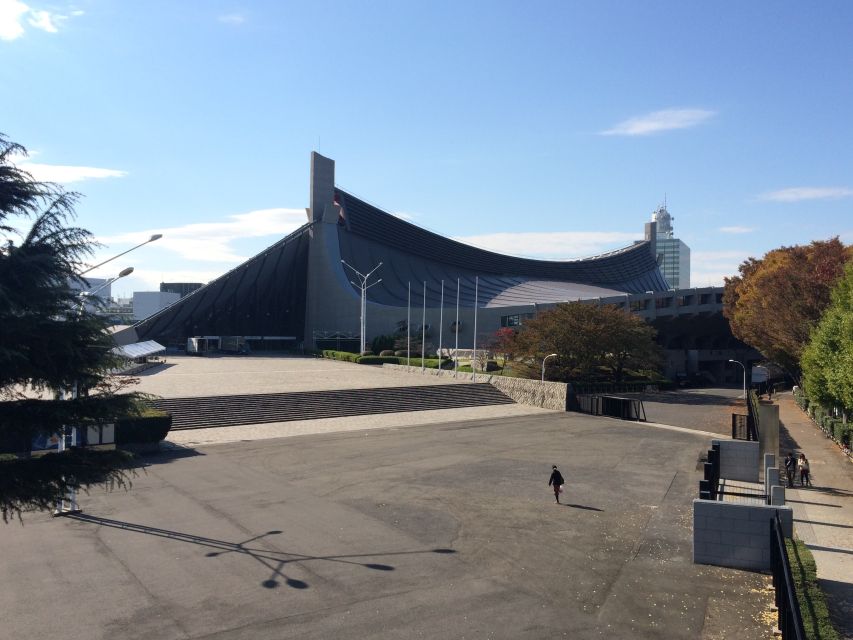
One of the early sights is Yoyogi Gymnasium, viewed from a distance. Even without entering the building, this is a worthwhile stop because the structure is one of Tokyo’s most impressive pieces of modern architecture.
The distant view also gives your guide room to explain the building in relation to its surroundings. You are not simply collecting storefront photographs. You are learning how a large public building fits into the city and why Tokyo’s postwar architecture remains important.
Do not expect an interior visit here. The information provided describes seeing Yoyogi Gymnasium from the distance, so the value lies in the explanation and the wider view rather than access inside. If you want detailed study time at every stop, tell your guide early. A private tour gives you a better chance of adjusting the pace, but 210 minutes still imposes a limit.
Omotesando’s designer buildings
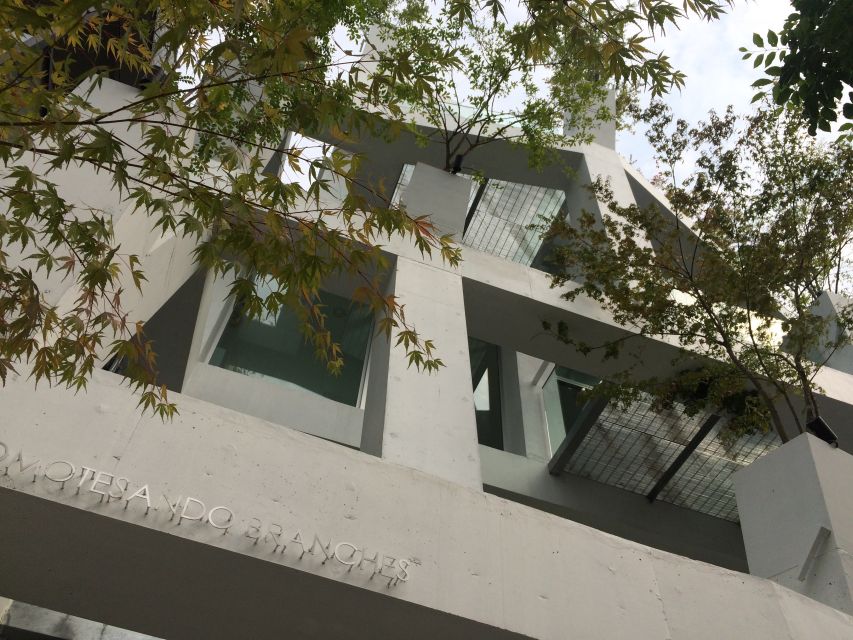
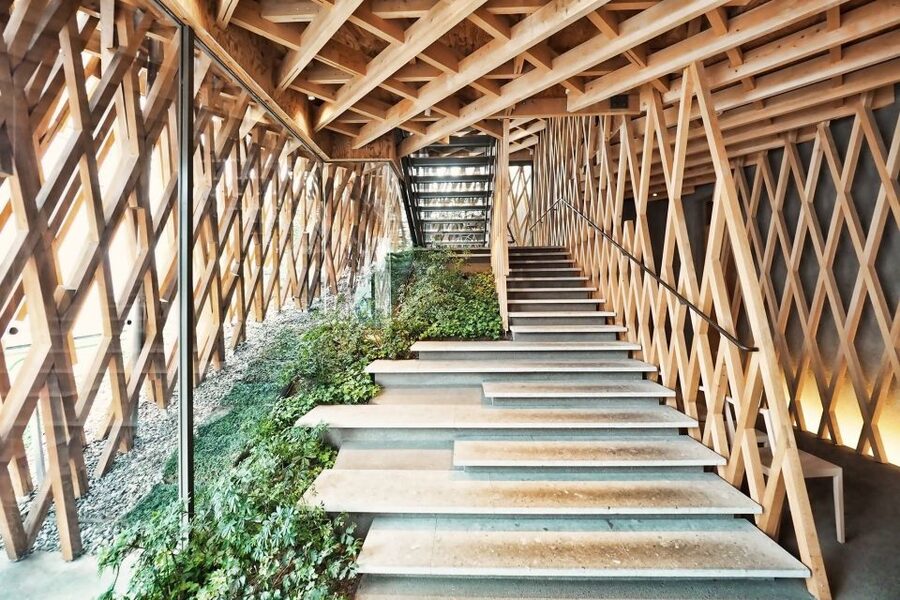
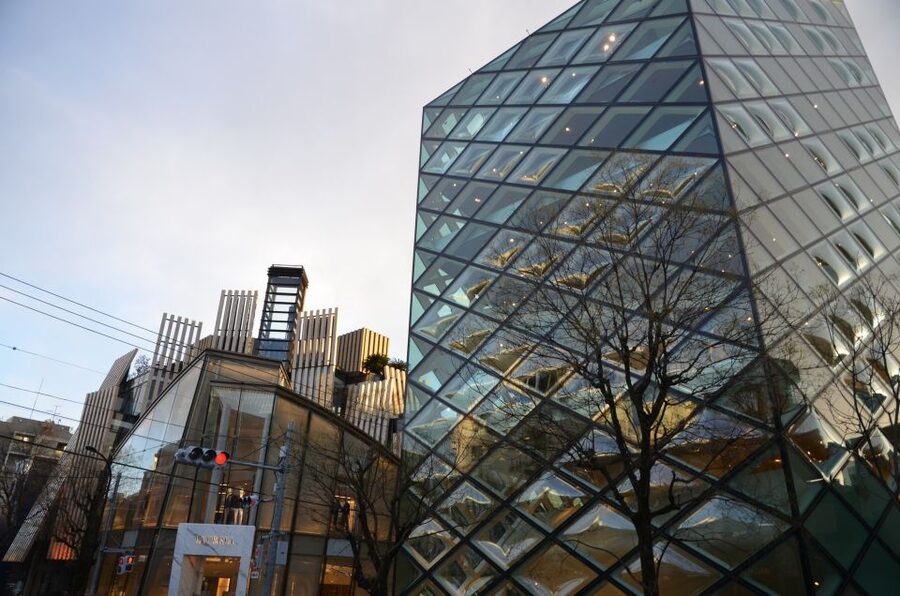
The central part of the walk focuses on contemporary architecture connected with major fashion and food brands. The route includes The Iceberg, Dior, Louis Vuitton, Sunny Hills, and Prada.
These buildings are useful comparisons because each uses a different visual idea. Some attract attention through transparent surfaces or strong angles. Others rely on texture, repetition, or an unexpected outer frame. You will see how a store can function like a large-scale advertisement without depending only on a sign.
Prada is a particularly rewarding stop for anyone interested in how architecture changes a familiar retail building. Dior and Louis Vuitton provide another look at the close relationship between fashion and building design. Sunny Hills adds variety, since the tour is not limited to the biggest luxury names.
You will have plenty of photo opportunities, but the guide’s explanations are what make the stops more than a checklist. Try to photograph each building from several angles rather than taking one front-on image and moving on. The approach, neighboring trees, sidewalk, and people around the building are part of the scene.
One practical point: these are active shopping streets. You may need to pause at the edge of the sidewalk while other pedestrians pass. The tour is designed for walking and looking, not for setting up a long photography session at every facade.
Same base, a completely different sort of day:
- Tokyo: teamLab Planets TOKYO Digital Art Museum Entry Ticket
★ 4.6 · 9,779 reviews - Mt Fuji & Hakone Cruise, Drum Show Bullet Train 1 Day from Tokyo
★ 4.0 · 7,413 reviews - Tokyo: Sumo Show Experience with Chicken Hot Pot and a Photo
★ 4.8 · 6,678 reviews - Tokyo: Shinjuku Food Tour (13 Dishes at 4 Local Eateries)
★ 5.0 · 6,603 reviews
The back streets behind the polished storefronts
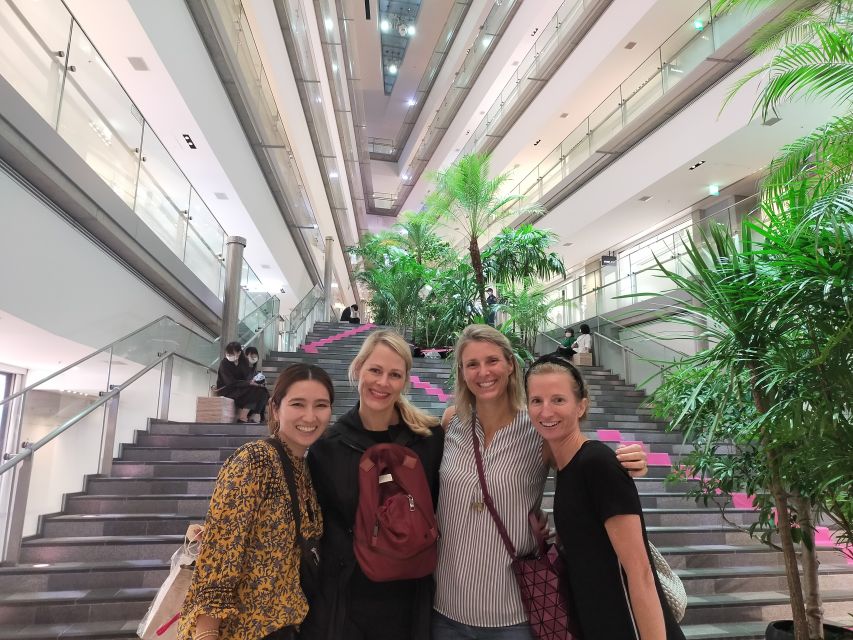
The side trip into a backstreet neighborhood is one of the most valuable parts of the route. Omotesando’s main road can give the impression that the entire district is made for luxury retail. The narrower lanes show a more varied side of the area.
Here you can observe different Japanese lifestyles close to the designer stores. The change may be quick, which is exactly why it is useful. You see how commercial streets and residential areas share the same limited city space.
This portion also keeps the tour from becoming a procession of brand names. If your interests run toward urban planning, daily life, or the way Tokyo neighborhoods change block by block, give your guide time to explain what you are seeing. Fuki has been praised for including requested buildings while also pointing out less dramatic structures along the way.
Cat Street may also be included in the walk. It is described as a lively neighborhood with a cozy feel, and it gives you another contrast with Omotesando’s wide, formal avenue. If you like independent-feeling streets and people-watching, you may want to return here after the tour, though the exact balance of stops depends on your guide and your interests.
A private guide makes the difference
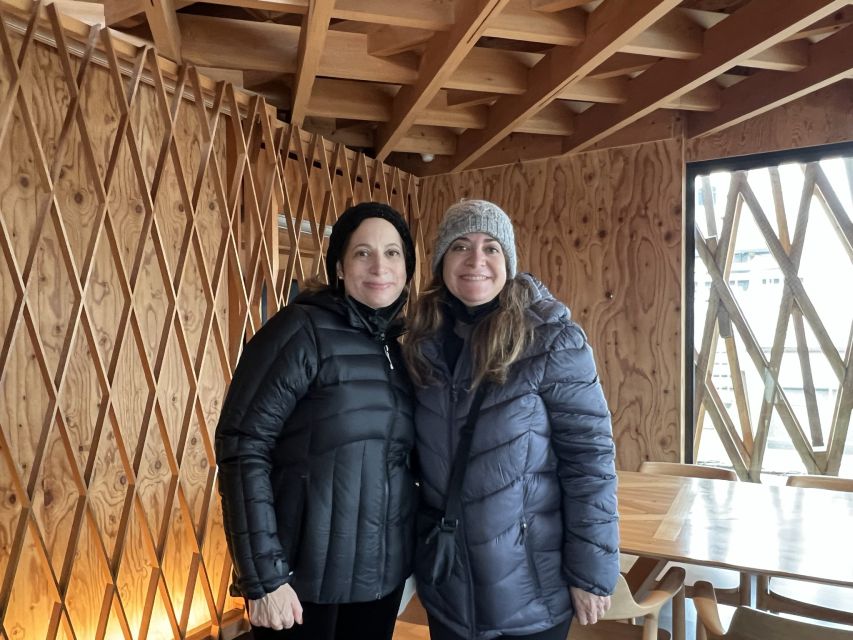
The private format is the strongest reason to choose this experience over a general city walk. You are not tied to a fixed group’s interests. A solo participant can ask detailed questions, while two couples or a small family can request a broader mix of buildings and neighborhood views.
You should tell the guide before or at the start of the tour what interests you most. Perhaps you care about Japanese architects, modern public buildings, retail design, photography, urban planning, or ordinary residential streets. The guides have shown that they can adjust the route and explanations to match those priorities.
The guide list is not fixed in the information provided. Past assignments have included Sakai Mari, Taka, Fuki, Yoshi, and Hal. Their backgrounds differ, but the common thread is an ability to discuss architecture in clear English. Taka’s urban-planning background is especially useful if you want to connect individual buildings with the way Tokyo grows and functions.
This is also a good setting for questions. You can ask why a store uses a particular material, how Japanese architects gained international attention, or why Omotesando developed differently from Ginza. The experience is at its best when you treat it as a conversation rather than a lecture.
Daylight or night?
The tour can be taken at night, according to the activity highlights, and the area changes after dark. Store lighting brings out the shape of glass, metal, and illuminated facades. Buildings that look quiet and restrained in daylight may become sharper and more graphic at night.
Night is a strong choice if photography is your main goal, though you should expect a different kind of visibility. Daylight is better for seeing materials, trees, residential streets, and the full setting around each building. If you want both, ask about available starting times when you check dates.
The route still takes 210 minutes, so the time of day affects more than the photographs. An evening walk may suit you if you want architecture followed by dinner or shopping. A daytime walk gives you a clearer view of the neighborhood’s everyday rhythm.
The cafe break and walking demands
A short break with drinks is included. This is a welcome feature because 210 minutes on foot can feel long, especially if you are also walking between other Tokyo sights that day.
Meals are not included, so do not treat the cafe stop as lunch or dinner. It is a pause, not a full dining experience. You can use it to ask follow-up questions, check photographs, or simply rest while watching people move along Omotesando.
Wear comfortable shoes. The tour covers several districts and includes back streets, so practical footwear matters more than dressing for the boutiques. Wheelchair access is listed, but the information does not describe the exact surfaces or route conditions. If you use a wheelchair, confirm the planned route and any access needs before booking.
Transportation to and from the Harajuku Omotesando area is not included. You arrange your own way to the meeting point and away from the finish. Build in extra time to find Café Mori no Terrace, especially if you are arriving directly from another part of Tokyo.
Is $129 per person fair?
The price is $129 per person. That is not a bargain for a simple neighborhood walk, but the comparison changes when you consider the private format and the length of the experience.
You are paying for 210 minutes with a licensed English-speaking guide, a customized route, architecture explanations, and a drink break. A private walk also avoids the limits of a large group. If you are traveling solo, the price may feel high. For two or more people who share an interest in design, the cost is easier to justify because the guide’s attention is focused on your group.
The value depends on what you want from Harajuku. If you only want to photograph Prada and Dior before shopping, you can see the exteriors on your own. If you want to understand why these buildings are there, how they relate to the area, and what lies behind the main road, the guide adds the real value.
The high rating of 4.9 from 18 ratings supports the idea that the tour delivers a strong personal experience, but the small number means you should still match it to your own interests. The most consistent praise centers on clear English, strong architecture knowledge, passion, and flexibility. Those are exactly the qualities you need for a specialized walking tour.
Who should book this Harajuku architecture walk?
I would put this near the top of the list for:
- People who enjoy modern architecture and Japanese designers
- Visitors who want more than shopping in Harajuku and Omotesando
- Solo visitors who want a private guide and a flexible conversation
- Photographers looking for unusual building angles
- Architecture students, designers, and urban-planning fans
- Repeat visitors who have already seen Meiji Shrine and the major shops
It may be less suitable if you want a relaxed cafe crawl, a food tour, or a quick introduction to Harajuku. The focus is buildings and city life, with shopping streets used as part of the setting rather than the main activity.
Families and older visitors should consider the walking distance. The tour is wheelchair accessible, but the route includes multiple streets and a backstreet section. Ask about pacing when booking if anyone in your group needs regular rests.
Practical booking advice
You can cancel up to 24 hours in advance for a full refund, and the reserve-now, pay-later option lets you hold a place without paying immediately. Starting times depend on availability, so check the schedule before building the rest of your day around it.
Plan to arrive at the correct cafe in front of Meiji Shrine’s large wooden gate. From JR Harajuku Station, use the Omotesando Exit and walk toward the forest, but do not pass through the shrine gates.
Bring comfortable shoes and a camera. If you have a short list of buildings you want to see, send it ahead of time or mention it at the start. The private format is most useful when you give the guide something to work with.
Should you book it?
Book this tour if you want to understand the architecture behind Omotesando’s famous shopping streets, not just photograph the storefronts. The mix of Yoyogi Gymnasium, designer buildings, Cat Street, and ordinary back streets gives you a sharper picture of the district than a standard shopping walk.
At $129 per person, it makes the most sense for architecture fans, small private groups, and solo visitors who value expert conversation. Skip it if you prefer to explore at your own pace or mainly want to shop. For the right audience, the private guide and flexible route turn a familiar Tokyo district into a much more interesting city walk.
FAQ
How long does the tour last?
The tour lasts 210 minutes, or three hours and 30 minutes.
What language is the tour in?
The tour is conducted in English by a licensed English-speaking guide.
Is this a private tour?
Yes. It is offered as a private group experience.
Where does the tour meet?
The meeting point is in front of Café Mori no Terrace, at 1 Yoyogikamizonocho, Shibuya City, Tokyo 151-0052. It is in the large open space near the big wooden entrance gate of Meiji Shrine.
How do I reach the meeting point from Harajuku Station?
Leave JR Harajuku Station through the Omotesando Exit and walk toward the forest. You do not go through a Shinto gate to reach the cafe.
Which buildings are included?
The route includes Yoyogi Gymnasium from a distance, The Iceberg, Dior, Louis Vuitton, Sunny Hills, and Prada. It also includes a backstreet neighborhood, and Cat Street may be part of the walk.
Is a cafe break included?
Yes. A break with drinks is included. Meals are not included.
Can I take the tour at night?
Night tours are offered as an option highlighted for this experience. Check available starting times for your chosen date.
Is the tour wheelchair accessible?
Yes, the activity is listed as wheelchair accessible. Contact the provider before booking if you need details about the exact route or specific access requirements.
Just added around Tokyo
- Private Arrival Transfer : Narita International Airport to Central Tokyo City★ 4.5 · 12 reviews
- Narita Airport(NRT): Private Transfer to Tokyo/Yokohama 1-9pax★ 5.0 · 47 reviews
- Private Transfer from Narita Airport to Yokohama Port and City★ 4.5 · 17 reviews
- [Narita Airport Terminals 1, 2] 40-60km Sawara Itako Historic Bike Tour★ 5.0 · 13 reviews
- 3 Day Japan Highlights Tour: Tokyo, Mt.Fuji, Nara, Kyoto, Osaka★ 5.0 · 22 reviews
- The 10 Tastings of Tokyo With Locals: Private Street Food Tour★ 5.0 · 48 reviews
- Small Town in the Big City: Tasting Tokyo’s Kichijoji★ 5.0 · 195 reviews
- Small Town in the Big City: Tasting Tokyo’s Kichijoji★ 5.0 · 16 reviews
Tokyo Tours, compared.

Mt Fuji and Hakone 1-Day Bus Tour Return by Bullet Train
Read our review →

teamLab Planets TOKYO Digital Art Museum Entry Ticket
Read our review →
Mt Fuji & Hakone Cruise, Drum Show Bullet Train 1 Day from Tokyo
Read our review →
Sumo Show Experience with Chicken Hot Pot and a Photo
Read our review →
Shinjuku Food Tour (13 Dishes at 4 Local Eateries)
Read our review →
Tokyo Mt Fuji 5th St & Hakone Cruise Bus Tour w/Bullet Train
Read our review →