
Reviewed · TOKYO TOURS
Tokyo: KABUKI, BUNRAKU, etc. presented by National Theatre
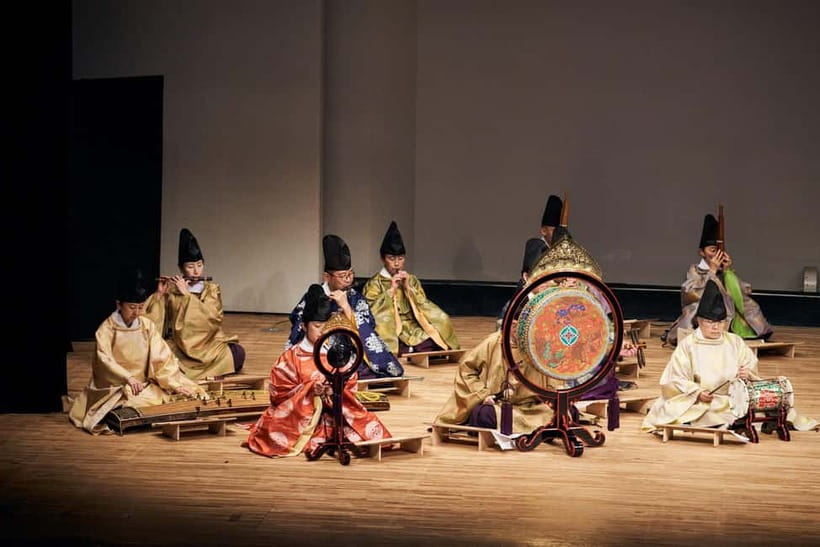
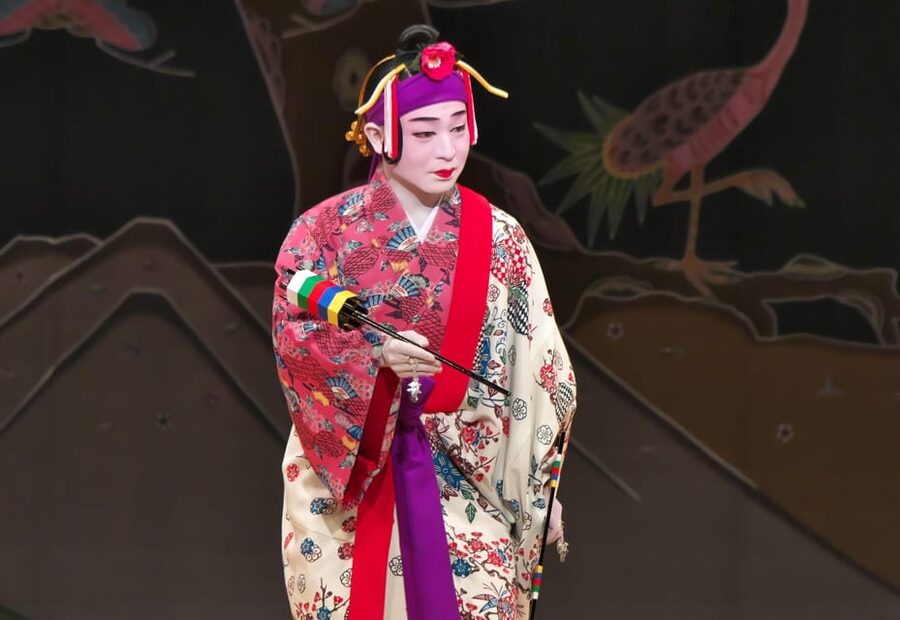
The remarkable thing here is the chance to see Japan’s classical theater as a working art, not a tourist imitation. Kabuki brings drama, dance, music, costumes, and stylized movement, while Bunraku joins a narrator, shamisen player, and puppeteers in one precise performance.
I like the English audio guide, which gives you the plot and key points without replacing the live voices on stage. I also like the direct connection to the National Theatre Japan, an institution that has supported these arts since 1965. The main drawback is time: some programs last up to three hours, and the English guide summarizes rather than translates every line.
Key points to know before booking
- Bunraku is held at KAAT Kanagawa Arts Theatre in Yokohama, not at the National Theatre in Hanzomon.
- Kabuki and Bunraku include an English audio guide that explains the action and major ideas.
- Hogaku includes a free English explanation sheet, rather than an audio translation.
- The program changes by date, so check the option title before you book.
- Performances run from 75 minutes to three hours, with some longer shows including intervals.
- Seats are assigned by the theater, so you cannot choose your exact position.
What this National Theatre Japan program really offers
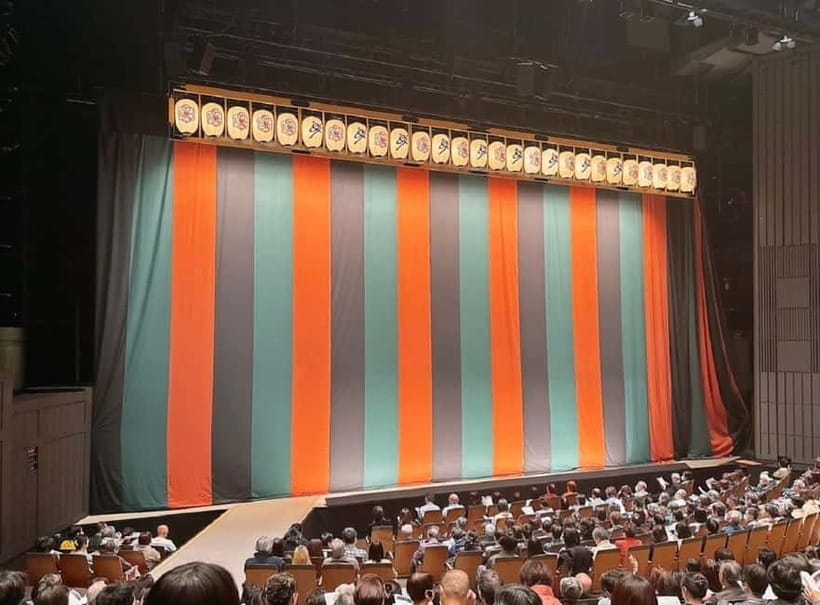
This is a ticket to Japanese classical performing arts presented by top-level performers who have carried their forms across generations. The point is not simply to watch a Japanese play. You are seeing carefully preserved systems of acting, music, storytelling, costume, puppetry, and stage movement.
The program may feature Kabuki, Bunraku, or Hogaku, depending on the date and the option you choose. These are quite different evenings, so I would not book from the general title alone. Read the option carefully, especially if you have your heart set on puppetry or on theatrical drama.
The National Theatre Japan has supported traditional performance since opening in 1965. That gives the event a serious cultural purpose, but you should still approach it as theater rather than as a museum display. The performers are not demonstrating old customs for inspection. They are presenting living art for an audience.
One helpful detail is that the performance does not rely on loudspeakers. You hear the live voices, shamisen, and other instruments directly in the hall. That quiet, unamplified setting matters, particularly in Bunraku, where the narrator’s vocal force and the shamisen’s sharp tone are central to the form.
A few more Tokyo half-days to weigh up
- Mt Fuji and Hakone 1-Day Bus Tour Return by Bullet Train
★ 5.0 · 26,383 reviews - 1-Day Tokyo Bus Tour
★ 5.0 · 14,250 reviews - Tokyo: TOKYO SKYTREE® Admission ticket
★ 4.5 · 11,192 reviews
Choosing between Kabuki, Bunraku, and Hogaku
Kabuki: drama, dance, and bold stage language
Kabuki is Japan’s best-known traditional theater form, and it combines music, dance, and dramatic storytelling. It has changed over hundreds of years, taking in the tastes of different eras while keeping its distinct visual and physical style.
You can expect striking costumes, carefully controlled gestures, scenic beauty, and stories built around conflict, loyalty, love, duty, or other strong human concerns. The acting style may feel broad and formal compared with modern Western theater. That is part of the appeal, but it can take a little time to adjust.
The English audio guide helps you understand what is happening. It is not a line-by-line translation. Instead, it gives an overview of the major points and explains enough of the action for you to follow the performance without pulling your attention away from the actors.
I find this approach sensible. A literal translation in your ear for the entire show could make it hard to watch the stage. Still, you will miss some wordplay and nuance, especially when the performers speak or sing in older forms of Japanese. Reading a little about Kabuki before you go will help you notice why a costume, stance, or movement matters.
Bunraku: three art forms working as one
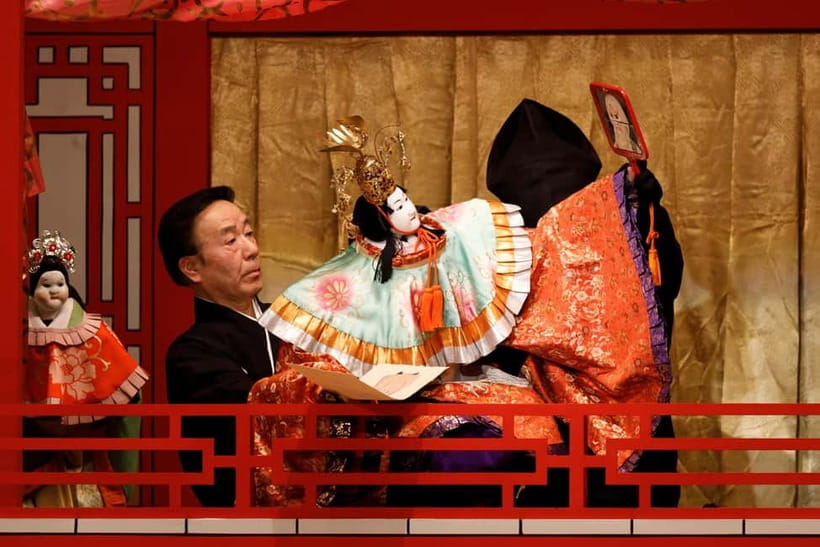
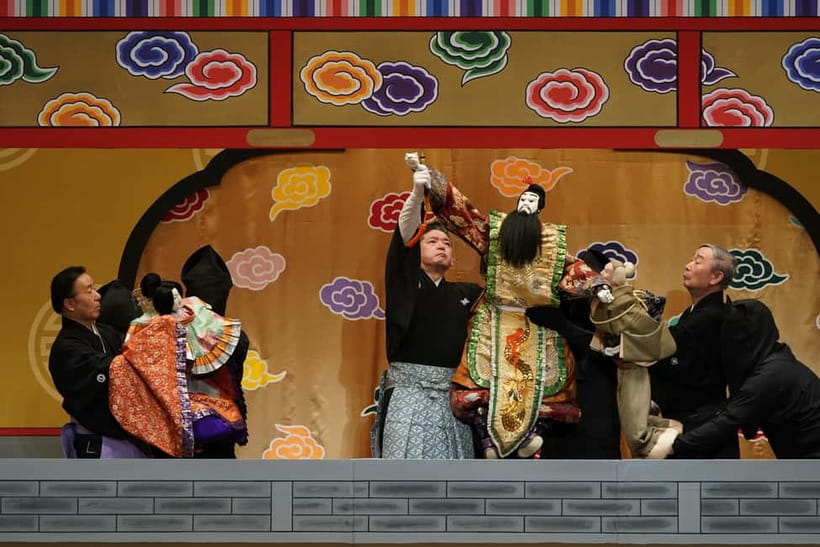
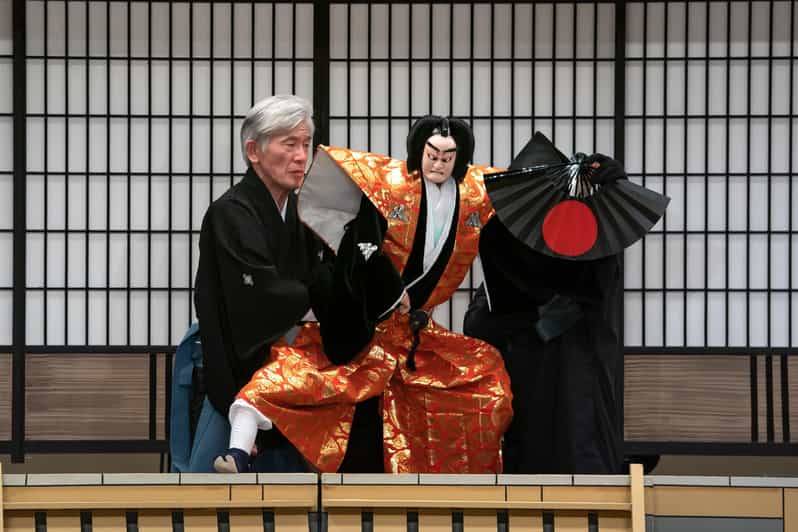
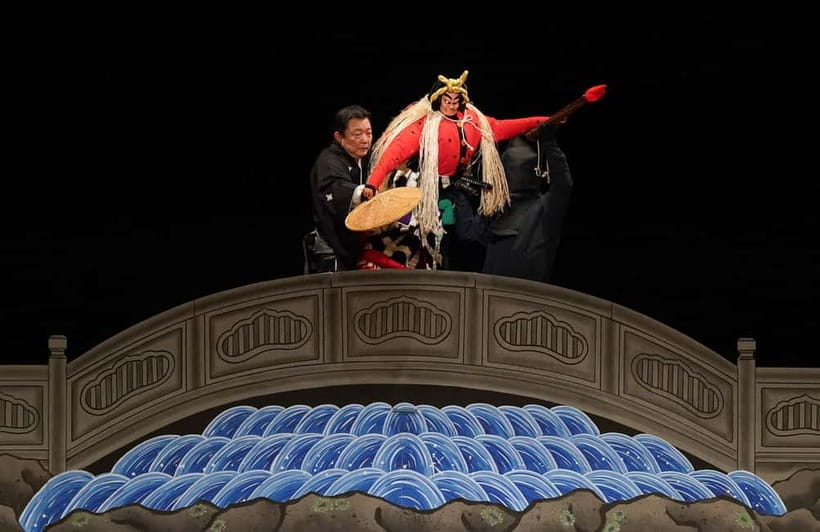
Bunraku is the most unusual choice here. It is a sophisticated form of puppet theater for adults, recognized by UNESCO as part of humanity’s intangible cultural heritage.
The performance brings together three elements:
- A narrator recites the story with enormous vocal range and force.
- A shamisen player supplies the musical pulse and emotional color.
- Puppeteers control the figures with precise, coordinated movements.
The puppets are not a side attraction. Their gestures, posture, and timing carry much of the drama. The narrator and shamisen player are equally important, creating a tightly linked performance in which voice, music, and movement must meet at exactly the right moment.
Some programs deal with serious subjects, including love suicide. If you are bringing children, check the nature of the performance when that information is available. The subject matter can be intense, even though the form is visually fascinating.
The English audio guide is especially useful for Bunraku because it gives you the story while you watch the puppets. It will not explain every lyric or cultural reference, but it gives you a firm outline. Without that support, the pace and formal style may be difficult to follow.
One important warning: special programs may not include puppets. A past special presentation was still labeled as Bunraku but had no puppets in the usual sense. Read the exact description for your date so you know what kind of program you are buying.
Same base, a completely different sort of day:
- Tokyo: teamLab Planets TOKYO Digital Art Museum Entry Ticket
★ 4.6 · 9,779 reviews - Mt Fuji & Hakone Cruise, Drum Show Bullet Train 1 Day from Tokyo
★ 4.0 · 7,413 reviews - Tokyo: Sumo Show Experience with Chicken Hot Pot and a Photo
★ 4.8 · 6,678 reviews - Tokyo: Shinjuku Food Tour (13 Dishes at 4 Local Eateries)
★ 5.0 · 6,603 reviews
Hogaku: listening for the melody of snow
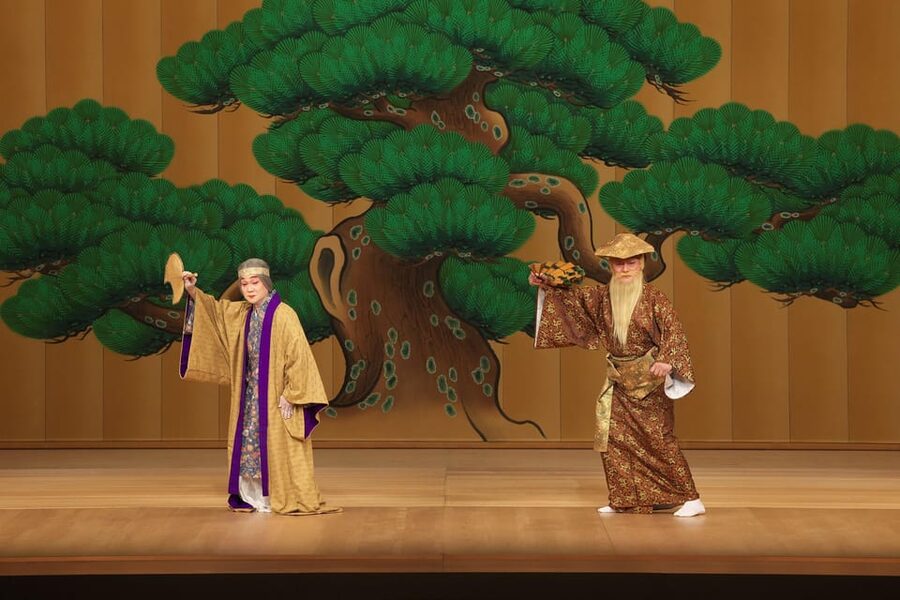
Hogaku is a concert of traditional Japanese music rather than a play. The program described here focuses on melodies linked with snow, especially Yuki no Aikata, a long shamisen interlude in the jiuta piece Yuki.
That melody appears in songs connected with falling snow. The program invites you to listen for how the same musical idea appears in different works and settings. This is a quieter and more listening-focused choice than Kabuki or Bunraku.
Hogaku does not include the English audio guide. Instead, you receive a free English explanation sheet. I would choose this option if you enjoy music and want a cultural setting that does not depend on following a plot.
If you need constant explanation to stay interested, Kabuki or Bunraku may suit you better. If you like noticing tone, repetition, rhythm, and musical mood, Hogaku can offer a more thoughtful evening.
The English audio guide helps, but it is not a translation
For Kabuki and Bunraku, the English audio guide is one of the most useful parts of the ticket. It explains the basic story and points out important moments, which makes the performance far more accessible to someone who cannot read or speak Japanese.
You listen to the guide while also hearing the performers. That takes a few minutes for your brain to manage. The guide’s voice and the live performance are happening together, so you need to divide your attention.
The system is designed to give an overview rather than translate every spoken line. This is a fair compromise, but you should set your expectations correctly. You will understand the broad action and important turns. You will not catch every joke, poetic phrase, or subtle reference.
I would arrive early enough to hear any introductory explanation before the curtain. That background can make the costumes, movements, and theater conventions easier to read. An English guide is helpful, but a little preparation gives you more to notice.
For Hogaku, use the English explanation sheet before the music begins. Since there is no spoken translation during the concert, reading the program notes first will help you listen with a clearer idea of what to expect.
The Yokohama venue requires careful planning
The supplied Bunraku program takes place at KAAT Kanagawa Arts Theatre in Yokohama. It is not at the National Theatre in Hanzomon, and this is the most important practical detail in the booking information.
The nearest station is Nihon-odori Station on the Minatomirai Line. From Exit 3 or 4, the theater is about a five-minute walk. Motomachi-Chukagai Station is another option, about eight minutes from Exit 1.
The Minatomirai Line connects directly with the Tokyu Toyoko Line and the Tokyo Metro Fukutoshin Line. From Shibuya, a train bound for Motomachi-Chukagai takes about 45 minutes. Give yourself extra time for the trip, the walk, and finding the correct entrance.
The venue can vary for other dates and programs. Always check the meeting-location details for your chosen performance. Do not simply enter National Theatre into your map and assume you are going to the Hanzomon building.
On the day, exchange the GetYourGuide voucher for the theater-issued ticket at the venue entrance. Staff will ask for the name of the person who made the reservation. This process is described as straightforward, but you should not leave it until the last second before the performance.
How long the show lasts, and why that matters
The stated duration ranges from 75 minutes to three hours. That is a large difference, so the start time and end time need to fit your plans.
A 75-minute program can work well as a focused cultural stop. A three-hour performance is a bigger commitment, particularly if you are trying to cover a long list of Tokyo sights. Some longer programs include two intervals, giving you time to leave the hall, eat something, or get a drink.
I would reserve the longest program for a day when you are not rushing across the city. A three-hour show can feel slow if you are unfamiliar with the style, especially when several acts tell separate stories or do not end with a neat resolution.
That structure may surprise you. A program can include three unrelated acts, with stories that feel unfinished from a Western theater perspective. This is not necessarily a flaw, but you should not expect one simple plot with a clear beginning, middle, and end.
The pace also makes this a poor match for very young children. Noise is not welcome, and the formal presentation can be long and slow for a child who does not already enjoy theater or music. Older children who can sit quietly and handle serious themes may find Bunraku memorable.
Seating, theater manners, and comfort
The theater assigns your seat, so you do not select the exact row or position. That is worth noting if you care strongly about sightlines or want to sit together in a particular place.
Inside the theater, smoking, photography, video recording, and audio recording are not allowed. Alcohol and drugs are prohibited, and pets are not allowed except assistance dogs. You also need to avoid making noise during the performance.
Drinks are not allowed in the theater. If your performance has an interval, you can use that break to go outside or get food, but do not count on taking a drink back to your seat.
A small practical tip concerns hot coffee during the interval. If you buy one early in the break, it may still be too hot to finish before you need to return. Asking for ice can help, though the simplest solution is to plan your drink and snack around the interval.
Wheelchair access is available. If you use a wheelchair, contact the provider as soon as possible so accessible seating can be arranged. That is better than waiting until arrival, since the regular seat assignment is handled by the theater.
Is $37 a fair price?
At $37 per person, this ticket offers good value if you want an authentic performance rather than a short cultural demonstration. The price includes admission and, for Kabuki and Bunraku, the English audio guide. For Hogaku, it includes the English explanation sheet.
Transportation is not included. For the Yokohama Bunraku program, you need to budget for the Minatomirai Line journey from Tokyo as well as the time involved. The added cost is reasonable if you already plan to visit Yokohama, but less convenient if this is your only reason to leave central Tokyo.
The price becomes more attractive when you consider the quality of the performers and the difficulty of finding these arts presented in an accessible way. You are not paying only for a seat. You are getting a structured introduction to forms that are hard to understand from a casual glimpse.
Still, value depends on your interest. If you have only a few days in Tokyo and want to spend every hour sightseeing, a two-and-a-half-hour or three-hour program may feel costly in time. If you are staying longer, or if theater and Japanese culture are central to your plans, the ticket is easier to justify.
Free cancellation up to 24 hours before the performance and reserve-now, pay-later booking add flexibility. Check the exact cancellation and payment terms at booking, since the performance date and option remain important.
Who should book this performance?
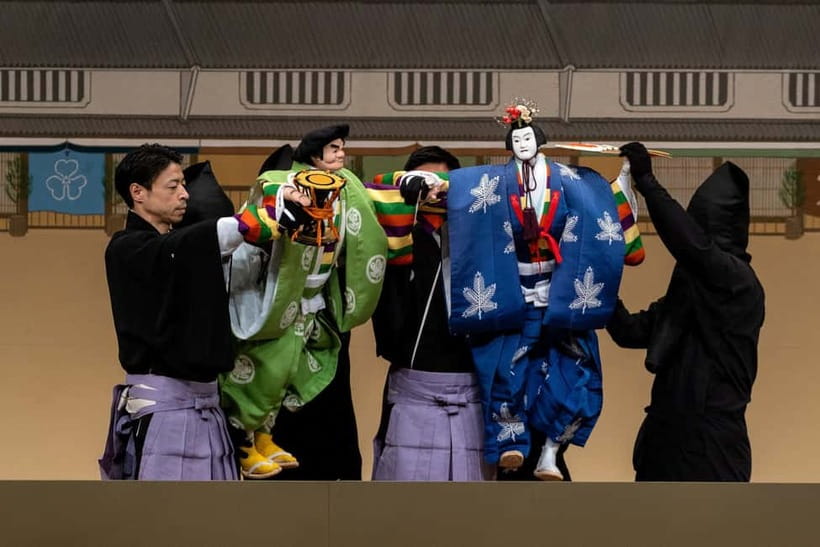
I would recommend it to you if you want to see an established Japanese art form in a serious theater setting. It suits people interested in theater, music, costume, storytelling, puppetry, or cultural traditions that are still performed for modern audiences.
Bunraku is the strongest pick if you are curious about puppetry and want something unlike a standard stage play. Kabuki works well if you want visual drama, dance, music, and expressive acting. Hogaku is better for a concert listener who enjoys traditional instruments and musical themes.
You should think twice if you dislike slow pacing, formal theater, or partial translation. The audio guide makes the event accessible, but it cannot give you every line or cultural nuance. A short introduction before you go will make a real difference.
I would also be cautious about booking it for very young children. The no-noise rule, long running time, and serious themes can make the evening hard for them.
Should you book it?
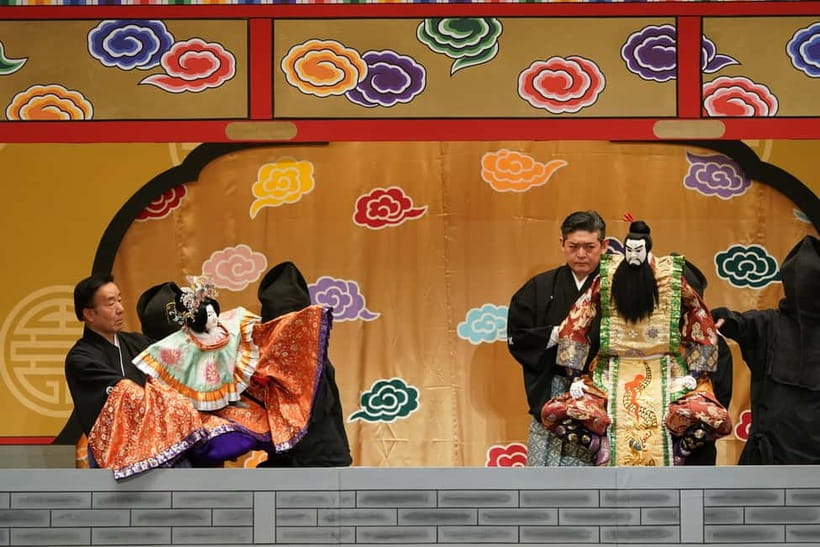
Book this if you want a genuine look at Kabuki, Bunraku, or Hogaku and can give the performance your full attention. The English support is concise and useful, the performers are highly regarded, and the $37 price is fair for a formal presentation of Japan’s classical arts.
Before paying, confirm three things: the exact art form, the venue, and the total duration. If the program is Bunraku, check that the date actually includes puppetry. If you are based in Tokyo, remember that the supplied Bunraku venue is in Yokohama.
For a short Tokyo visit focused only on major sights, this may take too much time. For a longer stay, or for anyone who wants more than a quick cultural photo stop, it can be one of the most distinctive nights on your itinerary.
FAQ
Where is the Bunraku performance held?
The Bunraku performance is held at KAAT Kanagawa Arts Theatre in Yokohama, not at the National Theatre in Hanzomon.
How do I reach KAAT Kanagawa Arts Theatre?
The nearest station is Nihon-odori Station on the Minatomirai Line, about five minutes from Exit 3 or 4. Motomachi-Chukagai Station is about eight minutes away from Exit 1.
How long does the performance last?
The available programs last between 75 minutes and three hours. Check the start time and duration for the specific date and option you select.
Is an English translation included?
Kabuki and Bunraku include an English audio guide. Hogaku includes a free English explanation sheet instead. The audio guide gives an overview of the main points, not a literal translation of every line.
Can I choose my seat?
No. Seating positions are assigned by the theater.
How do I enter the theater?
Exchange the GetYourGuide voucher for the theater-issued ticket at the venue entrance on the performance day. Staff will ask for the name used for the reservation.
Is transportation included?
No. Transportation to the theater is not included.
Can I take photographs or record the performance?
No. Photography, video recording, and audio recording are not allowed inside the theater.
Is the performance wheelchair accessible?
Yes. Wheelchair-accessible seating can be provided, but you should contact the provider as soon as possible before the performance.
Just added around Tokyo
- Private Arrival Transfer : Narita International Airport to Central Tokyo City★ 4.5 · 12 reviews
- Narita Airport(NRT): Private Transfer to Tokyo/Yokohama 1-9pax★ 5.0 · 47 reviews
- Private Transfer from Narita Airport to Yokohama Port and City★ 4.5 · 17 reviews
- [Narita Airport Terminals 1, 2] 40-60km Sawara Itako Historic Bike Tour★ 5.0 · 13 reviews
- 3 Day Japan Highlights Tour: Tokyo, Mt.Fuji, Nara, Kyoto, Osaka★ 5.0 · 22 reviews
- Small Town in the Big City: Tasting Tokyo’s Kichijoji★ 5.0 · 195 reviews
- Small Town in the Big City: Tasting Tokyo’s Kichijoji★ 5.0 · 16 reviews
- The 10 Tastings of Tokyo With Locals: Private Street Food Tour★ 5.0 · 48 reviews
Tokyo Tours, compared.

Mt Fuji and Hakone 1-Day Bus Tour Return by Bullet Train
Read our review →

teamLab Planets TOKYO Digital Art Museum Entry Ticket
Read our review →
Mt Fuji & Hakone Cruise, Drum Show Bullet Train 1 Day from Tokyo
Read our review →
Sumo Show Experience with Chicken Hot Pot and a Photo
Read our review →
Shinjuku Food Tour (13 Dishes at 4 Local Eateries)
Read our review →
Tokyo Mt Fuji 5th St & Hakone Cruise Bus Tour w/Bullet Train
Read our review →