
Reviewed · TOKYO TOURS
Tokyo: Mt. Fuji, Arakurayama Sengen Park, Oshino Hakkai Tour
Mount Fuji supplies the headline, but this full-day route gives you several different ways to see it: above a five-story pagoda, across clear spring water, beside Lake Kawaguchi, and from a traditional thatched-roof village. The views can be superb when clouds cooperate, especially at Arakurayama Sengen Park.
I like the mix of famous photo spots and quieter countryside, and I like that transportation, a guide, and the Saiko Iyashi-no-Sato Nenba admission are covered for $50. The main catch is the pace: you spend about nine and a half hours out, with long bus rides, crowds at popular stops, and some steep paths and stairs.
Key points at a glance
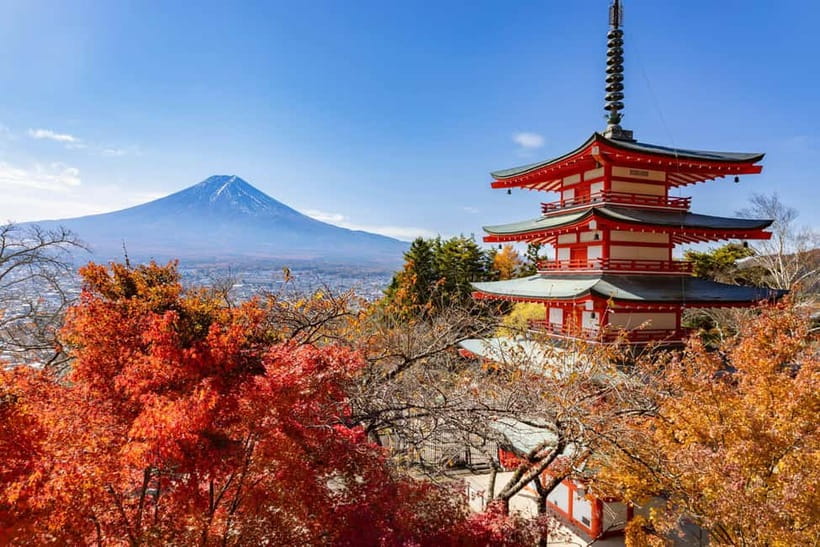
- Arakurayama’s pagoda view: Climb to one of the area’s best-known Mount Fuji viewpoints, with seasonal cherry blossoms, maple leaves, or snow adding to the scene.
- Oshino Hakkai’s spring water: Walk among clear ponds and traditional village views during a generous 90-minute stop.
- Fujiyoshida street photography: Pause at Hikawa Clock Shop, where the straight street view toward Mount Fuji creates a classic Japan photograph.
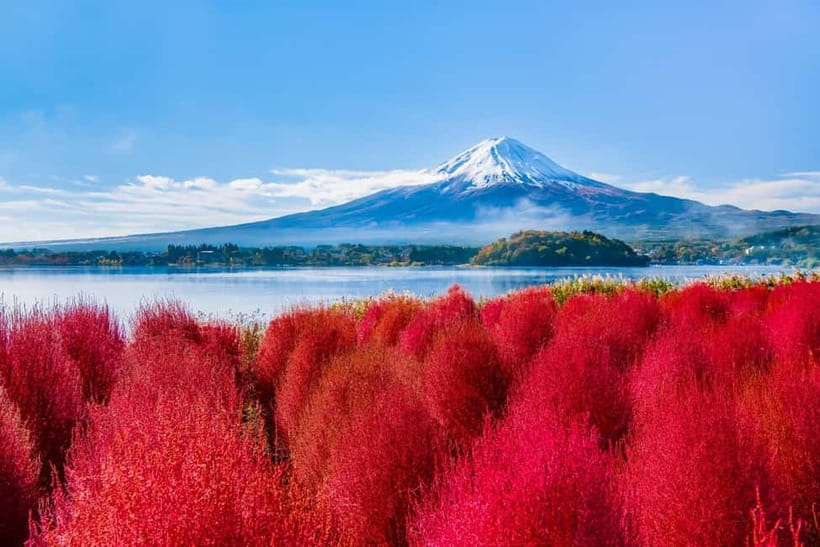
- Weekday-only Oishi Park: See Lake Kawaguchi, seasonal flowers, and Mount Fuji, but know that traffic can force this stop to be canceled.
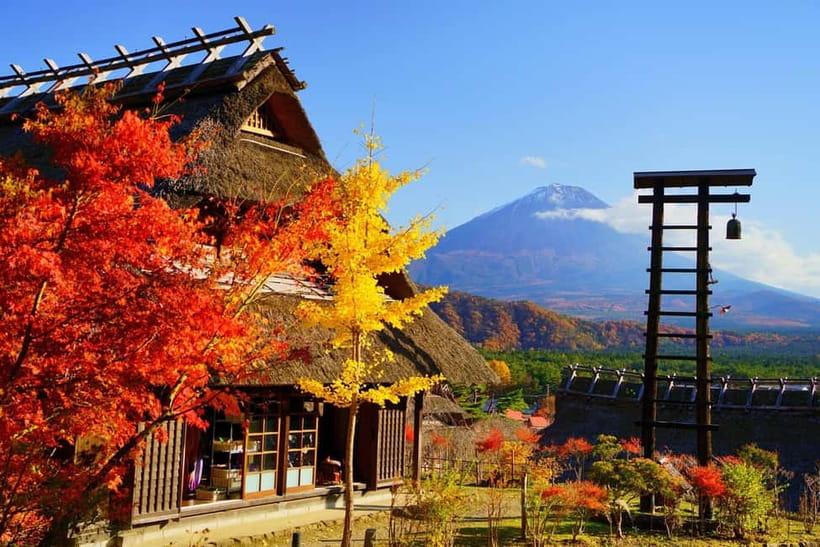
- Saiko’s rural village setting: Visit Saiko Iyashi-no-Sato Nenba, where thatched houses and mountain scenery offer a slower final stop before the ride back.
- A practical Tokyo escape: Leave from Shinjuku and return near Shinjuku Station, with meals and personal spending left to you.
Why this Mount Fuji day trip works
This is a sightseeing day built around variety. You are not simply driven to one overlook, handed a few minutes for photographs, and sent home. The route combines a major shrine park, a historic-looking street, spring-fed ponds, a lakeside park, and a reconstructed rural village.
That variety matters because Mount Fuji changes character from place to place. At Arakurayama Sengen Park, the mountain becomes part of a famous layered composition with a pagoda and hillside. At Oshino Hakkai, it belongs to a calm village setting. At Oishi Park, it forms a distant backdrop across Lake Kawaguchi.
I also like the built-in transport from central Tokyo. Reaching all these places by public transport would take planning, transfers, and patience. Here, you board near Shinjuku and finish near Shinjuku Station, which makes the day useful if you have limited time in Tokyo.
The tradeoff is that this is a long outing. The first ride takes about 90 minutes, and the final ride back takes about two hours. Add the shorter transfers and sightseeing stops, and you have a full day with a fair amount of time seated on a coach.
More Mt Fuji Tours in Tokyo
- Mt Fuji and Hakone 1-Day Bus Tour Return by Bullet Train
★ 5.0 · 26,383 reviews - Mt Fuji & Hakone Cruise, Drum Show Bullet Train 1 Day from Tokyo
★ 4.0 · 7,413 reviews - Tokyo Mt Fuji 5th St & Hakone Cruise Bus Tour w/Bullet Train
★ 4.4 · 5,024 reviews
Starting near Shinjuku’s west side
The meeting point is in front of Kogakuin University, close to the Shinjuku West Exit. From the underground Central West Exit, walk for about one or two minutes toward the Tokyo Metropolitan Government Building. The Keio Plaza Hotel is opposite the meeting area, and you should look for the Wonder Tour flag.
You need to arrive on time. The operator does not plan to contact you in advance, so do not treat this like a flexible meeting point where you can wander around and hope to spot the group.
Bring cash for meals, drinks, and personal purchases. Food is not included, and the day includes enough stops that you will want to plan how and when to eat, even though the exact meal arrangements are not specified.
Arakurayama Sengen Park and the five-story pagoda
Your first major stop is Arakurayama Sengen Park, with about one hour to walk and take photographs. The well-known view combines Mount Fuji, a red five-story pagoda, and the hillside town below.
The view is seasonal. In spring, about 650 cherry trees add pale blossoms around the pagoda. The cherry blossom period near Mount Fuji usually falls from late April to early May, though weather can change the timing and the number of flowers in bloom.
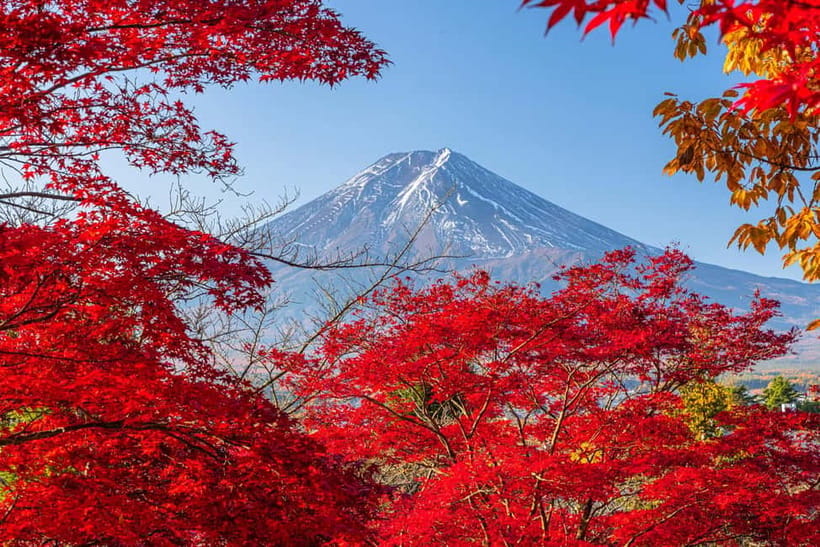
Summer brings green hills, clear air, and a blue-sky setting when conditions are kind. Autumn usually offers the strongest color from late October to early November, with red and orange leaves around the pagoda. Winter can be stark and dramatic, with snow on the pagoda roof and Mount Fuji.
This is also the stop that demands the most attention to your footing. Parts of the route include long stairs and uphill sections. One hour sounds generous, but some of it may go toward climbing, finding a viewing point, and returning to the coach.
If you use crutches or have difficulty with stairs, this tour may not suit you. The activity is also not recommended for people over 70, according to the operating conditions. That restriction is worth taking seriously rather than treating it as a minor note.
Hikawa Clock Shop and Fujiyoshida’s straight street view
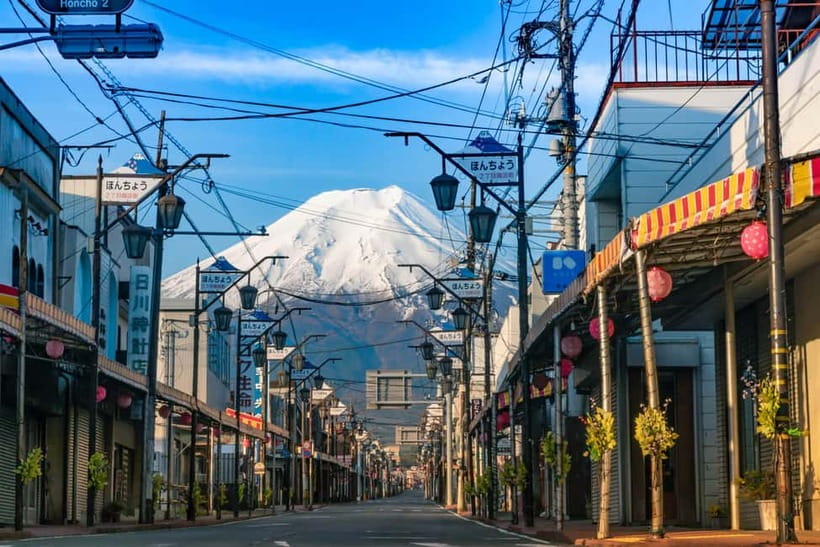
The next stop is Hikawa Clock Shop, with about 30 minutes for sightseeing. The appeal is the street itself: traditional-looking shops and architecture line a road that frames Mount Fuji in the distance.
Spring adds cherry blossoms along the street, while autumn brings yellow and red leaves. In winter, the crisp early air can make the snow-covered mountain especially clear from afar. Summer brings a more local festival mood, with fireworks and stalls connected to the season.
This is a short stop, so keep your camera ready and do not expect a long neighborhood walk. The route is designed for a strong view and a quick sense of Fujiyoshida rather than an in-depth visit to every shop.
The stop also shows why weather matters so much on this outing. The street may be exactly where you want it to be, but Mount Fuji can disappear behind cloud. The tour gives you several viewpoints, which improves your odds, but it cannot control visibility.
A few more Tokyo half-days to weigh up
- 1-Day Tokyo Bus Tour
★ 5.0 · 14,250 reviews - Tokyo: TOKYO SKYTREE® Admission ticket
★ 4.5 · 11,192 reviews - Tokyo: teamLab Planets TOKYO Digital Art Museum Entry Ticket
★ 4.6 · 9,779 reviews - Tokyo: Sumo Show Experience with Chicken Hot Pot and a Photo
★ 4.8 · 6,678 reviews
Oshino Hakkai’s clear ponds and village paths
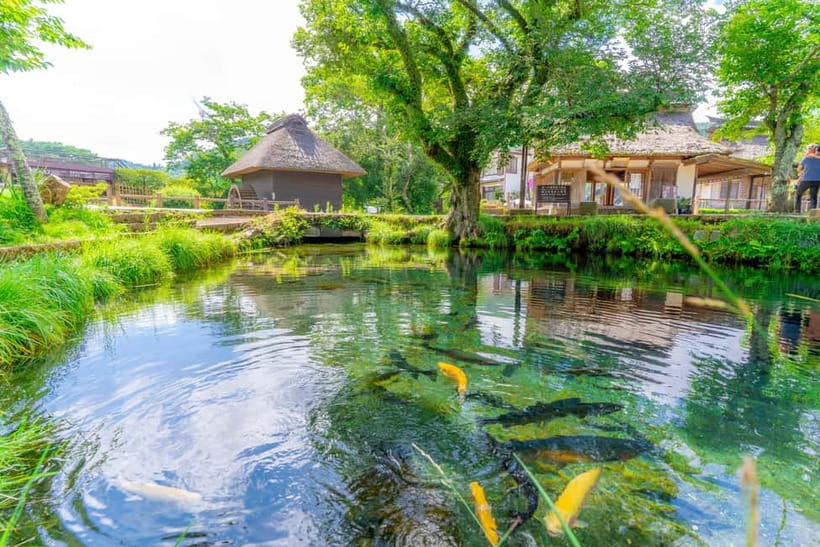
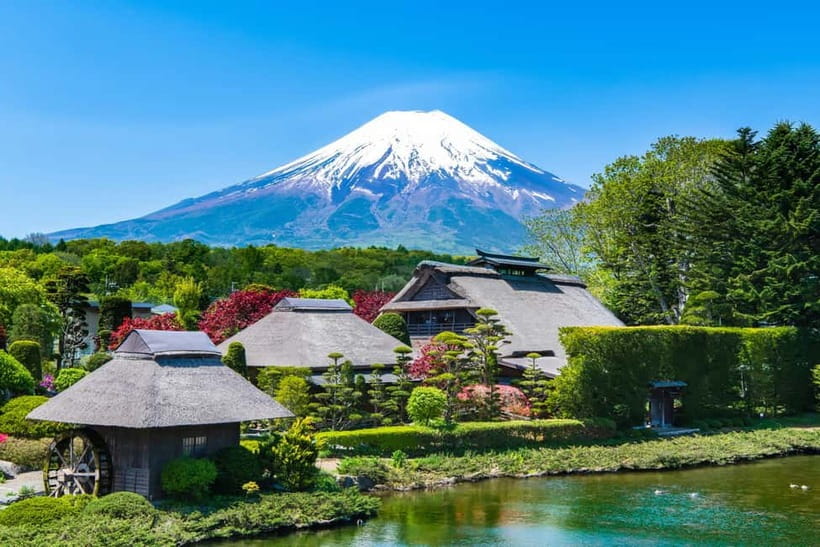
After a 20-minute bus ride, you reach Oshino Hakkai for roughly 90 minutes. This is one of the more relaxing stops, with clear spring water, ponds, village scenery, and views toward Mount Fuji.
The water is central to the experience. In spring, cherry blossoms may reflect on the surface. Summer brings cool water and green surroundings, while autumn leaves can drift across the ponds. In winter, snow covers the village while the springs remain clear.
You have enough time here to walk at an unhurried pace, take photographs, and look at the water from several angles. It is a better place for slowing down than Arakurayama, where the uphill walk can dominate your hour.
Oshino Hakkai is also one of the stops most likely to feel busy. The village is photogenic and well known, so narrow paths and popular viewing areas may be crowded. I would keep your expectations practical: this is a scenic stop, not a silent retreat.
Bring cash. Meals are not part of the tour, and personal expenses are separate, so you may want money for food or small purchases during the day.
Oishi Park and the weekday condition
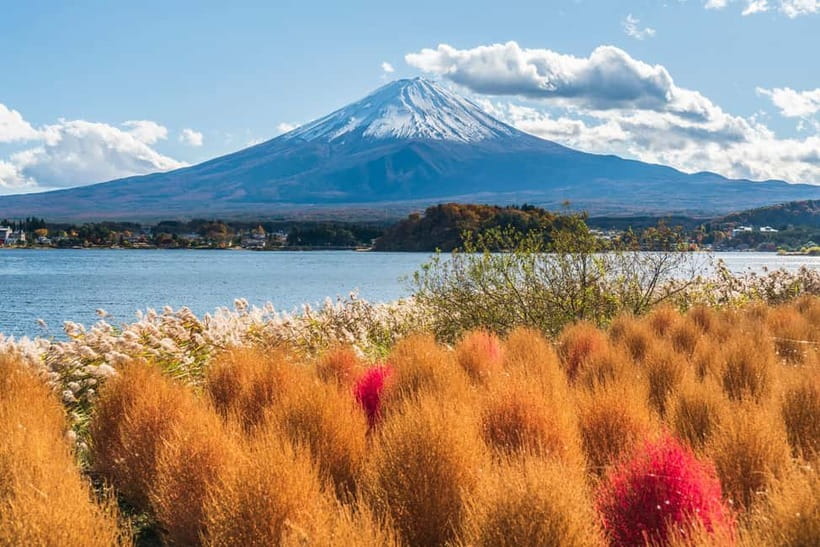
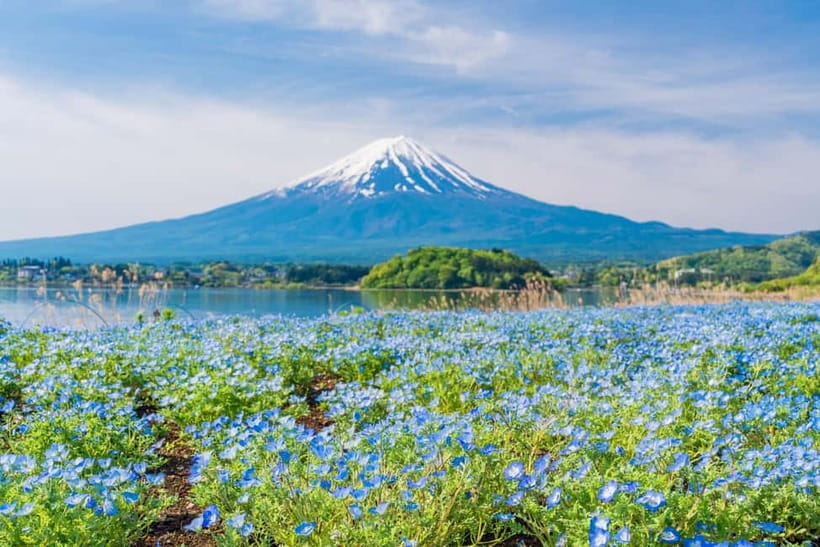
A 30-minute transfer takes you to Oishi Park, where you have about half an hour for photographs and free time beside Lake Kawaguchi. The stop pairs the lake with Mount Fuji and seasonal planting.
Spring can bring tulips and moss phlox. Summer is associated with lavender along the lakeshore, adding color and fragrance. In autumn, the grass turns golden and the mountain may show its first snow. Winter offers a quieter view, with the lake reflecting snowy mountain scenery.
There is an important limitation: Oishi Park is visited only on weekdays. It is closed to this tour on weekends, holidays, and during Golden Week from April 29 to May 5.
Traffic can cause another change. If the coach is delayed on a weekday, the operator may cancel the Oishi Park visit to keep the rest of the day moving. That means you should not book this trip with Oishi Park as your only reason for going.
The 30-minute stop is enough for a photo break, but not a long lakeside walk. Think of it as a carefully chosen viewpoint between larger visits.
Saiko Iyashi-no-Sato Nenba’s thatched village
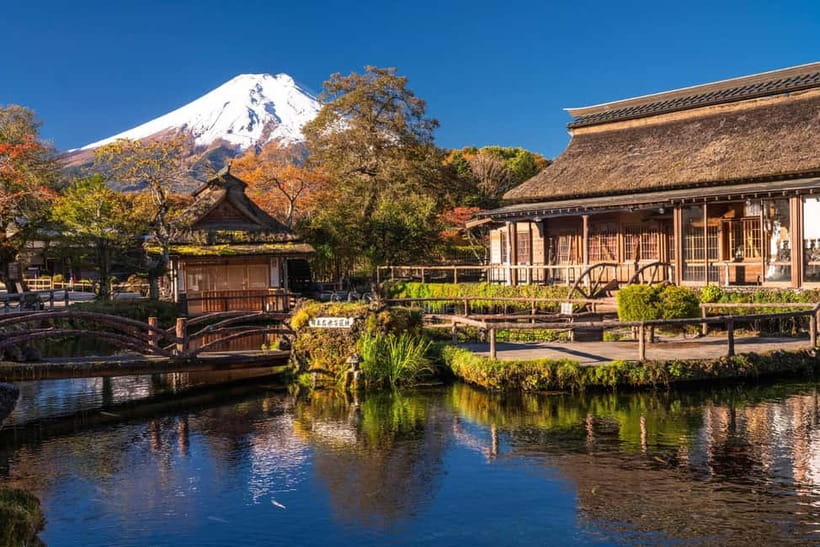
The final sightseeing stop is Saiko Iyashi-no-Sato Nenba, reached after about 20 minutes on the road. You receive about one hour here, and the admission ticket is included.
This village setting offers a different view of the Mount Fuji area. Thatched-roof houses, mountain surroundings, and rural details replace the pagoda and busy spring ponds. The setting is especially appealing if you want more than repeated mountain photographs.
Cherry blossoms add a traditional countryside feel in spring. Summer brings green rice fields, clear streams, and cool mountain air. Autumn foliage frames the thatched roofs, while winter snow can make the village look almost storybook-like, with steam rising from hot springs.
The stop is called Saiko Iyashi-no-Sato Nenba in the activity information, and you may also see the name written as Saiko Yasuragi no Sato Nenba. The included ticket saves you one extra payment and makes this a clear value point in the $50 price.
I would save some energy for this stop. After the stairs at Arakurayama and the walking at Oshino Hakkai, the village is a good place to move at a calmer pace. You still need to watch the clock, since the return drive to Shinjuku takes about two hours.
What $50 includes, and what it leaves out
At $50 per person, the price is attractive for a day that includes round-trip transportation from Tokyo, an English or Chinese guide, and the Saiko Iyashi-no-Sato Nenba ticket.
The transport is the main value. Visiting five separate sights around Mount Fuji without a coach would mean working out train and bus connections, dealing with regional schedules, and allowing more time for mistakes. The tour turns that into one organized day.
The price does not include meals or personal expenses. You also need to allow for the fact that the most scenic stops can have crowds, and the coach schedule limits how long you can linger.
Language support depends partly on the vehicle and guide arrangement. The activity is offered in Chinese and English. If the tour runs by Hiace or microbus, the driver may provide Chinese or machine-translated English commentary rather than a professional guide. If live guiding is important to you, confirm the vehicle and guide setup before booking.
Timing, comfort, and the long ride home
The total duration is 570 minutes, or about nine and a half hours. The route includes roughly 90 minutes to the first stop, shorter rides of 20 to 30 minutes between several attractions, and around two hours returning to Shinjuku.
That timing makes this a poor choice if you want a relaxed, slow day. It works better if you want to cover a lot of ground and accept that each stop has a fixed window.
You may bring one suitcase, up to 30 kilograms and 155 centimeters in total dimensions. Do not place valuables in the bus trunk, since the operator does not accept responsibility for loss, theft, or damage.
Weather is a real factor. Mount Fuji views can vanish in cloud, and extreme weather or other unexpected events can force changes to the route. If the operator cancels the tour because of those conditions, you can reschedule or request a full refund. If the itinerary cannot be followed because of unexpected conditions, no refund is issued for the missed portion.
You can cancel up to 24 hours in advance for a full refund, and the reserve-now, pay-later option helps if your Tokyo plans are still shifting.
The best season for each stop
Spring is the most famous period for photographs, especially from late April to early May near Mount Fuji. Cherry blossoms at Arakurayama, Oshino Hakkai, and the Fujiyoshida street can create the classic Japan scene, but bloom timing varies.
Summer offers green hills, clear spring water, lavender at Oishi Park, and a stronger sense of open countryside. It may be a good choice if flowers are less important to you than fresh color and clear air.
Autumn foliage is generally best from late October to early November. The pagoda, village roofs, and hillsides can all benefit from red and orange leaves, but exact dates depend on the weather.
Winter offers snow-covered Mount Fuji and rooftops, along with colder conditions and a quieter visual mood. Dress for outdoor stops and remember that clear air does not guarantee a clear mountain view.
Who should book this tour
I would choose this trip if you are staying in Tokyo and want a broad Mount Fuji day without arranging regional transport yourself. It suits photographers, first-time visitors, and anyone who wants several distinct settings in one outing.
It also suits you if you value convenience more than independence. The guide can help you move through the stops, and the route covers sights that would be awkward to connect on your own in one day.
I would skip it if you dislike coach rides, strict departure times, or crowded photo spots. You should also think twice if stairs are difficult, if you need a fully accessible route, or if you are over 70, since the activity specifically says it is not suitable for people over that age.
Should you book it?
Book this tour if you want the famous Arakurayama view plus a useful sampling of Oshino Hakkai, Fujiyoshida, Lake Kawaguchi, and Saiko’s rural village. At $50, the included transport and village admission make it a solid value for a long sightseeing day.
Do not book it solely for Oishi Park, since that stop is weekday-only and can be removed because of traffic. Also avoid treating the tour as a guaranteed Mount Fuji photograph expedition. The route gives you several chances, but weather decides the final picture.
FAQ
How long does the Mount Fuji tour last?
The tour lasts 570 minutes, or about nine and a half hours.
Where does the tour start?
It starts in front of Kogakuin University near the Shinjuku West Exit. Walk toward the Tokyo Metropolitan Government Building, with the Keio Plaza Hotel opposite, and look for the Wonder Tour flag.
Where does the tour finish?
The tour finishes near Shinjuku Station.
What languages are available?
The activity is offered in English and Chinese.
Is transportation included?
Yes. Round-trip transportation by bus, coach, Hiace, or microbus is included.
Is the Saiko Iyashi-no-Sato Nenba admission included?
Yes. The ticket for Saiko Iyashi-no-Sato Nenba is included.
Is food included?
No. Meals and personal expenses are not included, so bring cash.
Can I visit Oishi Park on a weekend?
No. Oishi Park is visited only on weekdays and is closed on weekends, holidays, and during Golden Week from April 29 to May 5.
Can bad weather change the tour?
Yes. Unexpected events or extreme weather may cause changes or cancellation. If the operator cancels the tour, you can reschedule or request a full refund.
Is the tour suitable for people with limited mobility?
The route includes long stairs and uphill sections. It is not recommended for seniors who require crutches, and the activity is not suitable for people over 70.
Just added around Tokyo
- Private Arrival Transfer : Narita International Airport to Central Tokyo City★ 4.5 · 12 reviews
- Narita Airport(NRT): Private Transfer to Tokyo/Yokohama 1-9pax★ 5.0 · 47 reviews
- Private Transfer from Narita Airport to Yokohama Port and City★ 4.5 · 17 reviews
- [Narita Airport Terminals 1, 2] 40-60km Sawara Itako Historic Bike Tour★ 5.0 · 13 reviews
- 3 Day Japan Highlights Tour: Tokyo, Mt.Fuji, Nara, Kyoto, Osaka★ 5.0 · 22 reviews
- Small Town in the Big City: Tasting Tokyo’s Kichijoji★ 5.0 · 195 reviews
- Small Town in the Big City: Tasting Tokyo’s Kichijoji★ 5.0 · 16 reviews
- The 10 Tastings of Tokyo With Locals: Private Street Food Tour★ 5.0 · 48 reviews
Tokyo Tours, compared.

Mt Fuji and Hakone 1-Day Bus Tour Return by Bullet Train
Read our review →

teamLab Planets TOKYO Digital Art Museum Entry Ticket
Read our review →
Mt Fuji & Hakone Cruise, Drum Show Bullet Train 1 Day from Tokyo
Read our review →
Sumo Show Experience with Chicken Hot Pot and a Photo
Read our review →
Shinjuku Food Tour (13 Dishes at 4 Local Eateries)
Read our review →
Tokyo Mt Fuji 5th St & Hakone Cruise Bus Tour w/Bullet Train
Read our review →
Flagship 2-Hours Official Street Go-Kart Tour – Tokyo Bay Shop
Read our review →Browse the lists this tour appears in