
Reviewed · TOKYO TOURS
Tokyo: Private City Highlights Tour
Tokyo is a city that can swallow a first-time visitor whole. This private tour gives you a practical way to cover far-flung sights in one day, from the incense-filled grounds of Senso-ji to the giant pedestrian sweep of Shibuya Crossing and the views from Tokyo Skytree. It is less a slow neighborhood walk than a smart orientation day by car.
I like the freedom to reshape the route, and I like the hotel pickup, private vehicle, and direct help with getting between districts. Guide Ahmad, also listed as Ahmed in some bookings, has been praised for clear English, patience, and changing the plan when weather or walking limits get in the way. The main tradeoff is simple: eleven listed stops in eight hours means many visits will be brief.
Key points at a glance
- A private car connects distant districts: You can reach Asakusa, Shibuya, Shinjuku, Harajuku, and Tsukiji without piecing together several train rides.
- The schedule can bend to your interests: You can place more weight on temples, shopping, technology, gardens, or city views.
- The day covers old and new Tokyo: Senso-ji and Meiji Shrine share the route with Skytree, Tokyo Tower, and Shibuya Crossing.
- Ahmad is noted for patience and flexibility: He has adjusted routes, accommodated walking difficulties, and created a backup plan during poor weather.
- The tour is priced by group: At $319 for up to five people, the per-person cost improves sharply when shared by a family or small group.
- You pay attraction fees and lunch separately: The price covers transport-related costs, but not admission tickets, meals, or personal spending.
What this eight-hour Tokyo day is really for
I would treat this as a first-day orientation to Tokyo, not as a thorough visit to every attraction. The tour packs together places that are spread across the city, and that is its central value. You get a broad sense of Tokyo’s contrasts without having to work out every transfer on your own.
The private format matters here. A standard sightseeing route may force you to follow a fixed order, but this one can shift around your priorities. If you care most about shrines and gardens, you can spend more attention there. If you want shopping, street fashion, or city views, your guide can adjust the balance.
Your guide waits in your hotel lobby 10 minutes before the scheduled pickup. Hotel, hostel, apartment, and other Tokyo addresses can be used for pickup, but airports, ports, and stations are not included. Leave some slack in your morning plans because highway traffic can make the driver as much as 30 minutes late.
The vehicle includes petrol, highway tolls, and WiFi when available. The driver-guide option is important to check when booking, since the included services distinguish transport from guided interpretation. The tour is private for your group, with no strangers added to the car.
A few more Tokyo half-days to weigh up
- Mt Fuji and Hakone 1-Day Bus Tour Return by Bullet Train
★ 5.0 · 26,383 reviews - 1-Day Tokyo Bus Tour
★ 5.0 · 14,250 reviews - Tokyo: TOKYO SKYTREE® Admission ticket
★ 4.5 · 11,192 reviews
Starting with Senso-ji and Asakusa
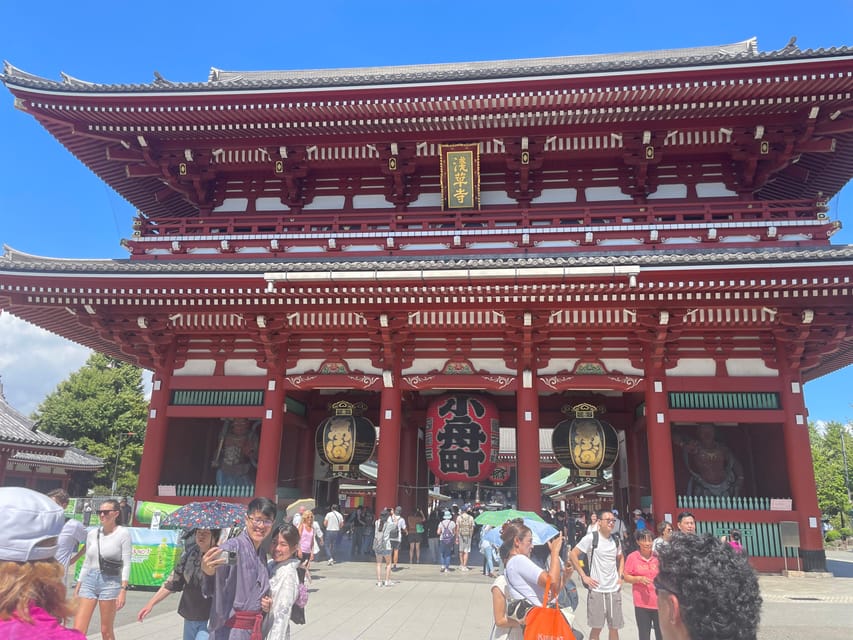
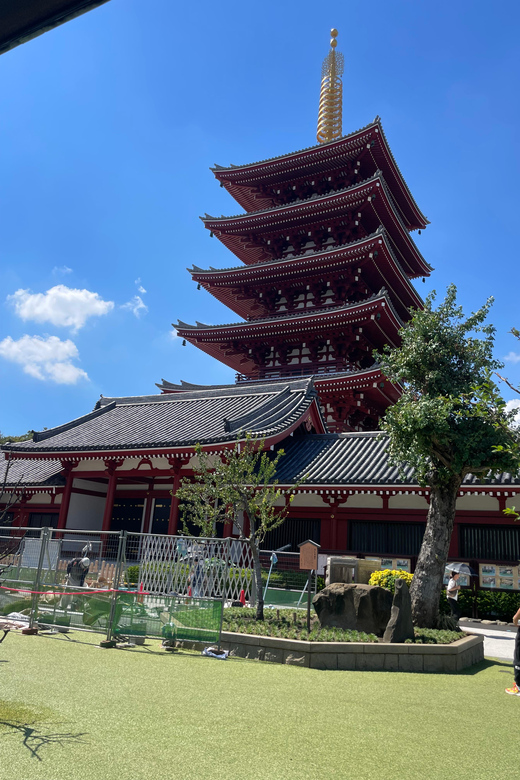
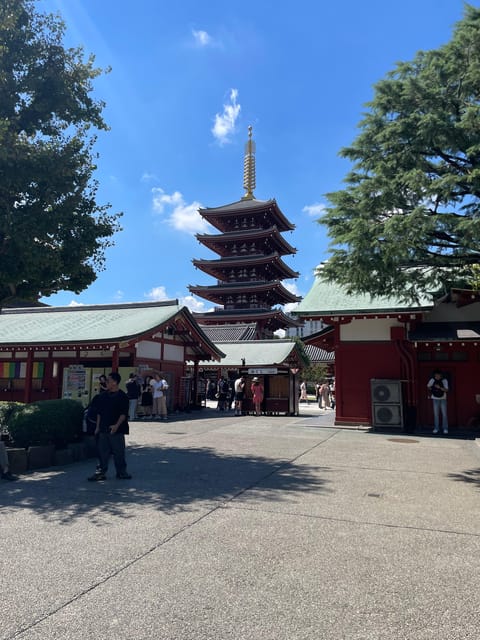
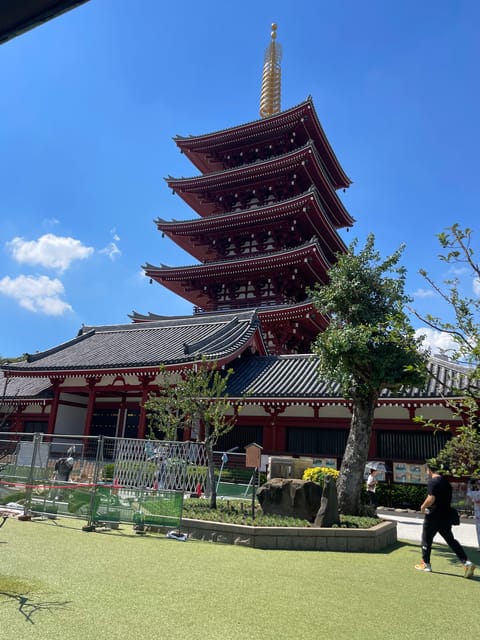
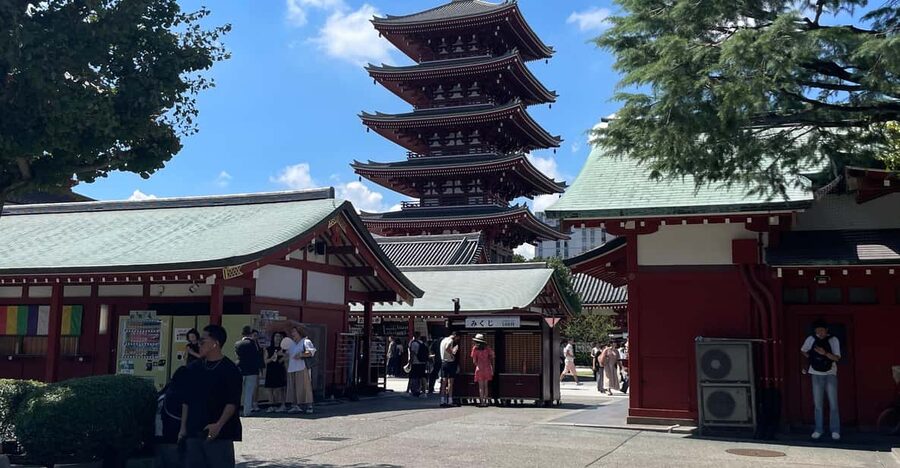
The Asakusa portion gives you the clearest introduction to old Tokyo. The route lists Asakusa Shrine, while the main draw in this area is Senso-ji, Tokyo’s oldest and best-known Buddhist temple. You enter through the red Kaminarimon Gate, pass along Nakamise Street, and reach the main temple complex.
Nakamise is lined with traditional shops selling souvenirs, snacks, and small Japanese goods. It can be crowded, but it also gives you a useful first look at how worship, shopping, and sightseeing overlap in Tokyo. Take a moment to notice the scale of the gate and the temple approach before rushing toward the main hall.
The temple is linked with the year 628, a date that helps explain why this is such an important place in the city’s story. You do not need to be an expert in Buddhist customs to appreciate the setting, but a guide can make the visit more meaningful by explaining the gate, incense, and temple grounds.
The planned hour is reasonable for a first look. It gives you time to walk the approach and see the temple, though not necessarily to browse every shop. Taito City is also included later as a short visit, reinforcing the Asakusa area rather than giving you a long, separate neighborhood tour.
Meiji Shrine and the quiet side of Tokyo
Meiji Shrine changes the mood completely. Set in a wooded area, this Shinto shrine honors Emperor Meiji and Empress Shoken. After the shops and crowds around Asakusa, the broad paths and calm surroundings offer a welcome pause.
You will walk here, so comfortable shoes are essential. The planned visit lasts about an hour, which should allow time to follow the approach and see the shrine grounds without turning the stop into a strenuous hike. If you have mobility concerns, tell the provider before the tour. One person with walking difficulties was able to get dropped close to sights to cut down the distance.
I like the way this stop prevents the day from becoming a parade of high-rise viewpoints and shopping streets. Meiji Shrine is not merely another photo stop. It gives you a sense of how Tokyo protects quiet ceremonial spaces within a huge urban center.
The surrounding Harajuku area makes the contrast sharper. One moment you are among trees and shrine gates, and soon after you can be looking at youth fashion and compact shops on Takeshita Street.
Skytree, Tokyo Tower, and two views of the city
Tokyo Skytree reaches 634 meters, making it the tallest structure in Japan. Its observation decks provide wide views across Tokyo, and on a clear day you might see Mount Fuji. The scheduled stop is about an hour for sightseeing.
That hour may or may not include enough time for every paid observation level, depending on lines and your preferred pace. Entrance fees are not included, so decide before the day how much you want to spend on going up. Even if you choose not to enter, the tower itself is an impressive city marker and a useful part of the route.
Tokyo Tower brings a second major viewpoint and a different visual character. The tour allows about an hour here as well. Visiting both towers is useful if city panoramas are a priority, but it also takes time away from the markets, temples, or shopping areas.
This is one place where I would speak plainly with your guide at the start. You may prefer one tower with more time at street level rather than two quick tower visits. The private format lets you make that choice. The schedule names both towers, but it does not require you to treat them as equal priorities.
Clear weather matters most for the observation decks. On a rainy or hazy day, the outdoor views can lose much of their impact. Ahmad has been praised for finding a backup plan in poor weather, so discuss the order of stops if the forecast looks rough.
Same base, a completely different sort of day:
- Tokyo: teamLab Planets TOKYO Digital Art Museum Entry Ticket
★ 4.6 · 9,779 reviews - Mt Fuji & Hakone Cruise, Drum Show Bullet Train 1 Day from Tokyo
★ 4.0 · 7,413 reviews - Tokyo: Sumo Show Experience with Chicken Hot Pot and a Photo
★ 4.8 · 6,678 reviews - Tokyo: Shinjuku Food Tour (13 Dishes at 4 Local Eateries)
★ 5.0 · 6,603 reviews
The Imperial Palace and East Gardens
The Imperial Palace is the Emperor of Japan’s residence, surrounded by gates, grounds, and gardens. The public East Gardens offer the main chance to walk in the palace area, and the planned stop lasts about 45 minutes.
This is a shorter visit than the shrine and tower stops. You should expect a compact look rather than a complete tour of the palace grounds. The gardens are valuable because they add open space and formal scenery to a day otherwise filled with dense streets and tall buildings.
The palace area can work well as a reset between major stops. It is also a place where your guide’s timing matters. The route has a lot to cover, so your guide can help you focus on the accessible public areas instead of wasting time looking for entrances or wandering without a plan.
Shinjuku Gyoen’s one-hour pause
Shinjuku Gyoen National Garden is another change of pace. The itinerary gives you an hour, enough for a purposeful walk rather than a full exploration of every path.
I would use this stop to slow down and let Tokyo feel less mechanical. Gardens are easy to undervalue on a packed city tour, but they help you understand the range of the city. You get formal greenery and open views, then return to the dense commercial districts.
The garden also makes the tour more attractive to families and mixed-interest groups. A child who has had enough temple gates may appreciate the space, while a photographer can get a different set of scenes from the towers and crossings. Keep in mind that the route involves walking, and the total day can feel long if you try to give every stop equal attention.
Shibuya Crossing and Harajuku street life
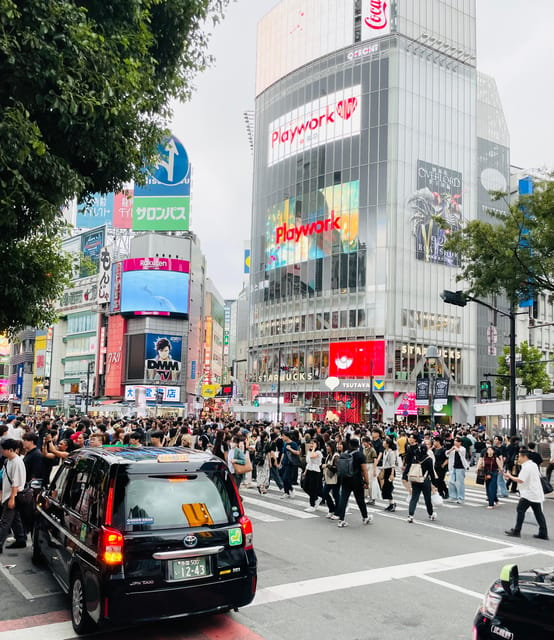
Shibuya Crossing is Tokyo’s famous pedestrian scramble, where several streams of people cross at once when the traffic stops. The tour allows about 45 minutes, which is enough to watch the crossing, take photos, and get a feel for the district.
The crossing is a symbol of modern Tokyo, but it is also easy to overdo. You do not need hours here to understand the appeal. A short stop works well, especially when the rest of the day includes several major sights.
Takeshita Street in Harajuku gets about 30 minutes. This is the heart of Tokyo’s youth fashion scene, with trendy shops, colorful clothing, and a strong people-watching angle. Thirty minutes is enough for a quick walk, but not enough for serious shopping. If fashion is your main interest, ask to adjust the route and give Harajuku more time.
The connection between Meiji Shrine and Takeshita Street is one of the day’s best pairings. The shrine gives you ritual and quiet; Harajuku gives you style, commerce, and youthful energy. You see two very different sides of Tokyo within the same district.
Tsukiji Outer Market for food and local flavor
The main Tsukiji fish market moved to Toyosu, but Tsukiji Outer Market remains a popular place for seafood, small eateries, and Japanese food specialties. Stalls and restaurants offer sushi, sashimi, and snacks such as tamagoyaki, the sweet Japanese omelette.
No fixed duration is provided for this stop, which is helpful if food is a high priority. You can ask for enough time to browse and eat, or keep it short if you would rather focus on temples and viewpoints. Lunch is not included, so budget separately for anything you buy here.
I would not treat Tsukiji as a formal sit-down lunch guarantee. It is better viewed as a chance to sample local foods and see a working market district. Ask your guide how much time remains before ordering a meal, since the day has several stops still competing for attention.
The route’s pace, walking, and accessibility
The private vehicle reduces the strain of Tokyo’s size, but it does not remove walking. You will walk through temple grounds, shrine paths, gardens, shopping streets, and public areas. Wear shoes that can handle a full day on mixed surfaces.
The route is wheelchair accessible, and the provider asks you to share extra needs such as car seats or allergies ahead of time. The experience is not suitable for people over 95, according to the tour conditions. Those with limited mobility should discuss the exact route before booking, especially because attractions such as Meiji Shrine, gardens, and markets involve walking.
Traffic is the unpredictable part. A private car is convenient, but Tokyo roads can slow the day. The driver may arrive up to 30 minutes late because of highway traffic, and travel between districts can take longer than the sightseeing time suggests. A flexible attitude will help.
The strongest reports about guide Ahmad focus on patience, good English, local knowledge, and willingness to listen. He has adjusted the plan, picked up guests on time, and changed the route around bad weather and walking difficulties. Those details are especially useful for families, older adults, and anyone who does not want to be pushed through a fixed schedule.
What $319 means for your group
The cost is $319 per group of up to five people. For five, that works out to about $64 per person. For two people, it is about $160 each, so the value depends heavily on group size.
The price includes hotel pickup and drop-off, a private vehicle, petrol, highway tolls, and WiFi onboard when available. A driver-guide is included if you select that option. Entrance fees, lunch, and personal expenses are extra.
I see the best value for a small family or group of friends that wants convenience and a tailored route. You are paying to save planning time, connect distant areas, and avoid managing transport for a long day. If you are a solo visitor or couple who enjoys Tokyo’s trains and wants leisurely time in each neighborhood, the price may feel high.
Do not assume the tour price covers the observation decks at Skytree or Tokyo Tower. Ask about the admission plan when booking and keep cash or another payment method available for food and purchases at Tsukiji and Harajuku.
Who will get the most from this tour
I would recommend this day to first-time visitors who want a broad introduction to Tokyo. It suits groups with different priorities because the route can shift between culture, shopping, gardens, food, and technology.
Families may appreciate the private car and the ability to limit walking at selected stops. Older adults should still discuss mobility needs in advance. The experience also suits visitors staying in Tokyo hotels, hostels, apartments, or private addresses who want door-to-door service.
It is less suited to anyone seeking a slow, specialist visit to one district. You will not have much time for long shopping sessions, extensive garden walks, or a careful look at every temple building unless you remove other stops.
Free cancellation is available up to 24 hours before the tour, and you can reserve now and pay later. Those policies help if your Tokyo plans are still taking shape, but they do not solve the basic issue of traffic and a full schedule.
Should you book the Tokyo highlights tour?
Book it if you want maximum coverage with minimum transport planning, especially if you can fill most of the five available places. The strongest reasons are the private vehicle, flexible route, hotel pickup, and the guide’s reported patience when plans need to change.
Before booking, decide which two or three stops matter most. If you want both towers, a full market meal, long temple visits, and serious Harajuku shopping, eight hours will feel tight. Tell Ahmad or your assigned guide your priorities at pickup and be ready to trim the list.
For a first look at Tokyo, this is a practical and adaptable choice. For a slower, more focused day, select fewer sights and use the private format to give them the time they deserve.
FAQ
How long is the Tokyo Private City Highlights Tour?
The tour lasts eight hours, including pickup and return to your Tokyo location.
How much does the tour cost?
The price is $319 for a private group of up to five people.
What locations can I visit?
The route includes Asakusa Shrine and the Senso-ji area, Meiji Shrine, Tokyo Skytree, Tokyo Imperial Palace, Tokyo Tower, Shinjuku Gyoen National Garden, Shibuya Crossing, Tsukiji Outer Market, Takeshita Street, and Taito City.
Is hotel pickup included?
Yes. Pickup and drop-off are included from hotels, hostels, apartments, and other addresses in Tokyo. Pickup is not available from airports, ports, or stations.
Is lunch included?
No. Lunch, entrance fees, and personal expenses are not included.
Is the tour private?
Yes. It is offered as a private group experience.
What languages are available?
The listed languages are English and Japanese. The guide option includes a driver-guide.
Can the tour accommodate wheelchair users?
The tour is listed as wheelchair accessible. You should tell the local provider about extra requirements, such as car seats, allergies, or mobility needs, before the tour.
Just added around Tokyo
- Private Arrival Transfer : Narita International Airport to Central Tokyo City★ 4.5 · 12 reviews
- Narita Airport(NRT): Private Transfer to Tokyo/Yokohama 1-9pax★ 5.0 · 47 reviews
- Private Transfer from Narita Airport to Yokohama Port and City★ 4.5 · 17 reviews
- [Narita Airport Terminals 1, 2] 40-60km Sawara Itako Historic Bike Tour★ 5.0 · 13 reviews
- 3 Day Japan Highlights Tour: Tokyo, Mt.Fuji, Nara, Kyoto, Osaka★ 5.0 · 22 reviews
- The 10 Tastings of Tokyo With Locals: Private Street Food Tour★ 5.0 · 48 reviews
- Small Town in the Big City: Tasting Tokyo’s Kichijoji★ 5.0 · 195 reviews
- Small Town in the Big City: Tasting Tokyo’s Kichijoji★ 5.0 · 16 reviews
Tokyo Tours, compared.

Mt Fuji and Hakone 1-Day Bus Tour Return by Bullet Train
Read our review →

teamLab Planets TOKYO Digital Art Museum Entry Ticket
Read our review →
Mt Fuji & Hakone Cruise, Drum Show Bullet Train 1 Day from Tokyo
Read our review →
Sumo Show Experience with Chicken Hot Pot and a Photo
Read our review →
Shinjuku Food Tour (13 Dishes at 4 Local Eateries)
Read our review →
Tokyo Mt Fuji 5th St & Hakone Cruise Bus Tour w/Bullet Train
Read our review →
Flagship 2-Hours Official Street Go-Kart Tour – Tokyo Bay Shop
Read our review →Browse the lists this tour appears in