
Reviewed · TOKYO TOURS
Tokyo: Private Customizable Tour with a Local Guide
Tokyo rewards a plan, but not a rigid one. This private tour lets you shape the day around temples, food, shopping, pop culture, or a first look at the city’s famous districts. A guide such as Joe, Maruf, Abu, Zia, or Amir can adjust the pace and help you fit more into your hours.
I like the private format, since you are not tied to a large group or a fixed route. I also like the chance to mix major sights with personal interests, such as Tsukiji food stalls, Akihabara’s otaku shops, or Harajuku’s Takeshita Street. The main drawback is distance: covering several Tokyo districts means a fair amount of walking and local transport, so the four-hour option cannot include everything.
Key points to know
- Four or eight hours: Choose a quick introduction to Tokyo or a full day with room for several neighborhoods.
- A guide who adjusts the route: Guides including Joe, Maruf, Abu, Zia, and Amir have helped guests fit in specific sights, food stops, and shopping.
- Major Tokyo landmarks: Senso-ji, Meiji Shrine, the Imperial Palace area, Tsukiji, Shibuya, and Shinjuku can all be part of the plan.
- Useful local food advice: Lunch recommendations are included, with Tsukiji and other markets and restaurants available along the way.
- Private sightseeing, not a fixed bus loop: You can spend longer at a temple, shorten a shopping stop, or switch from famous sights to less visited places.
- Plan for walking: Comfortable shoes, water, sunscreen, and weather-appropriate clothing will make a real difference.
A Tokyo day built around your interests
The strength of this experience is choice. You can use four hours to get your bearings, or take eight hours and connect several parts of the city in one long day. The guide is there to shape the route, explain what you are seeing, and help with timing.
That flexibility matters in Tokyo. Asakusa feels very different from Akihabara, and Shibuya has little in common with the quiet grounds of Meiji Shrine. A fixed sightseeing route can leave you rushing through places you care about or spending time on stops that do not interest you. Here, you can make those tradeoffs with a private guide.
You might ask for temples and traditional neighborhoods. You might prefer fashion, animation, electronics, food markets, and nightlife. First-time visitors can focus on Tokyo’s headline sights, while returning visitors can ask for a different side of the city. The tour is conducted in English and uses a private group format.
A few more Tokyo half-days to weigh up
- Mt Fuji and Hakone 1-Day Bus Tour Return by Bullet Train
★ 5.0 · 26,383 reviews - 1-Day Tokyo Bus Tour
★ 5.0 · 14,250 reviews - Tokyo: TOKYO SKYTREE® Admission ticket
★ 4.5 · 11,192 reviews
Tsukiji begins the day with food and local color
Tsukiji Outer Market is a useful opening stop because it gives you an immediate sense of Tokyo’s food culture. You have time for a guided visit, photographs, and free time, with about an hour assigned to the stop.
The outer market is a good place to ask your guide what to look for and where lunch might make sense later in the day. It can be easier to appreciate a food market when someone helps you understand the ingredients, stalls, and eating customs rather than simply leading you past them.
Keep your expectations practical. This is not a dedicated food tour, and meals and drinks are not included. You pay for anything you eat, so carry local currency for personal expenses. If food is your top interest, tell your guide early so the schedule leaves enough room for browsing and eating.
Senso-ji and Asakusa show Tokyo’s traditional side
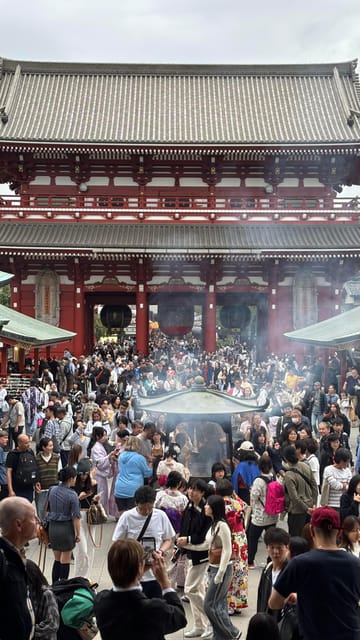
Senso-ji Temple is one of the tour’s central stops. You get time for a guided visit, photos, a break, and your own look around. The temple gives you a strong introduction to Tokyo’s Buddhist traditions and to the older feel of Asakusa.
The nearby Asakusa portion adds time for shopping and free exploration. That separation is helpful. You are not forced to treat the temple and the neighborhood as one rushed photo stop. You can spend time at Senso-ji, then look around Asakusa for food and small purchases.
This is also the part of the tour that can work especially well for travelers who want a cultural introduction rather than a list of city viewpoints. Amir, for example, arranged a highly customized Asakusa visit that included local food and Japanese cultural experiences. That kind of request is worth making clearly when you book or meet your guide.
There is a practical limit. Senso-ji and Asakusa can take up much of a shorter tour, especially if you want time to shop and eat. On a four-hour schedule, you may need to choose between this area and districts farther west.
Akihabara puts Tokyo’s pop culture on the route
Akihabara is the choice for anime, manga, games, electronics, and otaku culture. The tour allows time for a guided visit, sightseeing, shopping, photographs, and free exploration.
Your guide can help you decide how long to spend here. If you are deeply interested in Japanese pop culture, you may want to make Akihabara a major stop rather than a quick look. If it is only a curiosity, you can keep the visit short and use the saved time for Meiji Shrine or Shibuya.
This district is also a good example of why the private setup has value. A large group often has to move on together. Here, you can stop for shopping or ask questions without making a whole coach wait.
Akihabara will not suit everyone. If temples, gardens, or food are your priorities, it may be better to leave it out. Tell the guide what you actually want to see instead of trying to collect every famous district.
Same base, a completely different sort of day:
- Tokyo: teamLab Planets TOKYO Digital Art Museum Entry Ticket
★ 4.6 · 9,779 reviews - Mt Fuji & Hakone Cruise, Drum Show Bullet Train 1 Day from Tokyo
★ 4.0 · 7,413 reviews - Tokyo: Sumo Show Experience with Chicken Hot Pot and a Photo
★ 4.8 · 6,678 reviews - Tokyo: Shinjuku Food Tour (13 Dishes at 4 Local Eateries)
★ 5.0 · 6,603 reviews
Meiji Shrine offers a quieter pause
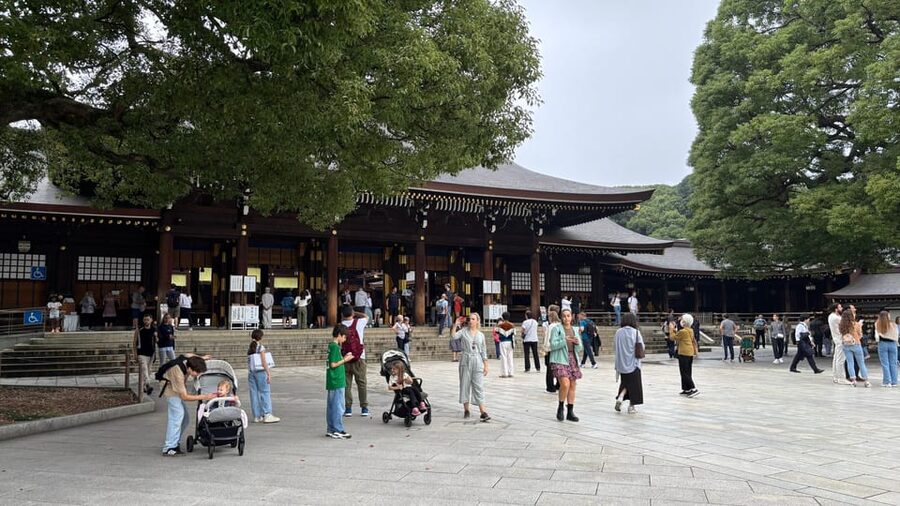
Meiji Shrine brings a very different mood. Its grounds are described as a forested setting, and the visit includes guided time, photographs, free time, and shopping nearby.
After the noise and signs of central Tokyo, this stop gives you a change of pace. It is a strong choice if you want to see how religious spaces fit into modern city life. You can ask your guide about shrine customs and what to notice as you move through the grounds.
The stop is not only about taking a picture at the entrance. Give yourself time to walk, look around, and appreciate the contrast with Harajuku. If you are tired or have limited time, though, this can become a demanding part of the day because the tour involves moderate walking.
Harajuku’s Takeshita Street can be added for colorful shops, youth fashion, and a more playful city atmosphere. It makes a natural pairing with Meiji Shrine, but the two experiences are quite different. One is calm and traditional, the other is commercial and youthful.
Shibuya brings shopping and famous city energy
Shibuya is included as a possible stop for sightseeing, shopping, photographs, and free time. It is a useful choice if you want a modern Tokyo snapshot after seeing temples and shrines.
Your guide can help you decide if Shibuya deserves a long stop or a shorter orientation. Shopping can easily expand beyond the planned hour, so set your priorities before you arrive. If you want a broad look at Tokyo in one day, keep moving. If you want retail time, accept that another district may need to go.
Shibuya also shows the value of a private day in practical terms. You can ask for help deciding between shopping and sightseeing rather than following a preset schedule. You are still responsible for personal purchases, and meals and drinks remain outside the tour price.
Shinjuku adds an evening option
Shinjuku is the final possible district, with sightseeing, shopping, and free time. The broader area is known for entertainment, including the narrow bars of Golden Gai and the Kabukicho district.
The evening portion can give the tour a lively finish, but it needs sensible planning. If you choose an eight-hour tour and want Shinjuku at the end, make sure the earlier stops do not consume the whole day. Tokyo’s districts are spread out, and every additional neighborhood means more movement.
Golden Gai is particularly different from the broad avenues and major shopping zones elsewhere on the route. It is made up of compact bars and narrow lanes, while Kabukicho offers a larger entertainment district. Your guide can help you decide what fits your interests, but the tour does not include drinks or other personal spending.
Four hours or eight hours?
The four-hour version works best when you have one clear goal. For example, you could focus on Asakusa and Senso-ji, combine Meiji Shrine with Harajuku, or see a compact selection of central highlights.
Do not try to force Tsukiji, Asakusa, Akihabara, Meiji Shrine, Shibuya, and Shinjuku into four hours. You would spend too much of the time moving and not enough actually seeing places.
The eight-hour option is the better value for a first visit if your budget allows. It gives you room for several neighborhoods, a lunch recommendation, shopping pauses, and time to ask questions. Even then, you should rank your interests. Tokyo is too large for a relaxed, meaningful look at every district in one day.
A useful approach is to choose three priorities and two optional stops. If food is first, begin with Tsukiji. If tradition matters most, give Asakusa and Meiji Shrine proper time. If pop culture and fashion are your focus, choose Akihabara, Harajuku, or Shibuya.
What the $120 price really buys
At $120 per person, this is not the cheapest way to see Tokyo. The value comes from having a private English-speaking licensed guide and the ability to change the pace and route around your interests.
That can be worthwhile for a first day in a huge city. A guide can reduce the uncertainty of choosing between districts, make lunch planning easier, and help you use your limited hours well. Abu, for instance, was praised for helping guests see as much as possible in one day, while Maruf combined subway travel with food markets, restaurants, sightseeing, and shopping time.
Entrance fees to the mentioned sites are included, and lunch recommendations are included. Meals, beverages, and personal expenses are not. The price is easier to justify if you plan to ask questions, want help connecting several districts, or have a short stay in Tokyo.
It is less compelling if you prefer wandering alone, already know the city, or plan to spend a full day in one neighborhood. In that case, public transport and self-guided sightseeing may cost less and give you more independence.
Walking, transport, and daily comfort
Be ready for a moderate amount of walking. The day can include temple grounds, shrine paths, shopping streets, markets, and several city districts. Wear comfortable shoes and bring water, sunscreen, a hat, and a camera.
Check the forecast before you leave and dress for the conditions. Tokyo sightseeing can feel very different in heat, rain, or cold, and the flexible format does not remove the physical demands of a long day.
One review describes moving between popular wards by subway. That gives you a useful picture of the experience: this is active city sightseeing, not a vehicle-based tour where you step out at each landmark. The guide may help you move between areas, but you should still expect time on foot.
The activity information gives conflicting details about mobility. It says the experience is wheelchair accessible, but it also says it is not suitable for people with mobility impairments or wheelchair users. Ask the provider to clarify current arrangements before booking if accessibility is important to you.
Smoking is not allowed. Have local currency available for food, drinks, shopping, and other personal costs.
The guides are the main reason to book
The strongest feature is not simply the list of places. It is the guide’s ability to respond to your priorities.
Joe arranged a day around everything one couple wanted to see. Zia used shortcuts, shared information about local culture, and included less familiar spots. Amir shaped an Asakusa visit around Japanese food and cultural experiences. These examples point to the best way to use the tour: arrive with a wish list, then let the guide help you make it workable.
You should also be direct about pace. Say if you want long photo stops, shopping time, food, or fewer locations with more explanation. The more clearly you explain what matters, the more useful a custom tour can be.
The overall rating is 4.8 from 13 reviews, with the supplied comments giving particular weight to guide service, local food suggestions, route planning, and the ability to see a lot in one day. The sample is not large, so I would treat that score as encouraging rather than as a guarantee of a particular guide or experience.
Should you book this Tokyo private tour?
Book it if you want a flexible first day, have a short stay, or need help fitting Tokyo’s major areas into one practical route. It is especially useful for couples, families, and private groups with different interests, since the guide can balance temples, food, shopping, and pop culture.
Choose the eight-hour option if you want several districts. Choose four hours only when you are willing to focus. Ask about your preferred guide, route, transportation, and the conflicting accessibility information before you commit.
Skip it if you enjoy planning every detail yourself or want a slow, single-neighborhood day. For everyone else, the $120 price can make sense when a good guide saves time and turns a long list of Tokyo names into a day that actually fits you.
FAQ
How long is the private Tokyo tour?
You can choose a four-hour or eight-hour tour. Starting times depend on availability.
Is the itinerary customizable?
Yes. The tour is private and the itinerary can be adjusted to your interests and schedule.
Which Tokyo sights can be included?
Possible stops include Tsukiji Outer Market, Senso-ji Temple, Asakusa, Akihabara, Meiji Shrine, Shibuya, and Shinjuku. The Imperial Palace area, Takeshita Street, Golden Gai, and Kabukicho may also fit into your plan.
Is a guide included?
Yes. A private English-speaking licensed guide is included.
Are entrance fees included?
Entrance fees to the mentioned sites are included.
Are meals included?
No. Meals and beverages are not included, but the tour includes lunch recommendations.
How much walking should I expect?
You should be prepared for a moderate amount of walking. Comfortable shoes, water, sunscreen, and weather-appropriate clothing are recommended.
Can I cancel for a full refund?
Yes. You can cancel up to 24 hours in advance for a full refund. You can also reserve now and pay later.
Just added around Tokyo
- Private Arrival Transfer : Narita International Airport to Central Tokyo City★ 4.5 · 12 reviews
- Narita Airport(NRT): Private Transfer to Tokyo/Yokohama 1-9pax★ 5.0 · 47 reviews
- Private Transfer from Narita Airport to Yokohama Port and City★ 4.5 · 17 reviews
- [Narita Airport Terminals 1, 2] 40-60km Sawara Itako Historic Bike Tour★ 5.0 · 13 reviews
- 3 Day Japan Highlights Tour: Tokyo, Mt.Fuji, Nara, Kyoto, Osaka★ 5.0 · 22 reviews
- Small Town in the Big City: Tasting Tokyo’s Kichijoji★ 5.0 · 195 reviews
- Small Town in the Big City: Tasting Tokyo’s Kichijoji★ 5.0 · 16 reviews
- The 10 Tastings of Tokyo With Locals: Private Street Food Tour★ 5.0 · 48 reviews
Tokyo Tours, compared.

Mt Fuji and Hakone 1-Day Bus Tour Return by Bullet Train
Read our review →

teamLab Planets TOKYO Digital Art Museum Entry Ticket
Read our review →
Mt Fuji & Hakone Cruise, Drum Show Bullet Train 1 Day from Tokyo
Read our review →
Sumo Show Experience with Chicken Hot Pot and a Photo
Read our review →
Shinjuku Food Tour (13 Dishes at 4 Local Eateries)
Read our review →
Tokyo Mt Fuji 5th St & Hakone Cruise Bus Tour w/Bullet Train
Read our review →