
Reviewed · TOKYO TOURS
Tokyo: Shibuya Food Tour (13 dishes and 4 Eateries)
Shibuya’s food scene is easiest to enjoy when someone else handles the ordering. This three-hour walk takes you from the meeting point near Tokyu Plaza through four different eateries, with 13 dishes ranging from yakitori and sushi to street food and dessert. You also cross Shibuya Scramble Crossing, so the evening mixes eating with a proper look at one of Tokyo’s famous districts.
I like the variety, and I like the practical help. You are not tied to one restaurant or one style of cooking, and guides such as Hoshi, Kei, Rio, Yota, and Naruto have been praised for explaining customs, showing how dishes are garnished, and offering ideas for places to eat and shop later. The main drawback is that the food is served at a steady pace, so this is not the tour for lingering over one long dinner. Dessert may also be a matter of personal taste.
Key points at a glance
- Four distinct food stops: Visit an izakaya, a street-food stall, a traditional eatery, and a dessert stop rather than repeating one type of meal.
- Thirteen dishes and two drinks: The $77 price includes a broad tasting menu plus alcoholic and non-alcoholic drink options.
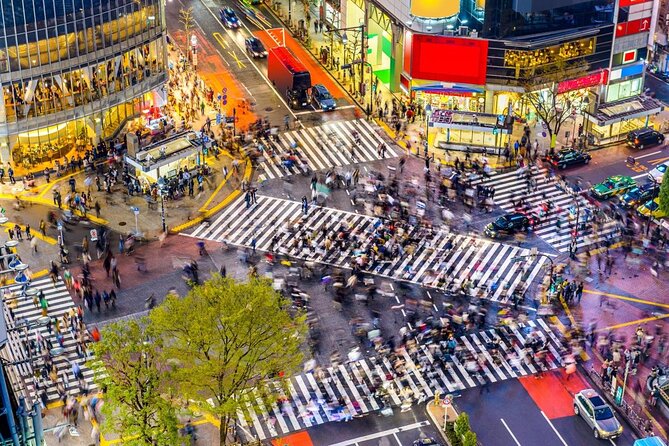
- Shibuya after dark: Walk through Shibuya City, Center Gai, Dogenzaka, and the famous crossing during one compact evening.
- Useful food guidance: Your English-speaking guide explains how foods are eaten, what garnishes mean, and how Japanese dining customs work.
- Friendly solo option: The social format gives you an easy way to meet people while having a guide help with unfamiliar dishes.
- Flexible booking: You can cancel up to 24 hours before the start for a full refund and reserve now while paying later.
Why this food walk works in Shibuya
Shibuya is often reduced to bright signs, crowded sidewalks, and the famous crossing. Those sights are worth seeing, but they do not tell you much about how people eat in the area. This tour adds a useful second layer: you walk through Dogenzaka and Center Gai while stopping at small, local-style food places.
The format is especially helpful if you are new to Japan. A guide can order several dishes for the group, explain what has arrived, and show you the usual way to eat or garnish them. That removes much of the guesswork that comes with a menu you cannot easily read.
The food is not one large plated meal. Instead, you receive 13 dishes across four stops. That gives you more range, but it also means you should expect movement, shared portions, and a schedule rather than a relaxed restaurant evening.
More Food Tours in Tokyo
- Tokyo: Shinjuku Food Tour (13 Dishes at 4 Local Eateries)
★ 5.0 · 6,603 reviews - Tokyo: Shinjuku Food Tour (15 Dishes and 4 Eateries)
★ 4.9 · 2,033 reviews - Best of Shinjuku: Izakaya Food Tour (4 Stops, 14+ Tastings)
★ 5.0 · 1,863 reviews
Meeting near Tokyu Plaza
The tour begins in front of the 7-Eleven at Tokyu Plaza in Shibuya, identified as Kusumoto Bld. as the starting location. This is a central part of Shibuya, so allow time to find the exact meeting point. Shibuya’s station area has many exits and plenty of foot traffic, and arriving early is sensible.
Once the group meets, the guide sets the tone for the night. The English-speaking guides are the main reason this format works. Hoshi has been praised for explaining dishes, answering questions about language and customs, and helping solo participants feel at ease. Other guides, including Kei, Rio, Yota, Will, Matt, Haydn, Doren, and Naruto, have also been singled out for humor, food knowledge, local suggestions, and good group conversation.
Guide assignments can change, so you should not book on the assumption that one particular person will lead your date. Still, the repeated praise for different guides suggests that the experience depends on a team rather than a single personality.
First hour in Shibuya City
The opening section takes about an hour and is built around dinner stops in Shibuya City. This is where the tour begins to show its value. You are not simply handed a dish and sent on your way. The guide explains what you are eating and gives the food a bit of cultural context.
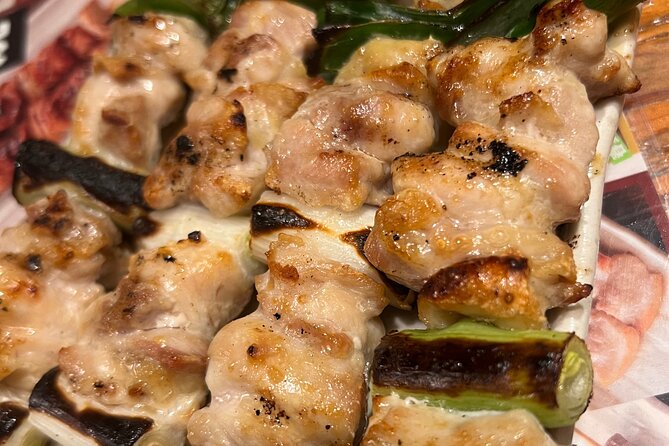
The exact menu can vary, but the stated selection includes Japanese favorites such as sizzling yakitori and fresh sushi. One of the most memorable foods mentioned by several participants was tuna, served both as sushi and in a cooked form. Smoked tuna also received special praise. If you enjoy seafood, this part may be a highlight.
Yakitori is a good introduction to the izakaya style. These grilled skewers are simple at first glance, but the experience depends on seasoning, texture, and the way several small plates work together. At an izakaya, you can expect a more social setting than a formal restaurant. The food is designed to share, discuss, and pair with a drink.
The guide’s explanation matters here. You might learn how a dish is normally garnished, which part to try first, or how it fits into ordinary Japanese dining. That kind of help is more useful than a long lecture on food history because you can use it at your next meal.
Center Gai and the street-food stop
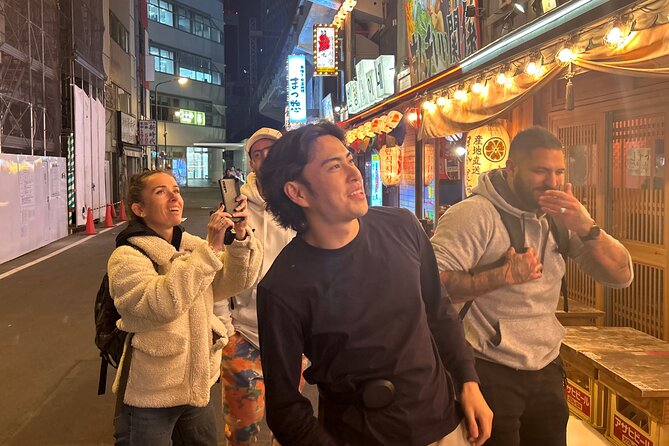
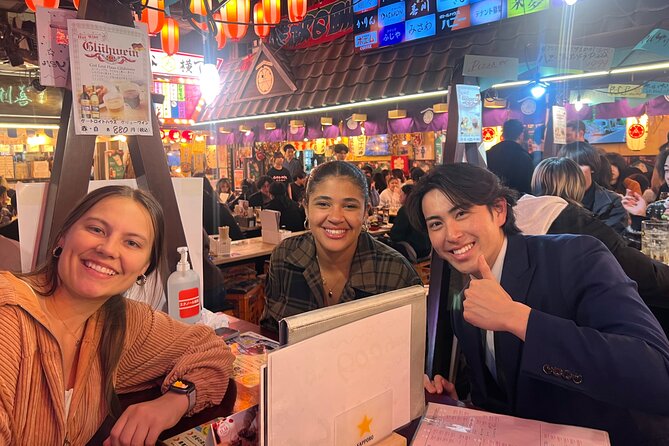
The next hour takes you through Center Gai, one of Shibuya’s best-known pedestrian areas. This is a lively, high-energy part of the district, filled with signs, shops, restaurants, and people moving between stations and nightlife spots. The walk gives you a feel for the area between bites.
The street-food stop changes the rhythm. A stall or casual counter lets you try something in a quicker, less formal setting. This is one of the strongest parts of a multi-stop food tour because you can sample something you might overlook when choosing a full meal on your own.
The group format also helps with ordering. You can try several items without committing to a large portion of one unfamiliar dish. That makes the tour suitable for curious eaters who want to expand their range, as well as cautious eaters who prefer to sample before ordering a full serving.
There is a practical limit. Thirteen dishes sounds generous, and it is, but you should pace yourself. You may not be hungry for a major meal afterward. The food arrives across the evening, though, so the experience feels more like a series of tastings than one heavy sitting.
Same base, a completely different sort of day:
- Mt Fuji and Hakone 1-Day Bus Tour Return by Bullet Train
★ 5.0 · 26,383 reviews - 1-Day Tokyo Bus Tour
★ 5.0 · 14,250 reviews - Tokyo: TOKYO SKYTREE® Admission ticket
★ 4.5 · 11,192 reviews - Tokyo: teamLab Planets TOKYO Digital Art Museum Entry Ticket
★ 4.6 · 9,779 reviews
Crossing Shibuya Scramble
The Shibuya Crossing section lasts about 10 minutes and is mainly a photo stop with a guided walk. It is brief, but it gives the tour a clear sense of place. You are not eating in an anonymous neighborhood. You are moving through one of Tokyo’s most recognizable public spaces.
Crossing with the group can be more enjoyable than simply stopping at the edge to take pictures. The crossing is orderly despite the mass of people, and the short visit lets you experience the movement without turning the tour into a sightseeing lecture.
Keep your expectations realistic. This is not a dedicated Shibuya sightseeing tour, and 10 minutes is not enough for an extended look at every nearby landmark. The crossing is a connecting point between food stops, with a little time for photos and orientation.
Dogenzaka and the final dinner stops
The last 50 minutes take you through Dogenzaka, an area known for restaurants, nightlife, and steep streets. This is where the food-focused walk and the evening city experience come together. You finish with more dinner dishes and dessert before ending in Shibuya.
Dogenzaka is a useful place to explore with a guide because it can be hard to know which doorway or small restaurant is worth your time. The tour gives you a starting point and may help you spot the kind of places you would otherwise pass by.
The traditional eatery adds another change in style. Along with the izakaya and street-food stop, it shows that Japanese food is not one single experience. Atmosphere, ordering style, serving method, and table customs can change from place to place.
Dessert closes the evening. Most of the food feedback is strongly positive, but one person found the dessert less appealing than the savory dishes. That is not a serious flaw, but it is a useful reminder that a fixed tasting menu cannot suit every palate equally.
What the $77 price includes
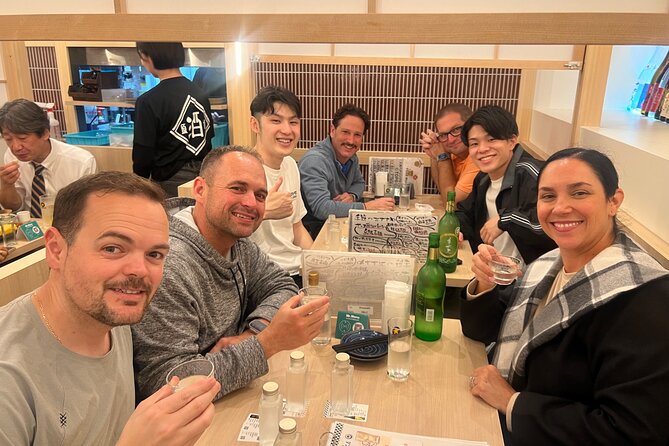
At $77 per person, the tour is not the cheapest way to eat in Shibuya. Its value comes from the combination of food, drinks, a guide, and access to several types of eateries in a short period.
The price includes food at one izakaya, one street-food stall, one traditional eatery, and a dessert stop. You also receive two drinks, with alcoholic and non-alcoholic choices. Since the experience includes 13 dishes, the cost is easier to justify if you planned to sample several foods anyway.
You are also paying for decision-making. The guide chooses or helps arrange the dishes, explains them in English, and provides advice for the rest of your time in Japan. That is useful on a first evening, especially if you want to learn where and how to eat before exploring alone.
I would not book this tour if your main goal is the lowest possible meal price or a long dinner at one highly regarded restaurant. I would book it if you value range, guidance, and the chance to try foods you would probably skip on your own.
The guides make the difference
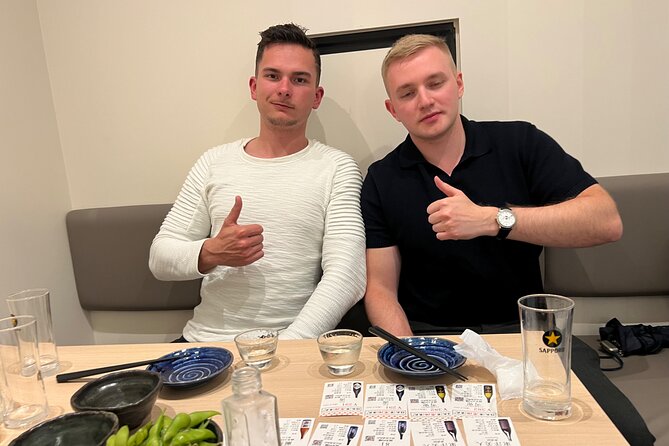
The strongest part of this experience is not a single dish. It is the human bridge between you and the food. Guides are expected to speak English and lead the group through the area, but the best moments come when they explain small details that are easy to miss.
Hoshi has been praised for his humor, hospitality, clear English, and ability to show how food is usually eaten or garnished. Kei has been described as friendly and helpful when introducing dishes that participants might not have tried alone. Rio has been valued for cultural explanations, while Naruto has adapted the food selection for a returning participant.
That last point says something useful about the format. The guide is not only reciting a script. The experience can respond to the group, the pace, and the questions being asked. You may also receive suggestions for later meals, shopping, or subway routes. One guide even helped a participant reach the correct subway for a hotel, while another assisted with finding the meeting point.
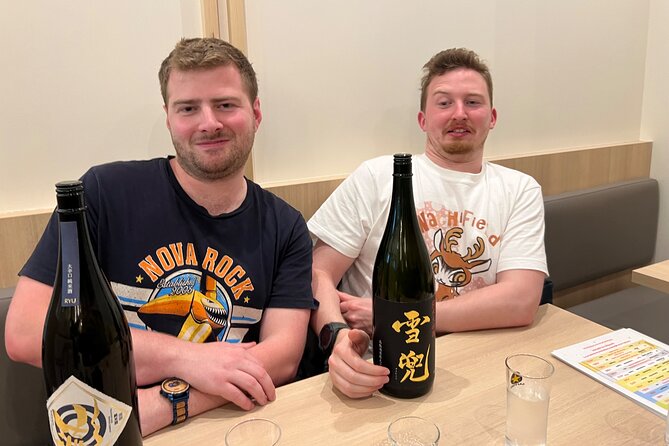
The group setting can be a plus for solo visitors. You have a natural reason to talk with other people, and the shared plates make conversation easy. If you prefer privacy or want to control every dish, a private food plan may suit you better.
Practical details before you book
The tour lasts three hours and is conducted in English. Starting times vary, so you need to check availability for your chosen date. The walk finishes in Shibuya, which is convenient if you want to continue your evening nearby.
The activity is listed as wheelchair accessible. Because the route includes busy streets, a crossing, and several eateries, it is still sensible to confirm any specific access needs when booking.
Food allergies, dietary restrictions, and strong dislikes are not explained in the available details. If you have a serious restriction, ask before paying rather than assuming the fixed menu can be changed. The same applies to alcohol preferences, even though both alcoholic and non-alcoholic drinks are offered.
You can cancel up to 24 hours in advance for a full refund. The reserve-now, pay-later option is useful if your Tokyo schedule is still changing.
Who should take this tour?
I would recommend it most strongly for first-time visitors to Tokyo, solo visitors, and anyone who wants a guided introduction to Japanese food without spending days researching restaurants. It is also a good first-night activity because it combines a major sight with practical dining advice.
Food lovers will appreciate the range, especially if tuna, sushi, yakitori, and small shared dishes appeal to you. The tour is also a sensible choice for cautious eaters because you can taste smaller portions and ask questions before ordering similar foods later.
Families with young children may find the three-hour evening pace tiring, depending on the child. The supplied information does not specify a minimum age or child menu, so check before booking if that matters to your group.
Experienced Japan visitors can still enjoy the tour, especially if they want conversation and new places. One repeat participant returned several times and appreciated trying different dishes with new guides. If you already know Shibuya well and only want a quiet meal, though, this may feel too structured.
Should you book the Shibuya food tour?
Book it if you want 13 dishes, four food settings, two drinks, and a guided walk through Shibuya for one fixed price. The tour gives you more than a meal, but it does not pretend to be a formal culinary course or an in-depth sightseeing tour.
The best reason to go is the mix: local-style food, a famous crossing, busy streets, and a guide who can explain what you are seeing and eating. The main cautions are the fixed menu, the quick movement between stops, and the possibility that dessert will not be your favorite course.
For a first evening in Tokyo, I think the $77 cost is fair. You get your bearings, learn useful dining habits, and leave with ideas for the rest of your stay. If that sounds more useful than simply finding one restaurant, this is a smart Shibuya introduction.
FAQ
Where does the tour meet?
Meet your English-speaking guide in front of the 7-Eleven at Tokyu Plaza in Shibuya.
How long does the tour last?
The tour lasts three hours.
How many dishes are included?
The experience includes 13 dishes served across four eateries.
What kinds of places do you visit?
The food stops include one izakaya, one street-food stall, one traditional eatery, and a dessert stop.
Are drinks included?
Yes. Two drinks are included, with alcoholic and non-alcoholic options.
Is Shibuya Crossing part of the tour?
Yes. The tour includes a guided walk through Shibuya Crossing and a photo stop lasting about 10 minutes.
What language is the tour offered in?
The live tour guide speaks English, and English is the listed tour language.
Just added around Tokyo
- Private Arrival Transfer : Narita International Airport to Central Tokyo City★ 4.5 · 12 reviews
- Narita Airport(NRT): Private Transfer to Tokyo/Yokohama 1-9pax★ 5.0 · 47 reviews
- Private Transfer from Narita Airport to Yokohama Port and City★ 4.5 · 17 reviews
- [Narita Airport Terminals 1, 2] 40-60km Sawara Itako Historic Bike Tour★ 5.0 · 13 reviews
- 3 Day Japan Highlights Tour: Tokyo, Mt.Fuji, Nara, Kyoto, Osaka★ 5.0 · 22 reviews
- The 10 Tastings of Tokyo With Locals: Private Street Food Tour★ 5.0 · 48 reviews
- Small Town in the Big City: Tasting Tokyo’s Kichijoji★ 5.0 · 195 reviews
- Small Town in the Big City: Tasting Tokyo’s Kichijoji★ 5.0 · 16 reviews
Tokyo Tours, compared.

Mt Fuji and Hakone 1-Day Bus Tour Return by Bullet Train
Read our review →

teamLab Planets TOKYO Digital Art Museum Entry Ticket
Read our review →
Mt Fuji & Hakone Cruise, Drum Show Bullet Train 1 Day from Tokyo
Read our review →
Sumo Show Experience with Chicken Hot Pot and a Photo
Read our review →
Shinjuku Food Tour (13 Dishes at 4 Local Eateries)
Read our review →
Tokyo Mt Fuji 5th St & Hakone Cruise Bus Tour w/Bullet Train
Read our review →
Flagship 2-Hours Official Street Go-Kart Tour – Tokyo Bay Shop
Read our review →Browse the lists this tour appears in