
Reviewed · TOKYO TOURS
Tokyo: Best of Shibuya Food Tour
Shibuya’s famous crossing is only the opening act. This three-hour food walk leads you into side streets, compact restaurants, standing sushi counters, izakaya, ramen stops, and a department-store food hall where dessert finishes the meal. The point is not simply to eat. It is to understand how Tokyo’s food culture works in the spaces between the neon signs.
I like the five-stop variety, which can take you from sushi and okonomiyaki to ramen and traditional sweets in one outing. I also like the personal touch from guides such as Alex, Jane, Maya, and Saika, who have helped visitors with Japanese customs, local phrases, food choices, and restaurant tips. The main caution is that this is a walking-and-standing experience, and some of the stops have limited seating. At $170 per person, it makes the most sense if you want guidance and a broad tasting menu, not just one inexpensive meal.
Key points at a glance
- Five different food stops: Expect a broad sampling of Japanese dishes rather than a single sit-down meal.
- Shibuya beyond the crossing: Side streets, small restaurants, alleys, and department-store food counters form the real route.
- Two drinks and dessert included: The package adds drinks along the way and ends with a sweet course.
- Small groups of up to 10: This is easier to manage than a large food crawl, though group size can affect restaurant space.
- Guides add cultural context: Alex, Jane, Maya, Saika, and other English-speaking guides have been praised for humor, care, and practical advice.
- Come hungry and wear good shoes: Portions can be generous, and three hours on foot is no time for flimsy footwear.
Shibuya food beyond the Scramble Crossing
Most first-time visits to Shibuya begin at Hachiko and the famous crossing. That is a fine place to get your bearings, but it tells you little about how people eat in this part of Tokyo. Restaurants sit above shops, below department stores, along narrow lanes, and inside buildings that are easy to overlook when you are focused on the big signs.
This tour uses food to pull you away from the obvious sights. You walk through busy streets, then turn into smaller passages where the sound changes. You may hear a grill working, see chefs preparing food in tight quarters, and find restaurants that would be hard to choose without someone who understands the area.
That is the real value here. You are not simply being taken from one famous address to another. You are shown how Shibuya is arranged and how local eating places fit into the neighborhood. The walk adds useful context to a district that can otherwise feel like a wall of lights and crowds.
More Food Tours in Tokyo
- Tokyo: Shinjuku Food Tour (13 Dishes at 4 Local Eateries)
★ 5.0 · 6,603 reviews - Tokyo: Shinjuku Food Tour (15 Dishes and 4 Eateries)
★ 4.9 · 2,033 reviews - Best of Shinjuku: Izakaya Food Tour (4 Stops, 14+ Tastings)
★ 5.0 · 1,863 reviews
What the five food stops can include
The exact dishes can vary, but the experience is built around five separate food moments. Past menus and guide-led outings have included sushi, an izakaya stop, okonomiyaki, ramen, and a traditional dessert. Other tastings have included takoyaki, Kobe beef, regional dishes, and street food.
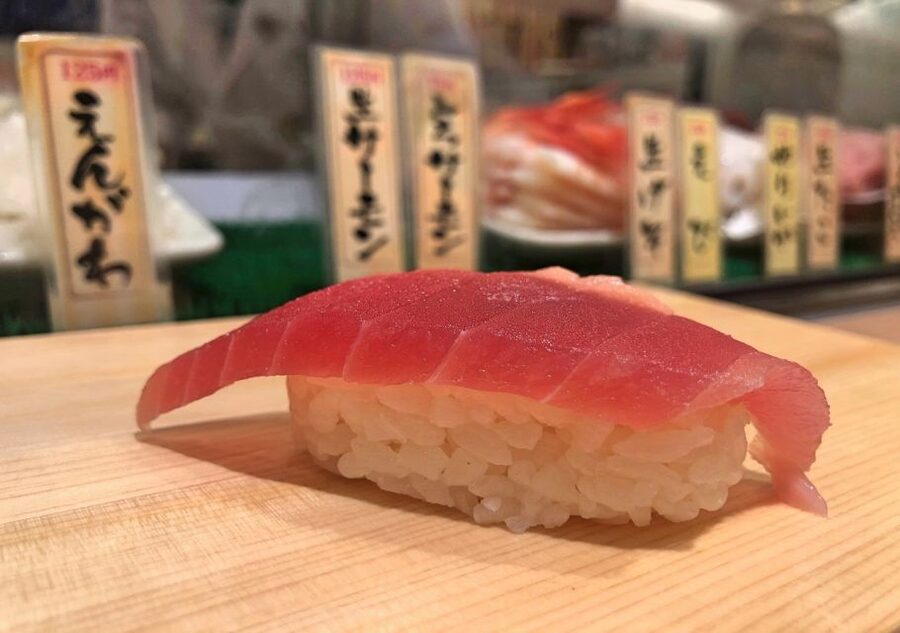
Sushi at a compact local stop
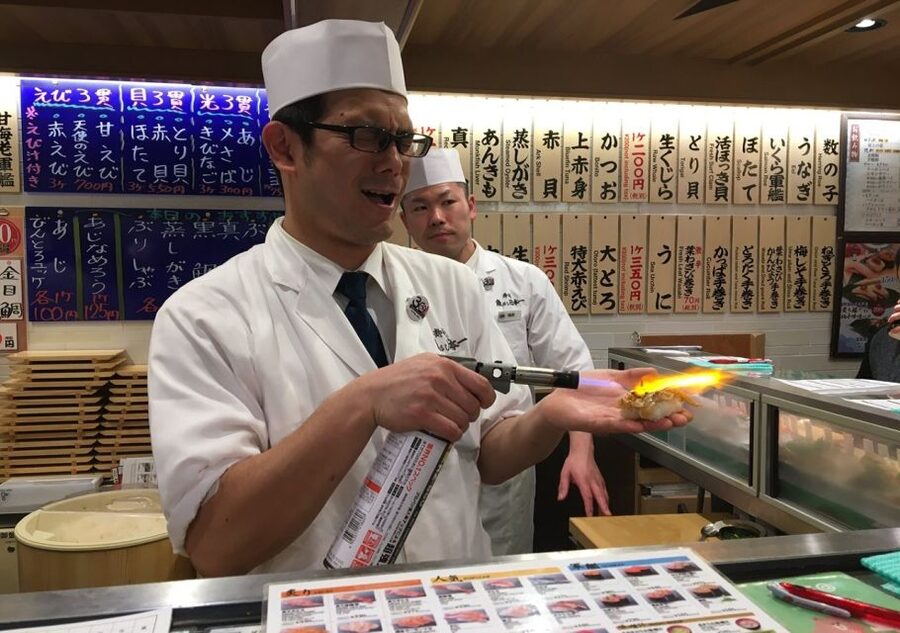
A sushi tasting gives you an early introduction to the care that goes into simple ingredients. One past route included a standing sushi restaurant, a useful detail for anyone who wants a distinctly Japanese setting rather than a formal dining room.
Standing restaurants are practical and fast, but they are not especially relaxing. You may be eating upright in a tight space, with little room for lingering. That said, a guide makes the experience far less awkward if you are unsure how to order, where to stand, or what you are being served.
Do not expect an extended sushi dinner. This is one part of a five-stop meal, designed to give you a taste before moving on. If sushi is your main reason for booking, check the current menu rather than assuming the tour will focus heavily on it.
Izakaya food and the social side of eating
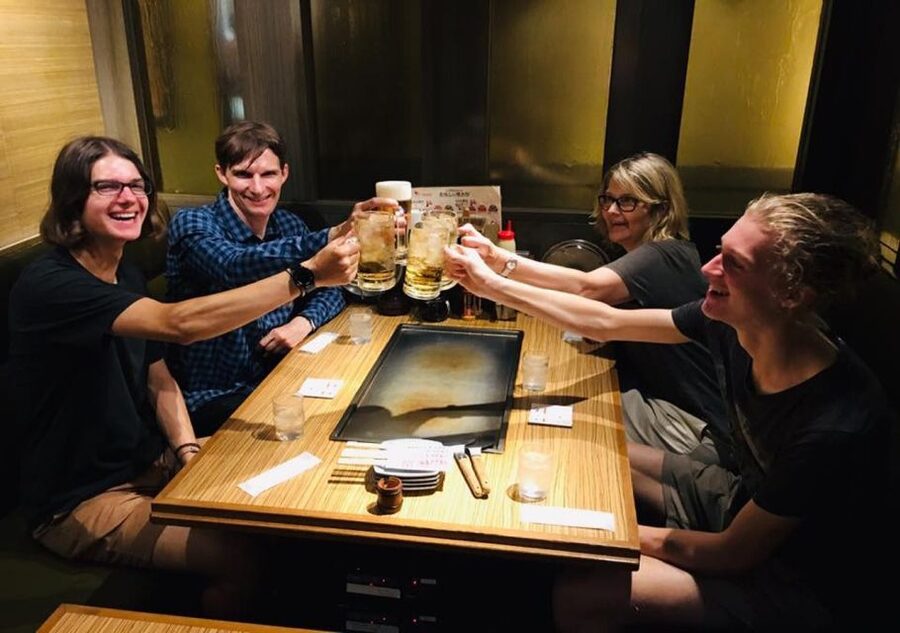
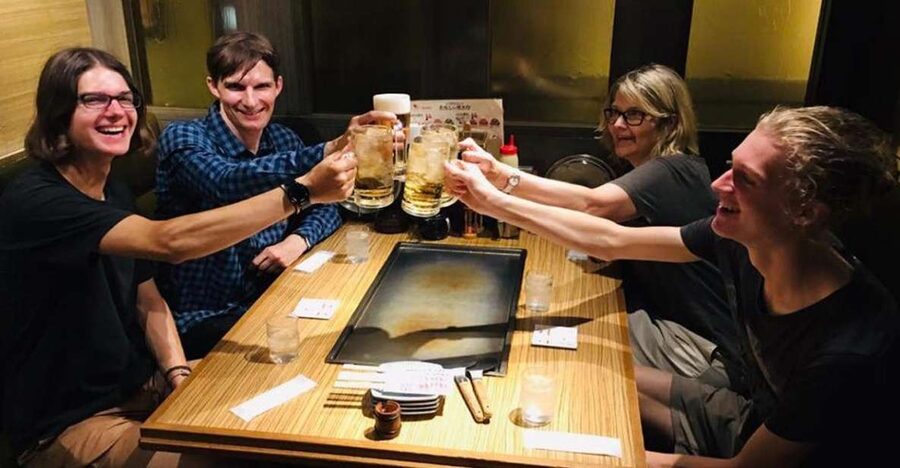
An izakaya is a Japanese drinking-and-dining spot where small dishes are commonly shared. It is a good setting for learning how food and conversation overlap in Japan. You might receive several modest plates rather than one large entrée, giving you more chances to try something unfamiliar.
The included drinks are useful here. Two drinks are part of the tour, and they help the meal feel like an evening out rather than a string of samples. Additional drinks and food can be purchased separately if you want more.
This stop may be less comfortable for someone who prefers quiet, spacious dining. The appeal lies in the atmosphere and the chance to see a typical style of Japanese social eating. Your guide can also explain ingredients and customs while you eat, which is much easier than trying to work everything out from a menu.
Same base, a completely different sort of day:
- Mt Fuji and Hakone 1-Day Bus Tour Return by Bullet Train
★ 5.0 · 26,383 reviews - 1-Day Tokyo Bus Tour
★ 5.0 · 14,250 reviews - Tokyo: TOKYO SKYTREE® Admission ticket
★ 4.5 · 11,192 reviews - Tokyo: teamLab Planets TOKYO Digital Art Museum Entry Ticket
★ 4.6 · 9,779 reviews
Okonomiyaki with a regional angle
Okonomiyaki is often described as a Japanese savory pancake, but that short label does not tell you much about the experience. It is a hearty dish with a range of ingredients, and different parts of Japan prepare it in their own ways.
The okonomiyaki stop has been especially well received, with past outings featuring regional versions of the dish. That makes this more than a quick novelty tasting. You get a chance to see how a familiar Japanese food changes by region and preparation style.
This is also one of the more filling stops. If you arrive after a large lunch, you may struggle by the time ramen and dessert appear. Plan to eat lightly beforehand, and remember that the aim is to try a sequence of dishes rather than finish a single giant plate.
Ramen along Shibuya’s food streets
Ramen brings a comforting, substantial course into the middle or later part of the walk. A previous route included a ramen restaurant on a food street, though the exact shop and bowl are not guaranteed.
Ramen is a useful stop for first-time diners because it is familiar enough to enjoy and still offers plenty to learn. A guide can help explain the style of the broth, the toppings, and the practical rhythm of eating in a busy noodle shop.
This can also be the point when you realize how much food is included. Several people have advised arriving hungry, and that is sensible. The tour does not appear to rely on tiny decorative bites. Portions can be generous, so pace yourself from the first stop.
Dessert inside a Shibuya Depachika
The route ends with a tour and dessert in a Depachika, the food hall found in the basement of a Japanese department store. This is a fitting finale because these markets show a polished side of Japanese food culture that is easy to miss if you only eat in restaurants.
You can expect a traditional sweet course, though the specific dessert is not stated. The stop gives you a final chance to ask questions, look at Japanese food presentation, and see how department stores package everything from daily meals to carefully made sweets.
Ending indoors is practical, especially in cold or wet weather. It also breaks up the walking and standing that come earlier. The final dessert is included, so you are not paying extra simply to complete the planned route.
The guides make the difference
The guide is central to this experience. The route itself includes appealing foods, but the person leading you determines how comfortable and useful the evening feels.
Past guide names include Alex, Jane, Maya, Saika, Serena, Shion, Kumie, Michie, Ryan, and others. Alex has been praised for humor, food advice, photographs, and stories that connected Japanese and Mexican culture. Jane has been credited with finding small independent restaurants and taking good care of the group. Saika has been praised for strong English, cultural explanations, photographs, and extra time spent with a very small group.
Those details point to the tour’s strongest feature: conversation. You can ask about Japanese habits, foods to try elsewhere in Tokyo, and places to eat later in your trip. Some guides have also helped with dietary restrictions, adapting the experience so nobody in a group was left out.
That flexibility should not be treated as a guarantee of every dietary request. Tell the operator about restrictions before booking, and confirm what can be accommodated. The food choices and guide assignment may vary.
Group size, walking, and comfort
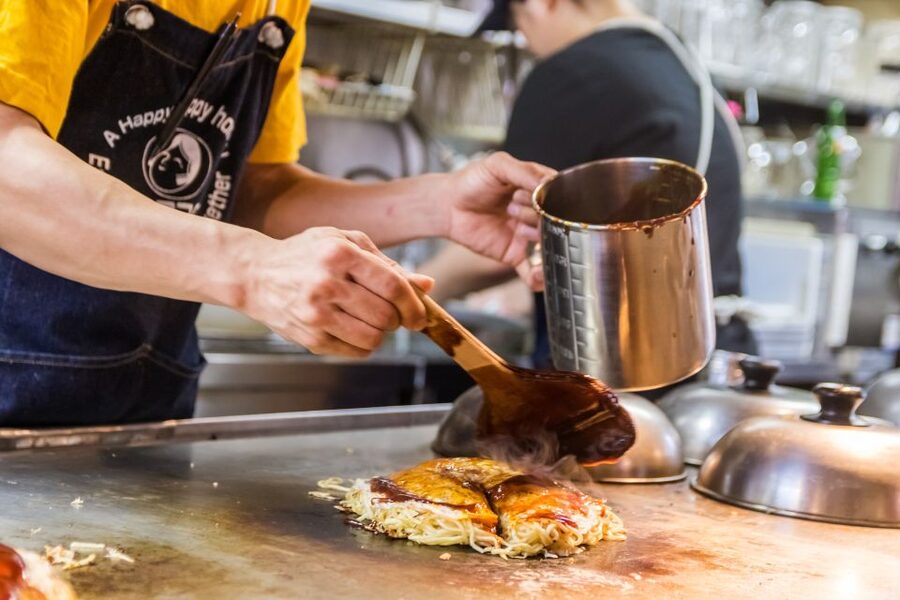
The advertised maximum is 10 people, which is a sensible size for narrow restaurants and busy streets. A small group lets you hear the guide and ask questions without fighting through a crowd. It also makes it easier to move between stops.
Group size can still affect the mood. One past outing involved a larger group of 12, and the size made some restaurants feel crowded. The current limit of 10 is better, but you should still expect compact seating or standing areas rather than a private dining room.
The tour lasts three hours and includes walking between stops. One earlier family outing involved children, including a six-year-old, and the guide adjusted the pace and spent enough time indoors to make the day manageable. Another account noted that much of the experience involved standing, which can be tiring for young children or anyone with mobility concerns.
Bring comfortable shoes. You should also avoid arriving full. There is no need to plan another major meal immediately afterward.
Is $170 a fair price?
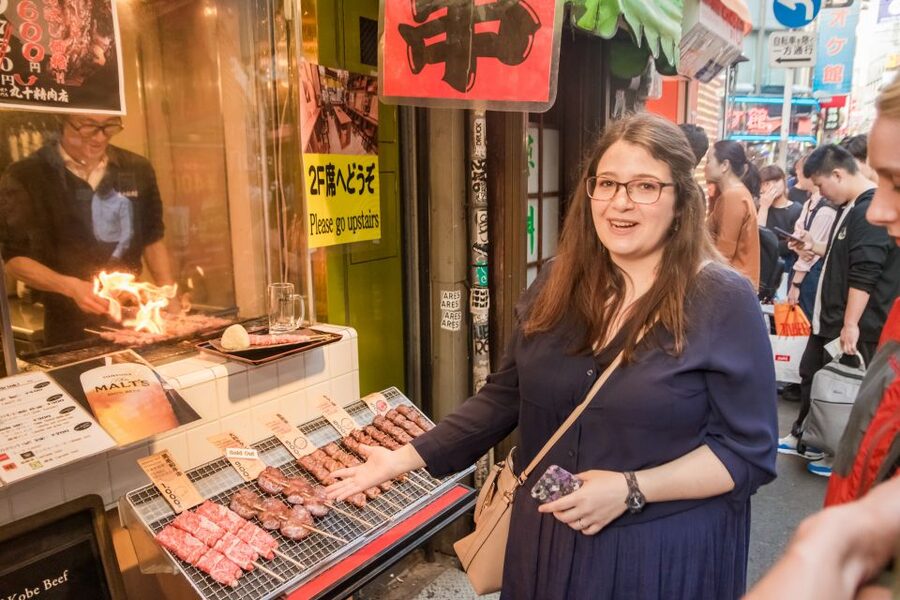
The $170 price is not cheap by Tokyo meal standards. If you are happy choosing restaurants yourself, you can spend far less on food. You are paying for more than the dishes here: an English-speaking guide, five organized stops, two drinks, dessert, cultural explanation, and help navigating Shibuya’s confusing food corridors.
The value improves for a first visit, especially if you are nervous about entering small Japanese restaurants. A guide handles the movement between stops, explains what is happening, and gives you ideas for the rest of your time in Japan. Several past outings also included group photographs and practical restaurant recommendations.
The value is weaker if you mainly want a bargain dinner or one long meal. You may prefer to spend $170 on a special restaurant reservation, especially if you dislike standing or want control over every dish.
I see this as a first or second night activity. It helps you get comfortable with Japanese food and gives you a short list of places and dishes to seek out later. It can also work near the end of a trip if you want one last guided look at Tokyo’s food culture.
Meeting at Hachiko’s mural
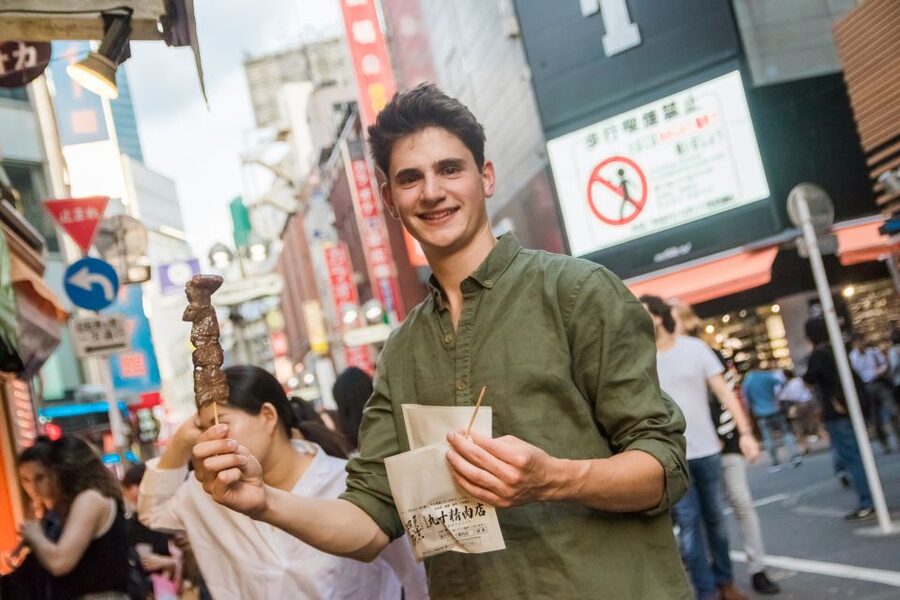
The meeting point is in front of the colorful Hachiko wall mural outside Shibuya Station at the Hachiko exit. Do not wait at the crowded Hachiko statue. The mural is visible as soon as you leave the station, and you should face the large intersection with the mural behind you.
Take this instruction seriously. Shibuya Station is confusing, and the tour can leave quickly. The operator allows only an additional five minutes after the scheduled start. Once the group has departed, the guide cannot provide directions or take phone calls, partly because the route must stay on schedule and the restaurants are expecting the group.
Allow extra time to find the correct exit. This is one of those small Tokyo logistics details that can make or break an otherwise good evening.
Who should book this Shibuya food tour?
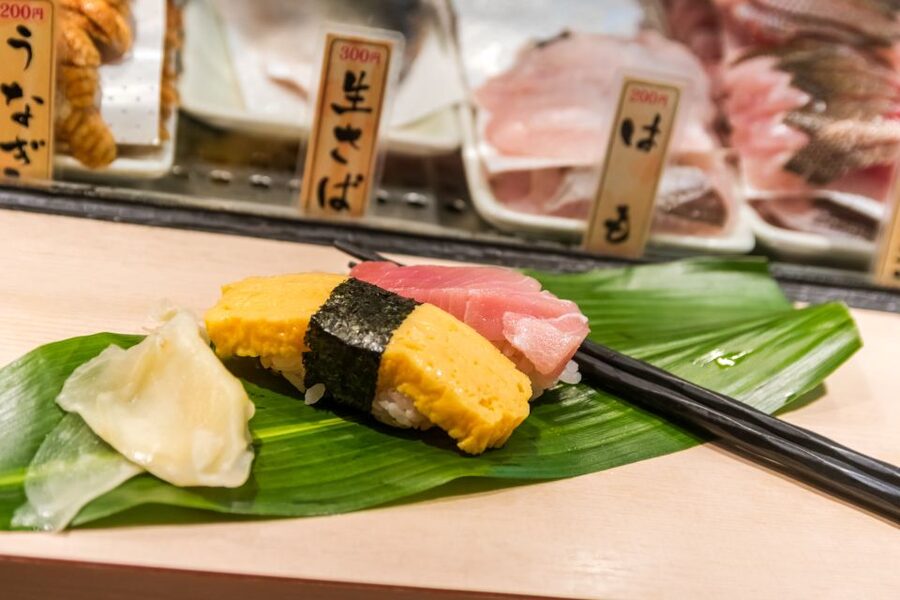
I would recommend it to first-time Tokyo visitors who want structure without spending an entire day on a formal food course. It also suits couples, families with adventurous children, and small groups who want to try foods they might not order alone.
Food-loving explorers will get the most from it, but you do not need expert knowledge of Japanese cuisine. The guide supplies the background, and the five-stop format keeps the evening moving.
I would hesitate if you need a fully seated meal, have strict dietary limitations that have not been confirmed, or prefer to explore independently. The tour also requires a good appetite and comfortable walking shoes.
Practical details to know
The tour is conducted in English by a live local guide. The group is limited to 10 participants, and the duration is three hours.
Two drinks, dessert, and a variety of dishes at multiple stops are included. Transportation, extra drinks or food, gratuity, and hotel pick-up are not included. Hotel pick-up may be arranged for an additional charge.
Bring your passport. A copy of passport information is required for every participant aged 10 and over. Comfortable shoes are essential.
You can cancel up to 24 hours before the start for a full refund, and the reserve-now, pay-later option lets you hold a place without paying immediately.
Should you book it?
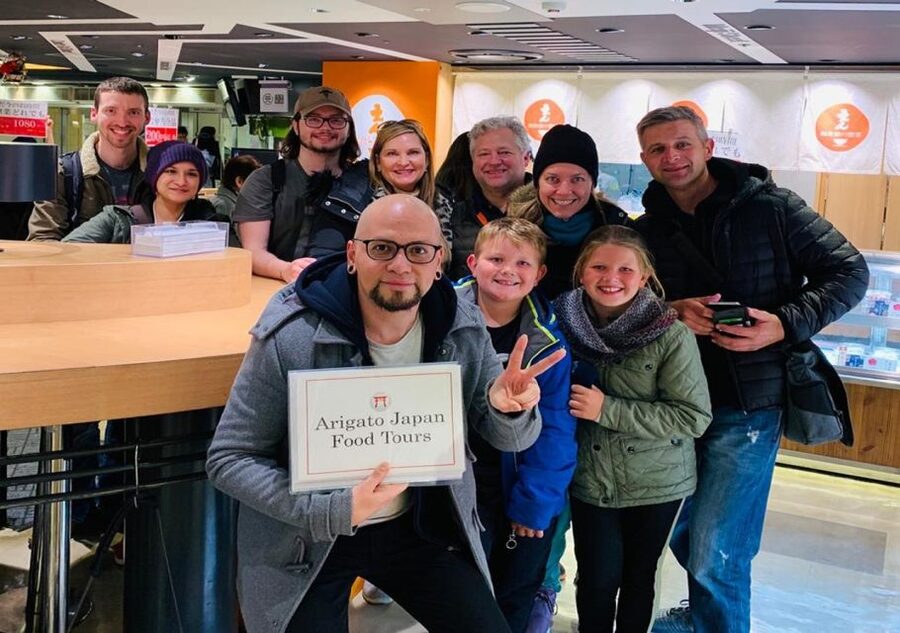
Book this tour if you want Shibuya explained through food, especially if you are uneasy about small restaurants, unfamiliar dishes, or Japan’s crowded station areas. The best parts are the range of stops, the side-street route, the Depachika finish, and the chance to spend an evening with a guide who can answer questions in real time.
Skip it if your priority is low-cost eating or a relaxed sit-down dinner. At $170, it is a guided food-and-culture outing, not a cheap meal.
For most first visits, I think the price is justified when you treat it as a practical introduction to Shibuya. Arrive early, bring your passport, wear shoes built for walking, and save room for the dessert.
FAQ
How long does the Shibuya food tour last?
The tour lasts three hours.
Where does the tour meet?
Meet in front of the Hachiko wall mural outside Shibuya Station at the Hachiko exit. Do not meet at the Hachiko statue.
How many people can join the group?
The small group is limited to 10 participants.
What food is included?
The tour includes dishes at five food stops, two drinks, and dessert. Past routes have included sushi, izakaya food, okonomiyaki, ramen, and traditional sweets, but the exact dishes may vary.
Is hotel pick-up included?
No. Hotel pick-up is not included, but it can be arranged for an additional charge.
What should I bring?
Bring your passport and comfortable shoes. A copy of passport information is required for all participants aged 10 and over.
Can I cancel for a full refund?
Yes. You can cancel up to 24 hours in advance for a full refund. You can also reserve now and pay later.
Just added around Tokyo
- Private Arrival Transfer : Narita International Airport to Central Tokyo City★ 4.5 · 12 reviews
- Narita Airport(NRT): Private Transfer to Tokyo/Yokohama 1-9pax★ 5.0 · 47 reviews
- Private Transfer from Narita Airport to Yokohama Port and City★ 4.5 · 17 reviews
- [Narita Airport Terminals 1, 2] 40-60km Sawara Itako Historic Bike Tour★ 5.0 · 13 reviews
- 3 Day Japan Highlights Tour: Tokyo, Mt.Fuji, Nara, Kyoto, Osaka★ 5.0 · 22 reviews
- Small Town in the Big City: Tasting Tokyo’s Kichijoji★ 5.0 · 195 reviews
- Small Town in the Big City: Tasting Tokyo’s Kichijoji★ 5.0 · 16 reviews
- The 10 Tastings of Tokyo With Locals: Private Street Food Tour★ 5.0 · 48 reviews
Tokyo Tours, compared.

Mt Fuji and Hakone 1-Day Bus Tour Return by Bullet Train
Read our review →

teamLab Planets TOKYO Digital Art Museum Entry Ticket
Read our review →
Mt Fuji & Hakone Cruise, Drum Show Bullet Train 1 Day from Tokyo
Read our review →
Sumo Show Experience with Chicken Hot Pot and a Photo
Read our review →
Shinjuku Food Tour (13 Dishes at 4 Local Eateries)
Read our review →
Tokyo Mt Fuji 5th St & Hakone Cruise Bus Tour w/Bullet Train
Read our review →
Flagship 2-Hours Official Street Go-Kart Tour – Tokyo Bay Shop
Read our review →Browse the lists this tour appears in