
Reviewed · TOKYO TOURS
Tokyo:Calligraphy &Make your original folding fan in Asakusa
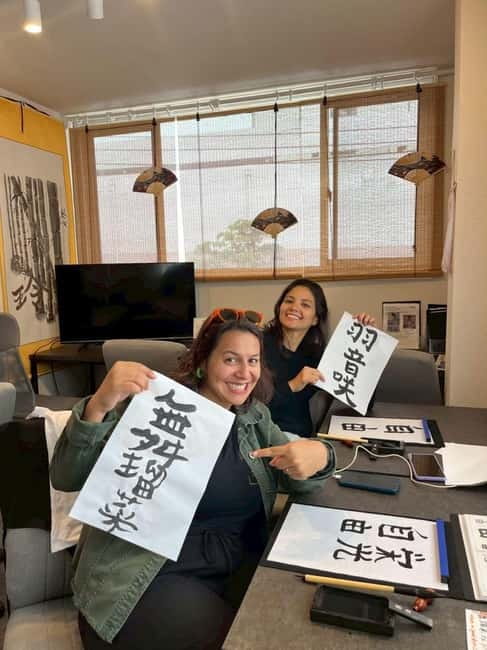
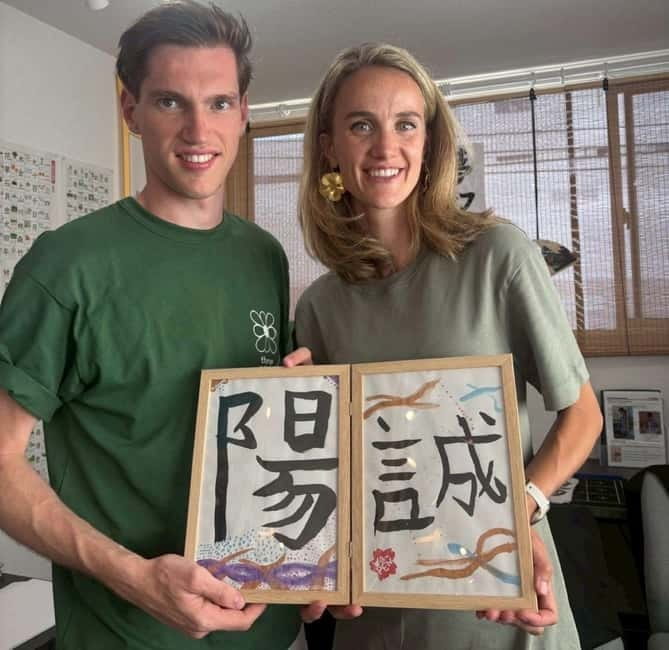
The best part of this Asakusa activity is that you do not just copy a Japanese character and go home. You learn how to hold the fude brush, prepare traditional ink, practice basic strokes, and turn your favorite work into an original folding fan. It is a small, hands-on look at Japanese culture rather than another quick photo stop.
I like two things here. First, the patient instruction from Mana gives beginners room to improve instead of rushing them toward a finished product. Second, the postcard and green tea add a thoughtful finish. You write a note to your future self, then receive it at home as a reminder of Tokyo.
The main consideration is practical: ink can make a mess, so wear clothes that can handle a spot or two, even though aprons are provided. The activity is also not suitable for wheelchair users, and choosing the henna tattoo option means you will not receive the calligraphy session.
Key points to know before booking
- Practice comes before the souvenir: You work through basic brush techniques on thin paper before creating your final fan.
- Mana teaches in English: She explains posture, brush use, ink control, kanji, and the cultural background in a friendly, clear way.
- The ink is prepared traditionally: You use water to soften a solid ink stick, a small but memorable part of the lesson.
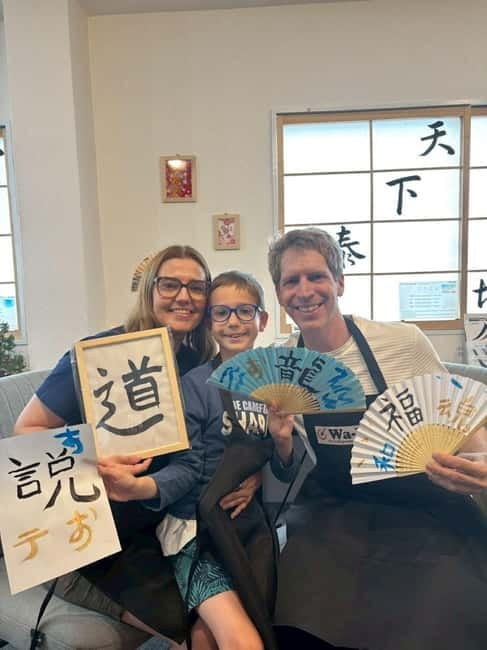
- Your keepsake is personal: Choose a design from a sample book or ask the instructor for help with a custom idea.
- The ending is unusually thoughtful: You write a postcard to yourself and enjoy green tea after the calligraphy.
- The price is modest: At $16 per person, the lesson, practice materials, tea, postcard, and folding fan make this a good-value cultural break.
Why this Asakusa class feels different
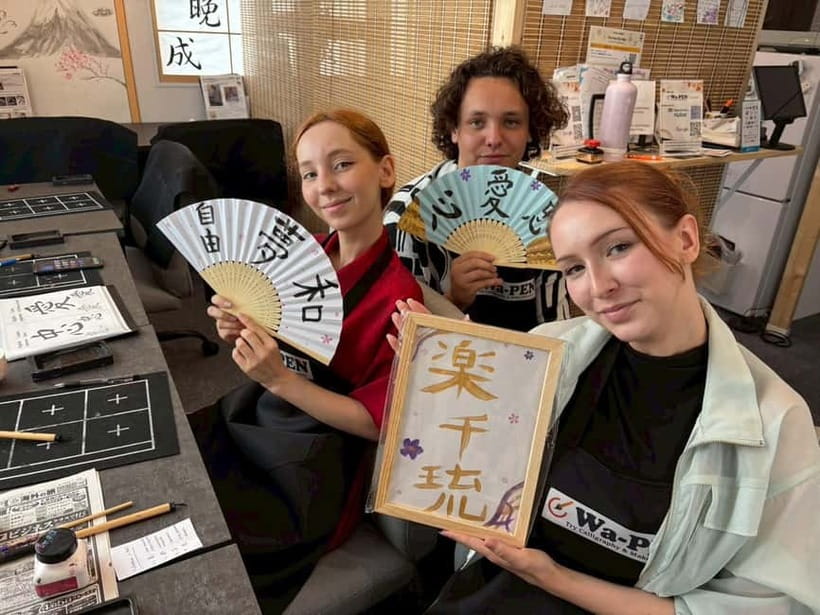
Asakusa is full of temples, souvenir shops, food stalls, and photo opportunities. This class gives you a quieter way to connect with Japan’s written culture. Instead of only looking at characters on signs or temple plaques, you learn how a brush moves and why posture matters.
Japanese calligraphy is not simply handwriting with a fancy tool. The shape of a character depends on pressure, speed, ink, and the order of each stroke. Even a beginner can feel the difference between dragging a brush stiffly and letting it move with a steady hand.
The lesson also introduces the history of Japanese calligraphy and the ideas behind hiragana, kanji, and modern Japanese life. The information is designed for first-time learners, so you do not need to know Japanese before arriving. You can ask for help with a name, a meaningful kanji, or another design offered by the instructor.
At $16, this is a particularly appealing option for anyone who wants more than a mass-produced souvenir. You receive a short cultural lesson and a handmade object for less than the cost of many paid Tokyo attractions. The activity is not a full formal calligraphy course, but it offers a useful first taste and a finished keepsake.
A few more Tokyo half-days to weigh up
- Mt Fuji and Hakone 1-Day Bus Tour Return by Bullet Train
★ 5.0 · 26,383 reviews - 1-Day Tokyo Bus Tour
★ 5.0 · 14,250 reviews - Tokyo: TOKYO SKYTREE® Admission ticket
★ 4.5 · 11,192 reviews
Beginning with posture, attitude, and the fude brush
The class starts with the basics. You learn the proper attitude and posture for calligraphy, then study how to hold the Japanese brush, called a fude. These details can sound small, but they matter. A poor grip makes the brush feel awkward, while the right position gives you better control over thick and thin lines.
You also learn how much ink to place on the brush. Too little ink produces a dry, broken mark. Too much can cause a blot or a heavy stroke. This is one reason the practice period is useful. You can test the brush without worrying about spoiling your final design.
The instructor teaches eight basic techniques with guide paper. These exercises help you understand straight lines, curves, pressure, and the rhythm of each stroke. You do not need artistic talent to take part, but you do need a little patience. The first marks may look uneven, and that is part of learning.
Mana’s teaching style is a strong part of the experience. She speaks English and has been praised for being patient, encouraging, and willing to explain a stroke more than once. One solo participant was even allowed extra time to continue practicing until the work felt right. That flexibility is valuable if you are new to brush writing or want to take the activity slowly.
Melting traditional ink instead of reaching for a bottle
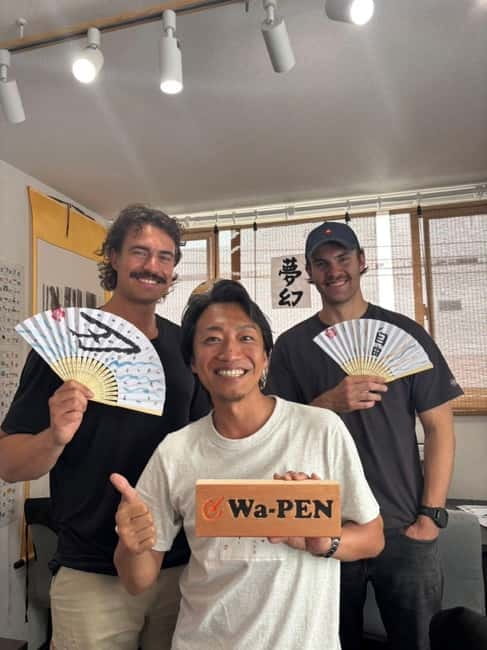
One of the more interesting details is the use of a traditional solid ink stick. You add water and work the stick until the ink is ready. This takes more time than opening a bottle, but it shows you an important part of the craft.
The process also helps set the pace for the class. Calligraphy rewards attention, and preparing the ink encourages you to slow down before you begin writing. You are not simply moving from one activity to the next. You are learning that the preparation is part of the work.
For many people, this will be the most unfamiliar part of the session. If you have never used solid ink, the instructor’s guidance makes it manageable. The aprons help protect your clothes, but you should still wear something casual that can tolerate a mark. One useful improvement would be a towel for cleaning hands, so bringing a small one is sensible if you have space.
Thirty minutes of practice on thin paper
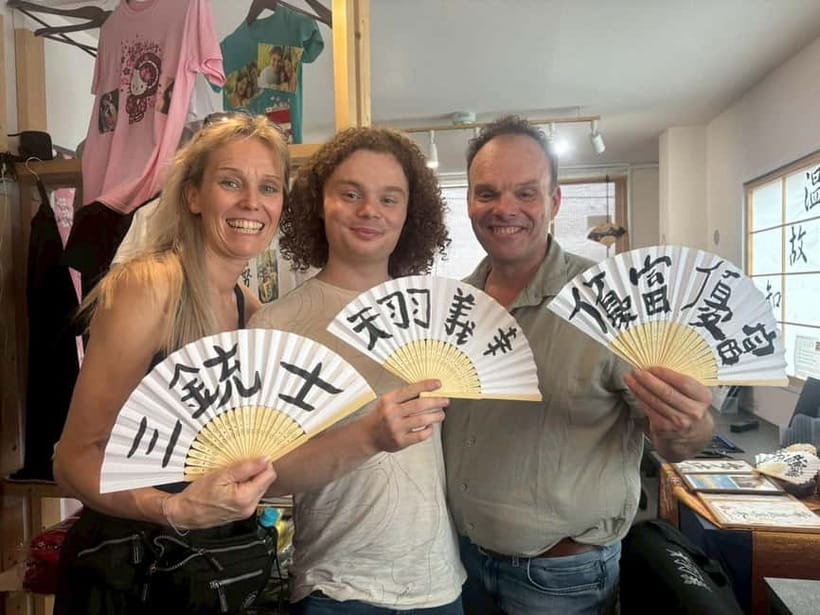
After the introduction, you practice for about 30 minutes on thin paper with guide sheets and help from the staff. This is where the class becomes personal. You can repeat a character, test different brush pressures, and decide which style feels best.
The guide paper makes the activity accessible. You are not expected to understand spacing or proportions at once. You can follow the lines and build confidence before attempting a final piece.
You may choose a design from a sample book or ask the instructor to help create something suited to you. Names written in kanji are popular, and the class can explain what the characters mean. You can also select another meaningful kanji or design for your fan.
I like that the activity does not force you to settle on your first attempt. The goal is not speed. You continue practicing until you are satisfied with the work you want to use. That makes the final souvenir feel more personal than a character printed for you by someone else.
Still, keep your expectations realistic. You are learning basic techniques in a short session, not becoming a professional calligrapher in one afternoon. Your finished character may have a charming beginner quality. The value lies in understanding the process and making it yourself.
Same base, a completely different sort of day:
- Tokyo: teamLab Planets TOKYO Digital Art Museum Entry Ticket
★ 4.6 · 9,779 reviews - Mt Fuji & Hakone Cruise, Drum Show Bullet Train 1 Day from Tokyo
★ 4.0 · 7,413 reviews - Tokyo: Sumo Show Experience with Chicken Hot Pot and a Photo
★ 4.8 · 6,678 reviews - Tokyo: Shinjuku Food Tour (13 Dishes at 4 Local Eateries)
★ 5.0 · 6,603 reviews
Designing the original folding fan
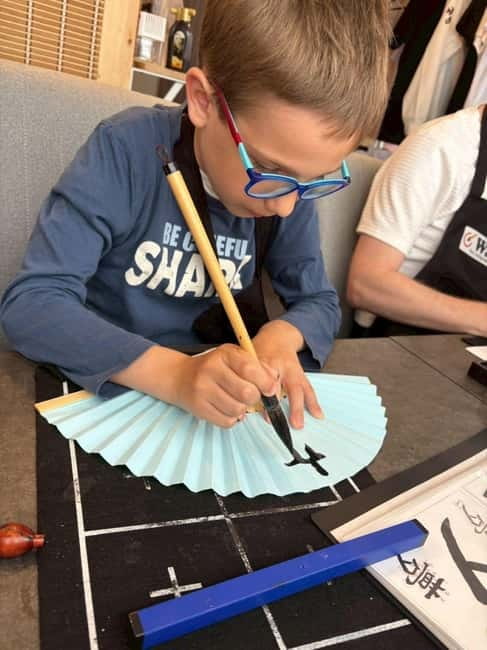
The folding fan is the main souvenir, and it gives the lesson a clear purpose. Once you have practiced, you choose the design you want to put on it. The instructor helps you prepare the final calligraphy, then you take home a one-of-a-kind fan.
This is more useful than a loose practice sheet. A fan is easy to pack, light enough for a carry-on, and connected to the craft you just learned. It also gives you something to show family and friends without needing a long explanation.
You should think about the design before the final stage. A name, a favorite kanji, or a character with a clear personal meaning will make the fan more memorable. If you are unsure, ask Mana for suggestions. Her help with names and kanji can be one of the most rewarding parts of the session.
The exact pace varies. Some people may finish in 30 minutes, while others may use closer to 90 minutes if they want more practice or take time with the design. Check the available start times when booking, and avoid placing this activity between two tightly scheduled sightseeing stops.
Green tea and a postcard for your future self
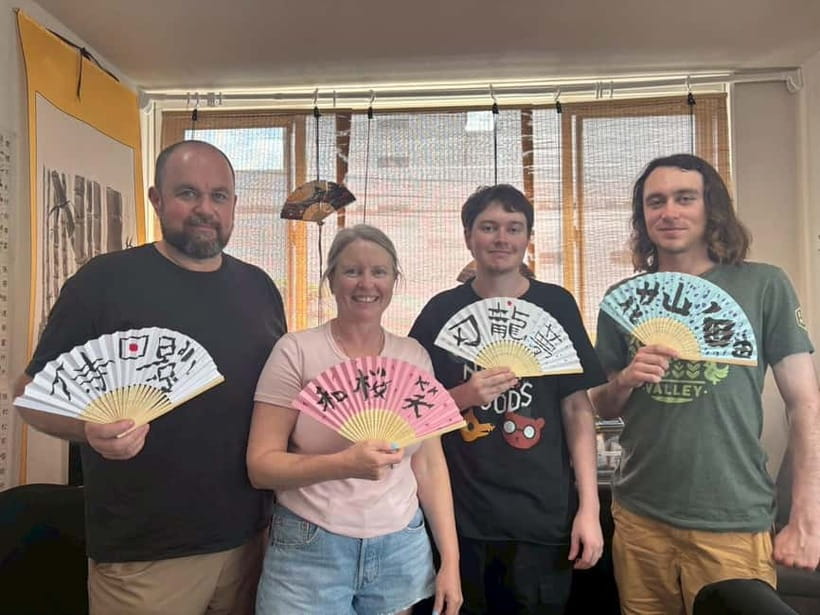
The class ends with a cup of green tea and a postcard. You write about your feelings after the calligraphy session and address it to yourself at home. This is a simple idea, but it gives the activity a lasting link to your trip.
Most souvenirs sit on a shelf and slowly lose their story. A postcard arriving later can bring back the setting, the characters you practiced, and the feeling of making something with your own hands. It also gives you a reason to reflect on the wider trip, not just the lesson.
Food and drinks are not allowed during the working portion of the session, so the tea comes as part of the closing moment rather than something you sip beside wet ink. That arrangement makes sense and keeps the materials safer.
The tea and postcard are included, along with the practice paper, guide sheets, ink work, and folding fan. At this price, those small extras improve the overall value without turning the class into a sales pitch.
What is and is not included
The calligraphy portion includes an introduction to its history, posture and attitude, traditional ink preparation, brush techniques, guided practice, custom design work, the postcard, green tea, and the original fan.
Printing your design on a T-shirt is not included. If you want that option, you can buy a T-shirt at the shop, but the clothing cost is separate. This is worth knowing before you budget, especially if you are comparing the fan with wearable souvenirs.
Pay close attention to the option you choose. The henna tattoo options do not include the calligraphy experience. This is the clearest booking detail to check, since the two offerings are not interchangeable.
The meeting point can vary by option. The listed coordinates are 35.7162239, 139.7922354, so confirm the exact meeting instructions for your booking rather than relying only on a general Asakusa landmark.
Who will enjoy this activity most
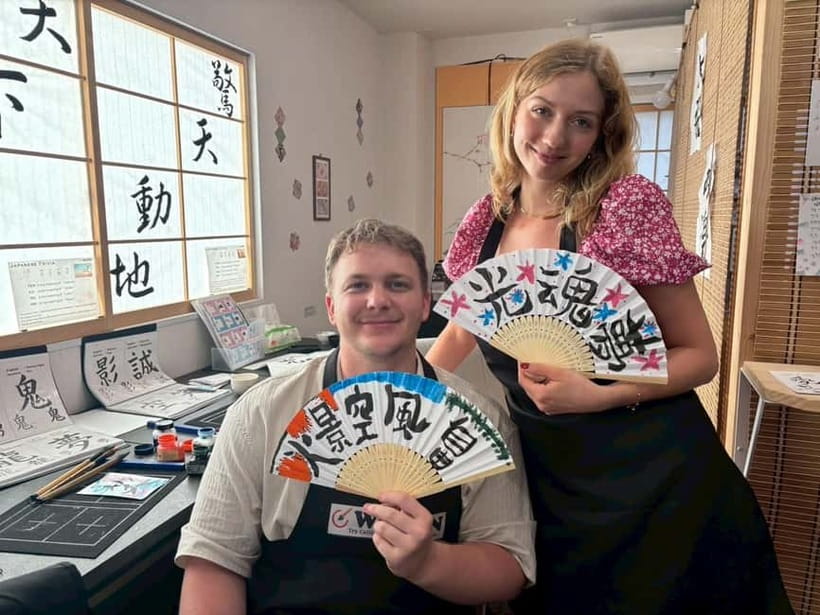
This class works well for couples, solo visitors, families, and multigenerational groups. A six-year-old was able to take part with patient guidance, and an older participant who had always wanted to study calligraphy found the format approachable. Children will need help with wet ink and careful brush handling, but the practice format keeps the activity manageable.
It is also a good choice for a hot or crowded sightseeing day. One of the pleasures here is getting a quiet creative break from walking through Tokyo. You still learn something distinctly Japanese, but you are not rushing from one major sight to another.
I would especially recommend it if you want a souvenir with a story. The fan is made through your own practice, and the postcard gives you a second reminder later. If you only want a polished professional artwork, this may not be the right fit. The point is participation, not perfect penmanship.
The English instruction is another advantage. Mana can explain the techniques and help with the meaning of names and kanji. That makes the class suitable even if you cannot read Japanese.
Timing, clothing, and access
The stated duration is 30 to 90 minutes. That wide range reflects the flexible practice time. If you are happy with a short introduction and a simple design, you may finish near the lower end. If you want repeated practice and a more careful final fan, allow more time.
Wear comfortable clothes that can get a little dirty. Aprons are available, but ink remains ink. Avoid bringing food or drinks into the session, and leave pets at home. Assistance dogs are allowed.
The activity is not suitable for wheelchair users. If access needs affect your plans, check this before booking rather than assuming the workshop space can accommodate every visitor.
Free cancellation is available up to 24 hours in advance for a full refund. You can also reserve now and pay later, which helps if you are still arranging your Tokyo schedule. These terms are useful, but the most important planning point is the variable meeting location and the time you need for practice.
Is the $16 price good value?
Yes, if you want an activity rather than a simple souvenir purchase. The $16 fee covers instruction, materials, traditional ink preparation, practice time, green tea, a postcard, and a folding fan. Even if your final strokes are not perfect, you leave with a personal object and a better understanding of how the writing is made.
The class is also good value because it has a human element. You can ask questions, request help with a design, and continue practicing instead of following a fixed demonstration with no personal attention. Mana’s willingness to spend extra time has been a repeated strength of the experience.
The limits are clear. This is a short beginner lesson, and the T-shirt option costs extra. The fan is included, but you should not expect a full collection of professional calligraphy works or a long academic lecture.
For most visitors, the low price makes the drawbacks easy to accept. It is a modest commitment with a useful souvenir and a calm pause in a busy city.
Should you book the Asakusa calligraphy and fan workshop?
Book it if you want to learn a hands-on craft, meet an encouraging English-speaking instructor, and take home something you made yourself. It is especially suited to families, couples, solo visitors, and anyone who enjoys meaningful souvenirs over standard Tokyo merchandise.
Skip it if you need wheelchair access, dislike the possibility of ink on clothing, or want only a quick photo with no practice. Also check that you are selecting the calligraphy and fan experience, not the separate henna tattoo option.
For $16, I see this as an easy addition to an Asakusa day. Give yourself enough time to practice, wear sensible clothes, and choose a character that means something to you. The fan will remind you of Tokyo, but the postcard may be the part that brings the memory back most clearly.
FAQ
Where does the calligraphy and fan activity take place?
It takes place in Asakusa, Tokyo, on Honshu. The meeting point may vary depending on the option booked. The listed coordinates are 35.7162239, 139.7922354.
How much does the activity cost?
The listed price is $16 per person.
How long does the experience last?
The duration is listed as 30 to 90 minutes. Available starting times can vary, so check the schedule when booking.
Is the instruction offered in English?
Yes. The instructor language is English, and Mana guides participants through the calligraphy techniques and design process.
Do I need previous calligraphy experience?
No previous experience is stated as necessary. The session includes posture instruction, brush guidance, eight basic techniques, guide paper, and practice time for beginners.
What will I make during the activity?
You will make an original folding fan using your calligraphy. You can choose a design from a sample book or ask the instructor for help with a custom design.
Is green tea included?
Yes. The activity includes a cup of green tea at the end, along with time to write a postcard to yourself.
What should I wear?
Wear comfortable clothes that can get a little dirty from ink. Aprons are provided, but clothing that can tolerate a mark is still recommended.
Is the activity wheelchair accessible?
No. The activity is not suitable for wheelchair users.
Just added around Tokyo
- Private Arrival Transfer : Narita International Airport to Central Tokyo City★ 4.5 · 12 reviews
- Narita Airport(NRT): Private Transfer to Tokyo/Yokohama 1-9pax★ 5.0 · 47 reviews
- Private Transfer from Narita Airport to Yokohama Port and City★ 4.5 · 17 reviews
- [Narita Airport Terminals 1, 2] 40-60km Sawara Itako Historic Bike Tour★ 5.0 · 13 reviews
- 3 Day Japan Highlights Tour: Tokyo, Mt.Fuji, Nara, Kyoto, Osaka★ 5.0 · 22 reviews
- Small Town in the Big City: Tasting Tokyo’s Kichijoji★ 5.0 · 195 reviews
- Small Town in the Big City: Tasting Tokyo’s Kichijoji★ 5.0 · 16 reviews
- The 10 Tastings of Tokyo With Locals: Private Street Food Tour★ 5.0 · 48 reviews
Tokyo Tours, compared.

Mt Fuji and Hakone 1-Day Bus Tour Return by Bullet Train
Read our review →

teamLab Planets TOKYO Digital Art Museum Entry Ticket
Read our review →
Mt Fuji & Hakone Cruise, Drum Show Bullet Train 1 Day from Tokyo
Read our review →
Sumo Show Experience with Chicken Hot Pot and a Photo
Read our review →
Shinjuku Food Tour (13 Dishes at 4 Local Eateries)
Read our review →
Tokyo Mt Fuji 5th St & Hakone Cruise Bus Tour w/Bullet Train
Read our review →