
Reviewed · TOKYO TOURS
Tokyo: Allstar Food Tour
Tokyo’s best food lessons often happen under the railway tracks, not in a polished dining room. This three-hour tour links luxurious Ginza with the old-school izakaya lanes of Yurakucho, giving you a quick look at two very different sides of the city while you eat your way through both.
I like the focus on regional and seasonal Japanese flavors, and I like that the tour includes a specialty snack shop with more than 300 years of history. The small group, capped at 10 people, also gives guides such as Sandra, Josh, Motoko, and Satoshi room to explain customs and answer questions.
The main drawback is the price: $181 per person is a serious outlay for three hours, especially since transportation, gratuity, and extra food or drinks cost more. You’re paying for guidance, access to several food stops, two drinks, and cultural context, not simply for dinner.
Key points at a glance
- Two contrasting Tokyo districts: Begin near the Ginza Wako Building, then see upscale Ginza and retro Yurakucho.
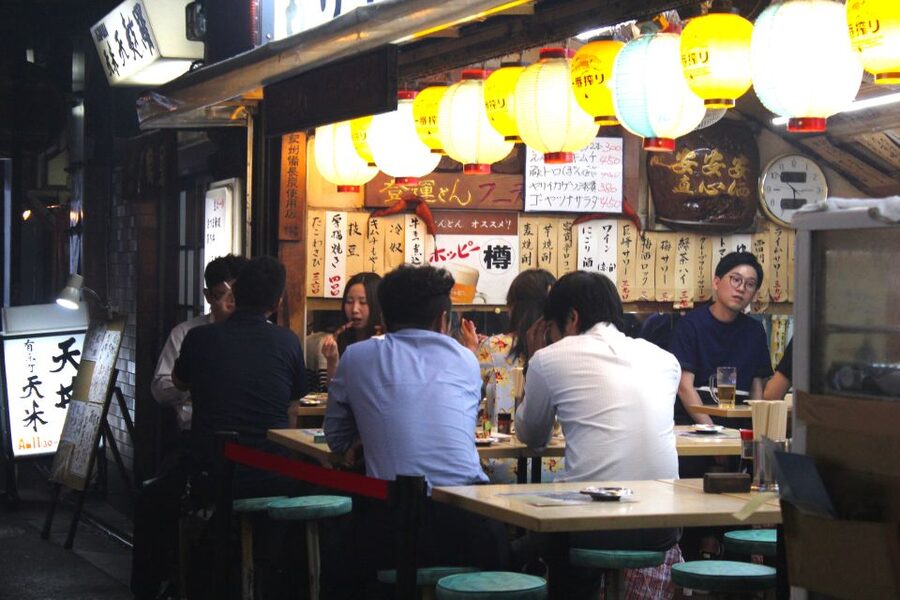
- Izakaya after dark: Visit cozy Japanese pubs and food spots around the railway, with lanterns, neon, grilled food, and local customs.
- Historic rice crackers: Try crisp regional snacks made with a recipe said to date back more than 200 years.
- Three hours in a small group: A maximum of 10 people keeps the evening more personal than a large coach-style outing.
- Two drinks included: Food is served at multiple stops, with two drinks included in the tour price.
- Good first-night orientation: The combination of food, history, and neighborhood walking helps you get your bearings in central Tokyo.
Starting beneath the Ginza Wako clock
The meeting point is in front of the Ginza Wako Building, about a minute from Ginza Station. This is a useful place to begin because the building is easy to identify, and the location puts you right in one of Tokyo’s most famous shopping districts from the first minute.
From Ginza Station, follow signs for the Ginza 4 Chome Crossing Gate. After passing through the fare gate, leave through Exit A9. The address is 4 Chome-5-11 Ginza, Chuo City, Tokyo, 104-8105.
You should allow extra time to find the correct station exit. Tokyo’s subway stations can be large, and arriving a little early is wiser than trying to race through department-store corridors and underground passages. Hotel pickup is not included, though it can be arranged for an additional charge.
The tour is conducted in English by a local guide. Past guides have included Josh, Sandra, Motoko, Ryan, Anne, and Satoshi, though your assigned guide can vary. The strongest part of the experience depends on the guide’s ability to explain what you are eating, why people eat it, and how the neighborhoods fit into Tokyo life.
More Food Tours in Tokyo
- Tokyo: Shinjuku Food Tour (13 Dishes at 4 Local Eateries)
★ 5.0 · 6,603 reviews - Tokyo: Shinjuku Food Tour (15 Dishes and 4 Eateries)
★ 4.9 · 2,033 reviews - Best of Shinjuku: Izakaya Food Tour (4 Stops, 14+ Tastings)
★ 5.0 · 1,863 reviews
Ginza gives you Tokyo at its polished best
Ginza is often described as Tokyo’s luxury district, and the tour uses it as a sharp contrast to Yurakucho. Here, wide streets, department stores, premium shops, and carefully presented food give you a look at the city’s more formal side.
That contrast matters. If you only visit casual food streets, you may miss how much Japanese dining culture values presentation, service, season, and regional identity. Ginza helps frame those ideas before the tour moves into smaller and less polished places.
The tour is not designed as a shopping walk, so you should not expect time for a long visit inside each department store. Instead, you’ll use the district as part of a wider food route, with your guide pointing out the relationship between Ginza’s expensive public face and its many places to eat.
For a first evening in Tokyo, this setting is handy. You can see a famous central neighborhood, eat in several locations, and learn basic food customs without spending your first night trying to work out restaurant rules alone.
Yurakucho reveals Tokyo’s old railway-side character
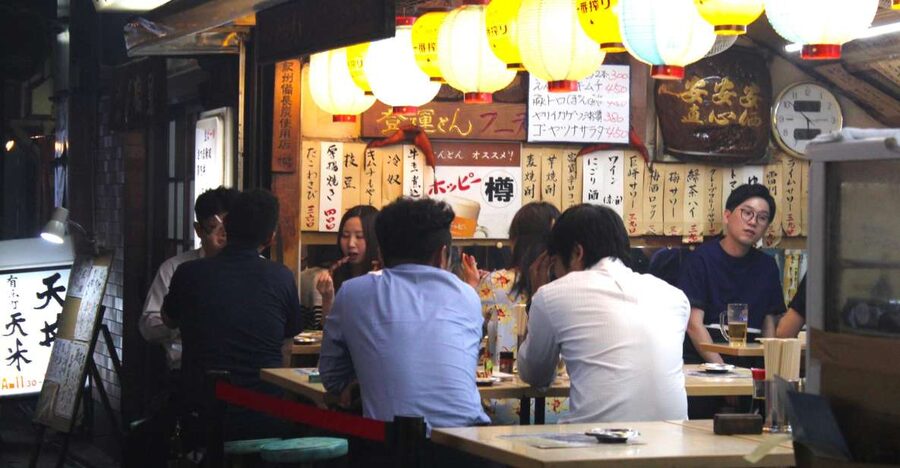
The mood changes around Yurakucho. Near the railway tracks, narrow lanes and compact eateries create a more casual setting. Red lanterns, neon signs, sizzling skewers, and grilled seafood replace the broad avenues and luxury storefronts of Ginza.
This is the kind of neighborhood where the atmosphere is as important as the meal. You hear conversations from nearby tables, watch cooks work in small spaces, and see how an evening out can feel social without being formal.
Your guide connects this area with the Showa era, the period associated with much of Japan’s postwar popular culture. The point is not simply to look at old signs or tiny restaurants. It is to understand why the izakaya remains such an important part of Japanese social life.
An izakaya is often described as a Japanese pub, but that label only tells part of the story. It is a place for drinks and shared dishes, and the food can range from simple snacks to carefully prepared regional specialties. You’ll learn how to approach this style of dining and what makes it different from ordering one large main course at a conventional restaurant.
Izakaya food is shared, social, and varied
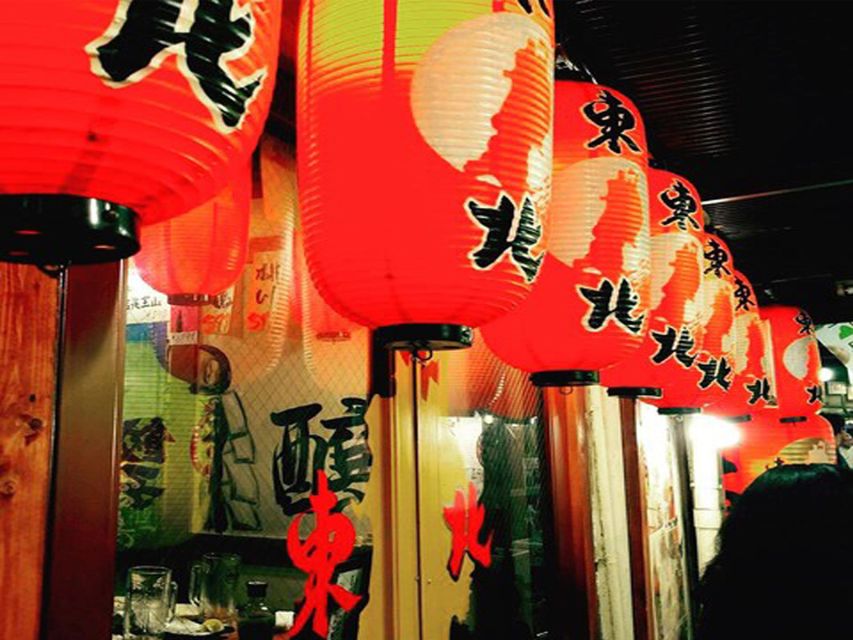
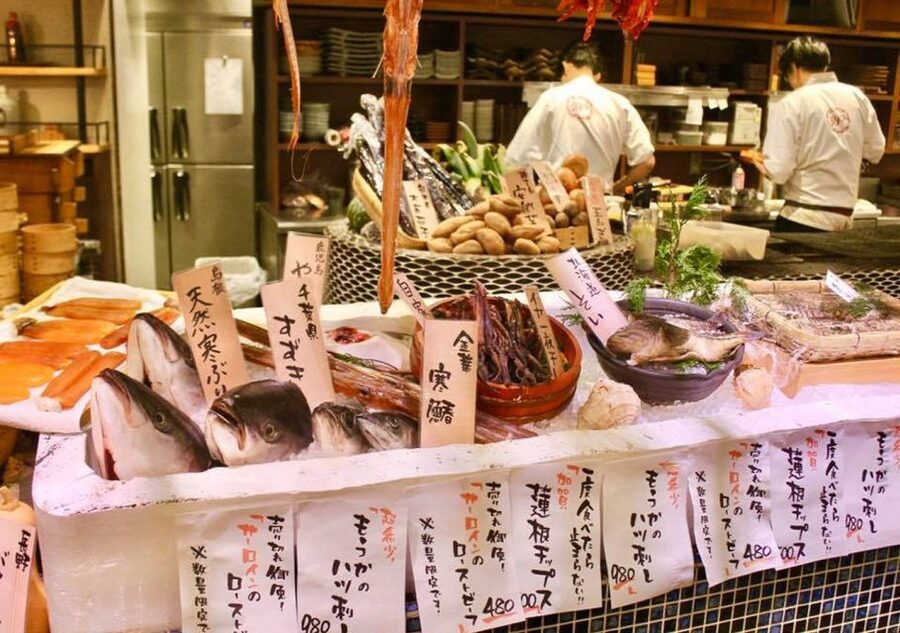
The food stops are spread across several locations, and the exact dishes can vary with the season and availability. That is a strength if you want a wider introduction to Japan rather than one fixed meal.
You may encounter regional specialties, skewers, seafood, snacks, or other small dishes. A past account of the tour described yakitori restaurants operating beneath the railway line, along with a side-street bar and food counters carrying a large range of products. Specific stops can change, so it is best to think of the experience as a guided sample of the area rather than a guaranteed menu.
The pacing is important. You are not sitting down for a long multi-course dinner in one place. You move between food stops, which lets you compare settings and styles while keeping the evening active. At the same time, three hours is not long enough for a full survey of Tokyo cuisine, so you should treat this as an introduction.
Two drinks are included. Additional drinks and food can be purchased at your own expense, which gives you some control over how much you spend. If you drink very little, the included beverages may be less valuable to you. If you enjoy the social side of izakaya dining, they help make the format feel complete.
Same base, a completely different sort of day:
- Mt Fuji and Hakone 1-Day Bus Tour Return by Bullet Train
★ 5.0 · 26,383 reviews - 1-Day Tokyo Bus Tour
★ 5.0 · 14,250 reviews - Tokyo: TOKYO SKYTREE® Admission ticket
★ 4.5 · 11,192 reviews - Tokyo: teamLab Planets TOKYO Digital Art Museum Entry Ticket
★ 4.6 · 9,779 reviews
A 300-year snack tradition adds a historical thread
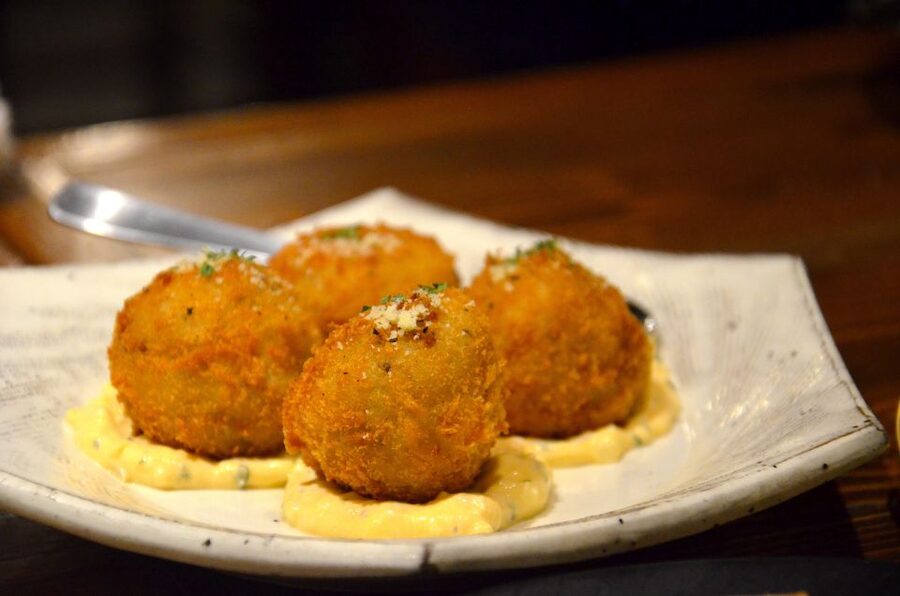
One of the most distinctive stops is a specialty snack shop with more than 300 years of history. The tour highlights crisp rice crackers made using a secret recipe said to be more than 200 years old.
This is a small detail, but it gives the food tour a useful sense of time. Tokyo can feel new, fast, and constantly rebuilt. A traditional snack provides a link to older food customs and shows that Japanese eating culture is not limited to sushi, ramen, or the dishes most familiar abroad.
Rice crackers also make a practical tasting item. They are easy to sample, strongly tied to Japanese snack culture, and likely to travel well in your luggage if you want to buy more. The tour includes unique snacks, but extra purchases are not included.
You should listen carefully when the guide explains the recipe and regional background. The value of a stop like this comes less from eating one cracker and more from understanding why a simple food can carry such a long story.
Dessert finishes a quick-moving evening
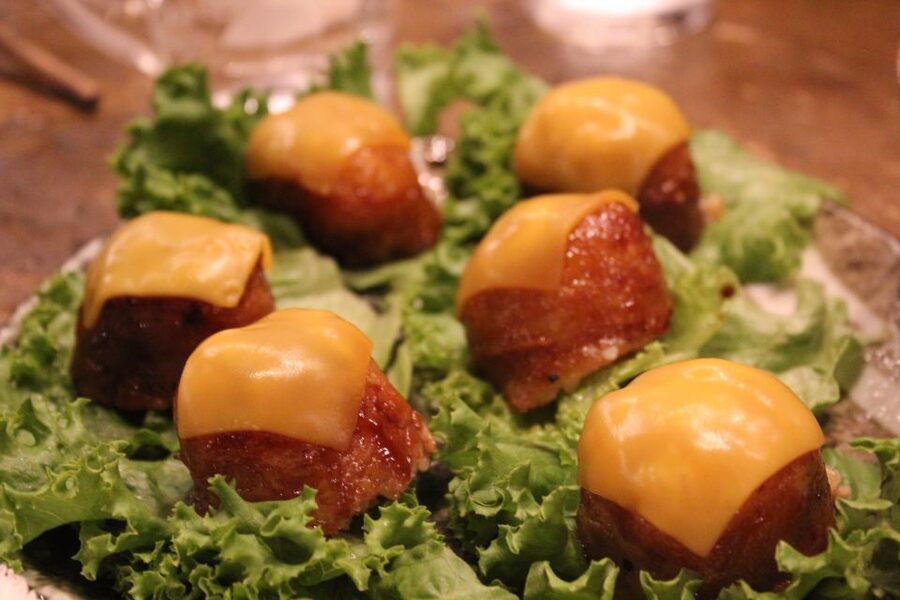
The final food moment is a dessert. The supplied details do not specify the exact sweet, so you should expect a dessert tasting rather than plan around a particular dish.
Ending with something sweet is useful after a sequence of savory foods and drinks. It also gives the group a natural point to slow down and compare what you have eaten. The tour is built as a progression from neighborhood orientation to izakaya food, traditional snacks, and dessert.
The meal should satisfy most people, but anyone expecting a large dinner should keep expectations in check. The included food is described as a variety of dishes at multiple stops, not as an unlimited meal. If you have a large appetite, budget for an extra purchase.
What the guides add to the food
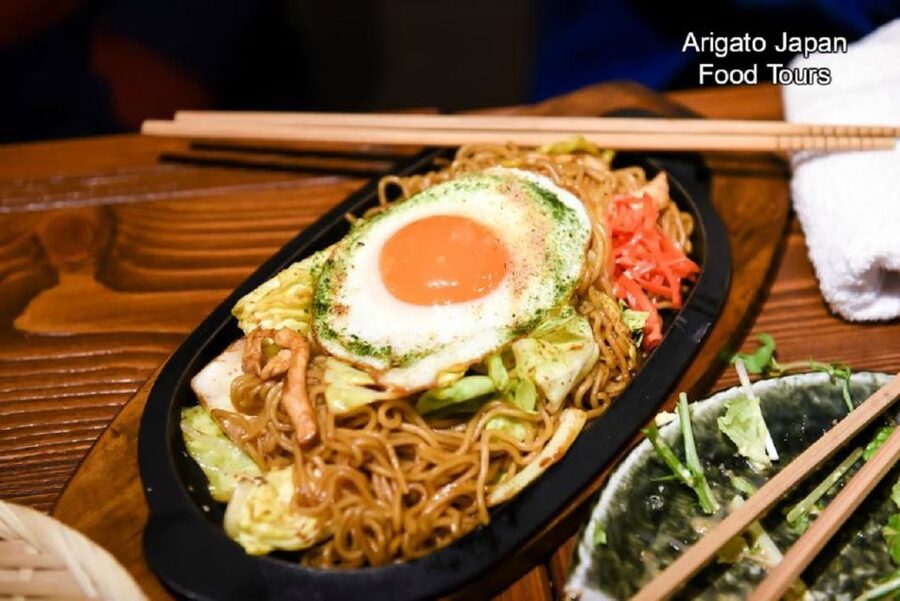
The best reason to take this tour instead of following a restaurant list is the explanation between bites. Guides have been praised for sharing cultural customs, local history, food origins, and differences between Japanese cuisine and other Asian food traditions.
Josh has been described as approachable and funny, while Motoko brought humor and a strong interest in Japanese cuisine to the route. Satoshi was remembered for his enthusiasm and knowledge of both the city and its food. Anne was noted for making the walk informative and entertaining.
Those details point to the tour’s main strength: the guide can turn unfamiliar dishes and dining habits into something you can use for the rest of your Japan trip. You might learn how an izakaya works, why certain foods are regional, or how to choose places that feel more local.
Guide quality can vary because people bring different personalities and interests. Still, the repeated praise for friendly, informative leadership suggests that the human side of the tour is a major part of its value.
Why a small group matters in Tokyo
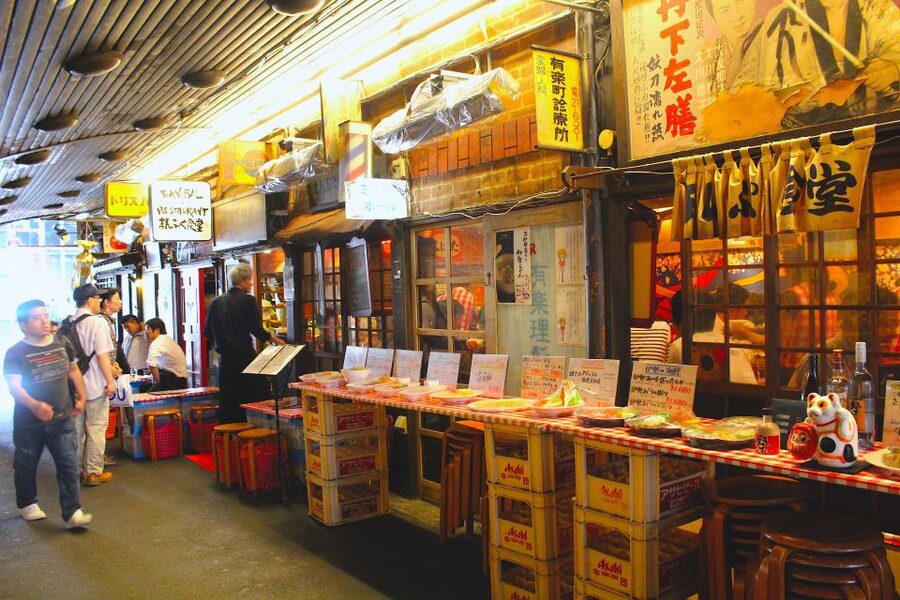
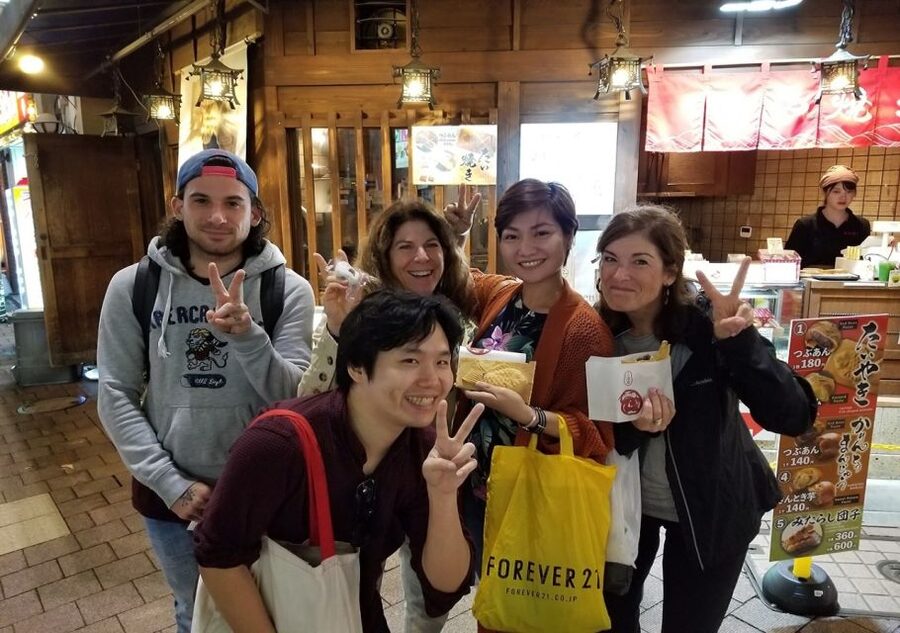
The maximum group size is 10 participants. That is large enough to keep the tour social but small enough for the guide to speak with everyone. It also makes it easier to enter compact bars and restaurants than it would be with a large crowd.
One earlier group included only one other couple besides the booking party. That kind of arrangement can make the food stops feel more like a shared evening than a formal presentation.
If you are joining alone, email the supplier before booking. The operator specifically asks single participants to make contact first. This is a practical requirement, not something to leave until the day of the tour.
The group size also affects the price calculation. At $181, you are not getting a cheap street-food crawl. You are paying for a small group, an English-speaking guide, several food stops, two drinks, snacks, dessert, and access to places that may be harder to understand on your own.
Is $181 a fair price?
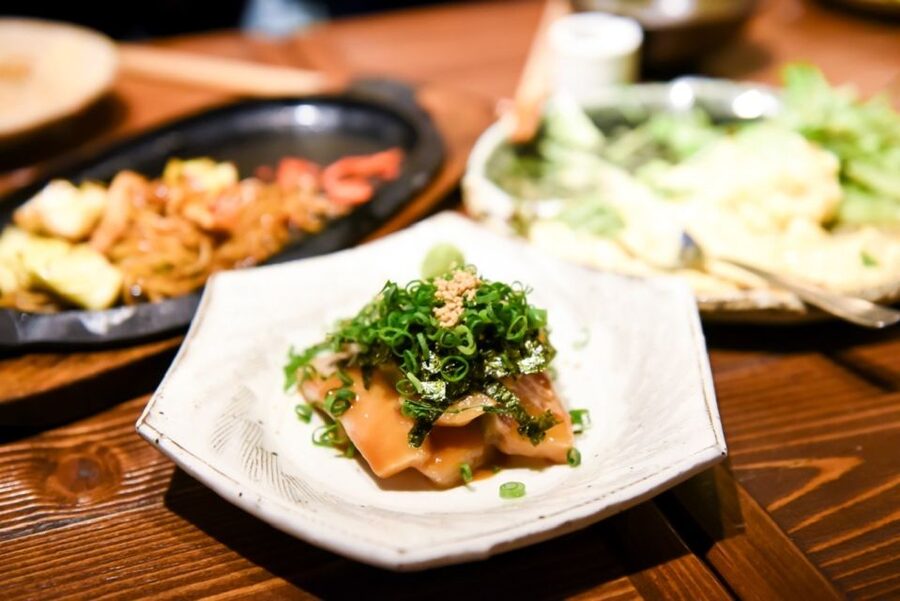
The answer depends on how you define dinner. If you compare the price with buying individual snacks and drinks, the tour is expensive. If you compare it with a private guide and a full evening of orientation, the cost becomes easier to understand, though it remains high.
I would see this as a food-and-culture tour rather than a budget meal. You get the chance to sample several regional and seasonal flavors, learn izakaya customs, and move through two central neighborhoods with local guidance. The food is only one part of what you are buying.
The value is strongest during your first days in Japan. You can ask basic questions, learn how casual restaurants work, and collect ideas for later meals. If you already know Tokyo’s food customs and prefer choosing your own restaurants, you may not get as much from the guided format.
Gratuity, transportation, and any extra food or drinks are not included. Keep a little spending money available. Dietary options are available, but you should communicate your needs before the tour so the operator can prepare.
Practical timing and comfort tips
The experience lasts three hours, with starting times available according to the date you choose. An earlier start can help you avoid the worst dinner rush. One past participant particularly liked beginning before the busiest evening period.
Wear comfortable shoes. You will walk between food stops and through streets, station areas, and narrow lanes. Yurakucho’s compact izakaya settings may involve limited room, so this is not the best choice if you want a quiet, spacious meal.
The tour is suitable for people who enjoy trying several small portions and listening to explanations. It may be less suitable if you need a fixed menu, dislike shared dining, or want a long restaurant dinner with no walking.
A passport information copy is required for all participants aged 10 and over. Dietary options are offered, but the available choices are not specified, so clear advance communication is important.
Free cancellation is available up to 24 hours before the tour for a full refund. You can also reserve now and pay later, which is useful when you are still arranging a Tokyo schedule.
Who should book the Ginza and Yurakucho food tour?
I would recommend this tour to a first-time visitor who wants a friendly introduction to Tokyo food without having to decode every menu alone. It is also a good fit for couples, small groups, and solo visitors who contact the supplier ahead of time.
You’ll get the most from it if you care about the setting around the food. The shift from Ginza’s luxury streets to Yurakucho’s railway-side lanes is the real structure of the evening. The dishes give that neighborhood story something to taste.
Families with participants aged 10 and over can join, provided the passport requirement is met. People with dietary restrictions should ask about the available options before booking, rather than assume every stop can accommodate every need.
I would skip it if your priority is the lowest possible food cost or a specific menu. The exact dishes and restaurants can vary, and the $181 price does not include every drink or extra purchase.
Should you book it?
Book this tour if you want a guided first taste of Tokyo’s food customs, especially during your first night or two in the city. The mix of Ginza, Yurakucho, izakaya dining, historic snacks, two drinks, and dessert gives you more than a simple meal.
The price is the sticking point. But for a small group and an English-speaking guide who can explain what you are eating, how local dining works, and where to eat next, it can be worthwhile. Go in expecting a three-hour introduction, not an unlimited feast, and the experience should make good sense.
FAQ
Where does the Tokyo Allstar Food Tour meet?
It meets in front of the Ginza Wako Building, about a minute’s walk from Ginza Station.
How do I reach the meeting point from Ginza Station?
Follow signs for the Ginza 4 Chome Crossing Gate, pass through the fare gate, and exit through A9.
How long does the tour last?
The tour lasts three hours.
What neighborhoods does the tour visit?
The route includes Ginza and Yurakucho, including Yurakucho’s railway-side yokocho alleys.
How many people can join the tour?
The small group is limited to 10 participants.
Is the tour conducted in English?
Yes. The tour has a live English-speaking local guide.
What is included in the price?
The price includes food at multiple stops, two drinks, unique desserts and snacks, and a local English-speaking guide.
Is hotel pickup included?
No. Hotel pickup is not included, but it can be arranged for an additional charge.
Can I cancel for a full refund?
Yes. You can cancel up to 24 hours in advance for a full refund.
Just added around Tokyo
- Private Arrival Transfer : Narita International Airport to Central Tokyo City★ 4.5 · 12 reviews
- Narita Airport(NRT): Private Transfer to Tokyo/Yokohama 1-9pax★ 5.0 · 47 reviews
- Private Transfer from Narita Airport to Yokohama Port and City★ 4.5 · 17 reviews
- [Narita Airport Terminals 1, 2] 40-60km Sawara Itako Historic Bike Tour★ 5.0 · 13 reviews
- 3 Day Japan Highlights Tour: Tokyo, Mt.Fuji, Nara, Kyoto, Osaka★ 5.0 · 22 reviews
- Small Town in the Big City: Tasting Tokyo’s Kichijoji★ 5.0 · 195 reviews
- Small Town in the Big City: Tasting Tokyo’s Kichijoji★ 5.0 · 16 reviews
- The 10 Tastings of Tokyo With Locals: Private Street Food Tour★ 5.0 · 48 reviews
Tokyo Tours, compared.

Mt Fuji and Hakone 1-Day Bus Tour Return by Bullet Train
Read our review →

teamLab Planets TOKYO Digital Art Museum Entry Ticket
Read our review →
Mt Fuji & Hakone Cruise, Drum Show Bullet Train 1 Day from Tokyo
Read our review →
Sumo Show Experience with Chicken Hot Pot and a Photo
Read our review →
Shinjuku Food Tour (13 Dishes at 4 Local Eateries)
Read our review →
Tokyo Mt Fuji 5th St & Hakone Cruise Bus Tour w/Bullet Train
Read our review →
Flagship 2-Hours Official Street Go-Kart Tour – Tokyo Bay Shop
Read our review →Browse the lists this tour appears in