
Reviewed · OKINAWA TOURS
Okinawa 2-Hours Genuine Kendo/Samurai Experience in Japan
Kendo is not just sword fighting with bamboo sticks. In this small Naha class, you learn why manners, spirit, and lifelong practice matter as much as landing a clean strike. The two-hour session combines a cultural lesson with real movement, armor, and controlled combat.
I like the personal feel of a group capped at five people, and I like that Taiji Yamakawa brings about 20 years of kendo experience, including experience as an Okinawa champion. The main consideration is physical: armor and repeated practice require moderate fitness, and Taiji’s English may be limited at times, though his demonstrations and clear directions help.
Key points to know before you book
- Train with Taiji Yamakawa: You’ll work with an English-speaking instructor who has about 20 years of kendo experience and Okinawa championship experience.
- Put on genuine kendo armor: This is a hands-on session, not a lecture or photo stop. You practice while dressed in protective kendo gear.
- Learn the rules behind the strikes: Etiquette, manners, spirit, and the mental side of kendo are part of the lesson.
- Keep the group small: The activity accepts a maximum of five people, which gives the instructor room to watch your form.
- Plan for a 1 p.m. start in Naha: Meet at 52 Ōnoyamachō, near public transportation, and finish at the same place.
- Pay for a focused cultural activity: At $118.60 per person, the price is easiest to justify if you want instruction, equipment, and a personal martial arts experience rather than a quick samurai-themed photo.
What kendo really asks you to learn
Kendo developed from Japanese sword-fighting traditions of the samurai era. Modern kendo uses bamboo swords and protective armor, but the lesson is not simply about hitting another person first.
The central ideas here are described as unifying your spirit, showing good manners, and practicing for life. That gives the class more weight than a basic action activity. You are asked to pay attention to posture, control, respect, and focus. The physical moves make those ideas easier to understand because you feel the need for discipline in your own body.
I appreciate this approach. A short class cannot turn you into a kendo practitioner, but it can show you why the art has both a competitive side and a spiritual side. You will learn that a strike is only one part of the exchange. How you prepare, behave, and respond also matters.
The lesson also gives you a useful point of contact with Japanese culture. Instead of only looking at samurai armor in a museum, you handle the equipment, follow basic etiquette, and try the movements yourself. That practical link is the reason this experience can work well for people who want more than sightseeing.
More samurai and ninja sessions in Naha:
- Tokyo: Samurai Restaurant Show Ticket with 2 Drinks
★ 4.5 · 1,307 reviews - Kyoto Samurai Experience
★ 5.0 · 1,294 reviews - Tokyo: Samurai Ninja Museum Guided tour and Experience
★ 4.6 · 1,010 reviews
Meeting in Ōnoyamachō at 1 p.m.
The experience begins at 52 Ōnoyamachō, Naha, at 1 p.m. It ends back at the meeting point, so you do not need to arrange a separate return transfer. The location is near public transportation, which makes it easier to fit into a day in Naha without paying for hotel pickup.
There is no hotel pickup or drop-off. You need to make your own way to the start, and you should allow enough time to arrive ready for a prompt afternoon session. A mobile ticket is accepted, and confirmation is provided when you book.
The fixed start time is worth noting if you are building a full day around the class. A 1 p.m. meeting leaves room for a morning activity, but the two-hour session can also shape your afternoon plans. Since the activity finishes where it starts, it is simple to continue exploring Naha afterward.
The group limit is five people. That is a meaningful advantage for a martial arts lesson. In a large class, you might spend much of your time watching. Here, the instructor has a better chance to correct your stance, explain a movement again, and keep the practice controlled.
Your first lesson: etiquette before action
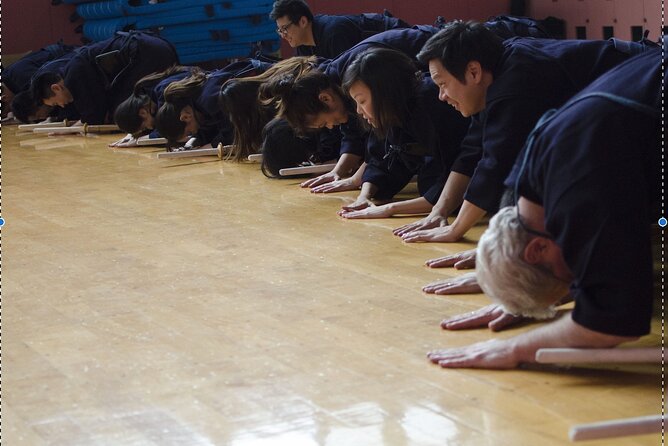
Expect the class to begin with an introduction to kendo and its place in samurai culture. The lesson covers not only how to strike, but also the manners and rules that shape the art.
That order matters. Kendo is built around respect, and the etiquette helps you understand why the class is conducted in a particular way. You may be eager to put on armor and swing a bamboo sword, but the formal behavior gives the activity its cultural purpose.
Taiji Yamakawa leads the class in English. His English may be limited in places, but the available information indicates that his directions are clear, and he can show you what to do. That is especially useful in a physical class, where a stance or arm position is often easier to understand by watching than by hearing a long explanation.
You should still expect some simple language, repetition, and demonstration rather than a detailed English lecture. I see that as a minor limitation, not a serious problem, because the class is built around movement. If you listen closely, watch Taiji’s form, and ask for clarification when needed, you should be able to follow the main instruction.
Several comments about the class point to the same strengths: patience, humor, and attention. Those qualities matter when beginners are trying a new martial art. You are likely to make awkward movements at first, and a patient instructor keeps the mood relaxed while still treating the practice seriously.
Getting into kendo armor
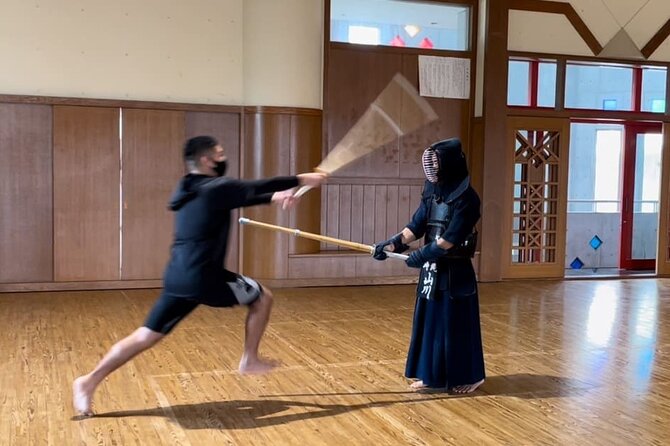
A major part of the appeal is the chance to wear kendo armor. Rental equipment is included, so you do not need to bring or purchase protective gear for a one-time lesson.
The armor changes the feel of the activity. It gives you a better sense of how kendo is practiced and makes the session more than a demonstration. You are not simply holding a bamboo sword for a photograph. You put on the gear, learn how it affects your movement, and then practice within it.
The equipment can also make the class physically demanding. The activity calls for a moderate level of fitness, and you should be comfortable standing, moving, and repeating basic actions during the lesson. The supplied information does not give an age range, medical guidance, or specific clothing rules, so contact the provider if you need those details before booking.
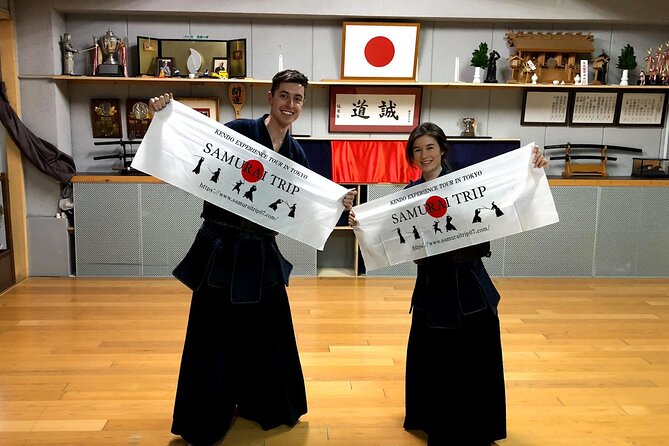
Bottled water is included, which is a small but helpful touch during a physical afternoon activity. You also receive a free kendo towel. The towel is not a major reason to book, but it is a useful keepsake tied to the class rather than a generic souvenir.
A few more Naha half-days to weigh up
- Official Street Go-Kart Tour – Okinawa Shop
★ 5.0 · 699 reviews - Naha: North Okinawa Sightseeing Tour & Churaumi Aquarium
★ 4.4 · 472 reviews - Okinawa: From Naha: Kerama Islands 1-day snorkeling tour
★ 4.4 · 423 reviews - From Naha: Tokashiki Island Day Trip by Boat
★ 4.3 · 385 reviews
Practicing strikes, form, and controlled combat
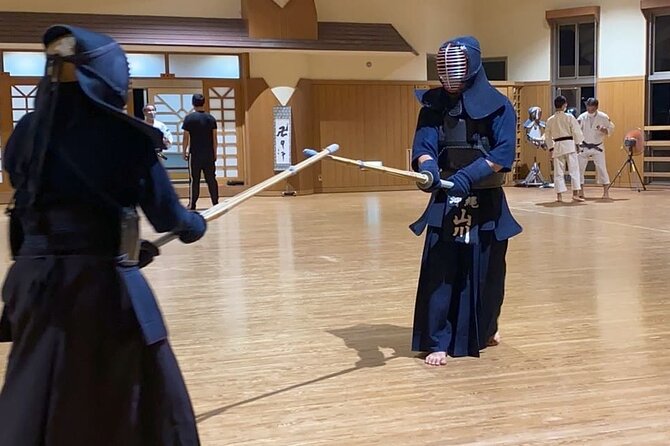
Once you have learned the basic rules and put on the armor, the class moves into practice. You work on kendo skills and then try combat in a controlled setting.
The exact order and amount of time spent on each exercise can vary, but you should expect a balance of instruction and active practice. Taiji’s role is not only to explain the technique. He watches what you do and helps you understand how your mind, skill, and body need to work together.
This is where the lesson becomes fun. Beginners can concentrate so hard on getting the movement right that the experience becomes a little comic. The class has a light tone, but the instructor’s attention keeps it from turning into random stick swinging.
You may practice against another person in the group. The point is not to win a rough fight. Kendo uses rules, control, and etiquette, so the exchange gives you a taste of the art without making the session unsafe or overly competitive.
The small group helps here. With no more than five people, you should have more space to take turns, watch a demonstration, and try again. If you are nervous about martial arts, the reported patience of the instructors is reassuring. If you already have some experience, you can still use the class to learn about kendo culture and practice under an Okinawa instructor.
Do not expect a complete training course in two hours. You will not cover everything a long-term student learns, and the activity is not presented as a certification class. Its strength is the compact mix of cultural context, equipment, instruction, and participation.
Taiji Yamakawa brings local experience
The instructor named in the experience is Taiji Yamakawa. He has about 20 years of kendo experience and is described as a former Okinawa champion.
That background gives the session a strong local connection. You are not learning from a generic performer hired to act like a samurai. You are practicing a Japanese martial art with someone who has spent years training in it.
The class is also led by an English-speaking kendo instructor, which makes the activity accessible to people who cannot follow a lesson in Japanese. Still, do not confuse English-speaking with fully fluent English instruction. The feedback indicates that Taiji’s English can be limited, while his demonstrations and directions remain understandable.
I would treat that as part of the class’s character. You will need to pay attention to gestures and examples, not just words. That can even make you more alert to the physical details of the art. But if you need extensive historical explanation in polished English, this may not satisfy you as much as a museum tour or a long cultural lecture.
The strongest reason to book is the chance to learn directly from an experienced practitioner in a very small class. The instructor’s patience and humor are just as important as his technical background, especially if this is your first kendo lesson.
Is $118.60 a fair price?
The cost is $118.60 per person. That is not a bargain-priced activity, especially for two hours, but the price includes all kendo equipment, bottled water, and a kendo towel.
The value depends on what you want from your afternoon. If you want a cheap cultural demonstration, this costs more than necessary. If you want to put on armor, receive personal instruction, practice the movements, and learn about etiquette in a group of no more than five, the price is easier to defend.
Small groups often make a large difference in a physical class. You are paying not only for entry, but also for the instructor’s time and the chance to receive attention. The former Okinawa champion detail adds credibility, while the included gear removes the need to arrange anything special.
Lunch is not included, and there is no hotel transportation. Those are minor costs to plan around, but they affect the total value. Eat before or after according to your schedule, and budget for your own transport to Ōnoyamachō.
The experience has a five-star rating from 28 reviews, with 100 percent recommending it. That does not guarantee that every person will enjoy wearing armor or repeating martial arts movements, but it does point to consistent satisfaction with the teaching and the format.
Who will enjoy this most
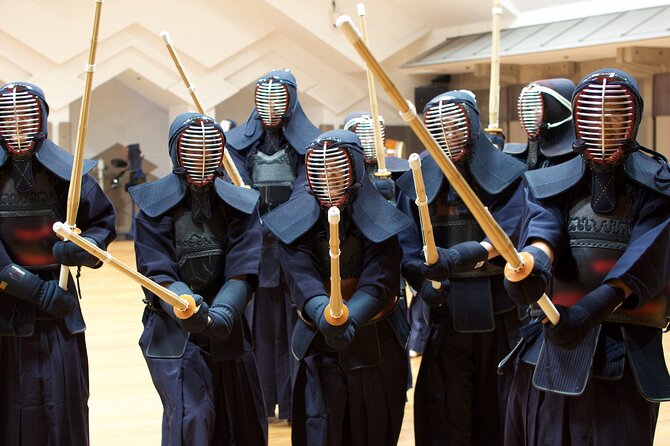
I would recommend the class to you if you want an active cultural experience in Naha. It suits first-time participants because the instructor is described as patient, funny, and attentive, and the class accepts different skill levels.
It is also a good match for people who like learning by doing. You will not spend the entire two hours listening. You will move, dress in armor, practice, and try a controlled exchange.
Families and mixed groups may appreciate the small size, though the supplied information does not give a minimum age. Ask the provider about children before booking. The same advice applies if you have an injury, mobility concern, or low fitness level, since moderate physical ability is expected.
Experienced martial artists may find the basic instruction familiar, but the cultural and etiquette lessons can still make the session worthwhile. The activity is especially useful if you want to compare kendo with another martial art or understand how Japanese sword traditions developed into a modern discipline.
You may want to skip it if you dislike structured physical activity, do not want to wear protective gear, or prefer a quiet cultural tour. This is not a passive show. You are expected to take part.
Practical details that affect your choice
The booking includes free cancellation if you cancel at least 24 hours before the local start time. Cancellations made less than 24 hours before the activity are not refunded, and changes inside that window are not accepted. The experience also requires a minimum number of participants, so an operator cancellation can lead to another date or a full refund.
You receive confirmation at booking, and the ticket is mobile. The meeting point is near public transportation, but hotel transfers are not offered. Plan to arrive at 52 Ōnoyamachō for the 1 p.m. start.
Wear something that allows movement, although no specific dress code is provided. Since you will use rental equipment, you do not need to bring kendo gear. The included water is useful, but you should still think about your comfort during a physical session.
The activity returns to the same meeting point. That makes it easier to connect with another Naha plan, but the fixed two-hour duration and 1 p.m. start mean you should not schedule a tightly timed activity immediately afterward.
Should you book this Naha kendo experience?
Book it if you want a small, hands-on introduction to Japanese martial arts and you like the idea of learning etiquette along with technique. Taiji Yamakawa’s long kendo background, former Okinawa champion experience, and patient teaching style give the class a strong foundation.
The price is fair for personal instruction, equipment rental, armor practice, water, and a small group, though it is high for a short activity if you only want a quick samurai photo. Keep the moderate fitness requirement and possible language limitations in mind.
For a first taste of kendo in Okinawa, this is a focused and memorable choice. You leave with more than a souvenir towel: you gain a clearer sense of why kendo links body, skill, manners, and spirit.
FAQ
Where does the kendo experience begin?
The activity begins at 52 Ōnoyamachō, Naha, Okinawa 900-0026, Japan.
What time does the class start?
The scheduled start time is 1 p.m.
How long does the experience last?
The experience lasts approximately two hours.
Where does the activity end?
The class ends back at the meeting point in Ōnoyamachō.
Is the instructor English-speaking?
Yes. The experience is guided by an English-speaking kendo instructor. Taiji Yamakawa’s English may be limited, but directions are described as clear.
Is kendo equipment included?
Yes. Rental kendo equipment is included in the price, along with bottled water and a free kendo towel.
How many people can join the class?
The activity has a maximum of five participants.
Can I cancel for a full refund?
Yes, if you cancel at least 24 hours before the local start time. Cancellations made less than 24 hours before the start are not refunded.
Just added around Naha
- Tokashiki Island Day Trip from Naha★ 4.0 · 15 reviews
- E-Bike Nature Tour in Shuri★ 5.0 · 25 reviews
- Zodiac Shrines and Naha Backstreets Cycling Tour★ 5.0 · 29 reviews
- Kintsugi Experience in Naha, Okinawa – Art from Broken Pieces!★ 5.0 · 28 reviews
- Sushi Making Experience Class in Naha Makishi Public Market★ 5.0 · 35 reviews
- Port Pick-Up: Naha Private Tour Licensed Guide& Vehicle★ 4.5 · 16 reviews
- Okinawa:Kerama Islands experience Diving/Snorkeling/WhaleWatching★ 4.5 · 16 reviews
- Naha: Full-Day Snorkeling Experience in the Kerama Islands, Okinawa★ 5.0 · 128 reviews
Okinawa Tours, compared.


North Okinawa Sightseeing Tour & Churaumi Aquarium
Read our review →
From Naha: Kerama Islands 1-day snorkeling tour
Read our review →

Naha, Okinawa: Keramas Island Snorkeling Day Trip with Lunch
Read our review →![[Miyako Island/Half Day] Sea Turtle Snorkeling](https://media3.thejapanesetraveller.com/wp-content/uploads/miyako-island-half-day-sea-turtle-snorkeling-400x267.jpg)


Snorkeling in the Blue Cave area【Okinawa Prefecture: Free feeding & photo images!English and Chinese speaking guide available!
Read our review →Browse the lists this tour appears in