
Reviewed · TOKYO TOURS
Shinjuku Golden Gai Food Tour
Shinjuku Golden Gai is easiest to enjoy with someone who knows where to turn. This three-hour evening walk threads through Omoide Yokocho, Kabukicho, Hanazono Shrine, and Golden Gai, pairing local food with the stories behind Tokyo’s most famous nightlife district. You finish at a tiny bar surrounded by more than 200 pubs, karaoke rooms, and drinking spots.
I like the mix of food and neighborhood history, especially the contrast between postwar Memory Lane and Golden Gai’s cramped bar streets. I also like the practical value of four food stops and two included drinks, plus guides such as Sandra, Ray, Wesley, Alex, and Yoshi, who have been praised for making the evening social and easy to follow.
The main caution is the price, $217 per person. That is a lot for ramen, skewers, sushi, and drinks, and the exact restaurants can change. Seating has also been uneven on some departures, so this suits people paying for access, context, and company rather than a high-end dinner.
Key points before you book
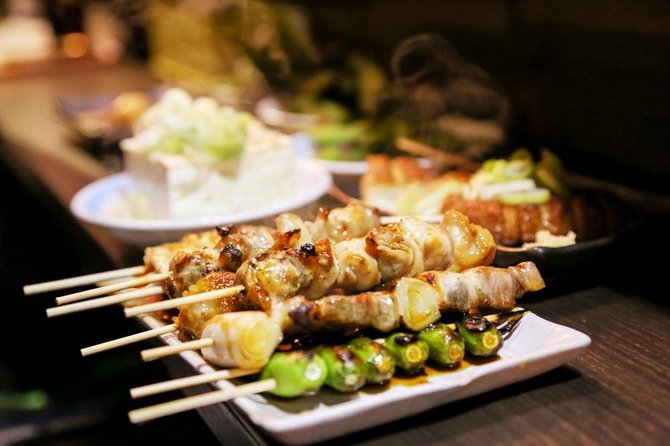
- Four food stops: Expect a changing selection that may include yakitori, ramen, sushi, and seasonal dishes.
- A 5:00 pm start: The timing lets you see Shinjuku shift from evening dining to nightlife.
- Golden Gai finish: End at Araku Bar or another designated Golden Gai spot with one included drink.
- Small group size: The maximum is 10 people, a useful limit in streets and venues built on a tiny scale.
- Adults only: Everyone must be at least 20 years old.
- Vegetarian and pescetarian friendly: Dietary needs can be accommodated, including a reported gluten-free vegetarian arrangement, but tell the provider in advance.
Why Golden Gai works best with a guide
Golden Gai is not a single attraction with a gate and a ticket. It is a tight network of narrow lanes and small buildings, packed with tiny pubs, snack bars, and karaoke rooms. Many venues have only a handful of seats, and some are easy to miss even when you are standing nearby.
That is the basic strength of this tour. You are not just pointed toward Golden Gai and sent off with a map. You arrive there after eating your way through nearby Shinjuku streets, with a guide handling the route and explaining what you are seeing.
I especially like the progression. The evening begins with food and local orientation, then moves into the district’s nightlife. By the time you reach Golden Gai, you have some context for the streets instead of seeing them as a maze of glowing signs and closed doors.
The group limit of 10 matters here. A large party would have trouble moving through the lanes and finding seats together. Even with a small group, you should expect close quarters, short walks between stops, and the possibility of standing at a bar rather than enjoying a full restaurant table.
More Food Tours in Tokyo
- Tokyo: Shinjuku Food Tour (13 Dishes at 4 Local Eateries)
★ 5.0 · 6,603 reviews - Tokyo: Shinjuku Food Tour (15 Dishes and 4 Eateries)
★ 4.9 · 2,033 reviews - Best of Shinjuku: Izakaya Food Tour (4 Stops, 14+ Tastings)
★ 5.0 · 1,863 reviews
Starting at Tajimaya Coffee at 5:00 pm
The meeting point is Tajimaya Coffee in Shinjuku’s Nishishinjuku area. The listed address is Japan, 160-0023 Tokyo, Shinjuku City, Nishishinjuku, 1-chōme 26, in the Shinjuku Suisan Building. The tour begins at 5:00 pm and uses a mobile ticket.
Allow extra time to find the starting point. One guide waited for a delayed group that had trouble locating the meeting place, but that should not be your plan. Shinjuku Station and its surrounding streets can be confusing, so arrive early and keep the meeting details open on your phone.
The opening stop is brief, only about five minutes. Its purpose is to meet your English-speaking local guide and the rest of the group, not to linger over coffee. Guides have included Sandra, Ray, Wesley, Alex, Yoshi, Giulia, Jacob, Osmar, and Tommy, though you cannot assume a particular person will lead your departure.
The best guides add much more than directions. Sandra has been praised for combining food explanations with stories about Tokyo and for helping a gluten-free vegetarian guest. Ray has been singled out for explaining Japanese dining manners and keeping the stops moving. Wesley, Alex, and Yoshi have also been noted for cultural background and good conversation.
That variation is worth understanding. A strong guide can turn an ordinary meal into a lesson about etiquette, religion, neighborhood life, and modern Tokyo. A less effective guide may provide less detail about the food itself, so the guide’s performance is a meaningful part of the tour’s value.
Omoide Yokocho and postwar Memory Lane
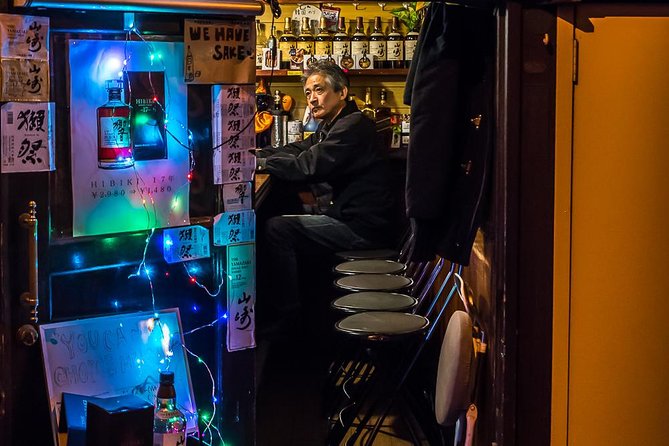
From the meeting point, the route heads toward Omoide Yokocho, whose name means Memory Lane. This narrow dining area is known for small bars and food stalls that retain a postwar feel, including establishments that have remained largely unchanged since around 1950.
This is a good first setting for a food walk. You see people eating in compact spaces rather than moving straight to a polished dining room. The area gives you a quick sense of how Tokyo’s drinking and dining culture can fit into a few narrow lanes.
Do not expect a long stop here. The listed time is about five minutes, which suggests that the guide uses Omoide Yokocho mainly for orientation and storytelling. The food sampling takes place across several later stops.
I like this part because it gives the evening a sense of place. You are not simply collecting dishes from unrelated restaurants. You are moving through an area shaped by postwar change, small-scale dining, and the steady pull of Shinjuku nightlife.
Kabukicho, food stops, and the shape of the evening
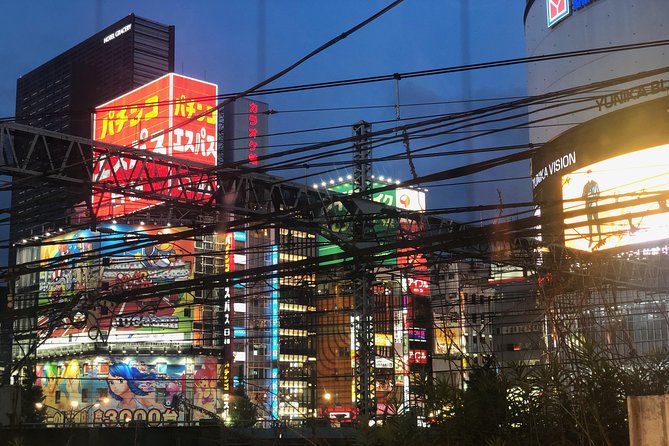
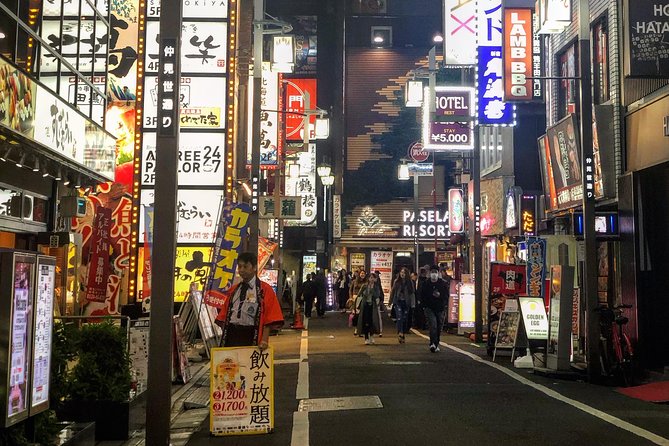
The route continues through Kabukicho, described as one of Asia’s largest and safest red-light districts. The important point for you is that Kabukicho is also a major entertainment zone, filled with restaurants, bars, arcades, hotels, and nightlife. The guide explains how the area developed and how its different uses fit together.
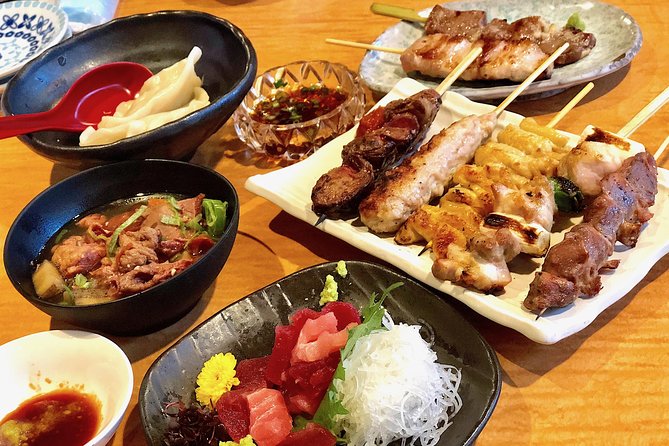
This is where the main eating begins. The tour includes four food stops, with possible dishes such as yakitori, ramen, sushi, and seasonal Japanese specialties. The exact lineup is not fixed, since restaurant schedules, public holidays, weather, and other conditions can require substitutions.
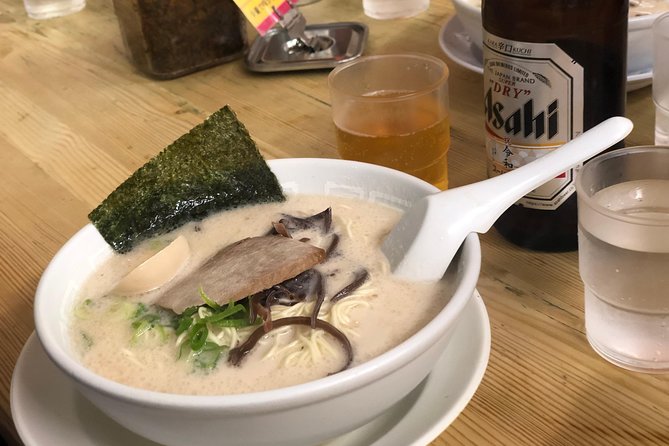
Yakitori gives you a taste of casual Japanese drinking food: skewered items designed to be eaten with a drink and shared in a lively setting. Ramen offers a warmer, more filling course. Sushi adds a different style of preparation, while seasonal dishes can change the meal depending on what is available.
The portions appear substantial enough that you should arrive hungry. One guide specifically advised not snacking before the tour, and that is practical advice. With four food stops plus drinks, this is not a light tasting stroll.
The food quality can vary. Many people have described the meals as delicious, with particular praise for ramen and sashimi. One evening included what was called the best ramen of the trip. But a less satisfied guest found the sushi disappointing and the yakitori dry, while considering the ramen the only especially strong stop.
That range is important at $217. You are not booking a guaranteed high-end sushi or kaiseki meal. You are paying for a guided night through difficult-to-navigate neighborhoods, several tastings, drinks, and conversation. If your priority is refined cooking, a carefully chosen restaurant may offer better food for less money.
Same base, a completely different sort of day:
- Mt Fuji and Hakone 1-Day Bus Tour Return by Bullet Train
★ 5.0 · 26,383 reviews - 1-Day Tokyo Bus Tour
★ 5.0 · 14,250 reviews - Tokyo: TOKYO SKYTREE® Admission ticket
★ 4.5 · 11,192 reviews - Tokyo: teamLab Planets TOKYO Digital Art Museum Entry Ticket
★ 4.6 · 9,779 reviews
What you learn between bites
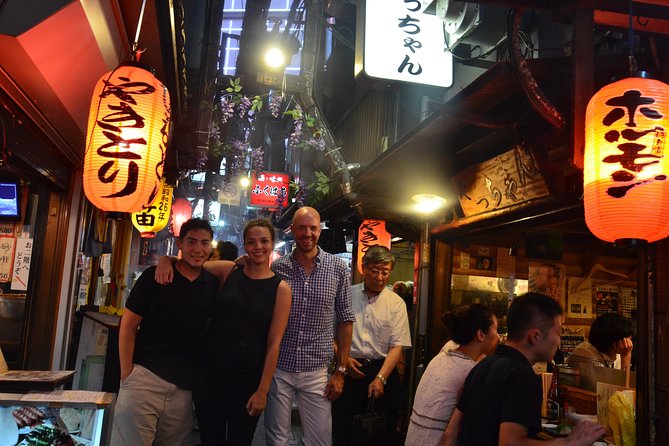
The strongest version of this experience treats the food as a doorway into Japanese life. Guides have explained dining etiquette, local customs, religion, Japanese history, and the changing character of Shinjuku. This makes the walk useful even when a particular dish is not your favorite.
Ask questions as you go. You may get more from the evening if you ask what type of ramen you are eating, how a dish is normally ordered, or why a particular style of restaurant is common in the district. Some past guests wanted more explanation at the food stops, so do not be shy about requesting it.
There is also a social benefit. A group of up to 10 people is small enough for conversation, and several guides have been praised for bringing strangers together quickly. The meal format encourages sharing, while the walk gives everyone something to discuss between stops.
That social side may be one of the tour’s best features. If you are new to Tokyo, it can be easier to enter a narrow bar or try an unfamiliar dish with a friendly guide and a small group beside you. If you prefer to eat quietly or set your own pace, the group format may feel restrictive.
Hanazono Shrine and a change of pace
Hanazono Shrine is included along the route, adding a quieter cultural pause to an evening otherwise focused on restaurants and nightlife. The shrine helps break up the food stops and gives the guide another place to discuss Tokyo’s traditions and the relationship between older religious sites and modern city life.
The supplied schedule does not give a separate visit duration for Hanazono Shrine, so do not expect a long formal sightseeing stop. Think of it as part of the walking route rather than a full shrine tour.
I like its presence in the itinerary. Kabukicho and Golden Gai can feel intense, especially after dark, and a shrine adds a different note without taking you far from the action. It also keeps this from being only a bar crawl with snacks.
Arriving in Golden Gai after dark
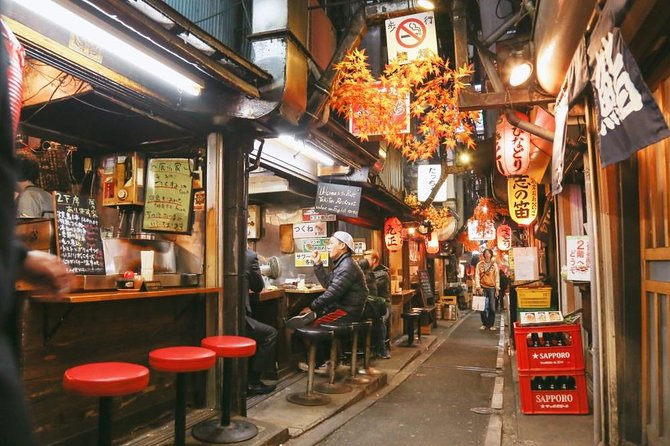
The tour ends in Shinjuku Golden Gai, with the listed endpoint at Araku Bar in the Golden Gai area. The neighborhood is famous for more than 200 pubs, tiny bars, stalls, and karaoke venues packed into an unusually small area.
This is the part many people are most excited to see. The lanes are narrow, the bars are intimate, and the buildings feel unlike the larger entertainment venues elsewhere in Tokyo. You get a look at a side of the city that can be intimidating to approach without local help.
One included drink is served here, and the tour includes two drinks in total. The exact style of drink is not specified, so do not book expecting a particular cocktail, sake, or beer. The point is to settle into the Golden Gai atmosphere and enjoy a final stop with the group.
Karaoke may be available as an after-party. It is not presented as part of the basic tour itself, so treat it as an optional continuation rather than a guaranteed feature. Past groups have enjoyed singing at the final bar, and that can make the evening feel like a shared night out rather than a series of tastings.
After the official finish, you are free to continue exploring Golden Gai independently. This is useful because the tour gives you an introduction without forcing you to leave as soon as the three hours are over.
Price, group size, and what you are really buying
At $217 per person, this is an expensive food walk. Four food stops and two drinks help, but the price is not justified by the cost of the food alone.
The better way to judge it is as a package. You receive an English-speaking guide, a planned route through Omoide Yokocho, Kabukicho, Hanazono Shrine, and Golden Gai, several tastings, and a small group capped at 10 people. You also avoid spending your first night in Tokyo searching for a restaurant that can handle unfamiliar ordering customs or tiny bar entrances.
For some people, that is good value. A first-time visitor who wants a sociable evening and feels unsure about Golden Gai may get more from this than from a cheaper self-guided meal. The guide can explain manners, answer questions, and make the nightlife district easier to approach.
For others, the price will feel too high. If you already know Tokyo’s food scene, speak Japanese, or prefer choosing your own sushi and ramen restaurants, you can likely spend less and control the quality more closely. The tour is also not the right pick for someone expecting a formal tasting menu.
Restaurant access is another practical issue. One account described a guide trying several places without pre-arranged seating, with a couple of venues unable to take the whole group and standing room at the final stop. This may not happen on every departure, but the possibility is worth keeping in mind.
Who should book this Shinjuku evening?
I would choose this tour early in a Tokyo visit, especially if you want help getting oriented. The route introduces several major Shinjuku areas in one night, and a guide can point out places you might otherwise walk past.
It suits:
- First-time visitors who want a guided introduction to Shinjuku nightlife
- Adults who enjoy trying several dishes instead of booking one long dinner
- Solo visitors and couples who like meeting a small group
- People curious about Golden Gai but hesitant to enter alone
- Pescetarian and vegetarian diners who arrange their needs ahead of time
- Anyone who enjoys history and local customs alongside food
I would think twice if you are a serious food enthusiast seeking the finest sushi, a polished restaurant setting, or detailed culinary instruction at every stop. The food is intended to be varied and local, but the quality and explanations can differ by venue and guide.
Wear comfortable shoes and plan for a moderate level of walking. The tour stays near public transportation, but hotel pickup and drop-off are not included, and transportation costs are your responsibility.
Booking and cancellation details
Confirmation is provided when you book, and the experience uses a mobile ticket. It is scheduled for good weather and requires a minimum number of participants.
You can cancel for a full refund up to 24 hours before the 5:00 pm start time. Cancellations or changes made less than 24 hours ahead are not accepted for a refund. If poor weather or an insufficient number of participants causes the company to cancel, you are offered another date or experience, or a full refund.
Should you book the Golden Gai food tour?
Book it if you want an easy, social introduction to Shinjuku’s food and nightlife, and you value a guide’s stories as much as the dishes. The route through Omoide Yokocho, Kabukicho, Hanazono Shrine, and Golden Gai gives you a fuller evening than a simple restaurant reservation, while the small group makes the narrow streets manageable.
Skip it if $217 feels steep for casual food, or if your main goal is a top-tier culinary meal. The strongest departures appear to depend on the guide, the restaurant lineup, and the quality of the seating arrangements.
My practical choice would be to book it near the start of your Tokyo stay, arrive early, come hungry, and tell the company about dietary needs before the tour. Ask your guide questions about each dish, and stay afterward for independent Golden Gai exploring if the mood is right.
FAQ
How long is the Shinjuku Golden Gai Food Tour?
The experience lasts approximately three hours.
What time does the tour start?
The tour starts at 5:00 pm local time.
Where does the tour begin?
It begins at Tajimaya Coffee in the Shinjuku Suisan Building, at Japan, 160-0023 Tokyo, Shinjuku City, Nishishinjuku, 1-chōme 26.
Where does the tour end?
The listed endpoint is Araku Bar in the Golden Gai area of Kabukicho, at Japan, 160-0021 Tokyo, Shinjuku City, Kabukicho, 1-chōme 16.
How many food stops are included?
Four food stops are included. Possible dishes include yakitori, ramen, sushi, and seasonal local dishes.
Are drinks included?
Yes. Two drinks are included in the tour price.
Is the tour suitable for vegetarians?
The experience is listed as pescetarian and vegetarian friendly. You should provide your dietary information in advance because restaurants and dishes may change.
Can children join the tour?
No. Participants must be at least 20 years old.
What is the maximum group size?
The tour accepts a maximum of 10 people.
Is karaoke included?
A karaoke after-party is available, but it is presented as an optional addition rather than a guaranteed part of the basic tour.
Can I cancel for a full refund?
Yes. You can cancel at least 24 hours before the start time for a full refund. Changes or cancellations made less than 24 hours ahead are not accepted.
Just added around Tokyo
- Private Arrival Transfer : Narita International Airport to Central Tokyo City★ 4.5 · 12 reviews
- Narita Airport(NRT): Private Transfer to Tokyo/Yokohama 1-9pax★ 5.0 · 47 reviews
- Private Transfer from Narita Airport to Yokohama Port and City★ 4.5 · 17 reviews
- [Narita Airport Terminals 1, 2] 40-60km Sawara Itako Historic Bike Tour★ 5.0 · 13 reviews
- 3 Day Japan Highlights Tour: Tokyo, Mt.Fuji, Nara, Kyoto, Osaka★ 5.0 · 22 reviews
- Small Town in the Big City: Tasting Tokyo’s Kichijoji★ 5.0 · 195 reviews
- Small Town in the Big City: Tasting Tokyo’s Kichijoji★ 5.0 · 16 reviews
- The 10 Tastings of Tokyo With Locals: Private Street Food Tour★ 5.0 · 48 reviews
Tokyo Tours, compared.

Mt Fuji and Hakone 1-Day Bus Tour Return by Bullet Train
Read our review →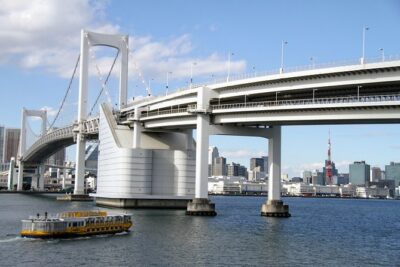
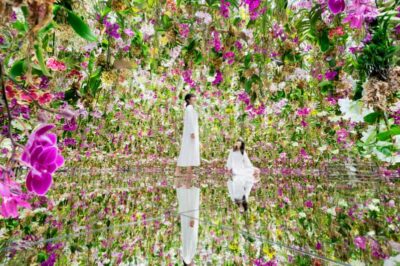
teamLab Planets TOKYO Digital Art Museum Entry Ticket
Read our review →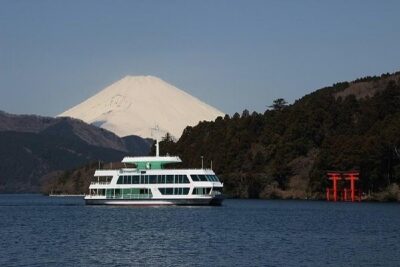
Mt Fuji & Hakone Cruise, Drum Show Bullet Train 1 Day from Tokyo
Read our review →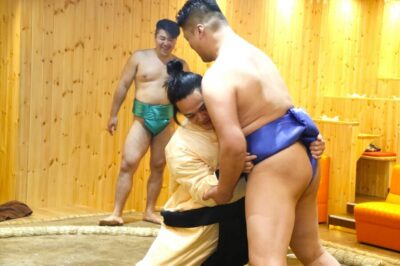
Sumo Show Experience with Chicken Hot Pot and a Photo
Read our review →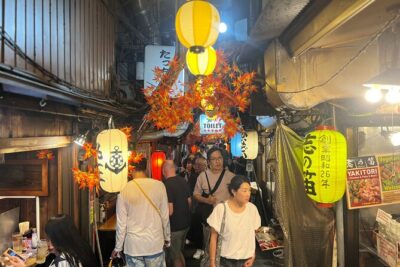
Shinjuku Food Tour (13 Dishes at 4 Local Eateries)
Read our review →
Tokyo Mt Fuji 5th St & Hakone Cruise Bus Tour w/Bullet Train
Read our review →
Flagship 2-Hours Official Street Go-Kart Tour – Tokyo Bay Shop
Read our review →Browse the lists this tour appears in