
Reviewed · TAKAYAMA TOURS
Kanazawa: World Heritage Shirakawa-go Morning Guided Tour
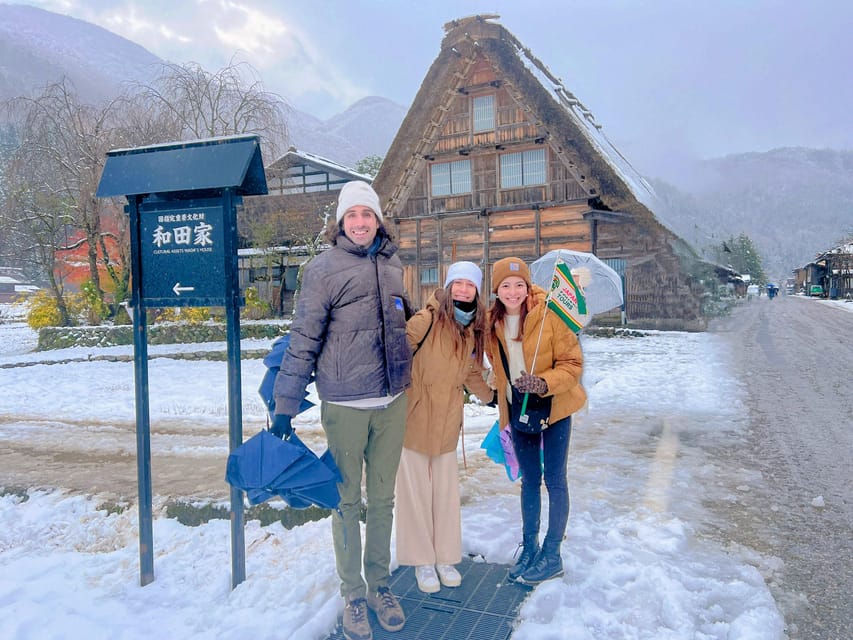
Shirakawa-go is at its best early, before the tour buses and day crowds fill its narrow lanes. This five-hour trip gets you from Kanazawa to the famous Gassho-zukuri village with little transport fuss, then gives you time to wander, take photos, and sample local food.
I like two things right away: the guide explains the village and Japanese culture during the drive, and you are then free to explore without being marched from stop to stop. Guides such as Keita, Yasushi, Aiko, and Nagomi have been praised for clear English, humor, maps, and useful food tips.
The tradeoff is time. About two and a half hours in Shirakawa-go is enough for the main sights, but not enough for a slow visit, long shop queues, and several traditional house interiors. If you want a relaxed afternoon there, choose the full-day option instead.
Key points to know before booking
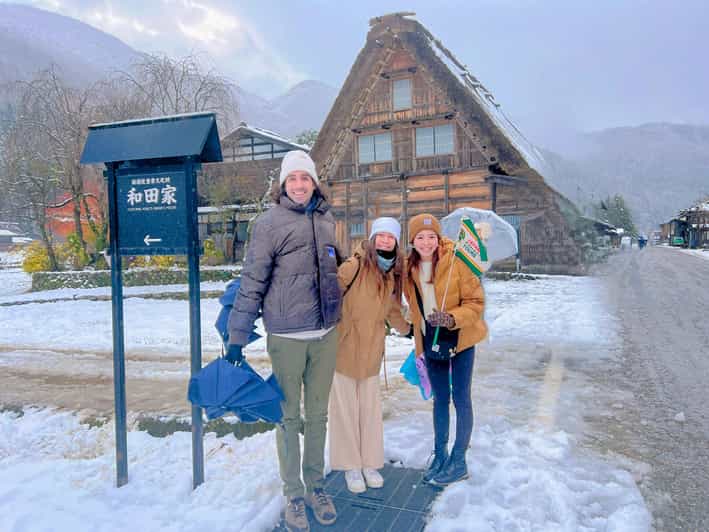
- Early arrival beats the crowds: The bus reaches Shirakawa-go in the morning, often before the larger afternoon flow begins.
- Free time follows useful guidance: Your guide gives history, cultural background, maps, and food suggestions before letting you explore independently.
- The bus removes a major headache: Round-trip transport from Kanazawa includes air conditioning, Wi-Fi, and a driver familiar with the route.
- Local snacks are part of the fun: Look for Hida beef, custard pudding, goheimochi, and Doburoku sake soft serve.
- Winter requires serious layers: Shirakawa-go can feel much colder than Kanazawa, especially when snow is falling.
- Five hours means a focused visit: You see the village efficiently, but you will need to choose between eating, shopping, viewpoints, and house visits.
Why the morning timing matters in Shirakawa-go
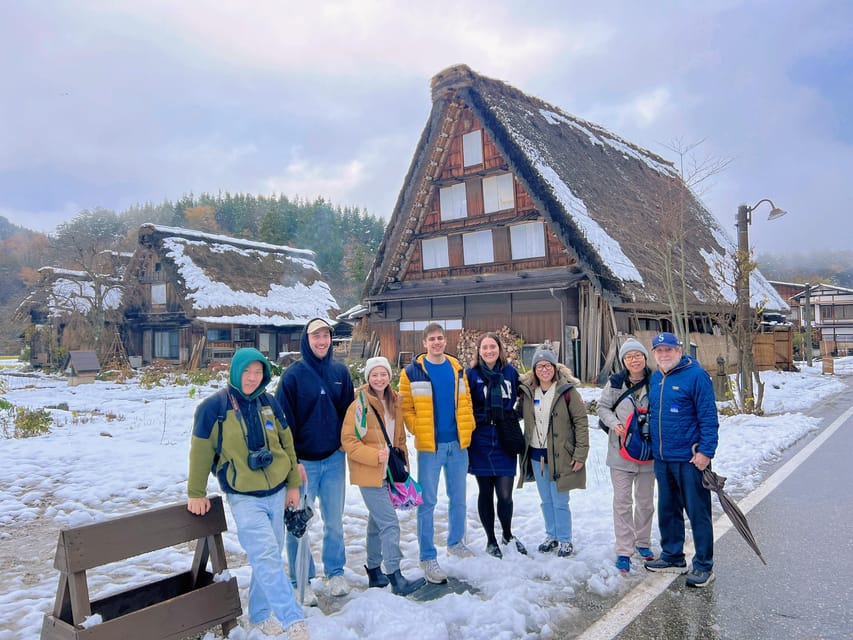
Shirakawa-go is famous for its steeply pitched thatched roofs, built in the distinctive Gassho-zukuri style. The design helped houses shed heavy winter snow, and the village was added to the UNESCO World Heritage list in 1995.
The setting is especially striking in winter, when snow covers the roofs and fields. Autumn brings colorful trees, while other seasons show the village in a quieter, more pastoral light. The scenery is the main event, but the village is not an open-air stage set. People still live here, and that matters when you walk through it.
The early start is one of the strongest reasons to book this trip. You check in at 7:50 AM and leave Kanazawa Station West Plaza at 8:00 AM. By arriving in the morning, you have a better chance to photograph the lanes and houses before they become crowded.
That does not mean you will have the village entirely to yourself. Shirakawa-go is one of Japan’s most popular rural stops. Still, the timing gives you a calmer first look and makes the two-and-a-half-hour visit more useful.
More history-led days in Takayama:
- Kanazawa: World Heritage Shirakawa-go & Two Local Experience
★ 4.9 · 274 reviews - Departing from Takayama [Regular sightseeing bus] World Heritage Sites Shirakawago and Gokayama Ainokura
★ 4.5 · 137 reviews - World Heritage Shirakawa-go and Experience Tours from Kanazawa
★ 5.0 · 4,049 reviews
Meeting at Kanazawa Station at 7:50 AM
The meeting point is the short-term car park at Kanazawa Station West Plaza, at 1-chōme-6-802 Hirooka. Look for the green and white Japan Panoramic Tours flag.
This is not a hotel pickup service. You need to reach the station on your own and be ready before departure. The operator states that latecomers and no-shows are not refunded, so this is a morning where punctuality matters.
I would arrive with enough time to find the west-side plaza without rushing. Keep your booking details easy to show, and wear comfortable shoes from the start. You will spend the village portion walking on streets and paths, and winter conditions may be wet, snowy, or slippery.
The bus leaves at 8:00 AM. The outbound drive takes roughly 80 minutes, depending on traffic and road conditions. That is a useful stretch of time, not dead time, because the guide provides background before you arrive.
The bus ride from Kanazawa to the village
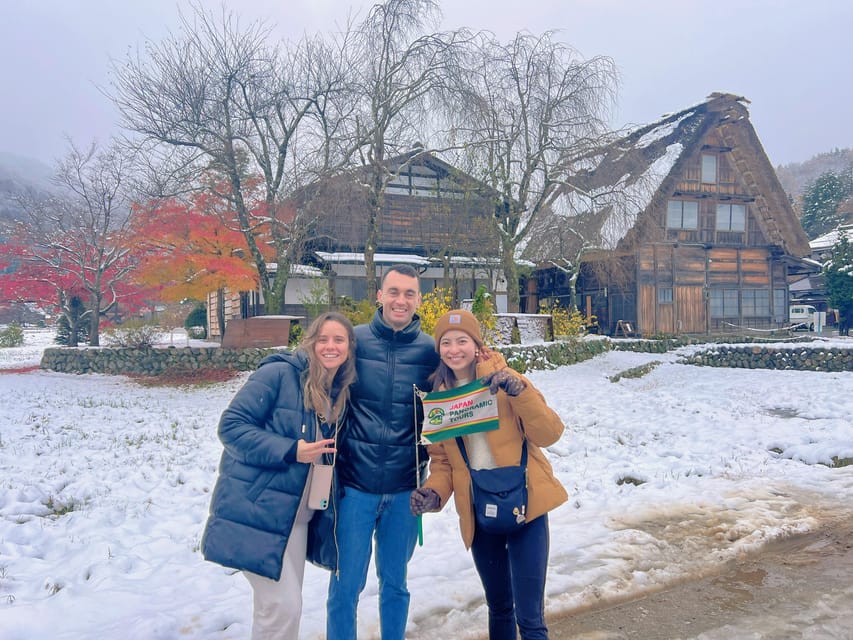
The coach is air-conditioned, regularly ventilated, and fitted with Wi-Fi. Antibacterial coating is also listed as part of the bus service. Wi-Fi is a welcome extra, though I would treat it as convenient rather than essential in a mountain area.
The English and Japanese-speaking guide talks during the ride. Guides including Keita and Yasushi have been especially good at keeping the journey lively with facts, quizzes, jokes, and stories about Japan and the region. Aiko has also been praised for clear explanations and practical advice.
The guide’s role here is important. Shirakawa-go is easy to admire but harder to understand from a quick walk alone. A short explanation of the Gassho-zukuri buildings, village life, and local customs gives you more to notice once you arrive.
Multilingual audio guidance is available in English, French, Italian, Spanish, German, Portuguese, and Ukrainian. The live guide languages are English and Japanese. If you prefer listening in another supported language, the headset option makes the trip easier to follow.
Your roughly 2.5 hours in Shirakawa-go
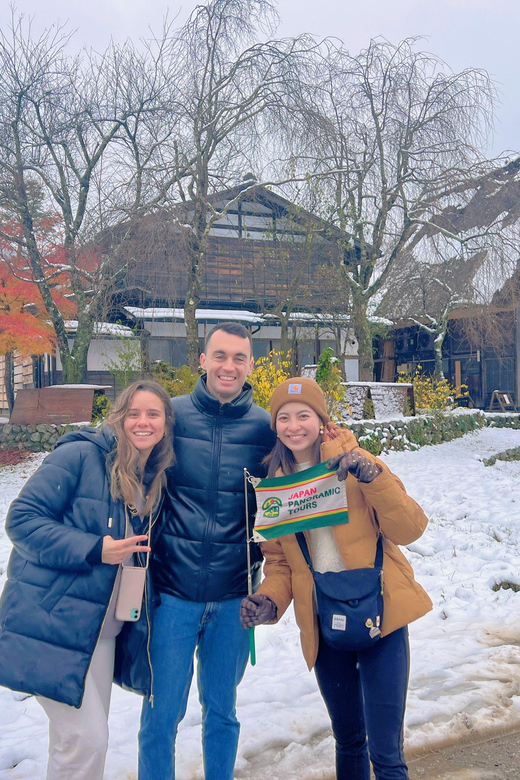
The village visit lasts about 2 hours and 20 minutes to 2 hours and 30 minutes. The guide walks with you at the start, provides a map and orientation, and then generally lets you explore on your own.
That arrangement works well for this kind of place. You get enough context to understand what you are seeing, but you are not tied to a fixed walking line. You can set your own pace, stop for food, take photographs, or browse small shops.
Plan your time before you step off the bus. If you want the classic views, local snacks, and a house visit, you will need to move with purpose. Several people have managed to see five key spots in the allotted time, while others found the schedule too tight for shops and indoor visits.
A practical approach is to begin with the most important view or building, then work back toward food and shopping. Queues can eat into your visit, especially at popular pudding shops. If a particular house interior matters to you, ask your guide about the best way to fit it in before you set off.
More early starts in Takayama:
- Private-group Morning Cycling Tour in Hida-Furukawa
★ 5.0 · 105 reviews - Short Morning Cycling Tour in Hida
★ 5.0 · 17 reviews - Kyoto Early Morning Tour with English-Speaking Guide
★ 5.0 · 1,427 reviews - Kyoto: Early Morning Tour with English-Speaking Guide
★ 4.9 · 1,128 reviews
What to eat: Hida beef, pudding, and Doburoku soft serve
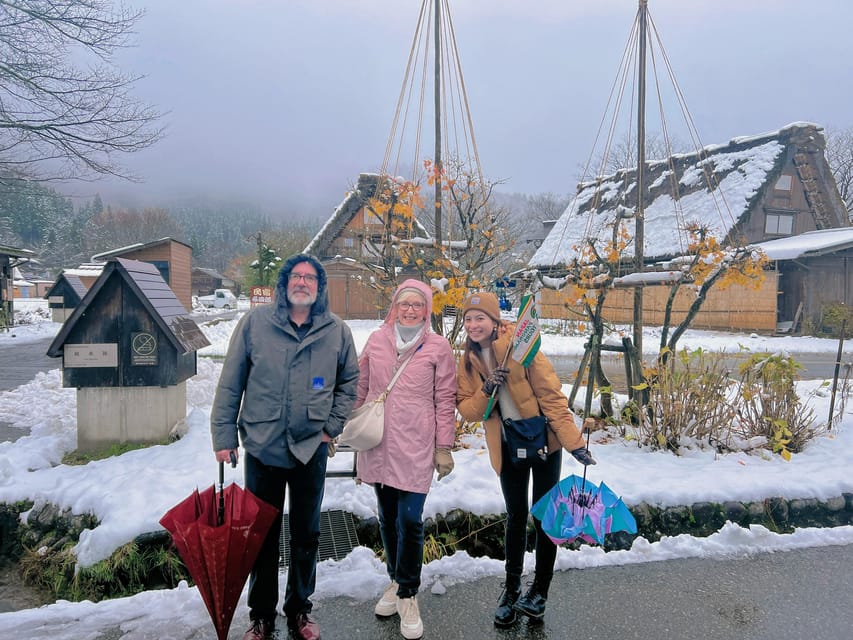
Food gives this short visit extra character. Hida beef is the local specialty to seek out, often served in a simple snack-sized portion such as a skewer. It is an easy choice when you want to taste the region without spending much time at a sit-down meal.
Custard pudding is another popular stop. The pudding shop can draw a queue, so you need to decide how much of your limited village time you want to spend waiting. It is a good treat, but not an obligation. If the line is long, you may prefer to keep walking.
Doburoku soft serve is made with unfiltered sake. It is an unusual local flavor and a fun choice if you want something tied to the area rather than a standard ice cream. Alcohol content and serving details are not specified, so ask the shop if that matters to you.
You might also see goheimochi, a regional rice snack recommended by one guide. Food purchases are not included in the $77 price, so carry some spending money and leave room in your schedule for small bites.
The village is beautiful, but it is still a living community
The traditional roofs are the visual draw, yet the deeper appeal is seeing an old village that remains part of daily life. Houses are not all museums, and residents still use the roads and buildings.
That means you should keep to marked visitor areas, avoid blocking lanes, and respect private homes. The experience is better when you see Shirakawa-go as a real community rather than a backdrop for photographs.
The guide can help explain this distinction. A short guided introduction is useful because it points out how the buildings function and why the architecture developed in this snowy region. After that, independent time lets you observe quietly.
Snow can make the village look almost storybook-like, but it also changes the practical side of the visit. Wear shoes with a good grip, dress in layers, and protect your phone or camera from wet weather. Shirakawa-go can be noticeably colder than central Kanazawa.
Returning to Kanazawa and finishing near Kenrokuen
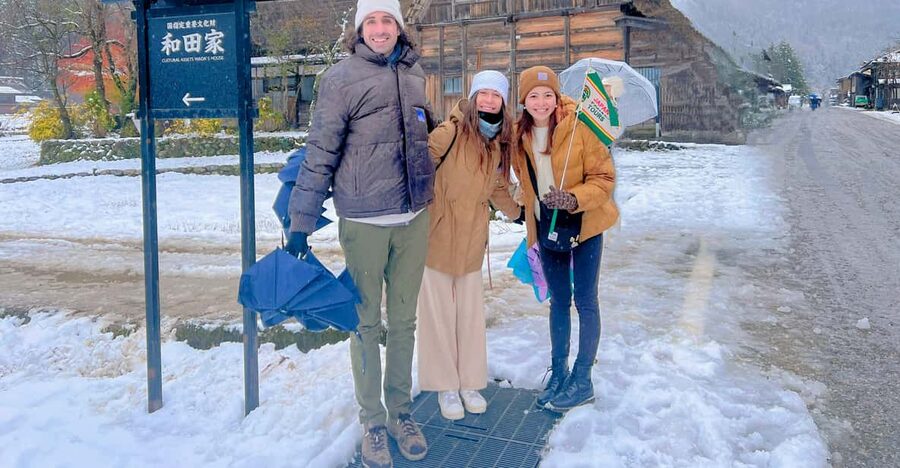
After the village visit, the bus returns toward Kanazawa. The ride takes about one hour, and the tour ends around 1:00 PM near Kenrokuen Garden at Kenrokuencho 1.
Kenrokuen Garden is the finish point, not a scheduled garden tour on this morning program. That is useful if you want to continue sightseeing in central Kanazawa. You can arrange your afternoon around the garden, Kanazawa Castle, the Higashi Chaya District, or a meal nearby.
On October 12 and 16, and November 1, 3, and 13, the stated finish point changes to the Higashi Chaya District. Check the end location for your date before making afternoon plans.
The early finish is one of the tour’s best practical features. You lose the flexibility of a private trip, but you gain a full afternoon in Kanazawa. If you decide during the morning that you want more, an upgrade to the full-day tour may be possible on the day, subject to availability.
What the $77 price gets you
At $77 per person, the main value is transport and time saved. Public bus arrangements between Kanazawa and Shirakawa-go can require advance planning, and the route is not the sort of connection I would want to improvise on a tight holiday schedule.
Your price covers the air-conditioned coach, the English and Japanese-speaking guide, the audio guidance system, and onboard Wi-Fi. It does not cover food, drinks, hotel pickup, or admission charges for anything you choose to enter.
The tour is not the cheapest way to see Shirakawa-go if you are already comfortable arranging transport and researching the village yourself. Its value is strongest for first-time visitors, people on a short Kanazawa stay, and anyone who wants a clear plan without renting a car.
You are also paying for the morning schedule. Arriving early can make the village feel more pleasant and can improve your photographs. That timing is hard to price separately, but it is a real part of the experience.
The main limitation: a fixed clock
The most important question is not simply if you want to see Shirakawa-go. It is how you like to see places.
This tour suits you if you want the major sights, a few local foods, a scenic walk, and an early return to Kanazawa. It is less suitable if you want to sit in cafés, inspect several house interiors, shop slowly, or wait in every food line.
The 2.5-hour window feels sufficient for a focused visit. It can feel rushed when the village is busy or when snow and queues slow you down. The itinerary can also change because of traffic, weather, or operational needs, and an alternative stop may be used if a scheduled place is closed.
That flexibility is normal for a road trip to a mountain village. Still, keep your afternoon plans sensible. Allow some breathing room after the stated 1:00 PM finish.
Who should choose this half-day trip
I would choose this tour for:
- First-time visitors staying in Kanazawa
- People who want an early, organized visit to Shirakawa-go
- Solo visitors or couples who prefer not to manage regional buses
- Families who value a clear schedule and onboard explanations
- Food-focused visitors who want time for Hida beef, pudding, or local sweets
- Winter visitors who want a practical way to reach the snowy village
I would choose the full-day option instead if Shirakawa-go is one of the central goals of your Japan trip. Extra time gives you more room for shops, house interiors, meals, and a slower walk.
The guides are a major part of the value. Keita is known for lively, clear English and practical village advice. Yasushi brings humor, local feeling, and strong explanations. Aiko has been praised for warmth, organization, and food suggestions, while Nagomi is noted for cheerful guidance and useful maps.
Guide assignments can change, so you should not book solely for a particular person. The consistent pattern is more important: live commentary on the bus, clear instructions, and independent time once you arrive.
Booking flexibility and simple preparation
Free cancellation is available up to 24 hours before departure for a full refund. You can also reserve now and pay later, which helps if your Kanazawa schedule is still changing.
Bring comfortable shoes and dress for the season. For winter, layers are essential because Shirakawa-go may be much colder than Kanazawa. Pets are not allowed.
The bus is designed for a straightforward ride, but this is still a walking tour once you arrive. If you want to spend money on snacks and souvenirs, bring funds for additional food and drinks since they are not part of the tour price.
Should you book the Shirakawa-go morning tour?
Book it if you want efficient transport, early access, and a helpful guide without giving up your Kanazawa afternoon. At $77, it is a fair choice for the convenience alone, and the early arrival improves the experience.
Skip it if you dislike fixed schedules or want to explore every corner slowly. In that case, arrange more time independently or choose the full-day option.
For most short stays, I see this as a smart half-day plan. You get the thatched-roof village, regional food, cultural context, and a comfortable ride, all before the rest of your Kanazawa day begins.
FAQ
Where does the tour meet?
The meeting point is Kanazawa Station West Plaza short-term car park at 1-chōme-6-802 Hirooka, Kanazawa. Check-in is at 7:50 AM, and departure is at 8:00 AM. Look for the green and white Japan Panoramic Tours flag.
How long is the tour?
The activity lasts five hours. The bus ride to Shirakawa-go takes about 80 minutes, the village visit lasts roughly 2 hours and 20 minutes, and the return journey takes about one hour.
What languages are available?
The live guide speaks English and Japanese. Audio guidance is available in English, French, Italian, Spanish, German, Portuguese, and Ukrainian.
Is food included?
No. Food and drinks are additional purchases. You can use your free time to try local specialties such as Hida beef, pudding, goheimochi, and Doburoku soft serve.
Does the tour include hotel pickup?
No. Hotel pickup and drop-off are not included. You need to reach the Kanazawa Station West Plaza meeting point yourself.
Can I cancel the booking?
You can cancel up to 24 hours in advance for a full refund. Reserve-now, pay-later booking is also available. Latecomers and no-shows are not refunded.
Just added around Takayama
- Private Afternoon Cycling Tour in Hida-Furukawa★ 5.0 · 109 reviews
- Gifu Samurai Sword Town;Japanese Damascus Knife Making Experience★ 5.0 · 27 reviews
- Private-group Morning Cycling Tour in Hida-Furukawa★ 5.0 · 105 reviews
- Short Morning Cycling Tour in Hida★ 5.0 · 17 reviews
- Magome & Tsumago Nakasendo Full-Day Private Trip with Government-Licensed Guide★ 5.0 · 20 reviews
- Magome & Tsumago Nakasendo Trail Day Hike with Government-Licensed Guide★ 5.0 · 38 reviews
- Frozen fall trekking★ 5.0 · 21 reviews
- Explore Kiso Valley : Magome – Tsumago Mountain Trail Walk★ 5.0 · 33 reviews
Takayama Tours, compared.
World Heritage Shirakawa-go & Two Local Experience
Read our review →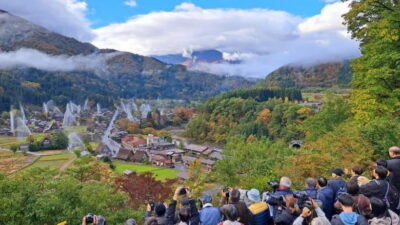
Kanazawa/Takayama: Shirakawago & Takayama Private Day Tour
Read our review →![Departing from Takayama [Regular sightseeing bus] World Heritage Sites Shirakawago and Gokayama Ainokura](https://media3.thejapanesetraveller.com/wp-content/uploads/departing-from-takayama-regular-sightseeing-bus-world-heritage-sites-shirakawago-and-gokayama-ainokura-400x267.jpg)
Departing from Takayama [Regular sightseeing bus] World Heritage Sites Shirakawago and Gokayama Ainokura
Read our review →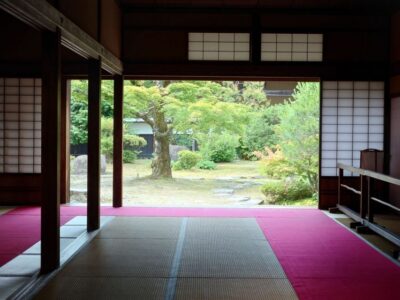
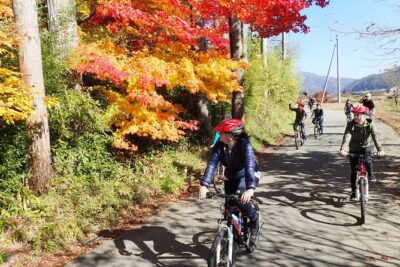
Private Afternoon Cycling Tour in Hida-Furukawa
Read our review →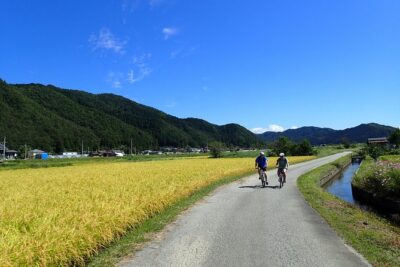
Private-group Morning Cycling Tour in Hida-Furukawa
Read our review →
Onigiri and miso soup making at a buddhist temple
Read our review →
Browse the lists this tour appears in