
Reviewed · TOKYO TOURS
Best of Shibuya Food Tour
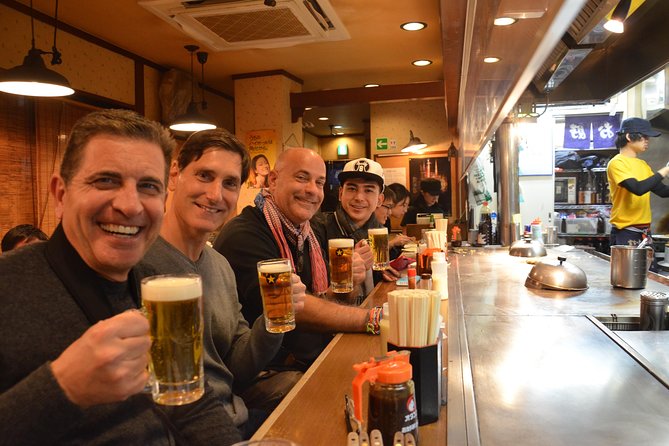
Shibuya after dark is more than the famous crossing. This three-hour food walk leads you from Hachiko Square into side streets, small restaurants, a department-store food hall, and the neon lanes around Center-gai. You may sample sushi, ramen, okonomiyaki, yakitori, gyoza, and dessert, depending on the night.
I like the small group size, capped at 10, and the way a local guide handles the hard parts of eating out in Japan. I also like the range of food, from regional dishes to quick bites, rather than one long meal in a single restaurant. The main caution is price: at $217 per person, you need to value the guidance, cultural context, and convenience, not just the food on the plate.
Key points to know before booking
- Five food stops in about three hours: You get a broad tasting session rather than a sit-down dinner.
- Shibuya beyond the crossing: The route includes Hachiko Square, Center-gai, Nonbei Yokocho, Shibuya 109, and Tokyu Food Show.
- One drink and dessert included: The drink may be alcoholic for adults, with a minimum drinking age of 21.
- Food can be generous: Several people finished stuffed, so eat lightly beforehand.
- Guides shape the experience: Seika, Jacob, Alex, Jane, Melissa, Sandra, and others have been especially praised for food advice and local context.
- The meeting point needs care: Find the Hachiko mural outside the station at the Hachiko Exit, not simply the broad area around Shibuya Crossing.
Starting beside Hachiko in late afternoon
The tour begins at 4:00 pm in front of the Hachiko mural, just outside Shibuya Station at the Hachiko Exit. This is a sensible place to start, but it is also one of Tokyo’s busiest meeting areas. Give yourself extra time to find the correct station exit and the dog statue mural.
Hachiko is more than a photo stop. Your guide uses the area to explain Shibuya, Japanese customs, and the local story behind the famous dog. The formal stop is brief, but the setting gives you useful bearings before the food walk begins.
The route also passes the Myth of Tomorrow mural, a large work with a serious historical theme. It is only a short stop, yet it adds a little art and cultural context before the evening turns fully toward food.
More Food Tours in Tokyo
- Tokyo: Shinjuku Food Tour (13 Dishes at 4 Local Eateries)
★ 5.0 · 6,603 reviews - Tokyo: Shinjuku Food Tour (15 Dishes and 4 Eateries)
★ 4.9 · 2,033 reviews - Best of Shinjuku: Izakaya Food Tour (4 Stops, 14+ Tastings)
★ 5.0 · 1,863 reviews
Seeing the famous crossing without making it the whole tour
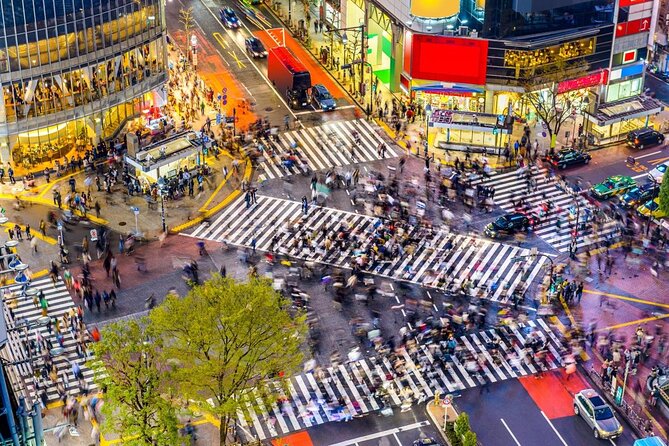
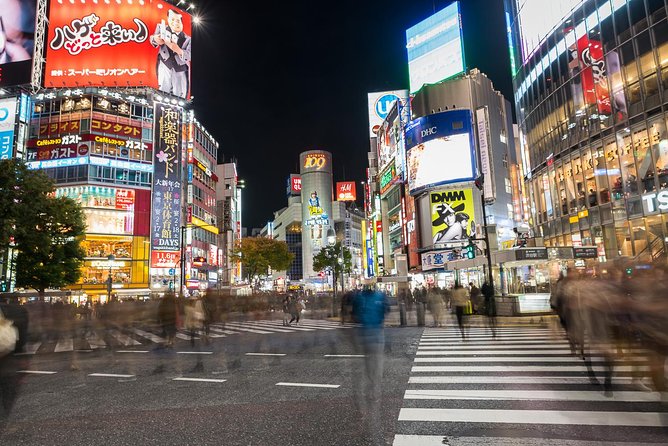
Shibuya Crossing is included, but the tour does not treat it as the final word on the neighborhood. You will have a chance to see the crossing and learn how it fits into daily life in Tokyo, then move away from the main flow of visitors.
That shift is important. The best value here is not simply being shown places you can locate on a map. It is getting help with the streets and food counters that are easy to overlook when you are focused on the crossing, Shibuya 109, or the giant signs.
One guide, Alex, was especially praised for finding a good view of the crossing from above. That kind of local help can be useful if you want a photograph without standing in the middle of the intersection. The exact viewing spot can change, so treat it as a possible bonus rather than a fixed promise.
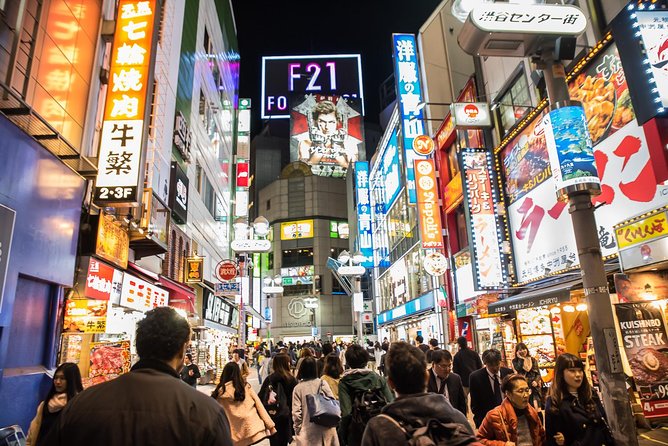
Center-gai and Shibuya’s side-street food
From the crossing, the walk moves toward Shibuya Center-gai and nearby lanes. This is where the experience begins to feel less like sightseeing and more like a guided evening out.
The food may include several Japanese favorites:
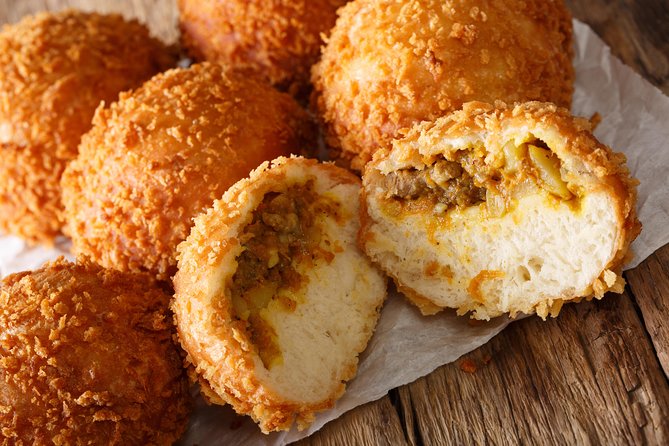
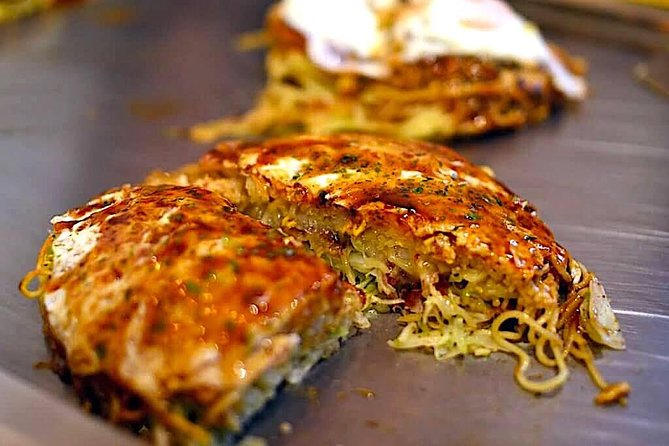
- Hiroshima-style okonomiyaki
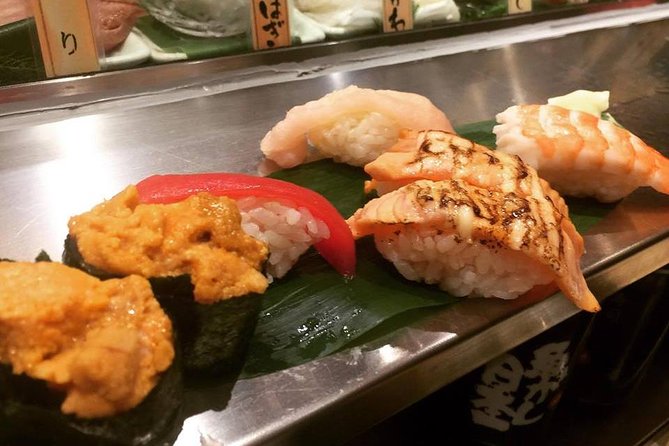
- Different kinds of sushi
- Wagyu beef yakitori
- Ramen
- Gyoza
- Chicken wings
- Vegetable and egg dishes
- Seasonal small plates
- Dessert
The wording matters here. The exact menu is not fixed. Restaurant schedules, public holidays, weather, and other conditions can lead to substitutions. You should expect a variety of Japanese food, but not book this expecting a guaranteed checklist of sushi, ramen, okonomiyaki, and beef skewers.
The food portions can also be larger than the word tasting suggests. Several people ended the walk very full, and one detailed account described a meal spread that included ramen, eight pieces of nigiri sushi, a vegetable and egg dish with bacon, chicken wings, gyoza, and cucumber. That is not necessarily your menu, but it is a good reason to skip a heavy lunch.
What the restaurant stops are really worth
The appeal of the restaurant stops is access and confidence. You can follow a guide into places you might hesitate to enter alone, especially if the menu is mostly in Japanese or the ordering system is unfamiliar.
A guide can explain how to approach the food, what a dish contains, and how it fits into regional Japanese cooking. Jacob was praised for showing people how to season ramen, while Jane was noted for explaining the background of both the food and the places visited. These details help turn a meal into something more useful than a string of samples.
The tradeoff is that quality may vary from stop to stop. Some food may be excellent, while another location feels more ordinary. One person found the food average to below average despite enjoying the guide and the variety. Another felt the stops were uninspired and too quiet. That criticism matters, especially at $217.
The tour is a better match for you if you want a broad introduction and help with local dining customs. It is a weaker match if you already know Shibuya well, speak Japanese, and are comfortable choosing restaurants on your own.
Same base, a completely different sort of day:
- Mt Fuji and Hakone 1-Day Bus Tour Return by Bullet Train
★ 5.0 · 26,383 reviews - 1-Day Tokyo Bus Tour
★ 5.0 · 14,250 reviews - Tokyo: TOKYO SKYTREE® Admission ticket
★ 4.5 · 11,192 reviews - Tokyo: teamLab Planets TOKYO Digital Art Museum Entry Ticket
★ 4.6 · 9,779 reviews
The department-store basement food hall
Tokyu Food Show is the ending point, in the basement beneath the station area. Japanese department-store food halls, often called depachika, are worth seeing even if you are not hungry. They bring together prepared foods, sweets, boxed meals, seafood, and beautifully presented items in a compact underground setting.
Here, the value is partly visual. You get to see how carefully Japanese food is displayed and sold, not just how it tastes at a restaurant table. Your guide can help you make sense of the selection and point out items you might otherwise pass without understanding.
The listed route also includes Mega Don Quijote, Shibuya 109, and Nonbei Yokocho. These are short orientation points rather than long shopping visits. Don Quijote shows the chaotic, anything-goes side of Japanese retail. Shibuya 109 is a major landmark for the district’s fashion culture. Nonbei Yokocho brings you near a much tighter network of small drinking and eating spaces.
The finish at Tokyu Food Show is practical. You end near public transportation and can continue your evening without needing a taxi back to the start.
The drink, dessert, and the family question
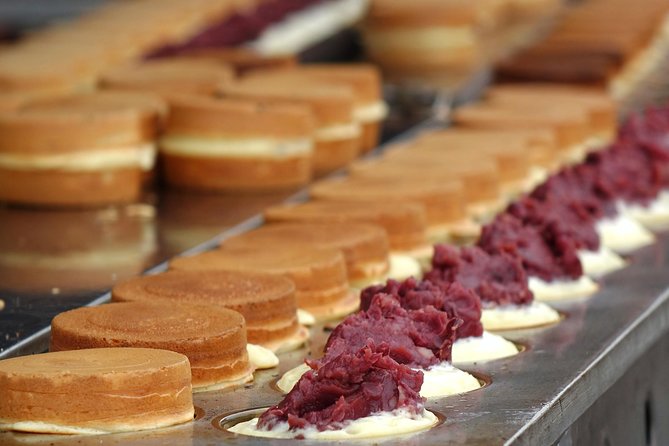
One drink is included, along with dessert. For adults, this may be a useful chance to toast the evening, but the minimum drinking age is 21. If you are under that age, or simply do not drink, check how the included beverage will be handled.
The tour is described as family-friendly, and children must be accompanied by an adult. Children receive chicken skewers instead of beef. A passport information copy is required for children age 10 and above, so families should prepare that before the meeting time.
Several families had a good time, including groups with children as young as 10. One guide, Sandra, was praised for keeping restroom needs in mind during a family walk. Still, this is a walking tour with several food stops, station crowds, and busy streets. Young children who tire easily may find the pace demanding.
Dietary restrictions and menu flexibility
Vegetarian and vegan-friendly options are available, but you should state your needs when booking and remind the guide at the start. The menu can change, and some of the named dishes commonly contain meat, fish, egg, or seafood.
The experience can also accommodate some specific restrictions. Saika was praised for arranging non-pork choices for a couple with that requirement. That is encouraging, but it does not mean every restriction can be handled at every stop.
You should not assume that a vegetarian, vegan, halal, gluten-free, or allergy-safe menu will be identical to the standard route. Ask for confirmation before paying, and make your needs clear early. The guide may be able to arrange substitutions, but restaurant availability controls the final menu.
Why the guide matters more than the map
Shibuya is easy to reach and easy to wander. The harder part is deciding where to eat, understanding menus, and knowing which local customs matter. That is where the guide earns the fee.
The strongest guide feedback centers on friendliness, pacing, language ability, and cultural explanation. Seika was praised for making the evening fun. Jacob was singled out for his Japanese language skills, food advice, and history knowledge. Alex helped with both neighborhood orientation and later restaurant recommendations. Melissa was praised for bringing Tokyo to life through conversation and food.
Jane received special praise for adjusting the walking speed to the slowest person in the group. That is a small but meaningful sign of good guiding. A food walk should not feel like a race between restaurants.
The group maximum is 10 people. That is small enough for questions and personal attention, though the actual group size can be lower or higher within that limit. If you want a private meal with long conversations at every stop, this is not that. It is a moving introduction to Shibuya’s food culture.
Is $217 a fair price?
The cost is high for three hours in Tokyo. You could certainly eat a filling meal in Shibuya for much less, and you can explore the crossing, Center-gai, and department-store food halls without paying for a guide.
The price makes more sense when you add up the included food, dessert, one drink, route planning, interpretation, and local help. You are paying to avoid guesswork and to sample several places in one evening. For a first night in Tokyo, that can save time and give you ideas for later meals.
The value depends heavily on the guide and the night’s restaurant choices. Some people found the quantities generous and the food excellent. Others felt the meal selection did not justify the cost, especially when the restaurants were quiet or felt ordinary.
I would compare it with the price of a private guide, not only with the cost of dinner. If you are new to Japan and want an easy introduction, $217 may be acceptable. If your main goal is maximum food quality per dollar, explore independently instead.
Timing, walking, and practical details
The walk starts at 4:00 pm and lasts about three hours. You begin in daylight or early evening, then move into Shibuya’s neon-lit night as the tour continues. This timing works well for a dinner replacement and lets you see the district change character.
Wear comfortable shoes. The route links several areas on foot, and you should expect station crowds, narrow lanes, stairs, and time standing at food stops. A moderate level of physical fitness is recommended.
There is no hotel pickup or drop-off, and transportation costs are not included. You meet at Hachiko and finish at Tokyu Department Store’s basement level under the station. The end point is convenient, but the start is strict. One person missed the group after struggling to locate the mural, so do not arrive at the general Shibuya area and expect to find the guide by chance.
The tour uses a mobile ticket, and booking confirmation is provided at the time of booking. Free cancellation is available up to 24 hours before the start time. Changes made inside that window are not accepted, and poor weather or failure to reach the minimum group size can lead to a new date or a full refund.
Who should book this Shibuya food walk?
I would choose this tour for a first visit to Tokyo, especially if you want to begin with food rather than a formal museum or temple visit. It suits couples, families with older children, and small groups who want an organized evening with plenty of tasting.
It also suits anyone who feels uncertain about Japanese menus or restaurant etiquette. A guide can make the first few meals less intimidating and help you spot dishes worth ordering later.
I would be more cautious if you are a serious food specialist, have a tight budget, or expect high-end dining. The tour promises variety and access, not luxury restaurants or a fixed chef-led menu. Restaurant quality can vary, and the high price will bother you if the cultural guidance is not a major part of what you want.
Should you book the Best of Shibuya Food Tour?
Book it if you want a social, food-focused introduction to Shibuya, you like trying several dishes in one evening, and you value a local guide who can explain what you are eating. Arrive early at the Hachiko mural, come hungry, and keep your menu expectations flexible.
Skip it if you mainly want the cheapest route to ramen and sushi, or if you prefer choosing every restaurant yourself. At $217, this is a guided neighborhood experience with food attached, not simply a three-hour dinner.
The strongest reason to book is the combination of side-street access, local explanation, and a generous spread of tastings. The main risk is uneven restaurant quality. For a first night in Tokyo, I think the convenience and orientation can justify the price. For repeat visitors, the decision comes down to how much you want the guide to shape your evening.
FAQ
How long does the Best of Shibuya Food Tour last?
The tour lasts approximately three hours.
What time does the tour start?
The scheduled start time is 4:00 pm.
Where does the tour meet?
Meet in front of the Hachiko mural at Hachiko Exit, outside Shibuya Station. The address provided is Hachikō Family, 2 Chome-1 Dogenzaka, Shibuya, Tokyo 150-0043, Japan.
Where does the tour finish?
The tour ends at Tokyu Food Show, on the basement level under the station area. The listed address is Tokyu Department Store Honten, 2-chōme-24-1 Dōgenzaka, Shibuya, Tokyo 150-8019, Japan.
What is included in the price?
The price includes a local guide, five food stops, dessert, and one drink. Hotel pickup and drop-off, transportation costs, and any food or drinks not specified are not included.
Can children join the tour?
Yes. The tour is family-friendly, but children must be accompanied by an adult. Children receive chicken skewers instead of beef, and a passport information copy is required for children age 10 and above.
Can the tour accommodate dietary restrictions?
Vegan and vegetarian options are available, and some other substitutions may be possible. Tell the operator about your restrictions when booking, since the menu can change according to restaurant schedules and availability.
Just added around Tokyo
- Private Arrival Transfer : Narita International Airport to Central Tokyo City★ 4.5 · 12 reviews
- Narita Airport(NRT): Private Transfer to Tokyo/Yokohama 1-9pax★ 5.0 · 47 reviews
- Private Transfer from Narita Airport to Yokohama Port and City★ 4.5 · 17 reviews
- [Narita Airport Terminals 1, 2] 40-60km Sawara Itako Historic Bike Tour★ 5.0 · 13 reviews
- 3 Day Japan Highlights Tour: Tokyo, Mt.Fuji, Nara, Kyoto, Osaka★ 5.0 · 22 reviews
- Small Town in the Big City: Tasting Tokyo’s Kichijoji★ 5.0 · 195 reviews
- Small Town in the Big City: Tasting Tokyo’s Kichijoji★ 5.0 · 16 reviews
- The 10 Tastings of Tokyo With Locals: Private Street Food Tour★ 5.0 · 48 reviews
Tokyo Tours, compared.

Mt Fuji and Hakone 1-Day Bus Tour Return by Bullet Train
Read our review →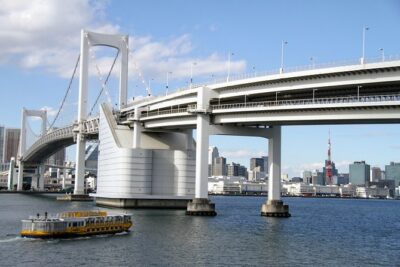
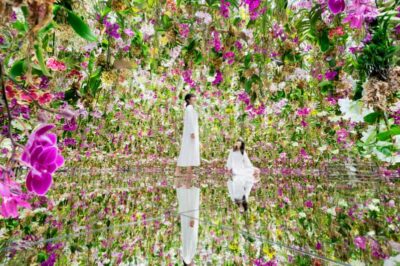
teamLab Planets TOKYO Digital Art Museum Entry Ticket
Read our review →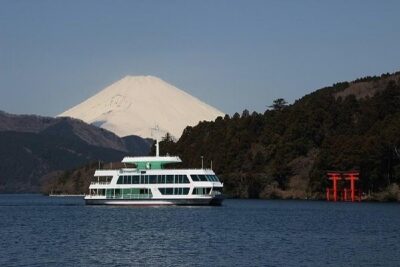
Mt Fuji & Hakone Cruise, Drum Show Bullet Train 1 Day from Tokyo
Read our review →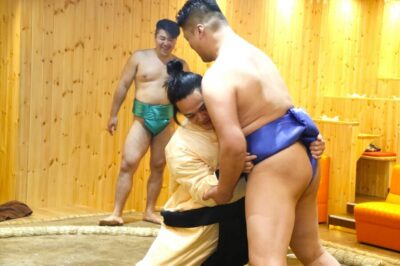
Sumo Show Experience with Chicken Hot Pot and a Photo
Read our review →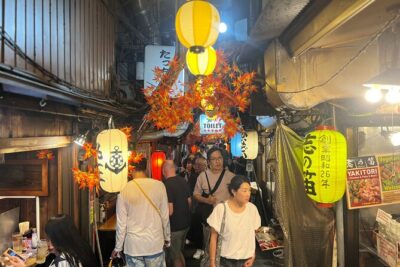
Shinjuku Food Tour (13 Dishes at 4 Local Eateries)
Read our review →
Tokyo Mt Fuji 5th St & Hakone Cruise Bus Tour w/Bullet Train
Read our review →
Flagship 2-Hours Official Street Go-Kart Tour – Tokyo Bay Shop
Read our review →Browse the lists this tour appears in