
Reviewed · TOKYO TOURS
Daikoku Parking : going by this mini JDM – one customer only
Tokyo’s car culture feels very different from the passenger seat of a tour bus. Here, you ride alone with Toshiro in a tiny modified Honda S660, heading along the Metropolitan Expressway and Bay Shore Route toward Daikoku and Tatsumi. The road itself is part of the show, especially if you enjoy the world seen in Wangan Midnight or Shuto Ko Battle.
I like the private format, which gives you room to chat with a local driver instead of being one face in a group. I also like the mix of real car-meet stops and Tokyo night views, including Rainbow Bridge, Tokyo Tower, and Tokyo Skytree. The main catch is simple: the S660 is very small, with an economy-airline-sized seat and no luggage space.
Key points before you book
- One passenger only: You get the front seat, the whole conversation, and Toshiro’s attention.
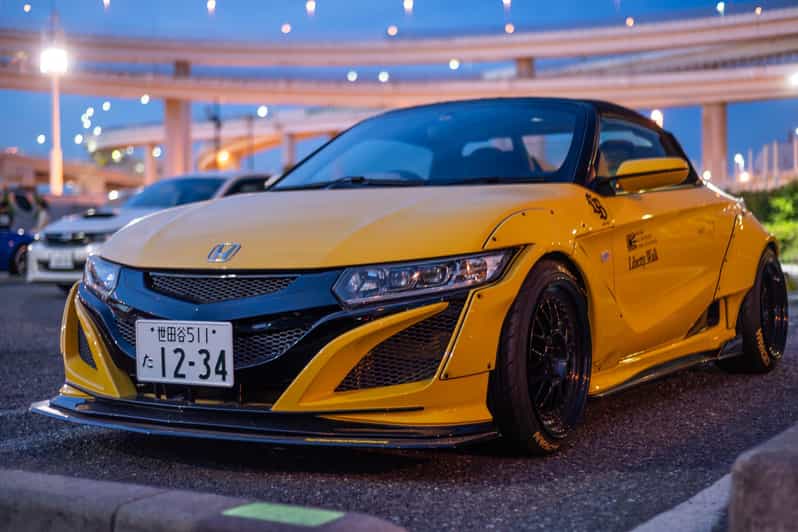
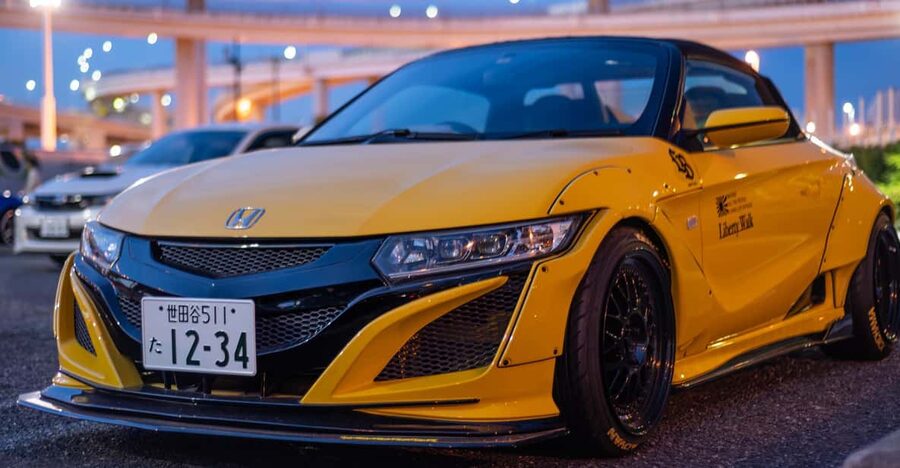
- A rare little car: The Honda S660 is a Japanese domestic mid-engine sports car with Liberty Walk modification.
- Two famous parking areas: Daikoku offers the main car-meet atmosphere, while Tatsumi provides a longer stop.
- Tokyo by expressway: The drive is not just transportation. Metropolitan routes, the Bay Shore Route, and Rainbow Bridge are central to the experience.
- Night timing matters: On Friday and Saturday, the parking area may close around 8:30 p.m., so the ride may run from 6 p.m. to 9 p.m.
- Come light: There is no room for luggage, and this is a sightseeing drive, not a racing session.
Why this Honda S660 ride feels different
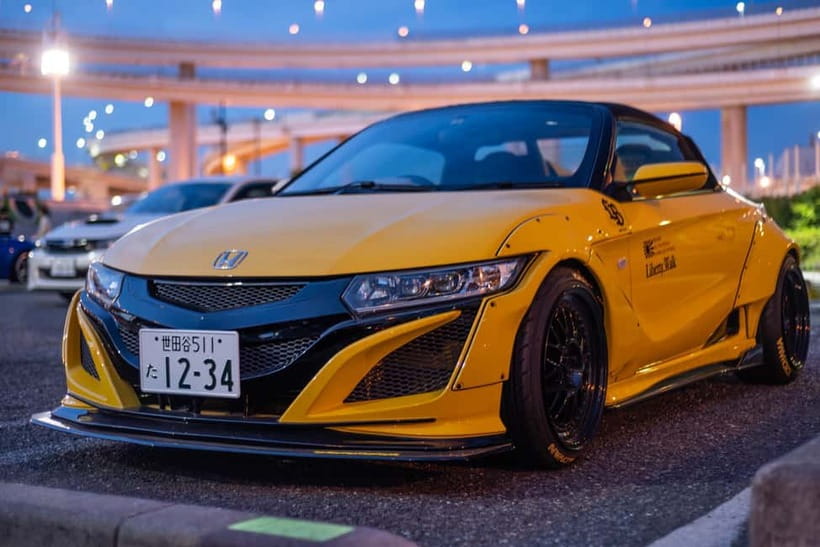
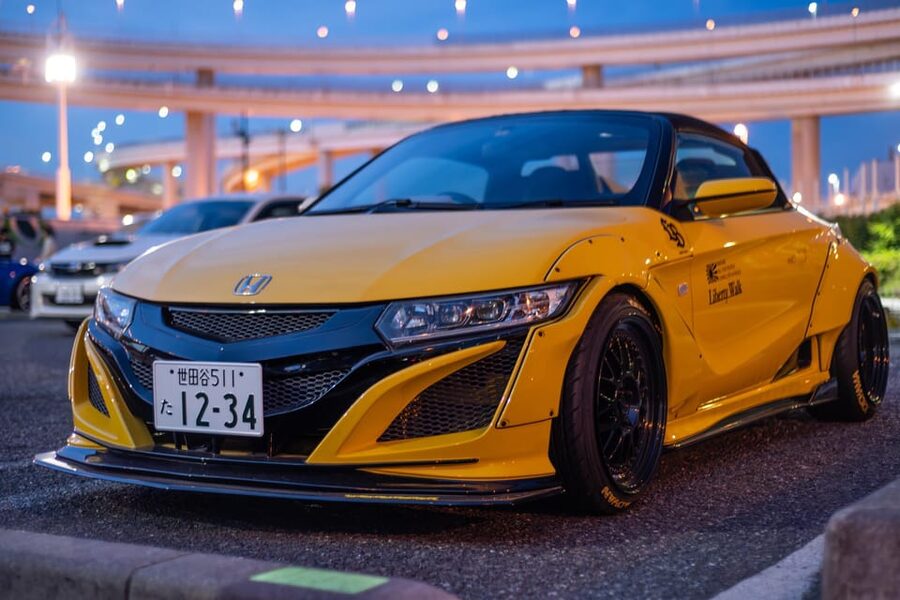
Many Tokyo car tours use a minivan or place several people together. This one does neither. You sit beside one local Japanese driver in a compact Honda S660, a domestic model with its engine mounted behind the seats and a Liberty Walk, or LBWK, modification that gives it a much more dramatic look.
That distinction matters. You are not simply being taken to a parking area to look at cars. You are moving through Tokyo in a Japanese sports car, using the same sort of urban expressway setting that inspires games, manga, and films about Japanese street-car culture.
The car is also part of the visual fun. One guest described the night ride as feeling like Wangan Midnight, while another singled out the car and the return drive after dark. Those comments make sense, but you should keep the comparison in its proper place. Toshiro follows traffic laws and does not stage races or high-speed contests. The appeal is the mood, the roads, the lights, and the machine around you.
The private setup is especially useful for a solo visitor. You can ask questions, talk about Japanese cars, or simply watch the city pass without trying to make conversation with a group. The published price is $192 for the entire group of up to one person, so it is expensive for a three-hour outing, but the cost buys exclusivity rather than a standard seat on shared transport.
A few more Tokyo half-days to weigh up
- Mt Fuji and Hakone 1-Day Bus Tour Return by Bullet Train
★ 5.0 · 26,383 reviews - 1-Day Tokyo Bus Tour
★ 5.0 · 14,250 reviews - Tokyo: TOKYO SKYTREE® Admission ticket
★ 4.5 · 11,192 reviews
Meeting Toshiro in Ōba
The meeting point is in front of MOS Burger in Ōba. Make sure you are ready to go at the agreed time, since the tour begins when you get into the S660 and ends when you return to the same area.
Hotel transportation is not included. You need to make your own way to the meeting point and back afterward. Since no luggage space is available, I would leave suitcases and large bags at your accommodation. Even a compact travel bag would be a poor fit in this car.
The language listed for the tour is English. Toshiro acts as both driver and local guide, and the private format means you can keep the conversation focused on the subjects that interest you most, from Japanese car modifications to the roads around Tokyo.
The first stretch: Tokyo from the expressway
The opening drive is one of the strongest parts of the outing. You travel through Tokyo on the Metropolitan Expressway and Bay Shore Route, seeing the city from a road-level angle rather than from an observation deck or a slow city bus.
For a car enthusiast, the route has a special appeal. You can connect the drive with the settings seen in Japanese car games and films, while also watching the city’s road system work around you. The Bay Shore section and the approach across Rainbow Bridge add open views and a sense of movement that a stationary car meet cannot provide.
I would treat the expressway as a sightseeing route, not as a thrill ride. The operator is clear that this is not a racing game, and you should not expect sharp maneuvers or illegal speed. That is a positive point for most people. You get the atmosphere without asking the driver to take risks.
The night return is another part worth noticing. One visitor particularly enjoyed the drive back after dark, and that is easy to understand. The same roads can feel different once the city lights come on, especially after you have spent time looking at modified cars.
Daikoku Parking Area: fifteen minutes at the main meeting place
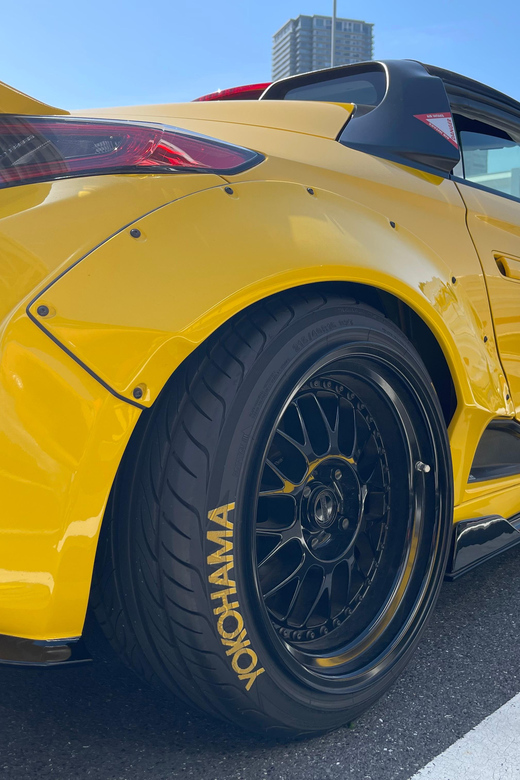
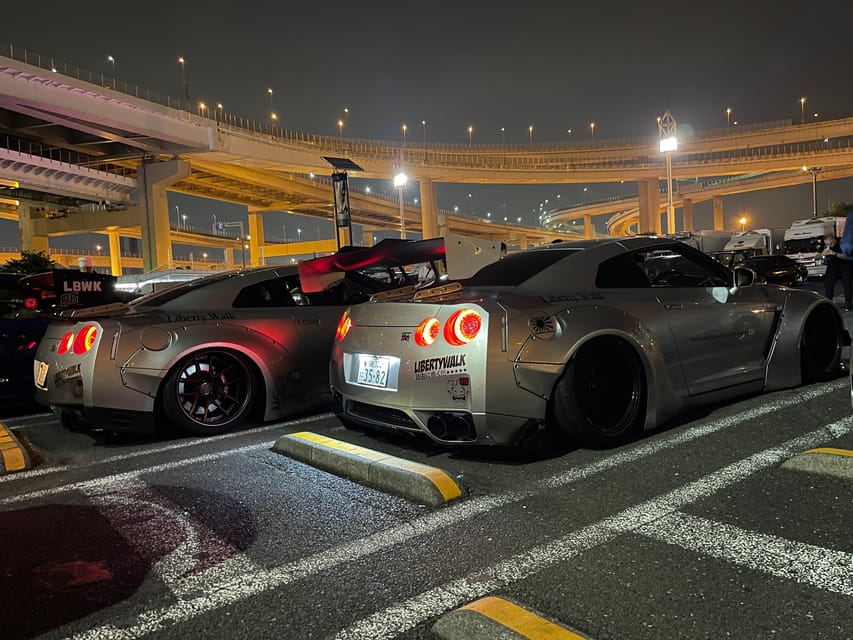
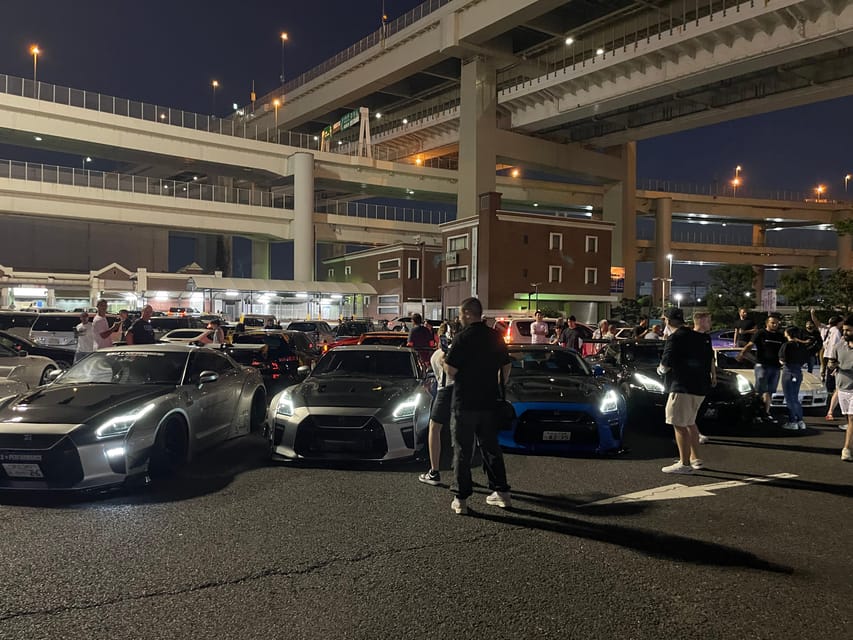
Daikoku Parking Area is the name most car fans will recognize. It is known for Japanese car culture and for the modified vehicles that gather there, though the exact mix of cars and atmosphere can change from one night to the next.
The planned stop here is about 15 minutes. That gives you time to get out, take photos, walk around, and see what has gathered. It is a short stop, so you should not expect an extended guided tour of every car. Think of Daikoku as a concentrated first look, followed by more time at Tatsumi.
The value of visiting with Toshiro is that he can help place the cars and the setting in context. The experience is not only about spotting a particular model. It is also about seeing how Japanese car enthusiasts use these parking areas as informal meeting points.
Daikoku can be especially rewarding if you arrive on a Friday or Saturday night, when the outing is often scheduled from about 6 p.m. to 9 p.m. But timing is not fully predictable. Police may close the parking area around 8:30 p.m., so the exact order or length of the stop can change.
That possibility is worth taking seriously. If your only goal is to see one exact car or a huge gathering, no tour can promise that on a particular night. If you are happy to enjoy the setting, the drive, and whatever arrives, Daikoku becomes a more sensible choice.
Same base, a completely different sort of day:
- Tokyo: teamLab Planets TOKYO Digital Art Museum Entry Ticket
★ 4.6 · 9,779 reviews - Mt Fuji & Hakone Cruise, Drum Show Bullet Train 1 Day from Tokyo
★ 4.0 · 7,413 reviews - Tokyo: Sumo Show Experience with Chicken Hot Pot and a Photo
★ 4.8 · 6,678 reviews - Tokyo: Shinjuku Food Tour (13 Dishes at 4 Local Eateries)
★ 5.0 · 6,603 reviews
Tatsumi 1st Parking Area: the longer stop
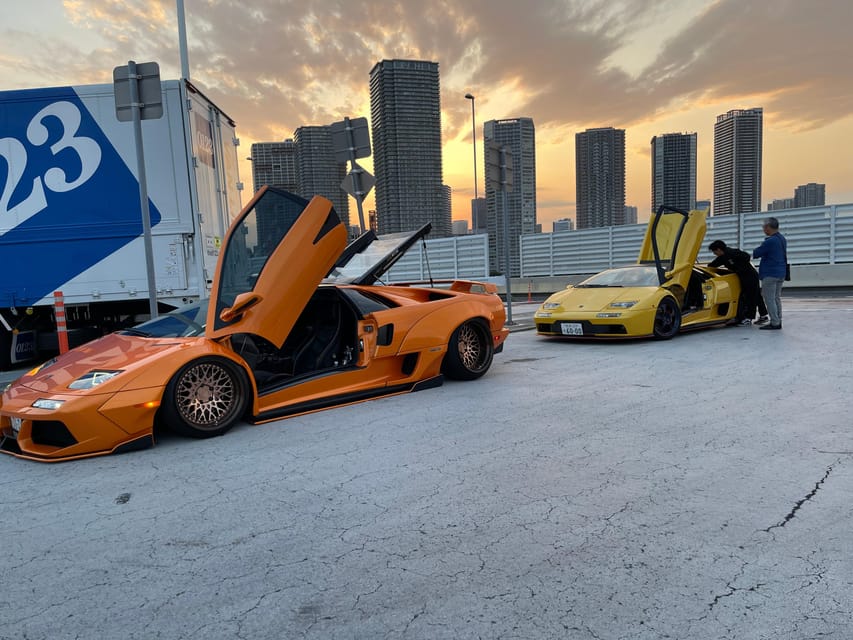
Tatsumi 1st Parking Area is scheduled for about an hour and a half, making it the main stop of the evening. You have time to take photos, walk, look at the cars, and talk with Toshiro without feeling rushed after the short Daikoku visit.
The longer pause gives you a better chance to notice details. Modified bodywork, wheels, paint, and engine-related changes are easier to appreciate when you are not trying to hurry back to the car. You can also use this time to ask about the Japanese domestic models you see.
Tatsumi is part of the tour’s broader point. You are visiting two car-meet locations, but you are also seeing how those places fit into Tokyo’s expressway culture. The evening has a useful rhythm: drive, stop, look around, drive again, and then return through the illuminated city.
You should still keep your expectations flexible. The information provided does not promise a fixed lineup of cars, a guaranteed event, or a chance to drive any vehicle yourself. The included car ride is with Toshiro at the wheel. Self-driving is not included.
Rainbow Bridge, Tokyo Tower, and Skytree from the road
The route includes several Tokyo landmarks, but none is a formal sightseeing stop. You pass Rainbow Bridge, Tokyo Tower, and Tokyo Skytree during the drive.
Rainbow Bridge is part of the crossing between the city and the waterfront expressway routes. It helps connect the car culture side of the tour with a recognizable Tokyo view. You will not have time here for a long walk or a photo session, so keep your camera ready while moving through the route.
Tokyo Tower and Tokyo Skytree are also passed by rather than visited. That makes them pleasant additions, not replacements for a dedicated landmark tour. If you want time at the base of either tower, or a view from the top, plan a separate visit.
I like this approach because it keeps the evening focused. The landmarks give the drive shape, but the tour does not pretend to be a full Tokyo sightseeing circuit. You are seeing the city as a driver sees it, with quick views between expressway stretches and car-meet stops.
What the three-hour schedule really means
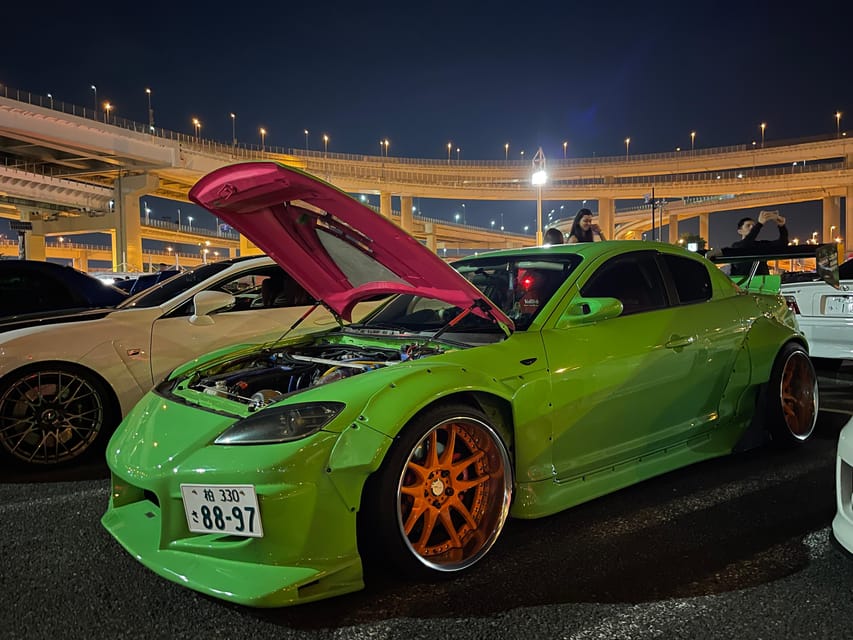
The total duration is three hours, including driving. Daikoku is listed at 15 minutes and Tatsumi at roughly 1.5 hours, leaving the rest for the road between Ōba, the parking areas, and the return journey.
Traffic will affect the pace. The operator specifically notes that Friday and Saturday nights may require an 18:00 departure and a 21:00 return because the parking area can close around 20:30. Weekdays are possible, though Friday, Saturday, or Sunday are suggested as better choices.
If rain affects the plan, you can postpone to another convenient day. This is useful because the experience depends heavily on views, outdoor walking, photography, and the condition of the car-meet areas. A wet night would not necessarily ruin the drive, but it could reduce the enjoyment of the stops.
I would keep the rest of your evening fairly open. The timing is built around expressway traffic and parking-area access, not a fixed museum schedule. That flexibility is normal for this kind of outing.
The small-car reality
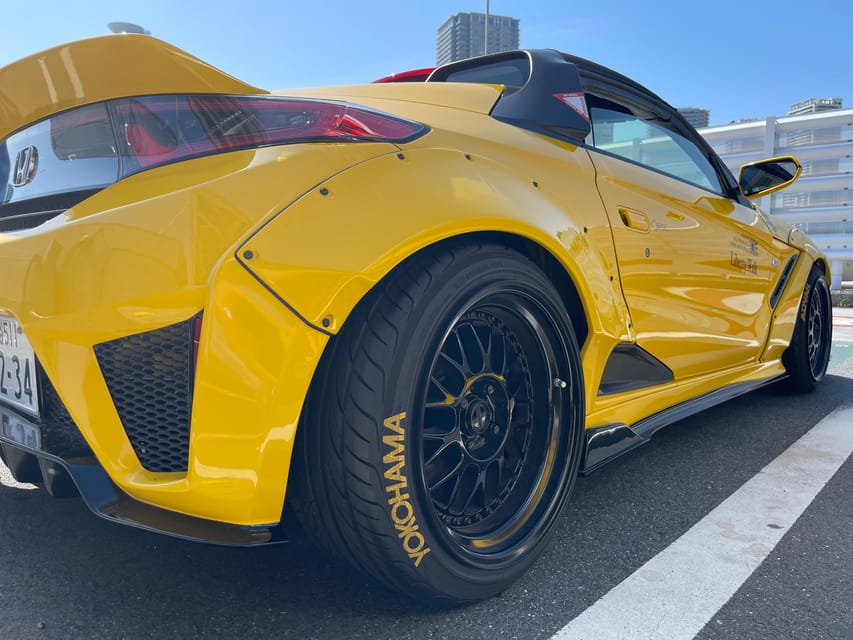
The Honda S660 is the star, but its size is the main practical warning. The seat is compared to an economy-class airline seat, and there is no luggage space. If you are tall, broad-shouldered, or carrying a backpack filled for a full day, you should think carefully before booking.
The compact cabin is also part of the charm. You are in an unusual Japanese sports car rather than a roomy vehicle that could carry six people. For a solo enthusiast, that tradeoff may be worthwhile. For anyone expecting a relaxed, spacious ride, it may not be.
The car is modified, described as one of a kind, and has the visual presence that makes the outing feel special from the moment you get in. At the same time, a distinctive sports car is not the same as a luxury vehicle. Expect a tight, close-to-the-road setup and a simple focus on the drive.
Is $192 good value for three hours?
At $192 for one person, this is not a budget way to reach Daikoku. You are paying considerably more than you would for ordinary public transport, but public transport cannot give you a private ride in a modified Honda S660 or place you beside a local Japanese car enthusiast for the night.
The value depends on your priority. If you mainly want to reach a parking area and see a few cars, the price may feel high. If you want the car itself, the expressway ride, the private guide, and the chance to connect Tokyo’s roads with Japanese car culture, the price is easier to justify.
Fuel and toll roads are included. That removes two costs that can otherwise complicate a private driving outing. You also avoid sharing the vehicle with strangers, and you do not need to navigate Tokyo’s expressways or parking areas yourself.
I would compare this with the cost of a standard shared tour only if you care about transport efficiency. This is not designed to be efficient. It is a specialist outing for someone who wants the journey to matter as much as the destination.
Who will enjoy it most
I would recommend this to a solo visitor who follows Japanese car culture, enjoys modified cars, or has a personal connection to Wangan Midnight and Shuto Ko Battle. It also suits someone who wants an unusual Tokyo night rather than another standard tower, shrine, or food tour.
The private format helps if you enjoy one-on-one conversation. Toshiro has been praised for being friendly, pleasant, and easy to talk with, and his role as local guide adds more than simply pointing out the route. One Italian guest also highlighted how memorable it felt to ride around Tokyo at night in a sports car.
You do not need to be an expert on JDM cars to enjoy the outing. The city drive and landmark views give it wider appeal. Still, the strongest match is someone who sees the Honda S660 and the expressway setting as attractions in their own right.
I would be cautious if you dislike tight seats, need to carry bags, want a guaranteed large car gathering, or expect racing-style driving. This tour follows traffic law and is built around viewing, conversation, and atmosphere.
Booking tips that can save you trouble
Choose a Friday, Saturday, or Sunday if your schedule allows, but confirm the departure time. Friday and Saturday nights may use the 18:00 to 21:00 window because of possible closure at Daikoku.
Arrive with no luggage and wear something comfortable for a very small seat. Bring your phone or camera, but do not plan on long photo stops at Tokyo Tower, Skytree, or Rainbow Bridge. Those landmarks are passed from the car.
If rain is forecast, ask about postponing rather than assuming the original plan must go ahead. Cancellation is free up to 24 hours in advance, and you can reserve now while paying later, which gives you some flexibility.
The listed price covers one passenger. If you want to bring more than two customers, contact the provider first, since the standard arrangement is one customer and one driver in the S660.
Should you book this private Daikoku ride?
Book it if you want the car ride itself to be the main event. The Honda S660, the one-on-one format, the night expressways, and the two parking areas create something far more personal than a minivan visit to Daikoku.
Skip it if you need space, want a guaranteed car show, or are searching for a conventional Tokyo sightseeing tour. For the right passenger, though, the price buys a rare combination: a local driver, a distinctive Japanese sports car, real car-meet locations, and Tokyo after dark from the road.
FAQ
Is this a shared or private tour?
It is a private group experience for one customer and one local Japanese driver. It is not a shared tour and does not use a minivan.
What car will I ride in?
You will ride in a modified domestic Honda S660 with a mid-engine layout and Liberty Walk, also called LBWK, modifications.
How long does the tour last?
The tour lasts three hours, including the drive from Ōba, the stops, and the return journey.
Where do I meet the driver?
The meeting point is in front of MOS Burger in Ōba. Hotel transportation is not included.
Are fuel and expressway tolls included?
Yes. Fuel and toll roads are included in the tour price.
Can I bring luggage?
No. The Honda S660 has no luggage space. The seat is also comparable in size to an economy-class airline seat.
Does the driver race or drive at game-like speeds?
No. The tour respects traffic laws and focuses on enjoying the views and car culture. Self-driving is not included.
Just added around Tokyo
- Private Arrival Transfer : Narita International Airport to Central Tokyo City★ 4.5 · 12 reviews
- Narita Airport(NRT): Private Transfer to Tokyo/Yokohama 1-9pax★ 5.0 · 47 reviews
- Private Transfer from Narita Airport to Yokohama Port and City★ 4.5 · 17 reviews
- [Narita Airport Terminals 1, 2] 40-60km Sawara Itako Historic Bike Tour★ 5.0 · 13 reviews
- 3 Day Japan Highlights Tour: Tokyo, Mt.Fuji, Nara, Kyoto, Osaka★ 5.0 · 22 reviews
- Small Town in the Big City: Tasting Tokyo’s Kichijoji★ 5.0 · 195 reviews
- Small Town in the Big City: Tasting Tokyo’s Kichijoji★ 5.0 · 16 reviews
- The 10 Tastings of Tokyo With Locals: Private Street Food Tour★ 5.0 · 48 reviews
Tokyo Tours, compared.

Mt Fuji and Hakone 1-Day Bus Tour Return by Bullet Train
Read our review →

teamLab Planets TOKYO Digital Art Museum Entry Ticket
Read our review →
Mt Fuji & Hakone Cruise, Drum Show Bullet Train 1 Day from Tokyo
Read our review →
Sumo Show Experience with Chicken Hot Pot and a Photo
Read our review →
Shinjuku Food Tour (13 Dishes at 4 Local Eateries)
Read our review →
Tokyo Mt Fuji 5th St & Hakone Cruise Bus Tour w/Bullet Train
Read our review →