
Reviewed · KANAZAWA TOURS
Full-Day Tour from Kanazawa: Samurai, Matcha, Gardens and Geisha
Kanazawa reveals itself best at walking speed. This full-day route links samurai homes, castle grounds, Kenrokuen Garden, and geisha districts in one long sweep across the city. You get the broad picture, but also the small details that disappear when you ride from sight to sight.
I like the stop at Gyokusen-an, where matcha and wagashi are served beside an old garden. I also like the small group, capped at 15 people, since guides such as Mike, Garrett, Lee, and Akari have room to answer questions and adjust the pace. The catch is plain: this is a serious walking day, roughly 10 to 12 kilometers and possibly close to 10 miles depending on the route and group pace.
Key points to know before booking
- Samurai homes you can enter: See two modest Ashigaru residences, not just grand castle architecture.
- A proper matcha break: Gyokusen-an pairs green tea and wagashi with a garden view.
- Three different old districts: Compare Nagamachi, Higashi Chaya, and quieter Kazuemachi.
- Kenrokuen is a major highlight: You have about 90 minutes to explore one of Japan’s best-known gardens.
- One long, mostly walking day: The route covers a lot, with no scheduled public transport.
- Lunch is flexible: You receive a one-hour break and guide recommendations, but pay for lunch separately.
Why this route works so well in Kanazawa
Kanazawa is compact enough to explore on foot, but its main sights are spread across several neighborhoods. That makes route planning more complicated than a quick look at a city map suggests. This tour solves that problem by moving in a sensible line from the old samurai quarter toward the castle and garden, then across to the traditional tea districts before returning to the station.
I like this approach because the city’s past becomes easier to follow. You begin with the military class, move through religious and castle sites, then finish with the refined entertainment districts connected to geisha culture. The sequence gives you a useful framework instead of a pile of unrelated stops.
The small-group format matters most during explanations. A group of 15 is not private, but it is far more manageable than a large coach tour. Guides can usually keep everyone together on narrow streets, point out details, and respond to questions without turning every pause into a production.
The guide quality is a major part of the experience. Mike has been praised for his humor and clear explanations, Garrett for his command of Japanese history and culture, and Lee for adjusting the pace to the group. Akari has also been noted for explaining how Kanazawa developed as an alternative to Kyoto. The guide assigned to your date can vary, so book this for the route and format first, then consider the individual guide a pleasant variable.
More Samurai and Ninja Experiences in Kanazawa
- Kanazawa: Samurai Residence Remains Nomura Family admission
★ 4.4 · 111 reviews - Kanazawa: Samurai, Matcha, Gardens and Geisha Full-Day Tour
★ 4.9 · 75 reviews - Try Mindful Calligraphy Near Kanazawa’s Ninja Temple
★ 5.0 · 50 reviews
Ashigaru Museum: starting with ordinary samurai life
The first stop is the Ashigaru Museum, where you enter two homes once occupied by Ashigaru families. Ashigaru were low-ranking samurai, so these buildings offer a useful contrast to the grander image many people carry of Japan’s warrior class.
I appreciate this beginning. You see how status shaped daily life, housing, and family space rather than starting with a famous monument and a broad lecture. The homes help put the later castle visit into human terms.
You have about an hour here, and admission is included at no extra charge. The stop is less about spectacle than context. If you want a quick succession of dramatic photo spots, the opening may feel quiet. If you like seeing how people actually lived, it gives the day a strong start.
Nagamachi: samurai streets with a sense of place
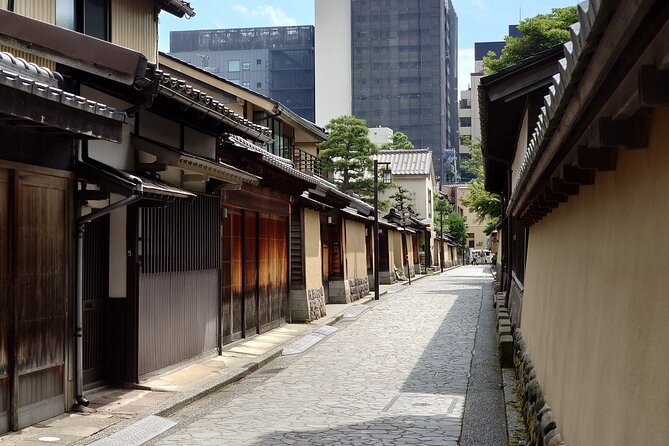
From the museum, your guide leads you through Nagamachi, the former samurai district. The streets retain a handsome, traditional appearance, with walls and narrow lanes that make the neighborhood feel distinct from modern Kanazawa.
This is one of the best places to listen rather than simply look. Your guide can explain how the district was organized and how the samurai class fit into Kanazawa society. The setting also gives you time to notice small features in the streets instead of rushing straight into another indoor attraction.
Plan on another hour here. The route is outdoors, so weather makes a real difference. Rain can make the streets slippery and tiring, while hot weather increases the strain of an already active day. Wear supportive shoes and bring water, even though the city itself is easy to walk through.
Oyama Shrine and the route toward Kanazawa Castle
The tour then passes through Oyama Shrine for about 40 minutes. Its entry gate is unusual because it combines brick with a design unlike the typical wooden shrine gates you see elsewhere in Japan.
This is a shorter stop, but it breaks up the old residential streets before you reach the castle grounds. I like the contrast between the shrine’s unusual gateway and the more familiar wooden architecture found at many Japanese religious sites.
The shrine is also part of the route rather than an isolated detour. That matters on foot. You are not repeatedly doubling back, and the movement from Nagamachi toward the castle helps the day feel like a continuous walk through Kanazawa’s historic center.
More samurai and ninja sessions in Kanazawa:
- Kanazawa Private Tour: Highlights of an Old Samurai Town
★ 5.0 · 46 reviews - Kanazawa: Samurai Swordsmanship Lesson at a rented temple
★ 5.0 · 21 reviews - Kanazawa Ninja Temple Half Day E-bike tour
★ 5.0 · 14 reviews - Tokyo: Samurai Restaurant Show Ticket with 2 Drinks
★ 4.5 · 1,307 reviews
Gyokusen-an: the day’s calmest hour
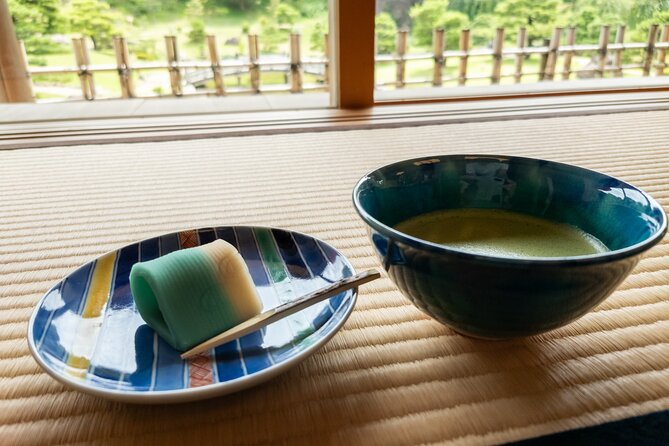
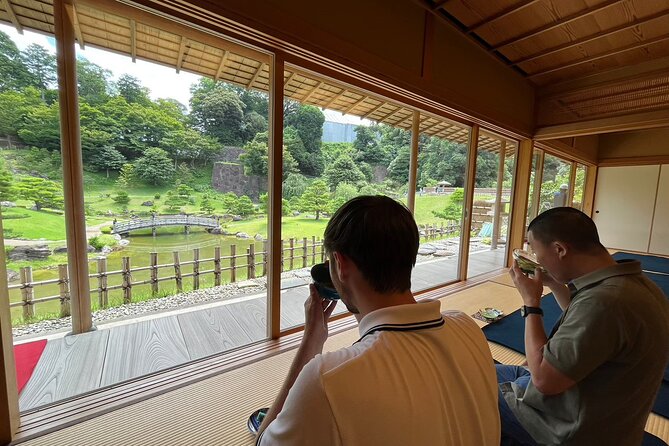
Inside the castle area, you pause at Gyokusen-an for a matcha experience. The tea house looks onto a centuries-old garden, and your included serving of matcha comes with wagashi sweets.
This is the tour’s most welcome pause. After several hours of walking and listening, sitting down with green tea gives you a chance to reset. The garden view also shows how Japanese design can frame a small scene with great care: water, plants, and borrowed views work together without needing grand scale.
The tea experience lasts about an hour and admission is included. It is not simply a snack stop. Your guide can help explain the customs around matcha and wagashi, making the break more meaningful than grabbing a drink between attractions.
I would not book this part expecting a full tea ceremony lesson unless that is specifically promised elsewhere. The information provided describes a matcha experience in a tea house, not a lengthy formal ceremony. Think of it as a cultural pause with sweets, tea, and a fine garden setting.
Kanazawa Castle: restored scale and open grounds
The route continues through Kanazawa Castle for about 20 minutes. You see restored buildings spread across broad lawns, giving you a sense of the castle’s size and importance.
Twenty minutes is enough for orientation and exterior views, but not a detailed castle study. That is worth knowing if castle interiors are your main reason for visiting Kanazawa. The tour uses the grounds as a bridge between Gyokusen-an and Kenrokuen rather than treating the castle as the day’s central attraction.
Still, the stop works well in the larger story. The Ashigaru homes showed the lower-ranking warrior class. Nagamachi showed the district where samurai families lived. The castle grounds then provide the political and architectural center of that world.
Kenrokuen Garden: allow the full 90 minutes
Kenrokuen receives about an hour and a half, the longest sightseeing stop on the route. That generous timing is important because this is not a garden you should race through.
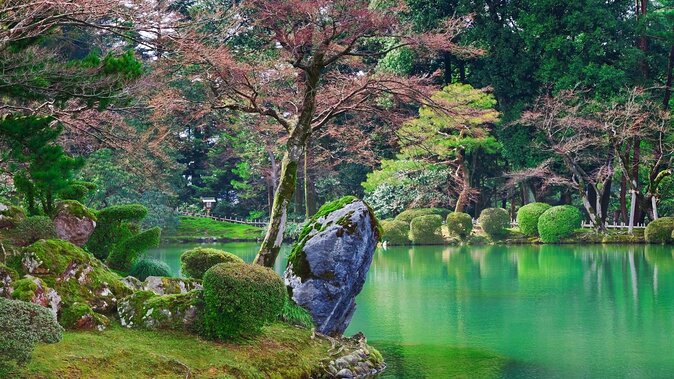
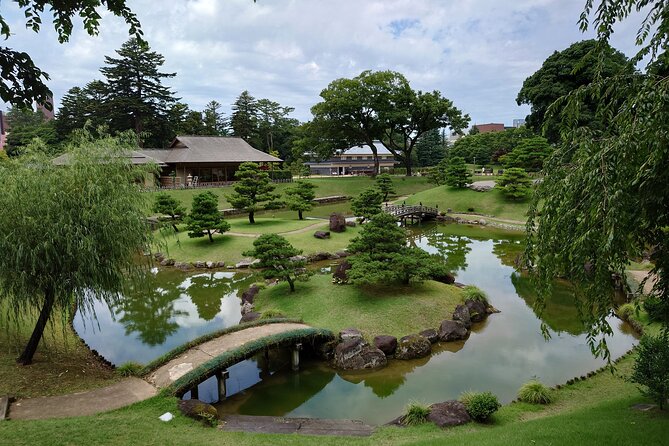
You can stroll beside ponds, view traditional structures, enjoy city views, and perhaps enter one of the garden’s homes or tea spaces if time and access allow. The design reflects several qualities valued in Japanese gardens, including space, age, water, and carefully arranged views.
I especially like having a guide before free exploration. You get an explanation of what you are seeing, then time to wander at your own pace. The garden changes with the season, and the supplied experiences include a visit during early cherry blossom season, when the timing added another layer to the visit. The exact appearance will depend on your date.
Admission is included. Wear shoes that can handle uneven walking and expect to keep moving, even though the garden offers places to pause. If you have limited stamina, this is one area where you may want to slow down and enjoy less rather than trying to cover every path.
Lunch: useful freedom, but no meal included
A one-hour lunch break is built into the nine-hour schedule. You choose your own restaurant, and the guide can offer recommendations.
I see this as a practical advantage. You are not locked into a preset meal, and you can choose according to appetite, budget, or dietary needs. It also gives the guide a chance to adjust the day after several hours on foot.
The tradeoff is that lunch costs extra and the exact restaurant is not part of the package. Keep the break within the allotted hour so the afternoon schedule does not become rushed. If you need a long, leisurely meal, this tour may feel tightly timed.
Higashi Chaya: traditional tea houses and craft shops
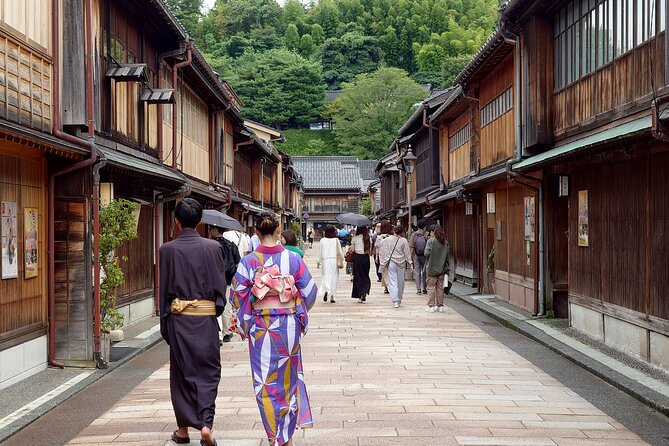
After Kenrokuen, the route heads to Higashi Chaya District for about an hour. The streets are lined with old tea houses, eateries, and craft shops, and the district offers your clearest look at Kanazawa’s geisha culture.
This area can be appealing and busy, so the guide’s context helps you look beyond the attractive facades. You learn why tea districts developed, how entertainment spaces functioned, and what made these establishments appealing to wealthy patrons.
You also receive some free time here. Use it for photographs, browsing crafts, or simply noticing the wooden fronts and narrow street pattern. Keep your expectations sensible: walking through a geisha district does not mean you will see a geisha performance. The value comes from the preserved setting and the chance to understand the culture connected to it.
Ochaya Shima: entering a preserved geisha house
The tour includes admission to Ochaya Shima, a tea house once used by geisha and their affluent customers. Inside, colorful walls and musical instruments offer a closer look at the polished world behind the district’s street fronts.
This is a stronger experience than viewing the neighborhood from outside. You can see the rooms and objects associated with performances and social gatherings, while your guide explains how the space was used.
The visit lasts about 30 minutes, so it is focused rather than exhaustive. I would pay close attention here because the details are easy to miss when you only have a short time indoors. The admission is included, which adds real value to the walking route.
Kazuemachi Chayagai: a quieter final district
The final neighborhood is Kazuemachi Chayagai, reached as you make your way back toward Kanazawa Station. It is less crowded than Higashi Chaya, and geisha still entertain customers there.
This quieter finish is one of the route’s nice touches. Higashi Chaya gives you the most obvious tea-house setting, while Kazuemachi lets you see another side of the same tradition without the same level of foot traffic. The area is allotted about 30 minutes and admission is free.
The return walk also gives the day a natural ending. You have moved from samurai residences to castle grounds and gardens, then into the city’s old entertainment quarters before heading back to the station.
The real cost: $151.30 and a full day on foot
At $151.30 per person, the tour is not a budget walking tour. Its value comes from the amount packed into one day: an English-speaking guide, matcha and wagashi, Kenrokuen admission, Ochaya Shima admission, and a route connecting several districts that are not all next door to one another.
You also save the time and effort of planning the order yourself. That matters in Kanazawa, where a poorly planned day can involve unnecessary backtracking. The guide adds the most value if you want explanations about how the samurai, castle, gardens, and geisha districts connect.
Lunch is not included, and there is no scheduled public transport. I would compare the price with the cost of arranging several admissions and a private guide, rather than comparing it with a simple self-guided walk.
The main concern is physical rather than financial. The route has been described as roughly 10 to 12 kilometers, with one account putting the day near 10 miles. Most people can participate, but seniors and anyone unused to long walks should think carefully. One person specifically wished there had been an option to use public transport during the longer stretches. That is a fair limitation.
Weather, pacing, and what to bring
The experience requires good weather and may be canceled if conditions are poor, with a different date or full refund offered. Even in decent weather, Kanazawa’s rain can arrive quickly, so check the forecast and bring suitable protection.
Your guide can adjust the pace to the group. Garrett has been praised for adapting the schedule, and Lee for matching the day to the people he was leading. That flexibility helps, but it cannot turn a 10 to 12 kilometer route into a short stroll.
Bring comfortable walking shoes, water, weather protection, and a small amount of room for lunch or tea-district shopping. A mobile ticket is provided, and the tour begins at Kanazawa Station at 9:00 a.m. It ends back at the meeting point.
Who should book this Kanazawa tour?
I would choose this for a first full day in Kanazawa, especially if you want a strong introduction to the city’s past and do not want to organize every stop yourself. It also suits people who prefer streets, gardens, historic homes, and conversation over buses and quick photo stops.
Families can benefit from the flexible pace, and one guide has adjusted the route for different ages. Still, children or older adults who tire easily may struggle with the distance. The same applies if you have mobility limits or dislike spending most of a day outdoors.
I would skip it if you want a slow garden visit, a long lunch, or extensive time inside Kanazawa Castle. I would also avoid booking it on a day when you are already worn out from a long train journey.
FAQ
Where does the tour start and finish?
It starts at Kanazawa Station at 9:00 a.m. The activity ends back at the same meeting point.
How long does the tour take?
The listed duration is approximately nine hours. One hour is reserved for lunch, so active sightseeing and walking take about eight hours.
How much walking is involved?
You should expect a full walking day of roughly 10 to 12 kilometers. Some accounts describe the distance as about 10 miles, depending on the exact route and pace.
Is lunch included?
No. You receive a one-hour lunch break, choose your own restaurant, and can ask the guide for recommendations. Lunch is paid for separately.
What admissions and refreshments are included?
The tour includes matcha tea and wagashi sweets at a tea house, admission to Kenrokuen Garden, and admission to the preserved Shima Chaya geisha house. The listed visits to the Ashigaru Museum, Nagamachi, Oyama Shrine, and Kanazawa Castle grounds do not carry a separate admission charge in the tour details.
How large is the group?
The tour has a maximum of 15 travelers.
Can I cancel for a full refund?
Yes, if you cancel at least 24 hours before the local start time. Cancellations or changes made less than 24 hours before the start are not refunded or accepted. If poor weather forces the operator to cancel, you will be offered another date or a full refund.
My booking advice
I would book this tour if you want one well-organized day covering Kanazawa’s samurai, castle, garden, and geisha quarters, and you are comfortable walking for hours. The matcha stop, Kenrokuen admission, preserved tea house, and strong guide-led storytelling make the price reasonable for an active cultural day.
I would not book it simply because it promises many sights. The distance is the deal-breaker. If you can manage that, this is a useful and enjoyable way to get your bearings in Kanazawa while seeing places a bus-based outing would miss.
More Full-Day in Kanazawa
- Kanazawa Full Day Tour (Private Guide)
★ 5.0 · 323 reviews - Kanazawa Full Day Private Tour to Top Highlights with Local Guide
★ 5.0 · 19 reviews - Full Day Tour to Kurobe Gorge and Unazuki Onsen from Kanazawa
★ 5.0 · 17 reviews - Kanazawa Full-Day Tour Private & Personalized with a Local Guide
★ 5.0 · 16 reviews
More Geisha Experiences
- Kanazawa Half-day Tour: Curated: Gardens, Craft & Geisha District
★ 4.5 · 12 reviews - Kyoto Geisha Walking Tour: Gion District & Hidden Gems
★ 4.7 · 3,273 reviews - Kyoto: Gion Magical Night Walking Tour with Geisha Trivia
★ 4.9 · 2,393 reviews - Kyoto: Gion Geisha District Walking Tour – Stories of Geisha
★ 4.7 · 2,187 reviews
Just added around Kanazawa
- Kanazawa: Sushi & Japanese Cooking Class at a Historic School★ 5.0 · 66 reviews
- Shirakawago & Kanazawa from Kanazawa★ 5.0 · 51 reviews
- Takayama and Shirakawago/Photoshoot by professional photographer★ 5.0 · 67 reviews
- Taste of Kanazawa (Food tasting in Omicho Market & Higashi Chaya)★ 5.0 · 58 reviews
- Kanazawa private 1 day/Photoshoot by professional photographer★ 5.0 · 33 reviews
- Photoshoot session by professional photographer in Kanazawa★ 5.0 · 42 reviews
- Private Tour Kanazawa, Shirakawago, Hida Furukawa,Takayama★ 5.0 · 108 reviews
- Kanazawa private half day/Photoshoot by professional photographer★ 5.0 · 38 reviews
Kanazawa Tours, compared.
World Heritage Shirakawa-go and Experience Tours from Kanazawa
Read our review →

![[One-day bus tour departing from Kanazawa Station] Shirakawa-go and Gokayama – Two World Heritage Villages Enjoyable Bus Tour](https://media3.thejapanesetraveller.com/wp-content/uploads/one-day-bus-tour-departing-from-kanazawa-station-shirakawa-go-and-gokayama-two-world-heritage-villages-enjoyable-bus-tour-400x267.jpg)
[One-day bus tour departing from Kanazawa Station] Shirakawa-go and Gokayama – Two World Heritage Villages Enjoyable Bus Tour
Read our review →
World Heritage Shirakawa-go Perfect Guided Tour from Kanazawa
Read our review →
Browse the lists this tour appears in