
Reviewed · KANAZAWA TOURS
Kanazawa 4hr Private Tour with Government Licensed Guide
Kanazawa’s best sights are scattered across a compact but sometimes confusing city center. This private walking tour lets you choose two or three priorities, then connects them with the stories that make the gardens, castle, samurai homes, and teahouse districts worth your time.
I like the freedom to shape the four hours around your interests, and I like starting a Kanazawa visit with a local guide who can explain what you are seeing. Guides such as Yumi, Yoshi, Hiroko, Sachi, and Yumiko have helped visitors with history, architecture, buses, lunch suggestions, and even onward travel.
The main catch is simple: four hours is not enough for all 11 possible sights. Admission, transport, lunch, and personal expenses are extra, and this is a walking tour with an on-foot meeting point, not a private car tour.
Key points to know before booking
- Choose two or three sights: Build your half-day around gardens, castles, museums, markets, samurai homes, or teahouse districts.
- Meet on foot: Pickup is offered within a designated Kanazawa area, but the guide meets you on foot and no private vehicle is provided.
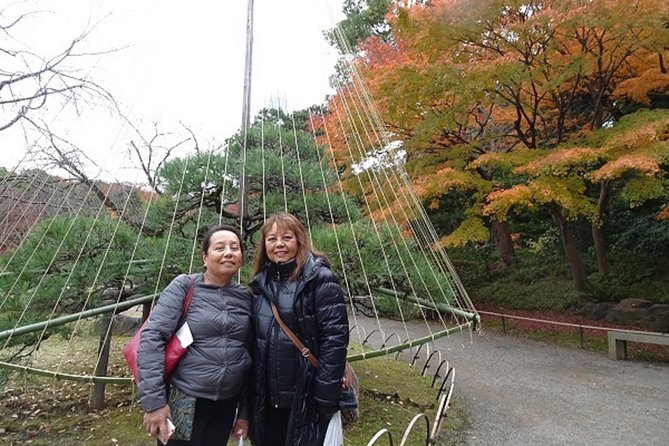
- Kenrokuen is a strong first choice: The famous garden is often the highlight, especially if you want help understanding its design and seasonal appeal.
- Local guides add practical help: Guides have assisted with buses, restaurant choices, rented kimono outings, and directions to hotels or stations.
- Budget for extras: Entrance tickets, bus fares, lunch, and personal purchases are not included.
- A private format has real value: You avoid a crowded group and can spend more time on the places that interest you.
Why a private walk works well in Kanazawa
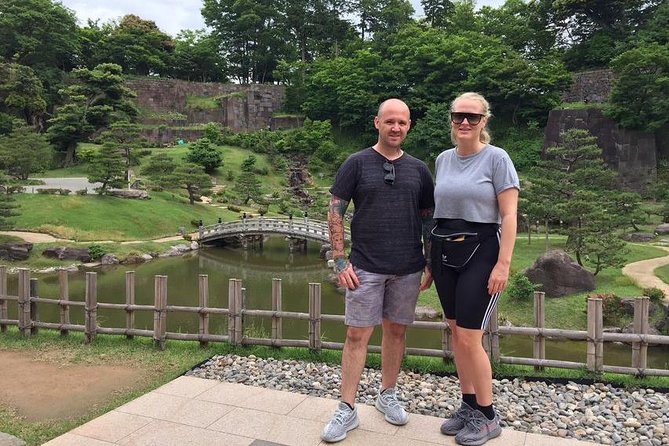
Kanazawa is easy to admire and harder to read. A pond, gate, garden wall, or wooden townhouse may look attractive, but the reason it matters can pass you by without context. This tour gives you a local English-speaking guide for approximately four hours, with the route adjusted to your priorities.
That flexibility matters more here than it would on a simple sightseeing loop. You might care most about Edo-period architecture and samurai life. You might prefer Zen thought and modern art. You might want gardens, food, and geisha districts. You choose from the available sights rather than spending half a day at places that do not suit you.
I would book this early in your Kanazawa stay. A first-day walk helps you understand the city’s layout and gives you practical clues for the rest of your visit. One guide even helped guests work out buses and reach their hotel, while another suggested a local restaurant and helped arrange a transfer to the train station.
The private format also makes it easier to ask questions. You can pause at a feature that interests you, adjust the pace, or spend less time at a museum that is not your style. The tradeoff is that a private guide cannot turn four hours into a full city tour. Pick your stops with care.
More licensed-guide days in Kanazawa:
- Kanazawa 6hr Private Tour with Government Licensed Guide
★ 5.0 · 52 reviews - Tokyo 6hr Private Tour with Government-Licensed Guide
★ 5.0 · 3,902 reviews - Tokyo 4hr Private Tour with Government-Licensed Guide
★ 5.0 · 1,394 reviews
Kenrokuen Garden: make this your anchor
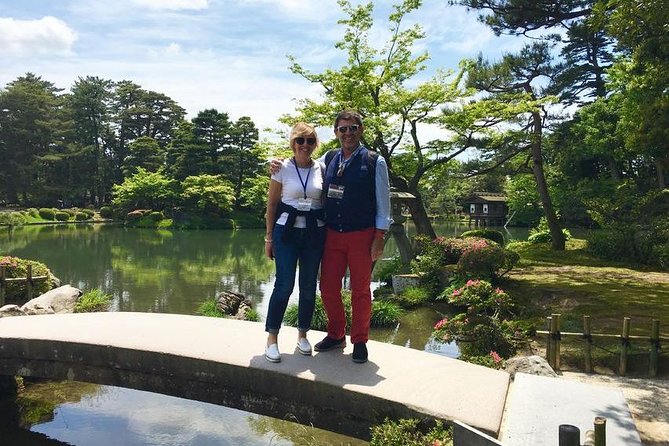
Kenrokuen is Kanazawa’s celebrated strolling garden and one of Japan’s three most beautiful landscape gardens, alongside Kairakuen in Mito and Korakuen in Okayama. Its broad grounds, ponds, paths, bridges, plantings, and carefully arranged views reward slow walking rather than a quick photo stop.
The guide’s role is especially useful here. You will learn why parts of the garden were arranged as they were and how the Maeda rulers shaped Kanazawa’s cultural life. The garden has a different character in each season, and the timing of one visit included early cherry blossoms. Winter can bring unusually clear days, though the city is also known for wet weather.
Allow about an hour if you include Kenrokuen. That leaves enough time for one nearby major sight or two compact districts, but not for a long list. The garden is an excellent choice for first-time visitors, photographers, families, and anyone who wants a calm beginning to the day.
Admission is not included. Add that cost to your budget, and wear shoes suited to paths and extended walking. If you choose only one paid attraction, this is the place I would seriously consider.
Kanazawa Castle and Seisonkaku Villa
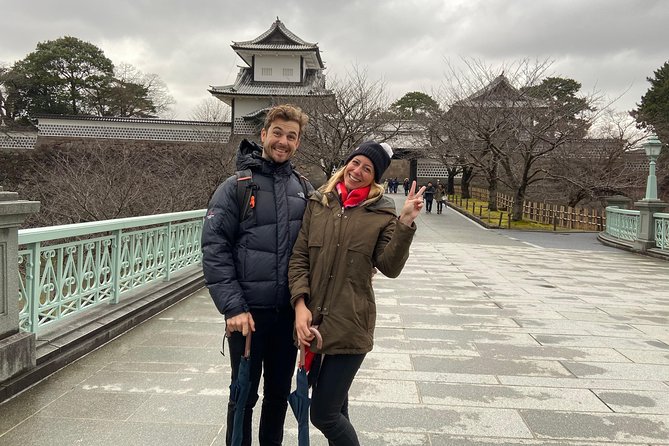
Kanazawa Castle was the seat of the powerful Maeda clan from 1583 until the end of the Edo period. The Maeda domain ranked just below the Tokugawa possessions in power, which helps explain why Kanazawa developed such an impressive concentration of art, gardens, architecture, and refined culture.
A guide can connect the castle grounds to the city around them instead of treating the site as an isolated photo stop. Pairing the castle with Kenrokuen makes geographic sense, since the two are close. It also creates a useful contrast between military power and formal garden design.
Seisonkaku Villa offers a different view of elite life. Built near the end of the Edo period by a Maeda lord for his mother, it is among Japan’s finest surviving samurai villas. The appeal is in the details of domestic architecture and the setting, not only in grand scale.
Both sites have admission fees that you pay separately. If you enjoy architecture, household history, and the Maeda family story, choose one of these along with Kenrokuen. Trying to add several museums and both districts in the same four hours would make the walk feel rushed.
Nagamachi: samurai streets with useful context
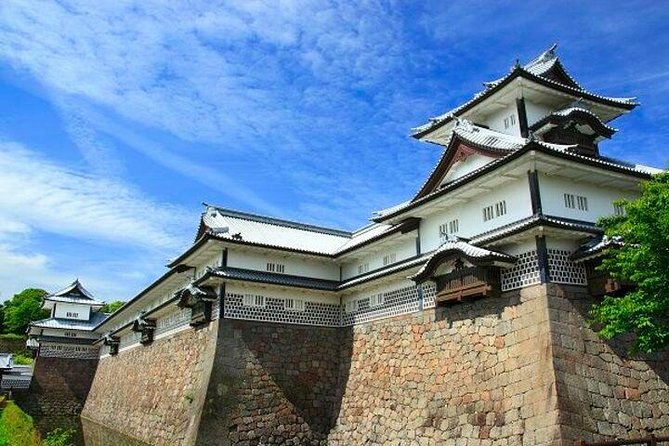
Nagamachi was the samurai district below Kanazawa Castle. Its remaining walls, lanes, residences, and traditional atmosphere show where samurai families once lived, but the area makes much more sense when someone explains how it fit into the old city.
This is a good stop for you if you want more than a pretty street. The guide can point out how the district developed and help you find houses and small features that are easy to overlook. The Nomura samurai residence and garden have been a particular favorite for some visitors, though entry is extra if included in your route.
Nagamachi pairs well with Higashi Chaya District because the two areas present different sides of the old social order. One is linked to samurai households and military administration. The other is tied to entertainment, geisha performance, and exclusive teahouses.
The lanes are walkable, but you should still expect a fair amount of time on your feet. If you are wearing a rented kimono, as some guests have, a patient guide can be helpful. Plan ahead for admission charges and allow time to move between districts, sometimes by bus.
A few more Kanazawa half-days to weigh up
- World Heritage Shirakawa-go and Experience Tours from Kanazawa
★ 5.0 · 4,049 reviews - Kanazawa: Kenrokuen Tea Ceremony Experience
★ 4.8 · 1,139 reviews - Kanazawa Half Day Tour (Private Guide)
★ 5.0 · 361 reviews - Kanazawa Full Day Tour (Private Guide)
★ 5.0 · 323 reviews
Higashi Chaya and Nishi Chaya: geisha culture without the cliché
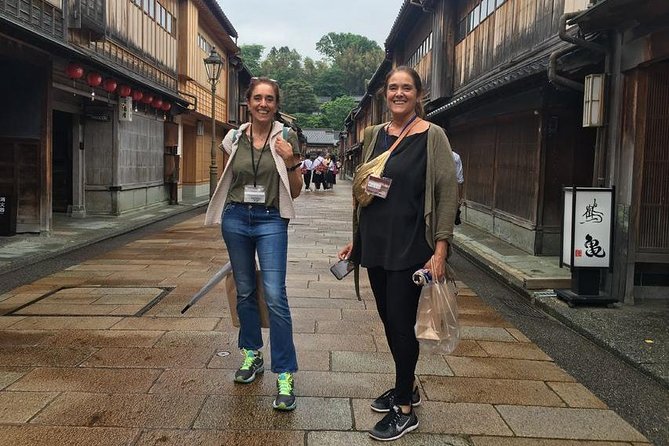
A chaya was an exclusive restaurant where geisha entertained guests through song and dance. Kanazawa has three preserved teahouse districts, with Higashi Chaya the best-known option and Nishi Chaya another possible choice.
The wooden facades and narrow streets are attractive, but the real value of a guide is the explanation of what these buildings were for and how the districts functioned. Without that background, you may see only a photogenic row of buildings. With it, the streets become part of Kanazawa’s social and cultural story.
Higashi Chaya can be paired with Nagamachi for a focused samurai-and-geisha half-day. This combination has been popular with people who want to understand old Kanazawa through its neighborhoods rather than through museums. You might also arrange a tea ceremony separately later in the day, as one couple did after the tour.
Nishi Chaya is useful if you have already seen Higashi Chaya or want a less familiar part of the city’s traditional districts. The tour does not include private geisha-room visits automatically. Any such entrance fee is extra, so ask your guide what is open and suitable on your date.
D. T. Suzuki Museum: quiet, compact, and idea-focused
The D. T. Suzuki Museum honors Suzuki Daisetz Teitaro, a prominent Buddhist philosopher who lived from 1870 to 1966. It is a small museum, centered on his life and work rather than on a large collection of objects.
Choose it if you prefer reflection, Buddhism, philosophy, and modern Japanese design to a long list of historic buildings. Its compact size also makes it easier to fit into a carefully planned route. The guide can provide the cultural frame that helps you understand why Suzuki mattered.
This is not the best pick if you want nonstop sightseeing or a market-and-neighborhood walk. Admission is extra, and the four-hour limit means you need to pair it with nearby priorities rather than distant stops. It may suit couples, solo visitors, and repeat visitors who have already seen the major castle and garden sights.
The 21st Century Museum of Contemporary Art
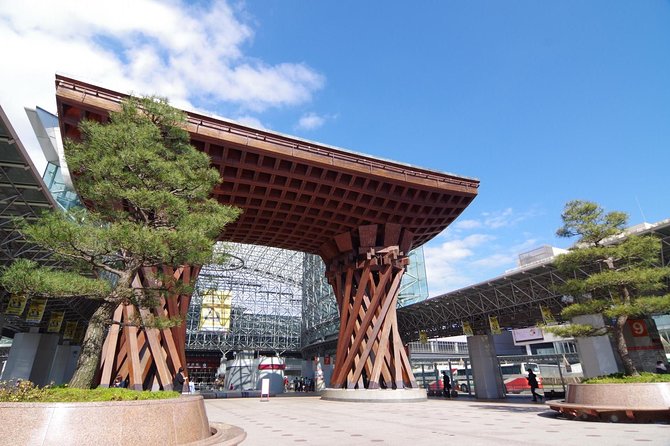
The 21st Century Museum of Contemporary Art opened in 2004 in central Kanazawa, a short distance from Kenrokuen. It presents works by acclaimed contemporary artists and gives the city a modern counterpoint to its Edo-period districts and traditional gardens.
I would choose this museum if your group has mixed interests. One person can enjoy modern art while another gains a clearer view of how Kanazawa combines old traditions with current cultural life. A guide can help explain the city’s shift from castle-town culture to a place with an active contemporary arts scene.
Admission is not included, and museum access can depend on what is open that day. Past visitors have encountered closures during public health restrictions, so it is sensible to confirm current opening information before making the museum the center of your plan.
Because the museum is close to Kenrokuen, the two make a logical pairing. Still, an hour at each leaves only two hours for walking, explanations, and another stop. Choose this combination when modern art is a genuine priority, not simply because it is nearby.
Omicho Market: Kanazawa through food
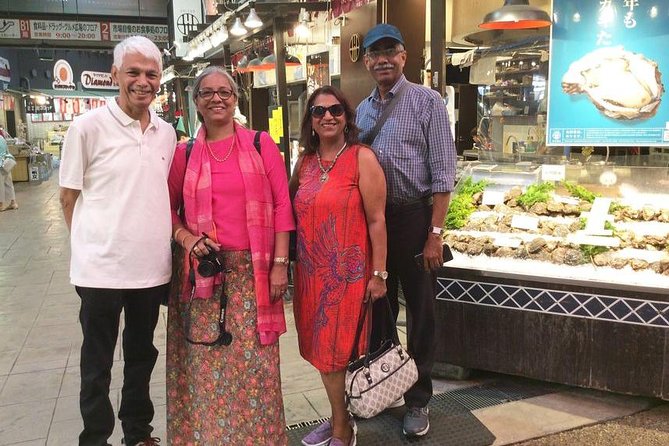
Omicho Market has served as Kanazawa’s main fresh-food market since the Edo period. Its covered streets contain about 200 shops selling food and other goods, making it a practical place to see how the city eats and shops.
A guide can help you understand local ingredients and decide how to use your limited time. One guide also helped guests find a ramen shop, while another pointed visitors toward a restaurant serving local specialties in the samurai district. Those suggestions can be more useful than a generic restaurant list.
The market is free to enter, but your appetite is not included in the tour price. If you want to stop for lunch, that meal reduces the time available for other sights. I would pair Omicho with Oyama Shrine or a nearby historic district, then make the market the final stop so you can continue eating or shopping after the guide leaves.
Markets are best when you allow room for curiosity. Do not choose Omicho if you want a tightly packed schedule with several paid museums. Choose it if food, daily life, and small local details matter to you.
Oyama Shrine and the Maeda connection
Oyama Shrine is dedicated to Maeda Toshiie, the first lord of the Maeda clan. It was built in 1599 by his successor, Maeda Toshinaga, and provides another way to connect Kanazawa’s religious sites with the political story of the Maeda family.
This is a sensible shorter stop if you want to add a shrine without committing a full hour to a museum. The shrine can also work as part of a route linking central Kanazawa with the castle, market, or older neighborhoods.
I would not select it as your only major sight. It works best alongside a garden, castle, district, or market where the guide can build a broader picture of the city. As with other paid sights, check the admission details with your guide when planning.
Four hours means choosing well
The activity lists 11 possible stops, but the included service is a customized visit to two or three sites. That distinction is the most important planning point.
A realistic four-hour route should allow for walking, pauses, questions, photographs, and possible bus rides. An hour at each of three stops already uses the full duration, before accounting for movement. You will get more from three well-matched places than from six rushed visits.
Here are sensible combinations:
- First visit: Kenrokuen, Kanazawa Castle, and one central historic area.
- Traditional Kanazawa: Nagamachi and Higashi Chaya, with time for a samurai residence or teahouse visit if practical.
- Art and ideas: Kenrokuen, the 21st Century Museum, and the D. T. Suzuki Museum.
- Food and history: Omicho Market, Oyama Shrine, and one nearby district.
- Architecture and gardens: Kenrokuen, Seisonkaku Villa, and Kanazawa Castle.
The guide can help adjust the plan, but the final route depends on opening hours, admission requirements, weather, walking pace, and how much time you want at each site.
What the guides add
The strongest part of the experience is the human connection. Yumi is a retired teacher whose explanations have focused on Kanazawa’s history and culture. Yoshi has helped visitors navigate buses, find lunch, take photographs, and continue independently after the tour.
Hiroko has been praised for patient explanations, strong English, and adapting the schedule to include an extra museum visit. Sachi has drawn attention to small corners and details that are easy to miss. Yumiko, Yuki, Fumie, Akira, and other guides bring their own local perspectives and specialties.
The quality can vary by guide. The overall rating is 4.8 from 89 reviews, with 97 percent recommending the experience, but there have also been reports of a guide failing to meet and one disappointing tour with too little explanation. That means communication matters. Confirm the meeting point carefully, state your top priorities, and tell the guide whether you want history, food, architecture, shopping, or a gentle pace.
Do not assume every guide will offer the same depth or style. If a particular guide is available, requests for Yumi or Yoshi have appeared in especially positive experiences, but assignment is not guaranteed by the information provided.
Price, tickets, and the real cost
At $122.23 per person, this is not the cheapest way to walk around Kanazawa. It can still be good value for a couple, family, or small private group that wants four hours of personal attention and help making sense of a new city.
The price covers a licensed local English-speaking guide and a customized route. It does not cover transportation, entrance tickets, lunch, or personal expenses. There is no private vehicle, and you cannot combine separate tour groups.
For two or three people, the cost buys flexibility and practical help. For a larger group, group discounts may improve the value. For a solo visitor, the per-person price is harder to justify unless you place a high value on personal questions and local guidance.
Bring cash or another accepted payment method for bus fares, admission, food, and optional visits. One guest specifically advised setting aside money for a day bus pass, park admission, and geisha-room visits. The tour itself is mobile-ticketed, and confirmation is provided when you book.
Weather, walking, and meeting details
This is an outdoor walking experience, so Kanazawa’s weather matters. Rain did not prevent some successful outings, but wet conditions can slow the route and make garden paths less comfortable. Wear shoes you can walk in for several hours and bring suitable rain protection.
Pickup does not mean hotel transport by car. The guide meets you on foot within the designated Kanazawa area. The tour is near public transportation, and guides have used buses between districts, but those fares are yours to pay.
Most people can participate, and service animals are allowed. Still, be honest about your walking pace before choosing distant or numerous stops. A private tour can adjust the order and pace, but it cannot remove the physical distance between neighborhoods.
Free cancellation is available up to 24 hours before the local start time for a full refund. Cancellations or changes inside that window are not accepted for a refund.
Who should book this Kanazawa tour?
I would choose it for a first visit, especially if you have only a day or two in Kanazawa and want to use a half-day wisely. It also suits families, couples, older visitors who prefer a flexible pace, and anyone who wants help with buses or restaurant choices.
It is a good match for people who enjoy questions and conversation. Tell the guide what you already know, what you want to understand, and which sites you would skip. The experience is strongest when you treat the guide as a local interpreter, not simply as someone leading you from gate to gate.
I would skip it if you prefer exploring alone, want a fixed low-cost group tour, or plan to spend most of the day inside museums. You should also look elsewhere if you need private vehicle transportation.
Should you book it?
Book this tour if you want a personal introduction to Kanazawa and can narrow your interests to two or three sights. Kenrokuen paired with the castle, or Nagamachi paired with Higashi Chaya, gives you a strong four-hour foundation.
The cost is easiest to defend when shared by a small group, and the extra fees need to be part of your budget. Confirm your meeting point, request your preferred guide if possible, and choose your priorities before the day begins. If you do that, this private walk can turn Kanazawa’s beautiful but sometimes puzzling sights into a clear, memorable story.
FAQ
How long is the Kanazawa private tour?
The tour lasts approximately four hours.
How many sights can I choose?
The tour includes a customizable visit to two or three sites from the listed options.
Is transportation included?
No. Transportation fees are not included, and no private vehicle is provided. The tour is a walking experience, though a guide may use public buses between districts when appropriate.
Are entrance tickets included?
No. Entrance fees are generally not included. Guide entry fees are covered only for sights listed under the tour’s What to Expect information.
Is this a group tour?
No. This is a private activity for only your group, and separate tour groups cannot be combined.
Where does the guide meet me?
The guide meets you on foot within the designated pickup area of Kanazawa. Pickup does not mean transportation by private car.
Can I cancel for a full refund?
Yes. You can cancel at least 24 hours before the local start time for a full refund. Cancellations or changes made less than 24 hours before the start time are not accepted for a refund.
Just added around Kanazawa
- Kanazawa: Sushi & Japanese Cooking Class at a Historic School★ 5.0 · 66 reviews
- Shirakawago & Kanazawa from Kanazawa★ 5.0 · 51 reviews
- Takayama and Shirakawago/Photoshoot by professional photographer★ 5.0 · 67 reviews
- Taste of Kanazawa (Food tasting in Omicho Market & Higashi Chaya)★ 5.0 · 58 reviews
- Kanazawa private 1 day/Photoshoot by professional photographer★ 5.0 · 33 reviews
- Photoshoot session by professional photographer in Kanazawa★ 5.0 · 42 reviews
- Private Tour Kanazawa, Shirakawago, Hida Furukawa,Takayama★ 5.0 · 108 reviews
- Kanazawa private half day/Photoshoot by professional photographer★ 5.0 · 38 reviews
Kanazawa Tours, compared.
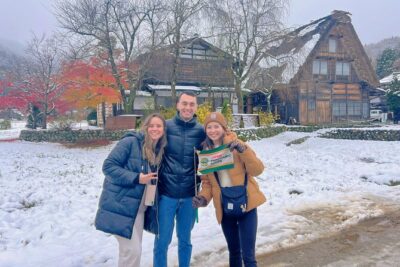
World Heritage Shirakawa-go and Experience Tours from Kanazawa
Read our review →

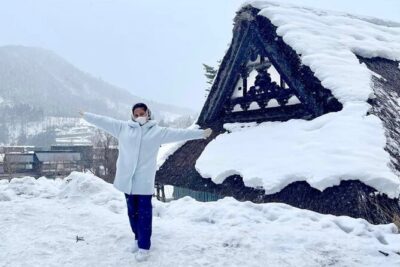
![[One-day bus tour departing from Kanazawa Station] Shirakawa-go and Gokayama – Two World Heritage Villages Enjoyable Bus Tour](https://media3.thejapanesetraveller.com/wp-content/uploads/one-day-bus-tour-departing-from-kanazawa-station-shirakawa-go-and-gokayama-two-world-heritage-villages-enjoyable-bus-tour-400x267.jpg)
[One-day bus tour departing from Kanazawa Station] Shirakawa-go and Gokayama – Two World Heritage Villages Enjoyable Bus Tour
Read our review →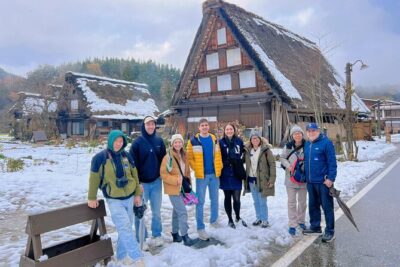
World Heritage Shirakawa-go Perfect Guided Tour from Kanazawa
Read our review →
Browse the lists this tour appears in