Reviewed · TOKYO TOURS
Kintsugi Experience: Art of Golden Joinery in Tokyo
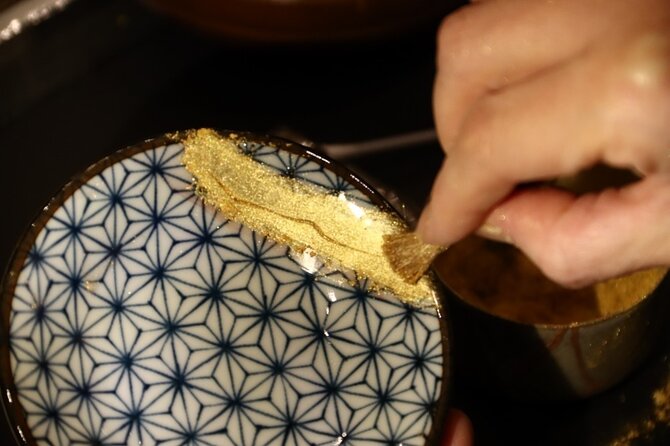
Kintsugi turns a broken ceramic plate into something worth keeping, using lacquer mixed with gold to mark the cracks rather than hide them. I like that this Tokyo workshop teaches both the hands-on method and the Japanese ideas behind it, including wabi-sabi and the value of an object’s past.
I also like the practical souvenir: your own repaired plate, carefully packaged for the journey home. The one-hour class is easy to fit into a Tokyo day, and the teacher and assistants give patient help. The main caution is strict booking policy: cancellations and date changes are not allowed, even if you choose the wrong day.
Key points to know before booking
- Repair a plate you can take home: The studio supplies the ceramic piece and all equipment, so you do not need to bring broken pottery.
- Meet Master Taku in the 11:00 class: The owner and master artisan may teach this session, with staff assisting other classes.
- Learn in a samue: You put on a traditional craftsperson’s garment before starting the work.
- Designed for beginners: Clear demonstrations, video examples, and personal guidance make the process approachable even if you are not artistic.
- Small studio setting: The lesson is described as a capped group of no more than 10, though the general activity limit is 20, so confirm the group size when booking.
- Plan carefully: The class is non-refundable and cannot be changed for any reason.
Why kintsugi makes a good Tokyo souvenir
Many Tokyo activities give you a photograph, a shopping bag, or a quick taste of a traditional craft. This one gives you a plate marked by your own hand. That changes the experience from simply watching Japanese culture to making a small object connected to it.
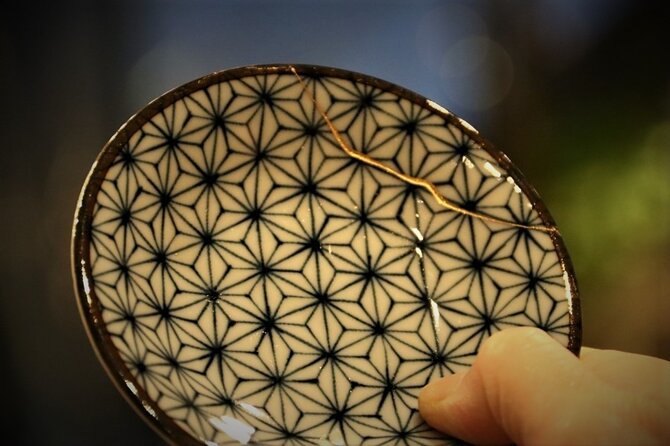
Kintsugi is the practice of repairing broken pottery with lacquer and gold. The crack becomes part of the piece’s story instead of a flaw to hide. In the class, you work with a plate supplied by the studio, rather than bringing a treasured bowl from home. That is a sensible choice for beginners, since you can learn without risking a family heirloom.
The idea connects with Japanese aesthetics often described through wabi-sabi, an appreciation of imperfection, age, and change. The lesson does not treat repair as a rushed fix. It presents repair as a way to recognize that an object has lived through something.
That philosophy gives the hour more weight than a standard craft session. You still spend most of your time making something, but you also leave with a different way to look at cracked dishes, worn furniture, and other everyday things.
A few more Tokyo half-days to weigh up
- Mt Fuji and Hakone 1-Day Bus Tour Return by Bullet Train
★ 5.0 · 26,383 reviews - 1-Day Tokyo Bus Tour
★ 5.0 · 14,250 reviews - Tokyo: TOKYO SKYTREE® Admission ticket
★ 4.5 · 11,192 reviews
Finding the Minami-Aoyama studio
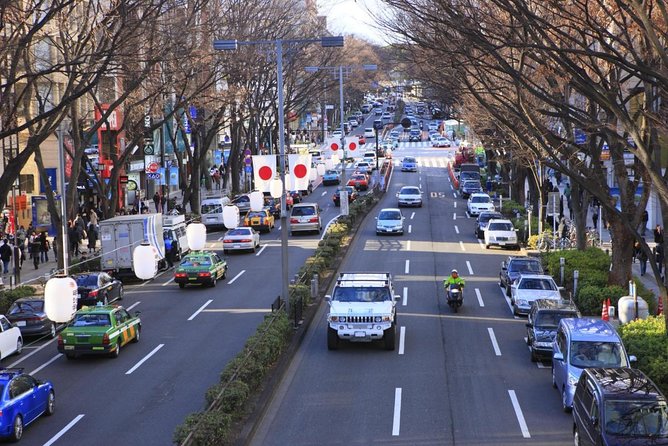
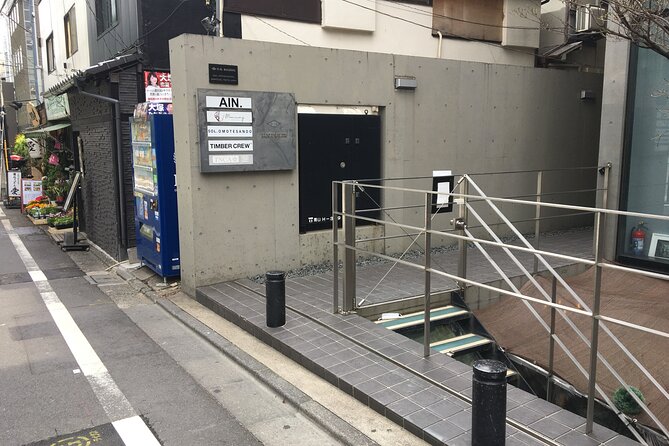
You make your own way to TNCA Minami-Aoyama Studio at 3-chōme-8-2 Minamiaoyama, in Minato City. The meeting point is near public transportation, with Omotesando listed as the itinerary stop and area reference.
Allow time to find the studio. One class participant specifically found the location difficult and advised preparing beforehand, while another found it easy to reach. Those two comments fit the practical reality of Tokyo: the neighborhood is well connected, but a small atelier can still take a few minutes to locate once you leave the station.
I would not arrive at the last second. The scheduled activity lasts only about an hour, and the opening instructions matter. Arriving early gives you time to find the door, settle in, and avoid beginning the class flustered.
The workshop ends back at the studio. There is no hotel pickup, drop-off, food, or drink included, so plan it as a short stand-alone activity between other Tokyo plans.
Putting on a samue and meeting the teacher

After you arrive, you meet the teacher and the rest of the group before putting on a samue, a traditional garment associated with Japanese craft and manual work. It is a small detail, but it helps mark a change of pace. You are not just browsing a shop or taking a quick photo. You are preparing to work with your hands.
The 11:00am class may include Master Taku, the owner and master artisan. The teaching team has been praised for being kind, encouraging, and patient. The instructor speaks very good English, and the directions are designed to be followed by people who do not speak Japanese.
The tone is friendly and sometimes playful. Video examples and easy-to-copy demonstrations help make the process clear. That matters because kintsugi can look mysterious when you see only the finished golden lines. A good demonstration turns it into a series of manageable steps.
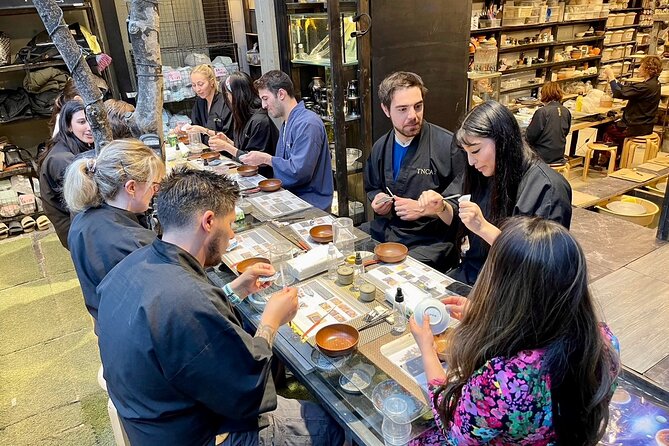
You should still expect a real workshop, not a passive cultural talk. The teacher explains the background and technique, then asks you to work. Staff members move around to offer help, and the instructor takes time to look at each person’s piece.
One point deserves balance. The class atmosphere depends partly on arriving on time and on the instructor assigned to your session. One poor account described a visitor arriving six minutes before the start and feeling ignored at first, with an assistant providing the welcome. That is not a reason to dismiss the activity, but it is a good reason to arrive early and make yourself known when you enter.
The one-hour plate repair
The studio supplies a ceramic plate for your project. You do not bring a personal item, and the plate is included in the lesson fee. All needed equipment is also supplied, along with taxes and handling charges.
The teacher guides you through the repair process using lacquer mixed with gold. You work on one traditional pottery item and finish it during the lesson. The aim is not to produce a museum piece in sixty minutes. It is to give you a sound first taste of the craft and a finished object that carries visible evidence of the process.
That makes the class friendly to beginners. You do not need to think of yourself as an artist. Couples, friends, parents and children over the age limit, and people who simply want a creative break from sightseeing can take part. Several descriptions of the activity stress how accessible it is for people with no art background.
The work also has a quiet, focused quality. You concentrate on a small plate, follow each instruction, and watch the gold line develop. It is a useful change after crowded trains, long museum visits, and busy shopping streets.
The finished result will reflect your own work. Do not book this expecting identical, factory-perfect plates. The charm is in the personal line and the fact that you made it yourself. The teacher’s job is to guide you toward a satisfying result, not remove every sign that a beginner made it.
Same base, a completely different sort of day:
- Tokyo: teamLab Planets TOKYO Digital Art Museum Entry Ticket
★ 4.6 · 9,779 reviews - Mt Fuji & Hakone Cruise, Drum Show Bullet Train 1 Day from Tokyo
★ 4.0 · 7,413 reviews - Tokyo: Sumo Show Experience with Chicken Hot Pot and a Photo
★ 4.8 · 6,678 reviews - Tokyo: Shinjuku Food Tour (13 Dishes at 4 Local Eateries)
★ 5.0 · 6,603 reviews
The philosophy behind the gold lines
The cultural explanation is an important part of the class. Without it, kintsugi could seem like a decorative method for making cracks attractive. With it, the repair becomes a lesson in how Japanese aesthetics can assign value to age and damage.
You learn why broken pottery is not automatically treated as rubbish. The repaired object keeps its past, and the visible seam becomes part of its identity. This is a useful idea to hear in Japan, where traditional arts often connect technique with patience, restraint, and respect for materials.
The lesson also gives you a way to understand why the gold is so striking. It does not imitate an invisible repair. It announces the repair. That visual choice is the heart of the craft and the reason your plate can become a meaningful memento rather than a generic souvenir.
The instruction combines history, philosophy, and technique without requiring a full day. If you want an academic study of Japanese ceramics, this hour will be too short. If you want an intelligent introduction with a practical result, the balance is good.
Group size and the feel of the studio
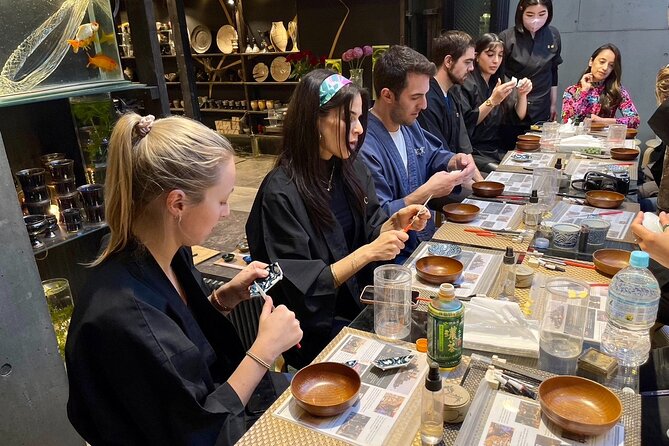
The experience is designed as a personalized class rather than a large demonstration. The main description caps the group at no more than 10 people, which should allow the instructor to check individual work. The additional information gives a maximum of 20 travelers for the activity, so the exact group size may depend on the session. I would confirm this if a small class is essential to your decision.
The studio itself is small and intimate. That can work in your favor because the teacher and assistants are close by when you need help. It also means the space may feel busy if the group reaches the upper limit.
The strongest pattern in the feedback is the teaching. People repeatedly praise the clear instructions, the gentle corrections, and the willingness of the staff to give each student attention without taking over. That is exactly what you want in a craft class: enough help to succeed, but enough freedom to make the piece your own.
At the 11:00am class, you may meet Master Taku. Other sessions can be led by members of his team. The available information does not promise that he teaches every class, so book the specific session carefully if meeting him is important.
What your $59.69 pays for
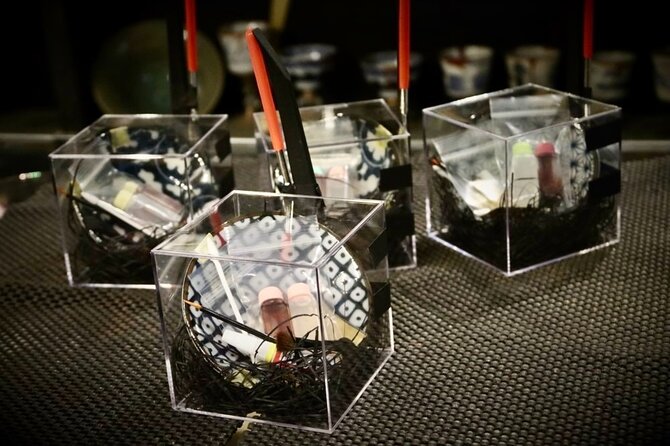
At $59.69 per person, this is not the cheapest one-hour activity in Tokyo. Its value comes from several things bundled into the price: instruction, a plate, materials, equipment, the use of the studio, and a finished object to carry home.
You are also paying for a structured introduction to a traditional craft. Buying a souvenir plate in a shop would cost less in time and perhaps less money, but it would not give you the connection between the gold seam and the philosophy of repair.
The short duration helps the value for many itineraries. You can fit the workshop into a morning around Omotesando, then continue sightseeing, shopping, or dining elsewhere in Tokyo. It does not consume half a day or require transport outside the city center.
The value drops if you dislike hands-on activities or want a technically advanced course. This is a beginner introduction, not a professional apprenticeship. You should also count the risk of the strict cancellation rule. The amount paid is not refunded if you cancel or request an amendment, including a date change. If the provider cancels because the minimum number is not reached, you are offered another date or experience, or a full refund.
Taking your plate home
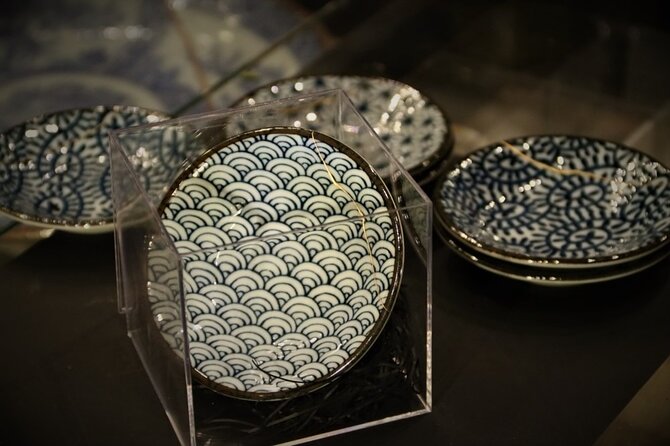
The repaired plate is yours to keep after the lesson. Several class accounts point out that the studio packages the item well for transport, which matters if you still have flights, train rides, and hotel changes ahead.
Treat the plate as a handmade souvenir, not as an ordinary piece of tableware unless the studio gives you specific care instructions. The supplied details do not state whether the finished piece is suitable for food use, a dishwasher, or a microwave. Ask the teacher before using it at home.
The plate’s practical value is modest, but its personal value can be high. You remember the class each time you see the gold line, and the unevenness of the repair is part of the story. It is a better keepsake for someone who prefers objects with a connection to place and process.
Pack it in your carry-on if possible, and keep the studio packaging around it. The provider has considered the return journey, but careful handling is still wise.
Who will enjoy this workshop most
I would choose this experience for you if you want a creative activity that offers more than a quick photo opportunity. It suits couples, friends, solo visitors, and families with children aged six or older who can participate safely in the atelier.
It is especially good for:
- People interested in Japanese culture and traditional crafts
- Anyone who likes making a personal souvenir
- Visitors who prefer a calm activity to another packed sightseeing stop
- Beginners who want clear instruction without needing artistic training
- Couples or friends looking for a shared project
The age rule is firm: children under six cannot enter the atelier because of the establishment’s safety rules. The supplied information does not give more detail about older children, so you should judge whether they can follow a one-hour craft lesson.
This is less suitable if you want to repair your own broken item. Personal pottery is not allowed, and the studio provides the plate. It is also not right for anyone who needs flexible cancellation or may change plans often.
A practical booking checklist
Book the date carefully. The activity is non-refundable and cannot be changed for any reason. Double-check the month, day, time, and number of people before paying.
Choose your route to Minami-Aoyama in advance and allow a little extra time for the final walk to the studio. A mobile ticket is provided, and the activity is near public transportation, but neither fact removes the need to identify the exact entrance.
Wear something you can work comfortably in, even though a samue is provided. Food and drinks are not part of the experience, so eat beforehand if you need a full breakfast or lunch.
If you hope to meet Master Taku, look for the 11:00am class. His presence is not guaranteed for every time slot, and other capable staff may teach the session.
Finally, ask about care for the finished plate before leaving. The class includes the object, but the available details do not specify how it should be washed or used.
Should you book the kintsugi experience?
Book it if you want a compact, thoughtful Tokyo activity where you make a real object and learn why the craft matters. The patient teaching, English accessibility, personal guidance, and well-packed plate make the $59.69 reasonable for a one-hour cultural workshop.
I would skip it if your schedule is uncertain, you need a refund option, or you are hoping to work on your own pottery. I would also set expectations correctly: this is a beginner lesson, not a full masterclass.
For most people who enjoy craft, Japanese aesthetics, or meaningful souvenirs, this is a smart way to spend an hour in Minami-Aoyama. Arrive early, check the date twice, and let the imperfect gold seam be the point.
FAQ
Where does the kintsugi class take place?
The class meets at TNCA Minami-Aoyama Studio, 3-chōme-8-2 Minamiaoyama, Minato City, Tokyo 107-0062, Japan. Omotesando is listed as the itinerary stop, and the studio is near public transportation.
How long does the experience last?
The lesson lasts approximately one hour.
What will I repair during the class?
The studio provides a ceramic plate for you to repair. Personal pottery and other personal items are not allowed.
Can I take my repaired plate home?
Yes. The plate used during the lesson is included and is yours to bring home afterward. The studio also packages the finished item for transport.
Is the class taught in English?
The instructor speaks very good English, and the directions are designed to be accessible to people who do not speak Japanese.
Will Master Taku teach my class?
You have the chance to meet Master Taku in the 11:00am class. The information does not promise that he teaches every session, as staff members may lead other classes.
Can children join the workshop?
Children under six cannot enter the atelier because of the establishment’s safety rules. The available information does not provide a different age policy for older children.
Can I cancel or change my booking?
No. The experience is non-refundable and cannot be changed for any reason. If the activity is canceled because its minimum number is not reached, you are offered another date or experience, or a full refund.
Just added around Tokyo
- Private Arrival Transfer : Narita International Airport to Central Tokyo City★ 4.5 · 12 reviews
- Narita Airport(NRT): Private Transfer to Tokyo/Yokohama 1-9pax★ 5.0 · 47 reviews
- Private Transfer from Narita Airport to Yokohama Port and City★ 4.5 · 17 reviews
- [Narita Airport Terminals 1, 2] 40-60km Sawara Itako Historic Bike Tour★ 5.0 · 13 reviews
- 3 Day Japan Highlights Tour: Tokyo, Mt.Fuji, Nara, Kyoto, Osaka★ 5.0 · 22 reviews
- Small Town in the Big City: Tasting Tokyo’s Kichijoji★ 5.0 · 195 reviews
- Small Town in the Big City: Tasting Tokyo’s Kichijoji★ 5.0 · 16 reviews
- The 10 Tastings of Tokyo With Locals: Private Street Food Tour★ 5.0 · 48 reviews
Tokyo Tours, compared.

Mt Fuji and Hakone 1-Day Bus Tour Return by Bullet Train
Read our review →

teamLab Planets TOKYO Digital Art Museum Entry Ticket
Read our review →
Mt Fuji & Hakone Cruise, Drum Show Bullet Train 1 Day from Tokyo
Read our review →
Sumo Show Experience with Chicken Hot Pot and a Photo
Read our review →
Shinjuku Food Tour (13 Dishes at 4 Local Eateries)
Read our review →
Tokyo Mt Fuji 5th St & Hakone Cruise Bus Tour w/Bullet Train
Read our review →