
Reviewed · TOKYO TOURS
Kintsugi Experience with Arita Ware in Tokyo (English Guide)
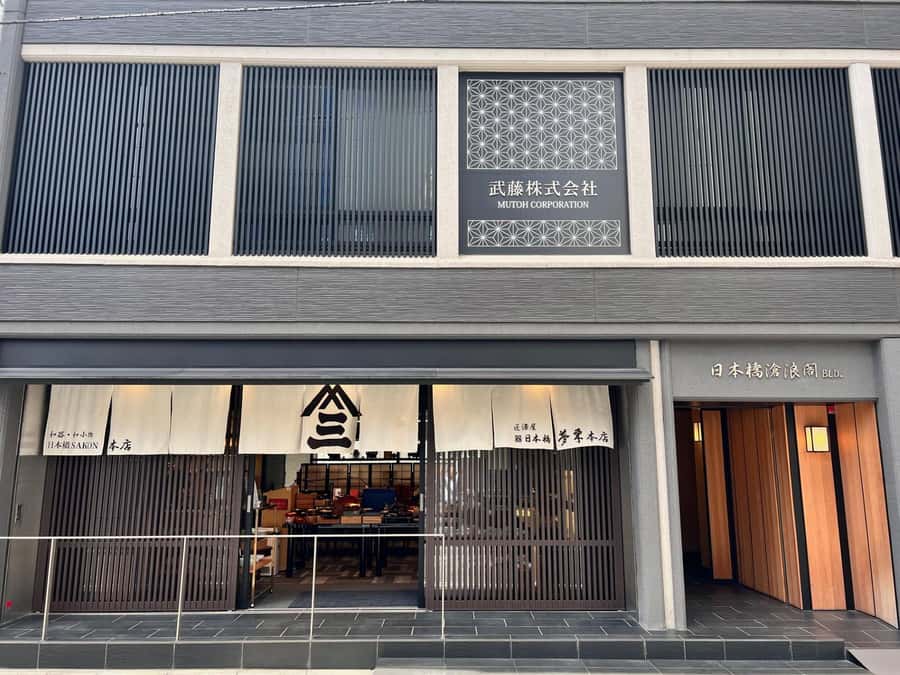
Kintsugi turns a broken plate into something worth keeping, tracing its cracks with gold instead of hiding them. At Tokyo’s Nihonbashi Mutoh Main Store, you’ll learn this patient Japanese craft with an English-speaking instructor and work with Arita Ware, Japan’s first porcelain.
I especially like the 90-minute length, which gives you time to finish one object without taking half a day, and the chance to work in a shop established in 1923. The main consideration is selection: the included piece is a plate, and your choice of replacement item may be limited.
Key points
- Repair Arita Ware: Work with porcelain from a tradition that began about 400 years ago in Japan.
- Learn in a historic shop: Nihonbashi Mutoh Main Store has sold lacquerware and glassware since 1923.
- Finish a take-home souvenir: The plate you work on is yours to bring home after the session.
- Use your own broken piece: Bring ceramic or porcelain up to about 15 centimeters wide and 15 centimeters high, with one or two broken parts.
- Small English-guided class: Sessions run for 90 minutes and allow up to 10 participants.
- Plan for careful use: Your finished piece must dry indoors for about a week and is for decoration, not food or drink.
Why kintsugi makes a memorable Tokyo souvenir
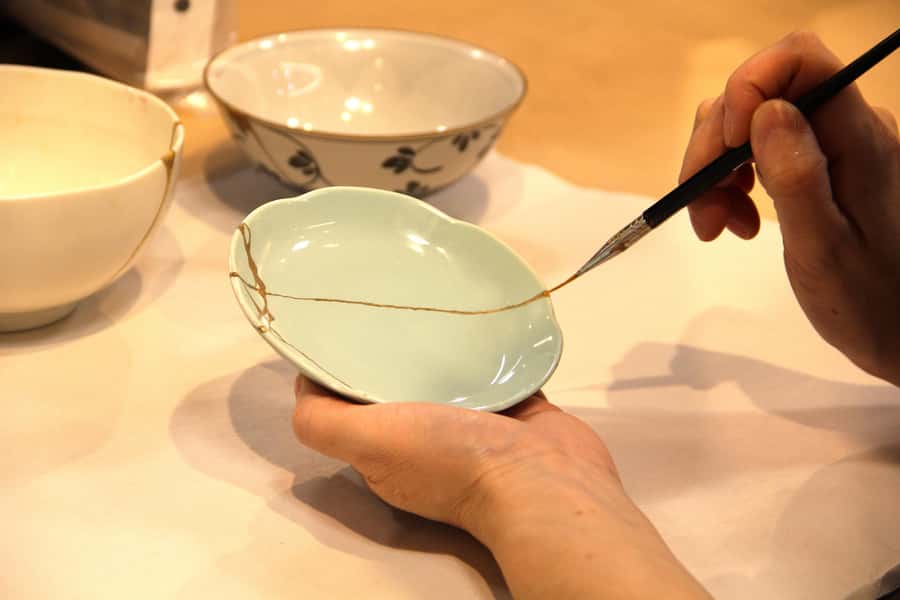
Many Tokyo activities give you a photograph, a snack, or a shopping bag. This one gives you a repaired object with a visible story. Kintsugi joins broken pottery and highlights the seams with gold, treating damage as part of the object rather than a reason to throw it away.
The idea is linked with wabi-sabi, a Japanese way of appreciating imperfection, change, and the marks left by time. You are not simply decorating a plate. You are learning why a repaired object can have more character than a flawless one.
That makes this a good choice if you want a hands-on souvenir rather than another mass-produced purchase. You make one object during the session, and its finished cracks will be unique to your work.
The craft is old, but the class is approachable. You do not need to arrive as an artist. The session is built as an introduction, and the group size is capped at 10, so you are not signing up for a large factory-style demonstration.
A few more Tokyo half-days to weigh up
- Mt Fuji and Hakone 1-Day Bus Tour Return by Bullet Train
★ 5.0 · 26,383 reviews - 1-Day Tokyo Bus Tour
★ 5.0 · 14,250 reviews - Tokyo: TOKYO SKYTREE® Admission ticket
★ 4.5 · 11,192 reviews
Inside Nihonbashi Mutoh Main Store
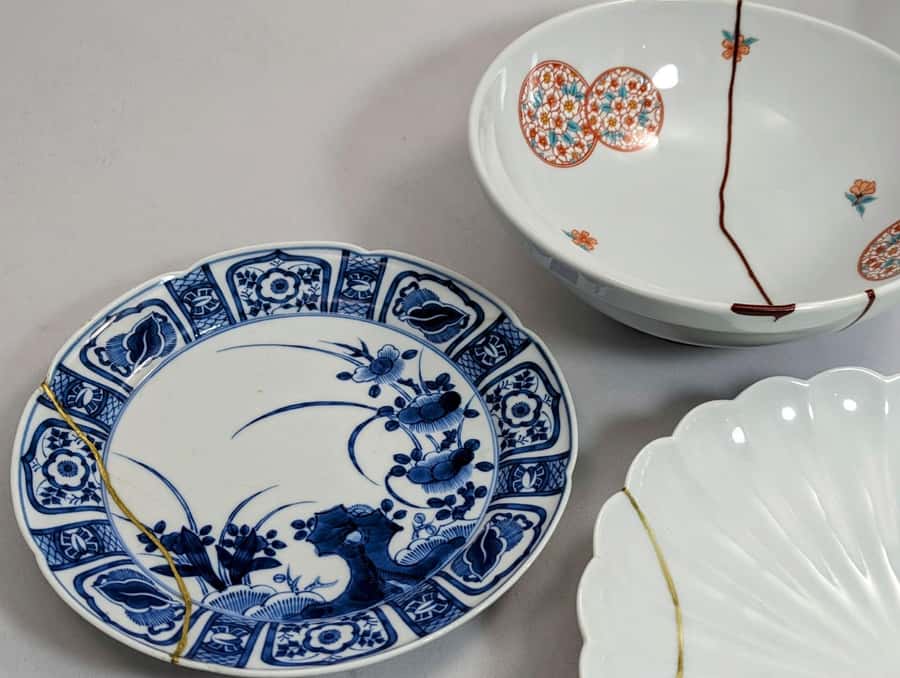
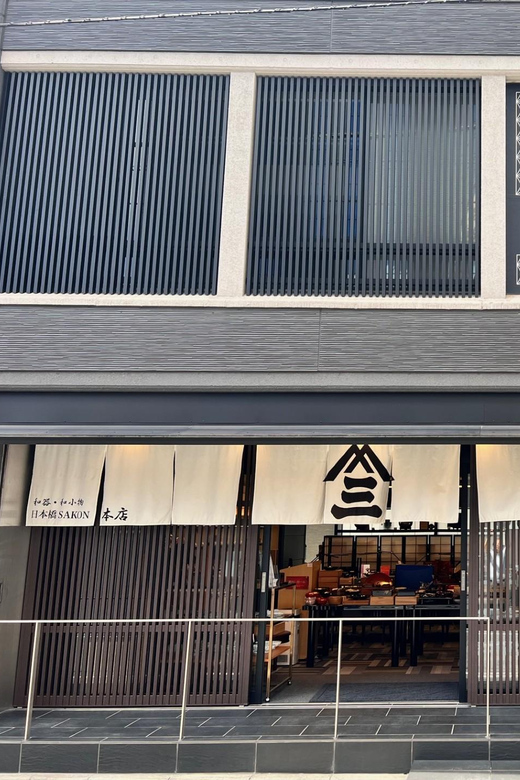
The workshop takes place at Nihonbashi Mutoh Main Store, at 1-8-3 Honcho, Nihonbashi, Chuo City, Tokyo. The shop was established in 1923 and deals in high-quality lacquerware and glassware. You will work among traditional craft goods rather than in a generic activity studio.
That setting matters. Before you touch the pottery, you are surrounded by objects made for careful use and display. It gives the class a stronger sense of place and links your small project to the wider world of Japanese craft.
The shop may also be serving regular customers during your class. That can make the setting feel more like a working store than a private lesson, but it also means the room may not be reserved only for your group.
Choose from three listed start times:
- 10:30 to 12:00
- 13:30 to 15:00
- 15:30 to 17:00
The schedule works well with a morning or afternoon in the Nihonbashi area. I would arrive early, since a late arrival does not extend the session. The experience still ends at its scheduled time.
What happens during the 90-minute class
The activity is designed to take you through the kintsugi process in one sitting. You receive the needed materials, an English-speaking instructor, and a plate for the workshop. The stated class length is short enough for a visitor with a packed Tokyo schedule, but long enough to complete one object.
Instruction may be given first in Japanese and then translated into English. A class of eight participants was described as comfortable and uncrowded, while the official limit is 10. That is a useful balance: enough people for a shared activity, but not so many that every bit of help becomes a struggle.
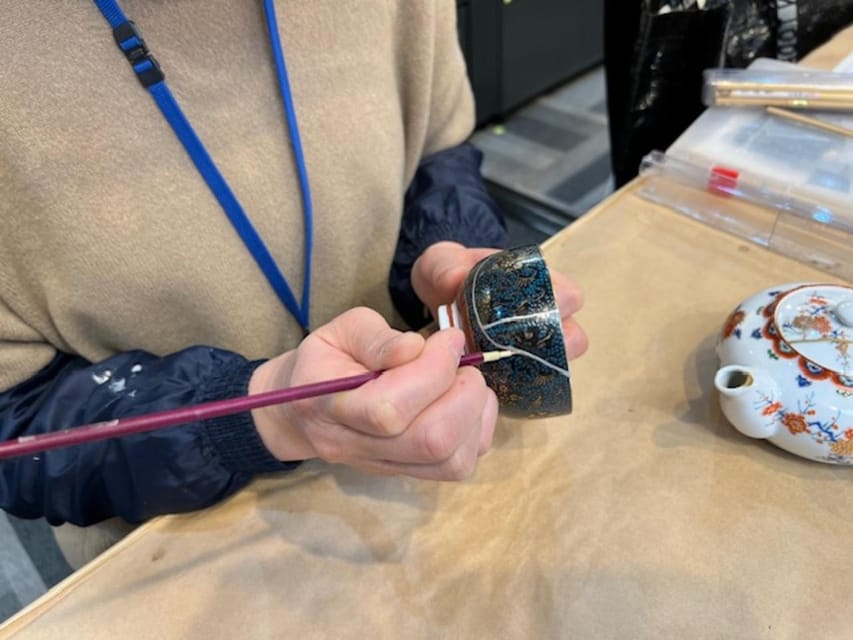
Expect the work to reward care rather than speed. Kintsugi is about repairing and marking a break, not rushing through a decorative craft project. The instructor explains the process, and you use the supplied tools and materials to work on your selected pottery.
The class is best understood as an introduction. You will complete one object, not master every form of traditional pottery repair. One session is enough to give you a feel for the method and the philosophy behind it, while leaving room to continue learning later if you become interested.
The finished plate is available to take home. That is the practical payoff, but the real value is the time spent making something with your hands in a historic Japanese craft shop.
Working with 400-year-old Arita Ware
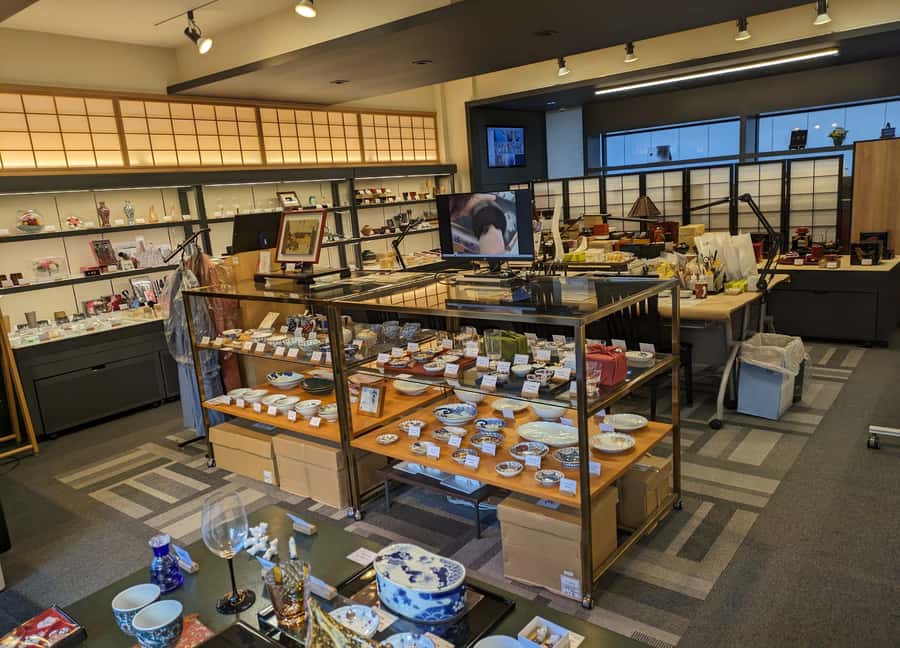
Arita Ware has been produced for about 400 years and is recognized as the first porcelain made in Japan. The pieces used here come from Shobido Honten, a popular Arita Ware brand with domestic and international fans.
That gives the activity more substance than repairing an anonymous souvenir plate. You are working with a form of Japanese porcelain that has a long place in the country’s craft tradition. The object is attractive before the repair, and the kintsugi marks give it a new identity afterward.
The available selection may be the one area where the class feels less flexible. The included item is a plate, and one participant wished there had been more variety to choose from. If you have a particular shape or color in mind, keep your expectations modest.
You can bring your own item instead, provided it meets the stated limits:
- Ceramic or porcelain only
- About 15 centimeters or less in diameter
- About 15 centimeters or less in height
- One or two broken parts
This option is especially appealing if you already have a small damaged object with personal meaning. A chipped family dish or broken travel keepsake could make the final piece more personal than a workshop-provided plate. The item must fit the size and damage rules, so check it before you go.
Same base, a completely different sort of day:
- Tokyo: teamLab Planets TOKYO Digital Art Museum Entry Ticket
★ 4.6 · 9,779 reviews - Mt Fuji & Hakone Cruise, Drum Show Bullet Train 1 Day from Tokyo
★ 4.0 · 7,413 reviews - Tokyo: Sumo Show Experience with Chicken Hot Pot and a Photo
★ 4.8 · 6,678 reviews - Tokyo: Shinjuku Food Tour (13 Dishes at 4 Local Eateries)
★ 5.0 · 6,603 reviews
The English guidance and group atmosphere
The class is taught in English, which removes much of the worry from learning a craft with unfamiliar tools and steps. The instructor provides clear directions, with Japanese instruction followed by English translation in at least one session.
The teaching style described for the activity is friendly and calm. That suits kintsugi, which is not a loud or competitive pastime. You have time to watch, listen, and work carefully.
The small-group format also helps. With no more than 10 participants, you can focus on your own pottery while still sharing the room with other people. One eight-person session was described as uncrowded, a useful sign for anyone who dislikes workshops where tables are packed together.
Still, this is not necessarily a private class. Regular shop customers may be present, so the atmosphere can be more open and commercial than a dedicated studio lesson. If you want total quiet or one-to-one instruction, this may not be the right fit.
For most people, the setting should feel relaxed. The class has received a 4.8 rating from 20 reviews, with especially strong praise for the instructor, the calm mood, the attractive shop, and the clear teaching.
What to wear and how to care for your finished piece
Wear clothes you do not mind getting dirty. This is simple advice, but it is worth following. Kintsugi involves hands-on work with craft materials, and your best travel outfit has no place in a workshop.
Once you finish, the pottery is not ready for immediate daily use. You should take it home and let it dry indoors for about one week. Plan your packing with that in mind, especially if you will leave Tokyo soon after the class.
The finished object needs gentle care:
- Wash it by hand with dishwashing detergent.
- Do not put it in a microwave.
- Do not put it in a dishwasher.
- Use it for decoration, not for eating or drinking.
This last point is important. Your completed plate is a display piece, not tableware. You can place it on a shelf or use it as a decorative object, but you should not serve food or drinks on it.
If you are flying home, protect it carefully. The workshop information does not specify special packing materials or shipping, so you should be prepared to carry the piece safely after it has dried.
Is $139 a fair price?
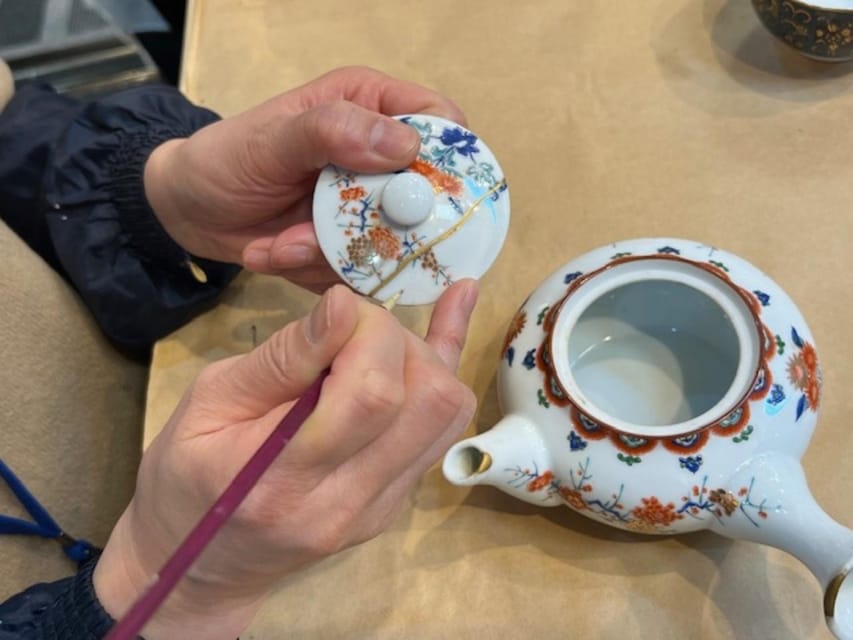
At $139 per person, this is not a bargain activity in the usual Tokyo sense. You are paying more than you would for a simple craft session or a casual souvenir purchase. The price makes better sense when you count what is included: 90 minutes of instruction, all necessary materials, an English-speaking instructor, and an Arita Ware plate to take home.
You are also paying for access to a historic specialist shop and for a guided introduction to a traditional Japanese craft. The experience is small in scale, but the object has more meaning than a ready-made souvenir because you repair it yourself.
The value depends on your interests. If you mainly want sightseeing, $139 may feel high for an hour and a half indoors. If you enjoy crafts, Japanese design, ceramics, or meaningful souvenirs, the price is easier to justify.
The included plate also limits the value slightly if you hoped to choose from many shapes. Bringing your own suitable item can solve that problem, though the class still needs to approve the object based on its size, material, and damage.
Free cancellation is available when you cancel at least three days in advance. There is no refund if you fail to attend on the scheduled day, and arriving late does not move the end time. These rules make it wise to choose a start time that fits your Tokyo plans without a tight connection afterward.
Who will enjoy this experience most?
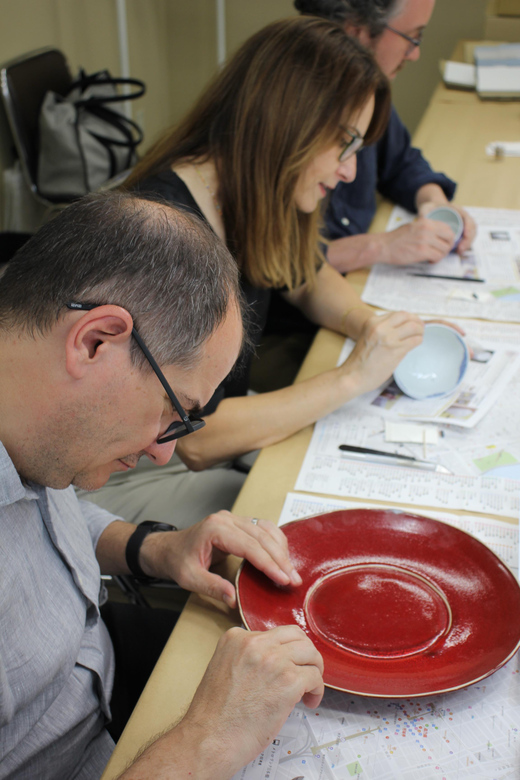
I would recommend this class to adults and older teens who like making things and want a souvenir with a story. It is not suitable for children under 13, and the careful nature of the work may be less appealing to anyone looking for a fast, playful activity.
It fits well for:
- Couples looking for a shared keepsake
- Solo visitors interested in Japanese craft
- Ceramic and porcelain fans
- People who already own a small broken object to repair
- Visitors who prefer a quiet indoor activity
- Anyone who wants an English-guided cultural experience
The activity also suits repeat visitors to Japan. You do not need another major temple tour or shopping district if you have already seen many of Tokyo’s standard sights. A craft class offers a different kind of connection to the country.
I would be more cautious if your main goal is variety. You complete one object, and the plate selection may not be broad. I would also skip it if you need an item that can go in the dishwasher or hold food.
Practical details before you book
The meeting point is Nihonbashi Mutoh Main Store at 1-8-3 Honcho, Nihonbashi, Chuo City, Tokyo, postal code 1030023. Check the current availability for the start time you want.
The class lasts 1.5 hours and is offered in English. It is wheelchair accessible, and the group is limited to 10 participants. Food and drinks are not included, though none are needed for this short workshop.
Bring your own ceramic or porcelain item only if it fits the stated rules. A piece with one or two broken parts is acceptable, while a badly shattered object may not be. Keep the size close to 15 centimeters in diameter and 15 centimeters in height.
Allow extra time before the class to find the shop and settle in. The session ends at its original time if you arrive late, so a rushed arrival can cost you part of the instruction.
Should you book the Arita Ware kintsugi workshop?
Book it if you want a calm, hands-on Tokyo activity and a souvenir that you helped create. The historic shop, English instruction, small group, and Arita Ware make this more than a basic craft lesson.
I especially like it for couples, solo visitors, and anyone who has a small broken ceramic object waiting for a second life. The main reasons to hesitate are the $139 price, the single-object format, and the limited use of the finished plate.
If those limits work for you, this is a thoughtful way to spend 90 minutes in Tokyo. You leave with a repaired piece, a better understanding of kintsugi, and a reminder that a flaw can become the most interesting part of an object.
FAQ
How long does the kintsugi experience last?
The workshop lasts 90 minutes, or 1.5 hours.
What start times are available?
The listed sessions begin at 10:30, 13:30, and 15:30. Check availability when booking, since start times may vary by date.
Is the workshop taught in English?
Yes. An English-speaking instructor leads the experience. Instructions may first be given in Japanese and then translated into English.
Can I bring my own broken item?
Yes. You may bring your own ceramic or porcelain item if it is about 15 centimeters or less in diameter and height and has one or two broken parts.
What is included in the price?
The price includes admission to the 90-minute workshop, all necessary materials, an English-speaking instructor, and a plate used during the experience that you can take home.
Can I eat from the finished plate?
No. The completed piece is for decoration only. It should be hand washed with dishwashing detergent and should not go in a microwave or dishwasher.
Is the workshop suitable for children?
The activity is not suitable for children under 13 years old.
Just added around Tokyo
- Private Arrival Transfer : Narita International Airport to Central Tokyo City★ 4.5 · 12 reviews
- Narita Airport(NRT): Private Transfer to Tokyo/Yokohama 1-9pax★ 5.0 · 47 reviews
- Private Transfer from Narita Airport to Yokohama Port and City★ 4.5 · 17 reviews
- 3 Day Japan Highlights Tour: Tokyo, Mt.Fuji, Nara, Kyoto, Osaka★ 5.0 · 22 reviews
- [Narita Airport Terminals 1, 2] 40-60km Sawara Itako Historic Bike Tour★ 5.0 · 13 reviews
- Small Town in the Big City: Tasting Tokyo’s Kichijoji★ 5.0 · 195 reviews
- Small Town in the Big City: Tasting Tokyo’s Kichijoji★ 5.0 · 16 reviews
- The 10 Tastings of Tokyo With Locals: Private Street Food Tour★ 5.0 · 48 reviews
Tokyo Tours, compared.

Mt Fuji and Hakone 1-Day Bus Tour Return by Bullet Train
Read our review →

teamLab Planets TOKYO Digital Art Museum Entry Ticket
Read our review →
Mt Fuji & Hakone Cruise, Drum Show Bullet Train 1 Day from Tokyo
Read our review →
Sumo Show Experience with Chicken Hot Pot and a Photo
Read our review →
Shinjuku Food Tour (13 Dishes at 4 Local Eateries)
Read our review →
Tokyo Mt Fuji 5th St & Hakone Cruise Bus Tour w/Bullet Train
Read our review →