
Reviewed · NAGANO TOURS
Nagano All Must-Sees 4hr Private Tour with Licensed Guide
Nagano’s best feature is its choice of very different half-day outings. You can focus on Zenko-ji Temple and its old approach, explore the Sanada clan’s samurai town in Matsushiro, or head to Obuse for Hokusai, sake, chestnuts, and small museums. A private guide helps turn a short visit into a more meaningful one.
I like the freedom to choose two or three sights in one area, and I like having a local English-speaking guide who can explain customs, history, food, and practical train connections. Guides such as Emi, also called Amy, and Yoshi have earned especially warm praise for their clear explanations and friendly help. The catch is that four hours goes quickly, and this is a walking and public-transport tour with no private vehicle.
Key points to know before booking
- Choose one of three areas: Zenko-ji, Matsushiro, or Obuse. You cannot combine multiple areas.
- Build a small custom route: Select two or three sights rather than trying to cover the entire long list.
- Zenko-ji is the easiest choice from central Nagano: The temple is less than 20 minutes on foot from Nagano Station.
- Matsushiro offers the strongest samurai theme: Castle ruins, Sanada homes, schools, and wartime tunnels are spread across the district.
- Obuse suits art and food lovers: Hokusai museums, sake, chestnut shops, and quiet temples give this outing a different feel.
- Budget for extras: Transport, entrance fees, lunch, and personal purchases are not included in the $120.84 per-person price.
Why this private Nagano tour works best as a focused outing
This is not a sightseeing bus that rushes you past a dozen landmarks. It is a private four-hour plan for your own group, built around one Nagano area and two or three selected sites. That distinction matters.
The long list of possible stops can look generous, but each listed stop is shown with only a few minutes attached. Treat those times as planning markers, not a promise that you will properly see every place. A temple, museum, castle site, or sake brewery needs more than five minutes once you allow for walking, questions, photographs, and public transport.
The better approach is to choose a theme. Pick Zenko-ji if this is your first time in Nagano and you want the city’s most important Buddhist sight. Choose Matsushiro if you care about samurai history and old houses. Select Obuse if Hokusai, local art, sake, and small-town streets sound more appealing.
Because the tour is private, you can tell the guide what matters to you. The supplied details specifically invite customization, and one guide helped a guest change the plan at the last minute to visit the snow monkeys. That does not mean every change will be possible, but it does show why direct communication with the guide can be valuable.
More licensed-guide days in Nagano:
- Tokyo 6hr Private Tour with Government-Licensed Guide
★ 5.0 · 3,902 reviews - Tokyo 4hr Private Tour with Government-Licensed Guide
★ 5.0 · 1,394 reviews - Kyoto 6hr Private Tour with Government-Licensed Guide
★ 5.0 · 1,369 reviews
Zenko-ji, the simplest and strongest first choice
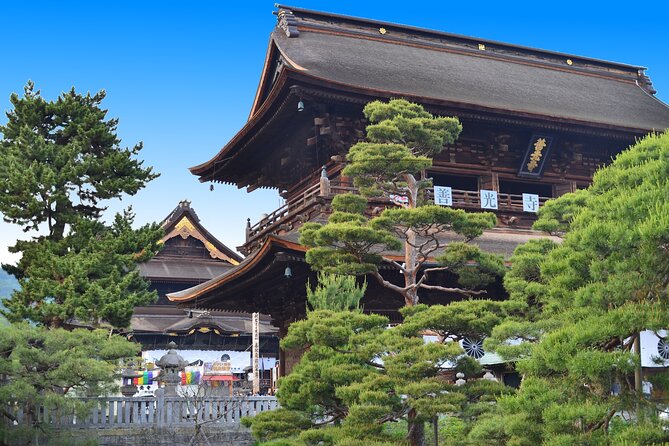
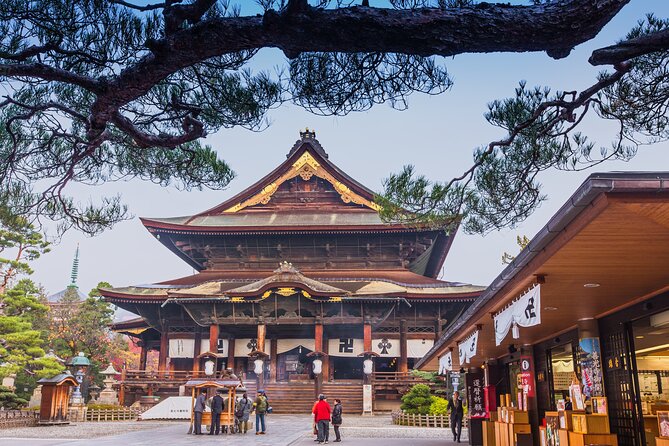
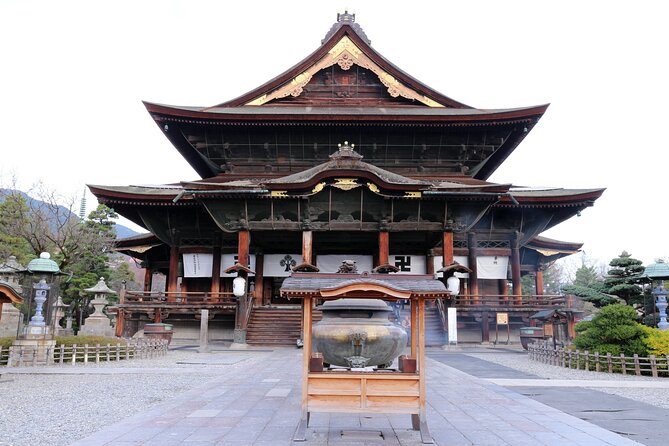
Zenko-ji is the tour’s most obvious anchor. Founded in 642, it is one of Japan’s oldest and most important Buddhist temples. From Nagano Station, you can walk along the historic approach, called Omotesando, toward the temple grounds.
I would choose this area if you have only a short time in Nagano. It gives you a major religious site, traditional streets, food stops, art, and a park without requiring a long ride across the region.
Zenko-ji Temple
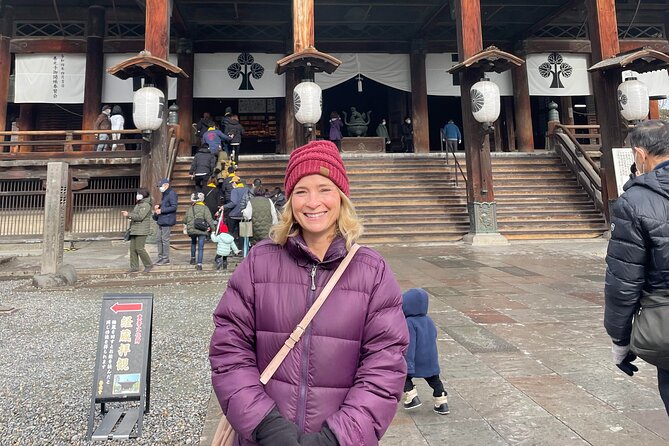
The temple deserves more than a quick photograph. Your guide can explain its Buddhist importance, the layout of the grounds, and the customs that may otherwise seem puzzling. One particularly strong account of this tour praised Emi for explaining the many sides of Zenko-ji and pointing out cultural sites, food to sample, and Japanese history along the walk.
Admission to the temple itself is listed as free, though specific interior areas or other sections may have their own charges. Since entry fees are generally not included, ask your guide what you plan to enter before setting the route.
Nakamisedori Street
Nakamisedori is the stone-paved approach leading out from the Nio-mon Gate. About 450 meters long and said to use around 7,777 stones, it is the natural place to slow down after the temple.
This is where a guide can add real value. Rather than simply walking past shops, you can ask about local snacks, souvenirs, religious goods, and the difference between a temple approach and an ordinary shopping street. The stop is free, but shopping and food are your responsibility.
A few more Nagano half-days to weigh up
- 1-Day Snow Monkeys, Zenko-ji Temple & Sake in Nagano
★ 5.0 · 1,020 reviews - Nagano: Snow Monkeys, Zenkoji Temple & Sake Day Trip
★ 4.9 · 833 reviews - From Tokyo: Snow Monkey 1 Day Tour with Beef Sukiyaki Lunch
★ 4.6 · 295 reviews - Tokyo: Snow Monkey & Nagano Customiseable Private Day Tour
★ 4.8 · 138 reviews
Nishimon Yoshinoya
Nishi-no-Mon is a Nagano sake brewery with a gift shop, museum, and restaurant. It gives the Zenko-ji outing a local food and drink angle, not just a religious one.
The brewery and museum may appeal to you if you enjoy seeing how regional traditions are presented to visitors. The downside is time. If you want a proper museum visit and a relaxed temple visit, these may already use much of your four hours.
Shinano Art Museum and Joyama Park
The Nagano Prefectural Art Museum, including the Higashiyama Kaii Gallery, is near Zenko-ji. It presents modern and contemporary art connected with nature and Nagano. Admission is not included, so confirm the current fee and opening details when planning.
Joyama Park sits on a hill near the temple and offers seasonal views. Spring cherry blossoms and autumn foliage are its main draws. It may be a better pick than the museum if you want fresh air, a short walk, and a view over Nagano rather than another indoor stop.
A practical Zenko-ji combination might be the temple, Nakamisedori, and either the sake brewery or Joyama Park. Trying to add the art museum as well could make the route feel hurried.
Matsushiro for Sanada samurai history and wartime tunnels
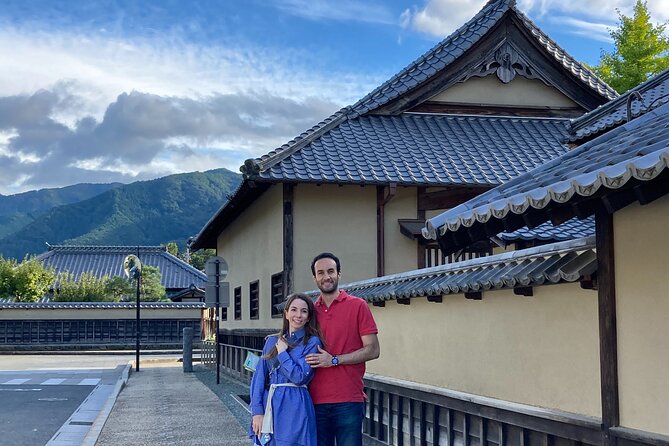
Matsushiro is the most history-heavy option. It preserves the story of the Sanada clan, who ruled the Matsushiro Domain, alongside later military and educational sites. The area is more spread out than the Zenko-ji district, so public-transport timing and walking pace matter.
Choose Matsushiro when you want a quieter setting and a stronger connection to samurai society. It is less suitable if your priority is one famous monument with plenty of time for cafés and shops.
Matsushiro Castle ruins
The castle site preserves moats, stone walls, and reconstructed gates connected with the Sanada domain. It is not a complete castle interior, but the surviving layout helps you picture how the stronghold once worked.
This stop is mainly about space, structure, and historical explanation. Admission is listed as not included, so ask the guide about the current arrangement. If you have never visited a Japanese castle ruin, this is a useful place to learn how much can remain even after the main buildings are gone.
Sanada Treasure Museum and Sanada House
The Sanada Treasure Museum displays armor, weapons, documents, and artwork connected with the clan. It can give you the objects and family details that castle walls alone cannot provide.
The Sanada Residence shows the later generations’ home through wooden construction, tatami rooms, and gardens. I like the pairing: the museum explains the clan’s possessions and story, while the residence shows how an elite household lived.
Both sites require careful time planning, and entrance fees are not included. If you choose them, you may have little room for the other Matsushiro sights.
Samurai homes and the Bunbu School
The Former Yokota Residence is a preserved home of a high-ranking Sanada retainer. The Jozan Yamadera Historic Residence belonged to a scholar and strategist who served the clan. Both offer a closer look at domestic life than a castle ruin does.
The Matsushiro Literary and Military School, known as the Bunbu School, trained samurai in literary and martial arts. Its classrooms and dojo help correct the narrow image of samurai life as only sword practice. Education, administration, and scholarship were also central.
These homes and the school make Matsushiro rewarding for anyone who likes architecture and social history. You should not try to see every one in four hours. Pick the two that best match your interests.
Zozan Shrine and the underground bunker
Zozan Shrine honors Sakuma Shozan, a late Edo-period scholar who promoted a mix of Western science and Japanese spirit. It offers a quieter religious stop and a different historical subject from the Sanada sites.
The Matsushiro Zozan Underground Bunker was built during World War II as a secret military command center. The tunnel network was cut into the mountain and remains a striking reminder of Japan’s wartime planning.
The bunker is free according to the supplied details, while the shrine has an entrance fee listed as not included. Because the district includes sites from several periods, Matsushiro works best when you choose a clear theme, such as Sanada history plus the bunker, rather than collecting random stops.
Obuse for Hokusai, sake, and chestnut streets
Obuse offers the most relaxed mix of art, food, and small-town atmosphere. It is the right pick if you want to connect Katsushika Hokusai with the town where he spent time later in life, while also enjoying breweries, temples, and attractive streets.
The tradeoff is that Obuse is not the best choice for a first look at Nagano’s central Buddhist heritage. It is a separate outing with a more local and artistic character.
Hokusai-kan Museum
The Hokusai-kan Museum focuses on Hokusai’s later work, including paintings and sketches. Hokusai is best known for ukiyo-e prints, but this museum’s emphasis on his later years gives you another view of the artist.
Admission is not included. If Hokusai is your main reason for choosing Obuse, give this museum enough time to make the trip worthwhile. A five-minute look would be too brief for most art lovers.
Ganshoin Temple
Ganshoin is famous for a phoenix painted on its ceiling by Hokusai when he was in his 80s. The temple connects his artistic power with a religious setting, making it one of Obuse’s most distinctive stops.
The temple charges an entrance fee that is not included. Ask about the best viewing arrangements and allow time to look upward carefully. This is not simply another temple on a checklist. It is the reason many art-minded visitors choose Obuse over Matsushiro.
Matsubaya Honten and Kurino Komichi
Matsubaya Honten is an Edo-period sake brewery housed in a roughly 200-year-old building. It moved to its current location in 1889 and is marked by a red-brick chimney. The brewery is free to visit according to the tour details, though purchases are extra.
Kurino Komichi, or Chestnut Lane, has chestnut trees, traditional buildings, cafés, shops, and museums. It is a good place to let the guide point out local foods and decide where to browse. The street gives Obuse its easygoing character, and it can balance a museum-heavy schedule.
Joko-ji, Obuse Museum, and Takai Kozan
Joko-ji Temple has old trees and traditional buildings in a quiet setting. It is a good choice if you want a pause from museums and shopping.
The Obuse Museum presents local and contemporary art and connects with the Takai Kozan Memorial Museum. The Kozan museum honors Takai Kozan, a scholar, painter, and close friend of Hokusai, through his former home, studio, art, calligraphy, and personal items.
These are appealing additions for repeat visitors or people with a strong interest in Japanese art. Since all four hours cannot cover every Obuse stop, make your priority clear before you meet the guide.
What the $120.84 price really buys you
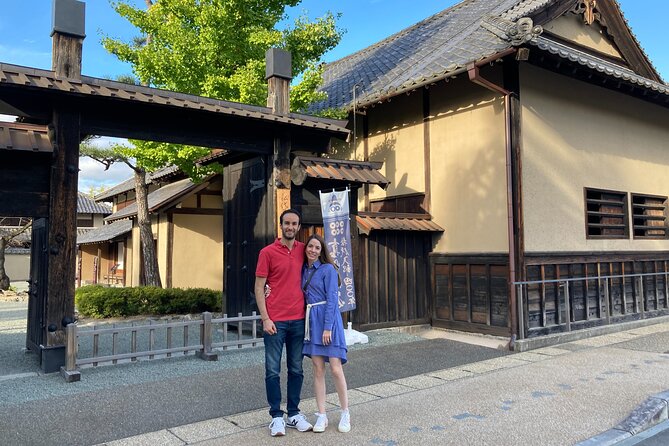
At $120.84 per person, this is not a cheap walking tour. Its value depends heavily on the size of your private group and how much you want interpretation.
The fee includes a licensed local English-speaking guide and a custom route of two or three sights. It does not include train or bus fares, entrance fees, lunch, or personal expenses. There is also no private car, so you are paying for planning, explanation, and flexibility rather than door-to-door transport.
For a couple or small group, a private guide can be worthwhile if you want context and help navigating. Group discounts may improve the price for a larger party, but you should compare the final total rather than relying on the per-person figure alone.
The government-issued National Government Licensed Guide Interpreter certification requires a strong understanding of Japanese culture and history. That credential is a useful sign, but local familiarity still matters. One account describes a guide losing time after getting lost, and the operator responded that guides are permitted to work in areas where they live or have lived. I would confirm your chosen area and meeting point clearly before the day.
Timing, transport, and how to plan the four hours
The tour lasts about four hours and begins with an on-foot pickup within a designated Nagano area. It is not a private-vehicle tour. You will walk and use public transportation, with fares paid separately.
Wear comfortable shoes and keep the route realistic. Two substantial sites plus one short walk or food stop will usually make more sense than three large museums. If you choose Matsushiro or Obuse, ask how much travel time will be used getting there and between stops.
The tour is private, so only your group participates. Most people can take part, and service animals are allowed. Date changes are accepted up to two days before the tour, but a change can mean a different guide or no availability. Cancellation is free until 24 hours before the start time, after which the payment is not refunded.
Guides and the value of human explanation
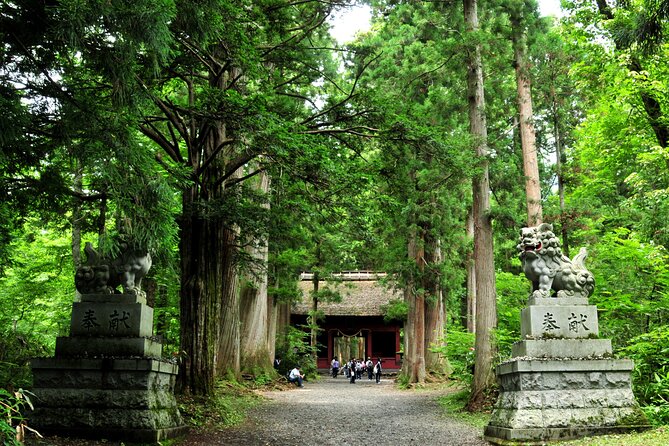
The best part of this format is the conversation. Emi, also known as Amy, has been praised for clear English, energy, and help with train-station and transport questions. Yoshi has also been singled out for making the scenery and sites enjoyable.
That local connection matters most at Zenko-ji, where etiquette and religious symbols can be easy to miss. It also matters in Matsushiro, where a guide can connect a castle ruin, samurai residence, school, and wartime bunker into one understandable story.
Do not be shy about stating your interests. Ask for food suggestions, cultural context, or help with onward transport. A good guide can make a four-hour visit feel purposeful, but the experience depends partly on how clearly you explain what you want.
Should you book the Nagano All Must-Sees tour?
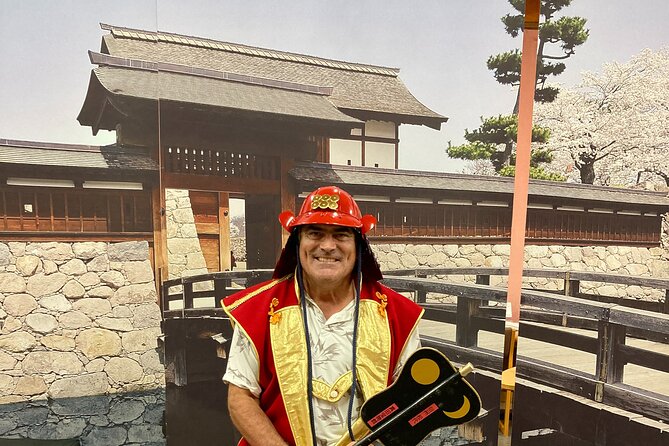
Book it if you want a private, flexible introduction and prefer explanation to simply collecting photographs. Zenko-ji is the safest choice for a first visit, while Matsushiro suits samurai and wartime history fans, and Obuse is best for Hokusai, sake, chestnuts, and smaller museums.
Skip it if you want a full-day regional tour, a private car, or a low-cost group outing. The $120.84 price is easier to justify for a small group that values a guide, and you must still pay transport and admission costs.
My practical advice is to choose your area before booking, name your top two sights, and ask for a walking route that leaves room for questions. Done that way, this tour gives you a useful local introduction without pretending four hours can cover all of Nagano.
FAQ
How long is the Nagano All Must-Sees tour?
The tour lasts approximately four hours.
Which areas can I choose from?
You can choose one of three areas: the Zenko-ji Area, Matsushiro Area, or Obuse Area.
How many sights can I visit?
The tour includes a customized selection of two or three sites within your chosen area. You cannot combine more than one area.
Is transportation included?
No. This is a walking and public-transport tour. Transportation fees are not included, and no private vehicle is provided.
Are entrance fees included?
Entrance fees are not generally included. Guide entry fees are covered only for sights listed in the tour information.
Is the tour private?
Yes. Only your group participates, and the experience includes a licensed local English-speaking guide.
Just added around Nagano
- Snow Monkeys, Hokusai & Sake: A Perfect Day in Nagano★ 5.0 · 19 reviews
- 1-Day Tateyama-Kurobe Tour: Walking on the ‘Roof of Japan’★ 5.0 · 20 reviews
- Snow Monkey & Shibu Onsen Afternoon Tour (Depart: Iiyama & Nozwa)★ 5.0 · 54 reviews
- Wasabi Farm Walking Tour & Lunch★ 4.5 · 20 reviews
- Snow Monkey Park, Soba Lunch and Shibu Onsen Tour★ 5.0 · 12 reviews
- Snow Monkey Park & Miso Production Day Tour from Nagano★ 5.0 · 18 reviews
- Ski or Snowboard Lesson in Shiga Kogen (4Hours)★ 5.0 · 34 reviews
- Nagano Spring: 1-Day Cherry Blossoms & Snow Monkeys Guided Tour★ 5.0 · 31 reviews
Nagano Tours, compared.
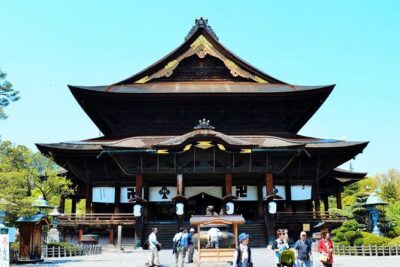
1-Day Snow Monkeys, Zenko-ji Temple & Sake in Nagano
Read our review →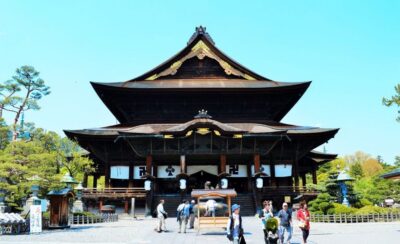
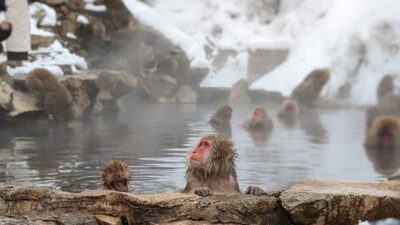
Snow Monkey 1 Day Tour with Beef Sukiyaki Lunch
Read our review →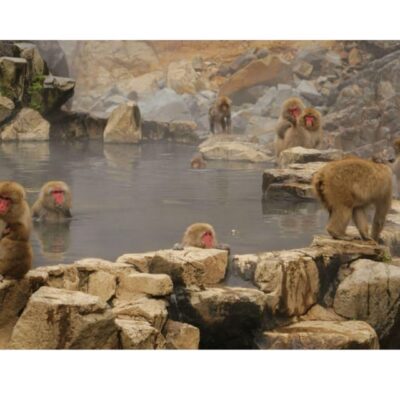
1-Day Tour from Nagano and Matsumoto Kamikochi & Matsumoto Castle
Read our review →
1-Day Snow Monkeys & Snow Fun in Shiga Kogen Tour
Read our review →
Wild Japanese Flying Squirrel Watching Tour in Nagano
Read our review →Browse the lists this tour appears in