
Reviewed · NIKKO TOURS
Nikko Private Custom Tour with Local Guide
Nikko Toshogu is not a quiet country shrine. It is a grand political and spiritual monument, packed with carved animals, painted gates, old cedar trees, and stories from Japan’s Edo period. The private format lets you give the day a clear focus instead of trying to cover every corner at the same pace.
I like the custom itinerary, since you can concentrate on Toshogu Shrine or add Rinnoji Temple, Futarasan Shrine, Kegon Falls, and Lake Chuzenji. I also like having an English-speaking local guide to explain why a shrine dedicated to Tokugawa Ieyasu contains both Shinto and Buddhist features. The main caution is cost clarity: at $214 per person, entrance fees, transport, lunch, and the guide’s necessary expenses are not included.
Key points to know before booking
- Tokugawa Ieyasu’s grand memorial: Toshogu Shrine honors the founder of the shogunate that ruled Japan for more than 250 years.
- A flexible six-hour plan: You can shape the day around cultural sites, natural scenery, or a mix of both.
- Famous carvings in one compact complex: Look for the Three Wise Monkeys, Sleeping Cat, Yomeimon Gate, and Five-Story Pagoda.
- Three important Nikko sites nearby: Rinnoji Temple and Futarasan Shrine add different religious and artistic perspectives.
- Nature can be added: Kegon Falls and Lake Chuzenji offer a sharp change from ornate buildings and forest paths.
- Extra costs require attention: Admission, lunch, transport, private transportation, and the guide’s expenses are excluded.
Why Nikko Toshogu deserves the first look
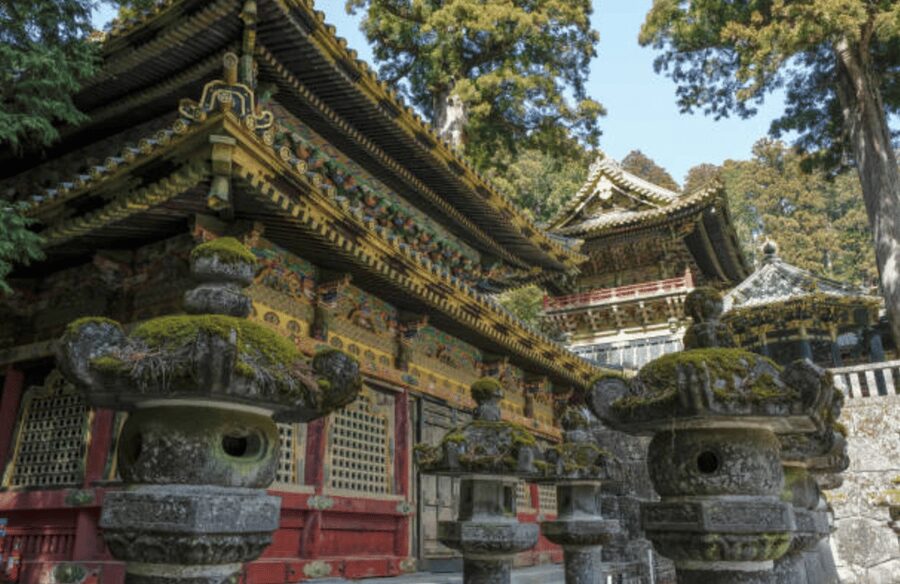
Nikko is one of Japan’s best day-trip destinations for seeing how power, religion, art, and nature were joined together. Toshogu Shrine is dedicated to Tokugawa Ieyasu, the military leader who founded the Tokugawa shogunate in 1617. His government shaped Japan for more than two centuries, so this is not simply a pretty religious site. It is also a carefully built statement about authority.
The approach through old cedar trees helps set the mood. Then the buildings become increasingly ornate. More than a dozen structures fill the shrine grounds, with bright paint and detailed carvings set against the darker forest. The contrast is part of the appeal: you move from cool, quiet woodland into a burst of color and decoration.
The private guide matters most here. Without context, Toshogu can feel like a busy sequence of gates, roofs, statues, and carvings. With an English-speaking local guide, you can ask why a particular animal appears above a doorway, how Shinto and Buddhist ideas overlap, and what the site says about Edo-period society.
A few more Japan half-days to weigh up
- Nikko Full-Day Private Tour with Government-Licensed Guide
★ 5.0 · 259 reviews - Nikko – Beautiful Full-Day Personal and Private Tour
★ 4.9 · 119 reviews - Nikko Heritage & Nature Day Trip from Tokyo
★ 4.8 · 94 reviews
Reading the carvings at Yomeimon Gate
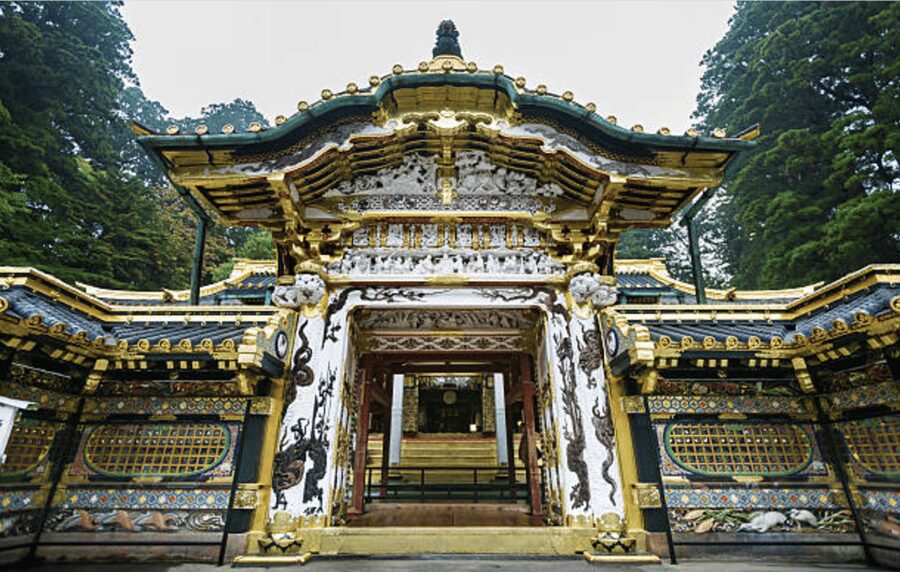
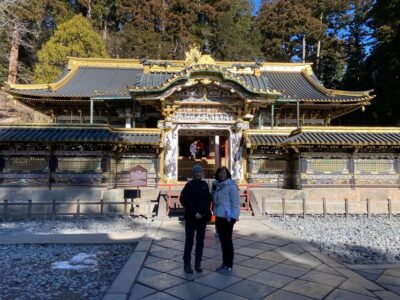
Yomeimon Gate is the visual centerpiece of Toshogu. It is often called the Gate of Sunlight, and its surface is covered with more than 500 carvings of mythical creatures, flowers, and sages. This is the place to slow down rather than simply take a photo and move on.
A guide can help you look at the gate as a work of political art. The detail is not decoration added at random. It reflects the money, labor, and status attached to Ieyasu’s memorial. You may find yourself noticing small figures and animals that would be easy to miss when looking only at the whole structure.
The ornate style may not suit everyone. If you prefer spare Zen temples or simple wooden shrines, Toshogu can feel almost too busy. I see that excess as the point, but you should know what kind of site you are choosing. This is theatrical, colorful, and carefully staged.
Finding the Five-Story Pagoda and Sleeping Cat
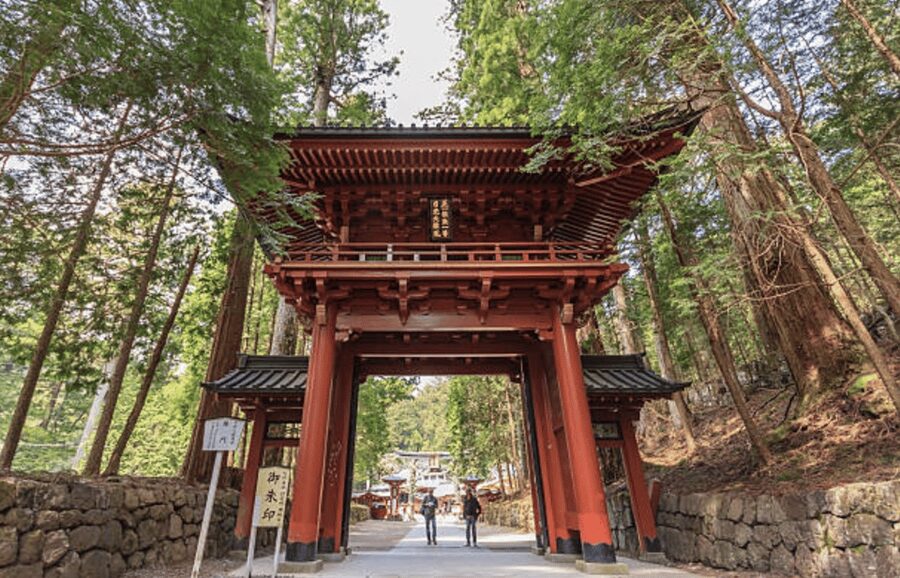
The Five-Story Pagoda provides a strong visual counterpoint to the gates. Its red exterior and carefully arranged details show the architectural elegance of the Edo period. It is one of the easiest landmarks to recognize as you move through the complex.
The Sleeping Cat carving, known as Nemuri-neko, sits above the Kuguri-mon Gate. Its small size makes it easy to overlook, especially beside the larger gates and buildings. The image is linked with peace and calm, and its location rewards paying attention to details rather than only the biggest structures.
This is one of the clearest reasons to choose a private guide. You can stop to ask about a carving instead of following a fixed group pace. The guide can also point out how the site balances public grandeur with small symbolic images.
What the Three Wise Monkeys mean
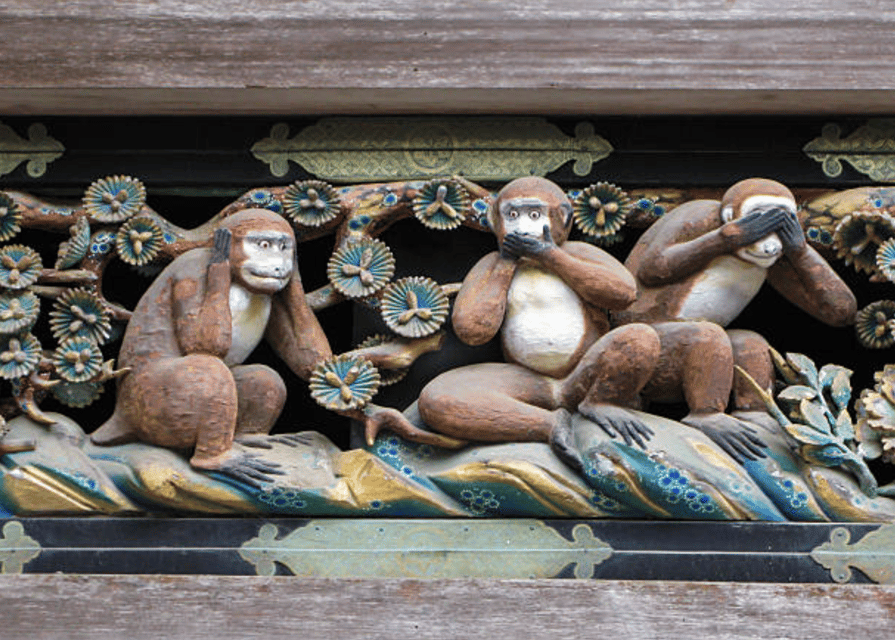
The Three Wise Monkeys are among Toshogu’s most familiar carvings. They show the familiar principle of seeing no evil, hearing no evil, and speaking no evil. Here, the image is tied to the ethical code of the Edo period.
You do not need to be an art expert to appreciate this stop. The monkeys offer an accessible way into the shrine’s moral ideas. They also show why Toshogu works well with a guide: a quick explanation turns a famous image into part of a larger story about behavior, order, and the values associated with the period.
Do not expect every part of the complex to feel equally calm. Toshogu is a major cultural attraction, and its fame is part of its appeal. A private schedule gives you more control over where to linger, but it does not change the character of the site itself.
Same base, a completely different sort of day:
- Mt Fuji and Hakone 1-Day Bus Tour Return by Bullet Train
★ 5.0 · 26,383 reviews - 1-Day Tokyo Bus Tour
★ 5.0 · 14,250 reviews - PERFECT KYOTO 1-Day Bus Tour
★ 5.0 · 13,518 reviews - Tokyo: TOKYO SKYTREE® Admission ticket
★ 4.5 · 11,192 reviews
Adding Rinnoji Temple for a different mood
Rinnoji Temple is a natural companion to Toshogu. Its best-known feature is a group of three large Buddha statues covered in gold lacquer. The temple offers a different visual language from Toshogu’s carved gates and painted surfaces.
I would add Rinnoji if you want the day to include more than one expression of Nikko’s religious tradition. Toshogu combines Shinto and Buddhist elements, while Rinnoji gives you a place to focus more directly on Buddhist imagery and worship.
The six-hour limit makes selection important. You may not have time to give every site equal attention, particularly if you also want to reach the waterfalls and lake. Tell the guide early if Rinnoji is a priority, rather than trying to fit it in at the end.
Visiting Futarasan Shrine among the Nikko mountains
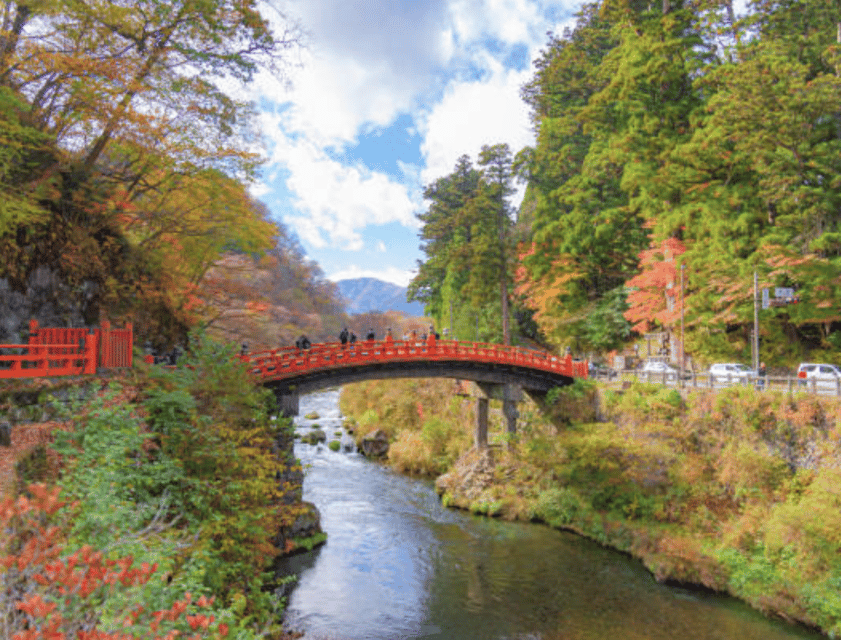
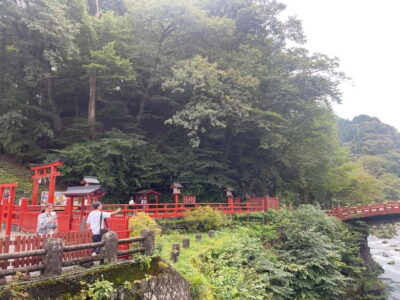
Futarasan Shrine is dedicated to the deities of the Nikko mountains. Its setting links local religious belief with the surrounding natural world, giving you another side of Nikko beyond the Tokugawa memorial.
This stop makes sense for anyone interested in how Japanese religious sites relate to mountains, forests, and sacred places. It also helps break up a morning or afternoon focused on elaborate architecture. Instead of seeing several buildings with similar visual weight, you get a broader picture of Nikko’s spiritual importance.
The tour is not a fixed checklist, so the exact balance depends on your choices. If you want all three cultural sites, state that clearly when arranging the day. If your main goal is Toshogu, you may prefer to spend more time there and use the remaining hours for nature.
Kegon Falls and Lake Chuzenji
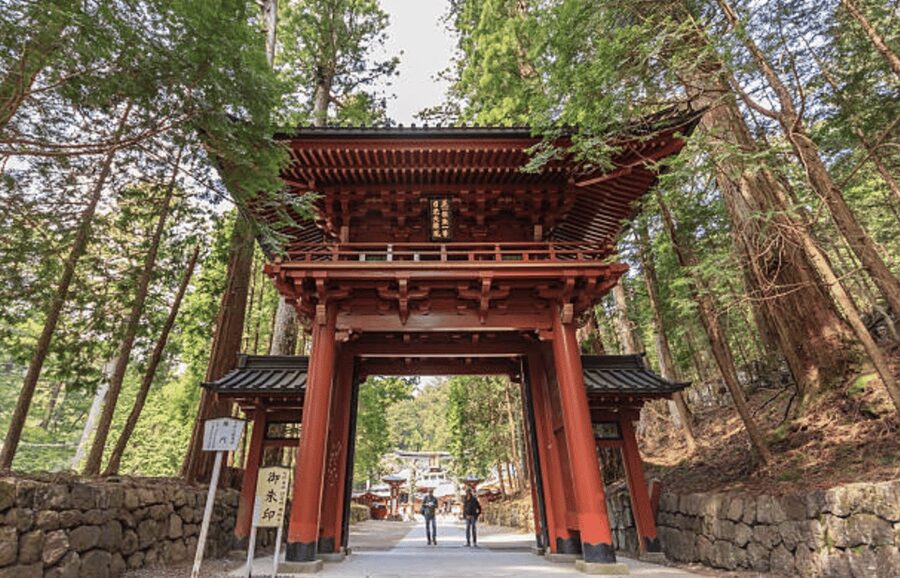
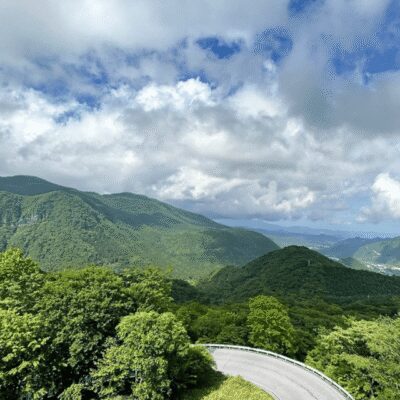
Kegon Falls and Lake Chuzenji offer the strongest change of pace. After the carved gates and religious buildings, you move toward open natural scenery and the mountains around Nikko. The waterfall is one of the area’s major sights, while the lake provides a quieter setting for taking in the surroundings.
These stops are especially useful if you want your Nikko visit to feel broader than a shrine tour. The cultural sites explain the area’s political and religious importance. Kegon Falls and Lake Chuzenji show why the setting itself has long drawn attention.
There is a practical tradeoff. The tour lasts six hours, and the natural sights are not simply extra rooms beside Toshogu. Adding them may reduce the time available for the shrine complex and temples. I would choose the waterfall and lake only if scenery is one of your main reasons for visiting Nikko.
The tour description refers to private vehicle service, but private transportation is also listed as excluded. Transportation fees for yourself are not included either. Confirm exactly how transport will work, what vehicle costs apply, and how the guide will travel before you book. This is the most important point to clarify.
How the private format changes the day
A private group is useful when your interests are specific. You can ask for a culture-heavy plan centered on Toshogu, Rinnoji, and Futarasan, or request a mix of shrines, temples, Kegon Falls, and Lake Chuzenji. The itinerary is customizable rather than locked into one route.
The format is also helpful for questions. Nikko has enough symbolism and history to keep a curious visitor busy, but only if there is time to stop and ask. A private English-speaking local guide can explain details as they appear instead of giving one long speech that may not match your interests.
Still, private does not mean every cost is covered. The listed price is $214 per person, while admission tickets, lunch, your transport, private transportation, and the guide’s necessary expenses are extra. Build those additions into your budget before deciding that the price is a bargain.
The value improves if you are traveling with people who want the same kind of day. If one person wants every major shrine and another wants a relaxed nature outing, customization helps, but six hours still imposes a limit. The price may be easier to justify for a private group that values personal attention and a tailored route.
What six hours allows
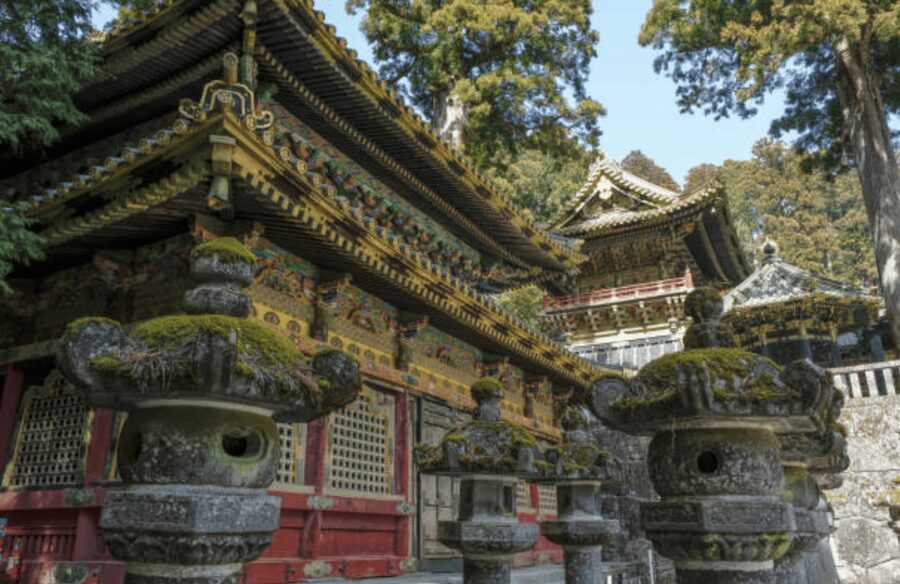
Six hours is enough for a focused introduction to Nikko, but not an unlimited tour of every attraction. Toshogu alone contains many buildings and details, so give the guide a clear priority list.
A culture-first version could focus on Toshogu, Rinnoji, and Futarasan Shrine. This option gives you more time to understand the religious and political story of Nikko, and it avoids spreading the day too thin.
A mixed version could center on Toshogu, then add either a temple or shrine and one natural sight. This is likely the best balance if you want both architecture and scenery.
A nature-first version could include Toshogu with Kegon Falls and Lake Chuzenji. It will give you the broadest sense of the area, but less time for close inspection of the shrine complex. Since the itinerary is customizable, tell the provider what matters most rather than assuming every listed sight fits comfortably.
The cost, inclusions, and what to confirm
The tour costs $214 per person. That covers the private tour format, walking tour, English-speaking local guide, and itinerary customization. Those are meaningful inclusions if you want personal attention and help making sense of a complex cultural site.
The extra charges are just as important. You pay your own entrance fees, lunch, personal expenses, transportation fees, and the guide’s necessary expenses. Private transportation is specifically excluded, even though the tour description discusses comfortable private vehicle service.
I would ask for a clear cost estimate before committing. The information provided does not give the entrance prices, transport price, or guide expense amount, so I cannot calculate the final total. The tour can still be good value, but only if the added costs fit your plans.
Free cancellation is available up to seven days in advance for a full refund. Starting times vary, so you need to check availability for the date you want. The tour is conducted in English and is limited to a private group.
Who will get the most from this tour
I would recommend this tour to you if you want historical explanation rather than a quick photo stop. Toshogu’s carvings and buildings are impressive on their own, but the Edo-period context gives them more meaning.
It also suits visitors who dislike rigid group schedules. You can set the emphasis, ask questions as you go, and decide how much time to give the shrine, temples, and natural sights. Families and small groups with shared interests may find that flexibility particularly useful, though the information provided does not specify a minimum or maximum group size.
This is less suitable if you want a low-cost sightseeing option with all tickets and transport included. It is also not ideal if you need a guaranteed full tour of every Nikko attraction in six hours. The day requires choices.
Should you book the Nikko private tour?
Book it if you want a personal introduction to Nikko and care about understanding what you see. Toshogu’s Yomeimon Gate, Five-Story Pagoda, Sleeping Cat, and Three Wise Monkeys make a strong core, while Rinnoji, Futarasan, Kegon Falls, and Lake Chuzenji let you shape the rest of the day.
Before paying, settle the transportation question and ask for the likely extra costs. At $214 per person, the tour is priced for private guidance and flexibility, not for an all-inclusive day. If that tradeoff suits you, this is a practical way to see Nikko without reducing the area to a quick shrine visit.
FAQ
How long does the Nikko private tour last?
The tour lasts six hours. Starting times depend on availability for your chosen date.
Is the tour private?
Yes. It is offered for a private group rather than as a shared group tour.
Is the guide English-speaking?
Yes. The tour includes a live English-speaking local guide.
Can I customize the itinerary?
Yes. The itinerary can be customized. You can discuss a focus on Toshogu Shrine, nearby religious sites, natural sights, or a combination.
Does the tour include entrance fees?
No. Your entrance fees are not included and must be paid separately.
Does the price include lunch and transportation?
No. Lunch, your transportation fees, private transportation, and the guide’s necessary expenses are excluded. Personal expenses are also not included.
What is the cancellation policy?
You can cancel up to seven days in advance for a full refund.
Just added around Japan
- Private Arrival Transfer : Narita International Airport to Central Tokyo City★ 4.5 · 12 reviews
- Narita Airport(NRT): Private Transfer to Tokyo/Yokohama 1-9pax★ 5.0 · 47 reviews
- Private Transfer from Narita Airport to Yokohama Port and City★ 4.5 · 17 reviews
- [Narita Airport Terminals 1, 2] 40-60km Sawara Itako Historic Bike Tour★ 5.0 · 13 reviews
- 3 Day Japan Highlights Tour: Tokyo, Mt.Fuji, Nara, Kyoto, Osaka★ 5.0 · 22 reviews
- All must-sees in 3 hours – Nara Park Classic Tour! From JR Nara!★ 5.0 · 108 reviews
- Private Nara Tour and Sake Tasting (Departing from Kyoto/Nara)★ 5.0 · 40 reviews
- Hammer a Pattern on Your Ring Workshop★ 5.0 · 57 reviews
Nikko Tours, compared.
Nikko Full-Day Private Tour with Government-Licensed Guide
Read our review →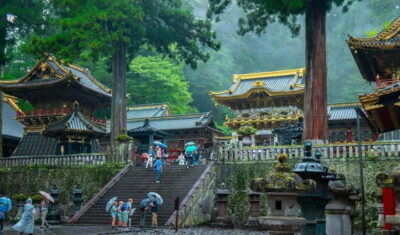
Browse the lists this tour appears in