
Reviewed · SHIZUOKA TOURS
Private sightseeing tour from Shimizu Port / Van Taxi
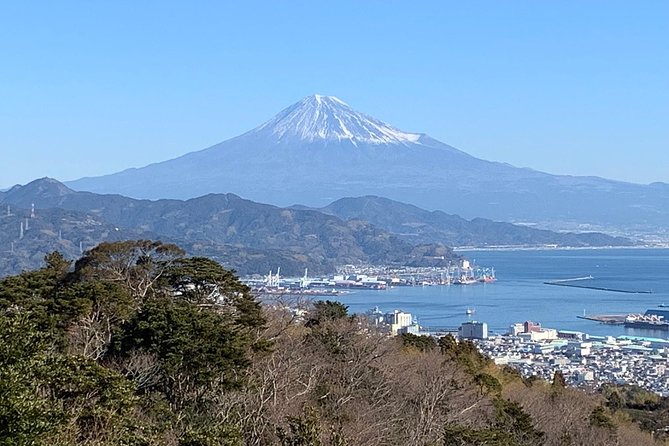
The best part of this Shimizu tour is the variety packed into four hours. You move from a mountain shrine and ropeway to a tea farm, then finish among pine trees and black sand at Miho no Matsubara, with several chances to see Mount Fuji.
I like the private jumbo taxi, especially for families or groups carrying day bags and luggage. I also like the guide-led visits, since guides such as Kiyo, Miyuki, Nobuko, and Yoko add local stories, explain shrine customs, and help you find good photo spots. The main drawback is simple: Fuji views depend on the weather, and the tour can feel tight when the ropeway is crowded.
Key points to know
- A strong port-day plan: Roundtrip pickup from Shimizu Port keeps the timing simple.
- Four major sights in one outing: Visit Kunozan Toshogu Shrine, Nihondaira, the tea fields, and Miho no Matsubara.
- Private van comfort: A jumbo taxi carries up to eight people and leaves room for luggage.
- Good guide support: English-speaking guides can explain local history, shrine customs, geography, and tea culture.
- Fuji views are weather-dependent: You get several viewing points, but clouds may hide the mountain.
- Budget for extras: Ropeway and shrine tickets cost ¥1,950 per person, and lunch is not included.
A smart way to see Shimizu from the port
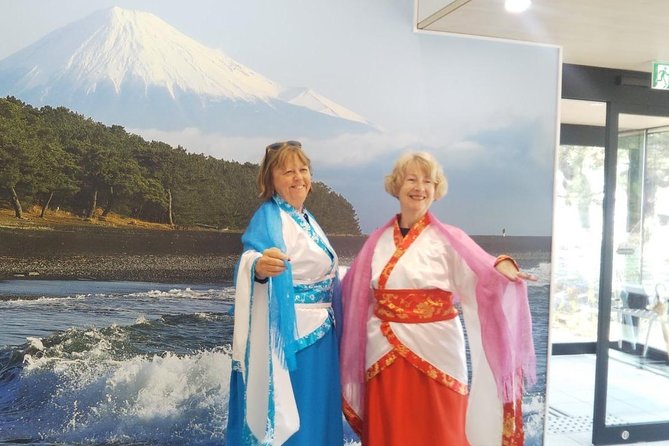
Shimizu is a useful cruise stop because its best sights are spread across the hills and coast. Public transport can take time, and a regular group excursion may not give you much say over the pace. This private tour solves that problem with a driver, an English-speaking guide, and direct transport back to the port.
You meet at the Shimizu Port ferry terminal in Hinodecho. From there, the drive to Nihondaira takes about 30 minutes. Morning and early-afternoon departures are available, which helps if your ship has an unusual schedule or you prefer to leave the port after the first rush.
The vehicle is a large, air-conditioned van taxi for groups of up to eight. That matters more than it may sound. You are not squeezing into a small car, and there is space for luggage. Families have also appreciated the effort to limit unnecessary walking, including the use of a small stool when getting in and out.
The price is $713.53 per group. For eight people, that works out to about $89 per person before admission costs. For four people, it is about $178 per person, so the value depends heavily on your group size. You are paying for private transport, a guide, and efficient port pickup rather than simply admission to sights.
A few more Japan half-days to weigh up
- Full Day Tour to Mount Fuji in Spanish
★ 5.0 · 279 reviews - Shizuoka/Shimizu Mt Fuji View 6 hr Private Tour: Guide Only
★ 5.0 · 80 reviews - Fuji Highlights Group Car Tour by Shimizu Port with Local Guide
★ 5.0 · 57 reviews
Nihondaira Ropeway and Kunozan Toshogu Shrine
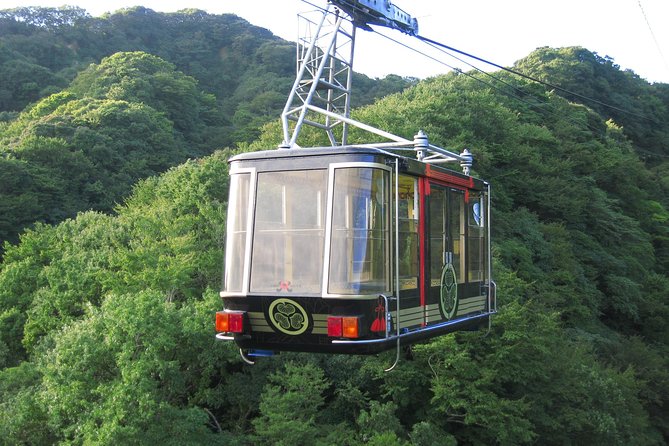
The first major stop is the Nihondaira Ropeway. The ride between Nihondaira and Kunozan Toshogu Shrine takes about five minutes each way, and the tour uses a roundtrip ticket. Allow about 20 minutes for the ride and waiting time, though a busy port day can stretch this considerably.
The ropeway is more than a transport trick. As you cross the hillside, you get views toward Suruga Bay and the surrounding area. On clear days, this is one of the first places where the scale of Shizuoka becomes clear: sea below, mountains inland, and the port far away.
The ropeway ticket is not included. The combined set ticket for the roundtrip ropeway, shrine admission, and museum costs ¥1,950 per person. Bring Japanese yen or confirm the current payment arrangements before departure.
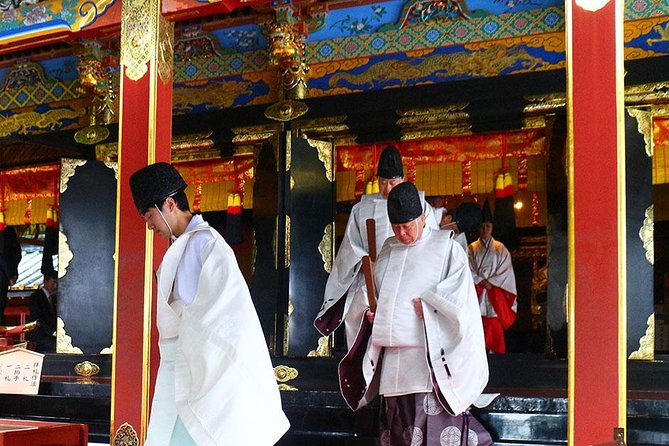
Kunozan Toshogu Shrine is the cultural heart of the tour. It honors Tokugawa Ieyasu, the shogun associated with the unification of Japan, and includes his mausoleum. The richly decorated buildings are a sharp contrast to the calm mountain setting.
You should not rush this stop. Guides such as Nobuko and Motoko have explained how to approach the shrine, how to make a wish, and which architectural details are easy to miss. Motoko has also used visual materials and local folk tales to make the setting easier to understand.
There are stone steps after you leave the ropeway. They are steep in places, with some steps higher than average. The tour requires moderate physical fitness, and this is the one stop that deserves an honest warning for anyone with knee, balance, or mobility problems.
The timing can make a real difference. The ropeway station and shrine may become crowded when several cruise ships arrive at once. A guide and driver who adjust the schedule can help you reach the shrine before larger groups, but no private tour can remove every wait on an unusually busy day.
Nihondaira’s observatory and tea country
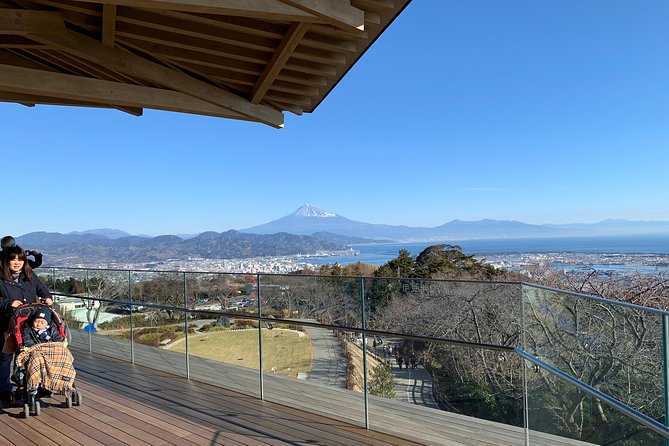
Back at Nihondaira, the Nihondaira Tourism Observatory offers a broad view over Shimizu Port, Suruga Bay, the Izu Peninsula, the Southern Alps, and Mount Fuji when the weather cooperates. The stop lasts about 20 minutes, so think of it as a focused viewpoint rather than a long museum visit.
This is one of the tour’s best chances for orientation. You can look back toward the port where your ship is docked and then out across the region you have just crossed. The stop is also useful when clouds block Fuji, since the bay and peninsula may still be visible.
The next stop is Nihondaira Ochakaikan, a Japanese tea shop beside a green tea field. Shizuoka is one of Japan’s major tea-producing areas, so this visit gives the tour a local flavor that a simple shrine-and-viewpoint excursion would miss.
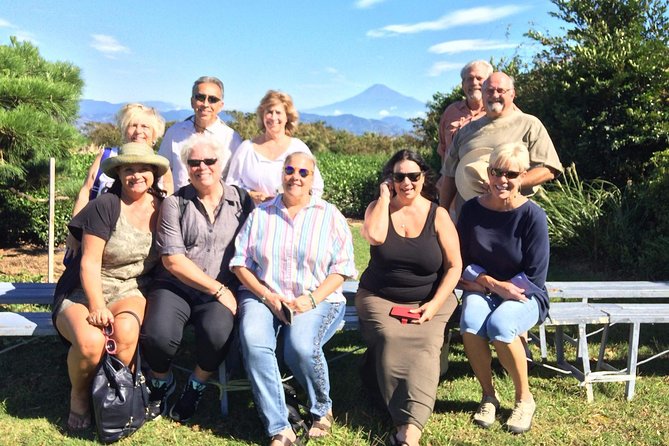
If the air is clear, the tea rows create a striking foreground for Mount Fuji. Guides often help with photographs, and several have taken family pictures or suggested angles that are better than simply standing at the edge of the field. The tea shop also gives you a chance to buy local tea or small souvenirs.
The tea field is not a substitute for going closer to Fuji. You are seeing the mountain from a distance, often with the coastal plain between you and the peak. Still, the combination of tea plants, mountain, and open sky is one of the most distinctly Shizuoka scenes on the route.
Miho no Matsubara’s pines, beach, and Fuji view
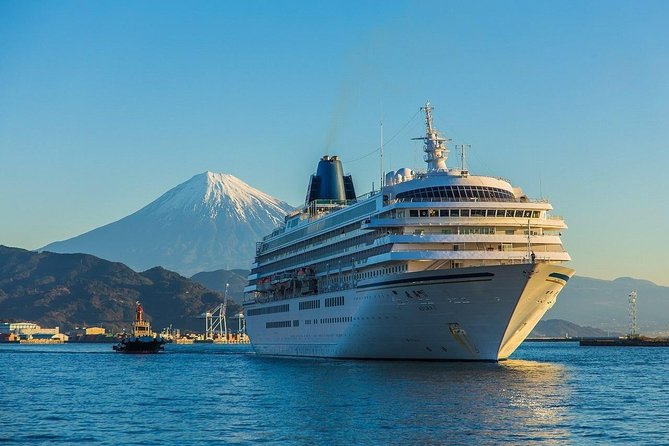
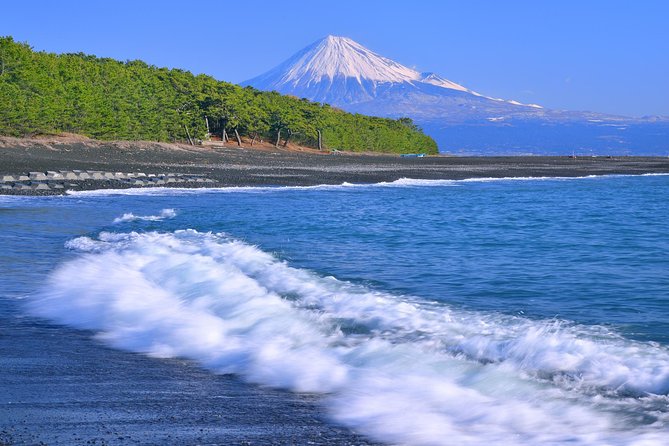
From Nihondaira, the van takes about 20 minutes to reach Miho no Matsubara. This coastal site is part of the Mount Fuji World Heritage area and offers a classic Japanese composition: a pine grove, dark sand, white surf, blue sky, and Fuji in the distance.
The pine trees are the main character here. They line the coast and frame the mountain, giving the view a different feel from the elevated observatory or tea farm. At the beach, you get open space and a chance to slow down after the shrine steps.
The scheduled visit lasts about 40 minutes. That is enough for a walk, photographs, and a look at the shore, but it is not a long beach outing. You are here for the scenery, not for a swimming day or a relaxed seaside lunch.
The Miho no Matsubara Culture and Creativity Center, called Mihoshirube, adds context. Opened in 2019, it presents the history of Miho, the Hagoromo legend, and a short film about the pine grove. It is particularly useful when Fuji is hidden by cloud, since you still have something meaningful to see and learn.
The center visit is planned for about 20 minutes. It can also provide a cooler, more structured break from the coast. The tour then returns to Shimizu Port in about 20 minutes.
Same base, a completely different sort of day:
- Mt Fuji and Hakone 1-Day Bus Tour Return by Bullet Train
★ 5.0 · 26,383 reviews - 1-Day Tokyo Bus Tour
★ 5.0 · 14,250 reviews - PERFECT KYOTO 1-Day Bus Tour
★ 5.0 · 13,518 reviews - Tokyo: TOKYO SKYTREE® Admission ticket
★ 4.5 · 11,192 reviews
What the guides add to the four-hour route
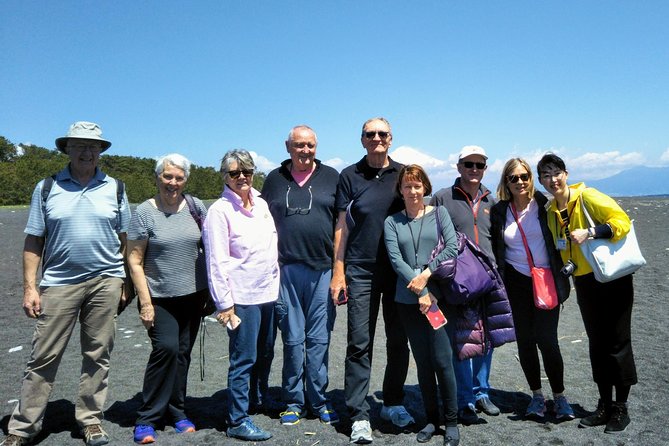
The private format is valuable because the guide can talk with you instead of delivering a fixed speech to a bus. Kiyo has been praised for clear English, quick answers, local food suggestions, and advice about places to visit elsewhere in Shizuoka. Miyuki has been described as friendly and easy to understand, with a talent for taking pictures and adjusting the pace.
Nobuko has used visual slides and stories to explain regional history and shrine details. Yoko has helped with information about local food, culture, and the surrounding area. The exact guide is assigned for your date, so you should not book on the assumption that one particular person will lead your tour unless the operator confirms it.
This personal contact is especially helpful at Kunozan Toshogu. Much of the meaning is not obvious from the buildings alone. A guide can point out ritual steps, explain Ieyasu’s role, and show you details that are not clearly marked in English.
The guides also help with practical choices. They can adjust the order around opening times, crowds, and your walking pace. One family with older parents received help limiting the walking distance, while another group changed the timing to arrive at the beach early. The tour remains four hours, so flexibility means smart use of time rather than adding extra stops.
The real Fuji question: weather and expectations
This tour is designed around Mount Fuji, but it cannot guarantee a clear view. Several people have had excellent visibility from the observatory, tea field, and beach. Others have encountered low cloud and still enjoyed the shrine, tea country, pine grove, and cultural center.
That makes the route a good choice if you want more than a single Fuji photograph. You get several viewing angles, so a brief break in the clouds at one stop may save the day. On the other hand, if your only goal is to stand close to Fuji, this is not the right product. The tour visits viewpoints around Shimizu rather than the mountain itself.
Season also matters. Snow on Fuji can make the outline easier to see, while summer haze and cloud can obscure it. The guides cannot control the sky, but they can keep the day worthwhile by explaining the places and shifting attention to the shrine, tea, coast, and local stories.
I would treat a Fuji sighting as a welcome bonus, not the sole reason to pay for the tour. That expectation matches the route better and reduces the risk of feeling disappointed on a cloudy day.
Timing, cost, and what you need to add
Four hours is enough to see the main sights, but the schedule is active. The published stop times total roughly three hours, with driving between locations and possible ropeway waits filling the rest. You should arrive ready to keep moving, especially if your ship has a firm departure time.
Lunch is not included. There is no dedicated lunch period in the schedule, so eat before departure or plan food after returning to the port. You may have time for a drink or a quick shop stop, but do not count on a sit-down meal during the tour.
Admission is also extra. Budget ¥1,950 per person for the ropeway, Kunozan Toshogu Shrine, and museum set ticket. The observatory, tea field, beach, and culture center are listed without an admission charge.
The group price becomes more attractive as your party grows. A family of six or eight gets private transportation and a dedicated guide at a cost that can compare well with several individual excursion tickets. For one or two people, the convenience may still be worth it, but the per-person price is much higher.
Free cancellation is available up to 24 hours before the start time. Changes or cancellations inside that window are not accepted for a refund.
Who will get the most from this tour
I would recommend it most strongly to cruise passengers who want a reliable port-day plan without driving themselves. The direct pickup and return reduce the worry of finding a taxi back to the ship.
It also suits families and mixed-age groups. The van is comfortable, the group stays together, and the guide can help reduce walking where possible. Still, the shrine steps are a serious consideration. If anyone in your group has limited mobility, ask about the walking demands before booking.
Photography-minded visitors should like the route. You get the observatory, tea field, pine grove, beach, and several chances for a Fuji composition. Guides can also take group pictures, which is useful when you want everyone in the frame.
History and culture fans will get more from the shrine than someone who only wants scenic stops. The guide’s explanation of Ieyasu, shrine customs, folk tales, and local geography gives structure to the day.
This is less suitable if you want a slow, food-centered outing or a full day in Shizuoka. A few people have wished for more time and more places, but adding much more would make the four-hour port schedule hurried. If you want an extended visit, ask the operator if a longer private tour can be arranged.
Should you book this Shimizu port tour?
Book it if you want private transport, several Fuji viewpoints, and a guide who can shape the day around your group. It is especially good for parties of four to eight, families, first-time visitors to Shimizu, and cruise passengers who value an easy return to the port.
Think twice if you dislike stairs, need a leisurely lunch, or require a guaranteed Mount Fuji view. The shrine involves steep stone steps, the schedule is compact, and weather can hide the mountain.
For the right group, this is a well-planned way to connect Shimizu’s major sights in half a day. The strongest reasons to choose it are the roomy van, port convenience, thoughtful guiding, and varied route from shrine to tea field to coast. Just budget for the ¥1,950 admission package and book with realistic Fuji expectations.
FAQ
How long is the private Shimizu tour?
The tour lasts approximately four hours, including transportation between Shimizu Port, Nihondaira, Kunozan Toshogu Shrine, Miho no Matsubara, and the return to the port.
Where does the tour start and finish?
It starts at Shimizu Port Ferry Terminal in Shimizu Ward, Shizuoka. The tour ends back at the same meeting point.
How many people can join the private tour?
The price covers one private group of up to eight people.
Is transportation included?
Yes. Private transportation in a jumbo taxi is included, along with an English-speaking guide.
Are the ropeway and shrine admission included?
No. The set ticket for the roundtrip Nihondaira Ropeway, Kunozan Toshogu Shrine, and museum costs ¥1,950 per person.
Is lunch included?
No. Lunch is not included, and lunch time is not part of the four-hour schedule.
How much walking is required?
You need moderate physical fitness. After leaving the ropeway, you must climb stone steps to reach Kunozan Toshogu Shrine.
Can I see Mount Fuji during the tour?
The route includes several viewpoints of Mount Fuji, including the observatory, tea field, and Miho no Matsubara. Visibility depends on the weather, and clouds may block the mountain.
Can I cancel for a full refund?
You can cancel up to 24 hours before the experience start time for a full refund. Cancellations or changes made less than 24 hours beforehand are not accepted for a refund.
Just added around Japan
- Narita Airport(NRT): Private Transfer to Tokyo/Yokohama 1-9pax★ 5.0 · 47 reviews
- Private Transfer from Narita Airport to Yokohama Port and City★ 4.5 · 17 reviews
- Private Arrival Transfer : Narita International Airport to Central Tokyo City★ 4.5 · 12 reviews
- [Narita Airport Terminals 1, 2] 40-60km Sawara Itako Historic Bike Tour★ 5.0 · 13 reviews
- 3 Day Japan Highlights Tour: Tokyo, Mt.Fuji, Nara, Kyoto, Osaka★ 5.0 · 22 reviews
- All must-sees in 3 hours – Nara Park Classic Tour! From JR Nara!★ 5.0 · 108 reviews
- Private Nara Tour and Sake Tasting (Departing from Kyoto/Nara)★ 5.0 · 40 reviews
- Hammer a Pattern on Your Ring Workshop★ 5.0 · 57 reviews
Shizuoka Tours, compared.

Shizuoka/Shimizu Mt Fuji View 6 hr Private Tour: Guide Only
Read our review →
Fuji Highlights Group Car Tour by Shimizu Port with Local Guide
Read our review →
Half Day Izu Kogen Highlands Downhill Cycling Tour
Read our review →
Let’s enjoy Scuba diving in Izu Peninsula for certificate Diver
Read our review →Browse the lists this tour appears in