
Reviewed · TOKYO TOURS
Shibuya: Ramen Dojo Tokyo | Make All 3 (Tonkotsu/Shoyu/Miso)
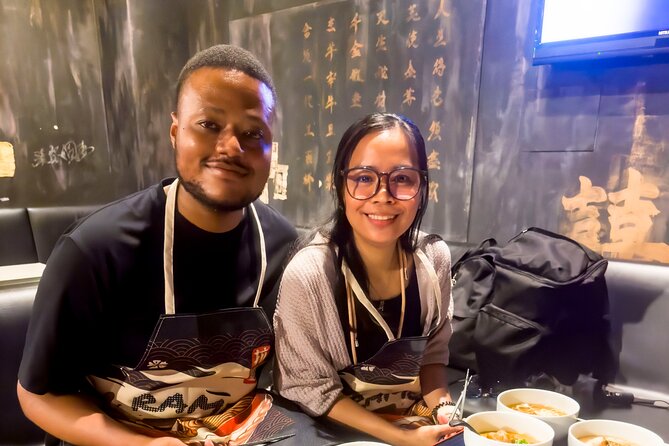
The clever part of this 90-minute ramen class is that you do not have to choose one style. You make fresh noodles, prepare chicken chashu, then taste tonkotsu, shoyu, and miso side by side. It is part cooking lesson, part very good lunch or dinner.
I like the hands-on noodle work, especially using a professional machine to knead, roll, and cut the dough. I also like the small-group setup, with no more than eight people and English-speaking instructors such as Kazuki, Kensei, Kai, and Arata who guide each step without making beginners feel clumsy.
The main consideration is that the three broths are prepared ahead of time, since proper soup stocks take far longer than 90 minutes. You still adjust the soup strength and assemble the bowls, but this is a practical ramen workshop, not a full lesson in making stock from pork bones or chicken bones.
Key points to know before you book
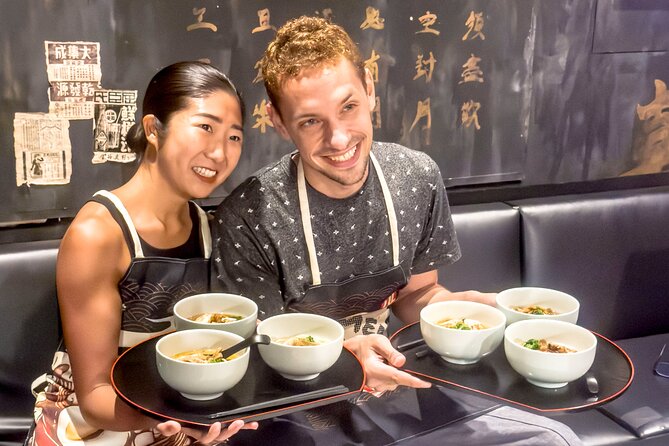
- Three ramen styles in one sitting: Compare tonkotsu, shoyu, and miso in three mini bowls rather than committing to just one flavor.
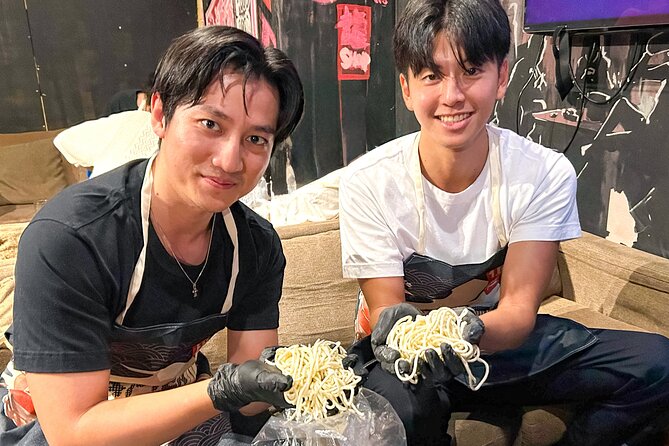
- Fresh noodles are the star: Knead dough, roll it, and cut it with professional equipment, with hand techniques explained along the way.
- A real meal as well as a class: Three small bowls can be surprisingly filling, so arrive hungry and avoid eating right before the workshop.
- Friendly English instruction: The class is designed for beginners, with clear demonstrations and time to ask questions.
- Easy to pair with Shibuya: The studio is about a 10-minute walk from Shibuya Station, and the class begins and ends at the same address.
- A recipe comes afterward: You receive a digital recipe, making it possible to repeat the experience at home without special equipment.
Making three bowls instead of one
Ramen Dojo Tokyo gives you a useful answer to a common Tokyo food question: what is the difference between ramen styles? Rather than explaining the answer only with a lecture, the class lets you taste it.
Tonkotsu is the creamy, pork-based style. Shoyu is seasoned with soy sauce and generally has a clearer, more savory profile. Miso brings a stronger fermented flavor and a fuller taste. The bowls are served in mini portions, allowing you to compare them without ordering three full meals at a ramen shop.
That comparison is one of the best reasons to book this activity. If you already like ramen, you can pay closer attention to the broth and seasoning. If you are new to Japanese food, you get a gentle introduction without needing to understand a long menu written in Japanese.
You also get some control over the final result. The class includes adjusting the soup base to your preferred strength, adding toppings, and putting together each bowl. That small amount of choice matters. You are not simply watching an instructor cook a meal for you. You help shape what reaches the table.
A few more Tokyo half-days to weigh up
- Mt Fuji and Hakone 1-Day Bus Tour Return by Bullet Train
★ 5.0 · 26,383 reviews - 1-Day Tokyo Bus Tour
★ 5.0 · 14,250 reviews - Tokyo: TOKYO SKYTREE® Admission ticket
★ 4.5 · 11,192 reviews
What happens during the 90 minutes
The schedule is tightly planned, but it does not feel like a rushed restaurant kitchen. Check-in and the opening briefing take about 10 minutes. This is when you learn the order of the class, the hygiene rules, and what you will be handling.
Next comes roughly five minutes of chicken chashu preparation. Here, the meat is chicken rather than the pork commonly associated with ramen. You prepare it with guidance, then return to it later for finishing.
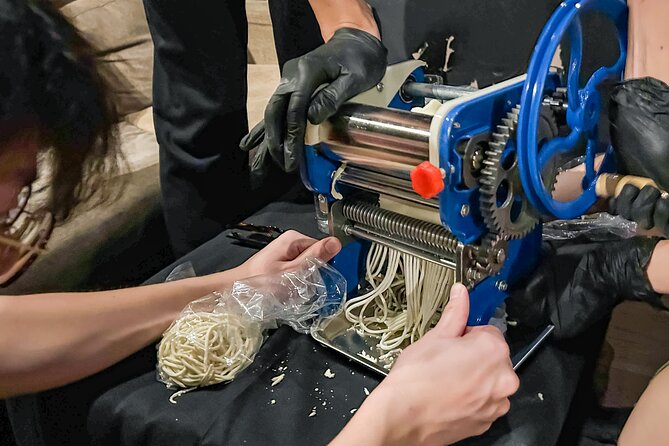
Noodle making takes about 20 minutes and is the most physical section. You work the dough, use the noodle machine to roll it, and cut it into strands. One useful detail from the class is that instructors may encourage hand technique rather than relying only on electronic equipment. That gives you a better feel for the dough and makes the finished noodles feel like your own work.
The machine also creates a good photo moment. Fresh dough changing shape as it passes through the rollers is more interesting than simply taking a picture of a finished bowl. An apron is provided, but flour can land on your clothes, so wear something casual and easy to wash.
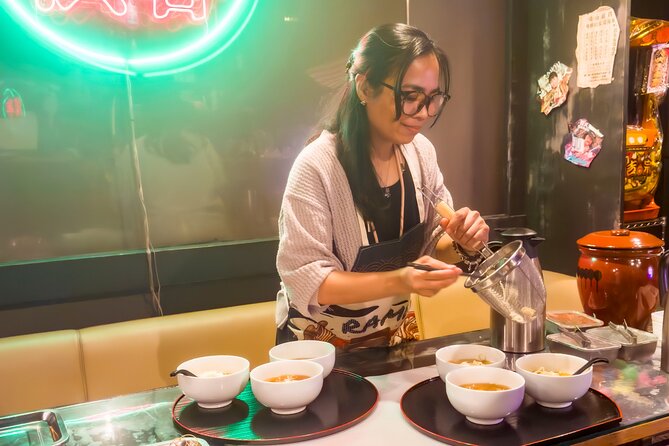
After the noodle work, you finish the chicken chashu over about 10 minutes. The class then moves into boiling the noodles and preparing the soup, which takes around another 10 minutes. The broths are ready in advance, allowing the class to focus on texture, seasoning, and assembly rather than waiting hours for stock to cook.
Plating takes about five minutes. You divide the noodles between three bowls, add the different soup bases, adjust the strength, and place the toppings. The final 30 minutes are for tasting and photographs. This is enough time to eat at a comfortable pace, compare the bowls, and ask questions.
The noodles are the most useful lesson
Ramen can look simple when it arrives at a restaurant: noodles, broth, meat, and toppings. The noodle session shows you why the texture matters so much.
You handle the dough, watch it become a smooth sheet, and cut it into noodles. The professional cutter keeps the process manageable for beginners, but the class still gives you the satisfaction of making the key part from scratch.
Several details make this more useful for home cooks. The method taught can be repeated at home without special equipment, according to the activity information and participant feedback. You do not need to leave Tokyo thinking that good ramen requires a restaurant-sized kitchen.
That does not mean you become a ramen chef in an hour and a half. The class simplifies the process so you can learn the basic movements and understand the sequence. The digital recipe provided afterward gives you a reference when you want to try again.
If your main goal is to learn every stage of authentic broth production, this will feel limited. The long-cooking stocks are already prepared. If your goal is to learn fresh noodles, seasoning, meat preparation, and assembly in a practical way, the balance works well.
Chicken chashu and the prepared broths
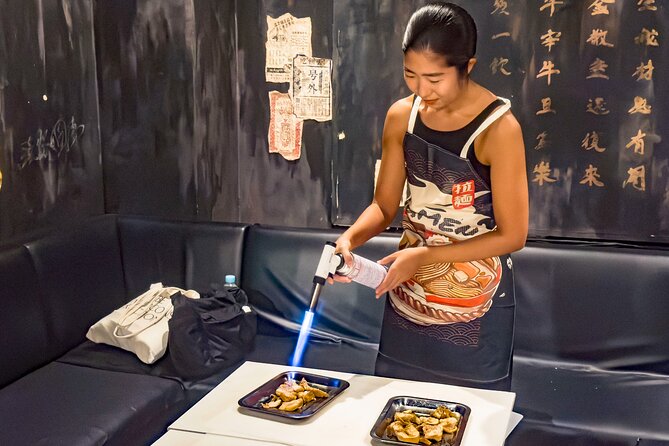
The chicken chashu adds a second cooking task beyond the noodles. You prep the meat, finish it under instruction, then use it as part of the bowls. It gives the workshop more substance than a class based only on mixing instant ingredients.
The broths are where you see the limits of the format. Tonkotsu, shoyu, and miso are available for tasting, but you are not spending the day building each stock from raw ingredients. That is sensible. A full tonkotsu process can take many hours, and a 90-minute class would otherwise leave little time for the hands-on work.
You can still learn how the seasonings change the finished dish. Adjusting the soup lets you see how a stronger or lighter base affects the noodles and toppings. It also means you can avoid being locked into one fixed taste.
For me, the pre-prepared broths make the class better suited to a first introduction than to advanced culinary training. You receive a clear picture of the finished ramen styles and enough technique to repeat parts of the process at home. You do not receive a full professional stock-making course.
Same base, a completely different sort of day:
- Tokyo: teamLab Planets TOKYO Digital Art Museum Entry Ticket
★ 4.6 · 9,779 reviews - Mt Fuji & Hakone Cruise, Drum Show Bullet Train 1 Day from Tokyo
★ 4.0 · 7,413 reviews - Tokyo: Sumo Show Experience with Chicken Hot Pot and a Photo
★ 4.8 · 6,678 reviews - Tokyo: Shinjuku Food Tour (13 Dishes at 4 Local Eateries)
★ 5.0 · 6,603 reviews
Friendly teaching in a small room
The maximum group size is eight, which is important for a practical class. You have to handle dough, noodles, meat, and bowls, so personal attention is more useful here than it would be on a large food tour.
Instructors named in the activity information and participant comments include Kazuki, Kensei, Kai, Arata, Atari, Rin-san, Ivy, Onodera, and Rick. The teaching style can vary by instructor, but the common thread is step-by-step guidance in English and Japanese.
Kazuki is repeatedly singled out for clear explanations, careful technique, and a relaxed manner. Kensei is also noted for combining humor with useful instruction. Kai is described as keeping the class both informative and enjoyable. These details matter because a cooking lesson can become frustrating if the teacher moves too quickly or assumes you already know the basics.
The class is built for beginners. You do not need previous noodle-making experience, and the staff take care to involve each person in different tasks. If your machine or dough does not behave perfectly at first, that becomes part of the fun rather than a reason to worry.
The room can also feel almost private when fewer people book a session. That is not guaranteed, but small attendance can give you more time for questions and more direct help with the dough and plating.
A filling lunch or dinner near Shibuya
At $64 per person, this is not the cheapest bowl of ramen you can buy in Tokyo. You can eat a good ramen meal for much less. The price makes more sense when you count the English instruction, ingredients, kitchen equipment, apron, three tastings, and digital recipe.
You are also getting an activity that fills a useful 90-minute gap in your day. Book it around lunchtime or dinner and it functions as both a class and a meal. The three mini bowls are smaller than standard restaurant portions, but the combined amount can be surprisingly filling.
Arrive hungry. Eating shortly before the class may leave you too full to enjoy the final tasting. There are no drinks or alcoholic beverages included, so plan to buy those separately if you want something with the meal.
The class is held at 1F, 2-16-29 Ohashi, Meguro-ku, Tokyo 153-0044. It is described as about a 10-minute walk from Shibuya Station. That makes it easy to combine with time in Shibuya, though you should allow enough time to find the studio rather than arriving at the last second.
Timing matters more than usual
Doors open 10 minutes before the start. Do not arrive earlier, because there is no waiting area and no early entry.
You should aim to arrive five to 10 minutes ahead of time. Arrivals five or more minutes late may need to join the class in progress or may be refused, with no refund in some cases. This rule is understandable because flour, boiling water, knives, and moving equipment require a controlled start.
If you are delayed, contact the provider before the class begins through the emergency contact details supplied with your booking. The activity starts and ends at the same studio, so there is no transport connection to catch afterward, but you still need to protect the full class time.
The studio is accessible by stairs only. That is an important limitation for anyone who cannot use stairs. The activity is recommended for children age six and older, making it a possible family choice, though younger children will need close supervision around hot water and kitchen equipment.
Dietary limits you should take seriously
The ingredients include wheat, gluten, egg, soy, chicken, and pork. Cross-contamination cannot be completely prevented, so this class is not suitable for severe wheat, egg, or soy allergies, celiac disease, or severe sensitivity to airborne flour.
Partial accommodation may be possible for people avoiding chicken or pork, as well as some vegetarian and vegan requests. You must ask in advance, and strict dietary compliance cannot be guaranteed. Do not wait until check-in to explain a serious allergy or religious dietary requirement.
The use of both chicken and pork in the ingredients is especially important for anyone following a strict diet. The class can sometimes adjust elements, but special substitutes beyond the stated arrangements are not included.
Who will get the most from this class
I would choose this for someone who wants a food activity with real participation, not just a tasting. It suits first-time visitors to Tokyo, couples, families with older children, and anyone who wants to take a practical skill home.
It is also a good choice if you are deciding between several Japanese cooking activities. The three ramen styles provide more variety than a single-dish class, and the digital recipe gives the experience a useful afterlife.
You should think twice if your main aim is advanced ramen science. The class does not cover the full long-cook process for each broth. It also may not suit you if you have strict dietary needs, severe allergies, difficulty with stairs, or strong sensitivity to flour in the air.
Photography is welcome, and the three-bowl setup gives you a natural final picture. Take photos during the noodle cutting and plating, but keep your hands free when the instructor is demonstrating a technique.
Cancellation and booking flexibility
You can cancel up to 24 hours in advance for a full refund. A reserve-now, pay-later option is also available, which helps if your Tokyo schedule is still changing.
The class is offered at different starting times, so check availability for the date you want. Since places are limited to eight people, booking ahead is sensible if you need a particular morning, afternoon, or evening slot.
Is Ramen Dojo Tokyo worth booking?
Book it if you want to understand ramen by making it, tasting three styles, and learning a noodle method you can use at home. The strongest parts are the fresh noodles, the clear English instruction, the small group, and the chance to turn the class into a satisfying meal.
At $64, you are paying for an experience rather than the lowest-cost ramen in Shibuya. For a hands-on food activity with a recipe to take home, the value is solid.
Skip it if you want a full lesson in slow-cooked broth, need guaranteed dietary substitutions, or prefer a quick restaurant meal. For everyone else, especially first-time cooks, this is a cheerful and useful way to spend 90 minutes near Shibuya.
FAQ
How long does the Ramen Dojo Tokyo class last?
The activity lasts 90 minutes. It includes check-in and briefing, chicken chashu preparation, noodle making, soup preparation, plating, tasting, and photo time.
Which ramen styles will I make?
You will prepare and taste three mini bowls: tonkotsu, shoyu, and miso.
Are the broths made from scratch during the class?
The broths are prepared in advance because the cooking process takes longer than the 90-minute workshop. You adjust the soup base and assemble the bowls during the class.
Is the class taught in English?
Yes. The class is conducted in English, with Japanese also available. English-speaking instructors provide step-by-step guidance.
How many people can join?
The class is limited to a maximum of eight participants, making it a small-group activity.
Is the workshop suitable for children?
It is recommended for children age six and older. Participants must follow staff instructions around kitchen equipment and hot ingredients.
Can the class accommodate vegetarian or vegan diets?
Partial accommodation may be possible for no chicken or pork, vegetarian, and vegan requests. You must inquire in advance, and strict dietary compliance or complete prevention of cross-contamination cannot be guaranteed.
Just added around Tokyo
- Private Arrival Transfer : Narita International Airport to Central Tokyo City★ 4.5 · 12 reviews
- Narita Airport(NRT): Private Transfer to Tokyo/Yokohama 1-9pax★ 5.0 · 47 reviews
- Private Transfer from Narita Airport to Yokohama Port and City★ 4.5 · 17 reviews
- [Narita Airport Terminals 1, 2] 40-60km Sawara Itako Historic Bike Tour★ 5.0 · 13 reviews
- 3 Day Japan Highlights Tour: Tokyo, Mt.Fuji, Nara, Kyoto, Osaka★ 5.0 · 22 reviews
- Small Town in the Big City: Tasting Tokyo’s Kichijoji★ 5.0 · 195 reviews
- Small Town in the Big City: Tasting Tokyo’s Kichijoji★ 5.0 · 16 reviews
- The 10 Tastings of Tokyo With Locals: Private Street Food Tour★ 5.0 · 48 reviews
Tokyo Tours, compared.

Mt Fuji and Hakone 1-Day Bus Tour Return by Bullet Train
Read our review →

teamLab Planets TOKYO Digital Art Museum Entry Ticket
Read our review →
Mt Fuji & Hakone Cruise, Drum Show Bullet Train 1 Day from Tokyo
Read our review →
Sumo Show Experience with Chicken Hot Pot and a Photo
Read our review →
Shinjuku Food Tour (13 Dishes at 4 Local Eateries)
Read our review →
Tokyo Mt Fuji 5th St & Hakone Cruise Bus Tour w/Bullet Train
Read our review →