
Reviewed · TOKYO TOURS
Tameike: Exploring the Heart of Japanese Politics Tour
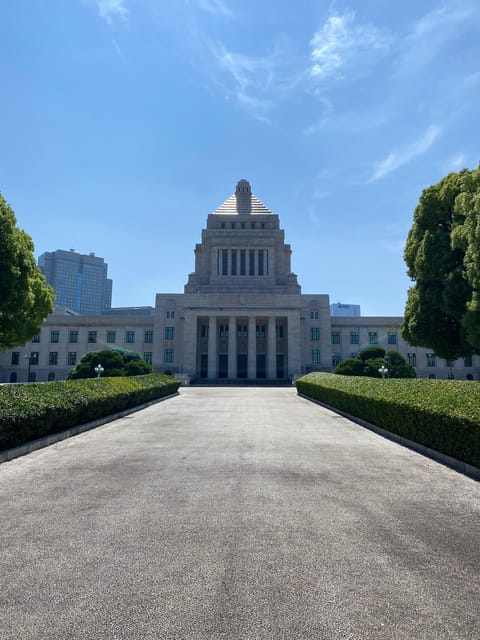
Japan’s political heart is not usually the first place visitors put on a Tokyo itinerary, which is exactly why this tour is interesting. You move from the National Diet Building, where Japan’s national government works, to Hie Shrine, with its monkey guardians and bright torii gates, then finish with matcha and sweets at a long-established tea shop.
I like the clear three-part shape of the morning, especially the chance to connect politics with everyday customs. I also like the small group limit of five, which gives you room to ask questions. The main consideration is that this is a walking tour with stairs, and the National Diet visit is only one hour, so it suits curious learners more than anyone wanting a slow architectural tour.
Key points at a glance
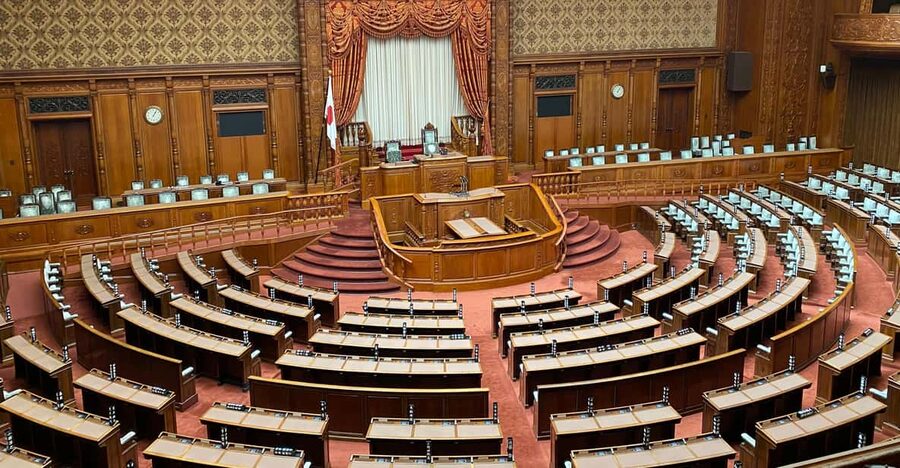
- The National Diet Building: Spend one hour on an English-guided visit focused on the building, Japan’s political system, and major events.
- Guide Megumi: Her explanations cover voting, government, Japanese customs, and daily life, with plenty of room for questions.
- Hie Shrine’s monkey symbols: See monkey statues, monkey-themed votive tablets and charms, and the shrine’s famous Thousand Torii Gates.
- A small, personal format: The group is limited to five people, and some departures may feel almost private.
- Matcha at Dobashi-en: End with traditional green tea, local sweets, and a souvenir tea gift.
- Simple station-to-station route: Meet at Kokkai-gijidōmae Station and finish near Akasaka-mitsuke Station after three hours.
Why this tour gives Tokyo a different focus
Tokyo offers plenty of tours about food, shopping, and famous neighborhoods. This one looks at how Japan is governed, then places that subject beside Shinto practice and tea culture. That combination gives you a more useful picture of the country than a standard sightseeing loop.
The tour begins at Kokkai-gijidōmae Station, Exit 1. Look for a guide wearing a navy-blue happi, a traditional Japanese coat. This is a practical meeting point because the National Diet Building is only about five minutes away on foot.
The small-group setup matters here. Politics can become a lecture if you are one face in a crowd, but a group of no more than five lets you stop and ask what you actually want to know. Guide Megumi is especially good for visitors who want to discuss how the government works, voting procedures, and the Japanese point of view on domestic and global issues.
You can also ask about ordinary customs. One particularly useful example from the tour’s conversations is why public parks and other outdoor areas may have few or no trash cans. Questions like this turn a political tour into a broader lesson in daily Japanese life.
A few more Tokyo half-days to weigh up
- Mt Fuji and Hakone 1-Day Bus Tour Return by Bullet Train
★ 5.0 · 26,383 reviews - 1-Day Tokyo Bus Tour
★ 5.0 · 14,250 reviews - Tokyo: TOKYO SKYTREE® Admission ticket
★ 4.5 · 11,192 reviews
Inside the National Diet Building for one hour
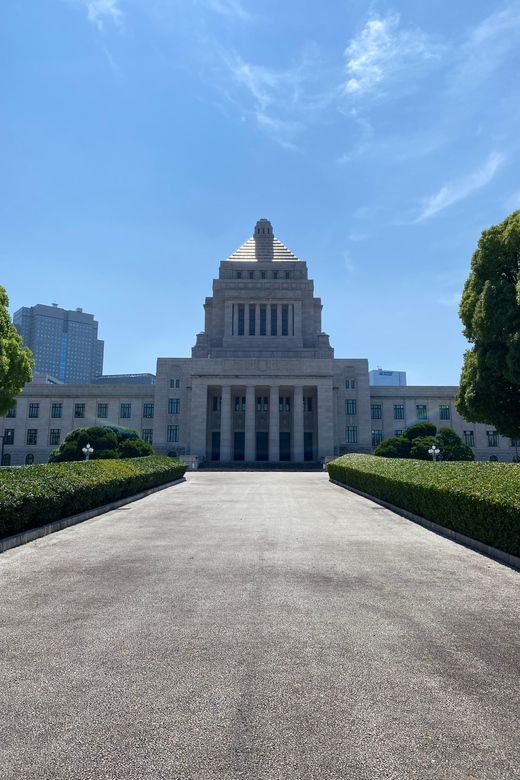
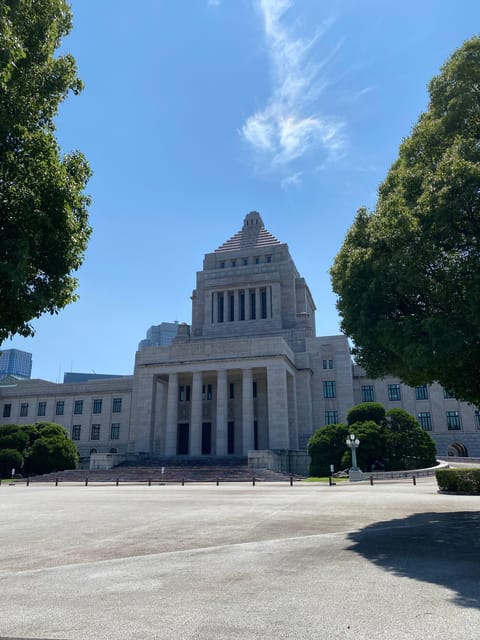
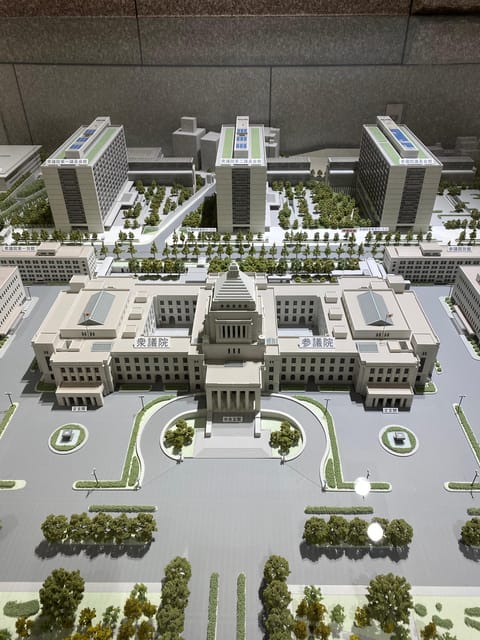
The National Diet Building is the tour’s main anchor. Japan’s national legislature is not simply a government office on the route. It gives you a physical place to connect with the political terms and systems you may have heard about before arriving.
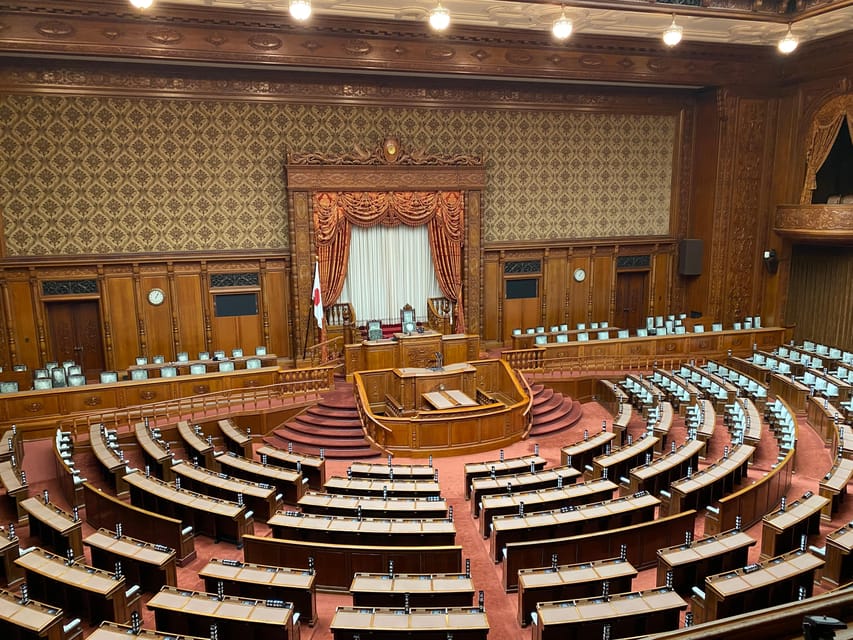
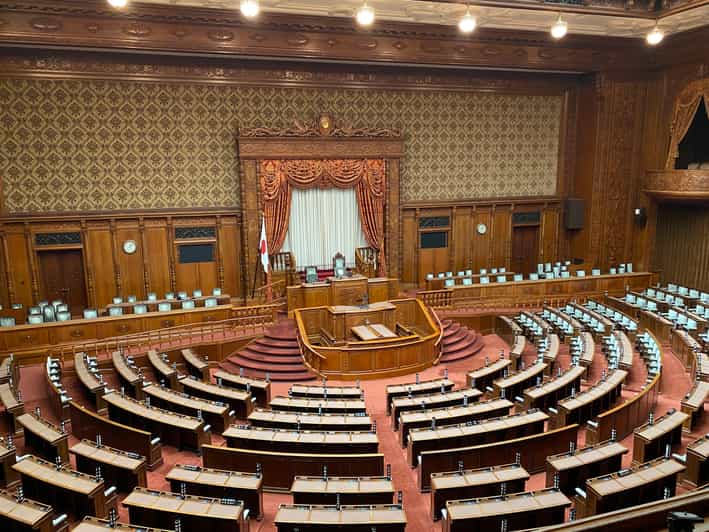
The guided visit lasts about one hour. You can expect explanations of the building’s history, its grand chambers, and key political events connected with the place. The guide also explains how Japan’s government functions, including voting procedures and the work carried out inside the building.
An English-speaking guide makes a major difference here. Government buildings can be hard to understand from signs alone, especially when the subject involves unfamiliar institutions and political terms. Megumi’s role is to supply the context and answer questions rather than simply point out rooms.
The architecture is another reason to pay attention. The building is presented as a grand national symbol, and the tour gives you a close look at its interior spaces. You will not be wandering at your own pace for the entire visit, since this is a guided experience, but that structure helps you focus on what you are seeing.
Plan for stairs. Comfortable walking shoes are specifically advised, and this is not the place for shoes chosen only for appearance. The first part of the tour is indoors, but you still need to be ready for the physical movement that comes with visiting the building.
I would especially recommend this stop if you have ever wanted to understand Japanese politics but found the subject difficult to approach. The guide can explain the system in plain English and connect formal government procedures to wider customs and social habits.
The short walk to Hie Shrine
After the Diet Building, the route continues on foot for about 15 minutes. This is a short transfer, but comfortable shoes still matter because the tour includes several walking sections and stairs.
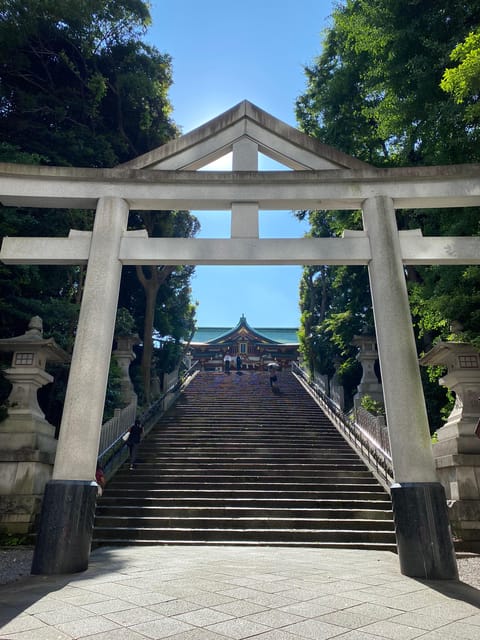
Hie Shrine changes the mood completely. You move from the formal setting of national government to a Shinto shrine associated with career success and matchmaking. That contrast is one of the tour’s strongest features. You see how modern political life and older religious customs exist close together in central Tokyo.
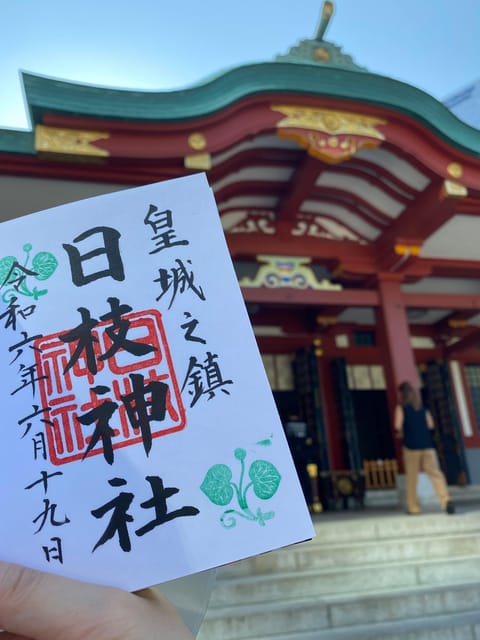
The shrine is known for monkey guardians at the gate and main hall. Monkey motifs also appear on votive tablets and charms. Your guide explains what you are seeing and shows you how to worship at a Shinto shrine, which is more useful than simply taking photographs and moving on.
Hie Shrine is often called a power spot for career success and matchmaking. You do not need to share those beliefs to appreciate the cultural meaning. The shrine gives you a chance to see how people connect places, symbols, hopes, and daily decisions.
The Thousand Torii Gates are another highlight. They recall the better-known torii-lined paths at Fushimi Inari Shrine in Kyoto, but you can see them as part of this Tokyo visit. The gates offer a striking visual change after the stone, columns, and formal rooms of the Diet Building.
The guided shrine visit and sightseeing portion lasts about 45 minutes. That is enough time for a useful introduction, the major features, and some questions, but it is not a long temple-and-shrine walking session. If you want an hour-by-hour study of Shinto architecture, you may find this portion brisk. For a three-hour city tour, the balance works well.
Matcha and sweets at Dobashi-en
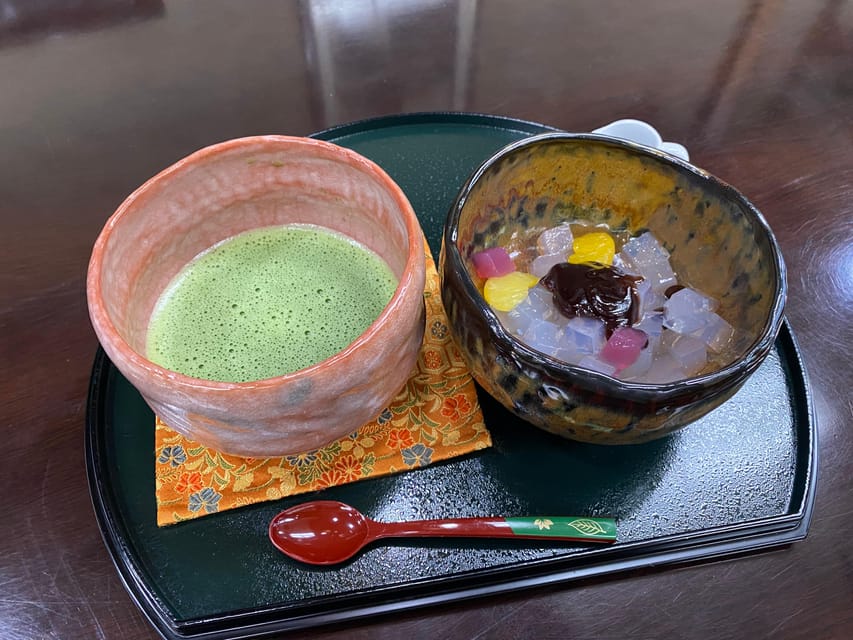
The final walk takes about 15 minutes and leads to Dobashi-en, a long-established green tea shop. Here you sit down for traditional matcha and sweets, along with local snacks and a souvenir tea gift.
This stop is more than a convenient finish. After walking through a government building and shrine grounds, tea gives the tour a calmer ending. You get to taste a familiar part of Japanese food culture while talking with the guide about what you have seen.
The tea experience is also a useful contrast to the political discussion. At the Diet Building, the focus is institutions and national events. At Hie Shrine, it is ritual and symbols. At Dobashi-en, the focus becomes a simple, traditional refreshment and the social pleasure of slowing down.
The available information does not specify the exact sweet served, so you should expect traditional Japanese sweets rather than a particular named item. Some shops may not accept cards, so bring cash. That advice is worth following even if you normally pay by card throughout Tokyo.
You finish at Akasaka-mitsuke Station. The station-to-station route is handy because you do not return to the starting point. It also leaves you near central Tokyo districts for the rest of your day, though the tour itself does not include further sightseeing after the tea shop.
Same base, a completely different sort of day:
- Tokyo: teamLab Planets TOKYO Digital Art Museum Entry Ticket
★ 4.6 · 9,779 reviews - Mt Fuji & Hakone Cruise, Drum Show Bullet Train 1 Day from Tokyo
★ 4.0 · 7,413 reviews - Tokyo: Sumo Show Experience with Chicken Hot Pot and a Photo
★ 4.8 · 6,678 reviews - Tokyo: Shinjuku Food Tour (13 Dishes at 4 Local Eateries)
★ 5.0 · 6,603 reviews
What the guide adds to the experience
The guide is the most important part of this tour. The buildings and shrine can be visited without a guide, but the political system, voting process, shrine customs, and cultural connections are much harder to grasp on your own.
Megumi is the named guide associated with the strongest praise for this experience. Her approach combines prepared explanations with open conversation. You can ask about government, Japanese customs, domestic issues, global affairs, and ordinary daily life rather than sticking to a fixed script.
That flexibility is particularly valuable in a group of five or fewer. You may be the only participant on a given departure, or you may share the tour with a small handful of people. A one-to-one format can feel very personal, but group size can vary, so you should book for the small-group setting rather than assume you will have a private tour.
The English is used throughout the tour. That matters most at the National Diet Building, where details about political structures can become confusing without a clear explanation. At Hie Shrine, it helps you understand the proper way to worship and the meaning behind the monkey imagery.
I would choose this tour for anyone who prefers conversation over a simple list of sights. It is also a good match if you want a Japanese point of view on politics and society, while remembering that the guide’s explanations are part of the experience rather than a substitute for a formal civics course.
Is $129 a fair price?
The price is $129 per person for three hours. That is not a budget outing, so the value depends on what you want from the visit.
You are paying for entry to the National Diet Building, a live English-speaking guide, a small group capped at five, a guided shrine visit, matcha and sweets at Dobashi-en, and a souvenir tea gift. The strongest value is the access to explanation and conversation. If you only want to see the exterior of the Diet Building and take a quick shrine photograph, the price may feel high.
For a visitor who wants to understand Japan beyond famous sights, the calculation looks better. The tour combines three experiences that would otherwise require separate planning: a government building visit, a guided Shinto introduction, and a traditional tea stop. You also avoid having to work out how to connect them yourself.
The one-hour Diet visit is the part that carries the most educational weight. The shrine and tea stop then keep the outing from becoming too formal or narrowly political. I like that balance, though anyone seeking a long tea ceremony or extensive shrine exploration should know that neither stop occupies the whole afternoon.
Free cancellation is available up to 24 hours before the tour for a full refund. You can also reserve now and pay later, which helps if your Tokyo schedule is still changing. Check available start times because the tour lasts three hours and does not list one fixed daily departure time.
Who should book it?
I would book this if you are curious about how Japan works, not just what Tokyo looks like. It is a good fit for adults and older students interested in politics, modern Japanese history, public customs, and the way traditional religious sites remain part of city life.
It also suits repeat visitors who have already seen the major tourist districts. The National Diet Building and Hie Shrine offer a different side of central Tokyo, and the tea shop provides a more local-feeling finish than another stop at a large commercial attraction.
The tour is also strong for solo visitors. A small group gives you a better chance to speak with the guide, and a solo participant may receive a very personal experience if no one else books that departure.
I would hesitate if you dislike stairs, have trouble walking for three hours, or want a relaxed schedule with lots of unscheduled time. The route includes several walks, and the National Diet Building has stairs. You should also skip the tour if you are unwell on the day.
Practical details for a smooth morning
Meet at Kokkai-gijidōmae Station, Exit 1. The guide wears a navy-blue happi, so look for that clear visual marker rather than trying to find a large tour sign.
Wear comfortable walking shoes. The route includes about five minutes to the Diet Building, 15 minutes to Hie Shrine, and another 15 minutes to Dobashi-en, plus walking within the sights.
Bring cash for the tea shop and any small purchases because some shops may not accept cards. The tea and snack, as well as the souvenir tea gift, are included in the tour price.
The tour is conducted in English and lasts three hours. It ends at Akasaka-mitsuke Station. Group size is limited to five participants, and cancellation is free up to 24 hours before the start time.
Should you book the Tameike tour?
Book it if you want a thoughtful, small-scale introduction to Japan’s political system paired with shrine customs and tea culture. The best reason to go is the guide-led conversation, especially with Megumi, whose explanations cover both formal politics and ordinary Japanese life.
Skip it if you want a purely visual tour, a long shrine visit, or a full tea ceremony. At $129, the value comes from the English guidance, access, questions, and carefully linked stops. For a curious visitor who wants Tokyo to make more sense, that is a worthwhile use of three hours.
FAQ
How long does the Tameike tour last?
The tour lasts three hours, including the National Diet Building, Hie Shrine, walking between stops, and tea at Dobashi-en.
Where does the tour begin?
Meet at Kokkai-gijidōmae Station, Exit 1. The guide wears a navy-blue happi, a traditional Japanese coat.
Where does the tour finish?
The tour ends at Akasaka-mitsuke Station after the tea and snack stop at Dobashi-en.
Is the tour conducted in English?
Yes. The tour includes a live English-speaking guide.
What is included in the $129 price?
The price includes entry to the National Diet Building, tea and a snack at Dobashi-en, and a souvenir tea gift.
How large is the group?
The tour is limited to five participants. The actual number can vary by departure, and some departures may have only one participant.
Do I need comfortable shoes?
Yes. The route includes several walking sections, and there are stairs at the National Diet Building.
Can I cancel the tour?
You can cancel up to 24 hours in advance for a full refund. You can also reserve now and pay later.
Just added around Tokyo
- Private Arrival Transfer : Narita International Airport to Central Tokyo City★ 4.5 · 12 reviews
- Narita Airport(NRT): Private Transfer to Tokyo/Yokohama 1-9pax★ 5.0 · 47 reviews
- Private Transfer from Narita Airport to Yokohama Port and City★ 4.5 · 17 reviews
- [Narita Airport Terminals 1, 2] 40-60km Sawara Itako Historic Bike Tour★ 5.0 · 13 reviews
- 3 Day Japan Highlights Tour: Tokyo, Mt.Fuji, Nara, Kyoto, Osaka★ 5.0 · 22 reviews
- Small Town in the Big City: Tasting Tokyo’s Kichijoji★ 5.0 · 195 reviews
- Small Town in the Big City: Tasting Tokyo’s Kichijoji★ 5.0 · 16 reviews
- The 10 Tastings of Tokyo With Locals: Private Street Food Tour★ 5.0 · 48 reviews
Tokyo Tours, compared.

Mt Fuji and Hakone 1-Day Bus Tour Return by Bullet Train
Read our review →

teamLab Planets TOKYO Digital Art Museum Entry Ticket
Read our review →
Mt Fuji & Hakone Cruise, Drum Show Bullet Train 1 Day from Tokyo
Read our review →
Sumo Show Experience with Chicken Hot Pot and a Photo
Read our review →
Shinjuku Food Tour (13 Dishes at 4 Local Eateries)
Read our review →
Tokyo Mt Fuji 5th St & Hakone Cruise Bus Tour w/Bullet Train
Read our review →