
Reviewed · TOKYO TOURS
Tokyo: Daikoku: JDM and Tokyo Car Culture Experience
Tokyo’s car culture is best understood from the passenger seat of a tuned Subaru WRX, Toyota Supra, or similar JDM machine. This experience takes you from Akihabara through Tokyo’s expressways and waterfront roads to Daikoku Parking Area, where car owners gather late at night.
I like two things here: you get real local context from guides such as Nikhil and Ranul, and the route includes more than one car meet stop. You also cross Rainbow Bridge and the Yokohama Bay Bridge, so the ride gives you a look at Tokyo beyond the usual train routes.
The main catch is that your favorite car may be in the workshop on your chosen date, and Daikoku can close because of police activity. The backup plan is another parking area, but it may not match the scale or fame of Daikoku.
Key points at a glance
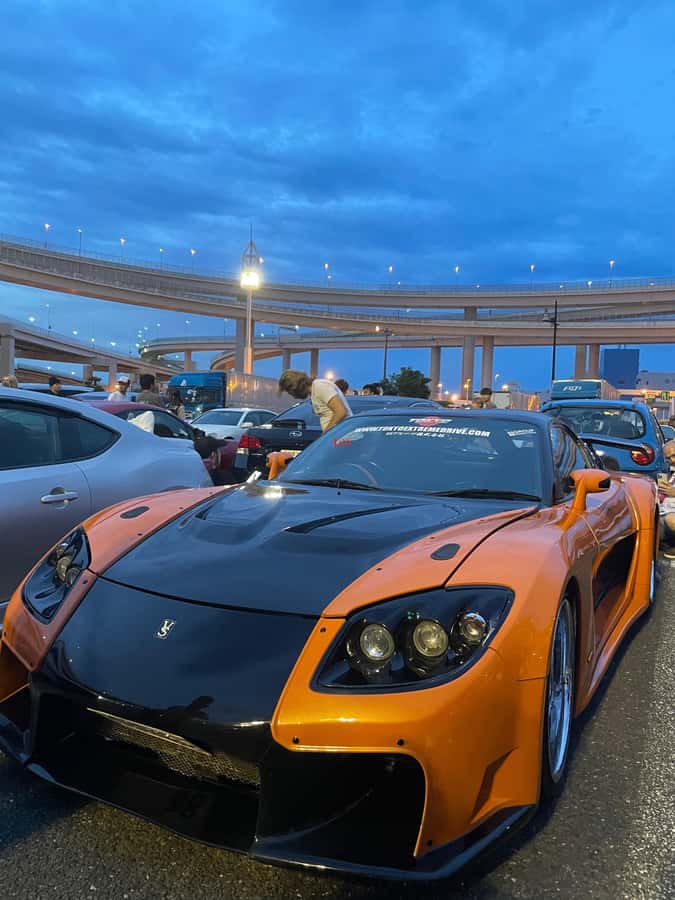
- Daikoku after dark: Finish at Yokohama’s famous car gathering point, with the possibility of seeing JDM cars, exotics, and modified builds.
- Tuned car or standard vehicle: Choose the Street Racer Experience for a JDM ride, or the Executive Drive for a more comfortable standard vehicle.
- Tokyo’s expressway culture: Cruise sections of the C1 Loop and Wangan Expressway, roads tied closely to Japan’s street-car image.
- More than a single stop: The route can include Akihabara, A-PIT Autobacs, Minato City, Rainbow Bridge, and the Yokohama Bay Bridge.
- Local guides who live the hobby: English and Japanese-speaking guides explain the cars, meet etiquette, and local scene.
- Fixed return point: The outing begins near Game Panic Akihabara and ends back there, not at your hotel.
Why Daikoku matters to car fans
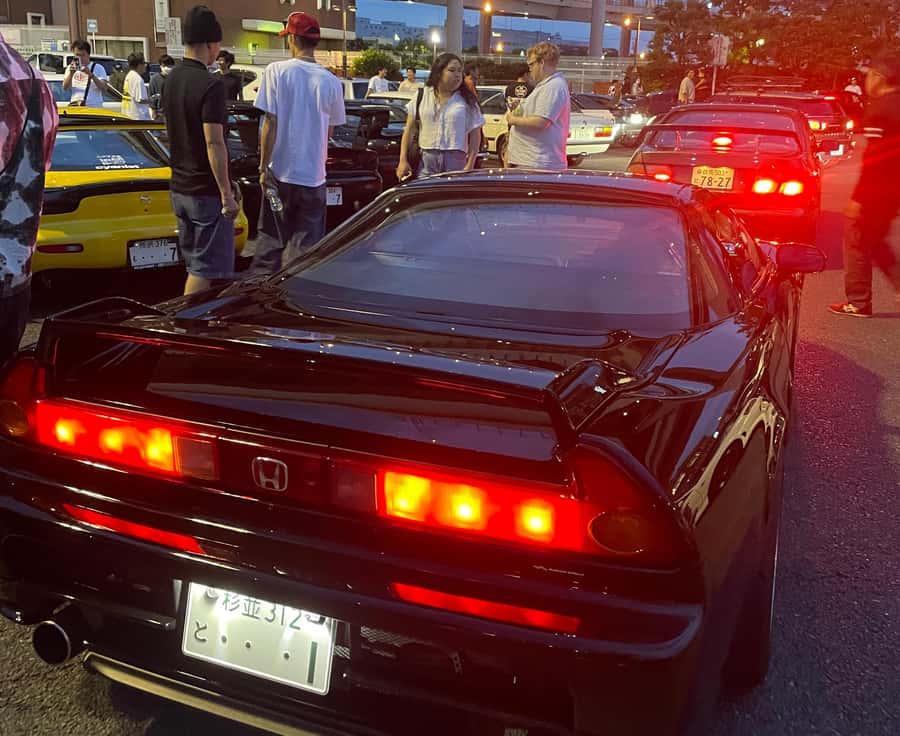
Daikoku PA is not a normal sightseeing stop. It is a large rest area in Yokohama linked to the expressway network, and it has become one of the best-known meeting places in Japan’s modified-car scene.
The attraction is the mix. On a good night, you might see carefully restored classics, tuned Japanese sports cars, high-end exotics, and everyday cars modified by their owners. The appeal is not a museum display. Cars arrive and leave, owners talk, and the lineup changes as the night goes on.
That makes timing part of the fun. One outing reached Daikoku after midnight and still found cars arriving until close to 2 a.m. This is a late-night activity, not a quick afternoon photo stop. If you want the fullest atmosphere, be ready for a long evening and a late return.
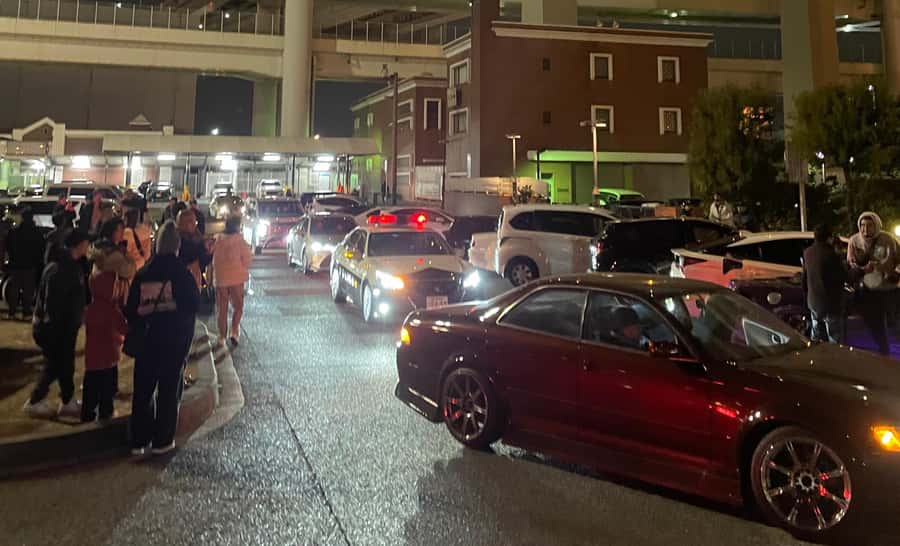
You should also keep expectations sensible. Daikoku is an active parking area, not a guaranteed show with a fixed roster. Some nights are stronger than others. Police may also close the area temporarily, especially when authorities want to control crowds or vehicle activity.
If that happens, the guide takes you to another location. This will not be the same as Daikoku, but the alternative can still offer cars and waterfront views. The guide’s local awareness matters most here, since a replacement stop is useful only if someone knows where the scene has moved.
A few more Tokyo half-days to weigh up
- Mt Fuji and Hakone 1-Day Bus Tour Return by Bullet Train
★ 5.0 · 26,383 reviews - 1-Day Tokyo Bus Tour
★ 5.0 · 14,250 reviews - Tokyo: TOKYO SKYTREE® Admission ticket
★ 4.5 · 11,192 reviews
The ride from Akihabara to the expressways
The meeting point is near Game Panic Akihabara. You are asked to search for the shop and follow the directions, or contact Project Wangan through Instagram for more precise instructions.
That arrangement calls for a little care. Akihabara is crowded and full of bright signs, shops, arcades, and train connections. Do not wait until the last minute to sort out the meeting point. Save the instructions, keep your phone charged, and allow extra time to find the exact place.
From there, the outing becomes a moving tour of Tokyo. You are not simply driven straight to Daikoku. The route is designed to show how the city’s roads connect its car culture spots, commercial areas, and waterfront districts.
The drivers use parts of the C1 Loop and Wangan Expressway. These roads are famous among car fans because of their place in Japanese street-racing stories and racing games. You are not signing up for a race, however. The point is to experience the roads, hear the cars, and understand why they matter to enthusiasts.
The ride itself is one of the strongest parts of the outing. Tokyo’s train system is superb, but trains cannot show you the city from the driver’s viewpoint. From a car, you see ramps, tunnels, elevated roads, bridges, and changing views of the city at night.
The reviews repeatedly praise the guides’ conversation and local tips. Nikhil, Ranul, and other drivers are presented as active enthusiasts rather than hired chauffeurs. That difference matters. A driver who can explain why a particular Subaru, Mitsubishi, Nissan, or Toyota attracts attention adds much more than a driver who simply follows the route.
Akihabara and A-PIT Autobacs
Akihabara is the practical starting point, but it also sets the tone. The neighborhood is famous for electronics, games, anime, and arcades. Starting here places the tour in one of Tokyo’s best-known entertainment districts before the route shifts toward automotive culture.
A-PIT Autobacs is a different kind of stop. It is associated with Japan’s car parts and accessory culture, and it helps explain how enthusiasts build and maintain their cars. For someone who only knows JDM cars from films or games, this stop adds useful context.
You may be more excited by the car meet itself, but A-PIT Autobacs gives the tour a wider frame. The cars at Daikoku are the finished result. A major automotive shop helps you see the equipment, styling choices, and mechanical interests behind that result.
This is also one of the better parts of the outing for a non-car fan. You do not need to identify every engine or recognize every generation of Skyline to enjoy the contrast between Akihabara’s pop culture and Japan’s hands-on automotive hobby.
Minato City, Rainbow Bridge, and Tokyo Bay
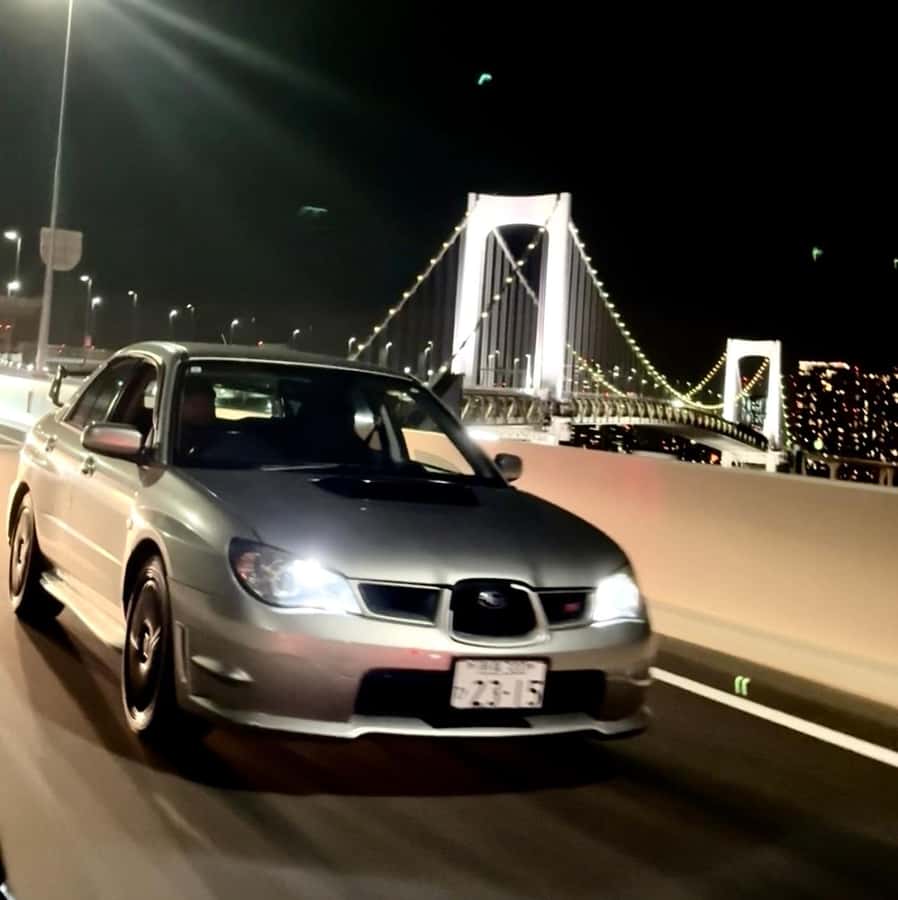
The route through Minato City adds some of Tokyo’s best-known urban views. Crossing Rainbow Bridge is a highlight because the bridge links the city center with the waterfront while giving you a broad view of Tokyo Bay.
The Yokohama Bay Bridge brings a second major crossing later in the route. These are not random scenic detours. Bridges and expressways are part of the car culture setting, and they make the journey feel like a proper night drive rather than a transfer between attractions.
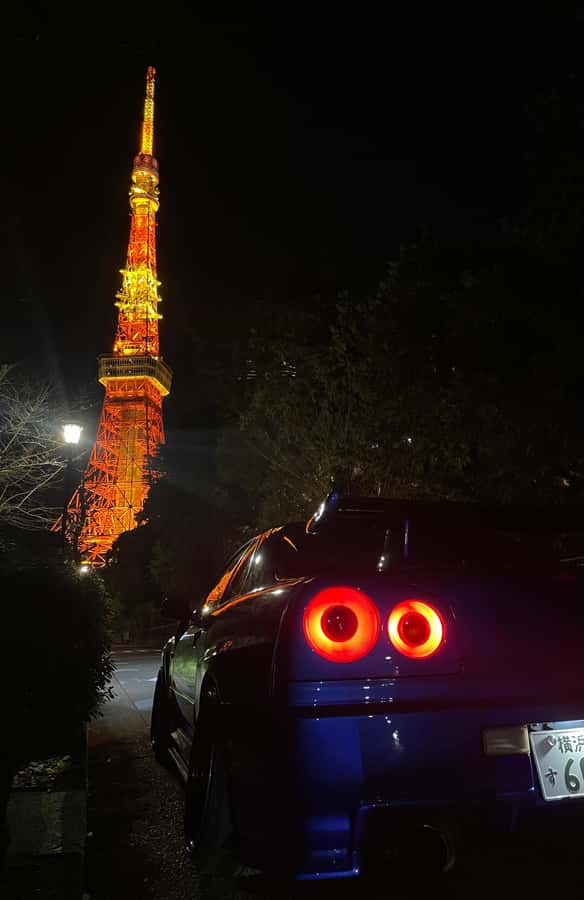
You will also see Tokyo landmarks such as Tokyo Tower from the moving route. Exact views depend on traffic, weather, and the position of the car, so do not treat this as a dedicated sightseeing tour of the tower or bridge. Think of the landmarks as part of the drive.
This is where the Executive Drive option may suit some people better. A standard vehicle gives you a calmer ride and lets you focus on the city views and conversation. The Street Racer Experience is more about the machine itself, including the sound, acceleration, and feel of a tuned car.
Same base, a completely different sort of day:
- Tokyo: teamLab Planets TOKYO Digital Art Museum Entry Ticket
★ 4.6 · 9,779 reviews - Mt Fuji & Hakone Cruise, Drum Show Bullet Train 1 Day from Tokyo
★ 4.0 · 7,413 reviews - Tokyo: Sumo Show Experience with Chicken Hot Pot and a Photo
★ 4.8 · 6,678 reviews - Tokyo: Shinjuku Food Tour (13 Dishes at 4 Local Eateries)
★ 5.0 · 6,603 reviews
Choosing between a tuned JDM car and a standard vehicle
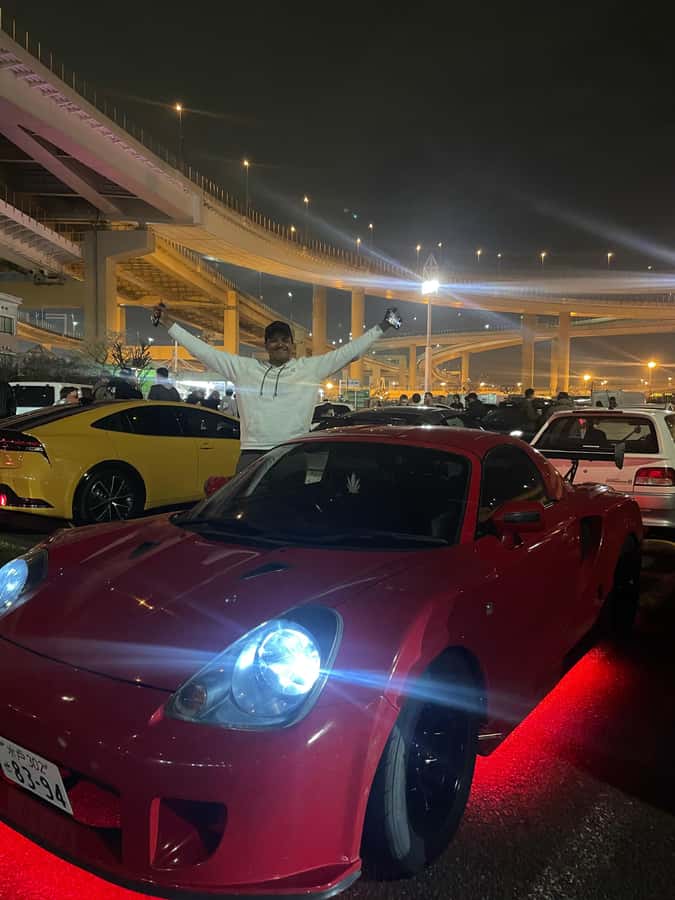
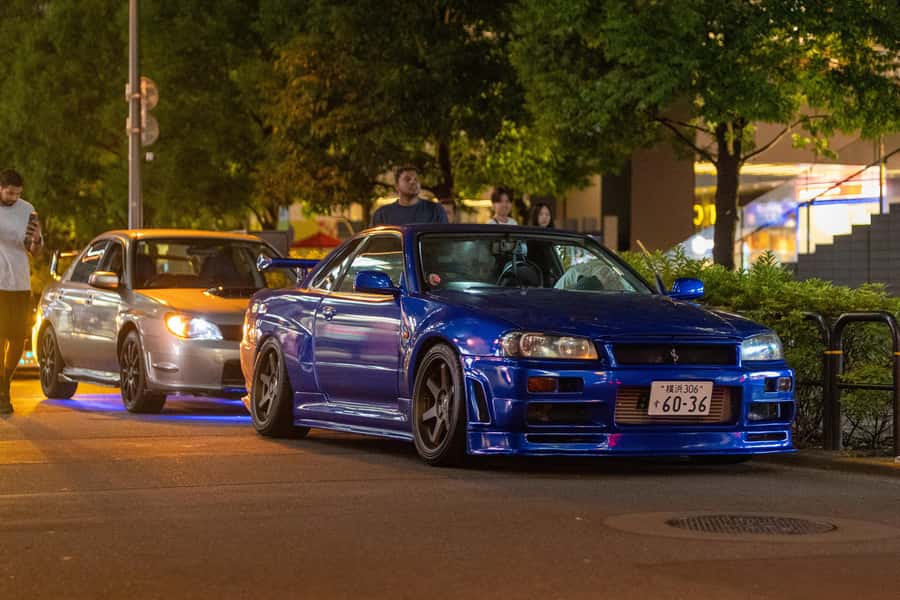
The Street Racer Experience is the clear choice if the car is the main reason you are booking. You ride with an expert driver in a tuned JDM vehicle, hear the engine and turbo, and travel in the same convoy as the other cars.
Possible vehicles include a Toyota MK5 Supra, Mitsubishi Lancer Evolution VIII, two Subaru WRXs, and other enthusiast cars. The exact model is not guaranteed. Cars sometimes go in for maintenance, which is normal for a small enthusiast-run fleet.
If you have your heart set on a WRX, Supra, Evo, or another particular model, contact Project Wangan through Instagram or GetYourGuide before booking. This is one of the most useful steps you can take. The advertised car list gives you an idea of the fleet, not a promise for your date.
The Executive Drive uses a standard vehicle. You still follow the route, visit the same car culture locations, and have access to the guide’s explanations. This option makes sense if you care more about the city drive and Daikoku than the sound and feel of a modified car.
There may be several vehicles in the convoy, and some outings have involved passengers changing cars along the route. That can be fun, but it also means you should clarify the seating arrangement if a particular vehicle matters to you. One passenger group enjoyed the ride but did not get a turn in the JDM car, so do not assume every booking includes time in every vehicle.
What the guides add to the night
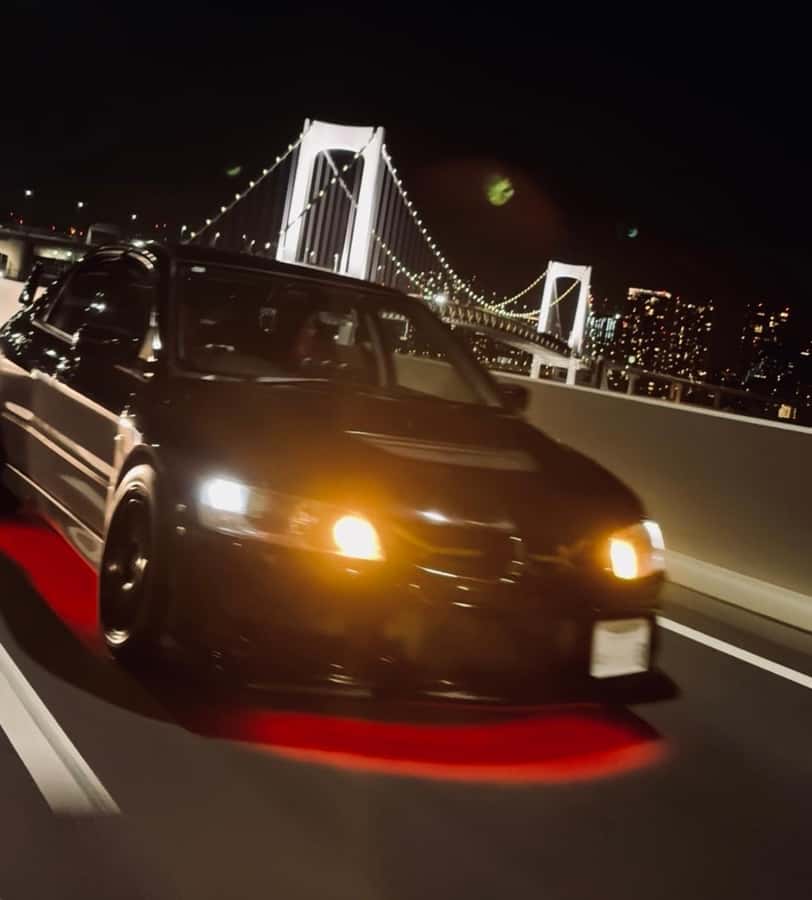
The guides are central to the value. Nikhil is praised for his friendly approach, music, car knowledge, and personal explanation of Tokyo’s scene. Ranul is also singled out for his easy manner, local insight, and care with the group.
The strongest comments focus on the feeling of going out with an enthusiast rather than joining a formal sightseeing bus. That informal tone can be a plus. You can ask about Japanese car culture, differences between car scenes in other countries, local roads, and the cars around you.
The guides are bilingual in English and Japanese. They can also help you connect with people at car meets. That does not guarantee that every owner will want a long conversation, but having someone who understands the setting helps you behave respectfully and avoid treating the meet like a staged performance.
The guides also seem willing to adjust when conditions change. Rain affected one outing, and a police closure affected another. In both cases, the route continued with alternate stops or a later visit. The important point is that flexibility depends on the guide and the conditions, not on a guaranteed substitute of equal size.
Snacks and drinks have occasionally been provided, but they should not be treated as a fixed inclusion. The formal inclusions are the ride, guide, fuel, highway tolls, taxes, and photo stops.
The cost and what you receive for $84
At $84 per person, this is a reasonable price if you want access to the car scene without renting a vehicle, learning Tokyo’s expressways, or trying to reach Daikoku independently.
The value comes from the combination. You are paying for a car ride, but also for the route planning, tolls, fuel, bilingual help, local introductions, and the chance to join a convoy. A taxi to a single location would not provide that context, and this activity is not sold as taxi or hotel transport.
The price is especially appealing on Fridays and weekends, when similar specialist outings may cost more. The advertised rate stays at $84 even on peak days. That makes it easier to plan around a busy Tokyo schedule.
Still, value depends on your priorities. If you want a guaranteed particular model, a private tour, a hotel drop-off, or a fixed show lineup, this may feel less predictable. The price covers a shared enthusiast experience with a fixed route, not a private chauffeur service.
Highway tolls and fuel are included, so you do not need to budget extra for the route itself. Hotel drop-off is not part of the standard plan. The tour ends back at the meeting point, although you can ask about late-night drop-off options in advance.
Weather, closures, and other practical limits
There is no weather guarantee. Rain can make photos less appealing and reduce the number of cars at an outdoor meet. One wet Saturday led to a Sunday outing instead, when the group had a longer car meeting.
Daikoku may also close because of police activity. The replacement stop can still include JDM and exotic cars, but you should accept that the famous parking area is not guaranteed. This is the biggest practical risk in booking the experience.
The activity is not suitable for children under eight, wheelchair users, people with heart problems, people prone to motion sickness, or people over 70. Smoking and alcoholic drinks are not allowed inside the vehicle.
Bring a passport or ID card. The experience is conducted in English and Japanese, and you can reserve now and pay later. Cancellation is free up to 24 hours before the experience.
The fixed return point is worth remembering. Tokyo’s trains may be less convenient late at night, so plan your trip back from Akihabara. The operator may discuss a late-night drop-off, but it is not part of the standard promise.
Who will enjoy Project Wangan most
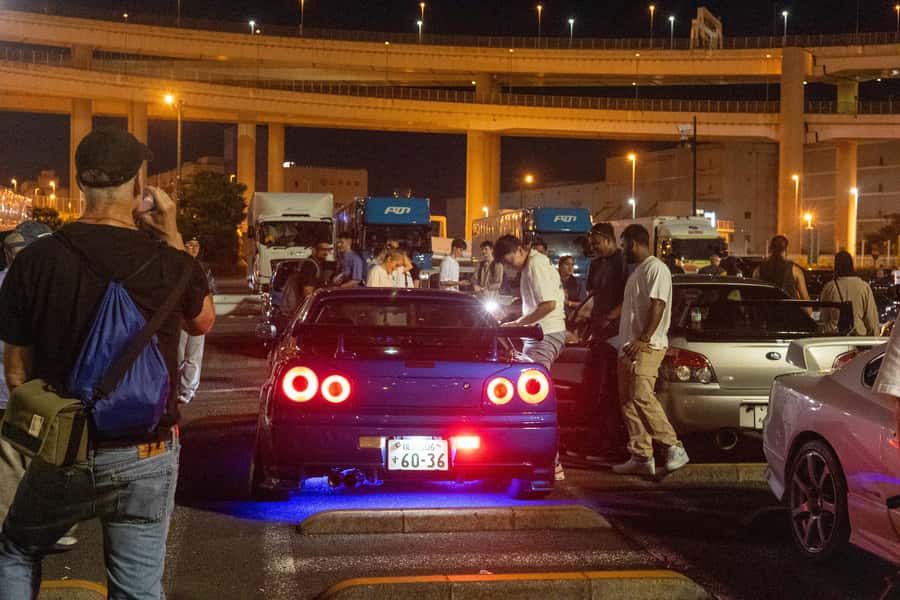
You should book this if cars are a major part of your Tokyo plans, especially if you want to see modified Japanese cars in their own setting rather than only in a showroom.
It also suits someone who enjoys night drives, bridges, city lights, and informal conversation. Several people who were not serious car fans still found the route enjoyable because the guide explained the cars and showed parts of Tokyo that are hard to reach by train.
Families with older children may consider it, but the age limit is eight and the vehicle restrictions matter. It is less suitable for anyone who needs a calm, predictable sightseeing schedule or an easy hotel return.
You should also be comfortable with a late evening. Daikoku is most interesting when the night is underway, and the timing can stretch past midnight. If your next morning starts early, this may not be the best use of your last Tokyo night.
Should you book this Tokyo car culture tour?
Book it if you want the sound of a turbo, the sweep of Tokyo’s expressways, and a real chance to see Japan’s JDM scene at night. The guides are the main strength, and the route gives you much more than a single stop at Daikoku.
Before you pay, message the operator about the car available on your date, the expected meeting instructions, and any late-night return concerns. If Daikoku closes, accept the alternate stop as part of the risk.
For a car enthusiast, the tuned JDM option is worth the extra excitement. For a curious companion, the standard vehicle still gives you the bridges, city views, local stories, and meet atmosphere. At $84, this is a strong value for an informal, enthusiast-led night out, provided you want a flexible car culture outing rather than a guaranteed show.
FAQ
Where does the experience start?
The meeting point is near Game Panic Akihabara. Search for Game Panic Akihabara and follow the directions, or contact Project Wangan through Instagram for further instructions.
Where does the experience end?
The activity ends back at the meeting point near Game Panic Akihabara. Hotel drop-off is not included in the standard route.
Does the price include fuel and highway tolls?
Yes. The price includes fuel, highway tolls, taxes, the ride, bilingual guides, scenic driving, and photo stops.
Can I request a particular JDM car?
You can ask about a specific model through Instagram or GetYourGuide, but availability is not guaranteed. Cars may be undergoing maintenance on your chosen date.
Is Daikoku Parking Area guaranteed to be open?
No. Daikoku may close temporarily because of police activity. If that happens, the guides offer an alternative location.
What languages are available?
The experience is available in English and Japanese.
Who should not take this activity?
It is not suitable for children under eight, wheelchair users, people with heart problems, people with motion sickness, or people over 70.
Can I cancel for a refund?
Yes. You can cancel up to 24 hours in advance for a full refund.
Just added around Tokyo
- Private Arrival Transfer : Narita International Airport to Central Tokyo City★ 4.5 · 12 reviews
- Narita Airport(NRT): Private Transfer to Tokyo/Yokohama 1-9pax★ 5.0 · 47 reviews
- Private Transfer from Narita Airport to Yokohama Port and City★ 4.5 · 17 reviews
- [Narita Airport Terminals 1, 2] 40-60km Sawara Itako Historic Bike Tour★ 5.0 · 13 reviews
- 3 Day Japan Highlights Tour: Tokyo, Mt.Fuji, Nara, Kyoto, Osaka★ 5.0 · 22 reviews
- Small Town in the Big City: Tasting Tokyo’s Kichijoji★ 5.0 · 195 reviews
- Small Town in the Big City: Tasting Tokyo’s Kichijoji★ 5.0 · 16 reviews
- The 10 Tastings of Tokyo With Locals: Private Street Food Tour★ 5.0 · 48 reviews
Tokyo Tours, compared.

Mt Fuji and Hakone 1-Day Bus Tour Return by Bullet Train
Read our review →

teamLab Planets TOKYO Digital Art Museum Entry Ticket
Read our review →
Mt Fuji & Hakone Cruise, Drum Show Bullet Train 1 Day from Tokyo
Read our review →
Sumo Show Experience with Chicken Hot Pot and a Photo
Read our review →
Shinjuku Food Tour (13 Dishes at 4 Local Eateries)
Read our review →
Tokyo Mt Fuji 5th St & Hakone Cruise Bus Tour w/Bullet Train
Read our review →