
Reviewed · TOKYO TOURS
Tokyo: Food Tour in Ueno with 10+ Tastings of Japanese Classics
Ueno is one of Tokyo’s best districts for pairing food with place. On this three-and-a-half-hour walking tour, you move from a market and train tracks to a park, Shinto shrine, and Buddhist grounds while sampling Japanese classics along the way. Guides such as Harumi, Natsumi, Yumi, and Mari bring the stops to life with food tips and local context.
I like the wide range of tastings, from sushi and gyoza to yakitori, croquettes, sukiyaki, fruit, and matcha ice cream. I also like the small-group format, capped at 15 people, which makes it easier to ask questions and adjust the experience to your tastes. The main catch is price: at $142 per person, you are paying for guidance, translation, planning, and access to places you may not find alone, not simply for the food.
Key points before you book
- Ten-plus tastings in about 3.5 hours: Come hungry, because the portions add up quickly.
- Ueno beyond the usual sights: The route links a market, under-track shopping area, Ueno Park, a Shinto shrine, and Buddhist worship sites.
- Local English-speaking guide: Guides including Harumi, Natsumi, Yumi, and Mari have been praised for food advice, area stories, and friendly pacing.
- Food can be adjusted: Tell the operator about dietary needs in advance so the menu can be handled as well as possible.
- Small group, not a private tour: The maximum is 15 people, and the experience returns to Ueno Station.
- Weather and availability matter: The route and menu can change, and poor weather may lead to a new date or a full refund.
Why Ueno is a smart place for a food walk
Many first-time Tokyo visitors concentrate on Shibuya, Shinjuku, or Asakusa. Ueno offers a different introduction. It has a practical, lived-in feel, with food stalls, small shops, commuter routes, religious sites, and public park space packed into one district.
That mix makes the tour more useful than a meal in a single restaurant. You are not only tasting Japanese food. You are seeing the kinds of places where food fits into daily life, from a market snack to grilled chicken near the railway lines.
The tour is also a good first activity in Tokyo because the guide handles the language barrier. Ordering food, understanding unfamiliar ingredients, and deciding what to try can take time when you are new to Japan. Here, you can ask questions as you go and get suggestions for restaurants and other places to visit later.
The pace is fairly brisk. In roughly three and a half hours, you may make around seven food stops, depending on the day’s route. That gives you plenty of variety, but it leaves little time for long visits at each sight.
More Food Tours in Tokyo
- Tokyo: Shinjuku Food Tour (13 Dishes at 4 Local Eateries)
★ 5.0 · 6,603 reviews - Tokyo: Shinjuku Food Tour (15 Dishes and 4 Eateries)
★ 4.9 · 2,033 reviews - Best of Shinjuku: Izakaya Food Tour (4 Stops, 14+ Tastings)
★ 5.0 · 1,863 reviews
Starting at Ueno Station and entering the market
The meeting point is at Ueno Station, at 7 Chome-1 Ueno, Taito City. That is convenient for anyone already using Tokyo’s rail network, but arrive with enough time to find the correct spot. The activity ends back at the same meeting point, so you do not need to plan a complicated pickup afterward.
The first major setting is a popular indoor-outdoor market filled with shops selling food, gifts, clothing, and other everyday goods. This is the right place to begin because it gives you an immediate sense of Ueno as a working shopping district rather than only a sightseeing zone.
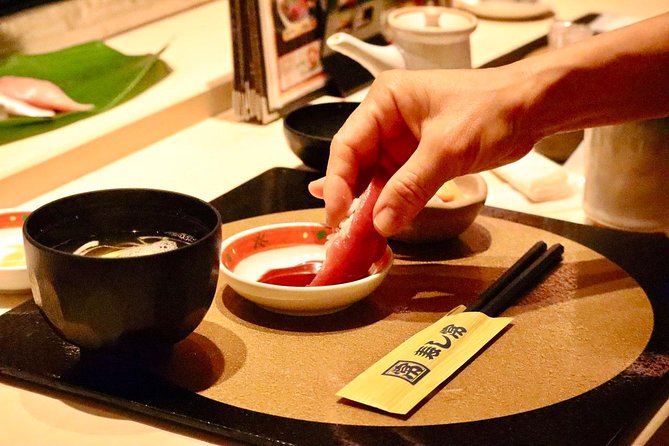
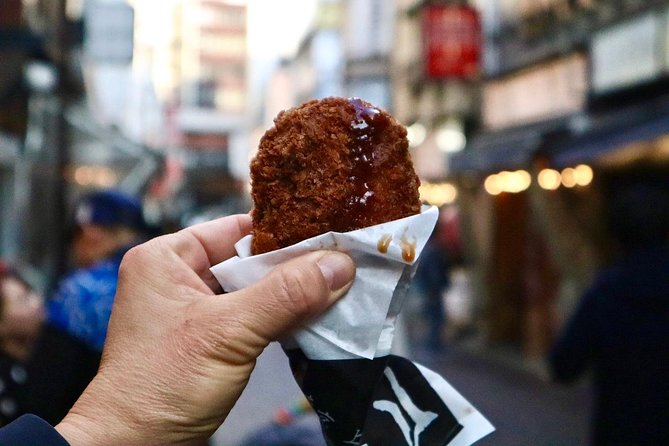
Your guide can help explain what you are seeing and steer you toward foods you might pass by on your own. The selections may include sushi, gyoza, and a croquette, though the exact menu can shift according to availability. That flexibility is helpful in Tokyo, where small food businesses may not offer the same items every day.
This part of the tour is also where the value of an English-speaking guide becomes clear. You can ask about ingredients, customs, and how a dish is normally eaten without stopping to translate every sign or menu. Still, do not expect a long tasting session at every stall. The market is one piece of a larger route.
Eating beneath the elevated railway
The route continues to an area under the elevated train tracks. The Japanese term for this kind of place refers to being under the girders, and it is a familiar feature of Tokyo’s urban life.
The setting matters. Rather than presenting food in a polished dining room, this stop connects eating with the city’s railway infrastructure and narrow commercial spaces. You get a look at how Tokyo makes use of the leftover spaces around its rail lines.
Yakitori is one of the listed tastings here or elsewhere on the route. These grilled chicken skewers are simple, satisfying, and easy to share. You may also receive gyoza, a local favorite with a crisp exterior and savory filling. These foods help keep the tour grounded in everyday Japanese eating rather than focusing only on formal cuisine.
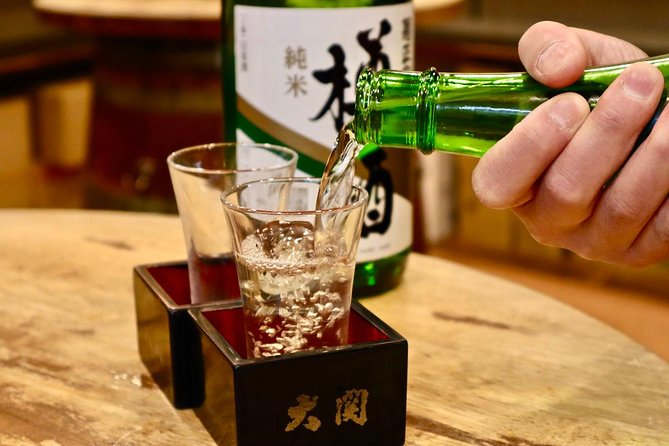
A draft beer is included, along with two different types of tea and water. The beer gives the meal a casual touch, while the teas offer a chance to compare flavors and drinking customs. If you do not drink alcohol, the listed tea and water provide alternatives, but it is sensible to mention any concerns before the tour.
Ueno Park adds breathing room
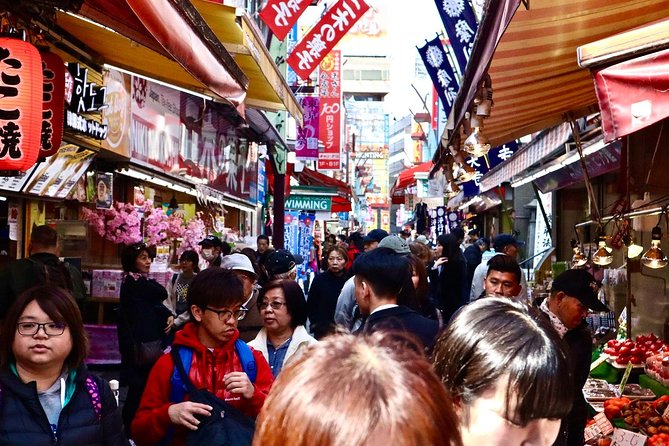
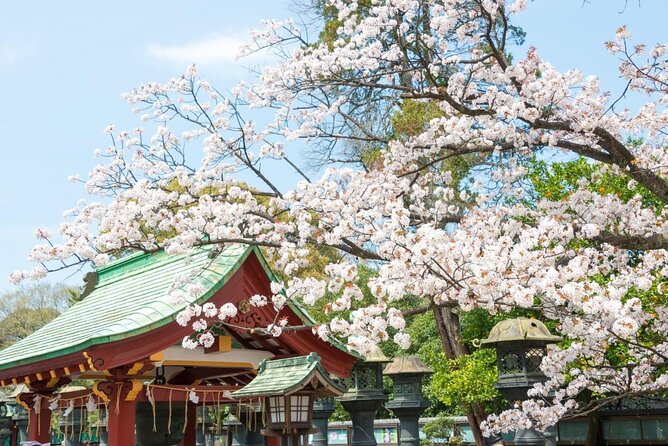
Food tours can become tiring when you move from one crowded stop to another. Ueno Park gives this experience a change of pace. It is a large public park in the Taito district, known especially for cherry blossoms and spring hanami gatherings.
The park helps place Ueno’s food culture in a broader setting. You are not simply following a list of dishes. You are walking through a district where shopping streets, religious buildings, public space, and rail connections sit close together.
The timing of a visit matters. Spring cherry blossoms can make Ueno Park especially busy, but the tour’s food route and timing may change with crowds, weather, and local availability. Do not book this expecting a long, quiet park stroll. The park is part of the walking route, not a separate sightseeing tour.
Comfortable shoes are important. The activity involves a fair amount of walking, and the combination of food stops and sightseeing can make the distance feel longer than the three-and-a-half-hour duration suggests.
Same base, a completely different sort of day:
- Mt Fuji and Hakone 1-Day Bus Tour Return by Bullet Train
★ 5.0 · 26,383 reviews - 1-Day Tokyo Bus Tour
★ 5.0 · 14,250 reviews - Tokyo: TOKYO SKYTREE® Admission ticket
★ 4.5 · 11,192 reviews - Tokyo: teamLab Planets TOKYO Digital Art Museum Entry Ticket
★ 4.6 · 9,779 reviews
A Shinto shrine and Tokyo’s religious side
One stop is a Shinto shrine built in 1627 and dedicated to Tokugawa Ieyasu, the founder of the Tokugawa Shogunate. This gives the tour a direct connection to the political and religious story of old Japan.
The shrine is more than a decorative pause between tastings. It shows how food, festivals, prayer, and public life have long shared the same city spaces. Your guide may explain customs and the significance of the site, though the amount of detail can depend on the guide and the day’s pace.
The shrine visit also keeps the tour from becoming a simple eating contest. The experience is designed to connect Japanese cuisine with local culture, and this stop gives that idea a clear setting.
Be prepared for a route that keeps moving. If you want an in-depth examination of shrine architecture or Tokugawa history, a dedicated cultural tour would be more suitable. Here, the shrine is one part of a food-focused walk.
Buddhist grounds and a quieter pause
The itinerary also includes a longstanding Buddhist worship center with tranquil surroundings. This part of Ueno offers a different religious atmosphere from the Shinto shrine.
The contrast is useful for first-time visitors. Japan’s religious sites can seem confusing when you encounter them without context, especially when the route moves quickly. A guide can help explain the difference between the two traditions and point out how worship spaces function within the neighborhood.
The wording of the route does not identify the exact Buddhist site, so you should think of this as a visit to a Buddhist temple or worship area rather than a guaranteed named monument. The setting provides a calmer break, but it is not a substitute for a full temple tour.
What you are likely to eat
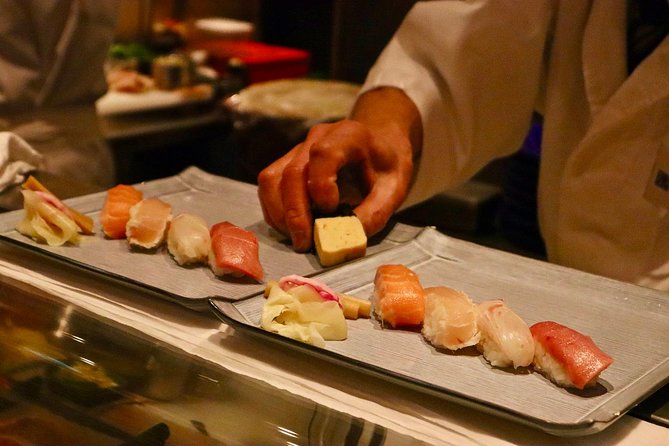
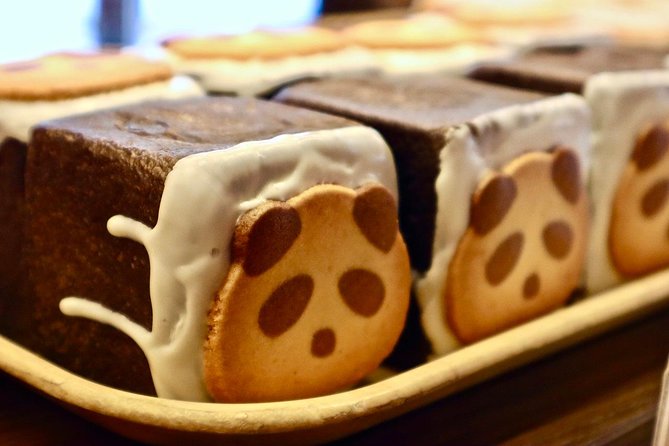
The tour includes more than 10 tastings, although the precise menu is not fixed. Listed foods include fresh Japanese sushi, crispy gyoza, yakitori, seasonal fruit, matcha ice cream, and a secret dish.
Additional food mentioned for the route includes croquette and sukiyaki. One version of the experience included sushi, gyoza, croquette, yakitori, and a surprise sukiyaki stop. That gives you a useful idea of the variety, but you should not treat every item as guaranteed.
The menu works well because it covers different textures and styles:
- Sushi offers a fresh, familiar starting point for Japanese cuisine.
- Gyoza brings a hot, crisp, savory bite.
- Yakitori shows the appeal of grilled skewers and simple seasoning.
- Croquette adds a fried street-food style snack.
- Sukiyaki provides a warmer, more substantial dish when available.
- Seasonal fruit gives the meal a fresh counterpoint.
- Matcha ice cream finishes the route with a sweet, creamy taste.
Matcha ice cream is worth saving room for. It was a clear favorite for some participants, and it gives the tour a proper dessert finish rather than ending with another savory plate.
The quantity is one of the tour’s strongest points and one of its practical warnings. Several stops can leave you full well before the final tasting. I would skip breakfast or eat only a very light meal beforehand, especially if you want to sample everything.
How good is the cultural explanation?
The best version of this tour combines food with stories about Ueno, Tokyo, customs, and the dishes themselves. Guides such as Yumi have offered restaurant suggestions and tips for the rest of a Japan trip, while Mari has been praised for explaining both food and local history. Harumi and Natsumi have also been singled out for friendly, engaging tours.
Guide quality can vary, as it does with any experience built around a person. One poor account described limited explanation of food origins, ingredients, and Japanese culture, along with language difficulties. That is worth keeping in mind when you are paying for interpretation as well as tastings.
The tour’s strongest cultural value comes from giving you a human bridge into Ueno. You can ask what to order later, how a dish is usually eaten, and which restaurants may suit your preferences. If you mainly want the cheapest possible meal, you can eat more economically on your own. If you want help finding small food stops and understanding the area, the guide is the main reason to book.
Group size, family fit, and dietary needs
The maximum group size is 15 people. That is small enough for a more personal feel, though it is not the same as having a private guide. A smaller departure can make conversation easier, while a full group may require more patience at food counters and on busy streets.
The tour can work for families. Children aged 8, 9, and 10 were able to enjoy it, and the simple format of walking, tasting, and moving on can hold their attention. Parents should still consider the walking distance and the large amount of food.
Dietary requirements need advance notice. The operator asks you to make contact before the tour so the team can handle your needs as well as possible. Since the menu changes with location and availability, do not assume every restriction can be accommodated without prior planning.
The experience is near public transportation, and most participants can take part. Hotel pickup and drop-off are not included, so you make your own way to Ueno Station and return there at the end.
Is $142 a fair price?
At $142 per person, this is not a budget food crawl. Tokyo offers inexpensive meals, and you can certainly spend less by choosing restaurants and market snacks yourself.
The price makes more sense if you place value on the full package: a local English-speaking guide, more than 10 tastings, a planned route, cultural explanation, translation help, a draft beer, two types of tea, water, and a secret dish. You are also paying to avoid guesswork during your first days in the city.
For a couple or family, the total cost rises quickly. Group discounts may help, but the exact savings are not provided. I would compare this tour with the cost of a good meal plus a private or small-group guide, rather than comparing it only with the price of sushi or gyoza.
The tour is strongest as an introduction. It helps you learn what you like, understand a part of Tokyo, and collect ideas for later meals. It is weaker for anyone who measures value only by the amount of food received.
Practical advice for a smoother outing
Book ahead if your schedule is tight. The experience is booked an average of 46 days in advance, and confirmation is issued within 48 hours, subject to availability.
Wear comfortable shoes and bring a modest appetite. Avoid a large breakfast, but do not arrive dehydrated. Water is included, and the route includes tea and a draft beer.
Keep your schedule flexible around the tour. The itinerary and menu may change because of weather, the availability of food businesses, or other circumstances. The activity also requires good weather and a minimum number of participants. If the operator cancels for either reason, you can choose a different date or experience, or receive a full refund.
Cancellation is free up to 24 hours before the start time. Within 24 hours, the payment is not refunded, and changes are not accepted. Cutoff times use Tokyo local time.
Who should book this Ueno food tour?
I would recommend it to first-time visitors who want an easy introduction to Japanese food without spending hours decoding menus. It is also useful for people with only a few days in Tokyo, families who want a structured outing, and anyone who likes mixing food with parks, markets, trains, shrines, and temples.
I would be more cautious if you are an experienced Japan eater, a strict budget traveler, or someone seeking a deep food history lesson at every stop. You may find better financial value by eating independently, and the exact level of cultural explanation depends on the guide.
Book it early in your Tokyo stay if you do choose it. You will have time to use the restaurant suggestions and food tips for the rest of your visit. Come hungry, wear good shoes, and treat the tour as a guided introduction to Ueno rather than a luxury dining event.
FAQ
Where does the Tokyo Ueno food tour start?
The tour starts at Ueno Station, at 7 Chome-1 Ueno, Taito City, Tokyo 110-0005, Japan.
Where does the tour end?
The activity ends back at the meeting point at Ueno Station.
How long does the food tour last?
The tour lasts approximately 3 hours and 30 minutes.
How many tastings are included?
The experience includes more than 10 Japanese food tastings, although the exact menu may change.
What food is included?
Listed tastings include sushi, gyoza, yakitori, seasonal fruit, matcha ice cream, and a secret dish. Croquette and sukiyaki may also appear on the route. The menu depends on availability.
Are drinks included?
Yes. The tour includes one draft beer, two different types of tea, and water.
Is hotel pickup included?
No. Hotel pickup and drop-off are not included. You travel to and from the Ueno Station meeting point yourself.
Can dietary requirements be accommodated?
You should contact the operator in advance with any dietary requirements so they can try to accommodate them as well as possible.
What happens if the tour is canceled because of weather?
You can be offered a different date or receive a full refund if poor weather causes the cancellation.
Can I cancel for a refund?
Yes. You can cancel at least 24 hours before the start time for a full refund. Cancellations within 24 hours are not refunded.
Just added around Tokyo
- Private Arrival Transfer : Narita International Airport to Central Tokyo City★ 4.5 · 12 reviews
- Narita Airport(NRT): Private Transfer to Tokyo/Yokohama 1-9pax★ 5.0 · 47 reviews
- Private Transfer from Narita Airport to Yokohama Port and City★ 4.5 · 17 reviews
- [Narita Airport Terminals 1, 2] 40-60km Sawara Itako Historic Bike Tour★ 5.0 · 13 reviews
- 3 Day Japan Highlights Tour: Tokyo, Mt.Fuji, Nara, Kyoto, Osaka★ 5.0 · 22 reviews
- Small Town in the Big City: Tasting Tokyo’s Kichijoji★ 5.0 · 195 reviews
- Small Town in the Big City: Tasting Tokyo’s Kichijoji★ 5.0 · 16 reviews
- The 10 Tastings of Tokyo With Locals: Private Street Food Tour★ 5.0 · 48 reviews
Tokyo Tours, compared.
Mt Fuji and Hakone 1-Day Bus Tour Return by Bullet Train
Read our review →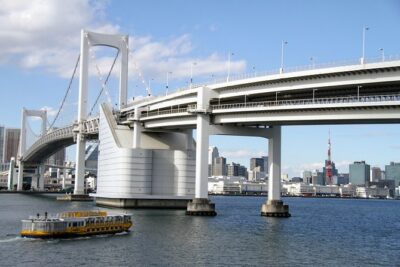
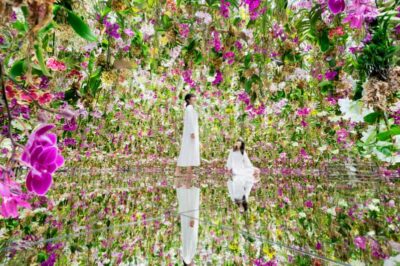
teamLab Planets TOKYO Digital Art Museum Entry Ticket
Read our review →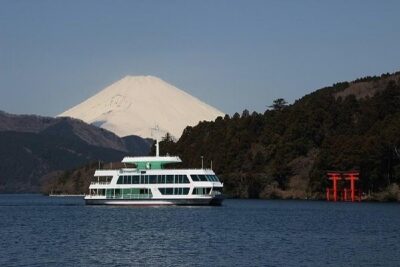
Mt Fuji & Hakone Cruise, Drum Show Bullet Train 1 Day from Tokyo
Read our review →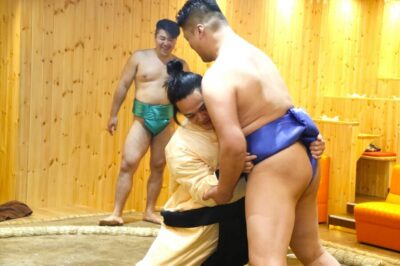
Sumo Show Experience with Chicken Hot Pot and a Photo
Read our review →
Shinjuku Food Tour (13 Dishes at 4 Local Eateries)
Read our review →
Tokyo Mt Fuji 5th St & Hakone Cruise Bus Tour w/Bullet Train
Read our review →
Flagship 2-Hours Official Street Go-Kart Tour – Tokyo Bay Shop
Read our review →Browse the lists this tour appears in