
Reviewed · TOKYO TOURS
Tokyo: Learn Traditional Origami with a Local
Tokyo gives you plenty of ways to look at Japanese culture, but few are as hands-on as sitting down with paper and learning to fold it well. With Manami Watanabe, a Tokyo native who has practiced origami since she was three, you make three to five traditional shapes while hearing the stories and meanings behind them.
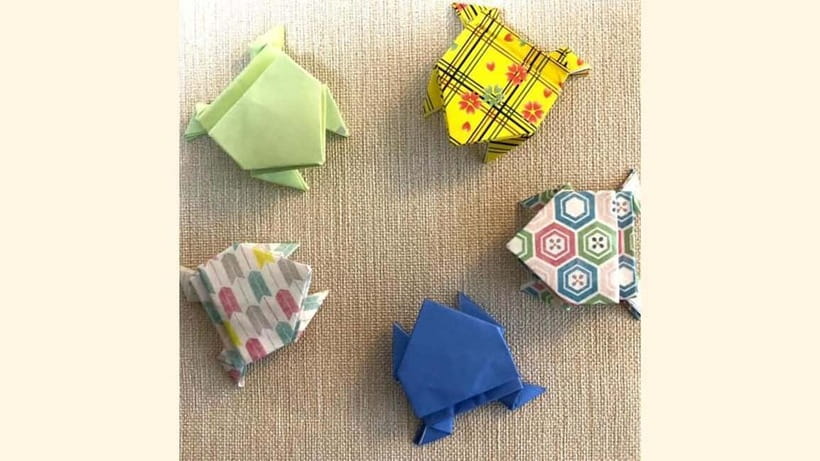
I like the personal instruction and the choice of papers. Manami demonstrates each fold patiently, and you can choose from traditional and modern designs instead of making the same figure as everyone else. The crane, samurai helmet, jumping frog, lotus flower, and open box are among the possible projects.
The main consideration is level. This class is built mainly for beginners, so experienced folders may find the designs too simple. The class cannot be customized on site, and families with children under seven or people needing special care must arrange a different venue in advance.
Key points to know before booking
- Manami has practiced origami since age three: You get instruction from someone with a lifelong connection to the craft, not just a quick demonstration.
- You make three to five pieces: The exact number depends on your pace and the designs you select.
- The class explains meaning as well as technique: Manami connects shapes such as the crane with Japanese culture and shares stories from her family and childhood.
- Beginners receive close guidance: You can ask for help at any step, and the pace is designed to keep the whole group together.
- Everything needed is supplied: Paper, scissors, pens, water, snacks, and small bags for carrying your finished work are included.
- The location is central but easy to miss: The meeting point is inside FEEEP Shinjuku Higashi-guchi, a shared workspace near Shinjuku-sanchome.
What the 90-minute origami class feels like

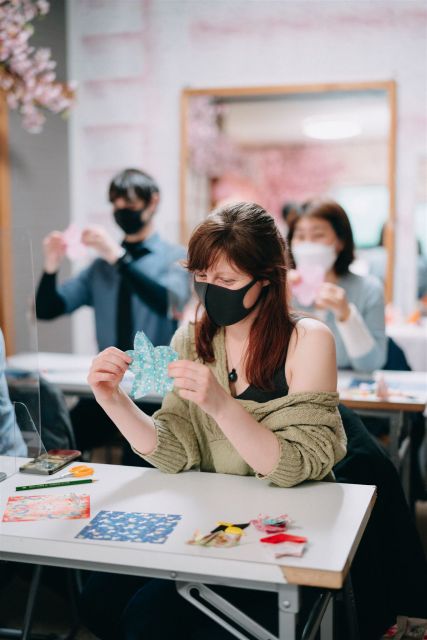
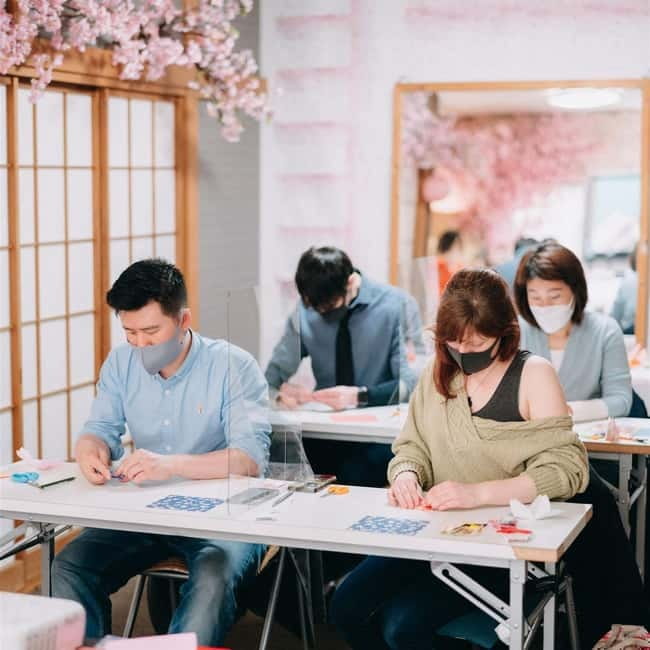
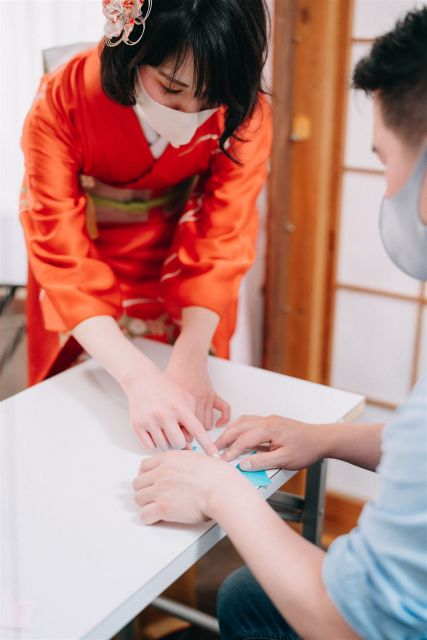
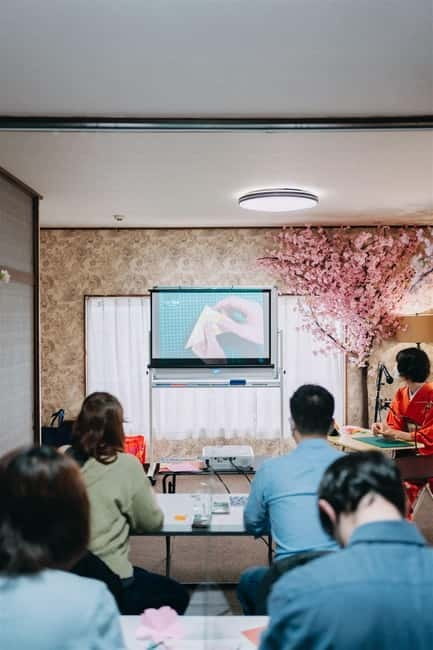
This is a quiet, focused break from Tokyo’s busy streets. You sit with paper in front of you, watch a demonstration, and repeat the folds one by one. The work is simple enough to follow but still gives you the satisfaction of making something with your hands.
Manami teaches in English and keeps the tone friendly and relaxed. She does not expect you to arrive with any skill. If a fold goes wrong, you can ask her to show it again or help correct the crease. That matters because origami instructions in books or diagrams can become confusing quickly, especially when several folds meet at one point.
The class works for solo visitors, couples, families, and larger groups. A private one-to-one session is also possible when the booking size allows it. In one session, a participant made four pieces with close guidance. In family groups, Manami has helped younger children keep up without rushing the adults.
You should expect to spend most of the time seated and concentrating. This is not a sightseeing tour with several stops. Its appeal is the calm pace and the chance to leave with objects you made yourself.
A few more Tokyo half-days to weigh up
- Mt Fuji and Hakone 1-Day Bus Tour Return by Bullet Train
★ 5.0 · 26,383 reviews - 1-Day Tokyo Bus Tour
★ 5.0 · 14,250 reviews - Tokyo: TOKYO SKYTREE® Admission ticket
★ 4.5 · 11,192 reviews
Choosing your three to five origami designs
At the start, Manami shows designs with different levels of difficulty. You then choose the shapes that interest you. The available options can include a crane, jumping frog, samurai helmet, balloon, lotus flower, and open box.
That choice gives the session some flexibility, but it is not an open-ended workshop. The options are selected in advance for a beginner-friendly class, and you cannot request completely different designs once you arrive. If you already fold complex models or have strong craft skills, you may find the choices basic.
For most people, that simplicity is useful. You have enough time to learn several forms rather than spending the entire session stuck on one complicated pattern. Three finished pieces is a realistic expectation for a group moving at a normal pace, while a confident folder may complete four or five.
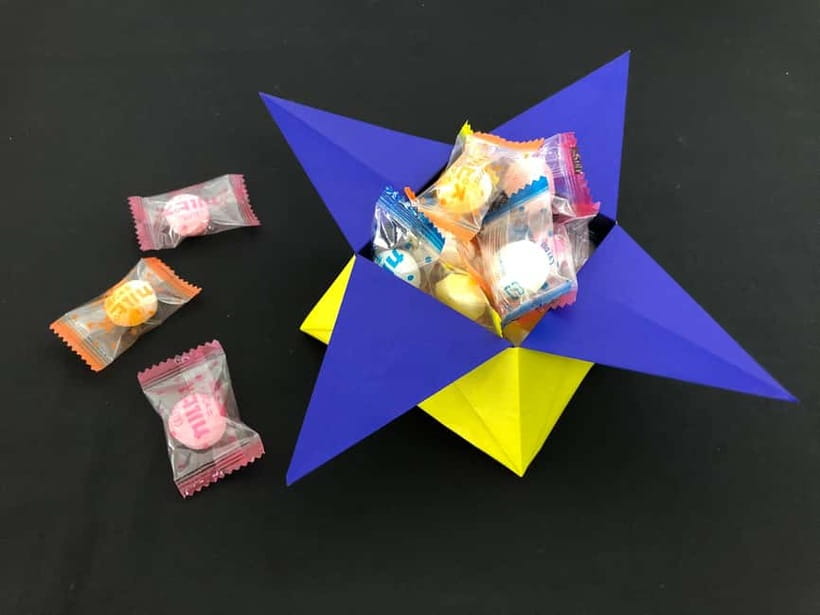
The designs also give you a pleasant mix of results. A crane offers a classic Japanese symbol. A jumping frog adds movement and a small moment of play. A lotus flower looks decorative, while an open box produces something useful. The samurai helmet gives children and families a shape with an obvious connection to Japan.
Manami explains how many figures begin with related basic folds. Once you understand that foundation, later shapes feel less mysterious. You are not simply copying hand movements. You begin to see how a square sheet can become a figure through a small set of repeated ideas.
The stories behind the paper shapes
The cultural side of the class is one of its best features. Manami talks about the background and meaning of the shapes as you make them, including the importance of the origami crane in Japan.
This context gives the activity more weight than a craft souvenir session. A paper crane is not just a bird with pointed wings. It carries cultural meaning, and learning that while your own fingers are shaping the paper makes the explanation easier to remember.
Manami also brings personal stories from her family and childhood into the lesson. That gives you a direct connection to how origami can be part of everyday Japanese life, rather than treating it as an old art locked away in a museum.
The conversation can extend beyond folding. You may talk about Japanese customs, childhood memories, and the place of origami in Japanese culture. The class remains informal, so it suits people who want a small cultural exchange as well as a practical skill.
I would not book this expecting a formal lecture on Japanese art history. The cultural explanations are woven into the activity and kept at a level that works for a short class. That balance is helpful, particularly for families and people who want context without sitting through a long presentation.
Paper, tools, snacks, and what you take home
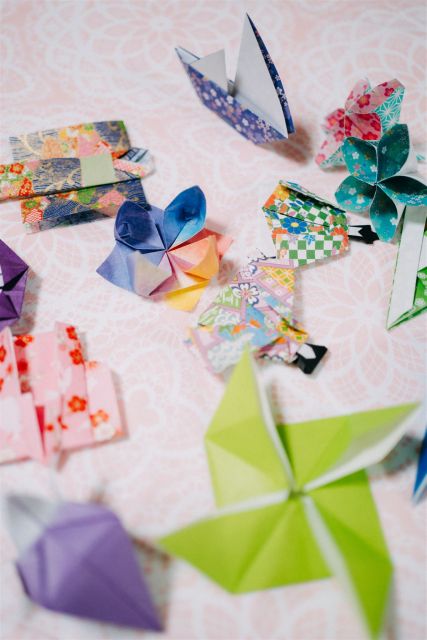
The paper selection adds real pleasure to the session. You can choose from traditional and modern origami papers, including sheets with attractive designs. Selecting the right paper for each figure gives you another small decision and makes the finished pieces feel personal.
You receive scissors and pens when they are useful for the selected projects. Water and some snacks are included, so you do not need to plan the class around finding a drink afterward. Small bags are provided for carrying your work home.
That last detail is practical. Folded paper can flatten or become damaged in a crowded day bag, especially if you are moving around Tokyo afterward. A separate bag gives your creations a better chance of reaching your suitcase in good shape.
The finished pieces also make better souvenirs than many quick purchases. They are light, easy to pack, and connected to a specific hour of your time in Tokyo. A crane or lotus flower on a shelf at home can bring back the memory of the class more clearly than another mass-produced trinket.
Same base, a completely different sort of day:
- Tokyo: teamLab Planets TOKYO Digital Art Museum Entry Ticket
★ 4.6 · 9,779 reviews - Mt Fuji & Hakone Cruise, Drum Show Bullet Train 1 Day from Tokyo
★ 4.0 · 7,413 reviews - Tokyo: Sumo Show Experience with Chicken Hot Pot and a Photo
★ 4.8 · 6,678 reviews - Tokyo: Shinjuku Food Tour (13 Dishes at 4 Local Eateries)
★ 5.0 · 6,603 reviews
Meeting in Shinjuku without getting turned around
The class takes place at FEEP Shinjuku Higashi-guchi, inside the Shinseido Building at 5F, 3-29-11 Shinjuku, Shinjuku-ku. The nearest station is Shinjuku-sanchome, served by metro lines M09, F13, and S02. You can also reach it from the east gate of JR Shinjuku Station.
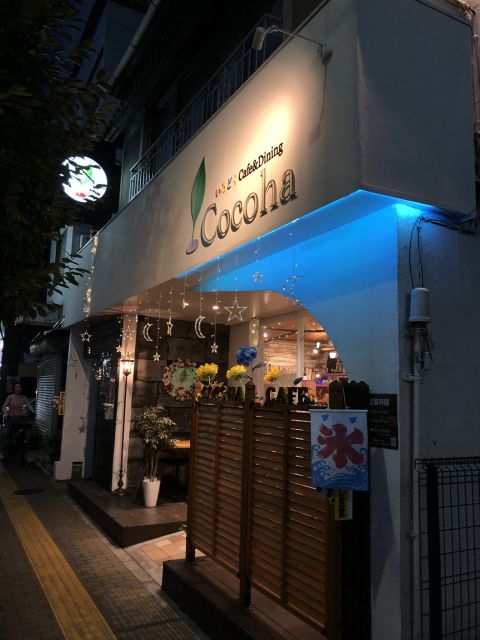
Allow time to find the building. FEEEP is a shared workspace with many meeting booths across one floor, not a traditional shopfront with a large class sign. The entrance is locked, so message Manami once you reach the fifth floor.
This is the one part of the arrival process that deserves extra attention. Shinjuku is a major transport area with plenty of signs, exits, and crowds. Use the supplied map location, check the building address before leaving the station, and avoid arriving at the last minute.
There is no train-station pickup. You are responsible for reaching the building, but the central location makes it practical to pair with time in Shinjuku. The class lasts 90 minutes, so you can fit it into a half-day plan without giving up a full morning or afternoon.
The venue is wheelchair accessible. If your group includes someone who needs special care, contact the provider ahead of time because the venue may need to change. The same advance notice applies to children under seven.
Is $58 a fair price?
At $58 per person, this is not the cheapest craft activity you will find in Tokyo. You are paying for instruction, prepared materials, a central location, English guidance, snacks, and a personal cultural explanation from Manami.
The value depends on what you want from the class. If your only goal is to learn one simple crane, the price may feel high. You could find paper and online instructions for far less. The class makes more sense if you want to produce several designs, understand their meanings, and have someone correct your folds as you go.
The time also matters. Ninety minutes is long enough to make multiple objects without turning the activity into a full-day commitment. For couples or families, the shared process can be more memorable than another hour of shopping or sightseeing.
I would see the price as reasonable for a guided cultural activity, but not an automatic bargain. One participant found it a little expensive while still recommending the class for learning several origami creatures in Tokyo. That is the right way to think about it: you are paying for patient teaching and a personal connection, not just paper.
Who will enjoy this most
This class suits first-time folders and people with only a little previous experience. You do not need to bring supplies, and Manami explains the steps clearly enough for children and adults to work together.
Families should note the age issue. The class can work well with school-age children, and Manami has taken special care to help an eight-year-old follow the process. Children under seven require advance notice and a venue change, so do not assume the standard meeting point will work for them.
Couples may like the quiet, cooperative nature of the activity. You can compare your folds, choose different papers, and leave with several small reminders of the day. Solo visitors also receive plenty of direct interaction, and a one-to-one session can provide especially close instruction.
It is less suitable for an advanced origami enthusiast looking for complex modular figures or highly technical models. The designs are mainly chosen so newcomers can finish them during the 90-minute session. If you already make difficult models at home, ask about the available level before booking, but remember that on-site customization is not available.
Small details that improve the visit
Message Manami when you reach the fifth floor because the FEEEP entrance is locked. This is more important than it sounds, since the building contains a shared workspace rather than a clearly marked tourist attraction.
Arrive with enough time to find the building and settle in. Shinjuku-sanchome is the easiest station, while the JR Shinjuku east exit is another option. Keep the address and map open on your phone.
Choose designs based on your own pace, not on how many you hope to finish. Three carefully made pieces are better than five rushed ones, particularly if you want the folds to hold their shape.
Ask questions as soon as you lose track. Manami’s patient, step-by-step style is a major part of the value, and the class is designed for you to request help. There is no prize for silently struggling with a crease.
You can take photos of your finished work and share them with friends and family. The small carry-home bags make this easy, but handle the pieces carefully until they have settled into your luggage.
Alcohol and drugs are not allowed. Water and snacks are supplied, so the basic refreshments are already covered.
Should you book this origami experience?
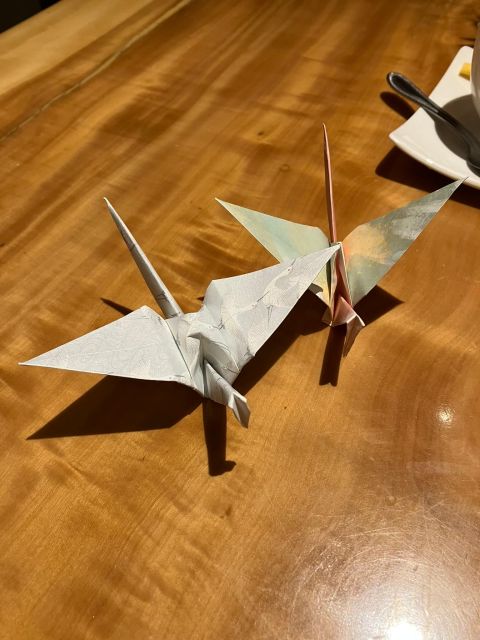
Book it if you want a calm, hands-on way to connect with Japanese culture, especially if you are new to origami. Manami’s lifelong practice, gentle instruction, family stories, and explanations of each shape give the class more substance than a simple paper-folding demonstration.
I would also recommend it for families with children old enough to follow several steps, couples seeking a quieter activity, and solo visitors who enjoy meeting a local teacher. The finished pieces are easy to carry, and the class fits neatly into a Shinjuku day.
Think twice if you are an advanced folder or if $58 feels too high for a beginner craft. The designs are not customized, and the venue can be tricky to find. For most first-timers, though, the mix of instruction, cultural context, attractive paper, and three to five finished shapes makes this a worthwhile 90-minute pause in Tokyo.
FAQ
How long does the origami class last?
The class lasts 90 minutes.
Who teaches the origami class?
Manami Watanabe teaches the class. She is from East Tokyo and has practiced origami since she was three years old.
Is the instruction available in English?
Yes. The listed language for the experience is English.
How many origami shapes can I make?
You can expect to make about three to five shapes during the session, depending on your pace and the designs you choose.
Is the class suitable for beginners?
Yes. The class is designed mainly for beginners, with step-by-step guidance and time to ask for help.
What materials are included?
Origami paper, scissors, pens, water, snacks, and small bags for carrying your finished pieces are included.
Where is the meeting point?
The meeting point is FEEP Shinjuku Higashi-guchi, Shinseido Building 5F, Shinjuku 3-29-11, Shinjuku-ku, Tokyo. The nearest station is Shinjuku-sanchome, and the building can also be reached from the east gate of JR Shinjuku Station.
Is the activity wheelchair accessible?
Yes, the activity is listed as wheelchair accessible. If someone in your group needs special care, contact the provider in advance because the venue may need to change.
Just added around Tokyo
- Private Arrival Transfer : Narita International Airport to Central Tokyo City★ 4.5 · 12 reviews
- Narita Airport(NRT): Private Transfer to Tokyo/Yokohama 1-9pax★ 5.0 · 47 reviews
- Private Transfer from Narita Airport to Yokohama Port and City★ 4.5 · 17 reviews
- [Narita Airport Terminals 1, 2] 40-60km Sawara Itako Historic Bike Tour★ 5.0 · 13 reviews
- 3 Day Japan Highlights Tour: Tokyo, Mt.Fuji, Nara, Kyoto, Osaka★ 5.0 · 22 reviews
- The 10 Tastings of Tokyo With Locals: Private Street Food Tour★ 5.0 · 48 reviews
- Small Town in the Big City: Tasting Tokyo’s Kichijoji★ 5.0 · 195 reviews
- Small Town in the Big City: Tasting Tokyo’s Kichijoji★ 5.0 · 16 reviews
Tokyo Tours, compared.

Mt Fuji and Hakone 1-Day Bus Tour Return by Bullet Train
Read our review →

teamLab Planets TOKYO Digital Art Museum Entry Ticket
Read our review →
Mt Fuji & Hakone Cruise, Drum Show Bullet Train 1 Day from Tokyo
Read our review →
Sumo Show Experience with Chicken Hot Pot and a Photo
Read our review →
Shinjuku Food Tour (13 Dishes at 4 Local Eateries)
Read our review →
Tokyo Mt Fuji 5th St & Hakone Cruise Bus Tour w/Bullet Train
Read our review →