
Reviewed · TOKYO TOURS
Tokyo: Origami Fun for Families & Beginners in Asakusa
Asakusa’s temples and busy streets get plenty of attention, but this 45-minute origami session gives you a quieter way to enjoy Japanese culture. You choose your paper, select a model on a tablet, and fold at your own pace. I like the freedom to try several designs, and I like the small group size, capped at six people. The main catch is time: 45 minutes passes quickly, especially if you choose an intermediate model.
The activity is friendly for first-timers, with staff nearby rather than a teacher leading every move. I also like the personal touches, such as stickers, stamps, and markers for decorating your finished pieces. Bring socks, expect stairs, and remember that children under 13 need adult supervision.
Key points at a glance
- Choose from more than 100 models: Fold animals, flowers, vehicles, and other designs from beginner to intermediate level.
- Pick from 50 paper colors: You can match the paper to your chosen figure, then decorate it with stickers, stamps, or markers.
- Tablet guidance keeps beginners moving: Pause, replay, or return to earlier steps whenever a fold needs another look.
- Small groups make help easier: The studio accepts no more than six participants, and staff can assist when needed.
- Plan for a 45-minute session: You may finish around four items, but complex models can use most of your time.
- Practical limits matter: Socks are required, the studio has stairs only, and seating has no back support.
Folding paper in the heart of Asakusa
Asakusa is one of Tokyo’s most popular sightseeing areas, known for its traditional atmosphere and major sights. This studio offers a different kind of stop. Instead of simply looking at Japanese craft, you handle the paper yourself and leave with something you made.
The activity begins with an introduction to the studio and its folding system. You then use a PC tablet with a touchscreen menu to browse the available models. Categories include animals, flowers, and vehicles, with choices ranging from simple beginner shapes to more demanding intermediate designs.
I like this setup because you are not locked into one project. If a crane, flower, or vehicle catches your eye, you can choose it. If the first design proves too tricky, you can return to the menu and select something simpler.
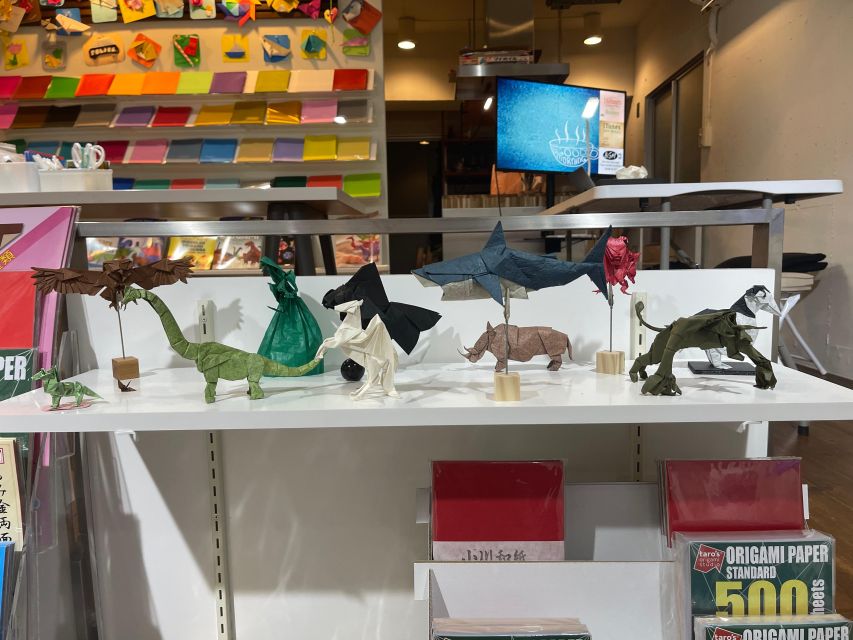
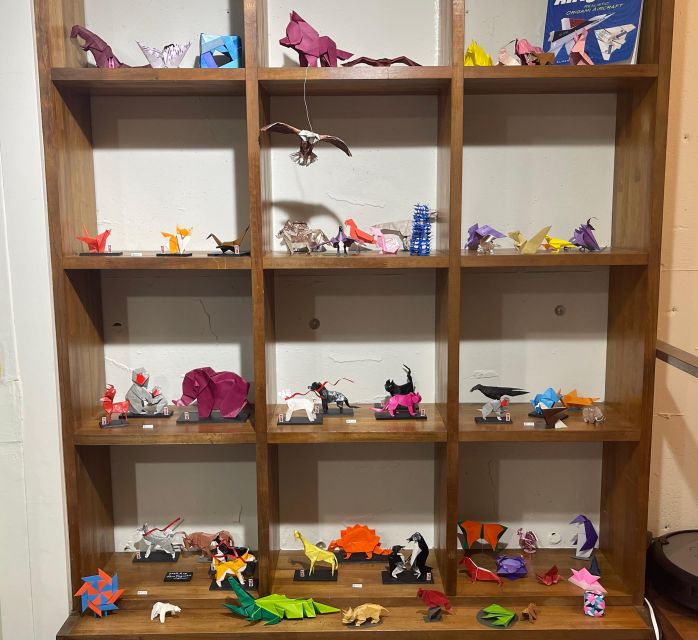
The studio also has origami displays to look at during or after your session. These displays give you a sense of what careful folding can produce, though you should keep your own expectations in check. A first attempt may have uneven corners and slightly loose folds. That is part of the fun, especially for children.
A few more Tokyo half-days to weigh up
- Mt Fuji and Hakone 1-Day Bus Tour Return by Bullet Train
★ 5.0 · 26,383 reviews - 1-Day Tokyo Bus Tour
★ 5.0 · 14,250 reviews - Tokyo: TOKYO SKYTREE® Admission ticket
★ 4.5 · 11,192 reviews
How the tablet-guided session works
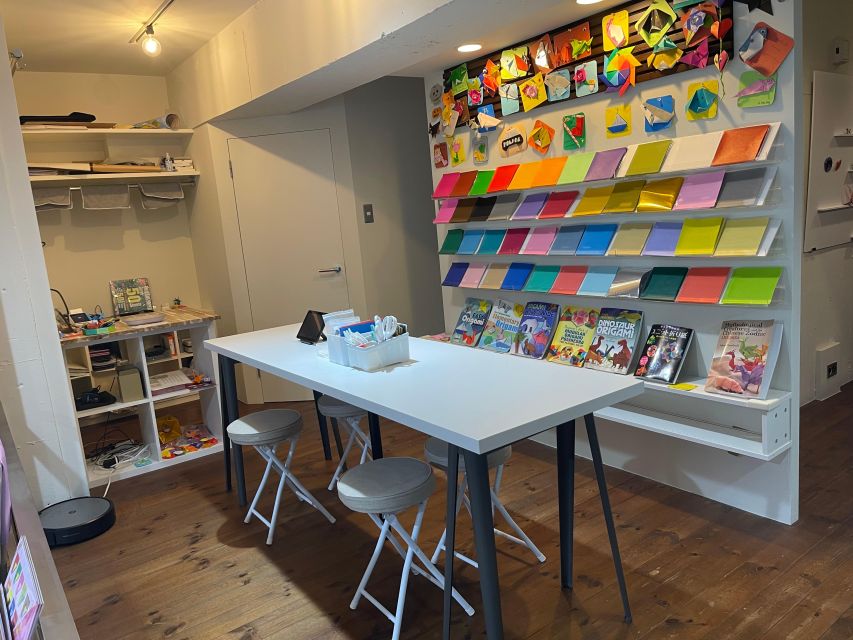
The process is simple, but the order matters. First, choose a model on the tablet. Look at the difficulty level before you commit, especially if you are folding with a young child or have never tried origami before.
Next, go to the paper wall and choose your sheet. There are 50 colors available, so you can make a bright animal, a soft-colored flower, or a vehicle in a shade that fits your taste. The paper choice is more than decoration. It gives children an early decision to make and helps turn the activity into their own project.
Return to the tablet, press Play, and follow the steps. The program takes you from a square sheet to the finished form. You can replay a step or go back to an earlier one, which is useful when a fold does not line up.
The instructions are designed for beginners, but origami still demands attention. Small folds can be hard for young hands, and an incorrect crease can affect the next several steps. Staff members are present to watch for trouble and offer help. They do not lead a full class, so you should expect to work through the tablet rather than sit back while an instructor demonstrates every model.
That distinction is important. This is an assisted, self-guided activity, not a private lesson. If you want constant one-to-one teaching, this may feel less personal. If you like choosing your own projects and working independently, the format gives you more control.
What you can make in 45 minutes
The session length is enough for an introduction and several small projects, but not enough to take on every model in the studio. A family group may finish around four items per person if it chooses straightforward designs and works steadily.
Beginners should start with an easier model. That lets you learn the basic actions without spending most of the session fixing one difficult fold. Once you have a finished piece in your hand, you can decide if there is time for something more complex.
Intermediate designs can be rewarding, but they require patience. If you are visiting with children, allow them to choose a model they can manage rather than picking only by appearance. A complicated figure may look impressive on the tablet but become frustrating after several steps.
The best plan is to make one simple item first, then use the remaining time for another beginner model or a slightly harder choice. You might finish fewer pieces, but the process will be calmer.
One useful detail from the feedback is that a participant enjoyed a one-on-one session with David, folding several figures while learning about origami. That suggests staff can give more focused help when the group is small or when other participants are working independently. Still, you should not book this expecting a guaranteed private lesson. The normal format remains tablet-guided.
Why families find it easy to enjoy
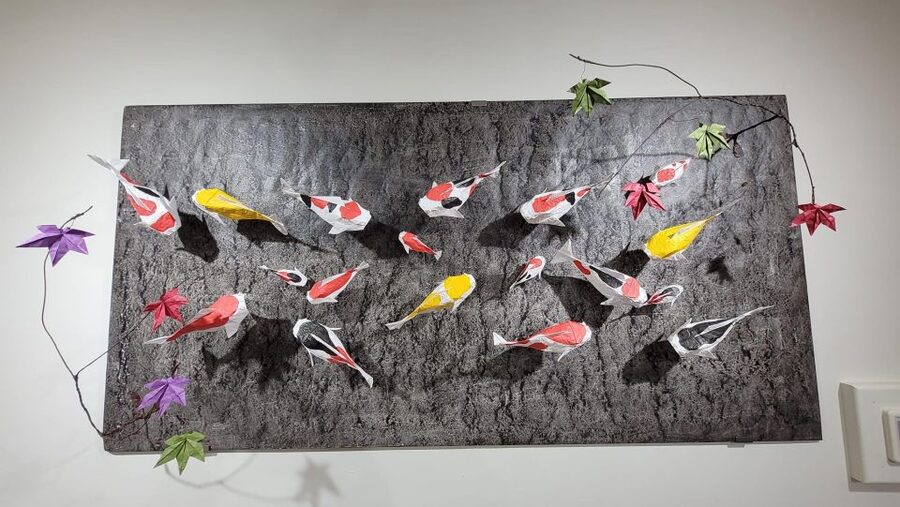
The activity works well across generations because everyone can choose a different level. A seven-year-old might focus on a simple animal, while a parent or grandparent tries a flower or vehicle with more folds.
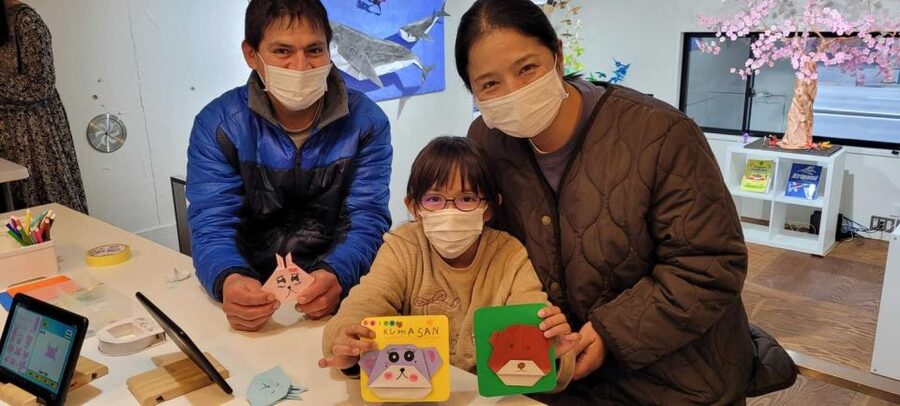
A family group of three, including a seven-year-old and a grandmother, made about four items each during the allotted time. That is a useful guide for planning. You may produce several small creations, but the exact number depends on the models you select and how much help you need.
Children often enjoy the choice of colors and the decorating stage as much as the folding itself. After completing a figure, they can add stickers, stamps, and marker details. These supplies help when a finished form looks plain or when a child wants to make the piece personal.
The staff approach also suits children who need a little help but do not want someone taking over. One staff member reportedly made a rose for a child, a small gesture that shows how assistance can add a memorable touch. Do not assume this will happen for every participant, but staff can help with individual models when necessary.
Younger children need close supervision. The activity is recommended for children four and older, while the more detailed guidance says children under five who cannot fold independently need an adult beside them throughout. All children under 13 need adult supervision for the full activity.
Same base, a completely different sort of day:
- Tokyo: teamLab Planets TOKYO Digital Art Museum Entry Ticket
★ 4.6 · 9,779 reviews - Mt Fuji & Hakone Cruise, Drum Show Bullet Train 1 Day from Tokyo
★ 4.0 · 7,413 reviews - Tokyo: Sumo Show Experience with Chicken Hot Pot and a Photo
★ 4.8 · 6,678 reviews - Tokyo: Shinjuku Food Tour (13 Dishes at 4 Local Eateries)
★ 5.0 · 6,603 reviews
The studio setting and practical comfort
This is a shoes-required-in-reverse kind of place. You must wear socks in the studio, so bring a pair or buy them before arriving. That rule can catch families off guard, particularly if you have spent the day in sandals.
The seating has no back support. For a 45-minute activity, this may be fine for many people, but it is worth considering if you need supportive seating. The studio is also not handicap accessible. There are no ramps or lifts, only stairs, so anyone with mobility concerns should account for that before booking.
Finding the entrance takes a little care. The studio entrance is on the main street side of the building. If you are beside the park, you are at the back and cannot enter from there. Look for the company sign on the front of the building and the brown sea turtle fixed to the wall below the window.
These details are small, but they can save time in Asakusa, where a wrong turn can mean stopping to check the location again. Arrive with socks on and use the street-side entrance.
The value of $27 per person
At $27 per person, this is not the cheapest way to fill 45 minutes in Tokyo. The price makes more sense if you value an organized indoor activity, a broad choice of paper and designs, and staff support when you get stuck.
Origami paper and supplies are included, as are the tablet instructions and taxes and fees. You are not paying extra for each sheet or each model, so you can try several designs within the session. That is useful for families, since each person can choose a different color and project without adding small material charges.
The small group limit also improves the value. With no more than six participants, staff have a reasonable chance to notice when someone needs help. The experience is less valuable if you want a long, detailed lesson on traditional origami technique, since this is not a teacher-led workshop.
I see the price as fair for families and first-time visitors who want a planned cultural activity in Asakusa. It is less compelling for experienced folders who already know the basics and simply want access to paper. The included guidance and friendly support are the main reasons to pay for this session.
Who should book this activity
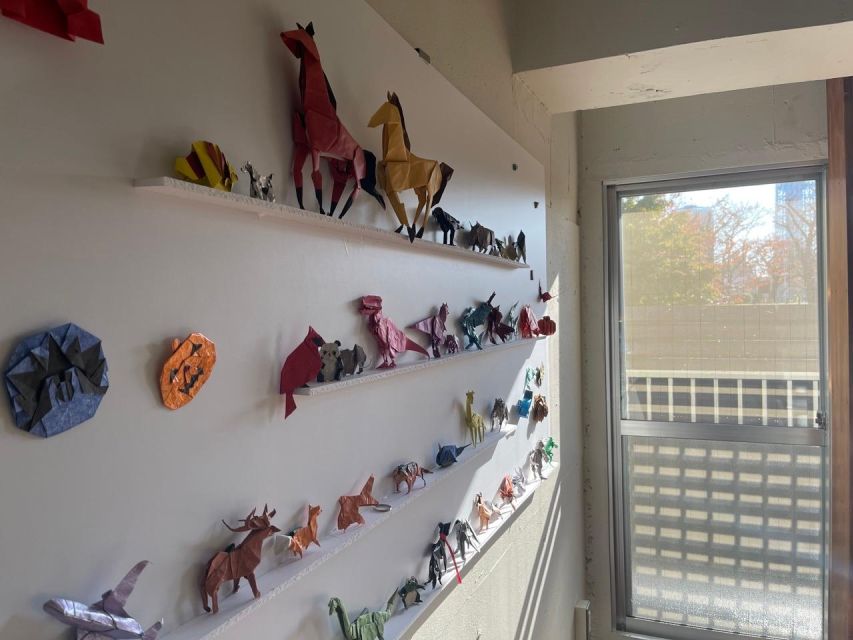
I would recommend it to families with children, first-time origami folders, and adults who want a calm break from sightseeing. It also suits mixed-age groups because each person can choose a different model and work at a personal pace.
The activity is a good fit if you enjoy making something tangible. You leave with your paper creations rather than only photographs, and the decorating supplies give you a chance to add a personal finish.
It may not suit you if you want a formal lesson with a teacher demonstrating each fold in front of the group. The tablet provides the main instruction, while staff step in as needed.
I would also think twice if you need accessible facilities, supportive seating, or a longer session. The stairs, backless seating, and 45-minute limit are clear constraints. People with a cold should not take part, and children under four are not considered suitable.
Timing your Asakusa visit
The activity lasts 45 minutes, so it can fit between other Asakusa plans. Because starting times vary, check the available schedule when choosing a booking. You should allow enough time to locate the correct entrance, especially if you are coming from the park side of the building.
The session itself has a natural rhythm:
- Choose a model on the tablet.
- Select paper from the 50-color wall.
- Follow the folding steps.
- Ask staff for help if needed.
- Decorate your finished piece.
- Try another model if time remains.
- Look at the studio displays and take photos before leaving.
Photos are allowed throughout the experience. You can also make purchases at the studio, though the supplied information does not specify what is available or how much it costs.
A flexible booking policy helps if your Tokyo schedule changes. You can cancel up to 24 hours before the activity for a full refund, and you can reserve now and pay later. That makes it easier to place the session into a busy sightseeing day without paying at the time of booking.
My take on the experience
The strongest part of this activity is its balance of independence and help. You are free to choose your own model and paper, but staff remain available when the tablet instructions are not enough.
The most praised qualities are the clear guidance, kind assistance, and relaxed small-group setting. Those strengths matter because origami can become frustrating fast when one fold goes wrong. A nearby staff member can get you back on track without turning the whole session into a formal class.
The main weakness is the short time. Forty-five minutes is enough to learn the system and make several simple items, but you will need to keep moving if you want to try more than one or two designs. Choose an easy model first, and you will get more from the session.
Should you book Taro’s Origami Studio?
Book it if you want a hands-on family activity in Asakusa, especially if no one in your group has much origami experience. The 50 paper colors, 100-plus models, tablet guidance, and small group format give you plenty of choice without making the activity hard to follow.
Skip it if you want an extended private lesson, accessible facilities, or a full afternoon of crafting. For everyone else, bring socks, choose a beginner model first, and treat the session as a pleasant creative pause in your Asakusa sightseeing day.
FAQ
How long does the origami activity last?
The activity lasts 45 minutes.
How much does it cost?
The price is $27 per person.
How many people can join the group?
The group is limited to six participants.
Is the activity suitable for beginners?
Yes. The tablet-guided instructions are designed for people with no prior origami experience.
How many origami models can I choose from?
You can choose from more than 100 origami models, ranging from beginner to intermediate difficulty.
How many paper colors are available?
The studio provides 50 colors of origami paper.
Is the activity teacher-led?
No. The activity is guided mainly by tablet software. Staff members are present to help with models when needed, but this is not a teacher-led lesson.
Do I need to bring anything?
You must bring socks or purchase a pair beforehand. Socks must be worn in the studio.
Can children join the activity?
The activity is recommended for children four and older. Children under five who cannot fold independently need adult supervision throughout, and all children under 13 need adult supervision.
Is the studio wheelchair accessible?
No. The facility has no ramps or lifts and can only be reached by stairs. Seating does not have back support.
Just added around Tokyo
- Private Arrival Transfer : Narita International Airport to Central Tokyo City★ 4.5 · 12 reviews
- Narita Airport(NRT): Private Transfer to Tokyo/Yokohama 1-9pax★ 5.0 · 47 reviews
- Private Transfer from Narita Airport to Yokohama Port and City★ 4.5 · 17 reviews
- [Narita Airport Terminals 1, 2] 40-60km Sawara Itako Historic Bike Tour★ 5.0 · 13 reviews
- 3 Day Japan Highlights Tour: Tokyo, Mt.Fuji, Nara, Kyoto, Osaka★ 5.0 · 22 reviews
- The 10 Tastings of Tokyo With Locals: Private Street Food Tour★ 5.0 · 48 reviews
- Small Town in the Big City: Tasting Tokyo’s Kichijoji★ 5.0 · 195 reviews
- Small Town in the Big City: Tasting Tokyo’s Kichijoji★ 5.0 · 16 reviews
Tokyo Tours, compared.

Mt Fuji and Hakone 1-Day Bus Tour Return by Bullet Train
Read our review →

teamLab Planets TOKYO Digital Art Museum Entry Ticket
Read our review →
Mt Fuji & Hakone Cruise, Drum Show Bullet Train 1 Day from Tokyo
Read our review →
Sumo Show Experience with Chicken Hot Pot and a Photo
Read our review →
Shinjuku Food Tour (13 Dishes at 4 Local Eateries)
Read our review →
Tokyo Mt Fuji 5th St & Hakone Cruise Bus Tour w/Bullet Train
Read our review →