Reviewed · TOKYO TOURS
Tokyo Skytree Admission Ticket with Tembo Deck and Galleria
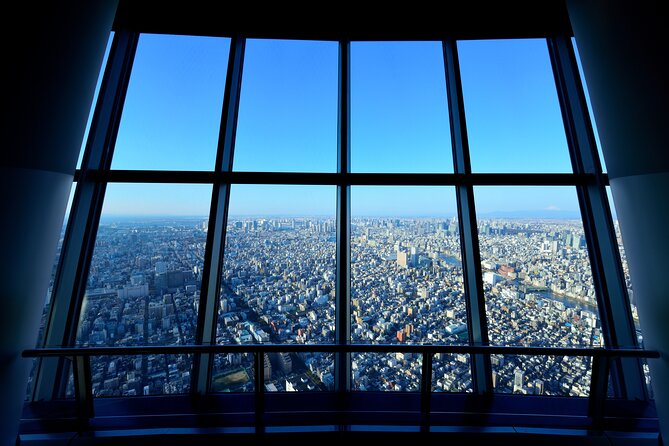
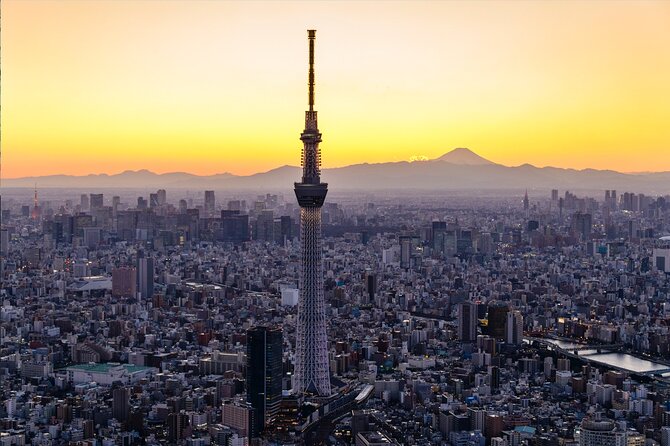
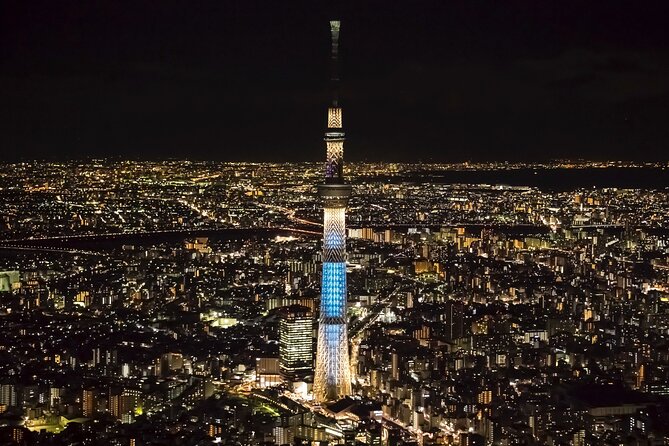
Tokyo Skytree sends you up 350 meters in a glass tube-style elevator, then gives you Tokyo from a height that makes the city feel almost map-like. On a clear day, you may spot Mount Fuji. At night, the streets become lines of light, and the Sumida River helps you find your bearings.
I like the choice of timed entry, which can save you from joining the longest ticket line. I also like the option to add the 450-meter Tembo Galleria, where the skywalk gives you another 100 meters of height and a more dramatic view.
The catch is crowd control. A timed ticket does not mean you will glide straight through the building. You may wait for the elevator, queue again to come down, and spend much of your one to two hours moving with a crowd.
Key points at a glance
- 350-meter Tembo Deck: The main observation level offers wide views across Tokyo and is included with the standard admission.
- 450-meter Tembo Galleria: An upgrade takes you higher and includes the thrilling skywalk section.
- Fast glass elevator: The lift reaches the Tembo Deck in about 55 seconds, making the ascent part of the experience.
- Sunset and night views: Arrive near sunset to watch Tokyo change from daylight to a field of city lights.
- Crowds affect the timing: Allow extra time for entry, elevator queues, photographs, and the journey back down.
- Clear weather matters: Mount Fuji and distant views are best on a bright, clear day.
Tokyo from 350 meters
Tokyo Skytree is not a guided tour. You arrive at Tokyo Skytree Town at 1 Chome-1 Oshiage in Sumida City, redeem your admission, and make your way through the tower experience. Staff are described as polite and helpful, but nobody is assigned to lead you around or explain the city as a guide would.
That is both a strength and a limitation. You can move at your own pace and stop wherever the view catches your eye. But if you want stories, neighborhood context, or a personal introduction to Tokyo, this ticket will not provide it.
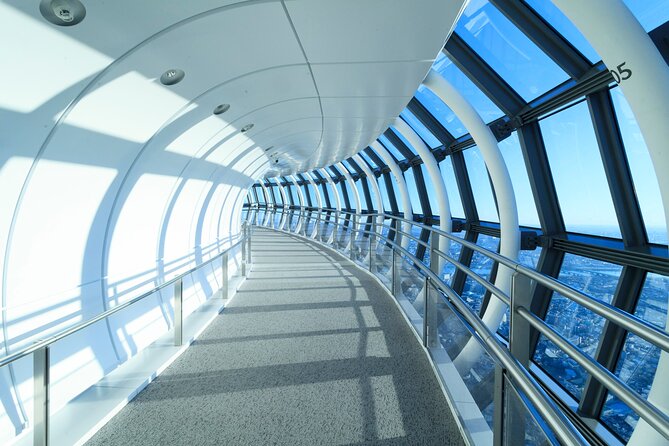
The main destination is the Tembo Deck, roughly 350 meters above the ground. From here, Tokyo spreads in every direction, with the river, streets, towers, and built-up districts forming a huge urban picture. You can spend a quick 20 minutes taking photographs, or stay longer to watch the light change.
The views are the reason to come. The building itself is clean and well organized, and the tower feels secure even for people who are uneasy with heights. You know you are very high, but the enclosed observation areas make the experience less exposed than an open-air platform.
A few more Tokyo half-days to weigh up
- Mt Fuji and Hakone 1-Day Bus Tour Return by Bullet Train
★ 5.0 · 26,383 reviews - 1-Day Tokyo Bus Tour
★ 5.0 · 14,250 reviews - Tokyo: TOKYO SKYTREE® Admission ticket
★ 4.5 · 11,192 reviews
The glass elevator is part of the show
The journey up is not a dull transfer from the ground to the view. The glass tube-style elevator gives you a fast look at Tokyo as the ground falls away. One ascent to 350 meters takes about 55 seconds, so the lift is quick enough to feel thrilling without leaving much time to study the scenery.
Once at the Tembo Deck, you may find lines near popular viewing spots and elevators. Crowds can be heavy, especially at night and around sunset. One visit can take about an hour if the lifts are moving well, while another can stretch toward two hours when queues build.
This is important if you have dinner reservations or another timed activity. Do not schedule Skytree too tightly against the next item on your day. One person reported spending roughly 30 minutes going up and 30 minutes coming down because of crowd levels. That will not happen every time, but it shows why a generous buffer helps.
Is the Tembo Galleria worth the extra cost?
The standard ticket covers the Tembo Deck. You can upgrade to include the Tembo Galleria at 450 meters, which is the higher observation level and the location of the skywalk.
I like the Galleria for a first visit because the extra height changes the feeling of the city below. You get a longer view over Tokyo, and standing on the glass floor adds a little drama. Several people considered the upper level the better choice, while another found the 350-meter deck sufficient. That is a fair split.
For many people, the Tembo Deck already delivers the main reward. If the weather is hazy, the additional 100 meters may not reveal much more. If the sky is clear and you enjoy observation towers, the upgrade makes sense. It is especially appealing if this is your one big city view in Tokyo.
Check your confirmation carefully so you know which level you purchased. The ticket options can cause confusion, and some people have reached the venue expecting both areas, only to be asked to pay extra for the Galleria. Your booking should clearly show if the higher level is included.
Choosing the best time to go
Sunset is the most popular choice for good reason. You can see Tokyo in daylight, watch the sun drop, and then see the city lights appear. On a clear evening, Mount Fuji may be visible in the distance before darkness takes over.
The tradeoff is demand. Sunset brings queues and crowded viewing areas. You may spend less time quietly looking out the windows and more time waiting for a position near the glass. If photographs matter, give yourself patience and do not expect every shot to be free of people or reflections.
Night is also a strong choice. Tokyo becomes a broad field of lights, and the river and surrounding districts are easy to pick out. The experience can feel especially atmospheric after dark, though indoor lighting may reflect on the windows and make night photography harder.
Daytime is the safer choice for clear photographs. You can see more detail in the city, and bright weather gives you a better chance of spotting Mount Fuji. The best time depends on your priority:
- Choose daylight for clearer city detail and easier photographs.
- Choose sunset for the most changing scenery, but expect heavier crowds.
- Choose night for glowing streets and a memorable evening activity.
- Choose a clear day if Mount Fuji is important to you.
Weather is not a minor detail here. Clouds, mist, or haze can flatten the view and hide distant landmarks. The experience requires good weather, and if poor conditions cause cancellation, you are offered another date or a full refund.
Same base, a completely different sort of day:
- Tokyo: teamLab Planets TOKYO Digital Art Museum Entry Ticket
★ 4.6 · 9,779 reviews - Mt Fuji & Hakone Cruise, Drum Show Bullet Train 1 Day from Tokyo
★ 4.0 · 7,413 reviews - Tokyo: Sumo Show Experience with Chicken Hot Pot and a Photo
★ 4.8 · 6,678 reviews - Tokyo: Shinjuku Food Tour (13 Dishes at 4 Local Eateries)
★ 5.0 · 6,603 reviews
Getting in, getting out, and managing the queues
Pre-booking is useful because it gives you a selected entry time and avoids buying admission after you arrive. It may also reduce the language barrier at the ticket counter. That does not remove every line, however.
You can still queue to enter, queue for the elevators, and queue to leave. The exit is a common pressure point. At busy times, people have waited around 20 minutes for the elevator down, and longer delays have also been reported. The tower does not simply empty the moment you decide to leave.
Keep your schedule loose. I would allow at least two hours around the visit if you are going at a busy time, even though the stated experience length is about one to two hours. That extra room protects you from a slow entry or a packed descent.
Your booking confirmation is important. The admission process has not been equally smooth for everyone. Some people have had trouble when a QR code was missing or when a PDF on a phone was not accepted at first. Staff resolved at least one such issue, but printing the required document is the safer approach when your confirmation instructions call for it.
This is a ticketed admission, not a personal tour. If you arrive late, entry may be refused, and the booking is non-refundable. A delayed flight or a change of plans can therefore turn an inexpensive ticket into a complete loss.
What you can do around Tokyo Skytree Town
The tower is part of Tokyo Skytree Town, so the visit does not end at the elevator doors. Shops, restaurants, and a food market surround the attraction, giving you an easy place to eat or browse before or after the view.
An aquarium is also in the surrounding complex, though it is not included in this admission. You need a separate ticket for it. This makes Skytree useful on a rainy or family-focused day because you can combine the tower with other activities in the same area, but do not assume one ticket covers everything.
The surrounding shopping and food options may be the surprise bonus. If the tower is too crowded for your taste, the complex gives you somewhere pleasant to slow down. Families also benefit from practical facilities, including a parent and baby bathroom.
The ticket itself includes landing and facility fees. Parking is not included, so anyone arriving by car needs to budget separately. The location is near public transportation, which is the more straightforward choice for most visits.
Who will enjoy this experience most?
I would recommend Tokyo Skytree to first-time visitors who want a broad view of the city without committing to a guided sightseeing program. It suits photographers, families, couples looking for a night activity, and anyone who enjoys modern architecture and high observation decks.
It is also a good fit if you want flexibility. You can choose your entry time, decide how long to stay, and select the higher Galleria level if the view matters more than keeping the cost low.
Families should note the age rule. Admission is free for children under five. A six-year-old who has not started primary school is also free of charge. Most people can participate, and service animals are allowed.
I would be more cautious if you dislike crowds, waiting, or enclosed lifts. The height itself feels safe, but the crowded queues can be tiring. Someone who strongly dislikes towers may find the packed elevator areas more unpleasant than the observation deck.
Price and overall value
At about $15.08 per person, the standard admission is reasonably priced for one of Tokyo’s major city views. You are paying for access to a landmark tower, the 350-meter Tembo Deck, and the facility fees, not for a guide or a full-day sightseeing program.
The value improves when you use the visit well. Arrive in good weather, choose a time that matches your interest in daylight or night views, and allow enough time to enjoy the surrounding shops and restaurants. A rushed visit with long queues and poor visibility will feel less worthwhile.
The Galleria upgrade is a personal choice. Pay for it if you want the skywalk, a higher viewpoint, and the satisfaction of reaching 450 meters. Skip it if you mainly want to see Tokyo from above and prefer to keep the cost down. The lower deck already provides the central experience.
Compared with the time and cost of a full guided city tour, this ticket is a simple way to add a major viewpoint to your schedule. Its weakness is that the ticket does not guarantee a quiet or quick visit. You are buying access, not an escape from Tokyo’s crowds.
Small details that improve the visit
Bring the booking confirmation in the format requested. If a printed document is required, print it before arriving instead of relying only on a phone PDF.
Give yourself extra time after your booked entry. The queues for the ride down can be surprisingly slow, especially in the evening.
If you hope to see Mount Fuji, place clear weather above the clock. A sunset booking is not automatically a Fuji booking. Haze can block the mountain even when Tokyo itself is easy to see.
At night, take photographs with care. Interior reflections can interfere with shots through the glass. The view may still be excellent, but your best picture could require patience and a darker position near the window.
Do not overlook the staff photo service. Small photos have been offered at both observation levels, and staff may take a picture for you. This is a useful touch for families or couples who do not want to rely on a selfie.
Should you book Tokyo Skytree admission?
Book it if you want a straightforward, self-guided view of Tokyo and can accept queues. The 350-meter deck is the essential choice, while the 450-meter Galleria is worth adding for the skywalk, clear weather, or a special occasion.
Choose a daytime slot for detail, sunset for changing light, or night for glowing city views. Leave room in your schedule, check whether your ticket includes the Galleria, and prepare the correct confirmation document.
I would skip it only if crowds and elevator waits would spoil the day, or if your schedule cannot absorb delays. For everyone else, this is a fairly priced way to see Tokyo from above, with the best results coming from good weather and a relaxed timetable.
FAQ
Where is Tokyo Skytree located?
The ticket redemption point is Tokyo Skytree Town, 1 Chome-1 Oshiage, Sumida City, Tokyo 131-0045, Japan.
What does the standard ticket include?
The standard admission includes access to the Tembo Deck at about 350 meters and the landing and facility fees.
Does the ticket include the Tembo Galleria?
The Tembo Galleria at about 450 meters is offered as an upgrade. Check your booking details carefully to confirm if your purchase includes it.
What is special about the Tembo Galleria?
The Galleria is the higher observation level and includes the skywalk. It gives you an additional 100 meters of height above the Tembo Deck.
How long does the visit take?
The approximate duration is one to two hours. Crowds can make the visit longer, particularly during the elevator ride down.
Is there a guide with the ticket?
No guide is included. This is admission to Tokyo Skytree, allowing you to explore the observation levels independently.
Are children admitted free?
Children under five enter free. Children who are six but have not started primary school are also free of charge.
Is parking included?
No. Parking fees are not included in the ticket.
What happens if poor weather closes the experience?
If the experience is canceled because of poor weather, you are offered a different date or a full refund. The booking itself is otherwise non-refundable and cannot be changed for another reason.
Just added around Tokyo
- Private Arrival Transfer : Narita International Airport to Central Tokyo City★ 4.5 · 12 reviews
- Narita Airport(NRT): Private Transfer to Tokyo/Yokohama 1-9pax★ 5.0 · 47 reviews
- Private Transfer from Narita Airport to Yokohama Port and City★ 4.5 · 17 reviews
- [Narita Airport Terminals 1, 2] 40-60km Sawara Itako Historic Bike Tour★ 5.0 · 13 reviews
- 3 Day Japan Highlights Tour: Tokyo, Mt.Fuji, Nara, Kyoto, Osaka★ 5.0 · 22 reviews
- Small Town in the Big City: Tasting Tokyo’s Kichijoji★ 5.0 · 16 reviews
- The 10 Tastings of Tokyo With Locals: Private Street Food Tour★ 5.0 · 48 reviews
- Small Town in the Big City: Tasting Tokyo’s Kichijoji★ 5.0 · 195 reviews
Tokyo Tours, compared.
Mt Fuji and Hakone 1-Day Bus Tour Return by Bullet Train
Read our review →
teamLab Planets TOKYO Digital Art Museum Entry Ticket
Read our review →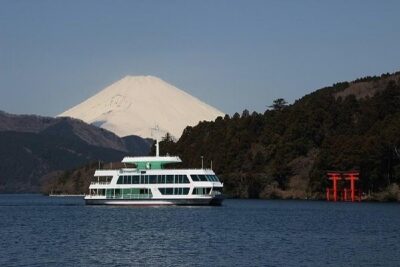
Mt Fuji & Hakone Cruise, Drum Show Bullet Train 1 Day from Tokyo
Read our review →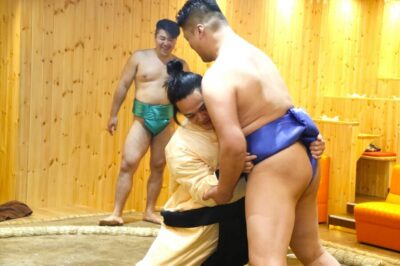
Sumo Show Experience with Chicken Hot Pot and a Photo
Read our review →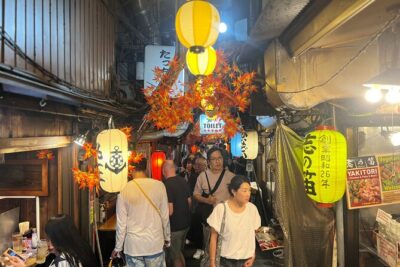
Shinjuku Food Tour (13 Dishes at 4 Local Eateries)
Read our review →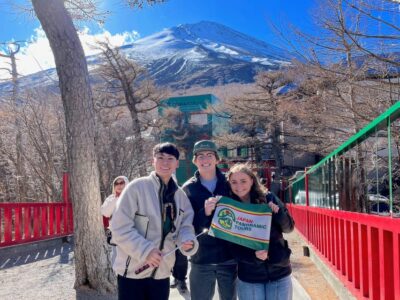
Tokyo Mt Fuji 5th St & Hakone Cruise Bus Tour w/Bullet Train
Read our review →