
Reviewed · TOKYO TOURS
Tokyo Sumo Experience: Chanko & Mochi with a Former Pro
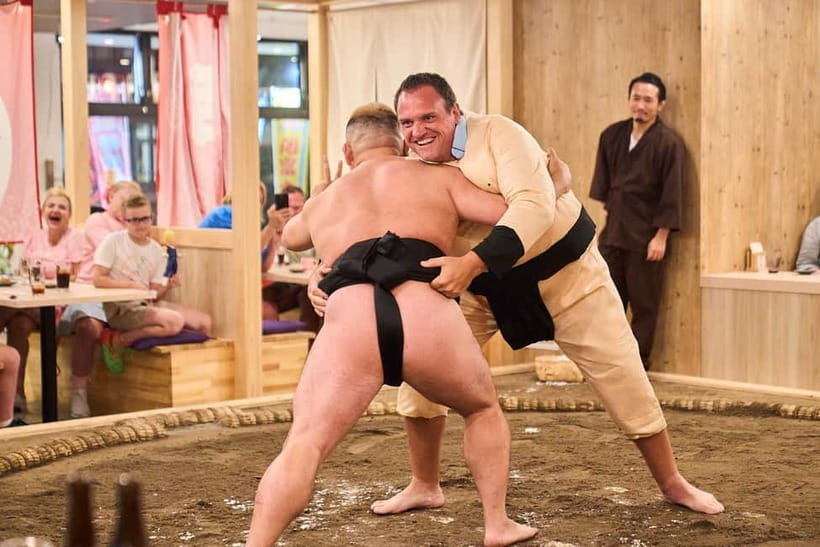
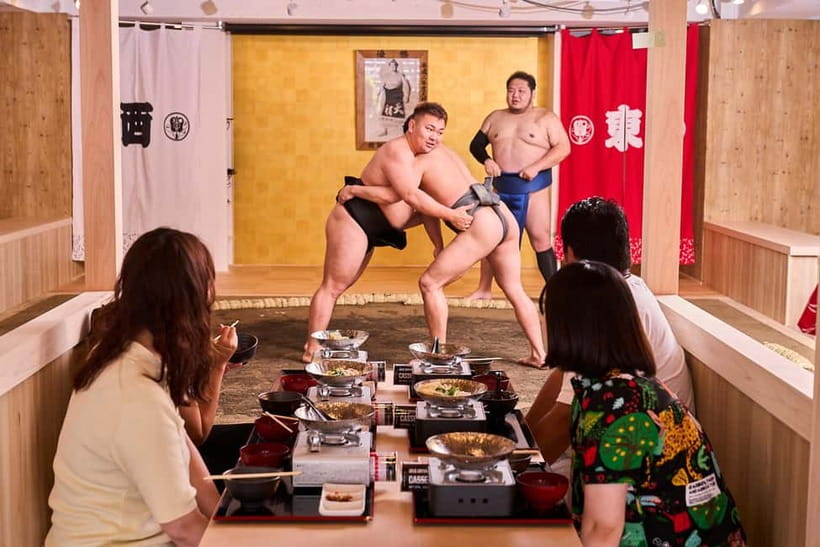
The best part of this Ryogoku sumo experience is the chance to see the action from close range, then step onto the dohyo yourself. You eat chanko nabe, the hot pot traditionally associated with sumo stables, while former pros demonstrate techniques and wrestling rounds right in front of you.
I like the mix of good food and real participation. You are not parked in a chair for two hours: you can help pound mochi, learn basic sumo moves, and test your strength against a wrestler. The main consideration is that this is a lively entertainment show, not a quiet visit to serious morning training, and wheelchair users cannot take part.
Key points at a glance
- Chanko nabe supervised by sumo wrestlers: A filling hot pot meal gives the event a genuine connection to wrestlers’ daily food.
- Three ways to join in: You can try mochi pounding, practice sumo techniques, and take part in a friendly bout.
- Close-up demonstrations: The wrestlers perform powerful matches and training movements beside the dining area.
- Good for families: Children and adults can participate, though standard seat rules require a paid reservation for every person.
- Easy Ryogoku location: The venue is on the first floor near Ryogoku Station, marked by a large sumo sign and flags.
- Useful booking flexibility: Cancellation is free up to 24 hours before the start, and you can reserve now and pay later.
Why Ryogoku is the right place for sumo
Ryogoku is Tokyo’s sumo district, so the setting does some of the teaching before the event begins. This is the part of Tokyo where sumo culture feels most at home, and the venue is only a short walk from Ryogoku Station.
Look for the large sumo wrestler sign and flags outside the first-floor store. One practical tip: the entrance can be a little easy to miss, so allow extra time rather than arriving at the last second. The area also fits neatly into a Tokyo sightseeing day. Asakusa, Akihabara, Nihonbashi, and Tokyo Skytree are all mentioned as nearby destinations, making this a useful evening or mid-day addition to a wider itinerary.
You will not be visiting an active stable for a private look at dawn training. Instead, you are entering a purpose-built venue designed to explain sumo through food, demonstrations, and audience participation. That distinction matters. If you want an informal look at the strict routine of a working stable, this will feel too polished. If you want to understand the sport while having a laugh and trying it yourself, the format is much more welcoming.
More Sumo Experiences in Tokyo
- Tokyo: Sumo Show Experience with Chicken Hot Pot and a Photo
★ 4.8 · 6,678 reviews - Tokyo: Sumo Show and Dining Experience
★ 4.8 · 2,742 reviews - the SUMO show
★ 5.0 · 1,960 reviews
The two-hour program: food, demonstrations, and hands-on sumo
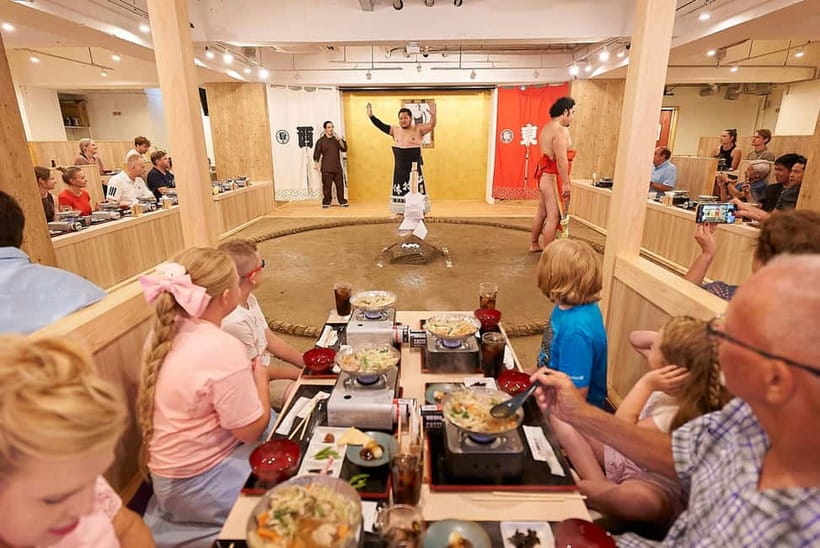
The experience begins with you settling into a seat around the dohyo, the raised sumo ring. Seat locations are assigned by the venue, so you cannot choose a particular place or request a front-row position.
That may disappoint anyone hoping to control the view, but the layout is built around watching the ring from close by. The main event takes place directly in front of the dining area, and the short format keeps the action moving.
The program combines several parts:
- A dynamic sumo demonstration
- An explanation of sumo training and techniques
- Chanko nabe
- Mochi pounding and mochi making
- Friendly audience participation on the dohyo
- Sumo wrestling demonstrations and bouts
The exact order can vary, but you should expect a steady change between watching, eating, and joining in. This keeps children interested and gives less athletic adults plenty to enjoy from their seats.
The demonstrations are one of the strongest parts. You get to see the wrestlers up close instead of watching small figures across a large arena. Their size and speed are easier to appreciate at this distance, especially when they show the force behind a push or demonstrate a technique.
The session is controlled and entertaining. You are not being thrown into an uncontrolled contest. The wrestlers and host guide the activities, invite people to participate, and keep the tone friendly. Several people can try the different activities, so a group does not need to nominate just one brave volunteer.
Chanko nabe: a meal with a sumo connection
Chanko nabe is the signature food here. It is a hot pot dish linked to sumo stables, where wrestlers eat it as part of their regular diet. The recipe and preparation are supervised by sumo wrestlers from an actual stable, giving the meal more meaning than a generic Japanese restaurant dish.
Expect a warm, filling meal rather than a tiny tasting portion. The dish includes fresh ingredients and has been described as both delicious and healthy. It is also substantial enough to help carry you through the rest of an evening in Tokyo.
I like that the food is not treated as a side note. It gives you a simple way to understand sumo life: food, training, and group meals are all part of the culture. You are not just hearing an explanation of a wrestler’s diet. You are sitting down to eat one of its familiar dishes.
The meal also makes the experience easier for mixed groups. Someone who has little interest in wrestling can still enjoy a hot pot dinner, while the sport fans get the demonstrations and activities.
Dietary requests need planning. Vegetarian, vegan, and gluten-free meals can be provided if you notify the provider at least two days before the reservation date. Halal meals are not available, though you may bring your own food. If you have an allergy, ask clearly in advance rather than relying on an on-the-spot adjustment.
One small point to note is the complimentary sour plum drink. It may contain alcohol, so anyone with an alcohol allergy should check before drinking it. The supplied details do not identify the exact ingredients, making caution the sensible choice.
Mochi pounding is more than a dessert break
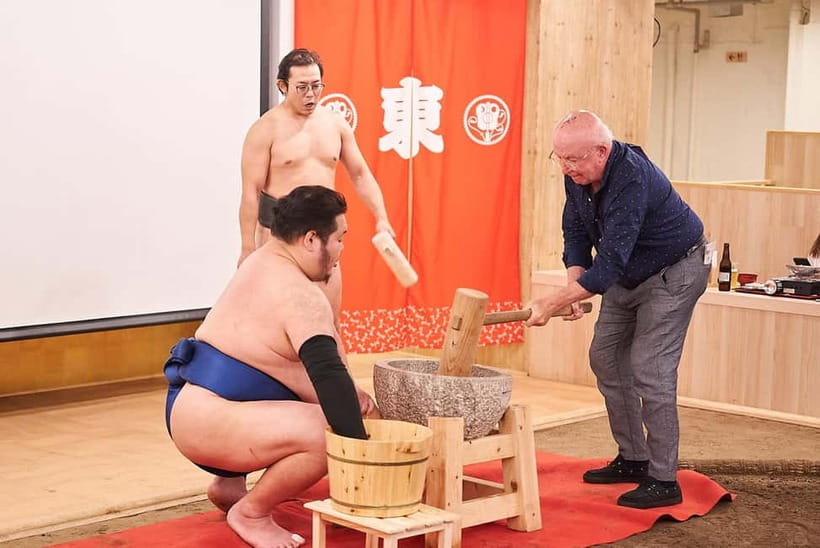
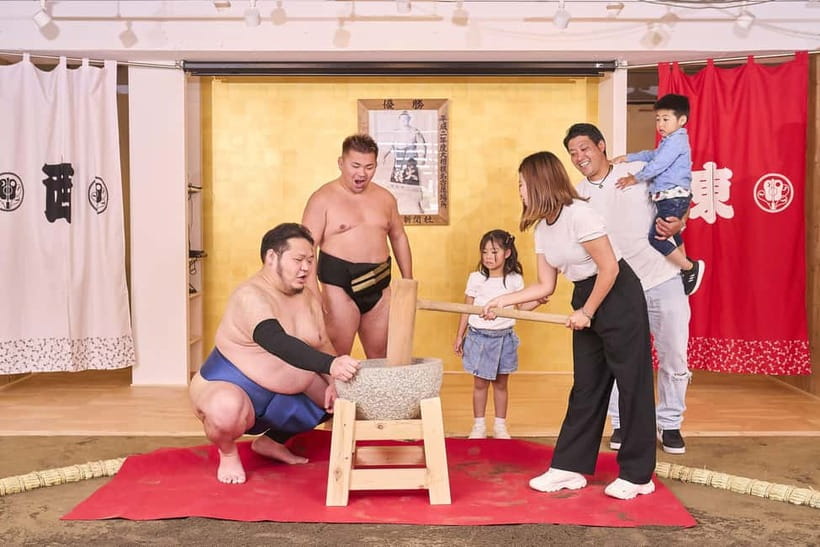
The mochi section adds a traditional Japanese food activity to the sumo program. You watch the pounding demonstration, learn how the process works, and then get a chance to pound mochi with the wrestlers.
The rhythm and teamwork make this a good group activity. It is physical without requiring sumo strength, and it gives children a clear job to do. You then eat sweet mochi for dessert, so the activity has an immediate reward.
This part also breaks up the heavier chanko meal. After watching demonstrations and eating hot pot, doing something with your hands brings the group back into the action. It is one of the easiest parts for almost anyone to join, and many participants consider it a favorite.
Follow the staff’s instructions carefully. Mochi pounding involves a large wooden mallet and coordinated timing, so this is not the moment for everyone to swing at once. The event is supervised, and the process is presented as a controlled demonstration rather than a free-for-all.
More sumo mornings and shows:
- Tokyo Shinjuku Sumo Show & Experience with Photo
★ 5.0 · 1,750 reviews - Tokyo: Sumo Show and Experience in Shinjuku
★ 4.8 · 1,001 reviews - Tokyo: Sumo Tournament Tour with Chair Seat Tickets
★ 4.6 · 753 reviews - Tokyo:Luxury Sumo Show Experience & Japanese cuisine & Drink
★ 4.7 · 577 reviews
Stepping onto the dohyo with a wrestler
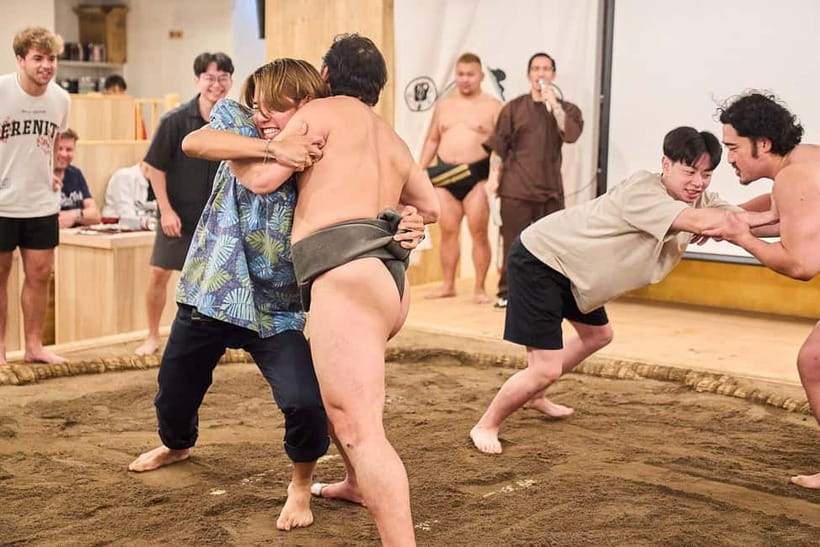
The most memorable choice is usually the sumo bout. You can step onto the dohyo and try your strength against one of the wrestlers.
This is playful participation, not a test of whether you can defeat a professional. The point is to feel the stance, pressure, and difficulty of moving someone who is trained for this sport. Even a brief push gives you a better sense of why balance and footwork matter so much in sumo.
You can also learn basic techniques without taking part in a full bout. That is helpful if you want the cultural explanation but would rather not wrestle in front of a room full of people.
The host plays an important role here. The event depends on clear instructions and good humor, especially when adults and children are taking turns. The hosts and wrestlers are described as friendly, encouraging, and inclusive, with plenty of chances for audience participation.
Parents should pay attention to the seating rules. In standard seats, it is considered dangerous to sit while holding a child on your lap, so you must reserve a place for every person, including the child. Box seats are safer for lap seating, can accommodate up to six people, and are the better choice for a family that needs that arrangement.
What this experience teaches about sumo
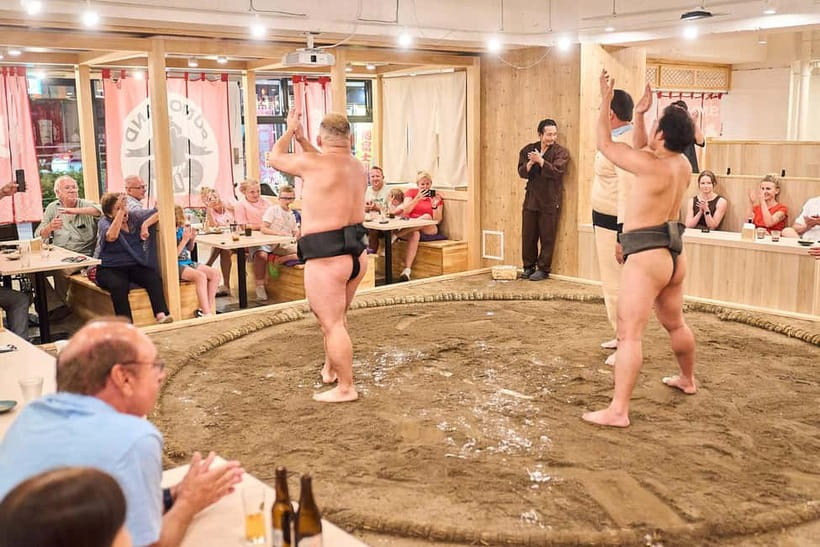
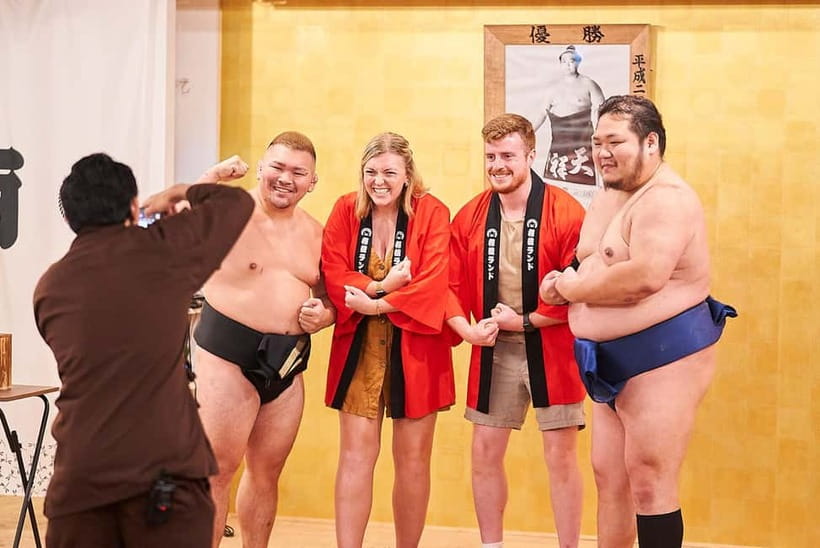
A good sumo activity should give you more than a photo with a large athlete. This one explains parts of the sport’s training, techniques, food, and wrestler lifestyle through short demonstrations and direct contact.
You might see training movements before watching proper wrestling rounds. That order helps you connect the simple exercises to the full match. A stance that looks easy when shown slowly becomes much more impressive when you see it used with speed and force.
The format also gives you a human connection to the wrestlers. You can speak with them through the English and Japanese instruction, participate beside them, and take photographs during suitable moments. The supplied details do not name individual wrestlers or instructors, so do not book this expecting a particular celebrity or champion.
This is a friendly introduction rather than a complete course in sumo rules. You will learn useful basics and see authentic techniques, but the two-hour schedule cannot cover every ritual, ranking rule, or part of stable life. For a first look, that is a fair trade. The event keeps the explanation short enough that you can enjoy yourself.
How the value compares with the $103 price
At $103 per person, this is not a cheap meal or a free public show. You are paying for a two-hour package that combines dinner, demonstrations, instruction, mochi making, and direct participation with former professional wrestlers.
The value improves if you would otherwise pay separately for a sumo-themed meal and a cultural activity. Chanko nabe is included, and the program gives you several active parts rather than one performance followed by a quick photograph. A family or small group can also get more from the experience because several people can join the activities.
I would be more cautious if you want a formal sporting event with strict silence and serious competition. This is built for laughter and participation. It is also less suitable if you dislike being invited onto a stage or dohyo.
The strong rating of 4.8 from 567 bookings supports the idea that the format delivers what it promises, especially for people seeking a fun introduction. Still, ratings cannot remove the two main limitations: assigned seating and the lack of a genuine morning training visit.
Who will get the most from this experience
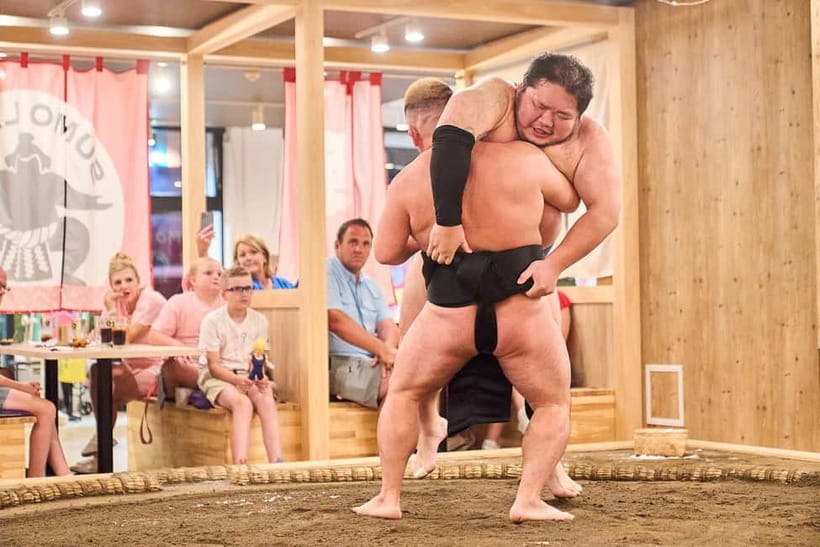
Families are a natural match. Children can watch large-scale action close up, make mochi, learn a few techniques, and try a bout if they wish. The activity has enough variety to hold the attention of older children and teenagers, while parents can focus on the food and cultural background.
It also suits first-time visitors to Japan who want a clear introduction to sumo without committing to a full tournament day. If you happen to be in Tokyo outside the main sumo tournament season, this gives you a way to see the sport in Ryogoku at any time the activity is scheduled.
Food-focused visitors will appreciate the chanko nabe connection. Groups looking for an easy shared activity should also find the format useful because nobody has to be an expert, athletic, or deeply familiar with Japanese customs.
I would not choose it for a wheelchair user, as the activity is not suitable for wheelchair users. People with strict halal requirements should also plan carefully, since halal meals cannot be provided. Anyone with food allergies should contact the provider ahead of time and confirm the available substitutions.
Wear comfortable clothes. You may be sitting for part of the program, eating, pounding mochi, and possibly stepping onto the dohyo. Bring a camera, but remember that seat locations are assigned and your exact photo angle cannot be guaranteed.
Booking and timing advice for Ryogoku
The experience lasts two hours, with starting times dependent on availability. Check the schedule before building a tight connection to another activity.
The venue is close to Ryogoku Station, but one booking detail deserves attention: the entrance is marked by a big sumo wrestler sign and flags, yet one person found it a little hard to locate. Arrive early enough to look around the station area without stress.
You can reserve now and pay later, which helps if your Tokyo plans are still shifting. You can also cancel for a full refund up to 24 hours before the activity. Those terms are useful for a trip with changing weather or a packed sightseeing schedule.
Smoking is not allowed. Seat locations are assigned, and the venue does not accept requests for specific seats. That is worth knowing before booking, especially if your group includes young children or anyone who needs a particular position.
Should you book the Tokyo Sumo Experience?
Book it if you want sumo brought close to you, with a proper meal, lively explanations, and a real chance to join the action. The combination of chanko nabe, mochi pounding, techniques, and friendly wrestling makes the $103 price reasonable for a two-hour cultural activity.
Choose something else if your main goal is serious morning training, a formal tournament, or a wheelchair-accessible venue. For everyone else, especially families, first-time visitors, and groups who enjoy a little harmless embarrassment, this is a smart Ryogoku choice. Arrive early, wear comfortable clothes, notify the provider about dietary needs at least two days ahead, and be ready to step onto the dohyo.
FAQ
Where does the Tokyo Sumo Experience take place?
It takes place in Ryogoku on Honshu, Japan. The store is on the first floor, a short walk from Ryogoku Station, and is marked by a large sumo wrestler sign and flags.
How long does the experience last?
The activity lasts two hours. Starting times depend on availability.
How much does it cost?
The listed price is $103 per person.
What food is included?
A chanko nabe hot pot meal is included. The dish is supervised by sumo wrestlers from an actual stable.
Can I take part in sumo wrestling?
Yes. You can step onto the dohyo and try sumo wrestling with the wrestlers. You can also learn sumo techniques and watch demonstrations.
Is mochi making included?
Yes. You can take part in mochi pounding with the wrestlers, watch a demonstration of the traditional process, and enjoy sweet mochi for dessert.
Is the activity suitable for children?
Yes. The experience is designed for both adults and children. In standard seats, you must reserve a place for every person because it is dangerous to hold a child on your lap. Box seats can seat up to six people and allow lap seating.
Can I request a particular seat?
No. The venue assigns seats, and you cannot choose or request a specific location.
Can dietary meals be arranged?
Vegetarian, vegan, and gluten-free meals can be provided if requested at least two days before the reservation date. Halal meals are not available, but you may bring your own food.
Is the venue wheelchair accessible?
The activity is not suitable for wheelchair users.
What languages are available?
Instruction is available in English and Japanese.
Can I cancel or pay later?
You can reserve now and pay later. A full refund is available if you cancel at least 24 hours before the activity.
Just added around Tokyo
- Private Arrival Transfer : Narita International Airport to Central Tokyo City★ 4.5 · 12 reviews
- Narita Airport(NRT): Private Transfer to Tokyo/Yokohama 1-9pax★ 5.0 · 47 reviews
- Private Transfer from Narita Airport to Yokohama Port and City★ 4.5 · 17 reviews
- [Narita Airport Terminals 1, 2] 40-60km Sawara Itako Historic Bike Tour★ 5.0 · 13 reviews
- 3 Day Japan Highlights Tour: Tokyo, Mt.Fuji, Nara, Kyoto, Osaka★ 5.0 · 22 reviews
- Small Town in the Big City: Tasting Tokyo’s Kichijoji★ 5.0 · 195 reviews
- Small Town in the Big City: Tasting Tokyo’s Kichijoji★ 5.0 · 16 reviews
- The 10 Tastings of Tokyo With Locals: Private Street Food Tour★ 5.0 · 48 reviews
Tokyo Tours, compared.

Mt Fuji and Hakone 1-Day Bus Tour Return by Bullet Train
Read our review →
teamLab Planets TOKYO Digital Art Museum Entry Ticket
Read our review →
Mt Fuji & Hakone Cruise, Drum Show Bullet Train 1 Day from Tokyo
Read our review →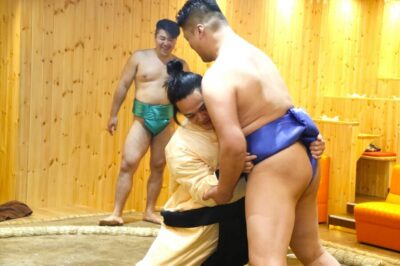
Sumo Show Experience with Chicken Hot Pot and a Photo
Read our review →
Shinjuku Food Tour (13 Dishes at 4 Local Eateries)
Read our review →
Tokyo Mt Fuji 5th St & Hakone Cruise Bus Tour w/Bullet Train
Read our review →
Flagship 2-Hours Official Street Go-Kart Tour – Tokyo Bay Shop
Read our review →Browse the lists this tour appears in