
Reviewed · TOKYO TOURS
Tokyo: Traditional Japanese Performing Arts Show and Dinner
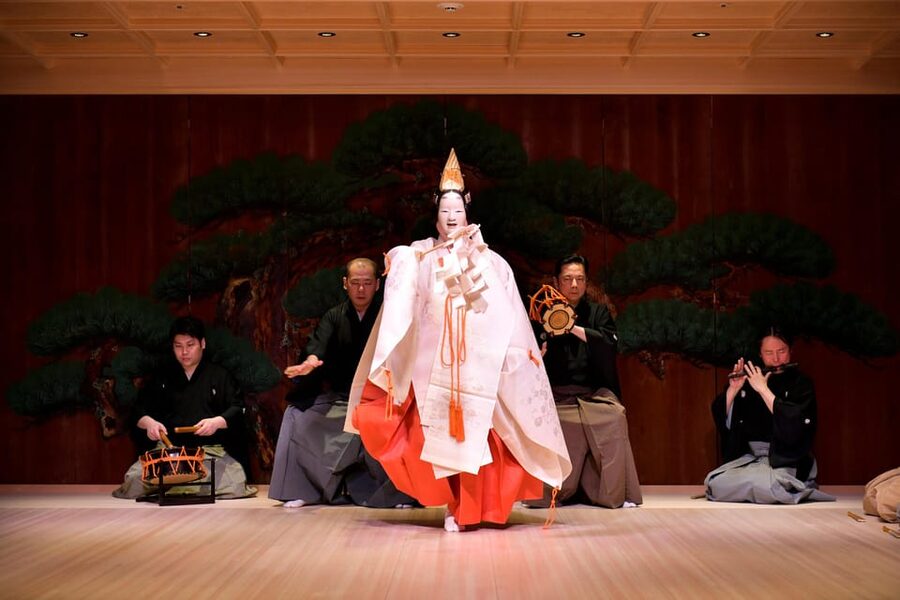
Tokyo’s SUIGIAN pairs a seasonal Japanese dinner with short live performances in a theatrical restaurant beneath Fukutoku Shrine. You’ll sit before a Noh-style stage, watch either ancient Shinto music and dance or traditional Japanese dance, and finish with matcha and dry sweets.
I especially like the beautiful setting beneath the shrine and the careful English explanations of the food and performance. The heritage dinnerware, some of it more than 350 years old, gives the meal a sense of occasion. The main caution is time: this is a slow, multi-course dinner, and the show itself may total only about 30 minutes.
Key points to know before booking
- Three short performances: Expect three segments of roughly 10 minutes each, rather than one long stage production.
- Seasonal omakase dinner: The chef chooses the menu, with courses built around fresh ingredients and bonito broth.
- Two rotating art forms: Certain February and March dates feature kagura, while most other listed dates feature nihon-buyo.
- Four seating choices: Your selected seat option determines how close you are to the Noh-style stage.
- Historic Nihonbashi location: SUIGIAN is under Fukutoku Garden, about a minute from Mitsukoshi-mae Station’s A6 Exit.
- Dietary requests matter: Tell the restaurant about allergies, vegetarian needs, or other restrictions before arrival.
A theatrical restaurant under Fukutoku Shrine
Finding SUIGIAN is part of the fun, though the directions could be clearer. The restaurant sits in the basement of Fukutoku Garden, under the forested grounds of historic Fukutoku Shrine. From Mitsukoshi-mae Station, take Exit A6 and walk toward Coredo Muromachi 2. SUIGIAN is on B1F, about a one-minute walk from the exit.
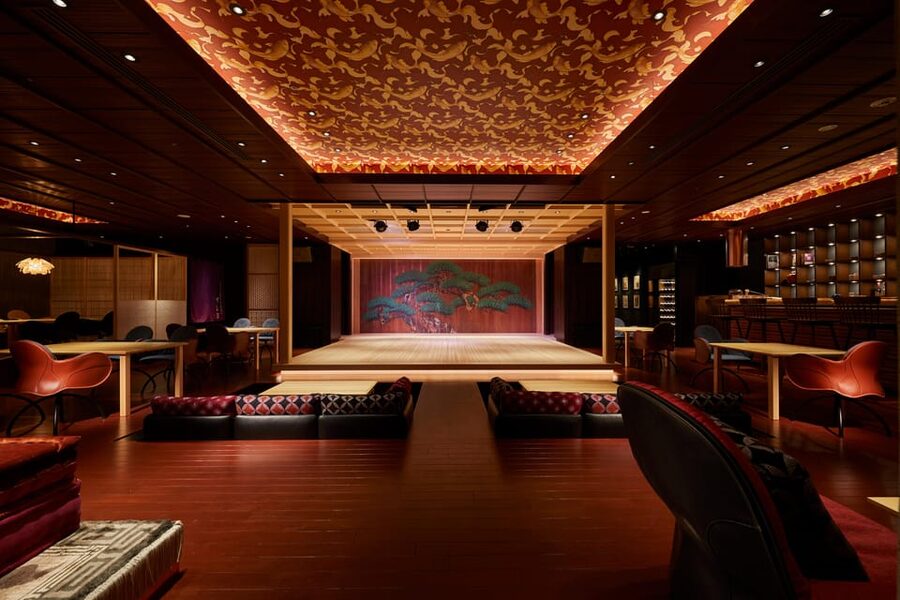
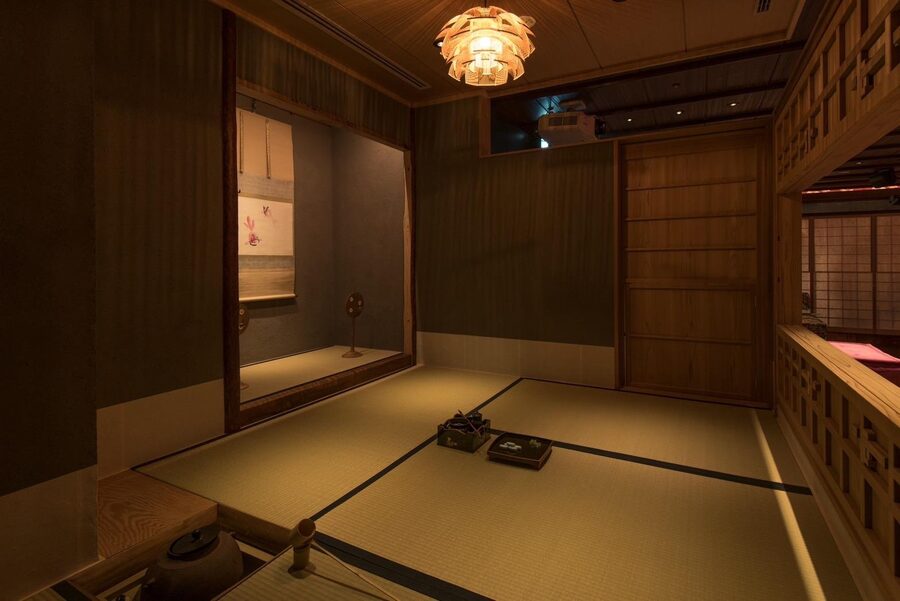
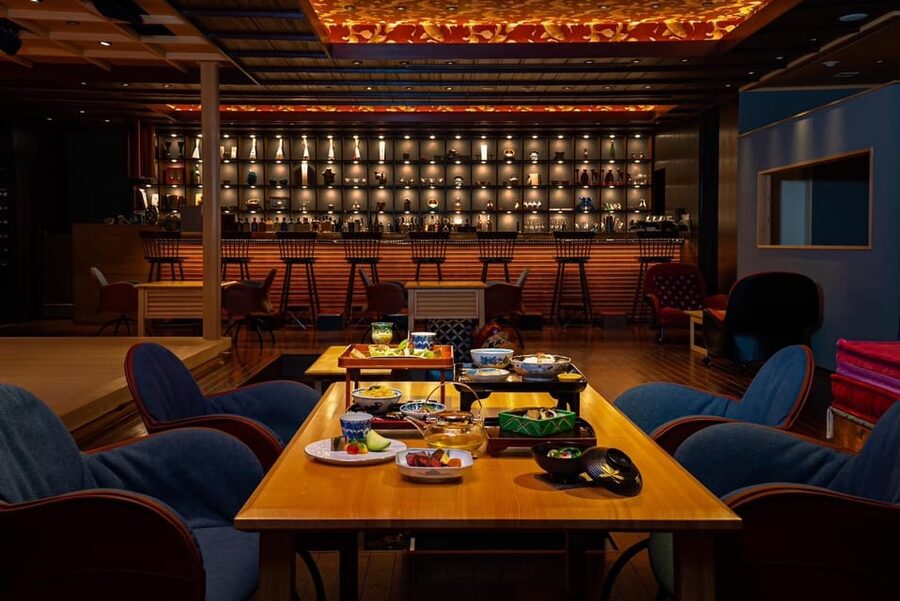
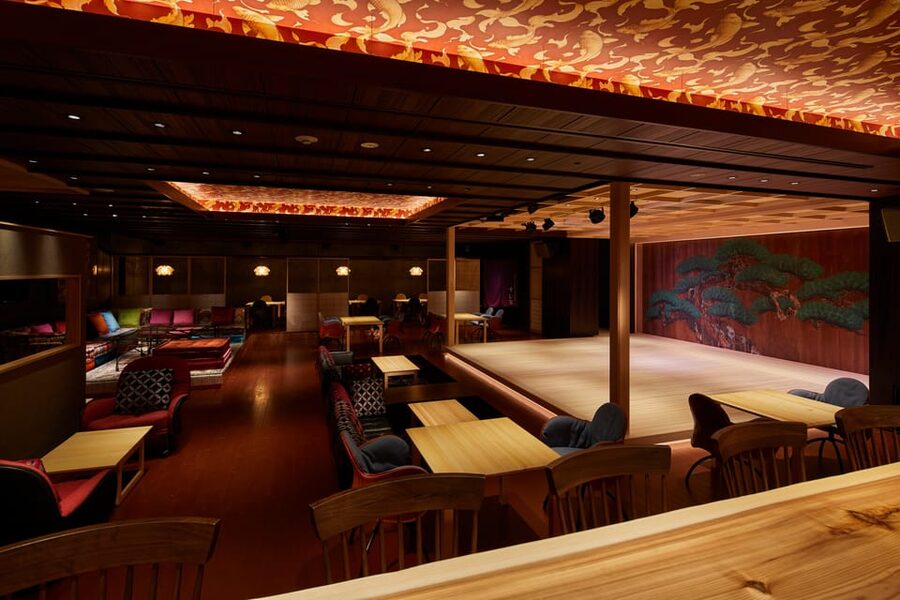
You enter below the park, where the restaurant and lounge feel removed from Tokyo’s busy streets. The interior combines dark, polished modern design with traditional artwork, sculptures, old objects, and Japanese decorative details. One visitor compared the space to a museum, which is a useful way to picture it, though this is a functioning restaurant rather than a gallery.
If you arrive by train, Mitsukoshi-mae is the simplest choice. Shin-Nihonbashi Station is about six minutes away, and Tokyo Station is roughly a 10-minute walk from its Nihombashiguch Exit. A taxi from Tokyo Station takes about six minutes and costs approximately ¥600. If you drive, the venue is about six minutes from the Kyobashi exit of the Inner Circular Route.
I would allow a few extra minutes to find the entrance. The restaurant is under the park, not clearly visible from the main street, and one visitor had trouble because the directions did not plainly identify SUIGIAN as the destination. Look for the corner entrance to the park and the Coredo Muromachi 2 building.
More dinners out in Tokyo:
- Tokyo Bar Hopping Tour in Shinjuku (All-You-Can-Drink + Dinner)
★ 5.0 · 3,587 reviews - Tokyo: Sumo Show and Dining Experience
★ 4.8 · 2,742 reviews - Sumida River: Japanese Traditional Yakatabune Dinner Cruise
★ 4.6 · 779 reviews
The Noh-style stage and four seat choices
The stage is designed in the style of a Noh theater, complete with the traditional old pine tree backdrop. That backdrop does more than frame the performers. It gives the room a formal visual focus and helps you understand that the entertainment is rooted in Japanese theater, not simply a dinner with background music.
You can choose from four seating options. The exact names and layout of those options are not provided, but the choice is useful because proximity matters here. The performances are compact, and sitting close lets you see the dancer’s movements, costume details, instruments, and facial expression more clearly.
The show is arranged in three parts, usually spaced between courses. Each performance lasts about 10 minutes, so the total live entertainment is relatively short. That pacing works well with a deliberate dinner, but it may disappoint you if you expect a full evening theater performance.
The program changes by date. On the listed February 5, 10, 17, and 25 dates, and March 10, 17, and 24, the regular performance is kagura. On other February and March dates, the regular performance is nihon-buyo. Always check the date-specific program before booking, since the type of dance and music changes the character of the evening.
Kagura: Shinto music and dance
Kagura is an ancient form of Shinto music and dance. Its connection to shrine tradition makes it a fitting choice for a restaurant beneath Fukutoku Shrine. The performance gives you a compact introduction to a ceremonial art form that can be difficult to encounter casually during a Tokyo visit.
You should not expect a long explanation of every symbol or movement. Instead, the performance works as a focused sample, with the stage setting and music supplying much of the atmosphere. If English information is important to you, the venue has provided English-language explanations of both the food and performances.
The short format is helpful if you are new to Japanese performing arts. You can watch without needing to follow a full plot or commit to several hours in a theater. At the same time, you may want more context if you have a strong interest in Shinto ritual or traditional music.
Nihon-buyo: dance, music, and visual detail
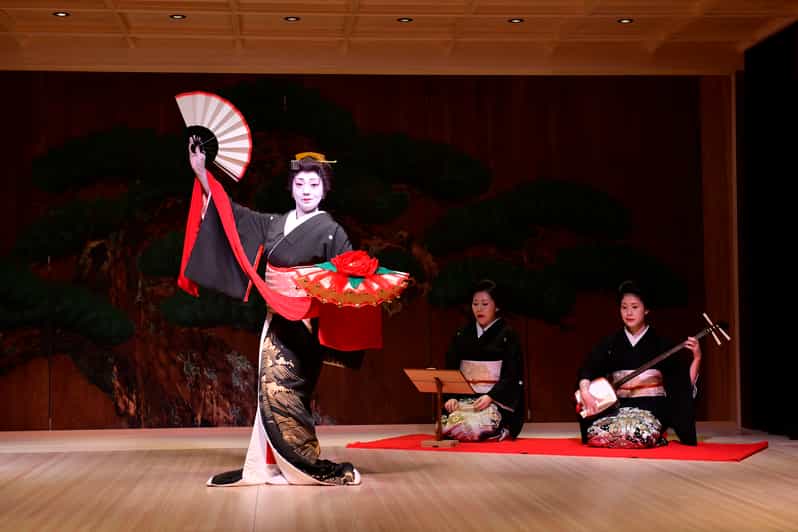
Nihon-buyo is traditional Japanese dance, and this is the program scheduled on most of the other February and March dates. The movements are controlled and expressive, with meaning carried through posture, costume, fan work, music, and small gestures rather than rapid action.
Several details make close seating worthwhile. You can watch the dancer’s hands, the handling of props, and the way the performer uses the limited stage. Some scenes are understandable even without knowing the language, since the story can be suggested through movement.
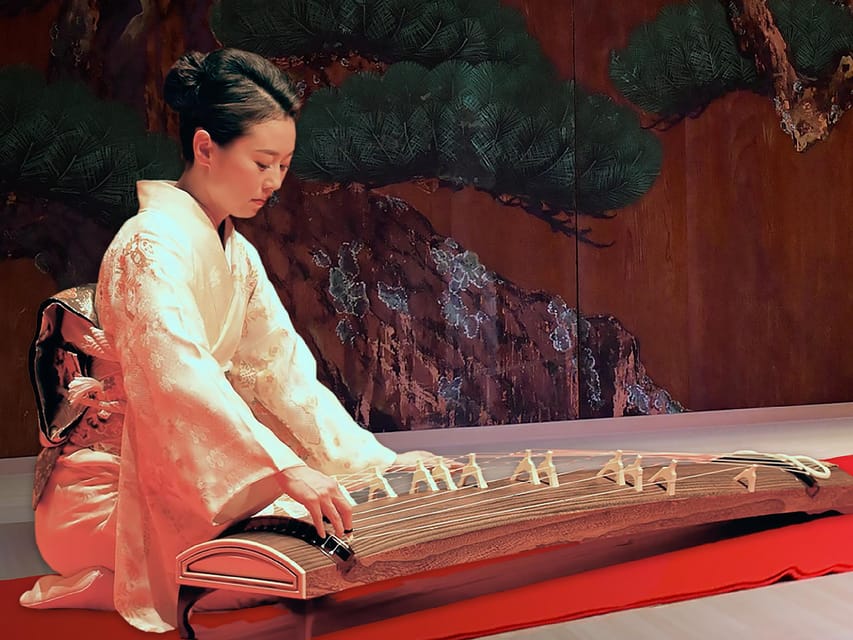
The music may include shamisen and vocals. One evening included a dancer accompanied by a shamisen player and vocalist, while another visitor described the program as a taste of Noh theater and music. The precise performers and program can vary, so treat these as possible elements rather than a guaranteed lineup.
The three performances are brief, but the spacing between them gives you time to eat, ask questions, and consider what you have seen. This is better suited to a relaxed cultural evening than to someone seeking nonstop entertainment.
More places to eat in Tokyo:
- Tokyo: Samurai Restaurant Show Ticket with 2 Drinks
★ 4.5 · 1,307 reviews - Tokyo Bay Yakatabune Dinner/Day Cruise with Japan Show and Drinks
★ 4.5 · 473 reviews - Tokyo: Shinjuku Bar Hopping with All-You-Can-Drink & Dinner
★ 4.9 · 440 reviews - Tokyo Dinner Cruise & Tradition Show & Drinks & Tokyo Tower
★ 4.7 · 315 reviews
A seasonal course built around the chef’s choices
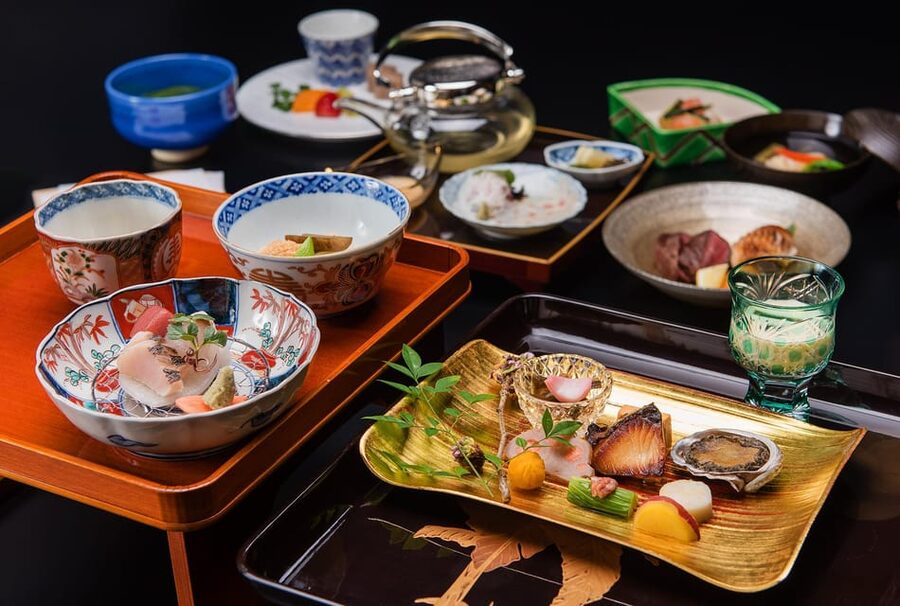
The food is not a quick dinner added to a show. It is a full Japanese course served at a slow and deliberate pace. The usual meal includes an appetizer, a first seasonal platter, soup, a later seasonal platter, a grilled dish featuring Japanese beef, rice, and dessert. The menu changes with the season.
Some descriptions of the meal refer to it as a nine-course experience, so you may receive several small servings within those broader categories. The key point is that you should arrive ready for a sequence of carefully presented dishes, not one main plate.
The restaurant uses fresh ingredients and bonito broth, and the meal is designed around seasonal flavor and presentation. The dishes arrive on trays and plates inherited from another Japanese restaurant in Nagasaki. Some of this dinnerware is more than 350 years old, adding a genuine historical object to the meal rather than merely decorative Japanese styling.
I like this combination of food and setting because the culture is not confined to the stage. You see it in the dishes, the serving ware, the order of the meal, and the explanation of each course. English explanations have been available, which makes the dinner easier to appreciate if you do not read Japanese.
The menu may be adventurous for some diners. Seafood appears often, and one diner counted several seafood servings, fish soup, and a dessert with a flavor they associated with fish. If you prefer familiar Western food, this may not be the right dinner. If you are happy to let the chef choose, the meal offers a broader taste of Japanese cooking than a standard restaurant order.
Why the slow pace matters
Plan on two to three hours. The staff serve the courses gradually, with performances placed between parts of the meal. This creates a calm rhythm after a full day of Tokyo sightseeing, but it means you should not schedule a tightly timed evening afterward.
The service is formal but warm. Staff have been described as attentive, gentle, kind, and willing to explain the food. In one particularly thoughtful moment, a server learned that a diner taught world music and arranged for the geisha performer to join the group for a photograph afterward.
That commemorative photo is included among the highlights of the experience, but the exact timing may vary. It is a pleasant final touch, especially for birthdays, anniversaries, or a special night with someone close to you. Staff have also helped call taxis after dinner, though you should not count on every personal request being handled in the same way.
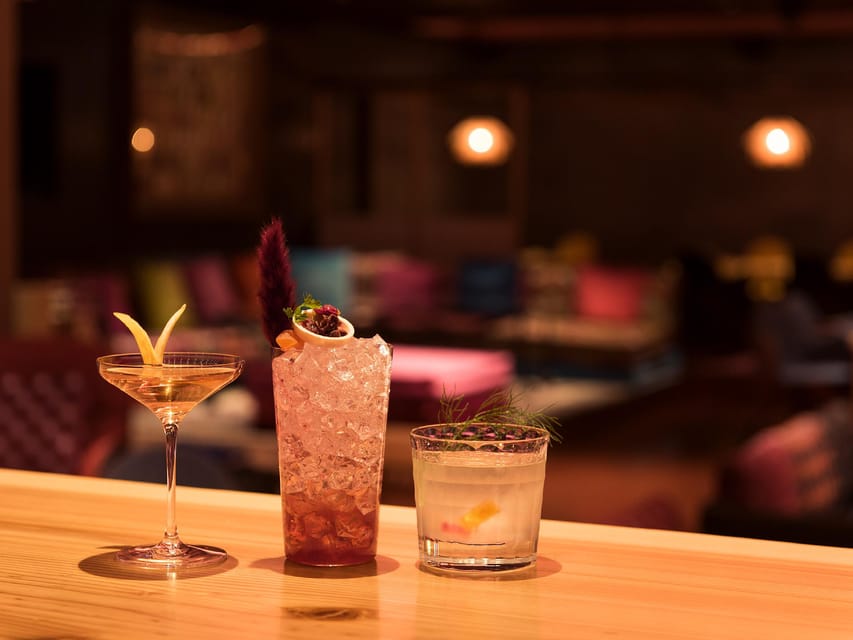
Drinks other than water are not included in the meal price. Budget separately if you want sake, wine, or another beverage. This is an important detail because the advertised price covers the course dinner, the performance, and your seat assignment, not an open bar.
Is $140 a fair price?
The listed price is $140 per group of up to one person, so confirm the final booking total and party details carefully. The cost is high compared with an ordinary Tokyo dinner, but this is not an ordinary dinner. You are paying for a seasonal multi-course meal, traditional live entertainment, a specially designed venue, table service, and access to a central Nihonbashi location.
Value depends on your priorities. If you would otherwise pay for a high-end Japanese meal and a separate cultural performance, the combined package can make sense. Several diners compared the cooking favorably with Michelin-starred kaiseki meals in Kyoto or Europe, though taste is personal and the seafood-heavy menu will not work for everyone.
The price is less appealing if you mainly want a long show. The live segments are short, at roughly 10 minutes each, and total performance time can feel modest beside the cost. Think of this as a refined dinner with traditional arts woven through it, not as a theater ticket that happens to include food.
For a birthday, anniversary, or final-night treat, I can see the appeal. For a budget-conscious visit, you may prefer to attend a less expensive performance and eat elsewhere. The setting and service are part of the value here, so the experience works best when you appreciate the whole evening rather than judging it by food quantity or stage time alone.
Dietary needs and age limits
SUIGIAN serves an omakase-style seasonal menu, meaning the chef selects the dishes. You must tell the restaurant in advance about allergies, vegetarian requirements, gluten-free needs, or other foods you cannot eat.
Do not wait until you sit down. The restaurant warns that it may not be able to meet requests made after arrival. One group received a successful gluten-free adjustment, but another diner had some dietary restrictions that were not fully met. That mixed evidence makes advance communication especially important.
The experience is not suitable for children under 10. The slow meal, formal setting, and short traditional performances are better for older children and adults who can enjoy a quiet evening at the table.
The venue is wheelchair accessible. If you need a specific seat arrangement, contact the restaurant before booking rather than assuming every one of the four seating options will work equally well for your needs.
Who will enjoy this evening most?
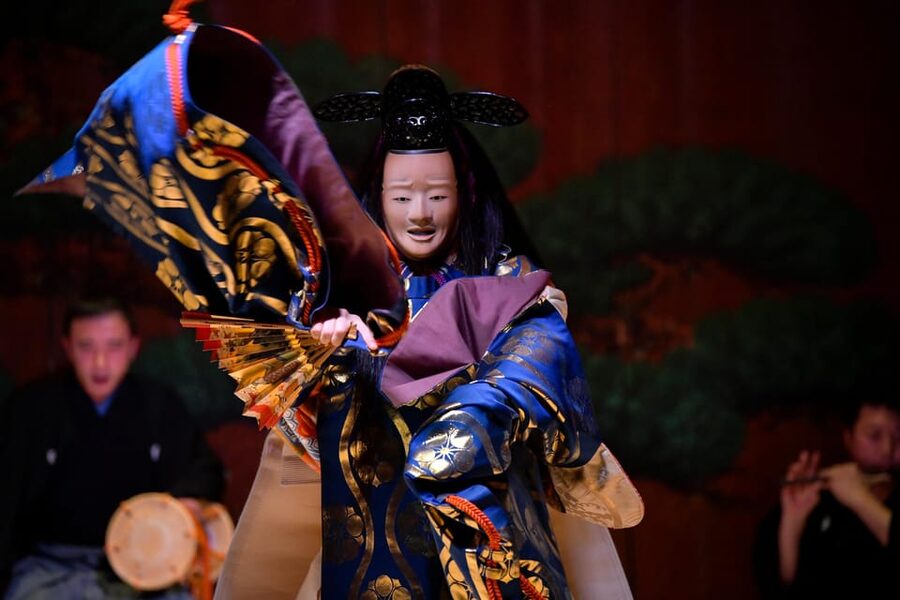
I would recommend SUIGIAN to you if you want Japanese culture presented through several senses at once. You will see traditional dance, hear music and vocals, taste seasonal dishes, and sit among Japanese artworks and historic tableware.
It suits couples and small groups marking a special occasion, as well as first-time visitors who want a polished introduction to traditional arts without spending a full night at a formal theater. The central location also makes it easy to combine with sightseeing around Nihonbashi, Mitsukoshi, and Tokyo Station.
You should think twice if you need a fast meal, dislike seafood, or want complete control over what appears on your plate. The course moves slowly, the chef chooses the menu, and drinks cost extra. You may also be disappointed if your main goal is a long dance performance.
Practical planning for the evening
Check the exact program for your date. Kagura is listed for specific February and March dates, while nihon-buyo is listed for the other days in those months. Since the show and pricing can vary by day, the date is part of the booking decision.
Choose the closest seat you can comfortably afford if the performance matters most to you. The stage is not described as large, and close proximity helps with the visual details of traditional dance.
Arrive with enough time to find the basement entrance. Mitsukoshi-mae Station’s A6 Exit is the easiest route, but the restaurant can be confusing to locate from street level because it is under Fukutoku Garden. Keep the address handy: Fukutoku Garden B1F, 2-5-10 Nihonbashi Muromachi, Chuo-ku, Tokyo.
Cancellation is free up to 24 hours before the experience for a full refund, and a reserve-now, pay-later option is available. The experience lasts two to three hours, so leave your later plans flexible.
Should you book SUIGIAN?
Book this experience if you want a slow, polished cultural dinner and care as much about atmosphere, service, and presentation as you do about the performance. The historic tableware, shrine-side setting, seasonal food, and traditional stage create a memorable combination.
Skip it if you want a long concert, a cheap meal, or a menu built around familiar ingredients. My practical advice is to confirm the performance type, explain every dietary restriction in advance, and choose a close seat. Done that way, SUIGIAN offers a convenient and thoughtful introduction to Japanese food and performing arts in the heart of Tokyo.
FAQ
Where is the traditional performing arts dinner held?
It is held at Theater Style Restaurant & Lounge SUIGIAN, in Fukutoku Garden B1F at 2-5-10 Nihonbashi Muromachi, Chuo-ku, Tokyo.
How do I reach SUIGIAN by train?
Take the Tokyo Metro Ginza or Hanzomon Line to Mitsukoshi-mae Station and use Exit A6. The venue is about a one-minute walk away, inside or near Coredo Muromachi 2 on B1F.
How long does the experience last?
The estimated duration is two to three hours.
What performances are included?
The program includes three short performances. Depending on the date, these are either kagura, ancient Shinto music and dance, or nihon-buyo, traditional Japanese dance.
How long is each performance?
Each of the three performances lasts about 10 minutes.
What food is served?
The restaurant serves a seasonal Japanese omakase course. The meal usually includes an appetizer, seasonal platters, soup, a grilled Japanese beef dish, rice, dessert, matcha green tea, and dry sweets.
Can the restaurant accommodate dietary restrictions?
You must provide information about allergies, vegetarian needs, gluten-free requirements, or other restrictions when you make the reservation. Requests made after arrival may not be possible to fulfill.
Are children allowed?
Children under 10 are not permitted to take part in the experience.
Is the venue wheelchair accessible?
Yes, the activity is listed as wheelchair accessible.
Are drinks included?
The included package covers the Japanese full-course dinner, traditional performing arts show, and seat assignment. Drinks other than water are not included.
Can I cancel the booking?
You can cancel up to 24 hours in advance for a full refund. A reserve-now, pay-later option is also available.
More Shows in Tokyo
- Mt Fuji & Hakone Cruise, Drum Show Bullet Train 1 Day from Tokyo
★ 4.0 · 7,413 reviews - Tokyo: Sumo Show Experience with Chicken Hot Pot and a Photo
★ 4.8 · 6,678 reviews - the SUMO show
★ 5.0 · 1,960 reviews - Tokyo Shinjuku Sumo Show & Experience with Photo
★ 5.0 · 1,750 reviews
Just added around Tokyo
- Private Arrival Transfer : Narita International Airport to Central Tokyo City★ 4.5 · 12 reviews
- Narita Airport(NRT): Private Transfer to Tokyo/Yokohama 1-9pax★ 5.0 · 47 reviews
- Private Transfer from Narita Airport to Yokohama Port and City★ 4.5 · 17 reviews
- [Narita Airport Terminals 1, 2] 40-60km Sawara Itako Historic Bike Tour★ 5.0 · 13 reviews
- 3 Day Japan Highlights Tour: Tokyo, Mt.Fuji, Nara, Kyoto, Osaka★ 5.0 · 22 reviews
- Small Town in the Big City: Tasting Tokyo’s Kichijoji★ 5.0 · 195 reviews
- Small Town in the Big City: Tasting Tokyo’s Kichijoji★ 5.0 · 16 reviews
- The 10 Tastings of Tokyo With Locals: Private Street Food Tour★ 5.0 · 48 reviews
Tokyo Tours, compared.

Mt Fuji and Hakone 1-Day Bus Tour Return by Bullet Train
Read our review →

teamLab Planets TOKYO Digital Art Museum Entry Ticket
Read our review →
Mt Fuji & Hakone Cruise, Drum Show Bullet Train 1 Day from Tokyo
Read our review →
Sumo Show Experience with Chicken Hot Pot and a Photo
Read our review →
Shinjuku Food Tour (13 Dishes at 4 Local Eateries)
Read our review →
Tokyo Mt Fuji 5th St & Hakone Cruise Bus Tour w/Bullet Train
Read our review →
Flagship 2-Hours Official Street Go-Kart Tour – Tokyo Bay Shop
Read our review →Browse the lists this tour appears in