
Reviewed · TOKYO TOURS
Tokyo: True Crime And Ghost Stories Tour
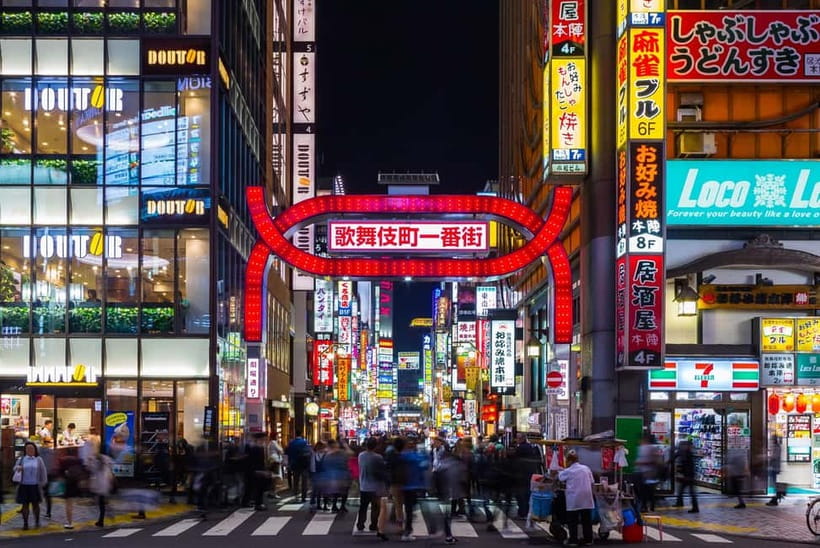
Tokyo has a polished face, but this three-hour walk takes you behind it. Starting at Hanazono Shrine in Shinjuku, guide John leads you through Kabukicho and Golden Gai, then toward Toyama Park and Aoyama Cemetery, using crime, war history, organized crime, and ghost lore to show a less familiar side of the city.
I like the strong mix of serious history and theatrical storytelling. I also like that the route visits real neighborhoods and public places rather than relying on staged haunted-house tricks. The catch is clear: this is a long walk with adult language, sexual subjects, murder, and disturbing wartime material, so it is not a casual family outing.
Key points to know before you go
- Kabukicho starts the story: Learn about gang conflicts, murders, love disputes, and Tokyo’s quasi-legal sex industry in Japan’s largest red light district.
- Toyama Park brings a grim wartime subject: The tour discusses Unit 731 and human experimentation connected with the site.
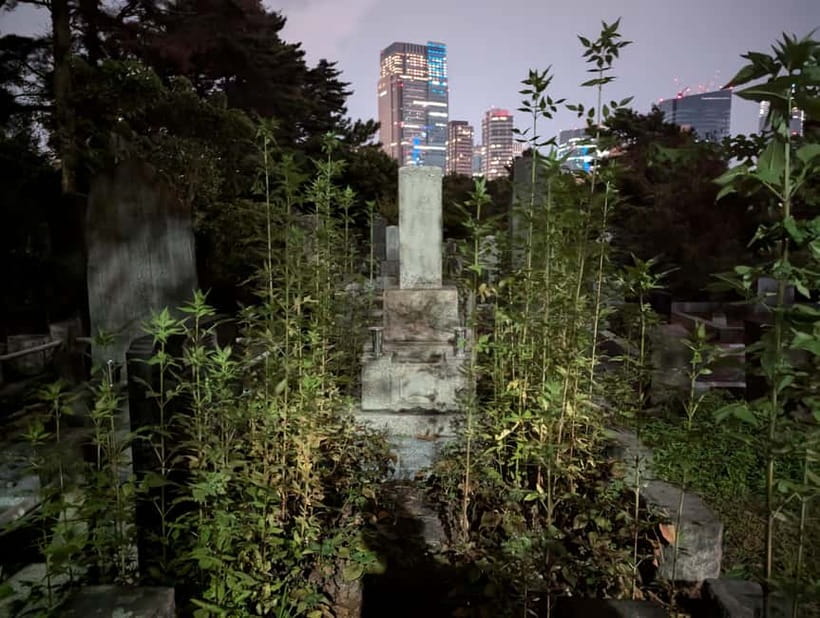
- Aoyama Cemetery supplies the atmosphere: Ghost stories work naturally among the cemetery’s paths, especially later in the day.
- John is the main attraction: His animated acting, jokes, historical detail, and willingness to answer questions shape the experience.
- Expect a proper walking tour: Allow for stairs, city walking, a 200-yen transportation cost, and no meal stop.
- Best for mature history and horror fans: Children under 14 are not accepted, and the material can be upsetting.
Tokyo’s dark side, told on foot
This is not a standard sightseeing walk with a few spooky lines added at the end. The subject is the darker side of Tokyo, and the tone shifts between grim, serious, strange, and knowingly funny.
John guides in English and brings a theatrical style to the stories. His acting is part of the appeal. He may retell a frightening event with a dramatic performance, then cut the tension with a deliberately silly joke. That approach will suit you if you like true crime podcasts, Japanese ghost stories, and history presented with personality.
The humor is not gentle at all times. Adult language appears, and subjects include prostitution, sex clubs, love hotels, murder, organized crime, and war crimes. I would not book this for anyone who wants a quiet cultural walk or who is easily disturbed by graphic material.
The experience lasts about three hours. It is presented as a private group option or a shared tour, depending on the booking choice. Since there are no admission charges along the route, the $35 price mainly pays for John’s guiding, research, storytelling, and route planning. For a specialized tour with no attraction tickets included, that is a fair price if the subject fits your interests.
A few more Tokyo half-days to weigh up
- Mt Fuji and Hakone 1-Day Bus Tour Return by Bullet Train
★ 5.0 · 26,383 reviews - 1-Day Tokyo Bus Tour
★ 5.0 · 14,250 reviews - Tokyo: TOKYO SKYTREE® Admission ticket
★ 4.5 · 11,192 reviews
Hanazono Shrine and the first step into Kabukicho
Meet John just in front of the stairs leading to the main shrine building inside Hanazono Shrine. The shrine sits near Golden Gai in Shinjuku, so you begin in a part of Tokyo where narrow lanes, nightlife, small bars, and modern high-rises meet.
The location gives the tour a useful opening contrast. Hanazono Shrine is a traditional religious site, while the surrounding streets lead into one of Tokyo’s most notorious entertainment areas. You do not need an entry ticket, and the meeting point is specific, but read the messages in your email or the GetYourGuide app carefully before setting out.
The guide is described as a thin, bald white man named John, making him fairly easy to identify. That small detail matters in a crowded area like Shinjuku, especially at night.
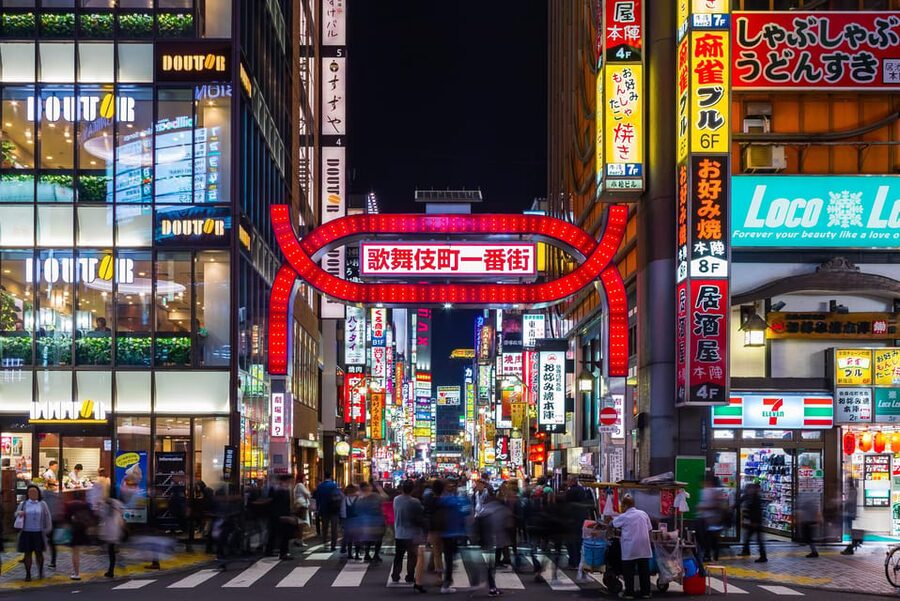
From the shrine, the route moves into Shinjuku and Kabukicho. The first guided section lasts about 45 minutes. You will hear about gang wars, shocking crimes, troubled relationships, and the way Tokyo’s adult entertainment businesses operate in a space that is often legal, tolerated, or regulated in complicated ways.
Kabukicho: crime beside the neon
Kabukicho is not a museum of crime. It is a working entertainment district, and that makes the discussion more immediate. You are walking through streets associated with nightlife while John explains the people, disputes, and criminal cases linked to them.
The tour also covers the yakuza and the role of organized crime in Tokyo’s past and present. The aim is not to turn the district into a cartoon villain. The best parts of this subject connect crime to the way neighborhoods develop, how businesses function, and why certain streets gain a particular reputation.
You should expect a busy urban setting rather than silence or spooky scenery here. Neon, traffic, restaurants, clubs, and pedestrians may compete with the guide’s voice. Stay close to the group and pay attention when crossing streets.
The discussion of the red light district can be blunt. Topics include girl and boy clubs, love hotels, and the sex trade. This is useful context for understanding Kabukicho, but it may feel uncomfortable if you prefer your sightseeing sanitized.
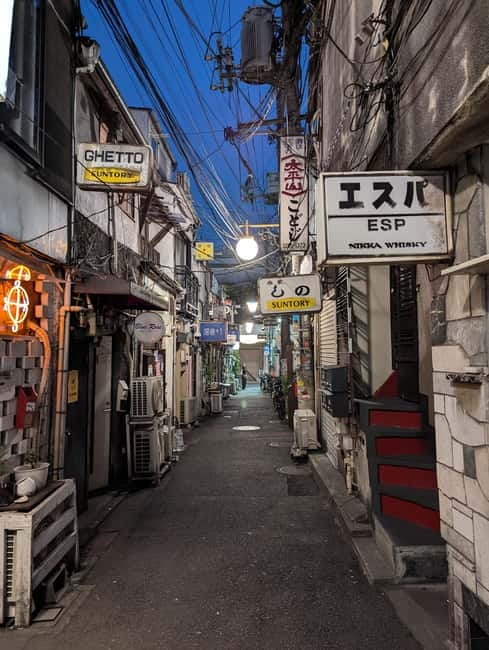
Golden Gai is part of this early section. Tokyo’s foremost drinking district is made up of tightly packed lanes and very small bars. The tour does not include dinner or drinks, so think of Golden Gai as a place for atmosphere and explanation, not a bar crawl.
That is a strength. You get a look at the district without paying for a forced meal or being steered into a venue. If you want to drink in Golden Gai afterward, make that a separate plan.
Toyama Park and the weight of Unit 731
The route then reaches Toyama Park, with about 30 minutes of guided discussion listed for this part of the walk. The mood changes sharply.
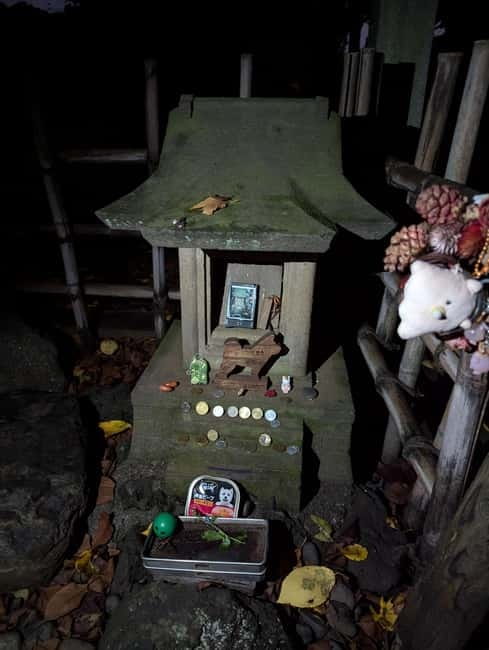
Toyama Park is presented as a site connected to terrible crimes against humanity and to the ghosts of people affected by Unit 731’s human experimentation projects. The tour uses the location to address wartime Japan and crimes that are often less visible in ordinary sightseeing programs.
This is the most serious section of the experience. It is not simply a spooky stop. The subject involves real human suffering, and the casual humor used elsewhere needs to give way to attention and respect. If you have a strong interest in wartime history, this section may give you more to think about than the ghost stories.
The description of Toyama Park as Tokyo’s mini-Auschwitz signals the intended tone, but the comparison is also a reason to listen carefully and avoid treating the place as a horror backdrop. You are being asked to consider memory, denial, and the difficult parts of national history, not just collect a frightening anecdote.
The route’s overall shape works well here. Kabukicho deals with crime in a modern city. Toyama Park shifts to state violence and wartime responsibility. Aoyama Cemetery then moves into folklore and supernatural storytelling. The three subjects are different, but together they create a broader portrait of Tokyo’s uneasy past.
Same base, a completely different sort of day:
- Tokyo: teamLab Planets TOKYO Digital Art Museum Entry Ticket
★ 4.6 · 9,779 reviews - Mt Fuji & Hakone Cruise, Drum Show Bullet Train 1 Day from Tokyo
★ 4.0 · 7,413 reviews - Tokyo: Sumo Show Experience with Chicken Hot Pot and a Photo
★ 4.8 · 6,678 reviews - Tokyo: Shinjuku Food Tour (13 Dishes at 4 Local Eateries)
★ 5.0 · 6,603 reviews
Aoyama Cemetery after dark
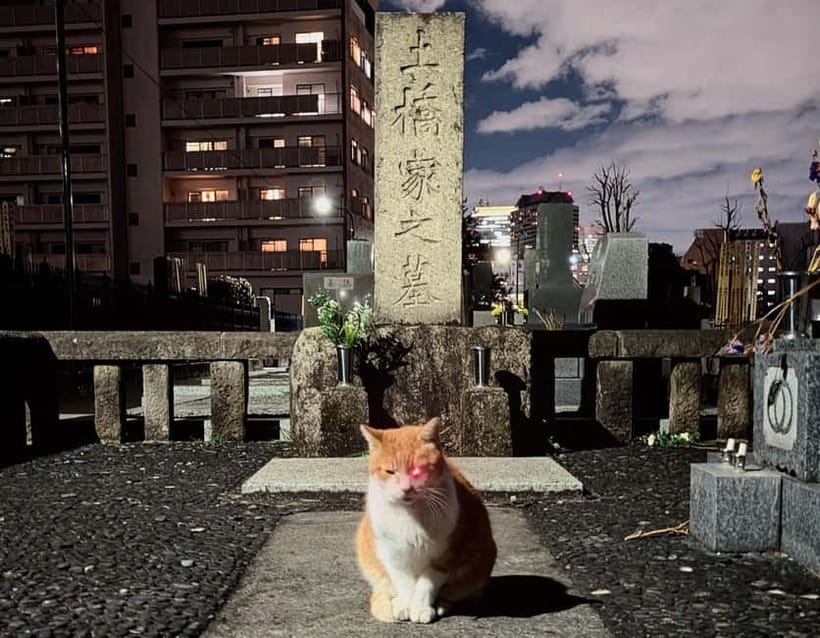
The final major stop is Aoyama Cemetery, described as Tokyo’s largest cemetery. The listed guided section here lasts about 45 minutes, and this is where the tour’s ghost-story side gets the best setting.
Cemeteries naturally slow the pace. After the bright streets of Shinjuku, the paths and graves provide a quieter place for Japanese ghost stories and urban legends. The time of day matters. One booking suggestion was to begin earlier so the cemetery can be seen in daylight or during sunset, while later departures will provide a darker and more atmospheric setting.
You should decide which mood you want. An earlier start gives you a clearer sense of the cemetery itself. A later start may make the ghost stories more effective, but it also means you see less of the surroundings. Check the available starting times before booking rather than assuming every departure offers the same atmosphere.
The cemetery section is not only about fear. Japanese ghost stories often reflect ideas about loyalty, grief, revenge, improper burial, and unresolved obligations. John’s role is to make those stories entertaining while giving you a bit of cultural framing.
The tour also visits the grave of Hachiko, Japan’s famous loyal dog. Hachiko is usually associated with the statue outside Shibuya Station, but the grave at Aoyama Cemetery adds another layer to the familiar story. This stop offers a welcome change from murder and war crimes, and it gives the final part of the walk a human and emotional note.
The experience ends at Aoyama-Itchome Station. That is practical because you can continue your evening from a major transit point, but remember that the tour does not include your transportation. Set aside 200 yen for the transport cost listed for the route.
How John shapes the experience
John receives the strongest praise for his storytelling, historical detail, humor, and energy. You are not getting a guide who simply points at a street corner and recites dates. His acting and dramatic retellings are a central part of the evening.
He also seems comfortable with questions beyond the scheduled material. If you want to ask about Japanese history, wartime Japan, local crime, or other parts of the country, you should have room for that conversation. The tour is structured, but it is not described as rigid.
A particularly useful quality is his attention to guests after the walk. John has helped people find the correct trains home, including on a rainy Halloween evening. That does not replace your own planning, but it is reassuring when the tour ends at night in an unfamiliar part of Tokyo.
The humor is personal and quirky. Some people will love the odd asides, theatrical delivery, and wicked jokes. Others may find the tone too irreverent for subjects involving murder and human experimentation. I would treat that as a matter of taste, not a flaw hidden in the small print.
Walking demands, timing, and comfort
You will walk quite a bit over three hours. The tour is not suitable for people with a low level of fitness, wheelchair users, or anyone who tires easily. Stairs are part of the route, and one practical comment specifically noted the need to climb them.
Wear comfortable shoes and bring water, especially in Tokyo’s hot and humid months. There is no dinner included, so eat before the meeting point or plan food after the tour. Golden Gai is nearby, but the experience itself does not include a bar visit or meal.
The route ends at Aoyama-Itchome Station rather than returning to Hanazono Shrine. That one-way design makes sense because the tour crosses several districts, but it means you should know where you are going afterward.
People over 300 pounds, or 136 kilograms, are not accepted. Children under 14 are also excluded. Even teenagers above that age should be comfortable with mature subjects and adult jokes before joining.
Who will get the most from this tour
I would choose this walk if you already have an interest in one or more of these:
- Japanese crime and organized crime
- True crime cases
- Japanese folklore and ghost stories
- Wartime history and difficult subjects
- Tokyo nightlife districts
- Unusual walking tours with a strong guide personality
It is also a good choice if you have already seen Tokyo’s major temples, shrines, shopping streets, and observation decks. This tour changes your angle. Instead of presenting the city as orderly and futuristic, it asks you to think about the people, violence, beliefs, and scandals beneath the polished surface.
You do not need to be a horror expert. The storytelling and jokes make the material accessible, and the historical context gives the walk more substance than a string of ghost tales. But you should be willing to hear about sex, murder, criminal networks, and wartime atrocities without expecting every subject to be softened.
I would skip it if you dislike walking at night, have limited mobility, are easily grossed out, or want a conventional introduction to Tokyo. It is also a poor fit for young children. The tour can be funny, but it is not light entertainment from beginning to end.
Is the $35 price worthwhile?
At $35 per person, the value depends on how much you want a specialist tour. There are no entry fees, food, or included sightseeing attractions. You are paying for three hours of guided interpretation in four distinctive parts of Tokyo, plus John’s research and performance.
That is good value for someone who would otherwise spend the evening wandering Kabukicho and Golden Gai without understanding their darker associations. You also get a route that links modern crime, wartime atrocities, Japanese ghosts, and Hachiko in one evening.
The price is less attractive if you are looking for a broad city tour or a simple haunted walk. This is a narrow subject, and the material is intentionally adult. Book it because you want this subject, not because it happens to be cheap.
Free cancellation up to 24 hours before the start and the option to reserve now and pay later make it easier to fit into a changing Tokyo schedule. Starting times vary, so check availability and consider whether you prefer daylight at Aoyama Cemetery or a darker atmosphere.
Should you book the Tokyo True Crime and Ghost Stories Tour?
Book it if you want an unusual, serious at times, and often funny look at Tokyo’s underbelly. John’s animated storytelling is the main reason to choose it, while the route gives the stories a strong sense of place.
My practical advice is simple: wear good shoes, eat first, allow 200 yen for transport, and read the content warning honestly. If murder, sex-industry subjects, war crimes, and ghosts sound like the right mix for your evening, this is one of the more distinctive ways to spend three hours in Tokyo. If you want polished sightseeing or a family-friendly night out, choose another tour.
FAQ
How long does the Tokyo True Crime and Ghost Stories Tour last?
The tour lasts three hours.
Where does the tour start?
It starts inside Hanazono Shrine in Shinjuku, just in front of the stairs leading up to the main shrine building, near Golden Gai.
How do I identify the guide?
The guide is named John and is described as a thin, bald white man. Check your email or GetYourGuide app messages for any extra meeting-point details.
Where does the tour finish?
The tour finishes at Aoyama-Itchome Station.
What language is the tour conducted in?
The tour is conducted in English with a live guide.
Is transportation included?
Transportation is not included. The listed transportation cost is 200 yen.
Are admission fees included?
There are no entry fees for the places visited along the route.
Is the tour suitable for children?
No. Children under 14 are not permitted, and the tour includes adult language, sexual subjects, murder, disturbing wartime history, and dark humor.
Just added around Tokyo
- Private Arrival Transfer : Narita International Airport to Central Tokyo City★ 4.5 · 12 reviews
- Narita Airport(NRT): Private Transfer to Tokyo/Yokohama 1-9pax★ 5.0 · 47 reviews
- Private Transfer from Narita Airport to Yokohama Port and City★ 4.5 · 17 reviews
- [Narita Airport Terminals 1, 2] 40-60km Sawara Itako Historic Bike Tour★ 5.0 · 13 reviews
- 3 Day Japan Highlights Tour: Tokyo, Mt.Fuji, Nara, Kyoto, Osaka★ 5.0 · 22 reviews
- The 10 Tastings of Tokyo With Locals: Private Street Food Tour★ 5.0 · 48 reviews
- Small Town in the Big City: Tasting Tokyo’s Kichijoji★ 5.0 · 195 reviews
- Small Town in the Big City: Tasting Tokyo’s Kichijoji★ 5.0 · 16 reviews
Tokyo Tours, compared.

Mt Fuji and Hakone 1-Day Bus Tour Return by Bullet Train
Read our review →

teamLab Planets TOKYO Digital Art Museum Entry Ticket
Read our review →
Mt Fuji & Hakone Cruise, Drum Show Bullet Train 1 Day from Tokyo
Read our review →
Sumo Show Experience with Chicken Hot Pot and a Photo
Read our review →
Shinjuku Food Tour (13 Dishes at 4 Local Eateries)
Read our review →
Tokyo Mt Fuji 5th St & Hakone Cruise Bus Tour w/Bullet Train
Read our review →