
Reviewed · TOKYO TOURS
Tokyo: Wagyu and Sushi Gastronomic Journey
The best part of this Shinjuku evening is the contrast: you get careful guidance through Wagyu and sushi, then step into narrow lanes where tiny bars and old-school food stalls tell a different story about Tokyo. Guide Emma has a friendly, personal way of explaining Japanese dining, and the small group keeps the night social without turning it into a parade.
I like the mix of excellent food and local orientation. I also like that the route includes quiet Hanazono Shrine alongside the neon of Kabukicho and the cramped lanes of Golden Gai. The main consideration is price: at $154 per person, this is a premium three-hour outing, and the food stops may not suit you if you want a long, leisurely dinner.
Key points
- Two food venues: Taste Wagyu, sushi, dinner, and alcoholic drinks for participants aged 20 and above.
- A compact Shinjuku route: Walk through Kabukicho, Omoide Yokocho, Hanazono Shrine, and Golden Gai.
- Small group size: No more than 10 people, with an English-speaking guide.
- Food with context: Learn about Wagyu’s origins, flavor, regional differences, and sushi technique.
- A strong night-time setting: Finish in Golden Gai, among more than 200 tiny bars and themed drinking rooms.
- Plan for extra fares: Transportation is not included and may cost 200 to 800 yen.
Wagyu first, then Shinjuku after dark
This experience is built around two pleasures that work well together. First comes Japanese food with explanation, not just a plate placed in front of you. Then comes a guided walk through one of Tokyo’s most famous night districts, where the streets change character every few minutes.
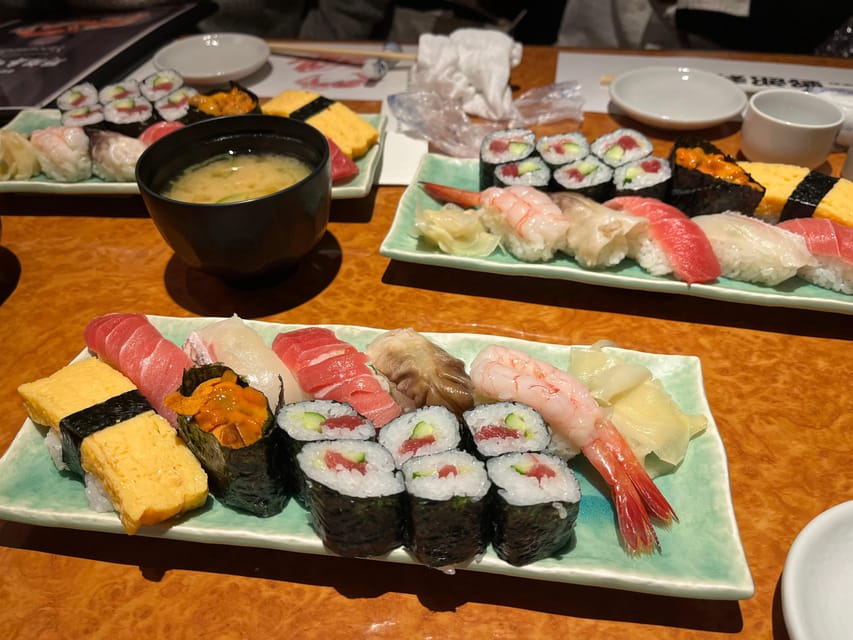
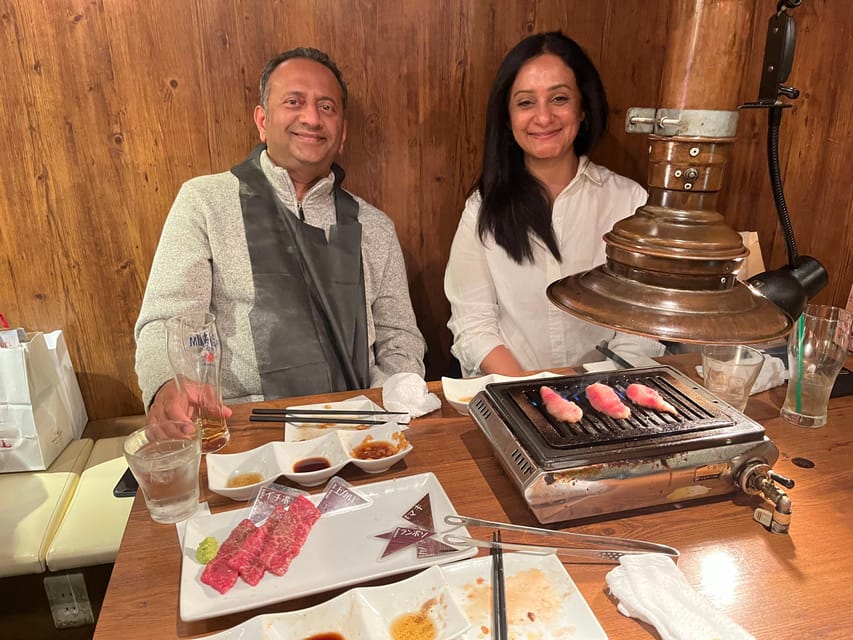
The meal is centered on Wagyu beef and sushi. You can expect the guide to explain why Wagyu is prized, how its flavor and texture differ by region, and how it fits into Japanese food culture. The sushi portion focuses on fresh seasonal ingredients and the precise work of the chefs. That makes a difference if you are new to sushi or unsure how to judge the balance of rice, fish, seasoning, and presentation.
The tour includes dinner at two distinct food venues. That is useful because you get more than one setting and more than one style of eating, though it also means the evening is divided between food and walking. This is not the right choice if you want to sit in one restaurant for three hours and order freely from a menu.
The supplied price is $154 per person. That is a serious outlay for a short tour, but it covers a local guide, dinner, alcoholic beverages for participants aged 20 and older, and visits to two food venues. You are paying partly for the ingredients and partly for the help of someone who can explain what you are eating and guide you through streets that can feel confusing at night.
A few more Tokyo half-days to weigh up
- Mt Fuji and Hakone 1-Day Bus Tour Return by Bullet Train
★ 5.0 · 26,383 reviews - 1-Day Tokyo Bus Tour
★ 5.0 · 14,250 reviews - Tokyo: TOKYO SKYTREE® Admission ticket
★ 4.5 · 11,192 reviews
Meeting near Nishishinjuku
The starting point is 7-chōme-10-5 Nishishinjuku, directly in front of the 3rd Burger. This is a useful landmark, but you should still allow time to find it. Shinjuku has many large stations, several exits, and streets that can look similar once the signs and lights begin to crowd your view.
The route is scheduled for about three hours, with the full experience sometimes lasting three to three and a half hours. The listed walking portions give Kabukicho and Golden Gai about 1.5 hours each, although food visits are part of the overall evening. Wear shoes you can walk in comfortably. The tour moves through city streets and narrow lanes rather than staying inside one dining area.
Transportation is not included. The stated extra cost ranges from 200 to 800 yen, so keep some yen available. The information does not specify exactly when or why that fare might be needed, so check the day’s arrangements if you are concerned about extra movement between areas.
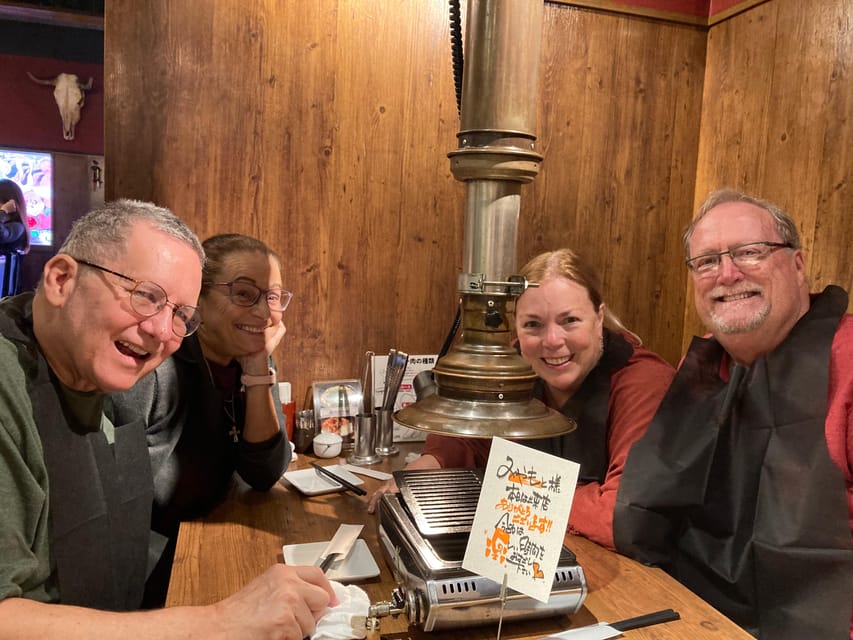
The tour is led in English and limited to 10 participants. That size is one of the better features here. A guide can usually answer questions and keep the group together without the stiff, crowded feel of a large coach tour. It also suits solo visitors who want company for a night out but do not want to organize every stop themselves.
Kabukicho, where neon replaces the quiet
Kabukicho is the first major area on the route. It is Tokyo’s famous entertainment district, full of bright signs, nightlife businesses, restaurants, and constant movement. The appeal is visual and social. You get a quick sense of how Shinjuku changes once the workday ends.
The tour includes the Godzilla Head on top of the Shinjuku Toho Building. It is an easy landmark and a fun piece of Tokyo pop culture. The giant monster figure also gives the guide a natural way to talk about the city’s taste for bold public symbols and modern entertainment.
I would treat this part as orientation rather than a long sightseeing stop. Kabukicho is exciting, but it can also feel loud, crowded, and visually intense. You will not get a calm, polished view of Tokyo here. You get a working nightlife district, with all the clutter and energy that implies.
A guide is especially useful in this setting because the area can be confusing for first-time visitors. The walk helps you understand where you are before the group turns toward the food stops and smaller lanes. Stay close to the group and pay attention to meeting instructions, especially if you pause for photographs.
Omoide Yokocho and the small-scale side of dinner
Omoide Yokocho is one of the route’s most atmospheric stops. The name is associated with a narrow passage lined with tiny bars and eateries, many serving yakitori and other Japanese comfort foods. The setting is close, informal, and very different from a spacious modern restaurant.
The value here is not only the food. It is the chance to see how much atmosphere Tokyo can fit into a very small space. Seats and counters are compact, the alleys are narrow, and the cooking feels tied to everyday dining rather than formal ceremony.
You should expect a lively setting and limited room. If you prefer quiet tables, wide aisles, or a predictable pace, this may feel cramped. For me, that is part of the point, but it is worth knowing before you book. This is an urban food walk, not a polished dining-room experience.
The tour information names Wagyu and sushi as the main food focus, while Omoide Yokocho is described as a place for yakitori and comfort food. Because the precise dishes and order of the stops are not specified, you should not assume that every specialty mentioned along the route will be served as a full course. The guide’s role is to place the meal in its Shinjuku setting and help you understand what is in front of you.
Same base, a completely different sort of day:
- Tokyo: teamLab Planets TOKYO Digital Art Museum Entry Ticket
★ 4.6 · 9,779 reviews - Mt Fuji & Hakone Cruise, Drum Show Bullet Train 1 Day from Tokyo
★ 4.0 · 7,413 reviews - Tokyo: Sumo Show Experience with Chicken Hot Pot and a Photo
★ 4.8 · 6,678 reviews - Tokyo: Shinjuku Food Tour (13 Dishes at 4 Local Eateries)
★ 5.0 · 6,603 reviews
Hanazono Shrine, a quiet pause in the city
Hanazono Shrine provides the route’s sharpest change of mood. After neon signs, restaurants, and entertainment streets, you reach a calmer religious site tucked among Shinjuku’s busy surroundings.
The shrine offers a chance to see traditional Japanese religious practice without leaving the city center. Your guide can provide context about the site and explain what you are seeing, though the available information does not promise a formal religious ceremony or a particular ritual. Think of it as a short cultural pause, not a separate shrine tour.
This stop matters because food tours can otherwise become a string of restaurants with a bit of walking between them. Hanazono Shrine gives the evening a sense of place. It reminds you that Shinjuku is not only shopping, nightlife, and giant signs.
The contrast also helps you read Tokyo more clearly. A shrine can sit only minutes from some of the city’s loudest streets, and that mixture is one of the most interesting things about urban Japan. Keep expectations modest, since the tour’s main purpose remains food and neighborhood exploration.
Golden Gai and the final narrow lanes
The evening finishes at Shinjuku Golden Gai. This maze of lanes contains more than 200 small bars, each with its own character and theme. The buildings and passageways are tightly packed, creating an intimate drinking district unlike the broad streets around the major stations.
Golden Gai is tied to Tokyo’s post-war culture, and the guide’s explanation adds meaning to what could otherwise look like a confusing collection of tiny doorways. You can learn why the area matters, how its small bars developed, and how it fits into Shinjuku’s night culture.
The tour ends in Golden Gai rather than returning you to the original meeting point. That is convenient if you plan to continue your evening nearby, but it means you should know how you will get back to your hotel. No hotel pickup or drop-off is provided.
Alcoholic beverages are included for participants aged 20 and above. Japan’s legal drinking age is reflected in the tour rules, so younger participants should not count on alcoholic drinks being part of the package. The information does not state what nonalcoholic alternatives are offered, so ask the provider if that is important to you.
Golden Gai is best enjoyed with realistic expectations. The bars are small, and the atmosphere is more intimate than grand. You may find the lanes fascinating, but you should not expect a large venue, a long bar menu, or a club-style night out.
What the food teaching adds
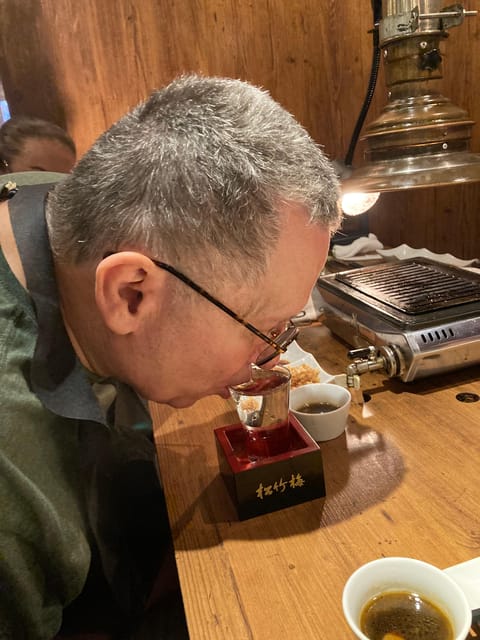
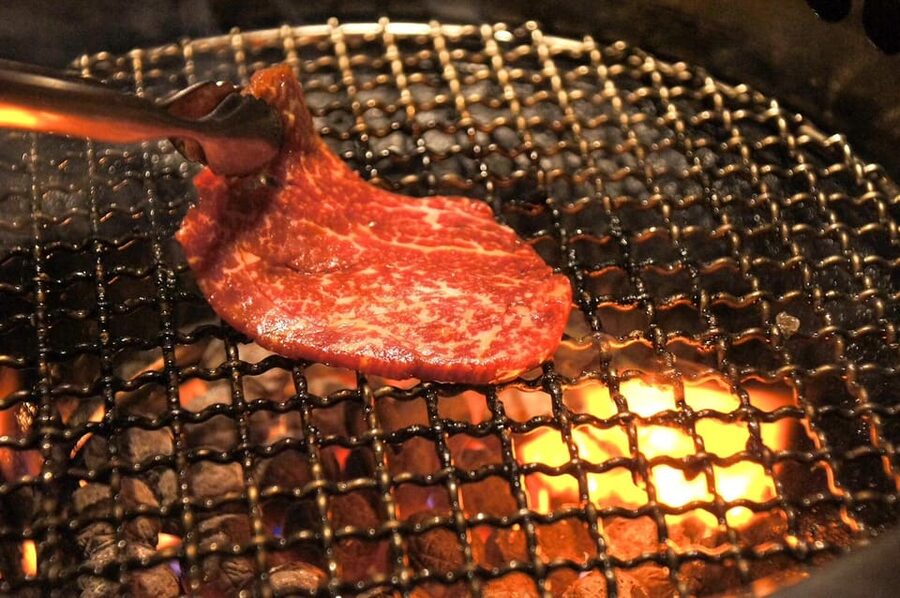
The food is the reason to book, and the explanations are what make the price easier to judge. Wagyu is more than simply tender beef. The guide discusses its history, taste, and regional variations, giving you a way to understand why different cuts and origins matter.
The sushi segment focuses on chef precision and seasonal ingredients. You get to watch the preparation of individual pieces and learn about traditional techniques. That is particularly helpful if you have eaten sushi before but usually order by guesswork.
A good food guide can also explain practical points that are hard to pick up from a menu: how a dish is meant to be approached, why a certain ingredient appears at a certain time of year, and what makes one preparation different from another. The available information supports this kind of instruction, but it does not provide a fixed menu, named restaurants, or a guaranteed number of sushi pieces and Wagyu servings.
The strongest praise attached to this experience centers on three things: the tenderness of the Wagyu, the freshness and quality of the sushi, and the guide’s warmth and food knowledge. Emma is specifically praised for being personable and for sharing useful details about dining in Tokyo. Another guide is described as friendly and enthusiastic, but no name is provided.
That means you should book for the food themes and neighborhood route, not for a promised celebrity chef or a particular restaurant. The venues and dishes can change, and the exact selection is not listed.
Is $154 good value?
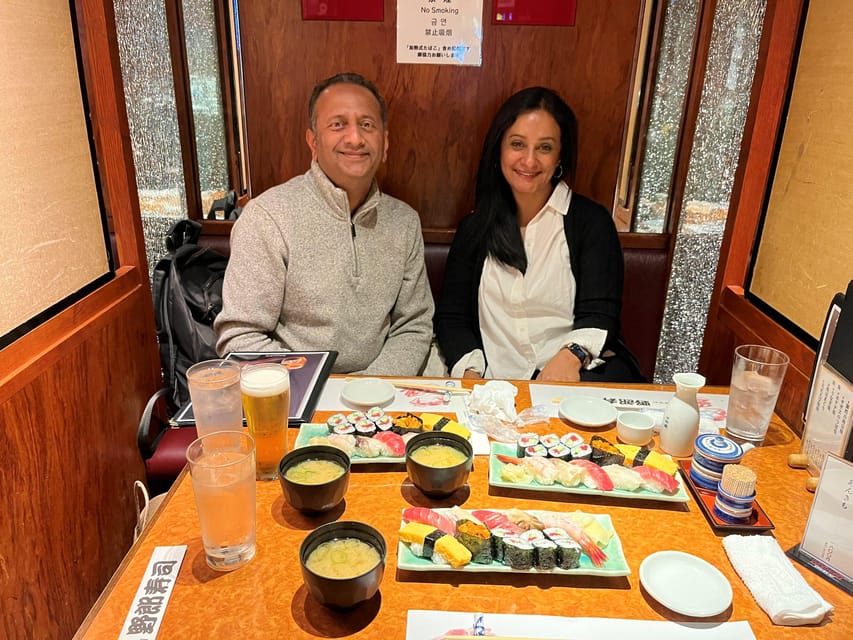
At $154, this is not a budget food walk. You need to decide how much value you place on guidance, included drinks, and a carefully arranged evening in a complicated neighborhood.
The price makes more sense if you are visiting Tokyo for the first time, want to try Wagyu and sushi without making all the choices yourself, and would like to see Golden Gai and Kabukicho with local context. Dinner at two venues also gives the outing more range than a single restaurant booking.
The value is weaker if you already know Shinjuku well, speak Japanese comfortably, or mainly want a large meal. The tour lasts only three to three and a half hours, and the food portions are not specified. You may leave satisfied, but you should not book it expecting an unlimited dinner.
Alcoholic drinks are included for those aged 20 and above, which helps justify the cost for people who plan to drink. Transportation costs are extra, though the stated range of 200 to 800 yen is relatively small compared with the tour price.
The overall rating is 4.3 out of 5 from 24 ratings. That is a solid result, and the praise is notably consistent around the food and guides. Still, the limited number of ratings means I would use that figure as one useful signal, not the sole reason to book.
Who will enjoy this Shinjuku evening?
I would recommend this experience to food-focused visitors who want more than a restaurant reservation. It suits you if you enjoy learning the background of a dish, walking after dinner, and seeing both quiet and noisy sides of the same district.
It also works well for solo visitors and couples who want a small social group. With a maximum of 10 people, the evening should feel more personal than a large city tour. The English-speaking guide makes it accessible if you do not speak Japanese.
You may want a different plan if you have mobility concerns, dislike narrow lanes, or prefer a slow, seated meal. The route includes city walking, compact alleys, and busy night districts. The available information does not give accessibility details, so contact the provider before booking if you need specific arrangements.
Families should also check the drinking arrangements. Alcohol is included only for participants aged 20 and above, and the tour’s final stop is a district known for small bars. The experience may be more comfortable for adults who enjoy nightlife settings.
Practical advice before you book
Arrive early at the 3rd Burger meeting point. Shinjuku station and its surrounding streets can take time to sort out, and a late arrival could be difficult once the group has moved on.
The provider asks you to make contact if needed and notes that a booking may be canceled if there is no contact from the participant by the day of the tour. If that happens, a full refund is issued. You can also cancel up to 24 hours ahead for a full refund, and the reserve-now, pay-later option lets you hold a place without paying immediately.
Bring comfortable shoes and enough yen for possible transportation costs. If you are aged 20 or older and want the included alcoholic beverages, carry identification if you normally need it for age checks, though the tour information does not specify an identification policy.
Do not expect to return to the starting point. The experience finishes in Golden Gai, so plan your route afterward. You may want to stay in Shinjuku for more food or nightlife, or arrange your return before the tour begins.
Should you book it?
Book this tour if Wagyu and sushi are high on your Tokyo list and you want a guide to connect the food with Shinjuku’s streets. The strongest reasons are the small group, the two food venues, the included dinner and drinks for eligible adults, and the mix of Kabukicho, Hanazono Shrine, Omoide Yokocho, and Golden Gai.
Skip it if $154 feels high for a three-hour outing, if you want a fixed menu and named restaurants in advance, or if you prefer to spend the whole evening at one table. For the right person, this is a well-shaped introduction to Shinjuku after dark, with excellent food at its center and plenty of local atmosphere around it.
FAQ
Where does the tour start?
It starts at 7-chōme-10-5 Nishishinjuku, directly in front of the 3rd Burger.
Where does the tour finish?
The tour finishes in Shinjuku Golden Gai.
How long does the experience last?
It is scheduled for three hours, though the full duration may be three to three and a half hours.
What food is included?
Dinner is included, with a focus on Wagyu beef and sushi. The experience visits two distinct food venues.
Are alcoholic drinks included?
Yes, alcoholic beverages are included for participants aged 20 and above.
Is transportation included?
No. Transportation costs are separate and may range from 200 to 800 yen.
Is hotel pickup or drop-off provided?
No. Hotel pickup and drop-off are not included.
What language is the tour conducted in?
The tour is conducted in English by a live guide.
How large is the group?
The experience is a small-group tour limited to 10 participants.
Can I cancel for a full refund?
Yes. You can cancel up to 24 hours in advance for a full refund.
Just added around Tokyo
- Private Arrival Transfer : Narita International Airport to Central Tokyo City★ 4.5 · 12 reviews
- Narita Airport(NRT): Private Transfer to Tokyo/Yokohama 1-9pax★ 5.0 · 47 reviews
- Private Transfer from Narita Airport to Yokohama Port and City★ 4.5 · 17 reviews
- [Narita Airport Terminals 1, 2] 40-60km Sawara Itako Historic Bike Tour★ 5.0 · 13 reviews
- 3 Day Japan Highlights Tour: Tokyo, Mt.Fuji, Nara, Kyoto, Osaka★ 5.0 · 22 reviews
- Small Town in the Big City: Tasting Tokyo’s Kichijoji★ 5.0 · 195 reviews
- Small Town in the Big City: Tasting Tokyo’s Kichijoji★ 5.0 · 16 reviews
- The 10 Tastings of Tokyo With Locals: Private Street Food Tour★ 5.0 · 48 reviews
Tokyo Tours, compared.

Mt Fuji and Hakone 1-Day Bus Tour Return by Bullet Train
Read our review →

teamLab Planets TOKYO Digital Art Museum Entry Ticket
Read our review →
Mt Fuji & Hakone Cruise, Drum Show Bullet Train 1 Day from Tokyo
Read our review →
Sumo Show Experience with Chicken Hot Pot and a Photo
Read our review →
Shinjuku Food Tour (13 Dishes at 4 Local Eateries)
Read our review →
Tokyo Mt Fuji 5th St & Hakone Cruise Bus Tour w/Bullet Train
Read our review →