
Reviewed · YOKOHAMA TOURS
Tokyo/Yokohama: Private JDM Daikoku/大黒 Car Meet With Driver
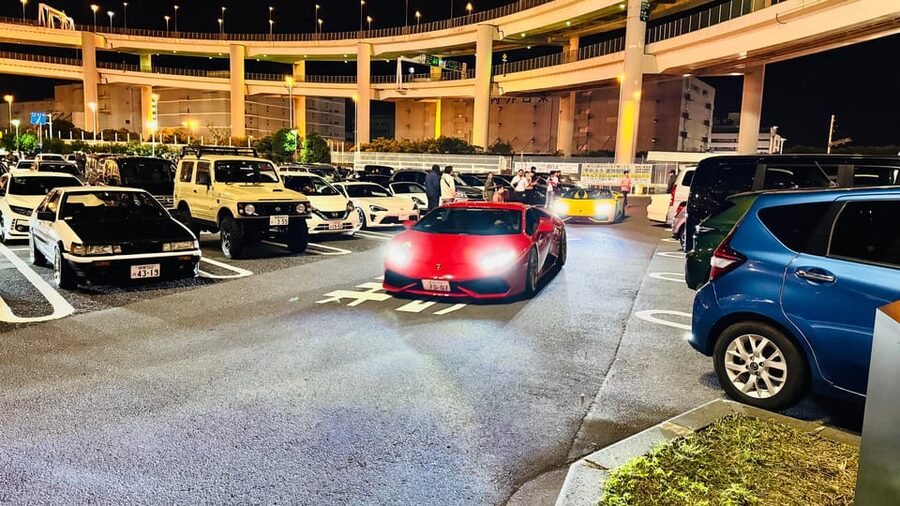
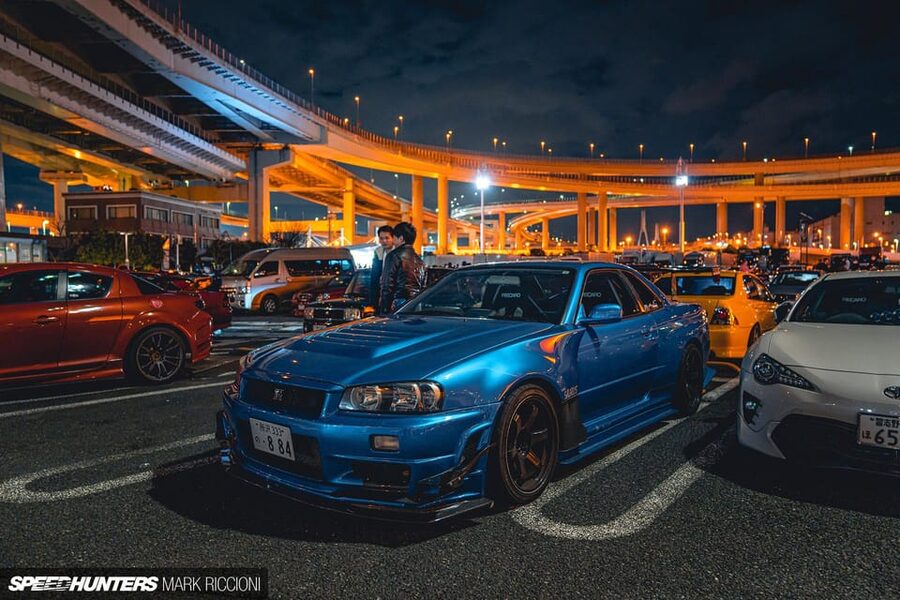
Tokyo’s most unusual night out may be a highway parking lot. At Daikoku Parking Area, modified Japanese cars gather beside the looping roads of Yokohama, turning an ordinary rest stop into a meeting place for Japan’s JDM scene. You ride there with a private driver, rather than trying to find the spot yourself.
I like two things right away: the private van keeps the evening simple, and the route adds real context through Autobacs Shinonome, Yokohama Bay Bridge, and the Tokyo Bay Aqua-Line. I also like the chance to ride the same roads linked with local street-racing culture, with an English-speaking guide such as Taro, David, Imran, or Sam explaining the city along the way.
The main catch is that Daikoku PA closes frequently, and the Umihotaru stop usually costs an extra ¥5,000 per person unless Daikoku is closed. If you want a guaranteed car show, this is not that kind of outing. If you enjoy cars, night drives, and the odd corners of Tokyo Bay, it can be excellent value.
Key points before you book
- Daikoku PA is a highway rest stop, not a formal car museum, so the cars and atmosphere can change from night to night.
- The private group format means you avoid arranging complicated public transport to a distant interchange.
- Autobacs Shinonome gives you a look at one of Japan’s largest car-related stores, with time to shop and walk around.
- The Tokyo Bay Aqua-Line adds a scenic road trip, with Umihotaru built on the sea as a possible final highlight.
- Guides vary, with Taro, David, Imran, Sam, and others named in the provided feedback, so your guide may not be one of these people.
- The four-hour schedule is active, with about 1.5 hours at Daikoku and shorter stops before and after.
Why a highway parking area matters to JDM fans
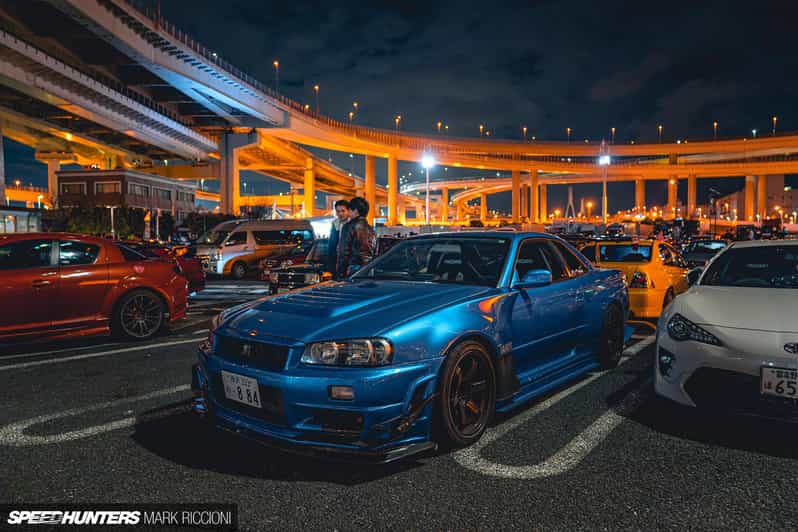
Daikoku Parking Area sits beside the complicated highway network around Yokohama. Roads loop, split, and cross Tokyo Bay, making the place difficult to reach by ordinary sightseeing methods. That awkward location is part of the appeal. You are not being taken to a polished automotive attraction built for tourists. You are visiting a real roadside meeting point where Japanese Domestic Market cars may gather.
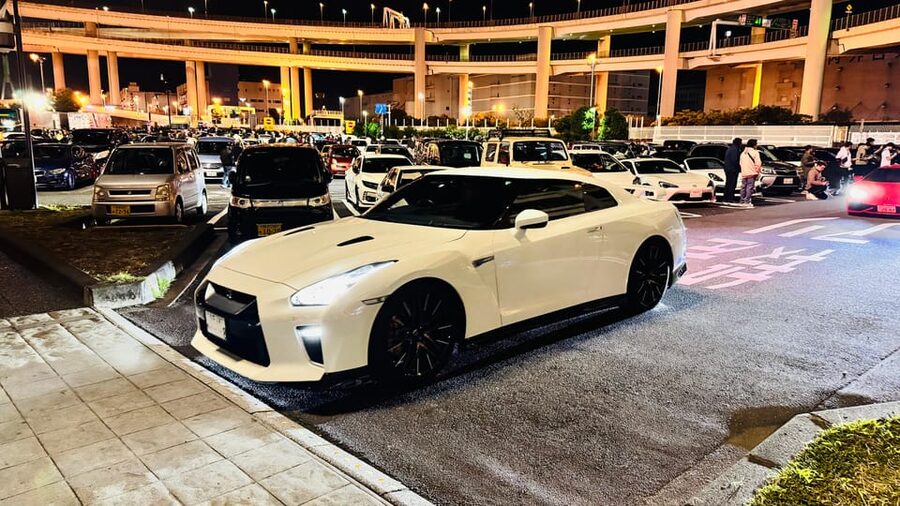
JDM refers to cars made for the Japanese market, though the culture around the term also includes modification, tuning, styling, and personal taste. On a good night, you might see a wide mix of modified cars in one place. The exact selection is never promised, which is important. This is a live meeting, not a scheduled exhibition.
That unpredictability is both the strength and weakness of the outing. A busy night can produce the memorable rows of cars you came hoping to photograph. A quiet night may feel more like a scenic drive with an automotive stop. The supplied rating of 4.7 from 20 reviews reflects strong satisfaction, but you should still book for the experience of the scene, not a guaranteed list of models.
A few more Japan half-days to weigh up
- Tokyo Private Sightseeing Tour by Car- English speaking chauffeur
★ 5.0 · 1,004 reviews - Tokyo Private Tour by Vehicle with English-Speaking Chauffeur
★ 5.0 · 504 reviews - Mt FUJI Day Tour with Private Car and English Speaking Guide
★ 5.0 · 433 reviews
The four-hour route from Tokyo or Yokohama
Pickup is offered in Tokyo, within Tokyo’s 23 wards, or Yokohama. If you are outside the 23 wards, you need to contact the provider before booking. This matters because the roads to Daikoku are far from a quick central-Tokyo taxi ride, and the starting point affects how much of the four-hour period you spend in the van.
The first driving section lasts about 40 minutes. That gives you time to settle in and see Tokyo from the road rather than from a station platform. The driver speaks English, Hindi, Japanese, Punjabi, or Urdu, though the available language depends on the person assigned to your group.
The private format is useful here. You do not have to work out which highway interchange allows access to Daikoku, and you are not left guessing how to return after the car meet. Drivers also point out major landmarks along the route. David, for example, was praised for safe driving and for explaining landmarks between stops. That kind of basic orientation adds value to what could otherwise be four hours of transportation and waiting.
Autobacs Shinonome: a practical first stop
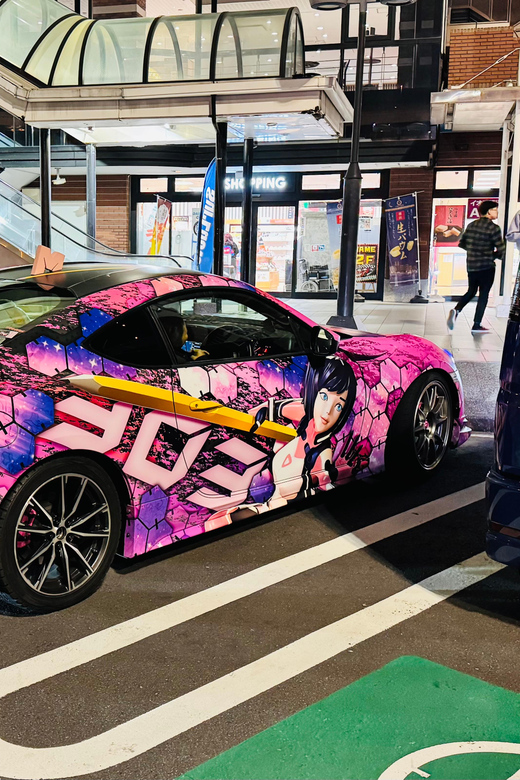
Autobacs Shinonome comes early in the route, with about 40 minutes for visiting, shopping, and walking. It is described as one of the largest car-related stores in Japan, so this stop gives you a more organized view of the country’s car culture before you reach the informal meet.
You might find parts, accessories, tools, and car-related goods here, but the supplied information does not promise specific products or brands. Think of it as a chance to browse and get a feel for how car ownership and modification are presented in Japan. If you are not interested in cars, this may be the least rewarding stop. The time is short, so you should not expect a long shopping session.
For a car fan, though, the stop helps explain why the Daikoku scene feels broader than a collection of unusual vehicles. It connects the hobby to retail, customization, and the practical business of making a car your own. Bring a credit card and some cash if you want to buy something, and keep your phone charged for quick translation or product photos.
The activity information also mentions the Great Shibuya Crossing among the included destinations, but the detailed route supplied for this experience does not list a stop there. I would confirm the exact route at booking rather than assume you will have time to visit Shibuya during the four-hour drive.
Daikoku PA: the main event
After about another 30 minutes in the van, you reach Daikoku Parking Area for roughly 1.5 hours. This is the heart of the outing. Your guide leads you around, gives you time to walk, and helps you take photographs.
The setting is practical rather than pretty. You are between highway circles, surrounded by roads, vehicles, and the industrial edges of Yokohama. That is precisely why the stop feels different from a standard Tokyo attraction. You are seeing a working piece of the road system that has become important to car enthusiasts.
Your guide may explain how local street racers use the roads and why Japanese car culture took root around expressways, parking areas, and modified vehicles. The available information does not promise a formal lecture, so expect conversation and on-the-spot help rather than a museum-style presentation.
The photo opportunity is a major reason to choose this tour. The cars can be displayed in rows or appear as owners arrive and leave. You may see a broad variety of modified JDM-style vehicles, but no one can control the turnout. The strongest feedback repeatedly praised the variety of cars and the chance to see them together in one place. One booking made only 30 minutes before departure was also accepted, though that kind of short-notice availability should not be assumed.
Treat the location with common sense. Bring your passport, camera, credit card, cash, and a charged smartphone, as requested for the activity. Alcohol and drugs are not allowed. The information does not state a formal photography rule, so ask your guide before getting close to a car or photographing people. A respectful approach makes sense in any enthusiast setting.
More private driver days in Japan:
- Mt Fuji Private Tour with English Speaking Driver
★ 5.0 · 861 reviews - Mt. Fuji & Hakone Private Day Tour with English-Speaking Driver
★ 4.5 · 824 reviews - Haneda Airport (HND) Private Transfer to Central Tokyo
★ 4.5 · 636 reviews - Mt. Fuji, Hakone Full-Day Private Tour with English Driver Guide
★ 4.5 · 458 reviews
Bay Bridge and the Aqua-Line at night
After Daikoku, the route passes over or by Yokohama Bay Bridge. You do not get a dedicated stop there, but the drive provides scenic views from the van. This is a nice change of pace after the concentrated car meet. You can sit back, watch the lights, and let the driver handle the roads.
The route then continues along the Tokyo Bay Aqua-Line for about 30 minutes. This road links the Tokyo and Chiba sides of the bay, and the drive itself is part of the attraction. The tour is not only a parking-lot visit. It uses Tokyo Bay’s highways to show you a different side of the metropolitan area, one shaped by bridges, tunnels, toll roads, and wide night views.
This portion also explains why the price is higher than a basic taxi ride to a single location. You are paying for a driver who knows the route, a private vehicle, and a planned loop through several distant points. The value improves if you would otherwise spend time and money arranging separate rides.
Umihotaru and the extra ¥5,000 question
Umihotaru PA is described as Japan’s only parking area in the middle of the sea. It offers time for photos, sightseeing, shopping, and walking, with about 40 minutes scheduled there. Its unusual position gives the evening a memorable final stop, especially if you enjoy infrastructure as much as automobiles.
There is an important pricing detail. Unless Daikoku PA is closed, going to Umihotaru costs an additional ¥5,000 per person because of the tolls and the much greater distance. The information also says that if Daikoku closes, the tour will go to Umihotaru instead. Since Umihotaru appears in the route but is listed as an extra charge in normal circumstances, confirm exactly what applies to your booking.
If Daikoku is closed, Umihotaru is not a poor substitute. It keeps the highway theme alive and offers a striking place to walk above Tokyo Bay. But it is not the same experience. Umihotaru is a scenic stop with shops and views, while Daikoku is the main car-culture destination. I would see the two as different highlights, not interchangeable attractions.
What the private price really buys you
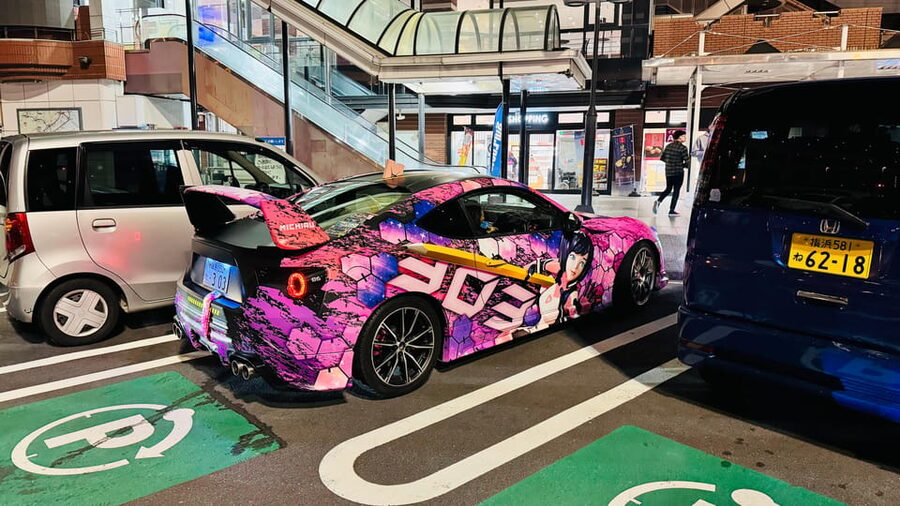
The stated price is $128 per person for four hours. That is not a cheap sightseeing ride, especially if you are booking for several people. The value depends on what you would otherwise need to arrange.
A private vehicle is the biggest benefit. Daikoku is not a simple central-Tokyo attraction, and the route combines Tokyo, Yokohama, and Tokyo Bay. Hotel pickup and drop-off reduce the risk of getting stranded at a remote highway facility. You also have a guide who can answer questions and point out landmarks, rather than relying only on a navigation app.
The price makes the most sense for two types of people. First, serious car fans who would gladly pay for a focused night around JDM culture. Second, small private groups who want a flexible evening and do not want to split up or manage long transfers.
The value is weaker if you only want a general Tokyo night tour. The schedule spends much of its time in a van, and the central attraction may vary. You could also pay another ¥5,000 per person for Umihotaru, so calculate the full cost before booking.
The cancellation terms are fair: you can cancel up to 24 hours in advance for a full refund, and you can reserve now and pay later. Those terms help if your Tokyo plans are still shifting, but they do not remove the uncertainty around Daikoku’s opening status.
Guides, timing, and the feel of the evening
The guide names connected with this activity include Taro, David, Imran, and Sam. Taro was singled out for being kind, available for questions, and helpful in creating a positive experience. David was praised for safe driving, landmark explanations, and getting the group to the right spots. Imran was noted for flexibility with travel arrangements, while Sam led an evening that also included Tokyo Tower and Roppongi illumination according to one account.
Those names show that the human part of the outing matters. You are not simply hiring a car. The guide can affect how much context you get, how smoothly the evening runs, and how comfortable you feel asking questions. Driver assignments can change, so do not book on the assumption that a particular person will be available.
The age restrictions are clear. The experience is not suitable for children under 10 or people over 95. It is a private group, which makes it easier to keep the evening focused on your interests, but the route and stops remain tied to the planned schedule.
Who should book this experience
I would recommend it to you if you collect car memories, enjoy modified vehicles, or want to see a side of Japan that does not appear in a standard city tour. It also suits anyone who likes night drives and large-scale road engineering. The Bay Bridge and Aqua-Line make the outing more than a static car stop.
You should be comfortable with uncertainty. Cars are not guaranteed, Daikoku can close, and the night includes substantial driving. If you need a fixed schedule with indoor attractions and a predictable display, choose a formal automotive museum instead.
Bring warm clothing if the evening is cool, though the supplied information only specifically requires a passport, camera, payment methods, and charged smartphone. Most of the interesting moments happen outside the van, so practical shoes and a little patience will help.
Should you book the Daikoku night drive?
Book it if the journey matters as much as the destination. You get a private driver, hotel pickup, a large car store, Daikoku PA, major Yokohama roads, and the option of Umihotaru. For a JDM fan, that combination is hard to reproduce without local help.
Skip it if you want a guaranteed collection of famous cars or if the extra Umihotaru fee would strain your budget. Before paying, confirm the pickup area, whether Daikoku is expected to be open, and whether Umihotaru is included or costs ¥5,000 extra. With those points clear, this is a focused and unusual way to spend four hours around Tokyo Bay.
FAQ
How long does the experience last?
The activity lasts four hours.
Where can pickup and drop-off take place?
Pickup and drop-off are available in Tokyo, Tokyo’s 23 wards, and Yokohama. If you are outside Tokyo’s 23 wards, contact the provider before booking.
Is the tour private?
Yes. The experience is offered as a private group.
Which languages are available?
The driver languages listed are English, Hindi, Japanese, Punjabi, and Urdu.
What happens at Daikoku Parking Area?
You have about 1.5 hours for photographs, walking, sightseeing, and a guided visit focused on the car meet and JDM culture.
Can Daikoku Parking Area close?
Yes. Daikoku PA closes frequently.
What happens if Daikoku PA is closed?
The tour goes to Umihotaru PA, the parking area located in the middle of the sea in Japan.
Is Umihotaru included in the price?
Unless Daikoku PA is closed, there is an additional charge of ¥5,000 per person for Umihotaru because of the tolls and longer distance.
What should I bring?
Bring your passport, camera, credit card, cash, and a charged smartphone.
Can I cancel for a refund?
Yes. You can cancel up to 24 hours in advance for a full refund. You can also reserve now and pay later.
Just added around Japan
- Private Arrival Transfer : Narita International Airport to Central Tokyo City★ 4.5 · 12 reviews
- Narita Airport(NRT): Private Transfer to Tokyo/Yokohama 1-9pax★ 5.0 · 47 reviews
- Private Transfer from Narita Airport to Yokohama Port and City★ 4.5 · 17 reviews
- [Narita Airport Terminals 1, 2] 40-60km Sawara Itako Historic Bike Tour★ 5.0 · 13 reviews
- 3 Day Japan Highlights Tour: Tokyo, Mt.Fuji, Nara, Kyoto, Osaka★ 5.0 · 22 reviews
- All must-sees in 3 hours – Nara Park Classic Tour! From JR Nara!★ 5.0 · 108 reviews
- Private Nara Tour and Sake Tasting (Departing from Kyoto/Nara)★ 5.0 · 40 reviews
- Hammer a Pattern on Your Ring Workshop★ 5.0 · 57 reviews
Yokohama Tours, compared.

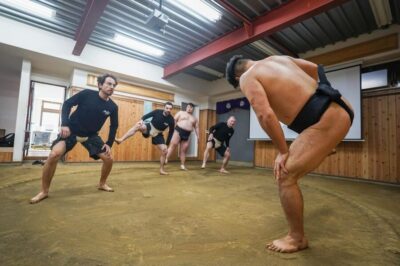
Authentic Sumo Experience in Tokyo: Enter the Sanctuary
Read our review →
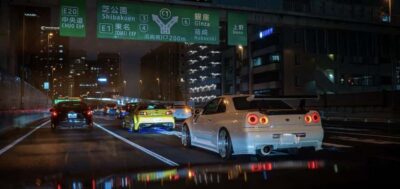
EVO, WRX, Skyline – JDM Night Run to Daikoku Car Meet
Read our review →
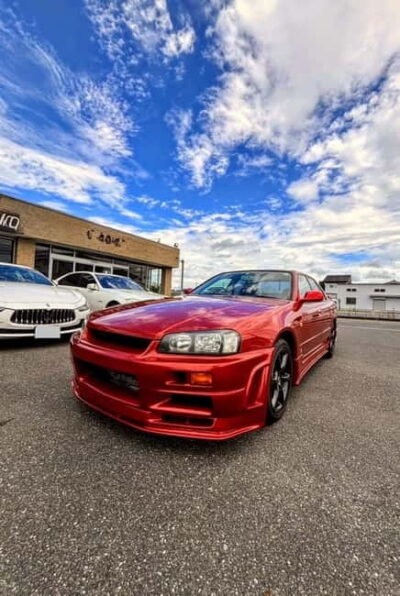
R34Skyline Daikoku PA Fast & Furious Private Experience
Read our review →
Guided Cup Noodles Museum Tour & Make Your Own Cup
Read our review →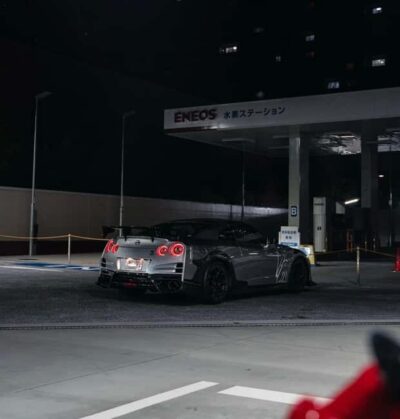
Daikoku & Tokyo JDM Night Tour in R34 or TopSecret R35 GT-R
Read our review →Browse the lists this tour appears in