
Reviewed · TOKYO TOURS
Ultimate Sumo Tournament: Tokyo, Osaka, Nagoya, Fukuoka
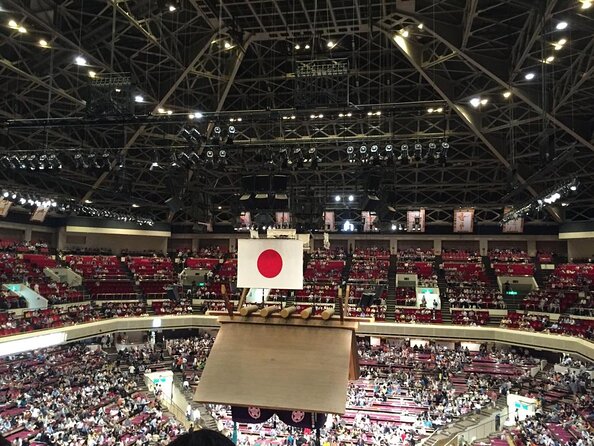
Japan’s grand sumo tournament is not simply a sporting event. It is a tightly scripted display of ritual, rank, ceremony, and explosive strength, and an English-speaking guide helps you understand what happens before, during, and between bouts. I like the reserved seats and the clear audio headsets, especially in a noisy arena. I also like the chance to add a chanko hot pot dinner after the matches.
The main consideration is price. At about $184.38 per person, this is far more than a basic admission ticket, although tickets can be difficult to secure. Standard seats are on the second floor, and the amount of commentary can depend on your guide. Most visitors receive excellent explanations, but one guest found the guiding too limited.
Key points to know before booking
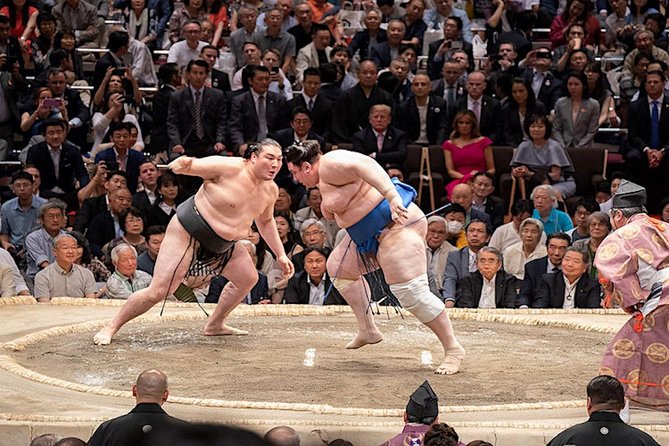
- Six official tournaments each year: Tokyo hosts January, May, and September, with Osaka in March, Nagoya in July, and Fukuoka in November.
- A four-hour arena visit: The tour begins at 2 p.m. and includes tournament access, an orientation, live commentary, and time to buy food or drinks inside.
- Standard seats are upstairs: Join-in groups use B or C chair seats on the second floor, with B seats generally in rows 7 to 11.
- Private tours sit closer: Private bookings include S or A-class seating, closer to the dohyo, or sumo ring.
- The guide makes the difference: Guides such as Hiro, Myoko, Yumi, Taku, Izumi, and Shunsuke have been praised for explaining rituals, rankings, and wrestling styles.
- Off-season dates are different: A morning stable visit near Warabi replaces the tournament and does not include a basho ticket.
Why sumo makes a fine first Japanese cultural experience
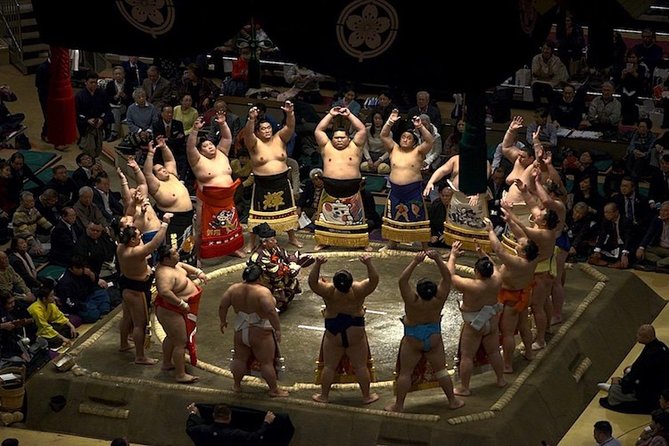
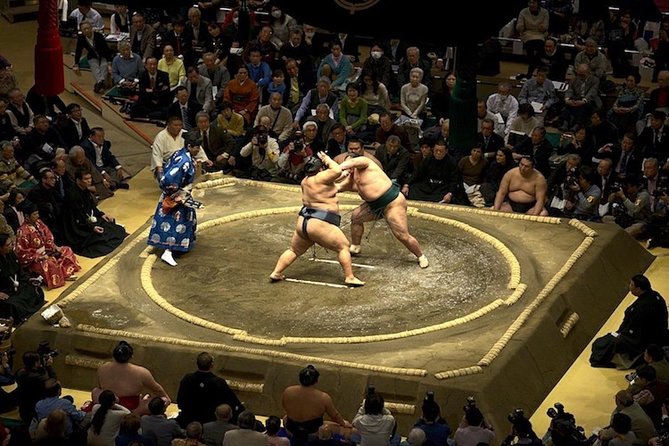
Sumo is easy to watch but not always easy to understand. A bout may last only seconds, yet much of the meaning lies in the salt throwing, foot stamping, bowing, referee’s commands, wrestler rankings, and long preparation before the charge.
I like this tour because it gives you a way into that world without asking you to study the sport first. Your guide uses a banzuke, the official ranking sheet, and explains the wrestlers, their form, their techniques, and their place in the tournament. The headset matters too. Inside the arena, cheering, announcements, movement, and food vendors can make ordinary conversation hard to hear.
The strongest part of the experience is usually the guide’s live commentary. Hiro has been praised for explaining each bout, including age, rank, recent form, and wrestling style. Myoko, Yumi, Taku, Izumi, Shunsuke, and others have also been singled out for clear explanations and genuine enthusiasm for sumo.
That said, this is still a live event, not a private lecture. Your guide may explain the major rituals and bouts, then give you time to watch independently, shop, eat, or use the restroom. One guest felt the explanations were too basic, so I would book this tour mainly if you want structured help with sumo, while understanding that the guide may not narrate every single moment.
More Sumo Experiences in Tokyo
- Tokyo: Sumo Show Experience with Chicken Hot Pot and a Photo
★ 4.8 · 6,678 reviews - Tokyo: Sumo Show and Dining Experience
★ 4.8 · 2,742 reviews - the SUMO show
★ 5.0 · 1,960 reviews
Choosing the right tournament city and month
The official tournaments, called basho, take place six times a year. Each lasts 15 days, beginning and ending on a Sunday.
- Tokyo hosts the January, May, and September tournaments at Ryogoku Kokugikan.
- Osaka hosts the March tournament at EDION Arena Osaka.
- Nagoya hosts the July tournament at IG Arena.
- Fukuoka hosts the November tournament at Fukuoka Kokusai Center.
The city you choose should depend first on your Japan itinerary. The sumo calendar is fixed by month, so you cannot simply pick any date in any city. If you are in Tokyo in May, for example, Ryogoku is the natural choice. If you will be in Osaka in March, the Osaka basho lets you fit the event into a wider Kansai trip.
Tokyo offers the strongest sumo setting because Ryogoku is closely associated with the sport and the Kokugikan is Japan’s official sumo arena. The other cities provide the same basic tournament format, but the surrounding trip can feel different. Osaka, Nagoya, and Fukuoka are useful choices if your route already includes those places.
Book early. Three months before your preferred date is recommended, and one month is the minimum suggested timing. Group tickets are released by the Sumo Association only four to seven weeks before the tournament date. If tickets cannot be obtained, the operator says it will notify you within four weeks and offer another date or a full refund.
What happens at Ryogoku Kokugikan
The Tokyo option meets at or near Ryogoku Kokugikan, with the exact meeting details sent by email at least one week before the tour. The advertised start time is 2 p.m., and the guided visit lasts about four hours.
Your guide first helps you get oriented. This may include a short look around the arena and the Sumo Museum. The museum can become crowded, and a large group may be asked to visit it independently rather than moving through together. That is a practical point, not a flaw. You will often see more comfortably if you are allowed to move at your own pace.
There can also be a wait before seating. The group may need to wait until some matches finish before entering the seating area. The exact flow can therefore feel less tidy than a standard sightseeing tour. I would avoid planning a tightly timed activity immediately afterward.
Once seated, the guide explains the structure of the day and the elements that are easy to miss. The early bouts help set the scene, while the higher-ranked wrestlers appear later. The schedule allows you to watch the top-division Makuuchi bouts and roughly half of the second-division Juryo bouts, according to the tour information.
A headset lets you hear the guide without requiring everyone to sit shoulder to shoulder. This is especially useful when the arena is loud. One practical warning: a guest found the headset volume very high even at its lowest setting, so bring earplugs or an ear-loop style hearing protector if you are sensitive to sound.
Standard seats, private seats, and what you are paying for
The standard join-in tour places you in B-class or C-class chair seats on the second floor. B seats are generally in rows 7 to 11, and the group can include up to 20 people sitting in the same area with the English-speaking guide.
These are not ringside seats. You will see the action, but wrestlers will appear smaller than they do from the lower levels. The advantage is that you receive a reserved place during a tournament that can sell out quickly, plus an explanation of what you are seeing.
Private tours include S-class or A-class seats closer to the ring. If being near the dohyo is your main goal, or if you are marking a special occasion, the private option may make more sense. The supplied price of $184.38 is listed per person, but the final cost can vary according to the date, seat category, group size, and selected options. Check the exact booking total before committing.
I see the standard tour as a convenience purchase with cultural guidance attached. You are not paying only for a chair. You are also paying for ticket arrangement, seating allocation, an English-speaking guide, the ranking sheet, and the audio equipment. That can be fair value if official tickets are unavailable when you try to buy them.
Still, the value depends on your priorities. If you already understand sumo and only want to watch the matches, the premium may feel steep. If you are new to the sport and want someone to explain the difference between rankings, techniques, and rituals, the added cost is easier to justify.
More sumo mornings and shows:
- Tokyo Shinjuku Sumo Show & Experience with Photo
★ 5.0 · 1,750 reviews - Tokyo: Sumo Show and Experience in Shinjuku
★ 4.8 · 1,001 reviews - Tokyo: Sumo Tournament Tour with Chair Seat Tickets
★ 4.6 · 753 reviews - Tokyo:Luxury Sumo Show Experience & Japanese cuisine & Drink
★ 4.7 · 577 reviews
Understanding the action without studying sumo first
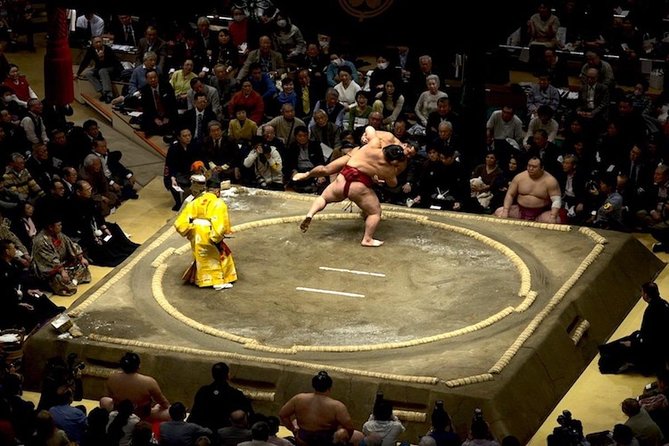
The guide’s role is most useful during the parts that look repetitive to an untrained eye. The wrestlers are not simply walking into a ring and pushing. Their movements are shaped by rank, stable traditions, ritual, strategy, and the rules of the Japan Sumo Association.
You can expect explanations of the pre-bout ceremonies, the symbolic use of salt, the referee, the wrestlers’ styles, and the basic scoring logic. The banzuke sheet helps you follow rank and identify the names taking part.
Bouts move quickly. A wrestler can win by forcing an opponent out of the ring or making another part of the body, other than the soles of the feet, touch the ground. The guide’s comments help you see why a match ended as it did rather than simply noticing that one wrestler fell.
The atmosphere also matters. Local fans cheer for particular wrestlers, and the arena’s attention shifts as higher-ranked competitors enter. You can watch the crowd as carefully as the dohyo. This is one reason I would not treat the headset commentary as a replacement for the event itself. Listen during the explanations, then look up and enjoy the noise, ceremony, and sudden impact.
Food, shopping, and the optional chanko dinner
Food and drinks are not included unless you select the dinner add-on. Outside food and drinks are not allowed in the arena, but vendors inside sell refreshments and snacks. You will have free time to purchase them, although the timing depends on the group’s movement and the event schedule.
One small practical detail from the arena experience: the soft-serve ice cream on the second floor has received a special mention. Dress lightly in Tokyo’s arena if you tend to get warm indoors.
The optional meal is chanko nabe, the hot pot associated with sumo wrestlers. It usually contains chicken stock, vegetables, and other ingredients, with a large pot suited to feeding hungry people after training. The dish originated in the Ryogoku area and remains closely linked with sumo life.
Dinner does not include drinks. Vegetarian requests can be made in the special requirements field when booking, but traditional broth often uses chicken or pork. The restaurant may substitute the broth, and dietary changes cannot be made during the week before the tour date once the request has been accepted.
This dinner is a good addition if you want the day to feel like a full cultural outing rather than a stadium visit. It is less useful if you have a favorite restaurant booked or need to leave the area quickly. One particularly well-received meal included the guide Hiro, who helped sort meat, fish, and vegan choices for the group.
Osaka, Nagoya, and Fukuoka tournament visits
The Osaka tour takes place during the March basho at EDION Arena Osaka. It follows the same basic four-hour format: meet your guide, receive an introduction, enter with the reserved ticket, and listen to commentary through the headset.
Nagoya’s tournament takes place in July at IG Arena. The July date can be a good fit for a central Japan itinerary, but remember that heat and indoor arena conditions may affect your comfort. The supplied information does not promise a particular seat row for these options, so check the selected category carefully.
Fukuoka hosts the November tournament at Fukuoka Kokusai Center. This is the year’s final official basho and can fit neatly into a Kyushu trip. Again, the core value is the combination of admission and interpretation, not hotel transport or city sightseeing.
For all three cities, transportation is your responsibility. The meeting point is sent in the tour details, and the venues are near public transportation. Allow extra time to find the correct entrance and meeting place, especially if you are unfamiliar with the city.
The off-season stable visit near Warabi
An off-season date does not give you a tournament ticket. Instead, it offers a three-hour morning visit to a working sumo stable near Warabi Station, about 30 minutes from Tokyo Station.
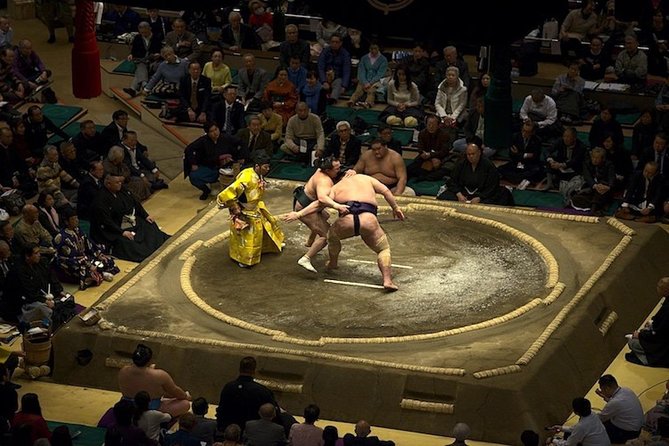
The stable session runs from 8 a.m. to noon and is available as a join-in group of roughly 8 to 16 people. You watch wrestlers train while an expert guide explains what is happening through audio headsets. Chanko lunch follows the practice session.
This option may suit you better if you want to see training close up and prefer a quieter, more intimate setting. Training can reveal the discipline behind the public bouts, but it lacks the arena crowd, formal tournament setting, and top-division competition.
The distinction is important: off-season stable dates include the stable visit, guide, headset, and chanko lunch, but not a sumo tournament seat ticket. Read the date and option wording carefully before booking.
Timing, groups, and practical planning
The standard tour can include up to 20 people. That is large enough for the headset system to matter, and it also explains why the guide may not keep the entire group together in the museum or between every activity.
There is no hotel pickup or transportation included. You need to reach the meeting point yourself, and the exact location arrives by email at least one week before the date. Confirmation is sent at booking, but ticket availability can remain uncertain until group tickets are released.
The experience requires a minimum number of participants. If the operator cancels because that number is not reached, you can receive another option or a full refund. Poor weather can also cause cancellation, with a different date or full refund offered.
Your own cancellation terms are stricter: the experience is non-refundable and cannot be amended for personal reasons. I would not book until your tournament date and Japan itinerary are firm.
Who will get the most from this sumo tour
I would recommend this experience to you if:
- You have never watched sumo and want the rituals explained.
- You tried to find official tickets and discovered how quickly they sell out.
- You want a reserved seat without managing the Japanese ticket process alone.
- You enjoy cultural context as much as the sporting contest.
- You can fit one of the six tournament months into your itinerary.
- You are interested in a chanko meal after the event.
I would think twice if you want only a cheap seat, dislike group activities, or expect constant commentary from the first bout to the last. Standard seating is upstairs, and the tour does not include transport. The private option solves the seating issue, but it will cost more.
Should you book the Ultimate Sumo Tournament?
I would book it if sumo is a priority and you are visiting Japan during the right month. The reserved ticket is the hard part, and an expert guide can turn a bewildering afternoon into an event you understand and remember.
Choose the standard tour for good access and useful explanations. Choose private seating if proximity to the dohyo matters more than price. Add chanko dinner if you want the day to continue beyond the arena.
The one thing to confirm is exactly what you are buying: tournament or stable visit, city, seat class, dinner, and final price. Get those details right, and this is one of the better ways to meet an important part of Japanese culture without treating it as a staged performance.
FAQ
Where do the official sumo tournaments take place?
Tokyo hosts tournaments in January, May, and September at Ryogoku Kokugikan. Osaka hosts the March tournament, Nagoya hosts July, and Fukuoka hosts November.
How long does the tournament tour last?
The guided tournament visit lasts about four hours and starts at 2 p.m.
What seats are included in the standard tour?
Standard join-in groups use B-class or C-class chair seats on the second floor. B seats are generally in rows 7 to 11 or nearby C-class seating.
What seats are included in a private tour?
Private tours include S-class or A-class seats, which are closer to the sumo ring.
Is transportation from my hotel included?
No. Hotel pickup and transportation are not included. The meeting point and directions are sent by email at least one week before the tour date.
Is dinner included?
Dinner is optional. If selected, the usual meal is chanko nabe without drinks. A vegetarian option may be requested when booking.
What happens on an off-season date?
An off-season date offers a three-hour morning practice visit at a sumo stable near Warabi Station. It includes a guide, audio headset, and chanko lunch, but it does not include a tournament seat ticket.
Just added around Tokyo
- Private Arrival Transfer : Narita International Airport to Central Tokyo City★ 4.5 · 12 reviews
- Narita Airport(NRT): Private Transfer to Tokyo/Yokohama 1-9pax★ 5.0 · 47 reviews
- Private Transfer from Narita Airport to Yokohama Port and City★ 4.5 · 17 reviews
- [Narita Airport Terminals 1, 2] 40-60km Sawara Itako Historic Bike Tour★ 5.0 · 13 reviews
- 3 Day Japan Highlights Tour: Tokyo, Mt.Fuji, Nara, Kyoto, Osaka★ 5.0 · 22 reviews
- Small Town in the Big City: Tasting Tokyo’s Kichijoji★ 5.0 · 195 reviews
- Small Town in the Big City: Tasting Tokyo’s Kichijoji★ 5.0 · 16 reviews
- The 10 Tastings of Tokyo With Locals: Private Street Food Tour★ 5.0 · 48 reviews
Tokyo Tours, compared.

Mt Fuji and Hakone 1-Day Bus Tour Return by Bullet Train
Read our review →
teamLab Planets TOKYO Digital Art Museum Entry Ticket
Read our review →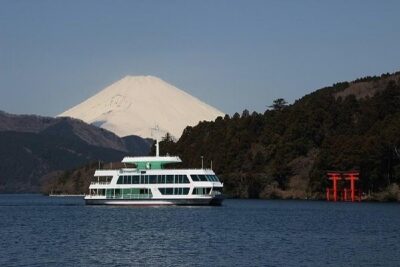
Mt Fuji & Hakone Cruise, Drum Show Bullet Train 1 Day from Tokyo
Read our review →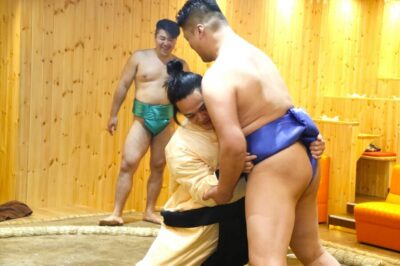
Sumo Show Experience with Chicken Hot Pot and a Photo
Read our review →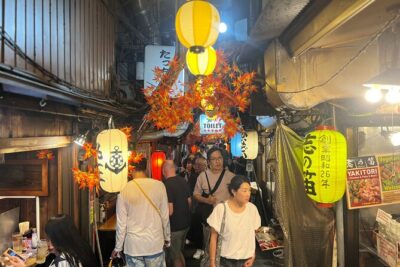
Shinjuku Food Tour (13 Dishes at 4 Local Eateries)
Read our review →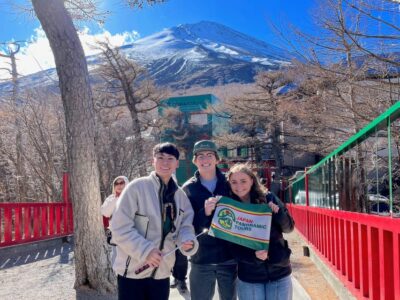
Tokyo Mt Fuji 5th St & Hakone Cruise Bus Tour w/Bullet Train
Read our review →
Flagship 2-Hours Official Street Go-Kart Tour – Tokyo Bay Shop
Read our review →Browse the lists this tour appears in