
Reviewed · TOKYO TOURS
Tokyo: Matcha Tasting and Making Experience
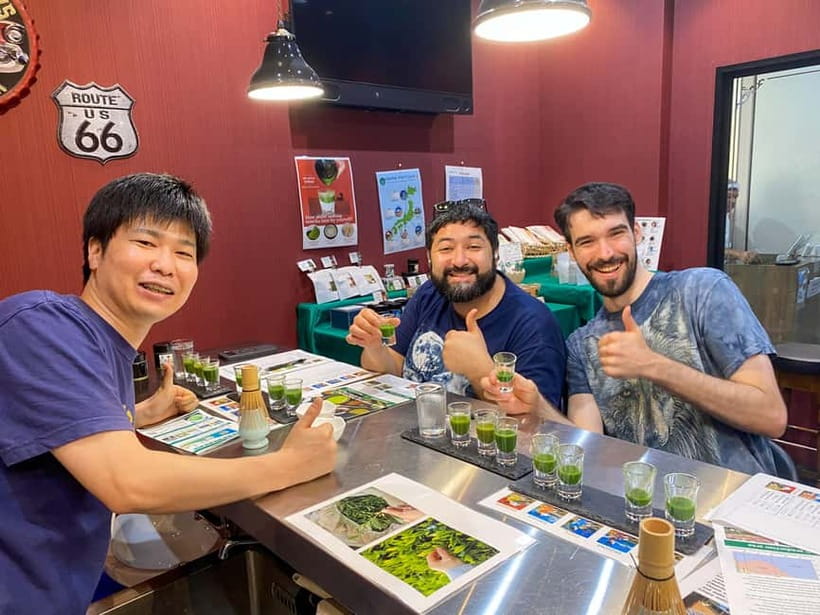
The most interesting part of this Tokyo matcha experience is the side-by-side tasting. You do not just drink one sweet green cup and nod politely. You compare matcha from five Japanese production areas, look at the color, smell each tea, and taste how farming and processing shape the result. Your guide, Chisei, spent six years growing tea in Kyoto, so the class has a useful farm-to-cup angle.
I like two things here. First, you taste several teas in small portions, which gives you a better feel for matcha than buying one expensive bowl. Second, you choose your favorite and whisk it yourself with a bamboo tea whisk. The main consideration is the tasting count: the detailed program says eight teas, while the headline description says ten. Ask for the current lineup if that difference matters to you.
Key points at a glance
- Five Japanese production areas: Compare regional styles instead of judging matcha from one cup alone.
- A former Kyoto tea farmer leads the class: Chisei explains cultivation, processing, history, and preparation in English.
- Eight teas are served in the detailed tasting format: Six are ceremonial grade, while two are sold as matcha but are not technically defined as matcha.
- You whisk your own ousucha: The bamboo whisk practice is simple enough to repeat at home.
- The final drinks are made for comfort: An original matcha blend goes into a latte, with hojicha latte and matcha sweets as well.
- The class stays small: A maximum of five participants allows plenty of room for questions and personal guidance.
A matcha class that begins with comparison, not ceremony
This 90-minute class takes place at a cafe on the second floor of Henn na Hotel Asakusa Tawaramachi. FamilyMart is on the ground floor, which is a useful landmark when you arrive. Enter the hotel, go upstairs, and look for the cafe rather than waiting outside on the street.
The small group format matters. With no more than five people, the session can focus on tasting and questions instead of pushing a large crowd through a fixed routine. You are not signing up for a formal tea ceremony with elaborate robes and silent movements. This is a practical class for general visitors who want to understand Japanese tea and learn how to make matcha at home.
The class is taught in English. That removes one common worry in Tokyo food activities: missing the explanation while concentrating on the drink. Chisei’s background as a former tea farmer gives the session a useful point of view. You hear about the plant and the work behind the powder, not only the correct way to hold a whisk.
More food tours in Tokyo:
- Tokyo: Shinjuku Food Tour (13 Dishes at 4 Local Eateries)
★ 5.0 · 6,603 reviews - Tokyo Tsukiji Fish Market Food and Culture Walking Tour
★ 5.0 · 3,184 reviews - Tokyo: Shinjuku Food Tour (15 Dishes and 4 Eateries)
★ 4.9 · 2,033 reviews
What you learn before the first tasting
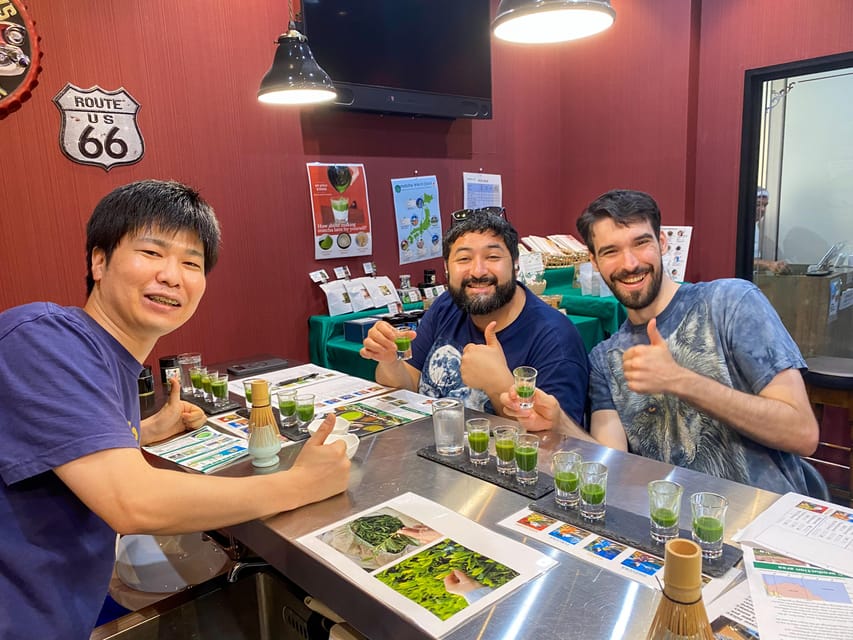
The experience begins with a welcome drink. While you sip, Chisei explains what matcha actually is, where it fits in Japanese tea culture, and how it is cultivated and produced.
That opening is important because matcha is often used as a broad marketing term. In this class, you learn that not every green powder sold around the world as matcha fits the technical definition. The tasting includes six ceremonial-grade matchas and two additional products that are sold as matcha but are not defined as matcha in the same way.
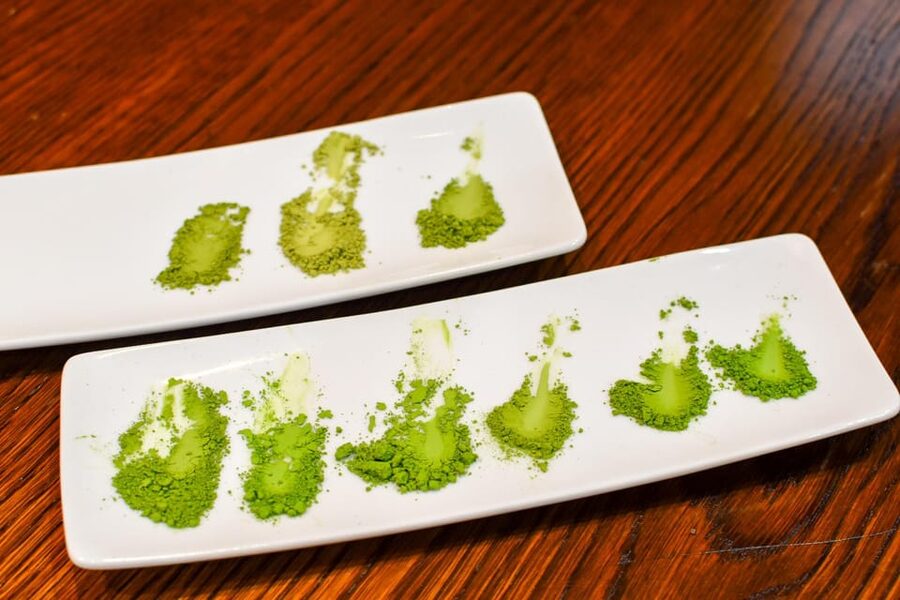
This comparison gives you a sharper eye when shopping. Color alone does not tell the whole story, but you begin to notice differences in shade, fragrance, bitterness, sweetness, and texture. You also gain a better idea of why two products with similar packaging can taste very different.
The history section keeps the tasting from becoming a string of mysterious Japanese names. You learn how growing methods affect the final tea and why production area matters. The point is not to memorize every fact. It is to understand what you are tasting and why it tastes that way.
Five production areas, several very different cups
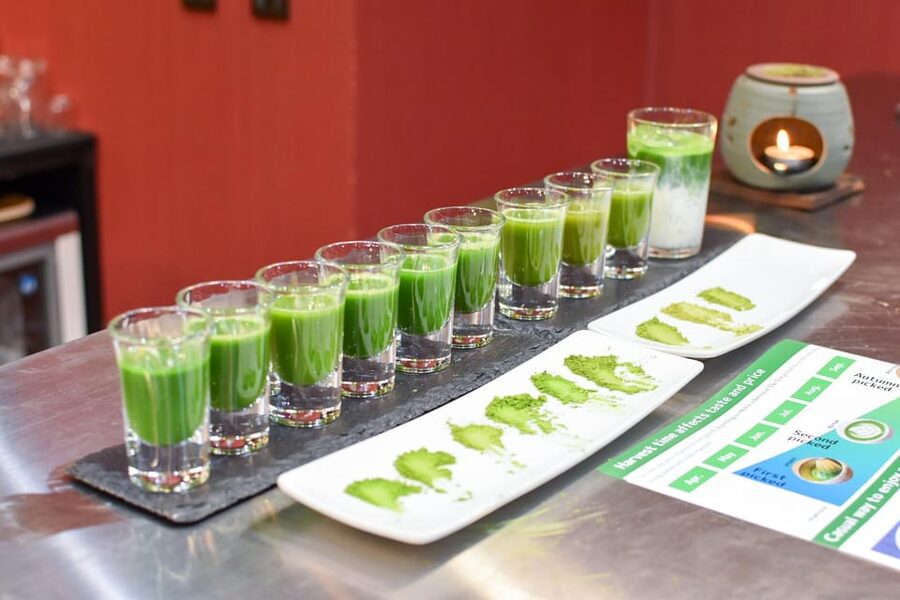
The central part of the class is the matcha comparison. The detailed schedule says eight teas are served in small amounts from five representative Japanese production areas. The headline material refers to ten types, so the exact number may vary by session or current stock. If you are booking mainly for the full ten-tea comparison, confirm the present selection before paying.
The tasting follows a sensible order. First, you look at the powder and its color. Then the tea is prepared for you, allowing you to consider its fragrance and taste. This simple sequence helps you avoid treating matcha as one single flavor category.
You might notice that one cup seems gentle and rounded, while another has a sharper bitter edge. A third may smell stronger or feel fuller in the mouth. Those differences are easier to understand when the portions arrive together, rather than separated by several days and different cafes.
The five production areas are the real educational value. Tea is not only about a label that says Japan. Place, growing conditions, cultivation choices, and processing all affect the cup. You do not need specialist vocabulary to enjoy the exercise. You simply need to pay attention to what changes from one sample to the next.
The portions are small, which is sensible. Matcha is concentrated, and eight cups would be too much if served at full cafe size. Small servings let you compare without turning the session into a caffeine endurance test.
Ceremonial grade and the matcha label
The class is especially useful for anyone confused by the phrase ceremonial grade. Six of the eight teas in the stated tasting set are ceremonial grade. Two others are sold as matcha around the world but are not technically defined as matcha.
That distinction gives the session a welcome dose of honesty. You are not simply told that every green powder is equal. Instead, you see that labels can be loose and that price alone does not explain quality.
Still, do not expect a formal certification lecture or a professional buying course. The stated purpose is to teach general visitors about Japanese tea. Commercial questions are not part of the session, and anyone booking for a business purpose should contact the provider before reserving.
For a regular food-focused visitor, the benefit is practical. After the class, you should be better prepared to ask what you are buying, how it was produced, and how it is intended to be prepared. That is more useful than learning a handful of impressive tea terms and forgetting them by dinner.
A few more Tokyo half-days to weigh up
- Mt Fuji and Hakone 1-Day Bus Tour Return by Bullet Train
★ 5.0 · 26,383 reviews - 1-Day Tokyo Bus Tour
★ 5.0 · 14,250 reviews - Tokyo: TOKYO SKYTREE® Admission ticket
★ 4.5 · 11,192 reviews - Tokyo: teamLab Planets TOKYO Digital Art Museum Entry Ticket
★ 4.6 · 9,779 reviews
Making your own ousucha with a bamboo whisk
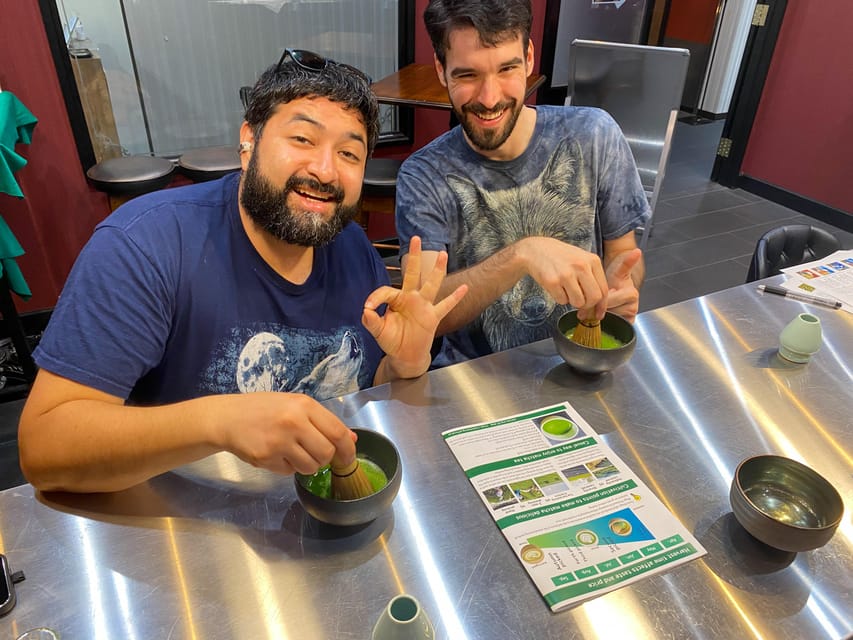
After tasting the samples, you choose the matcha you liked best. This is where the class becomes hands-on.
You make ousucha, the lighter style of whisked matcha, using a bamboo tea whisk. Chisei demonstrates the process, and you follow along. The action is not difficult, but the whisk changes the drink from a powder mixed into water to a properly aerated cup with a smoother surface.
I like this part because it turns a passive tasting into a skill you can take home. You are not just told that matcha needs whisking. You hold the tool, work the tea, and see how preparation affects the result.
The class is not presented as a substitute for years of tea training. It is a friendly introduction for general visitors. You leave with a basic method you can repeat, which is enough to make a better cup in your own kitchen.
Pay attention to the demonstration before rushing in. The tasting is the best time to notice what you prefer, but the whisking section is the best time to learn. If you are unsure about the motion or consistency, the small group setting should make it easier to ask.
Matcha lattes, hojicha, and sweets to finish
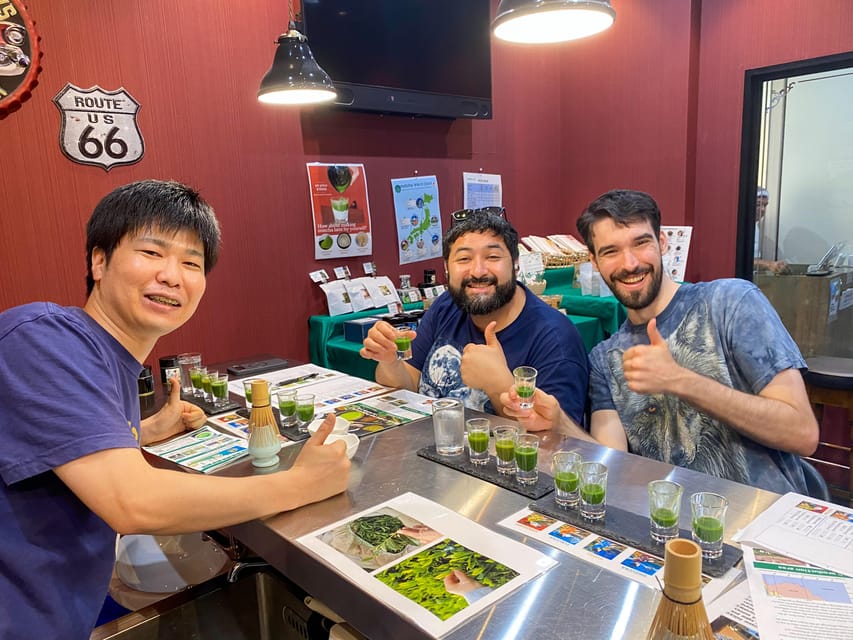
The final part shifts from tasting education to easygoing cafe pleasure. You enjoy a matcha latte, a hojicha latte, and matcha sweets.
The cafe uses its own matcha blend for milk drinks. That blend is selected to work well with milk, so the latte is not necessarily the same tea you chose for your plain whisked cup. This is worth understanding. A matcha that is delicate and pleasant with water can lose its character in milk, while a stronger blend may hold its flavor better.
The hojicha latte provides a useful contrast. Hojicha is roasted tea, so its profile differs from fresh green matcha. Having both drinks in the same session helps you see that Japanese tea is not limited to the bright green powder most people know from dessert menus.
The sweets add a relaxed finish, though they are not the main reason to book. The strongest part of the activity is the comparison and instruction. Think of the latte and sweets as a pleasant closing course, not a full cafe meal.
If you are mainly looking for a matcha dessert stop, this class may feel more structured than necessary. If you want to understand matcha and then enjoy it in familiar cafe forms, the ending works well.
Why the 90-minute length works
Ninety minutes is enough time for the class to have substance without taking over your day in Tokyo. You have time for an introduction, the comparison, the hands-on whisking, and the drinks at the end.
The schedule is fairly full. You should not expect a slow, meditative tea ceremony with long pauses. The activity is designed to cover several kinds of tea and give you a practical skill within one sitting.
The small group limit of five improves the use of that time. A larger class would make the tasting less personal and the whisking section more awkward. Here, the instructor can explain a point, demonstrate it, and respond to individual questions.
The session is also easy to pair with time in Asakusa, since the meeting point is at Henn na Hotel Asakusa Tawaramachi. Transportation is not included, so you need to make your own way to the hotel. The directions are straightforward: find FamilyMart on the first floor, enter the hotel, and go to the second floor.
The $63 price and who gets good value
At $63 per person, this is not a cheap cup of matcha. You are paying for instruction, several tasting portions, a guided comparison, a hands-on preparation lesson, two latte styles, sweets, and a small group capped at five.
The value is strongest if you would otherwise spend money sampling matcha without knowing what you are tasting. Eight small portions from five areas can teach you more in 90 minutes than several isolated cafe visits. The former tea-farmer background also gives the lesson more substance than a simple drink-making demonstration.
The price is less compelling if you only want a sweet latte or a quick photo-friendly activity. You can find matcha drinks for much less in Tokyo. This booking makes sense when you want context, personal instruction, and a chance to compare several teas in one place.
The difference between the stated ten types and the detailed eight-tea format is the one price-related detail I would clarify before booking. It does not erase the value of the class, but it is fair to know exactly what you are buying.
Who should book this Tokyo matcha experience
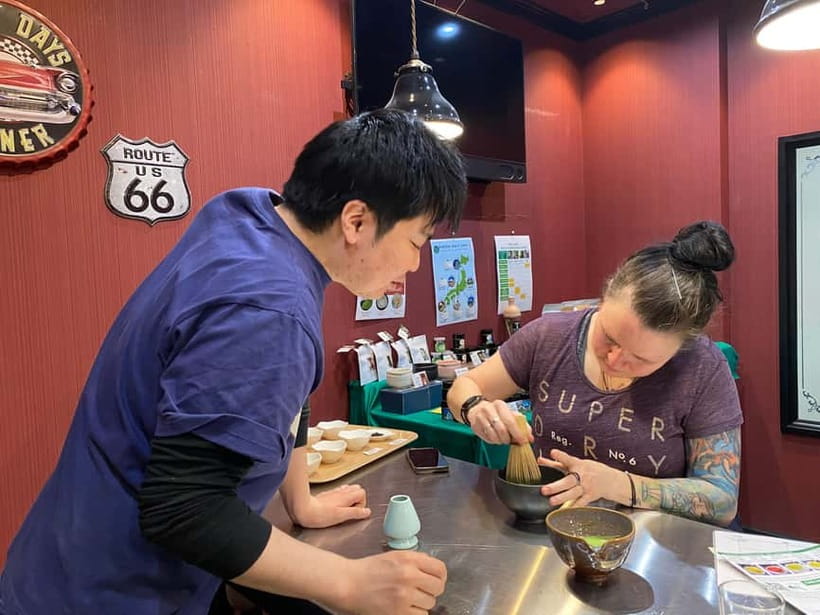
I would recommend it to curious food lovers, first-time matcha drinkers, and anyone who has wondered why one matcha tastes smooth while another tastes harsh. It also suits couples and small groups who prefer a calm indoor activity with a clear start and finish.
You will get the most from it if you enjoy asking questions and comparing flavors. This is not a show where you sit back while someone else makes every drink. The tasting asks you to look, smell, taste, and decide which tea suits you.
It is also a good choice for people who want a souvenir skill rather than another physical item. You learn a basic whisking method and can continue making matcha at home.
I would be more cautious if you want a traditional Japanese tea ceremony, a large meal, or a long cultural performance. The class is educational and practical. Its focus is the tea itself, not costume, ritual, or sightseeing.
Cancellation is flexible enough for most schedules: you can cancel up to 24 hours before the activity for a full refund, and you can reserve now and pay later. Check available starting times when you choose your date, since the activity lasts 90 minutes.
Should you book it?
Book this class if you want to understand matcha rather than simply drink it. The five-region comparison, the explanation from a former Kyoto tea farmer, and the chance to whisk your own ousucha give the $63 fee a clear purpose.
Before reserving, confirm whether your session includes eight or ten matcha samples. If the current format is eight, it still offers a useful spread: six ceremonial-grade teas plus two products sold as matcha but not technically defined that way. For a small, English-language class in Asakusa, that is a fair package for anyone who values instruction as much as the final latte.
FAQ
Where does the matcha experience take place?
It takes place at a cafe inside Henn na Hotel Asakusa Tawaramachi in Tokyo. FamilyMart is on the hotel’s first floor. Enter the hotel and go to the second floor.
How long does the class last?
The experience lasts 90 minutes.
What language is the experience taught in?
The instructor teaches the class in English.
How many people can join?
The experience is limited to five participants.
How many types of matcha are included?
The detailed program states that eight types are served from five production areas. The main description refers to ten types, so you should confirm the current tasting lineup if the exact number is important to you.
Do I make my own matcha?
Yes. You choose a favorite from the tasting and make ousucha yourself with a bamboo tea whisk.
Are drinks and sweets included?
Yes. The experience includes a welcome drink, matcha latte, hojicha latte, and matcha sweets. Transportation to the cafe is not included.
Just added around Tokyo
- Private Arrival Transfer : Narita International Airport to Central Tokyo City★ 4.5 · 12 reviews
- Narita Airport(NRT): Private Transfer to Tokyo/Yokohama 1-9pax★ 5.0 · 47 reviews
- Private Transfer from Narita Airport to Yokohama Port and City★ 4.5 · 17 reviews
- [Narita Airport Terminals 1, 2] 40-60km Sawara Itako Historic Bike Tour★ 5.0 · 13 reviews
- 3 Day Japan Highlights Tour: Tokyo, Mt.Fuji, Nara, Kyoto, Osaka★ 5.0 · 22 reviews
- Small Town in the Big City: Tasting Tokyo’s Kichijoji★ 5.0 · 195 reviews
- Small Town in the Big City: Tasting Tokyo’s Kichijoji★ 5.0 · 16 reviews
- The 10 Tastings of Tokyo With Locals: Private Street Food Tour★ 5.0 · 48 reviews
Tokyo Tours, compared.

Mt Fuji and Hakone 1-Day Bus Tour Return by Bullet Train
Read our review →

teamLab Planets TOKYO Digital Art Museum Entry Ticket
Read our review →
Mt Fuji & Hakone Cruise, Drum Show Bullet Train 1 Day from Tokyo
Read our review →
Sumo Show Experience with Chicken Hot Pot and a Photo
Read our review →
Shinjuku Food Tour (13 Dishes at 4 Local Eateries)
Read our review →
Tokyo Mt Fuji 5th St & Hakone Cruise Bus Tour w/Bullet Train
Read our review →
Flagship 2-Hours Official Street Go-Kart Tour – Tokyo Bay Shop
Read our review →Browse the lists this tour appears in