
Reviewed · TOKYO TOURS
Tokyo: Mount Fuji Private Tour with Scenic Lunch Experience
Mount Fuji is the star, but the best part of this 10-hour private outing is how many different sides of the mountain you can see in one day: lakeside views, old shrines, forest paths, craft workshops, and a quiet Japanese lunch. Chureito Pagoda gives you the famous postcard view, while Iyashi no Sato offers a slower look at village life and local handiwork.
I like the private van and flexible schedule, especially for families or groups with mixed energy levels. I also like the scenic lunch, which turns a necessary meal into part of the day rather than a rushed stop at a highway restaurant. The main caution is time: the long drive from Tokyo, traffic, and the number of possible stops mean you should agree on priorities with your guide before setting off.
Key points at a glance
- Chureito Pagoda requires about 400 stairs, but rewards you with one of the clearest classic views of Mount Fuji.
- Iyashi no Sato combines thatched houses, artisan workshops, and mountain scenery in a compact cultural stop.
- A private vehicle makes family travel easier, with room to adjust breaks, shorten visits, or skip stops.
- The lunch stop is part of the experience, with either Lake Kawaguchi views or a family-run farmhouse setting.
- The guide can help with photographs, a real advantage at crowded viewpoints and shrine gates.
- Clear weather matters, and the guide may change the order or adjust the plan when conditions are poor.
A private route from Tokyo to Fuji country
This is a full-day outing, beginning with pickup at your hotel or accommodation anywhere in Tokyo’s 23 wards. You ride in a private car or van with Wi-Fi and bottled water, and the price is $330 per group of up to six people.
That price is easiest to judge as a group cost. For six people, it works out to $55 per person before personal spending. For two people, it is a much bigger expense, but you are paying for a private vehicle, hotel pickup and drop-off, an English or Japanese-speaking guide, fuel, tolls, parking, and the ability to shape the day around your own group.
The drive toward Mount Fuji takes about two hours before the sightseeing begins. That is a serious chunk of the day, and Tokyo traffic can make the return slower. Still, private transport saves you from planning several train and bus connections, and it lets you reach places that are awkward to combine by public transportation.
Your guide may be Ali, Sarfy, also written as Sarfi, or Rana. The strongest experiences depend on clear communication, so tell your guide early which stops matter most. The schedule can be changed for young children, older family members, weather, or your own interests. One guest had the plan adjusted to suit children and grandparents, skipping some options rather than forcing everyone through an exhausting route.
More Mt Fuji Tours in Tokyo
- Mt Fuji and Hakone 1-Day Bus Tour Return by Bullet Train
★ 5.0 · 26,383 reviews - Mt Fuji & Hakone Cruise, Drum Show Bullet Train 1 Day from Tokyo
★ 4.0 · 7,413 reviews - Tokyo Mt Fuji 5th St & Hakone Cruise Bus Tour w/Bullet Train
★ 4.4 · 5,024 reviews
Mount Fuji’s Fifth Station at 2,300 meters
Mount Fuji’s Fifth Station is one of the highest places on the route, at about 2,300 meters. It is not the summit, but it gives you a close mountain setting, broad views, souvenir shops, cafes, restaurants, and a Shinto shrine.
For many people, this is the moment Mount Fuji feels less like a distant picture and more like a real mountain. The road can also include a stop at the Fourth Station for photographs, depending on the day’s timing and road conditions.
The drawback is weather. Clouds can hide the mountain even when the lower lakes are clear. The tour operates year-round, rain or shine, but severe weather can lead to changes. Bring warm layers in winter and light layers in summer. Even on a mild Tokyo morning, the higher station can feel much colder.
If you have limited time, do not assume the Fifth Station is automatically the best Fuji viewpoint. It gives you proximity and mountain atmosphere, while the lakes and Chureito Pagoda often offer the more recognizable full view. This is a good stop when you want both scenery and a chance to browse local shops.
Chureito Pagoda and the 400-step climb
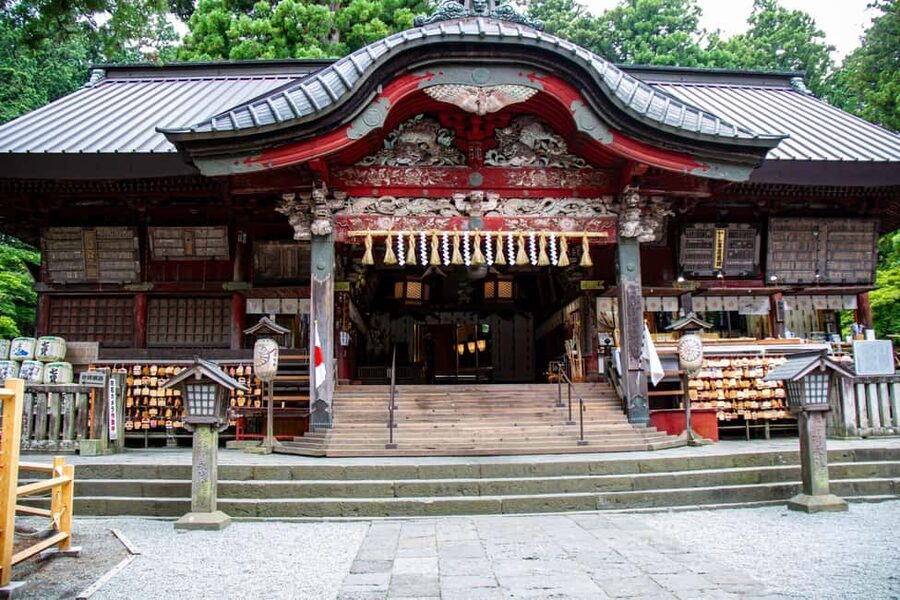
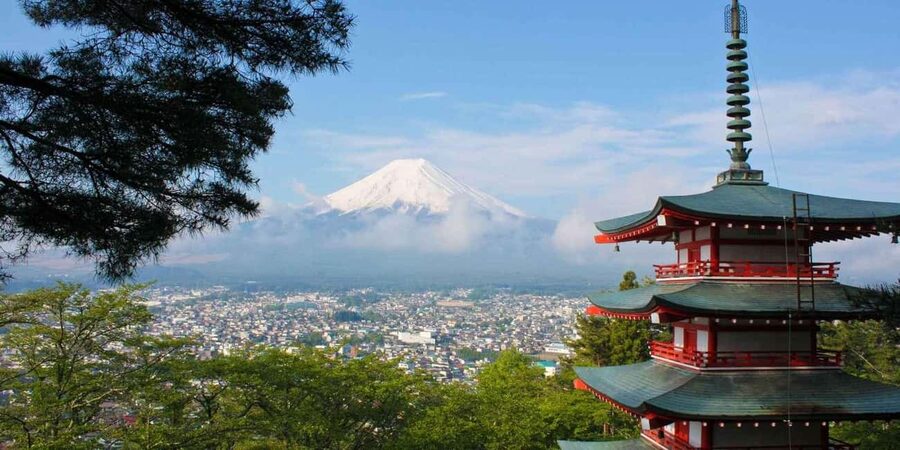
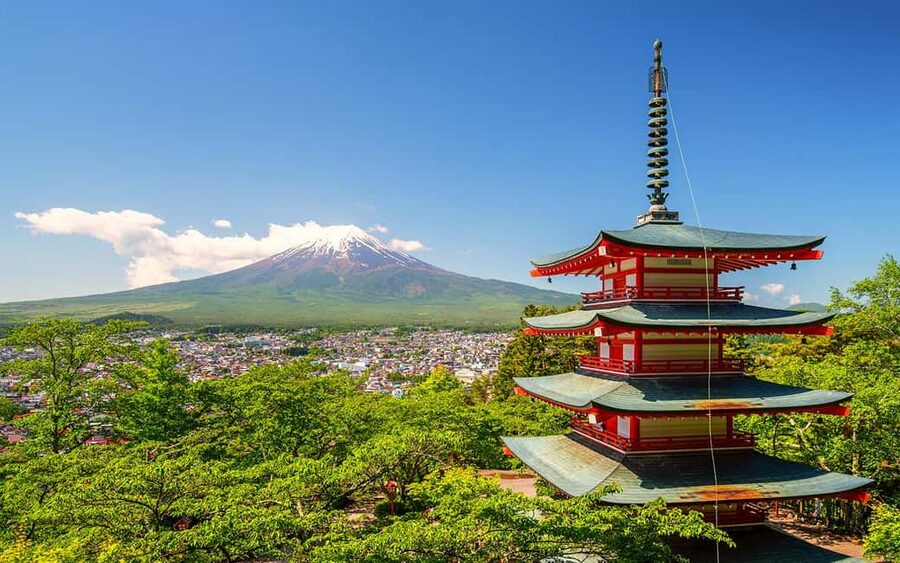
Arakura Fuji Sengen Shrine and its Chureito Pagoda are among the day’s most rewarding stops. The red pagoda, wooded hillside, and Mount Fuji in the distance create the classic image many people associate with Japan.
You should know about the climb before arriving. The viewpoint involves roughly 400 stairs. The steps are manageable for many visitors, but they can be hard in hot weather or for anyone with limited mobility. Take your time, wear proper walking shoes, and let your guide know if your group needs a slower pace.
The view is especially dependent on visibility. On a clear day, it can be superb. On a cloudy day, you may get the pagoda and trees without the mountain. Your guide can help you find the best photo position and take pictures for the whole group, which is useful when you want everyone included.
Bring some yen, too. A cash-only or cash-preferred machine selling special capsule toys has been mentioned as a small but amusing extra at the pagoda area. It is not the reason to visit, but it is the sort of detail that makes a short stop more fun.
Iyashi no Sato and the slower side of Fuji
Iyashi no Sato is a restored thatched-roof hamlet near the Fuji Five Lakes area. Its traditional houses hold artisan workshops and provide views toward Mount Fuji. This stop gives the day a cultural center rather than making it a string of lookouts.
You can browse handmade work, see craft demonstrations, and walk between the old-style buildings. The setting is easy to understand without a long lecture: this is a carefully restored village where architecture, local crafts, and mountain scenery are presented together.
I would give Iyashi no Sato more time if you enjoy photography, traditional buildings, or small workshops. If your group is mainly focused on getting as many Fuji viewpoints as possible, you may prefer a shorter visit. The private format lets you make that choice instead of following a fixed bus schedule.
Some traditional sites may require you to remove your shoes before entering. Wear socks you are comfortable walking in, and choose shoes that are easy to take on and off.
More lunch stops in Tokyo:
- Tokyo: Mt.Fuji & Lake Kawaguchiko 1-Day Bus Tour w/Optional Lunch
★ 4.5 · 839 reviews - Tokyo: Sumo Experience and Chanko Nabe Lunch
★ 4.8 · 257 reviews - Tokyo: 1 Day Bus Tour with Meiji-Jingu,Odaiba,lunch&Skytree
★ 4.6 · 156 reviews - Tokyo: Family Sumo Workshop & Live Wrestling Show with Lunch
★ 4.9 · 99 reviews
Lake Kawaguchi and a lunch worth slowing down for
Lake Kawaguchi is one of the key places to frame Mount Fuji with water. Depending on the weather and your guide’s plan, you may stop for photographs at the lake and at places such as Oishi Park. One particularly appealing detail is the chance to try ice cream made with Hokkaido milk, a small treat that fits well into a lakeside break.
The countryside lunch is one of the strongest features of the day. You may eat at a quiet restaurant overlooking Lake Kawaguchi with Fuji behind it, or at a family-run farmhouse serving seasonal Japanese food with garden views.
That choice matters. A meal with scenery gives you time to sit down, warm up or cool off, and enjoy local flavors without treating lunch as fuel between attractions. Seasonal dishes are also a better match for the setting than a generic international meal.
The exact restaurant can depend on availability and the route. Cash is important because some countryside shops and restaurants do not accept credit cards. Personal expenses are not included, so budget for food, drinks, snacks, and any shopping beyond the included countryside lunch arrangement.
Saiko Lake and the Bat Cave
Saiko Lake has a quieter, more wooded feel than Lake Kawaguchi. Forest surrounds the water, and the stop adds a nature break to a day otherwise filled with shrines, villages, and viewpoints.
The nearby Bat Cave offers a short exploratory visit in a forest setting. Expect uneven paths and a more outdoorsy stop than the paved viewpoints around the lakes. Comfortable walking shoes are a must, and anyone who dislikes confined or rough paths should tell the guide before committing to the cave.
This is a good example of why the private format has value. You can spend longer around the lake, make the cave a brief look, or skip it if the ground is uncomfortable or the weather turns poor. It is not the most essential stop for a first-time Fuji visitor, but it gives the day variety.
Oshino Hakkai, Yamanakako, and water beside the mountain
Oshino Hakkai is a traditional village area known for its ponds, old houses, shopping, and Fuji views. It is attractive, photogenic, and easy to explore on foot, but it can become crowded. Keep your visit focused if the walkways are busy, and use the time for the ponds, food stalls, or traditional buildings that interest you most.
The schedule gives this stop only a short visit in one version of the route, though the overall plan can change. Do not expect a long, leisurely village afternoon unless you arrange that with your guide.
Lake Yamanaka, or Yamanakako, brings another lakeside angle. A morning stop can be especially pleasant, with opportunities to feed swans and fish. The lake is not simply a repeat of Kawaguchi: changing the side of the Fuji Five Lakes gives you different foregrounds and a different feel around the mountain.
You cannot realistically linger at every lake, shrine, cave, village, station, and hot spring in a single 10-hour day, particularly with traffic between Tokyo and the Fuji area. Treat the listed route as a menu. Choose the three or four places that matter most to your group.
Kitaguchi Hongu Fuji Sengen Shrine
Kitaguchi Hongu Fuji Sengen Shrine sits at the base of Mount Fuji and is described as about 1,900 years old. Its tall trees, traditional torii gate, and quiet grounds offer a strong contrast to the busy photo stops.
This is the place to slow down and pay attention to atmosphere. The shrine is less about collecting another mountain picture and more about seeing how Mount Fuji fits into Japanese religious tradition. Your guide can explain the setting in English or Japanese, depending on the guide assigned to your group.
Allow time for respectful walking and photography. Some religious buildings may require shoes to be removed, and visitors should follow posted instructions. The grounds can include steps or uneven surfaces, so wheelchair users should contact the provider in advance. Not every location is fully accessible.
Hakone, Lake Ashi, and the limits of one day
Some versions of the route include Hakone and Lake Ashi after the Fuji-area stops. Hakone adds another well-known mountain region, while Lake Ashi provides a broad body of water and another chance for photographs.
The practical problem is distance. A 10-hour day from Tokyo already includes about four hours of potential driving to and from the Fuji area, before traffic, meals, and sightseeing. Adding Hakone, Lake Ashi, a hot spring, and all the Fuji Five Lakes stops would make the day very rushed.
Ask your guide to explain which route is realistic for your date. If Fuji is your main goal, I would give priority to Chureito Pagoda, one or two lakes, Iyashi no Sato or Oshino Hakkai, Kitaguchi Hongu Fuji Sengen Shrine, and lunch. If you specifically want Hakone or Lake Ashi, accept that other stops may need to be dropped.
The hot spring option and flexible timing
A hot spring visit may also be included, with up to two hours listed for visiting, guided time, and free time. This can be a welcome way to rest after walking and driving, but it is an optional activity rather than something every group will want.
Ask about the hot spring before the day begins if it is important to you. The supplied information does not identify a specific bathhouse or explain its bathing rules, so your guide will need to confirm the practical details. Bring appropriate clothing and follow local instructions if you choose to go.
The same flexibility applies to shopping, photo breaks, and extra cultural stops. A private guide can adjust the day, but flexibility is not the same as unlimited time. Good planning means choosing what to leave out.
What the guides add, and one communication concern
The most praised qualities of the guides are friendliness, patience, driving, help with photographs, and willingness to adjust plans. Ali has been described as calm and flexible when traffic affected the route. Sarfy has helped groups reach viewpoints before they became too crowded and has offered practical advice based on weather and season. Rana has led a route through Lake Yamanaka, Oshino Hakkai, Kitaguchi Shrine, and the Fifth Station.
Photography help is a real benefit. Fuji viewpoints often involve crowded areas, awkward angles, or a group member being left out of every picture. A guide who knows where to stand can save time and help you return home with more than selfies.
English ability may vary by guide. One booking ended early because communication in English was difficult. This is the clearest caution in the available feedback. If detailed explanations are important to you, state your language needs clearly when booking and confirm them before departure.
Who will get the most from this $330 private tour
This outing suits families, couples, and small groups who value convenience over the lowest possible price. It is especially useful when your group includes children, older relatives, photographers, or people who want to stop without managing public transport.
The per-group price is good value for six people because it covers the vehicle, driver-guide, Tokyo pickup and drop-off, tolls, fuel, parking, bottled water, Wi-Fi, and lunch arrangements. For a couple, it is a premium day, but the ability to avoid transfers and revise the schedule can justify the cost.
It is less suitable if you want a slow, single-area visit or a tight guarantee of seeing every stop. Weather, traffic, and the large number of possible locations require realistic expectations. Mount Fuji may be hidden by cloud, and the best plan can change during the day.
The tour is wheelchair accessible in general, but not all locations are accessible. Contact the provider ahead of time for special arrangements. Comfortable shoes, seasonal layers, and cash in yen are practical essentials. Alcohol and drugs are not allowed, and the tour runs in rain unless severe weather requires an adjustment.
Should you book it?
Book this tour if you want a private day with a human guide, a flexible route, and more than one standard Fuji viewpoint. I especially recommend it for groups of four to six, families with mixed needs, and anyone who wants a scenic lunch, shrine visits, village crafts, and nature stops without planning every connection.
Before paying, decide your top priorities and ask which combination fits inside 10 hours. Confirm the guide’s English ability if that matters, and accept that Hakone, Lake Ashi, the hot spring, and the full Fuji circuit may not all fit comfortably.
If you can handle a long day and keep the plan flexible, this is a strong way to see Mount Fuji from several angles. If you need a slow pace or a guaranteed clear view, no tour can promise that, so choose your stops carefully and keep your expectations sensible.
FAQ
How long does the Mount Fuji private tour last?
The tour lasts 10 hours, including pickup and return to Tokyo’s 23 wards.
Where can pickup and drop-off take place?
Pickup and drop-off are available at hotels or other accommodations within Tokyo’s 23 wards. You should provide your accommodation details when booking.
How many people can join the private tour?
The $330 price covers a private group of up to six people.
Is lunch included?
A scenic countryside lunch is included. The stop may be at a restaurant overlooking Lake Kawaguchi and Mount Fuji or at a family-run farmhouse serving seasonal Japanese dishes with garden views.
Which languages are available?
The tour is available with a live guide in English or Japanese. Guide communication ability can vary, so confirm your language needs when booking.
Does the tour operate in bad weather?
The tour operates year-round, including rainy days. In severe weather, the itinerary may be adjusted.
Is the tour suitable for wheelchair users?
The activity is wheelchair accessible in general, but some locations are not fully accessible and may include steps or uneven paths. Contact the provider in advance to discuss special arrangements.
Just added around Tokyo
- Private Arrival Transfer : Narita International Airport to Central Tokyo City★ 4.5 · 12 reviews
- Narita Airport(NRT): Private Transfer to Tokyo/Yokohama 1-9pax★ 5.0 · 47 reviews
- Private Transfer from Narita Airport to Yokohama Port and City★ 4.5 · 17 reviews
- [Narita Airport Terminals 1, 2] 40-60km Sawara Itako Historic Bike Tour★ 5.0 · 13 reviews
- 3 Day Japan Highlights Tour: Tokyo, Mt.Fuji, Nara, Kyoto, Osaka★ 5.0 · 22 reviews
- Small Town in the Big City: Tasting Tokyo’s Kichijoji★ 5.0 · 195 reviews
- Small Town in the Big City: Tasting Tokyo’s Kichijoji★ 5.0 · 16 reviews
- The 10 Tastings of Tokyo With Locals: Private Street Food Tour★ 5.0 · 48 reviews
Tokyo Tours, compared.

Mt Fuji and Hakone 1-Day Bus Tour Return by Bullet Train
Read our review →

teamLab Planets TOKYO Digital Art Museum Entry Ticket
Read our review →
Mt Fuji & Hakone Cruise, Drum Show Bullet Train 1 Day from Tokyo
Read our review →
Sumo Show Experience with Chicken Hot Pot and a Photo
Read our review →
Shinjuku Food Tour (13 Dishes at 4 Local Eateries)
Read our review →
Tokyo Mt Fuji 5th St & Hakone Cruise Bus Tour w/Bullet Train
Read our review →
Flagship 2-Hours Official Street Go-Kart Tour – Tokyo Bay Shop
Read our review →Browse the lists this tour appears in