
Reviewed · TOKYO TOURS
Tokyo: teamLab Planets TOKYO Digital Art Museum Entry Ticket
teamLab Planets TOKYO turns art into something you walk through, touch, hear, and sometimes wade through. You go barefoot from room to room, while light, sound, flowers, water, and your own movement change what you see.
I like the water rooms, where digital fish and shifting patterns respond to people in the space. I also like the flower and orchid areas, which give you quieter moments after the more playful installations.
The main catch is timing. You cannot buy admission on the same day, and late arrivals are not refunded. Some rooms involve knee-deep water, bright light, mirrors, and uneven access, so this is not a good fit for every visitor.
Key things to know before you go
- Bare feet are part of the route: You remove your shoes and use lockers for small belongings.
- The water rooms require practical clothing: Wear trousers you can roll above your knees.
- Your entry time matters: Admission is allowed only during the first 30 minutes after your selected time.
- The flower and orchid rooms reward patience: Do not rush through the rooms just to take photographs.
- The visit suits families and teenagers: Children younger than 13 must enter with an adult.
- The $25 ticket can save time: Transportation is not included, but a prebooked ticket avoids the risk of arriving without a same-day option.
What teamLab Planets actually feels like
This is not a conventional museum where you walk past framed works and read labels. At teamLab Planets, the artwork fills the room. You may stand in moving water, lie back beneath falling digital flowers, watch projected images travel across walls, or see your presence alter what appears around you.
That physical involvement explains why the visit works for people who normally skip art museums. You are not asked to understand a complicated theory before enjoying the room. The effect is immediate: the color changes, the sound moves, and the room reacts as you walk.
The exhibition covers more than 10,000 square meters and includes several areas with different materials, lighting, sounds, and surfaces. The route has a clear sense of progression, though directions can feel less obvious in a few places. Take your time, and ask staff if you are unsure where to go next.
I would allow at least two hours. You can move faster, but that would miss much of the point. Several rooms invite you to sit or lie down and watch the work develop. If you are visiting with children or teenagers, expect them to want extra time in the water areas.
More museums and galleries in Tokyo:
- Tokyo: Samurai Ninja Museum Guided tour and Experience
★ 4.6 · 1,010 reviews - Ninja Experience (Family Friendly) at Samurai Ninja Museum TOKYO
★ 5.0 · 441 reviews - Tokyo Studio Ghibli Museum and Ghibli Film Appreciation Tour
★ 4.5 · 421 reviews
The barefoot opening and the first change of pace
Before entering the art spaces, you remove your shoes. Small lockers are available for belongings, which is useful because you will want your hands free. Phones and cameras are allowed only where the surroundings and staff instructions permit, but do not let photography turn the entire visit into a search for the next picture.
The barefoot rule changes your attention at once. You notice the floor beneath you, the temperature of the water, and the feel of different materials. That physical awareness is central to the exhibition rather than a minor practical detail.
The route may include dark areas, reflective surfaces, and changing lights. Move carefully, particularly when the floor is wet. You should also keep an eye on children, since the unusual surfaces can make ordinary walking feel less certain.
The Water Gallery brings the largest sense of surprise
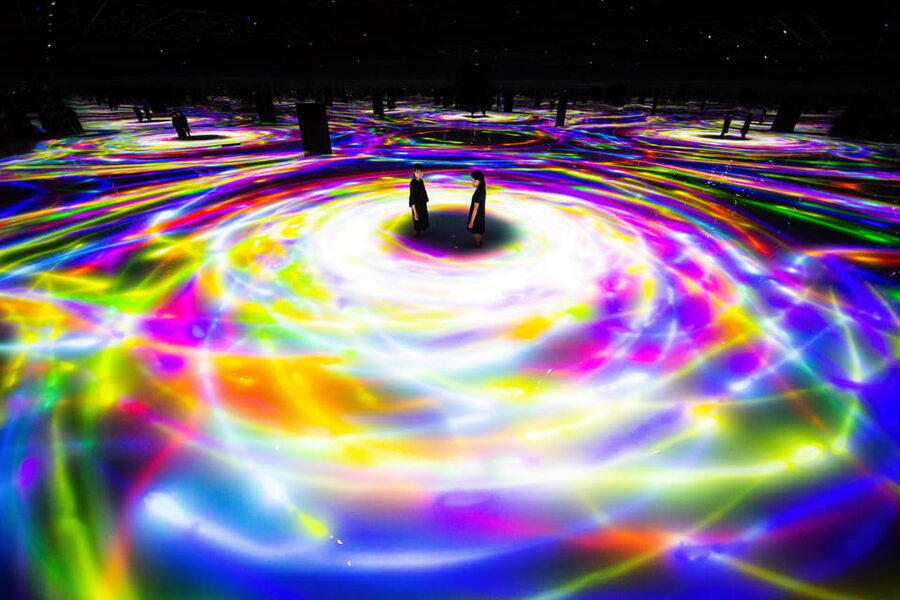
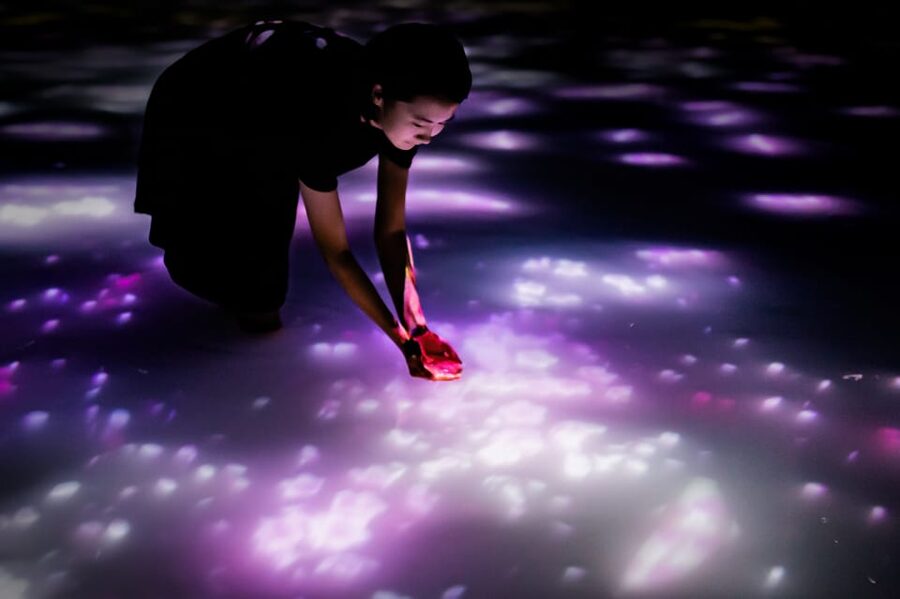
The water rooms are the part I would prioritize if you have limited time. Water can rise to about knee height, and digital images move across it. One especially memorable element uses fish-like forms and koi imagery, creating the odd feeling that the projected creatures are sharing the water with you.
This section shows why teamLab Planets is more than a room filled with large screens. Your body becomes part of the picture. People walking through affect the view, and the water gives the installation a physical quality that a standard projection cannot match.
Wear trousers that roll comfortably above your knees. The practical advice matters more than fashion here. Some clothing becomes awkward when wet, and the water areas are not the place for long hems.
Staff manage the flow through the rooms, which helps prevent the water spaces from becoming chaotic. At busy times, the entrance area may feel crowded, but the movement inside is generally controlled. An early entry time can make it easier to pause without feeling pressed along.
Flowers, falling petals, and the slower rooms

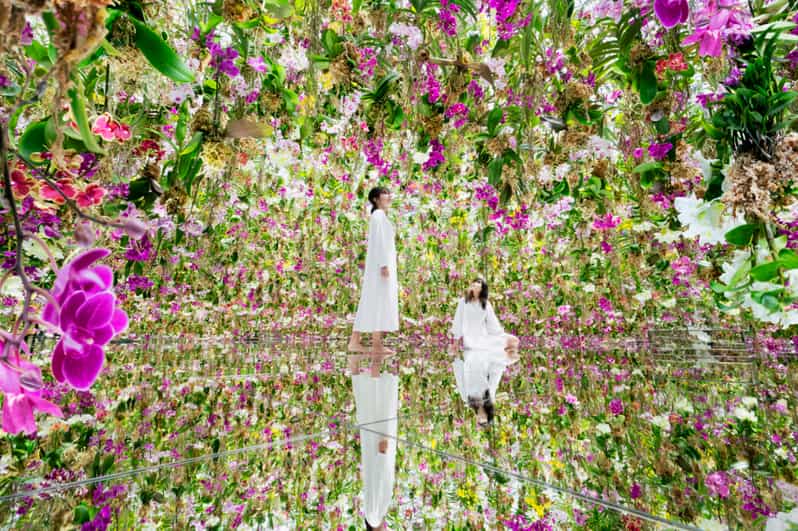
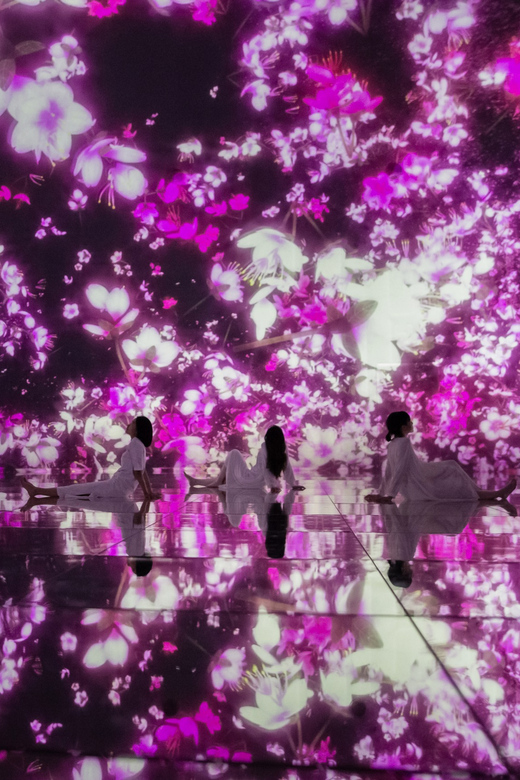
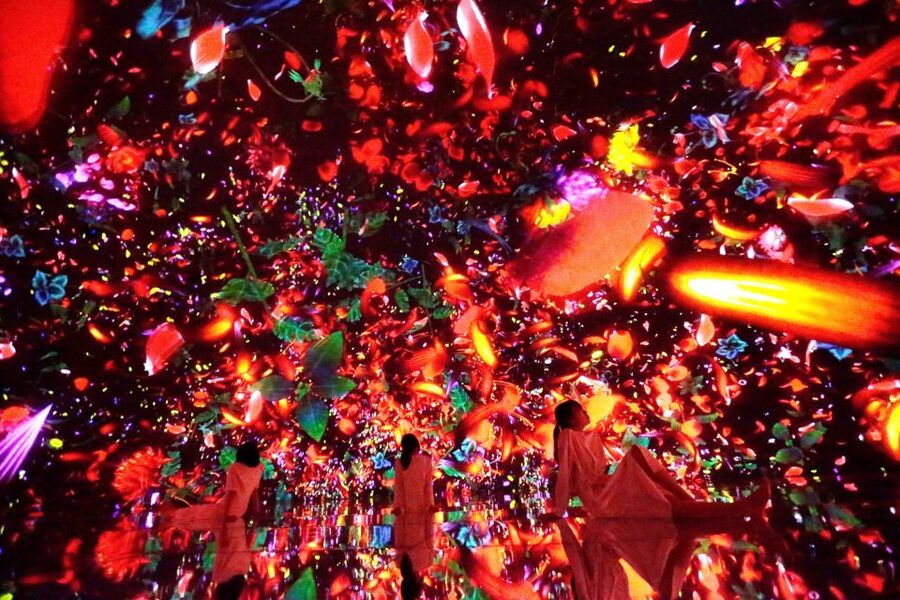
The flower installations provide a gentler change after the water. Digital blossoms appear to fall, shift, and gather around you. In one area, the effect can feel like a ceiling full of flowers moving toward your face. Another flower-petal setting uses walls and surfaces to make the room feel soft and enclosed, even though the material is entirely digital.
These rooms reward stillness. Stand in one place for a while, then move and watch the image respond. Sit or lie down if the room allows it. The best part is not capturing a single frame, since the artwork keeps changing.
The flower universe is likely to be a favorite for anyone who enjoys color and calm. It also gives solo visitors a comfortable way to take part. Some more playful installations can feel slightly awkward when you are alone, but the flower rooms require no special performance. You simply look, listen, and let the space change around you.
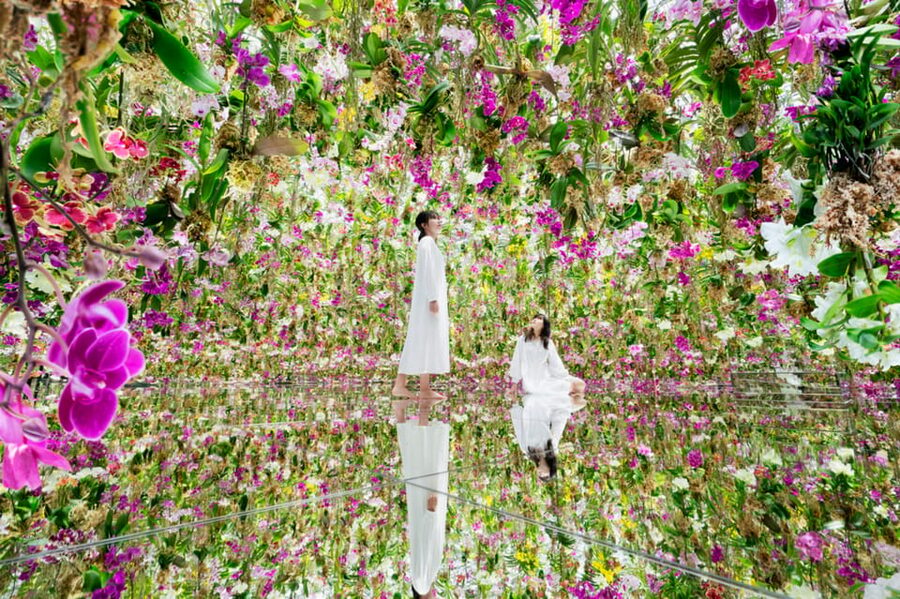
The orchid area is another strong section. It uses real physical space and projected plant imagery to create a garden-like setting. The contrast between the delicate flowers and the dark digital surroundings gives this part a calmer mood than the more dramatic rooms.
A few more Tokyo half-days to weigh up
- Mt Fuji and Hakone 1-Day Bus Tour Return by Bullet Train
★ 5.0 · 26,383 reviews - 1-Day Tokyo Bus Tour
★ 5.0 · 14,250 reviews - Tokyo: TOKYO SKYTREE® Admission ticket
★ 4.5 · 11,192 reviews - Mt Fuji & Hakone Cruise, Drum Show Bullet Train 1 Day from Tokyo
★ 4.0 · 7,413 reviews
The garden gives you a pause from the screens
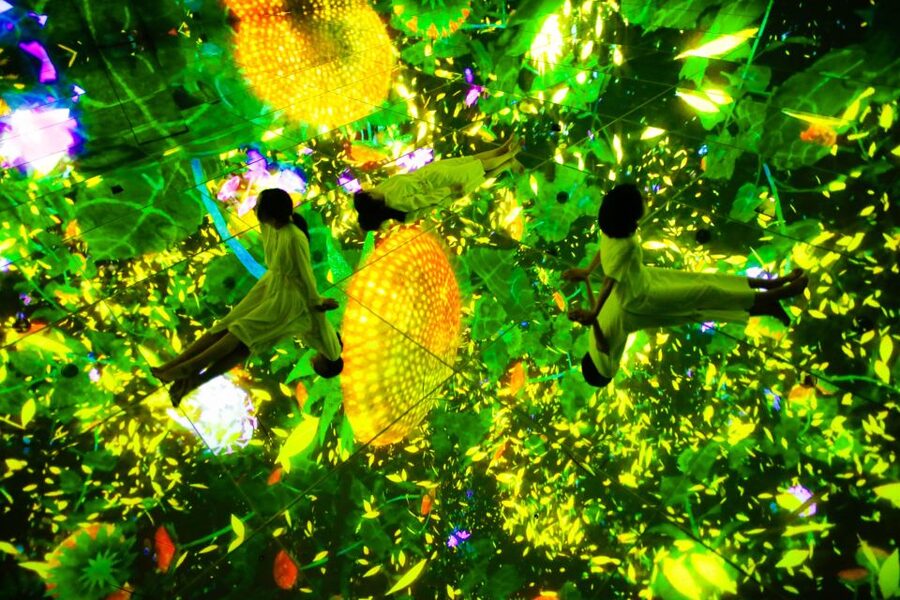
The garden section brings plants into the digital art setting and gives the visit a different texture. The orchid installation is particularly effective because the flowers are not just images on a flat wall. They help define the space around you.
I would not rush here. The water rooms produce the biggest immediate reaction, but the garden asks you to slow down. It is a good place to reset before moving into another room filled with light, sound, or motion.
This variety is one of the exhibition’s strengths. You are not walking through the same projection repeated in different colors. Materials and moods change from one area to the next. Some sections feel playful, others peaceful, and a few can feel almost reflective or dreamlike.
How your presence changes the artwork

The central idea is simple: your position and movement affect the digital work. Walk toward an image and it may shift. Stand still and the scene may settle. Move among projected flowers, water, or creatures and the pattern responds to your body.
That interaction gives the visit a personal quality. Two people can enter the same room and notice different changes because they move differently. Children often test the cause and effect by walking back and forth, while adults may prefer to stand quietly and watch.
The exhibition also makes a useful distinction between seeing art and taking part in it. You do not need an art background, and you do not need to know the names of particular techniques. The rooms explain themselves through motion, sound, and touch.
Still, the digital effects will not appeal to everyone. If you prefer paintings, historic objects, or detailed written interpretation, you may find the visit light on traditional museum content. This is about sensation and participation first.
Timing, queues, and the outdoor wait
The ticket is valid for one day, but it is tied to a selected entry time. You can enter only during the first 30 minutes after that time, so plan your transportation with a little spare time. A late arrival does not qualify for a refund.
Do not assume that arriving very early lets you enter early. At busy periods, people may wait outside until their assigned time rather than joining an indoor queue straight away. This is the main logistical irritation, especially in cold or rainy weather.
A prebooked ticket is useful because same-day admission cannot be purchased. The official voucher is emailed to you and must be shown for entry. Carry your passport or ID card, since staff may check age or school affiliation.
There are two teamLab locations in Tokyo, so check the exact location on your booking before setting off. This is an easy mistake to make when you are moving quickly between sightseeing stops.
The $25 price and what you get
At $25 per person, the ticket is reasonable for a Tokyo attraction that can occupy about two hours and offers far more than a short photo stop. The admission includes entry only. You pay for your own transportation, food, and other purchases.
The value depends on how you use the visit. If you rush through every room in 45 minutes, the price may feel high. If you pause in the water, flower, and garden installations, the ticket buys a substantial activity with several distinct moods.
The ticket is also valuable because it removes uncertainty. Since same-day tickets are not available, arriving without a booking can waste part of your day. A prearranged entry time lets you fit the visit around other plans, though you must accept the non-refundable terms.
There is a cafe, but it should not be the reason you book. The exhibition is the main event, and the nearby food and coffee options may be more useful if you arrive early and have time before your entry.
Who will enjoy this most
I would recommend teamLab Planets to families, teenagers, couples, photographers, and anyone curious about technology used in unusual ways. It is especially suitable if you normally find museums too quiet or too formal.
The activity also works well on a rainy evening, though parts of the waiting and entry process may take place outside. Bring suitable outerwear in cooler weather. The exhibition itself is indoors in its main areas, but the approach and waiting conditions still matter.
Solo visitors can enjoy it, particularly in the garden and flower rooms. Some interactive spaces may feel more natural with a companion, but there is no need to perform for anyone. You can take the visit at your own speed.
I would avoid booking if you have epilepsy, serious light sensitivity, or heart problems. Wheelchair users should also note that some sections are not accessible. The attraction is not suitable for unaccompanied minors, and children younger than 13 need an adult.
Practical clothing and conduct tips
Wear trousers that can roll above the knee. This is the single most useful clothing tip because water may rise to knee height. You enter barefoot, and lockers are available for small items.
Bring your passport or another accepted ID card. You may be asked to show it for proof of age or school affiliation, so do not leave it at your accommodation.
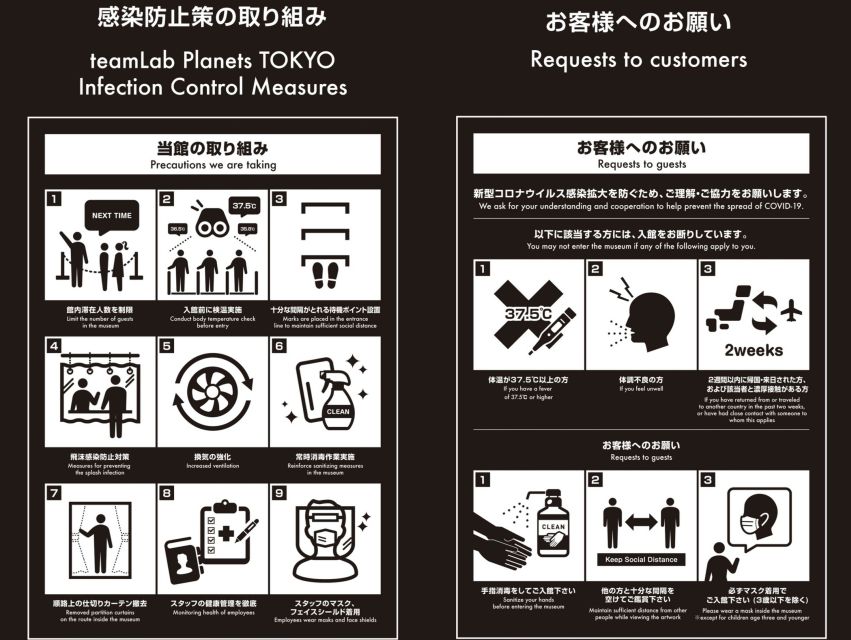
Food, drinks, and smoking are prohibited inside the exhibition. Intoxicated people cannot enter. These rules protect the artwork and help keep wet, dark, crowded rooms manageable.
The exhibition is not suitable for every mobility level. Some parts cannot accommodate wheelchairs, and reflective floors or water may make movement difficult. Check your own comfort with bright lights, mirrors, water, and changing surfaces before paying, since the ticket is non-refundable.
Should you book teamLab Planets TOKYO?
Book it if you want an unusual Tokyo activity that asks you to take part instead of simply look. The water gallery, orchid garden, and falling-flower rooms offer enough variety to justify the visit, and the $25 price is fair if you allow around two hours.
Choose an early or quieter time if you dislike crowds, and arrive at the correct location with your voucher and ID ready. Wear practical trousers, protect your schedule from late-running transport, and expect to wait outside if you arrive before your assigned slot.
Skip it if you want a traditional museum, have difficulty with water or bright light, or cannot manage a timed, barefoot route. For everyone else, teamLab Planets offers one of Tokyo’s more memorable ways to encounter art.
FAQ
Can I buy a ticket on the same day?
No. Same-day admission tickets cannot be purchased, so you need to arrange your entry in advance.
How long is the ticket valid?
The ticket is valid for one day, but admission is linked to the selected entry time.
How late can I arrive?
You can enter only during the first 30 minutes after your selected entry time. Late arrivals are not eligible for a refund.
What do I need to show at the entrance?
You need the official voucher emailed to you, and you should bring a passport or ID card. Staff may request ID to confirm age or school affiliation.
Do I need to remove my shoes?
Yes. Visitors enter the exhibition barefoot. Lockers are available for small items.
What should I wear for the water rooms?
Wear trousers that can be rolled above the knee. Water levels may rise to around knee height in some areas.
Can children visit teamLab Planets?
Children younger than 13 must be accompanied by an adult. Unaccompanied minors are not allowed.
Is teamLab Planets suitable for wheelchair users or people with epilepsy?
No. Some areas are not accessible by wheelchair, and the activity is not suitable for wheelchair users or people with epilepsy. It is also not recommended for people with light sensitivity or heart problems.
Just added around Tokyo
- Private Arrival Transfer : Narita International Airport to Central Tokyo City★ 4.5 · 12 reviews
- Narita Airport(NRT): Private Transfer to Tokyo/Yokohama 1-9pax★ 5.0 · 47 reviews
- Private Transfer from Narita Airport to Yokohama Port and City★ 4.5 · 17 reviews
- [Narita Airport Terminals 1, 2] 40-60km Sawara Itako Historic Bike Tour★ 5.0 · 13 reviews
- 3 Day Japan Highlights Tour: Tokyo, Mt.Fuji, Nara, Kyoto, Osaka★ 5.0 · 22 reviews
- Small Town in the Big City: Tasting Tokyo’s Kichijoji★ 5.0 · 195 reviews
- Small Town in the Big City: Tasting Tokyo’s Kichijoji★ 5.0 · 16 reviews
- The 10 Tastings of Tokyo With Locals: Private Street Food Tour★ 5.0 · 48 reviews
Tokyo Tours, compared.

Mt Fuji and Hakone 1-Day Bus Tour Return by Bullet Train
Read our review →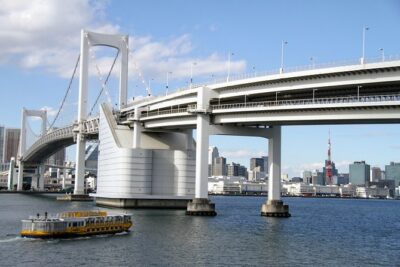
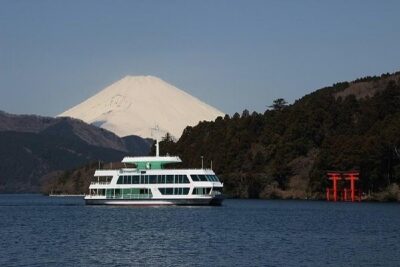
Mt Fuji & Hakone Cruise, Drum Show Bullet Train 1 Day from Tokyo
Read our review →
Sumo Show Experience with Chicken Hot Pot and a Photo
Read our review →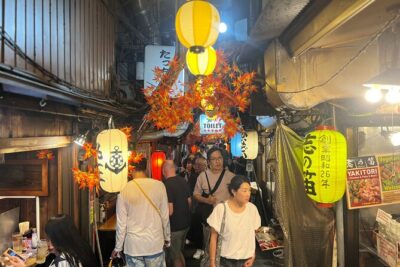
Shinjuku Food Tour (13 Dishes at 4 Local Eateries)
Read our review →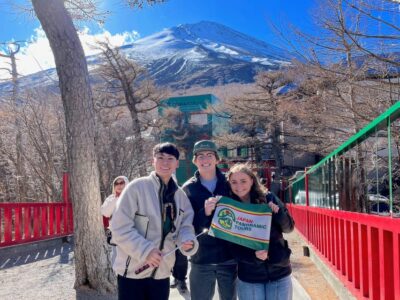
Tokyo Mt Fuji 5th St & Hakone Cruise Bus Tour w/Bullet Train
Read our review →
Flagship 2-Hours Official Street Go-Kart Tour – Tokyo Bay Shop
Read our review →
Browse the lists this tour appears in