
Reviewed · NAGASAKI TOURS
Nagasaki Like a Local: Private & Custom Experience (2-3 hrs)
Nagasaki is easiest to understand on foot, one neighborhood at a time. This private walk lets your host act as both local guide and human GPS, leading you through old lanes, port districts, temples, and foreign-trader streets instead of forcing you into a fixed sightseeing parade.
I like the open itinerary and the chance to shape the outing around food, architecture, wartime history, or quiet neighborhoods. I also like that hosts such as Moe, Senyo, Miki, and Armand have adjusted routes for cruise passengers, foot injuries, stairs, cherry blossoms, and bad weather. The main catch is that the experience can be only as strong as your assigned host’s English and local knowledge.
Key points at a glance
- A flexible private walk: Choose a two or three-hour route with only your group taking part.
- Nagasaki’s greatest contrasts: Move from Chinatown and Dejima’s port story to temples, churches, and Dutch-era streets.
- A host matched to your interests: A questionnaire helps City Unscripted assign a like-minded local.
- Useful for cruise stops: Hosts have met people at the cruise port and built compact city overviews around ship schedules.
- Walking comes first: Public transport may be used, but food, transport fares, and attraction tickets cost extra.
- Strong overall score: The experience is rated 4.9 out of 5 from 14 published ratings, with 93 percent recommending it.
A private way to get your bearings in Nagasaki
At $64.07 per person, this is not a bargain sightseeing bus, nor is it meant to be. You are paying for a private host, a flexible route, and the ability to change direction as you go. For a couple or small group that wants help making sense of Nagasaki in a short window, the price can be fair.
The basic outing lasts two or three hours. That is enough time for a useful introduction, but not enough to cover every major sight in the city. If you want the Atomic Bomb Museum, Peace Park, Chinatown, Oura Cathedral, Dejima, and the hillside homes in one sweep, you will need to set priorities before meeting your host.
That planning matters because the advertised places are examples, not guaranteed stops. Your host chooses the final route around your interests and the time available. You might spend more time on food and port history, or trade a major attraction for a quiet neighborhood and a cup of matcha in a Zen Buddhist temple.
Within 24 hours of booking, you receive a short questionnaire about your personality and interests. Answer it with useful detail. If you care more about local food than landmark photographs, say so. If you need fewer stairs, say that too. The route is designed from your answers, and you can still change your mind during the walk.
A few more Nagasaki half-days to weigh up
- Nagasaki: Private Walking Tour with a Local
★ 4.7 · 79 reviews - Nagasaki Full-Day Private Tour with Government-Licensed Guide
★ 5.0 · 66 reviews - Nagasaki Half-Day Private Tour with Government-Licensed Guide
★ 5.0 · 53 reviews
Chinatown, snacks, and Nagasaki’s port story
Nagasaki Chinatown is a natural starting point for a city walk because it connects food, migration, and the port. It is described as Japan’s oldest Chinatown, with lanes that cross and twist through the central city. Your host can help you sample street food here, although food and drinks are not included in the price.
That last point is worth keeping clear. You are not buying a food tour with tastings built into the fee. Instead, you have the chance to stop and buy something that catches your eye, with your host helping explain what you are seeing and perhaps steering you toward a local favorite.
The Chinatown portion works best for people who like to pause and ask questions. A fixed group tour often needs to keep moving. Here, you can spend more time looking at shopfronts, discussing Nagasaki’s overseas links, or simply choosing a snack before continuing.
The port theme can extend toward Higashiyamato and Dejima. The supplied route description connects these areas with Nagasaki’s long contact with foreign traders. Your host may include them, but the final choice depends on your answers and the day’s plan.
Meganebashi Bridge and the old city center
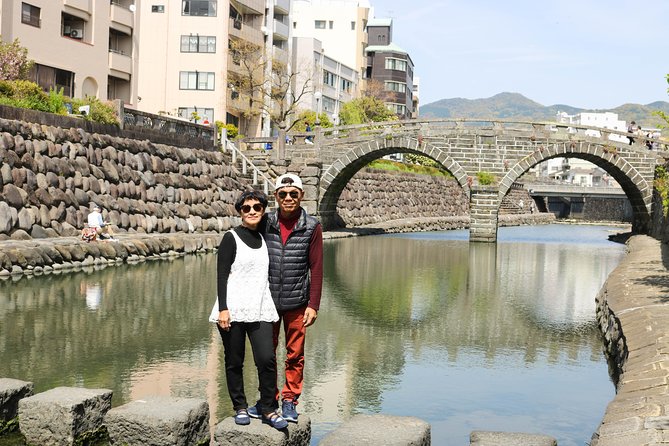
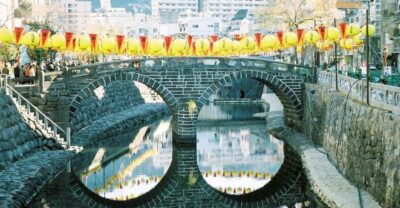
Meganebashi, or Spectacles Bridge, is one of Nagasaki’s most recognizable sights. The 400-year-old stone bridge gets its name from the reflection of its arches in the water, which can create the shape of spectacles under the right conditions.
This is a quick stop, but it gives the walk a strong sense of place. You can see how the city’s waterways and narrow streets shape its center, then continue on foot through the surrounding area. It is the sort of landmark that benefits from a local explanation, especially if you want more than a photograph.
Do not expect a long guided visit here. The bridge is an outdoor city feature, not a ticketed attraction with a formal tour program. The value comes from fitting it into a broader route and understanding how it connects with Nagasaki’s older neighborhoods.
If your interests lean toward photography, architecture, or city planning, mention that in the questionnaire. A flexible host can give this stop more attention than a standard highlights walk might allow.
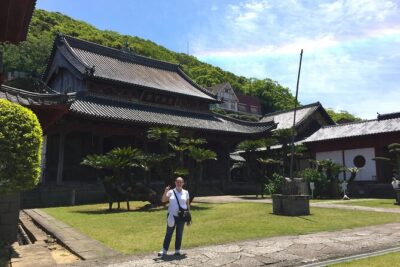
Fukusai-ji, a temple with a difficult past
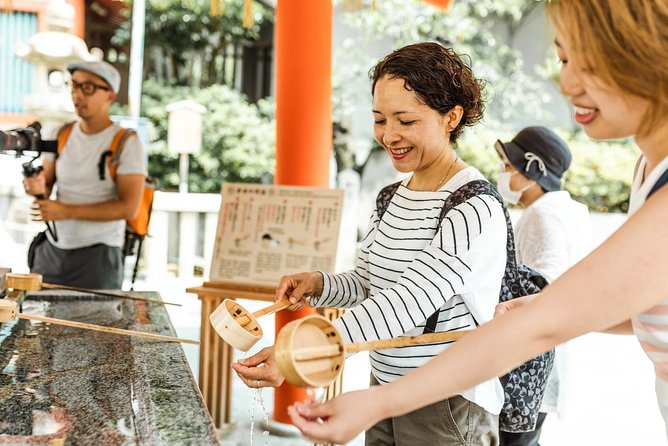
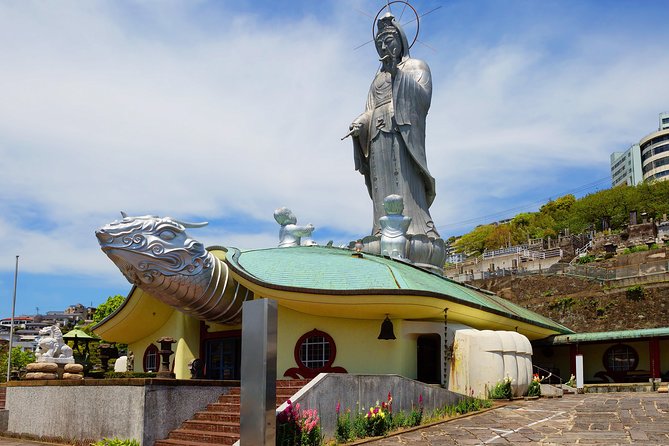
Fukusai-ji is described as a curiously shaped temple, rebuilt after World War II as a mausoleum for fallen Japanese soldiers. That combination makes it more than a quick temple photo stop. It raises questions about destruction, remembrance, and the way Nagasaki rebuilt itself.
The visit may appeal to you if you want historical context with your sightseeing. It is also a reminder that Nagasaki’s story is not limited to foreign trade and elegant Western buildings. The city carries layers of religious, military, and wartime memory, sometimes within a short walk of one another.
You should allow your host to set the tone here. Fukusai-ji is connected with loss and remembrance, so it calls for a more thoughtful visit than a casual stop for a snack. A good host can explain the site in a clear, respectful way and place it within the city’s larger story.
There is no promise that Fukusai-ji will be included. If it matters to you, name it when you discuss the itinerary. The same advice applies to other listed sights.
Same base, a completely different sort of day:
- Visit Gunkanjima Island (Battleship Island) in Nagasaki
★ 4.0 · 32 reviews - Taste Local Life: Nagasaki’s Historical Street Walking Tour
★ 5.0 · 27 reviews - Nagasaki Full Day Tour with Licensed Guide and Vehicle
★ 5.0 · 27 reviews - Nagasaki Street Food Adventure: Private Walking Tour with a Local
★ 5.0 · 26 reviews
Oura Cathedral and Dutch Slope
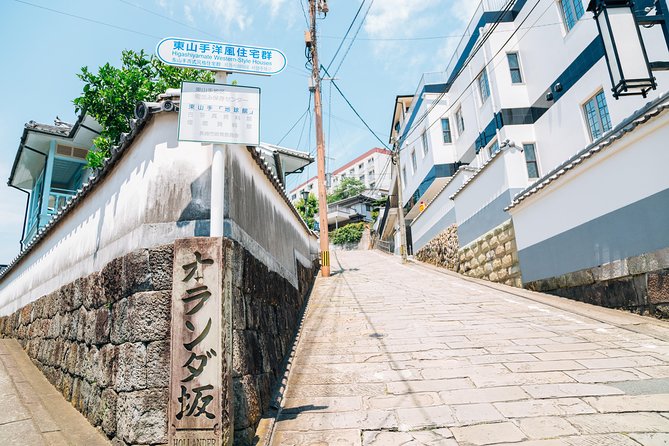
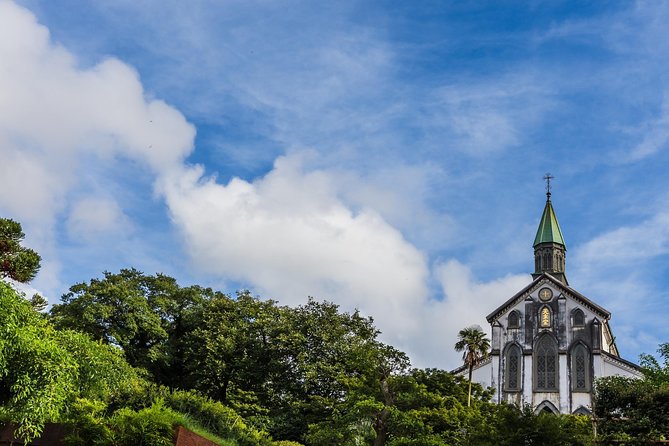
Oura Cathedral brings a different side of Nagasaki into view. Its European style reflects the city’s long relationship with foreign traders and religious communities. Along with nearby Dutch Slope, it helps explain why Nagasaki can feel unlike other Japanese cities.
Dutch Slope is a stone-paved street lined with former Western-style residences connected with foreign traders. The setting offers a compact lesson in how overseas contact changed the built form of the city. You get old paving, sloping streets, and houses that look quite different from the temples and traditional lanes elsewhere in Nagasaki.
This area is especially useful if you want to connect architecture with history rather than tick off isolated sights. I would ask your host to explain who lived in these residences and how the foreign settlement related to the port. The supplied information does not promise entry to every building, and attraction tickets are not included, so think of this primarily as a walking visit.
The slope also raises a practical issue. Nagasaki is hilly, and the walk is not entirely flat. One person in a group of eight had difficulty with stairs, and host Senyo adjusted the experience without hesitation. That is encouraging, but you should still explain mobility concerns before the tour begins.
A route that can change with the weather
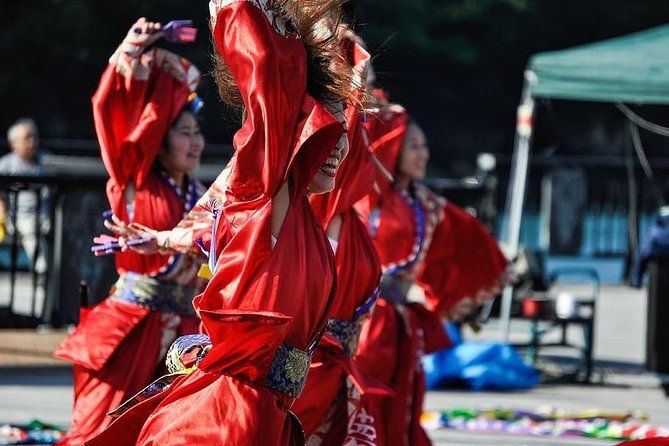
The walk is primarily on foot, though public transport may be used. That gives your host some room to adjust the route, but it also means you should wear comfortable shoes and prepare for uneven streets, slopes, and stairs.
Bad weather does not automatically cancel the experience. Moe took a group around Nagasaki in poor weather and still arranged a pleasant day, including lunch. Lunch was not part of the listed inclusions, so you should expect to pay for any meal or snack yourself.
A flexible route is most useful when your day has limits. Cruise passengers have used this experience as an alternative to a cruise-company excursion, with hosts meeting them at the port or working around a port visit. The standard meeting point is the Nagasaki City Tourist Information Center at 1-60 Onouemachi, and the activity ends back at the meeting point.
A central hotel meet-up is available on request. If you are arriving by ship, do not assume the port meeting is automatic. Arrange the location directly with the host or provider before the day.
What the host can add
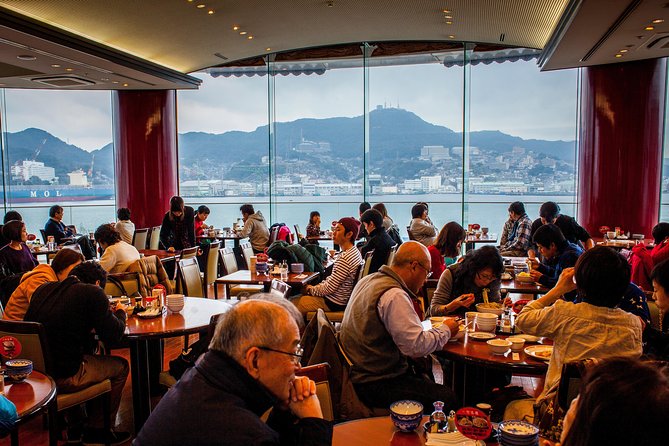
The host is the heart of this experience. The best examples show how much a personal guide can change the day. Miki adapted the route for a fresh foot injury while still covering requested sights and adding places the participant had not known about. Armand added a park with more than 400 cherry trees when blossoms were a priority, and kept the route in areas with few crowds.
Senyo is another strong example of the format’s usefulness. He handled a group of eight, adjusted for someone who found stairs difficult, used the city’s trolleys, walked up to large hillside houses, and made time for crepes. That is not a fixed route. It is a day shaped around people.
A Dutch host living in Nagasaki with his Japanese wife focused on historical stories and included matcha tea at a Zen Buddhist temple. Macchi was praised for helpfulness, strong English, and small surprises along the way. These details show the range you might get, from a practical overview to a more conversational local outing.
There is one clear warning. One participant found the assigned guide friendly and hardworking but felt that her English and ability to explain history were not strong enough. If detailed historical interpretation in English is your main reason for booking, ask about language ability and subject knowledge before confirming, if that information is available.
How much can you see in two or three hours?
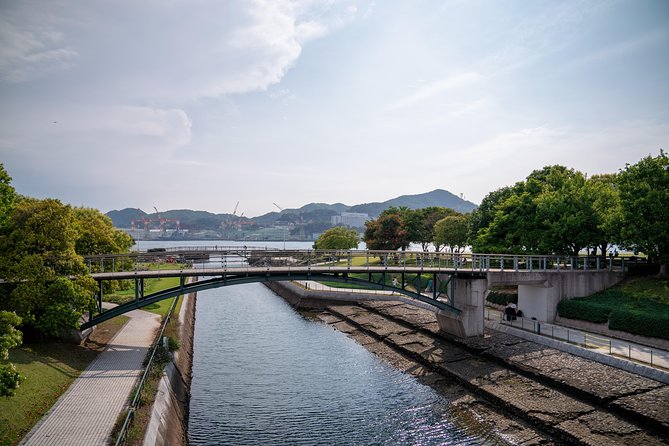
You can see a useful slice of central Nagasaki, but you cannot see the entire city. A two-hour walk should focus on one compact area. A three-hour version gives your host more breathing room for a second neighborhood, a transport connection, or a longer food and history stop.
The listed points cover a wide spread: Chinatown, Fukusai-ji, Oura Cathedral, Dutch Slope, and Meganebashi Bridge. Trying to fit all five into a short outing could make the walk feel rushed, especially if you stop for food or use public transport.
Before the meeting, choose your top two or three priorities. For example:
- Ask for Chinatown, Meganebashi, and food if you want central city flavor.
- Choose Oura Cathedral and Dutch Slope for architecture and foreign-trader history.
- Prioritize Fukusai-ji and the Atomic Bomb hypocenter if wartime memory matters most.
- Request neighborhoods, gardens, or cherry blossoms if you have already seen the main sights.
The Atomic Bomb hypocenter is not listed as a guaranteed stop, but it was included in one customized route. If it is important to you, request it clearly rather than assuming it will appear.
Value, costs, and practical limits
The $64.07 per-person price includes a private, personalized walking tour with a local host and a two or three-hour route. It does not include food, drinks, public transport fares, entrance tickets, or gratuities.
For a solo visitor, the price is a larger personal expense. For two or more people, the private format may make more sense, especially with group discounts available. You are not paying for a large group’s schedule or waiting for strangers to finish at each stop.
The strongest value comes from time saved and local judgment. A host can point you toward a useful neighborhood, explain why a street matters, or change the plan when your feet, the weather, or your interests demand it. If you are comfortable researching and navigating on your own, you may find the price less compelling.
The listed score is 4.9 out of 5 from 14 ratings, with 93 percent recommending the experience. That is a strong signal, though the small number means I would still pay close attention to guide matching and language expectations.
Free cancellation is available up to 24 hours before the local start time. Changes or cancellations made inside that window are not accepted for a refund.
Who should book this Nagasaki walk?
I would choose this experience if you have a short stay, want a private route, or dislike sightseeing in a large group. It suits cruise passengers particularly well because the walk can be arranged around a port visit, and the hosts have handled compact city overviews before.
It also suits repeat visitors who have already seen the major memorial sites and want neighborhoods, food, gardens, or everyday city life. Families and mixed-ability groups may benefit from the flexible pace, but you should state mobility needs early.
I would be more cautious if you want a formal lecture, guaranteed entry to every major attraction, or a fixed list of stops. The itinerary can change, and the quality of historical explanation depends on the host assigned to you. If fluent English and detailed history are essential, make that request before the walk.
Should you book it?
Book this Nagasaki experience if you want a private and adjustable introduction rather than a rigid sightseeing circuit. The strongest part is the human element: a good host can connect Chinatown, temples, port history, hillside homes, and personal interests in a way a map cannot.
Set your priorities in advance, ask about the meeting point, and remember that admissions, food, and transport cost extra. If you do that, the tour offers a practical way to get oriented and find parts of Nagasaki you might miss on your own.
FAQ
How long does the Nagasaki local experience last?
The experience lasts approximately two to three hours.
Is this a private tour?
Yes. Only your group participates in the activity.
What is included in the price?
The price includes a private, personalized walking tour with a local host, lasting two or three hours.
Are food and drinks included?
No. Food and drinks are not included. You can buy street food or meals during the walk at your own expense.
Is transportation included?
No. The experience is mainly on foot, though public transport may be used. Transport costs are not included.
Are attraction tickets included?
No. Tickets to attractions are not included in the price.
Where does the tour start and end?
The standard meeting point is the Nagasaki City Tourist Information Center at 1-60 Onouemachi, Nagasaki. The activity ends back at the meeting point.
Can the host meet me at my hotel or cruise port?
Hotel meet-up is available on request for central locations. Cruise-port meetings have been arranged, but you should confirm the location directly in advance.
Can I cancel for a full refund?
Yes. You can cancel at least 24 hours before the local start time for a full refund. Cancellations or changes made less than 24 hours before the start time are not accepted for a refund.
Just added around Nagasaki
- Nagasaki Private Historical Tour with Licensed Guide★ 5.0 · 13 reviews
- Private Ring Craft Experience in Nagasaki★ 5.0 · 14 reviews
- Traditional Kimono Experience in Nagasaki★ 5.0 · 16 reviews
- Semi Private Guided Tour of Nagasaki.★ 5.0 · 17 reviews
- Taste Local Life: Nagasaki’s Historical Street Walking Tour★ 5.0 · 27 reviews
- Nagasaki WW2 History and Culture Tour★ 5.0 · 19 reviews
- Nagasaki Full Day Tour with Licensed Guide and Vehicle★ 5.0 · 27 reviews
- Nagasaki Private Customizable Half Day Tour★ 5.0 · 16 reviews
Nagasaki Tours, compared.
Nagasaki Full-Day Private Tour with Government-Licensed Guide
Read our review →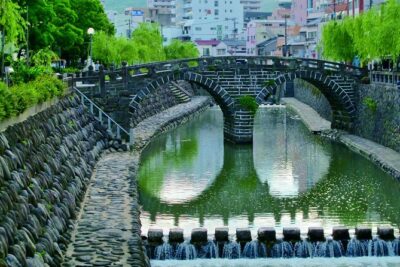
Nagasaki Half-Day Private Tour with Government-Licensed Guide
Read our review →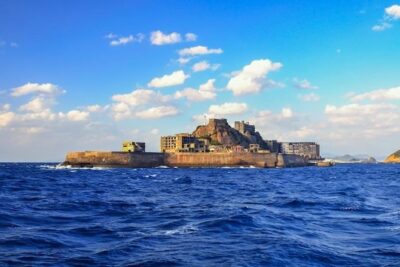
Visit Gunkanjima Island (Battleship Island) in Nagasaki
Read our review →
Taste Local Life: Nagasaki’s Historical Street Walking Tour
Read our review →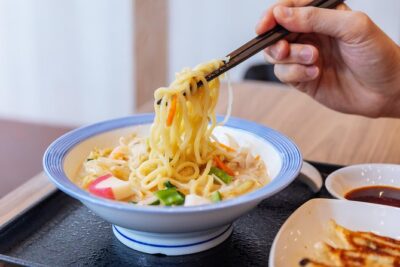
Nagasaki Street Food Adventure: Private Walking Tour with a Local
Read our review →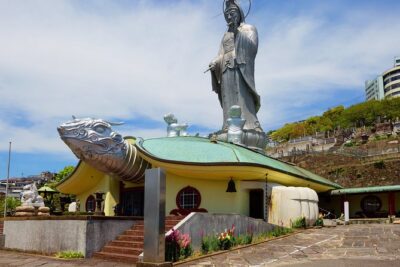
Nagasaki Private Tour with a Local – Highlights & Hidden Gems
Read our review →Browse the lists this tour appears in