
Reviewed · NAGASAKI TOURS
Nagasaki Full-Day Private Tour with Government-Licensed Guide
Nagasaki’s past is too large for a quick checklist, and this private tour gives you a guide who can adjust the day as your interests take shape. You might spend the morning at the Peace Park and Atomic Bomb Museum, then switch to Dejima, a Chinese temple, or the city’s hillside views.
I like the private format, which keeps the pace in your hands, and I like the chance to ride local trams and buses with guides such as Hiro, Mei, Yoko, and Yoshiko. The main drawback is simple: six hours gets you three or four main sights, not the entire menu, and transport, meals, and most admission fees cost extra.
Key points to know before booking
- Three or four sights, not all sixteen: You choose a short list from a wide range of Nagasaki attractions.
- A walking and public transport day: Your guide meets you on foot, and buses, trams, or other public transport connect the stops.
- Excellent guide flexibility: Guides can reshape the route around museums, churches, temples, food, views, or personal requests.
- The atomic bomb sites need time: Peace Park and the Atomic Bomb Museum can make a powerful half-day pairing, but they are not light sightseeing.
- Mt. Inasa adds a big city view: The 333-meter summit can be reached by ropeway, bus, or car, with transport costs outside the tour price.
- Good for private groups: Only your party joins, with group discounts available and a listed price of $155.22 per person.
What this six-hour Nagasaki tour really offers
Nagasaki can feel scattered. The Peace Park and Atomic Bomb Museum lie north of the center, while Dejima, the waterfront, Glover Garden, Oura Church, and the foreign settlement sit in other parts of town. Chinese temples and the Temple Town district add another direction, and Mt. Inasa rises across the harbor.
That geography makes a private guide useful. You are not simply paying for a person to point at monuments. You are paying for help choosing a route that fits six hours, then moving through the city by foot and public transport. A guide can also explain the connections between Nagasaki’s Chinese, Dutch, Portuguese, Christian, wartime, and modern identities.
The tour costs $155.22 per person. For one person, that is a serious outlay. For a private party of two, three, or more, the price makes more sense because the guide’s time is reserved for your group alone. Group discounts are offered, though the exact reduction is not specified.
The strongest value comes when you use the guide for interpretation and local navigation, not just transportation. Admission fees, fares, lunch, and personal spending are not included, so budget for those separately.
More licensed-guide days in Nagasaki:
- Nagasaki Half-Day Private Tour with Government-Licensed Guide
★ 5.0 · 53 reviews - Nagasaki Full Day Tour with Licensed Guide and Vehicle
★ 5.0 · 27 reviews - Nagasaki Private Historical Tour with Licensed Guide
★ 5.0 · 13 reviews
Choosing three or four sights without wasting the day
The long choice list is both the tour’s strength and its trap. You have plenty of options, but trying to squeeze in every famous place would turn the day into a race. Pick one theme, or two related themes, and let the guide build around them.
For a first visit, I would consider:
- Peace Park and the Atomic Bomb Museum
- Dejima and the Nagasaki Museum of History and Culture
- Glover Garden and Oura Church
- Sofukuji Temple, Kofukuji Temple, and Meganebashi
- Mt. Inasa with one nearby city sight
- A mix of the atomic bomb sites, one religious or cultural site, and one viewpoint
The tour description allows three or four sites from the offered list. Some stops appear more than once in the supplied schedule, including Kofukuji Temple, Oura Church, and the Confucius shrine, so treat the list as a menu rather than a fixed route.
The short time labels, often 15 or 30 minutes, should not be read as a promise that every stop will feel equally complete. They show the approximate sightseeing blocks, but transport between places also takes time. Ask your guide early which places deserve a longer visit.
Peace Park and the Atomic Bomb Museum
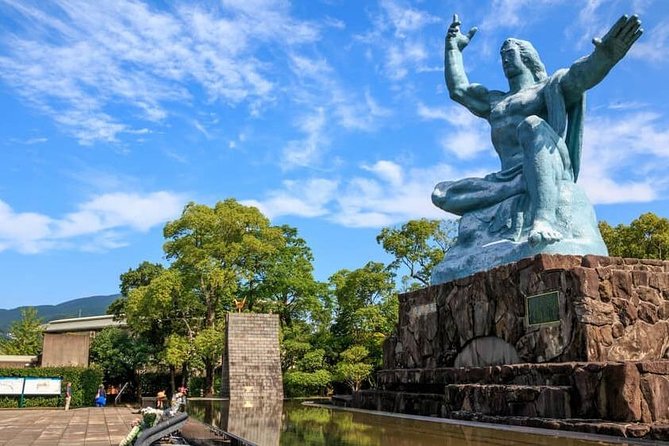
Nagasaki Peace Park is a quiet place built to remember the atomic bombing of August 9, 1945. It marks the destruction of a large part of the city and the deaths caused by the attack. The park itself is free to enter and gives you room to think before or after the museum.
The nearby Atomic Bomb Museum presents the bombing, its effects, and Nagasaki’s recovery. It is not casual sightseeing. The museum can be painful and moving, especially when you consider that the city was a lived-in place before the attack and had to rebuild afterward.
I would make these two sites the core of the day if you want to understand Nagasaki’s wartime story. A guide can provide context and help you connect the museum material with the city around you. One guide also helped a guest learn about ground zero and the effects of the bombing on Japan and the wider world.
Allow emotional space here. A short museum visit can leave you with a lot to process, and adding five more major stops afterward may feel rushed. If you choose Peace Park and the Atomic Bomb Museum, pair them with only one or two lighter stops.
Mt. Inasa for Nagasaki from above
Mt. Inasa rises 333 meters near the city center. Its summit offers wide views over Nagasaki and the water, and the night view is particularly well known. The stop is listed as free admission, but reaching the summit by ropeway, bus, or car involves transportation costs that are not included.
The ropeway is an attraction in itself. One account describes riding the gondola to the top and enjoying the view over the city and ocean. Weather matters, so ask your guide about the conditions before committing a large part of the day to the summit.
The 15-minute listing is a reminder that this is a viewpoint stop, not a long mountain visit. If you want photographs and a quick sense of Nagasaki’s shape, it works well. If the sky is poor, the value drops, and you may prefer more time at a museum or temple.
A few more Nagasaki half-days to weigh up
- From Tokyo: Mount Fuji Full-Day Sightseeing Trip
★ 4.5 · 4,970 reviews - Mount Fuji Full-Day Private Tour from Tokyo (Customizable)
★ 4.9 · 1,470 reviews - Hiroshima / Miyajima Full-day Private Tour with Government Licensed Guide
★ 5.0 · 1,298 reviews - Tokyo Private Full-Day Tour by Car or Van
★ 5.0 · 684 reviews
Dejima and the city’s international story
Dejima began as a man-made island in Nagasaki’s port. It was built in 1636 to separate Portuguese residents from the Japanese population and control missionary activity. Later, the Dutch used the site, making Dejima an important window between Japan and the outside world during a period of restricted foreign contact.
This is one of the best choices if you want to understand why Nagasaki feels different from many other Japanese cities. The site connects trade, religion, foreign settlement, and government control. It also helps explain why the city became such an important international port.
Admission is not included. Give Dejima more than a quick photograph if you care about the details, since reconstructed buildings and displays reward a slower visit. Pair it with the Nagasaki Museum of History and Culture for a day focused on the city’s role as a meeting point between Japan and other countries.
Glover Garden and Oura Church
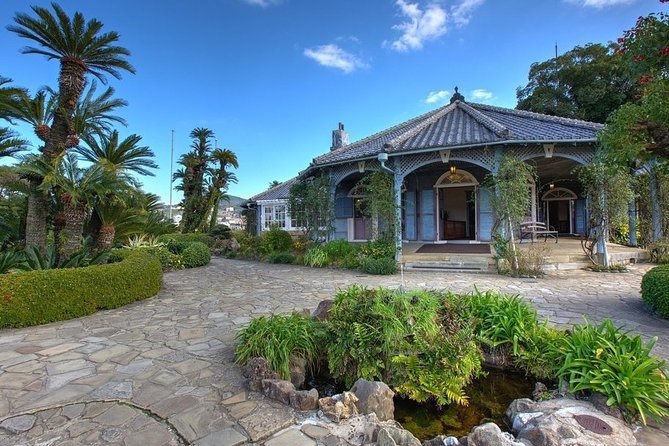
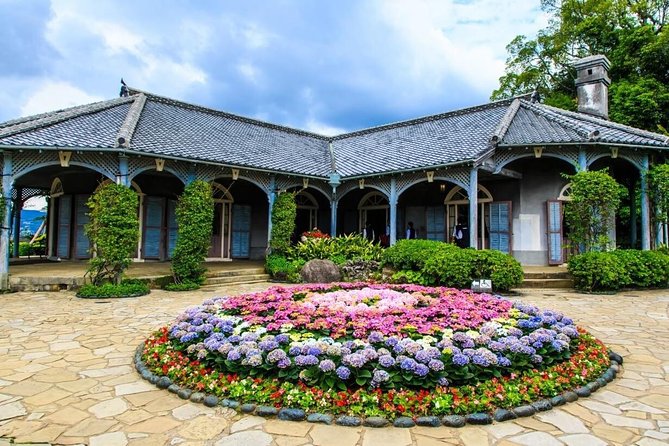
Glover Garden is an open-air museum on a hillside. It presents mansions linked with former foreign residents and buildings associated with the Western merchants who lived in Nagasaki after the port opened to foreign trade. The hill setting gives the visit an added sense of place, but it also means walking uphill and along sloping paths.
Nearby Oura Church was built in 1864 by a French missionary for the foreign merchant community. Its story connects Nagasaki with Catholicism, foreign settlement, and the return of Christianity after a long period of restriction. Admission is not included for either the garden or church.
These sites suit you if you want architecture, religion, and the foreign quarter rather than a museum-heavy day. You can also ask to include the Dutch Slope, a stone-paved hillside street where foreign traders lived after the port reopened in 1859.
The schedule includes both Oura Church and the Catholic Oura Church under slightly different names. They refer to the same attraction, so confirm the exact plan with your guide rather than counting them as two separate stops.
Chinese temples and bridges in the center
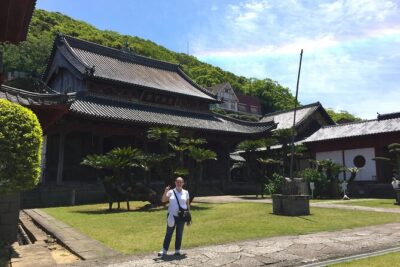
Sofukuji Temple was built in 1629 for Nagasaki’s Chinese residents and follows the Obaku school of Zen Buddhism. Its Chinese architectural style gives you a different view of the city’s religious life.
Kofukuji Temple is older among the Chinese-founded temples and sits in the Temple Town district. It is linked with the beginnings of the Obaku tradition in Japan. The listed visit is 30 minutes, longer than many of the 15-minute stops, which makes sense if you want to look carefully at the grounds and buildings.
Kofukuji also appears more than once in the supplied choices, so again, see the list as a selection of possible stops. Admission is not included.
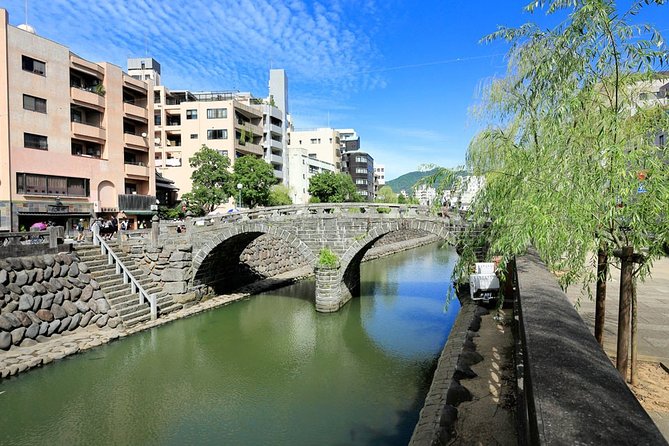
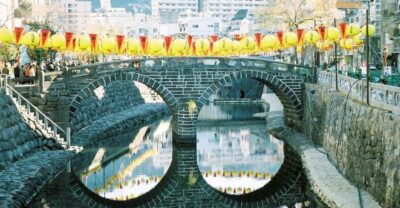
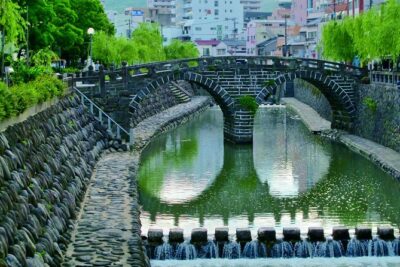
Meganebashi, or Spectacles Bridge, crosses the Nakashima River in the downtown area. Its name comes from the way the arches can resemble spectacles when reflected in the water. It is a short, easy addition if your route passes through the center, and one guide combined it with the Peace Park and the Torii Gate of Sanno Shrine.
The Nagasaki Confucius Shrine is another possible stop. It was built in 1893 by Nagasaki’s Chinese community and is one of only a small number of Confucius shrines in Japan. The supplied itinerary also uses the name Nagasaki Gokoku Shrine for this entry, so clarify the intended site before the day begins.
Urakami Cathedral and the Twenty-Six Christian Martyrs
Urakami Cathedral is a working Catholic church in a large European-style red-brick building. It has a tragic connection with Nagasaki’s wartime destruction, making it a serious stop rather than simply an architectural photo opportunity.
The Twenty-Six Christian Martyrs Monument and adjacent museum remember the Christians executed in Nagasaki on February 5, 1597. This site reaches further back than the atomic bombing, showing how religious conflict shaped the city centuries earlier.
You can use these places to build a Christian history route with Oura Church. That pairing also shows two different settings: the foreign merchant district and the community connected with Urakami. Admission is not included, and the monument and museum are listed for about 30 minutes.
Festivals, art, and other choices
The selection includes a Nagasaki Lantern Festival entry, but the description provided actually explains Nagasaki Kunchi, the festival of Suwa Shrine held October 7 to 9. It has been celebrated for about 400 years and includes Chinese influences.
Because the information is inconsistent, ask your guide exactly what you would visit under this option. It may be useful if a festival or related display is taking place, but do not assume you will attend a live event simply because the festival appears in the choices.
The Nagasaki Museum of History and Culture focuses on the city’s role as one of Japan’s major international ports. It is a good choice in rainy weather or for anyone who wants organized historical context. The Nagasaki Prefectural Art Museum sits by the port in a modern complex designed by a famous architect, according to the supplied details. Both require an admission fee.
One especially useful feature of a private guide is the ability to request something personal. A guide helped arrange a gift search involving anime characters, while another added a cat shrine to a visit. These details show how a private day can include more than the standard headline sights, provided you state your interests clearly.
Getting around by tram, bus, and foot
This is not a private-car tour. It is a walking and public transport experience, and the guide meets you on foot within a designated area of Nagasaki. You may ride buses and trams alongside local residents, which gives the day a more ordinary city feel.
The tradeoff is control versus comfort. A private vehicle would reduce transfers and stairs, but public transport keeps the cost lower and lets you see how the city works. It also means you should wear comfortable shoes and be ready for hills, especially around Glover Garden, Oura Church, and the foreign settlement.
The guide can help with route planning, fares, and transfers, but transport fees remain yours to pay. Pickup means an on-foot meeting, not a car collecting you at the hotel entrance. Confirm the designated meeting area before the start.
The guide makes or breaks the experience
The strongest pattern in the feedback is guide quality. Hiro helped a group learn about Nagasaki culture, food, and history while riding buses and trams. Mei built a family route around the sites the group selected and used quizzes to keep a child involved.
Yoko is praised for meeting on time, quickly identifying requested locations, and using a picture book to confirm choices. She also adjusted plans in imperfect weather. Yoshiko helped turn an ordinary sightseeing day into a personal introduction to her hometown, while Yosi was described as considerate and helpful during a visit with a mother and daughter.
Minnie, also known as Hiromi, helped a couple reach more places than expected and included a Chinese meal. Norah guided a serious visit to ground zero and the atomic bomb museum while also helping with a personal gift request.
The names matter because guide assignment may vary. You cannot assume you will receive Hiro, Yoko, Mei, Yoshiko, Yosi, Minnie, or Norah. What you can reasonably expect is a licensed local English-speaking guide and a private day shaped around your party.
The tour has a 4.9 rating from 66 reviews and a 97 percent recommendation rate. One one-star score appears beside an entirely positive written account, so treat the numerical picture with a little care. Still, the repeated praise for punctuality, flexibility, local insight, and kindness is consistent.
Who should book this private day
I would recommend it most strongly for first-time visitors with only one day in Nagasaki, families who need a flexible pace, and small groups with different interests. It also suits anyone who wants to ask questions without holding up a larger group.
It is particularly useful if you want to combine serious sites with lighter ones. You could spend time at the Atomic Bomb Museum, then shift to a temple, bridge, food stop, or viewpoint rather than staying with one subject all day.
You may prefer another arrangement if you want a fixed sightseeing circuit, a private vehicle, or admission and transport bundled into one price. Six hours is also not enough for every major site. Choose carefully before you meet your guide.
Is $155.22 per person good value?
The answer depends on your group size and priorities. For a private party, the price buys six hours of one guide’s attention, route planning, interpretation, and help with public transport. That can be worthwhile in a city where the main sights are spread across several districts.
It is less compelling if you only want to be escorted between places and read signs yourself. You will still pay for transport, lunch, and most entries. Before booking, estimate those extras and decide which three or four sites matter most.
I would also send a short wish list in advance. Put your top two sights first, then add two backups. Tell the guide if your priority is wartime history, Chinese and Christian heritage, views, art, food, or a family-friendly day.
Final verdict: book it for flexibility, not for a checklist
Book this tour if you want a private local guide, a customized route, and help making sense of Nagasaki’s difficult and varied past. The best version of the day combines two or three meaningful sights with enough time to listen, look, and move at a human pace.
Skip it if you expect a private car, all admission fees included, or a guaranteed visit to every place in the long attraction list. For most small groups, though, the combination of licensed guides, public transport, personal planning, and Nagasaki’s major sites offers solid value at $155.22 per person.
Free cancellation is available up to 24 hours before the start time. Service animals are allowed, most people can participate, and the activity is private to your group.
FAQ
How long does the Nagasaki private tour last?
The tour lasts approximately six hours.
How many places can I visit?
You can customize the tour around three or four sights from the available attraction list.
Is the tour private?
Yes. Only your group participates, and you cannot combine your party with another tour group.
Is hotel pickup included?
An on-foot meeting within the designated area of Nagasaki is included. This is not pickup by a private vehicle.
Is transportation included in the price?
No. Transportation fees are not included. The tour uses walking and public transport, such as buses and trams.
Is a private vehicle provided?
No. A private vehicle is not included.
Are entrance fees included?
Most entrance fees are not included. Guide entry fees are covered only for sights specifically listed under the tour’s What to Expect section.
Is lunch included?
No. Lunch and other personal expenses are not included.
Is the guide licensed and English-speaking?
Yes. The tour includes a licensed local English-speaking guide.
Can I cancel for a full refund?
Yes, if you cancel at least 24 hours before the experience start time. Cancellations or changes made less than 24 hours before the start time are not accepted for a refund.
Is the tour suitable for most people?
Yes. Most people can participate, and service animals are allowed. The experience involves walking and public transportation.
Just added around Nagasaki
- Nagasaki Private Historical Tour with Licensed Guide★ 5.0 · 13 reviews
- Private Ring Craft Experience in Nagasaki★ 5.0 · 14 reviews
- Traditional Kimono Experience in Nagasaki★ 5.0 · 16 reviews
- Semi Private Guided Tour of Nagasaki.★ 5.0 · 17 reviews
- Taste Local Life: Nagasaki’s Historical Street Walking Tour★ 5.0 · 27 reviews
- Nagasaki WW2 History and Culture Tour★ 5.0 · 19 reviews
- Nagasaki Full Day Tour with Licensed Guide and Vehicle★ 5.0 · 27 reviews
- Nagasaki Private Customizable Half Day Tour★ 5.0 · 16 reviews
Nagasaki Tours, compared.
Nagasaki Half-Day Private Tour with Government-Licensed Guide
Read our review →
Visit Gunkanjima Island (Battleship Island) in Nagasaki
Read our review →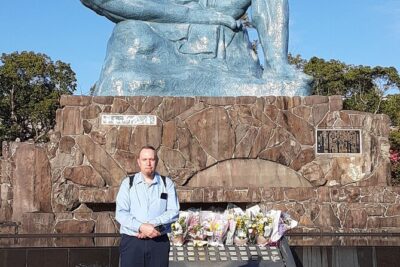
Taste Local Life: Nagasaki’s Historical Street Walking Tour
Read our review →
Nagasaki Street Food Adventure: Private Walking Tour with a Local
Read our review →
Nagasaki Private Tour with a Local – Highlights & Hidden Gems
Read our review →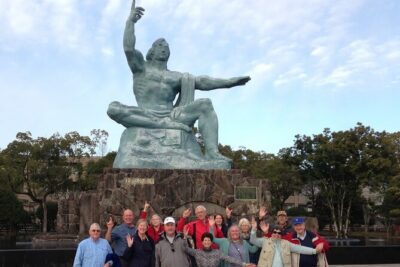
Browse the lists this tour appears in