
Reviewed · NAGASAKI TOURS
Nagasaki WW2 History and Culture Tour
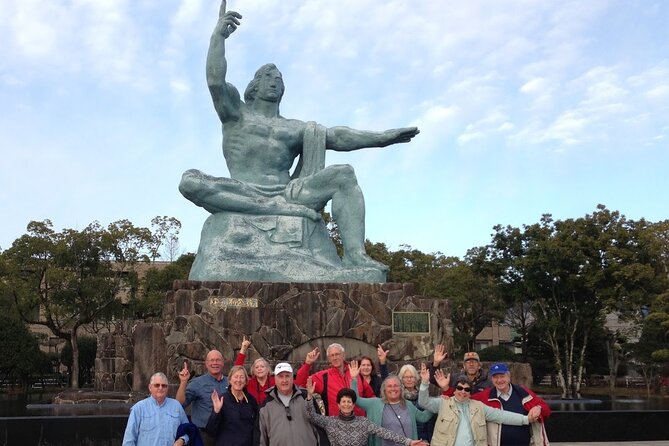
Nagasaki’s wartime story reaches far beyond the Atomic Bomb Museum. This private day with Shannon Lefebvre links the Peace Park and museum with radio towers tied to the opening of the Pacific War, a former torpedo base, an air-raid shelter, and quieter places most visitors would not find alone. You also get shrines, sake, ceramics, lunch, and a fine view from Mount Inasa.
I like the small private format, since Shannon can shape the pace around your interests and take you well beyond the standard city circuit. I also like the mix of serious history and everyday culture: after sobering wartime sites, you may be tasting sake or looking through Hasami pottery.
The main consideration is the pace. Ten stops spread across Nagasaki and its surrounding area make this a full day, and the museum’s graphic material can be emotionally difficult. The tour also requires good weather, and its cancellation terms are strict if you change your mind.
Key points at a glance
- WWII sites beyond the usual museums: Visit Hario Transmission Towers, Mukyudo air-raid shelter, and the Katashima Torpedo Base Ruin.
- A private group of up to three: You travel in an air-conditioned vehicle with pickup offered, WiFi, and room for personal questions.
- Atomic Bomb Museum admission included: The Peace Park and museum provide essential context for Nagasaki’s wartime experience.
- Culture breaks up the heavy history: Sohonzan Shrine, Hasami ceramics, and Umegae Sake Brewery add a fuller picture of the region.
- Food and drinks are built in: Lunch may be served on the go or as a picnic, with still and sparkling water plus alcoholic and nonalcoholic drinks.
- A long but varied day: Allow roughly 7 to 9 hours, including driving between widely spaced stops and the view from Inasayama Observation Deck.
A full-day look at Nagasaki beyond the city center
This is not a quick memorial tour. It is a broad circuit through Nagasaki and nearby areas, combining WWII history with local customs, food, crafts, and scenery. You spend time in a private vehicle, then get out for short visits at ten locations.
The $656.88 price covers the whole group, not each person, and the group limit is three. For three people, that works out to about $219 per person before considering the included food, drinks, transportation, and admissions. For one person, it is expensive. For a small family or a trio of friends, the cost makes more sense because you are buying a private day rather than a seat on a large bus.
Shannon’s approach, based on the tour’s structure and the way the day is described, is conversational and flexible. He has been praised for explaining Japanese customs and local history, and for taking people to places even two Nagasaki residents had not visited. That is useful here, since several stops are not obvious additions to a first-time itinerary.
More history-led days in Nagasaki:
- Taste Local Life: Nagasaki’s Historical Street Walking Tour
★ 5.0 · 27 reviews - Nagasaki Private Historical Tour with Licensed Guide
★ 5.0 · 13 reviews - World Heritage Shirakawa-go and Experience Tours from Kanazawa
★ 5.0 · 4,049 reviews
Sohonzan Shrine starts the day with a sense of scale
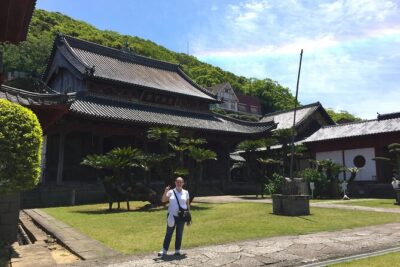
The first stop is Sohonzan Shrine, reached through a very large torii gate. You get about 30 minutes here, enough for a look at the shrine grounds and a quiet introduction to Japanese religious culture.
This is a smart opening. Nagasaki is often reduced to its wartime past, but a shrine helps place the city in a much longer story. The enormous gate also makes an immediate impression. It tells you that this is not a tiny neighborhood altar, but a substantial religious site.
Do not expect a long formal temple lesson or a major museum. The admission is free, and the stop is brief. Its value comes from atmosphere, scale, and contrast with the serious sites later in the day.
Saikai Bridge reveals the Hario Strait
At Saikai Bridge, the focus shifts from history to natural forces. The bridge overlooks the Hario Strait, where seawater moves between Omura Bay and the narrow channel. The current is known for whirlpools that form as the tide changes.
You have about 30 minutes to take in the view. This is one of the lighter stops, but it gives the day breathing room. After a morning of historical material, a bridge over fast-moving water feels like a welcome reset.
The view depends on conditions and timing. If you are hoping for dramatic whirlpools, you may find the scene more subdued at your particular visit. Still, the stop adds a useful sense of the waterways around Nagasaki and breaks up the driving with fresh air.
Hario Radio Tower connects Nagasaki to the Pacific War
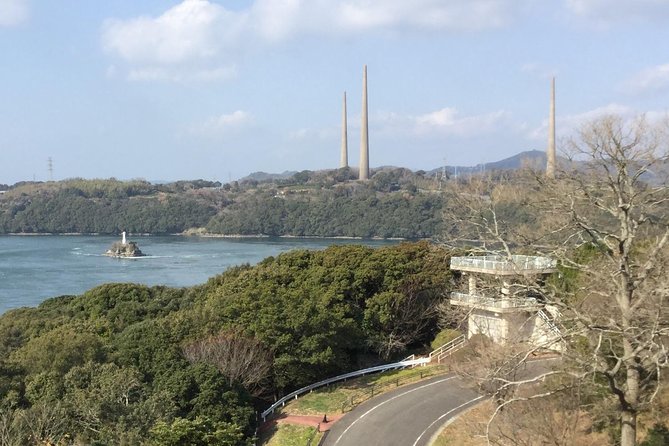
The Hario Transmission Towers are among the tour’s most unusual sites. They are presented as the starting point for a message sent by officials to proceed with the attack on Pearl Harbor. That gives the towers a direct connection to the opening of the Pacific War.
You spend around 30 minutes here. The stop is not simply an old structure to photograph. It asks you to think about how wartime orders moved across distance, and how an event remembered globally can be tied to a particular place in Nagasaki Prefecture.
This is the sort of location that benefits from a guide. Without context, transmission towers can look like industrial leftovers. With an explanation of their wartime role, they become a meaningful part of the day. The site may appeal most to you if you enjoy military history and lesser-known locations rather than only famous memorials.
A few more Nagasaki half-days to weigh up
- Nagasaki: Private Walking Tour with a Local
★ 4.7 · 79 reviews - Nagasaki Full-Day Private Tour with Government-Licensed Guide
★ 5.0 · 66 reviews - Nagasaki Half-Day Private Tour with Government-Licensed Guide
★ 5.0 · 53 reviews - Visit Gunkanjima Island (Battleship Island) in Nagasaki
★ 4.0 · 32 reviews
Umegae Sake Brewery brings the day back to daily life
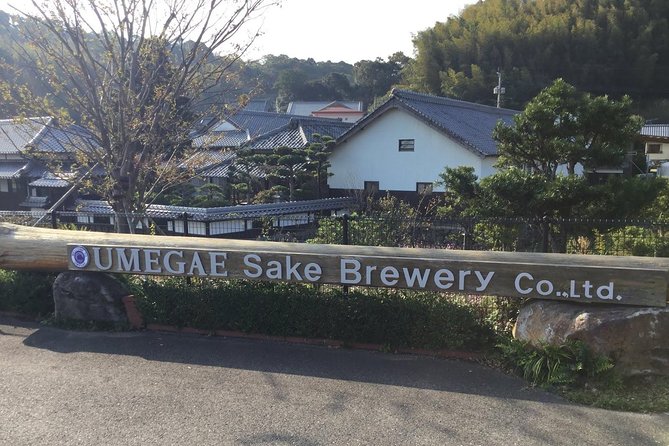
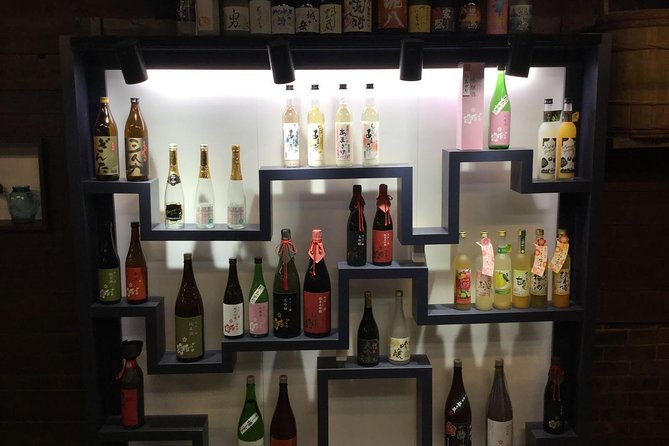
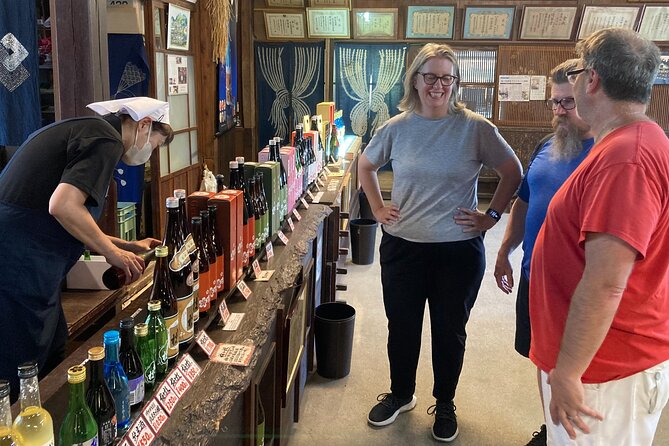
Umegae Sake Brewery adds a welcome cultural turn. You get about 30 minutes at the brewery, with alcoholic and nonalcoholic beverages provided at certain times during the day.
The timing matters. Nagasaki’s wartime past can make for a heavy itinerary, especially before and after the Atomic Bomb Museum. A brewery visit shows another side of the region, one tied to food, drink, and local production rather than military events.
Alcohol is included, but the schedule is controlled by the tour rather than left open for unlimited tasting. You should also keep your own comfort in mind. This is still an active sightseeing day with several stops ahead, so moderation is wise.
Mukyudo preserves the memory of air raids
Mukyudo was used as an air-raid shelter by the former Miyamura Elementary and Junior High School. You have about 20 minutes here.
The site is especially notable because the shelter served both male and female students, according to the information provided. That detail helps make wartime life more concrete. Instead of hearing only about large military decisions, you are confronted with the practical fear and disruption experienced by children and schools.
This is a short stop, and you should not expect a large exhibit hall. Its power comes from the physical space and the story attached to it. If enclosed or stark historic sites are difficult for you, ask Shannon for context before entering and take the stop at your own pace.
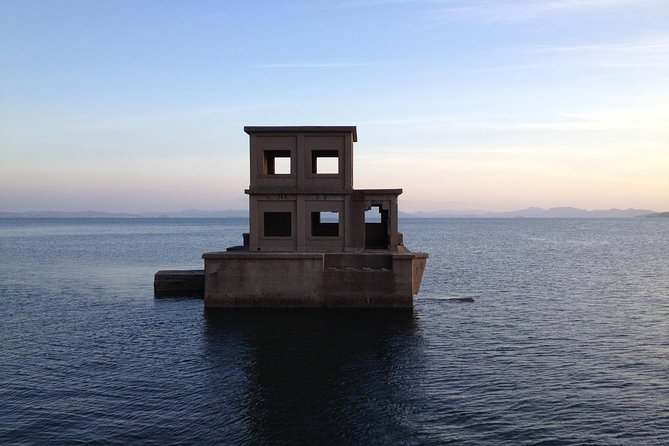
Katashima Torpedo Base Ruin shows the machinery of war
The Katashima Torpedo Base Ruin is another unusual WWII location. The remaining empty building was connected to training facilities, and the large interior gives you a sense of the scale of the operation.
You have roughly 30 minutes here. The building is not presented as a polished attraction. Its emptiness is part of the experience. You may notice the raw, abandoned quality more than formal displays or signs.
That lack of polish is also the drawback. Access and finding the building can be less straightforward than at a major museum, and the stop may feel rough around the edges. This is precisely why private guiding helps. Shannon can connect the structure to the wider wartime story instead of leaving you to interpret an empty room on your own.
Hasami ceramics offers a gentler change of pace
Hasami is known for Japanese porcelain, and the ceramics stop gives you about 30 minutes to look at the museum and surrounding festival or display area. The focus is on Hasami pottery and the local craft tradition.
I like this addition because it prevents the tour from becoming one long sequence of war memorials. You can see how Nagasaki Prefecture is also associated with skilled making, design, and everyday tableware. The tour information also points to the pleasure of finding small ceramic pieces, which may appeal if you enjoy browsing for useful souvenirs rather than mass-produced keepsakes.
Thirty minutes is enough for an introduction, but not enough for a slow, serious study of every display. If ceramics are a major interest, you may wish you had longer. For most people, though, the stop works well as a cultural pause before returning to Nagasaki’s central memorial sites.
Peace Park gives you space to reflect
Nagasaki Peace Park is a quiet place to walk and think about the atomic bombing. You have around 30 minutes here, which gives you time to see the park and absorb its purpose without turning the visit into a rushed photo stop.
The park is essential preparation for the Atomic Bomb Museum. Its open setting gives you physical space before entering the more concentrated museum experience. I recommend resisting the urge to treat it as simply another sightseeing stop. Take a few minutes to look around and consider the contrast between its peaceful purpose and the destruction remembered there.
The visit is brief, so you will not have time for every corner or memorial marker. That is not a flaw in the tour as much as a reminder that this day offers an overview. If Peace Park is your main reason for coming to Nagasaki, plan a separate return visit.
The Atomic Bomb Museum is the emotional center
Admission to the Nagasaki Atomic Bomb Museum is included, and the planned visit lasts about 35 minutes. The museum presents stories, photographs, and objects connected to the bombing and its aftermath.
You should prepare for graphic material. This is a sobering museum, and it may bring a strong emotional response. The short scheduled visit can be enough for a first look, but you may feel that you need more time, especially if you read every account carefully.
For me, this is the stop where the tour’s historical themes come together. The radio towers and military sites show the machinery of war. Peace Park presents a place of remembrance. The museum brings the human cost into direct view.
If you prefer to process difficult material slowly, tell Shannon. The tour is private, so there may be more room for a pause than on a large group excursion, although the overall day still has a set route and a lot of ground to cover.
Mount Inasa closes the day with Nagasaki views
The final stop is Inasayama Observation Deck, with admission included and about 20 minutes scheduled for the visit. From Mount Inasa, you get a broad view over Nagasaki.
The daytime outlook is attractive, but the night view is widely regarded as the more dramatic experience. Since this tour’s timing can vary within a 7 to 9 hour day, ask when the deck visit is likely to happen if the view matters greatly to you. The information provided does not promise a nighttime arrival.
Twenty minutes is enough for photographs and a quick look, but it is not a long sunset session. The deck works well as a closing scene because it lets you see the city as a whole after spending the day visiting individual places.
Lunch, drinks, and transport make the long day easier
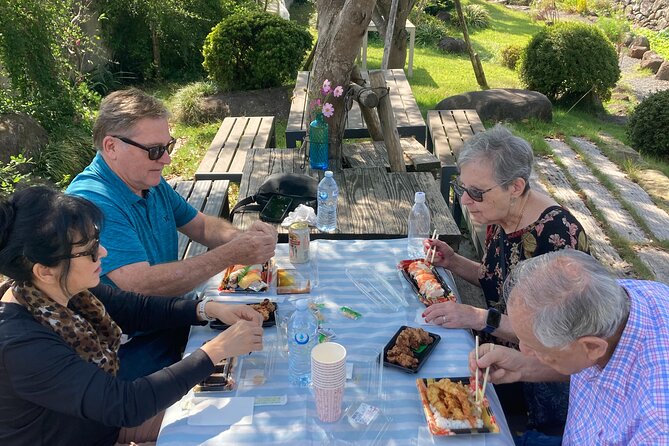
Lunch is included and may be served as an on-the-go meal or a picnic, depending on weather and time. That flexibility is practical. A formal restaurant lunch would make a packed route harder to manage, while a picnic gives the day a more relaxed break when conditions allow.
Still and sparkling bottled water are provided throughout the day, along with alcoholic and nonalcoholic drinks at certain times. Hydration matters on a long outing with repeated stops, especially if you are walking outdoors at the shrine, bridge, park, and observation deck.
Private transportation is provided in an air-conditioned vehicle, with WiFi on board. Pickup is offered, though the supplied information does not specify the exact pickup area. Confirm that detail when booking. The vehicle is a major part of the tour’s value because the route covers sites that would be awkward to connect by public transport in one day.
Who will get the most from this tour
I would choose this experience if you want serious WWII history with local culture, rather than a memorial-only visit. It suits a couple, family, or small group of friends who value a private guide and want to ask questions throughout the day.
It is also a good match for repeat visitors to Nagasaki. The Hario towers, Mukyudo, Katashima Torpedo Base, and Hasami ceramics offer a different view from the city’s best-known attractions. Even two people from Nagasaki found some of these places new to them, which says something about the route’s local reach.
This is less suitable if you want a slow museum day, a relaxed food tour, or a short city walk. The schedule is ambitious, and some sites are emotionally heavy. You should also be comfortable with an outdoor day that depends on weather.
The experience has a 4.9 rating from 19 reviews, with 100 percent recommending it. That is a strong record, but the sample is small. I would put more weight on the specific strengths: Shannon’s explanations, the private setting, the unusual WWII stops, and the way the day includes food, crafts, and views.
Booking details worth knowing before you decide
The tour is booked on average 65 days in advance, so planning ahead is sensible. Confirmation is provided at booking, and a mobile ticket is available.
Most people can participate, and only your group joins the activity. The price is $656.88 per group of up to three. That is not a budget excursion, but the private vehicle, guide, lunch, drinks, WiFi, included Atomic Bomb Museum admission, and included Inasayama Observation Deck admission make the calculation more favorable for three people.
The experience is non-refundable and cannot be changed for any reason after booking. If poor weather causes the provider to cancel, you are offered another date or a full refund. Since weather is required for the tour to operate, check the forecast before committing, especially if your Nagasaki schedule is tight.
Should you book the Nagasaki WW2 History and Culture Tour?
Book it if you want a full, personal day that explains Nagasaki through both its wartime sites and its living culture. Shannon’s route reaches places that are hard to connect on your own, and the private format gives the day a more human rhythm than a large coach tour.
Think twice if your budget is tight, you dislike packed itineraries, or you want extended time inside the Atomic Bomb Museum and Peace Park. For a group of three with limited time in Nagasaki, though, the price can be reasonable. You get history, a shrine, a strait, sake, ceramics, lunch, and a mountain view in one carefully linked day.
FAQ
How long does the Nagasaki WW2 History and Culture Tour last?
The tour lasts approximately 7 to 9 hours.
How many people can join the private tour?
The private tour is for a group of up to three people, and only your group participates.
Is pickup available?
Yes, pickup is offered. The exact pickup area is not specified in the provided tour details, so confirm it when booking.
Are admission fees included?
Admission to the Atomic Bomb Museum and Inasayama Observation Deck is included. The other listed stops have free admission.
Is lunch included?
Yes. Lunch is provided either on the go or as a sit-down picnic, depending on the weather and time available.
Are drinks provided during the day?
Yes. Still and sparkling bottled water are provided throughout the day. Alcoholic and nonalcoholic beverages are also provided at certain times.
What happens if bad weather cancels the tour?
If the provider cancels because of poor weather, you are offered a different date or a full refund. If you cancel or request an amendment yourself, the experience is non-refundable and cannot be changed.
Just added around Nagasaki
- Nagasaki Private Historical Tour with Licensed Guide★ 5.0 · 13 reviews
- Private Ring Craft Experience in Nagasaki★ 5.0 · 14 reviews
- Traditional Kimono Experience in Nagasaki★ 5.0 · 16 reviews
- Semi Private Guided Tour of Nagasaki.★ 5.0 · 17 reviews
- Taste Local Life: Nagasaki’s Historical Street Walking Tour★ 5.0 · 27 reviews
- Nagasaki Full Day Tour with Licensed Guide and Vehicle★ 5.0 · 27 reviews
- Nagasaki Private Customizable Half Day Tour★ 5.0 · 16 reviews
- Nagasaki Street Food Adventure: Private Walking Tour with a Local★ 5.0 · 26 reviews
Nagasaki Tours, compared.
Nagasaki Full-Day Private Tour with Government-Licensed Guide
Read our review →
Nagasaki Half-Day Private Tour with Government-Licensed Guide
Read our review →
Visit Gunkanjima Island (Battleship Island) in Nagasaki
Read our review →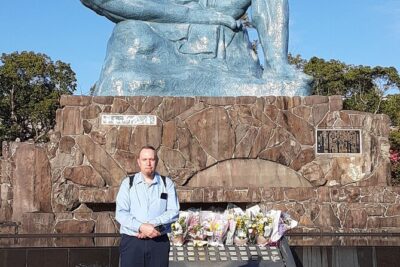
Taste Local Life: Nagasaki’s Historical Street Walking Tour
Read our review →
Nagasaki Street Food Adventure: Private Walking Tour with a Local
Read our review →
Nagasaki Private Tour with a Local – Highlights & Hidden Gems
Read our review →Browse the lists this tour appears in