
Reviewed · OSAKA TOURS
Osaka 6hr Private Walking Tour with Government Licensed Guide
Osaka’s appeal comes from its mix of grand sights and everyday street life, and this six-hour private tour lets you join both worlds in one day. You might visit Osaka Castle and Shitennoji, then switch to Kuromon Market, Dotonbori, or Shinsekai for food and local color.
I like the custom itinerary, which lets you focus on temples, shopping, food, architecture, or a little of everything. I also like the practical help with Osaka’s trains and subways, especially from guides such as Yama, Yuki, Sachiko, and Rie. The main caution is pace: six hours on foot, sometimes with public transport, can feel strenuous, and one guest found the walking too fast.
Key points to know before booking
- Choose only three or four sights: The long attraction list is a menu, not a promise that you will see every stop.
- Meet on foot in Osaka: Pickup means a walking meeting from your hotel or an agreed location, not a private car.
- Food can be a major part of the day: Dotonbori, Kuromon Market, and Shinsekai offer takoyaki, okonomiyaki, kushikatsu, udon, and other Osaka specialties.
- Public transport costs extra: Guides can help you use trains, buses, and subways, but fares are not included.
- Admission fees are usually extra: Shitennoji, Umeda Sky Building, Osaka Castle, the National Museum of Art, and Keitaku-en Garden list entrance charges separately.
- The private format pays off for families and short stays: Your guide can adjust the route, explain customs, and change the pace to suit your group.
How this six-hour Osaka tour works
This is a private walking experience for your group, led by a licensed local English-speaking guide. The price is listed at $155.26 per person, with group discounts offered, though the exact discount depends on the booking.
The guide meets you on foot within a designated area of Osaka. That detail matters. You do not get a private vehicle, and the tour price does not cover subway, train, or bus fares. You also pay separately for entrance tickets, lunch, drinks, shopping, and other personal costs.
Before the day, you can discuss the places that interest you. The service describes the tour as a choice of three or four sites from the sightseeing list. That is the key to enjoying it. Do not look at the eleven listed stops and expect to complete them all in six hours. Instead, pick a sensible group of sights that work together geographically and fit your walking ability.
The guides named in the feedback include Yama, Miyuki, Yuki, Sachiko, Rie, Saori, Yoshii, Shogo, Yuka, Hide, and Noriko. Experiences can differ by guide, but the strongest pattern is clear: the guide is there to explain what you are seeing and help you use the city, not simply lead you from one photo stop to the next.
More licensed-guide days in Namba:
- Osaka 4hr Private Tour with Government-Licensed Guide
★ 5.0 · 359 reviews - Tokyo 6hr Private Tour with Government-Licensed Guide
★ 5.0 · 3,902 reviews - Tokyo 4hr Private Tour with Government-Licensed Guide
★ 5.0 · 1,394 reviews
Dotonbori, where Osaka turns food into theater
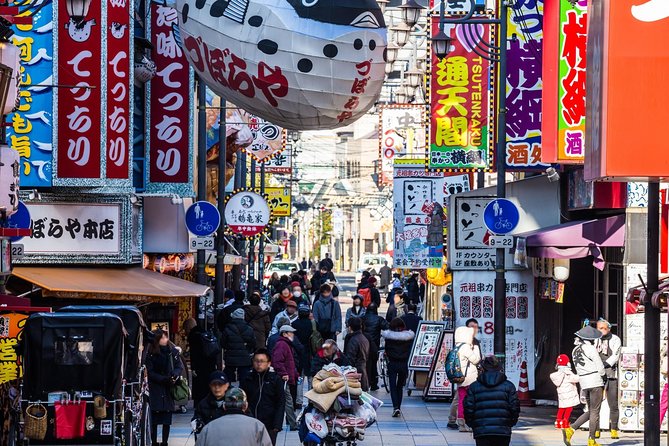
Dotonbori is often the easiest place to feel Osaka’s personality. The main street is lined with huge signs, restaurants, food stalls, bright storefronts, and the famous canal district. You can look for takoyaki, the hot octopus-filled snack, and okonomiyaki, the savory pancake associated with Osaka.
You get about an hour here, which gives you time to walk, take pictures, and ask your guide what to eat. This is where a private guide can be useful. The choices can feel endless, and a guide may point you toward a stand or small restaurant that fits your tastes.
Dotonbori is not a quiet introduction to Japan. It is loud, commercial, and crowded at popular times. That is part of the point, but anyone seeking old shrines and calm gardens may prefer to pair it with Sumiyoshi Taisha or Shitennoji.
Doguyasuji and Shinsaibashi for shopping with a purpose
Sennichimae Doguyasuji Shopping Street is a short but unusual stop. The covered arcade runs about 150 meters and is packed with shops selling cooking tools, tableware, appliances, restaurant supplies, and kitchen accessories.
You do not need to be a serious cook to enjoy it. It offers a look at the working side of Osaka’s food culture, and it can be a better souvenir stop than a standard gift shop. You might find chopsticks, serving dishes, knives, or other kitchen items, but purchases are your own responsibility.
The suggested visit lasts around 30 minutes. That is enough for an introduction, but not a long shopping session. If you want to browse carefully, tell your guide in advance and consider giving up another stop.
Shinsaibashi-suji is a very different kind of shopping street. Its covered arcade extends about 600 meters and includes cosmetics shops, clothing stores, restaurants, and familiar retail chains. It has been a retail center for a long time, but the experience today is more about modern Osaka shopping than old Japan.
I would choose Shinsaibashi if you want shopping, people watching, or a central route between other Namba sights. I would skip it if your priority is temples, gardens, or Osaka’s older neighborhoods.
Kuromon Market and the Osaka food lesson
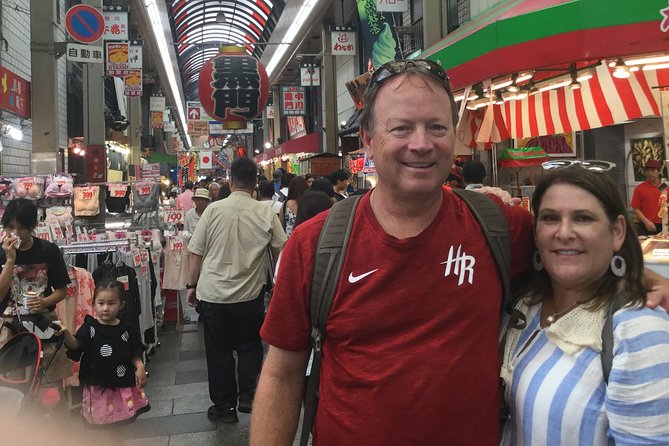
Kuromon Market is a roofed market with seafood shops and food counters. The information for the tour singles out conger pike in summer and fugu and hamo in winter. Several seafood shops specialize in fugu and hamo, so the market gives you a chance to learn about seasonal Japanese ingredients even if you do not plan to eat them.
A 30-minute visit is enough to walk through and sample something, but it is not enough for a slow meal or detailed shopping. Food is not included, and a vegetarian group may find this stop less appealing. One family found that the market and food focus did not suit their interests, so be direct with your guide before finalizing the route.
For an Osaka food day, Kuromon pairs well with Dotonbori and Shinsekai. You can ask about local specialties, eating customs, and how to choose among the stalls. Past guides have also helped with udon, takoyaki, kushikatsu, and identifying authentic Kobe beef claims. That kind of practical advice may be more useful than a long speech about dates and dynasties.
More walking tours in Namba:
- Osaka Bar Hopping Night Walking Tour in Namba (3 bars, 6 tastes)
★ 5.0 · 958 reviews - Osaka: Namba Local Food Walking Tour (Taste 15 Dishes)
★ 5.0 · 20 reviews - 1 Day Takoyaki Making and Osaka Castle Walking Tour
★ 5.0 · 15 reviews - Discover Real Osaka: A Cultural Walk with Food & Drink
★ 5.0 · 13 reviews
Sumiyoshi Taisha, Osaka’s oldest spiritual pause
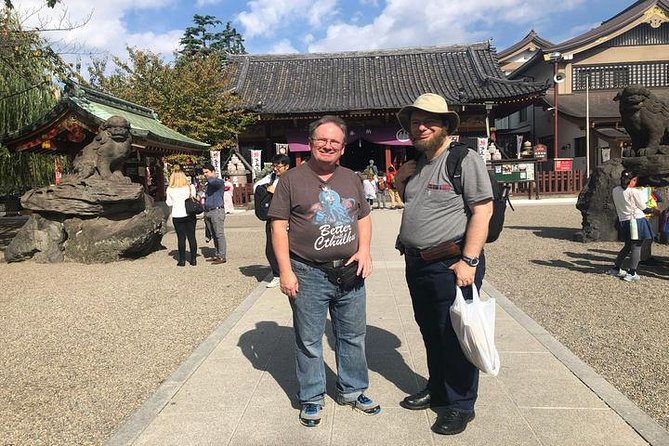
Sumiyoshi Taisha is one of Japan’s oldest shrines, founded in the third century before Buddhism arrived in Japan. Its architecture follows a distinctive shrine style, and the grounds offer a calmer contrast to Dotonbori and Kuromon Market.
The planned stop takes about 30 minutes. That is enough to see the main setting and learn how to behave at a Shinto shrine, but you may want extra time if you enjoy quiet spaces, photography, or ritual details.
One particularly useful part of the guiding here is learning how to take part respectfully. A guide can explain what to do at the entrance and worship area, so you are not left guessing. A guide and group also happened upon a traditional Shinto wedding during one visit, a reminder that shrines are living places, not just monuments.
If you want a route with culture and food, Sumiyoshi Taisha can pair with Dotonbori or Kuromon Market. It is farther from the central shopping streets than some other choices, so your guide may use public transport. Fares remain extra.
Shitennoji and the beginnings of Buddhism in Japan
Shitennoji dates to 593 and was founded by Prince Shotoku, who supported the spread of Buddhism in Japan. It is regarded as one of the country’s oldest temples and the first temple built by the state.
The tour allows about 30 minutes here, with admission not included. The short visit works for a first look, though it may feel rushed if you want to explore every building or spend time in the grounds.
This is one of the best stops for visitors who want historical context. Your guide can explain how Buddhism entered Japan and how temples differ from Shinto shrines. That distinction is easy to blur when you are moving quickly from one sacred site to another.
Several route combinations featured Shitennoji with Sumiyoshi Taisha, Osaka Castle, or the central markets. I like that balance. You get a sense of Osaka’s older religious life, then return to the city’s food and shopping districts.
Osaka Castle, the headline sight
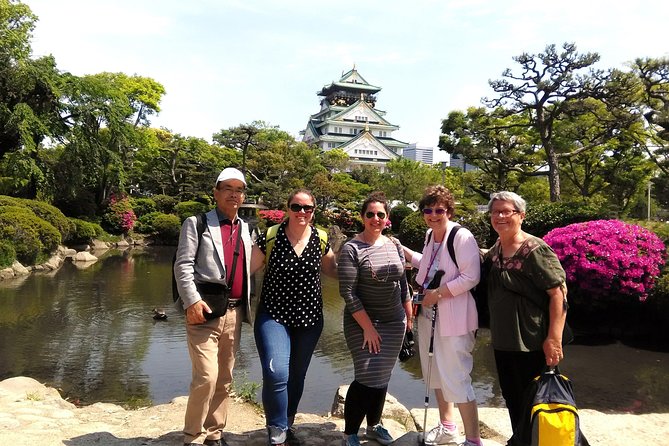
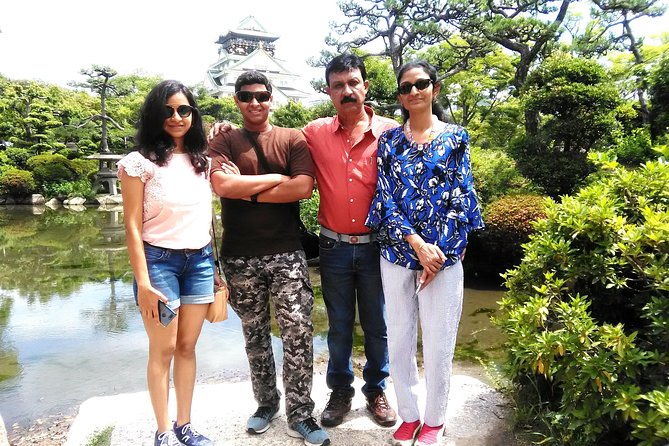
Osaka Castle is the most obvious landmark on the list. The present five-story tower is a striking reconstruction, and the site’s story reaches back almost 450 years. The surrounding park gives the visit room to breathe after crowded streets.
The suggested time is one hour, the longest single stop. Admission is extra, so check the total cost before you commit to the interior. Some groups choose to see the castle from outside, while others value the museum displays and elevated views inside.
A guide can make the castle more than a picture stop by explaining its place in Osaka’s history. One guide also discussed how the main tower survived World War II, a detail that can add weight to what might otherwise be a quick photo opportunity.
Osaka Castle is a strong choice for first-time visitors, families, and anyone who wants one major landmark. It is not the best pick if you prefer small streets and local markets, especially since the castle area can take time to reach and walk through.
Umeda Sky Building and the modern city view
The Umeda Sky Building rises 173 meters in Osaka’s Kita district, close to Osaka and Umeda stations. Its design and upper-level views offer a modern counterpoint to Osaka Castle and the city’s older temples.
The stop lasts about 30 minutes, and admission is not included. That time is enough for a quick visit and view if the building fits your route. Since the tour is primarily on foot but may use public transport, ask your guide whether this northern Osaka stop makes sense with your other choices.
Umeda Sky Building is best for architecture fans, skyline views, and visitors staying around the Umeda area. It is less useful as an add-on to a southern route packed with Dotonbori, Kuromon, Sumiyoshi, and Shinsekai. Osaka is spread out, and every extra cross-city trip reduces time at the sights.
Shinsekai and the Tsutenkaku neighborhood
Shinsekai means New World, and the area is known for Tsutenkaku Tower, often compared with the Eiffel Tower, along with kushikatsu restaurants and the Billiken figure associated with luck and money. Spa World, a large bath complex, is also in the area, though admission and a long bath visit are not part of the tour.
The planned stop is about 25 minutes, making it one of the quickest visits. That is enough to walk the main streets and learn what makes the neighborhood different. It is not enough to settle into a meal, visit Spa World, and see everything at a leisurely pace.
Shinsekai is a good substitute for Dotonbori if you want a distinct Osaka food district with a different feel. Add it to a south Osaka route, rather than combining it with Umeda Sky Building and the National Museum of Art.
Art and gardens, for a quieter Osaka
The National Museum of Art, Osaka is an underground museum on Nakanoshima, with a major collection. The suggested stop is 30 minutes, and admission is extra.
That is a short time for a museum. Choose it only if you have a specific interest in the collection or want a quick architectural and cultural stop. You will not get a full museum visit in half an hour.
Keitaku-en Garden sits within Tennoji Park. It is a traditional Japanese garden designed in the early twentieth century, with a central pond, arranged rocks, and seasonal plantings. The listed time is only five minutes, which is enough for a glance but not enough to appreciate the garden properly.
Both stops are best treated as specialist choices. I would not add either one to an already packed route unless you are willing to remove a market or major landmark.
Why the guides can add real value
The most praised part of this experience is the guide, particularly the combination of clear English, cultural explanation, and practical city help. Yama was praised for humor and detailed explanations, while Yuki helped groups fit a lot into a short day. Sachiko was especially good at planning routes around specific interests and helping one family reach Shin-Osaka Station afterward.
Rie helped a group understand trains, buses, and subways while also finding less touristy places and a kushikatsu lunch. Saori made food and conversation central to the day, and Yuka even helped locate a specific Ohtani baseball jersey for a family souvenir.
Those details show what you are paying for. The guide may save you time, explain a custom before you make an awkward mistake, help you order food, or solve a transport problem. That value is strongest when you communicate your interests before the tour.
There is one important warning. One group found Yama’s walking speed too fast, even though the guide was friendly and spoke excellent English. The guide waited for the slower guest, but the group felt separated at times. If you have mobility concerns, children, or simply prefer a relaxed day, say so clearly before the start.
Is $155.26 per person good value?
For a solo guest, the price is fairly high for a walking tour because transport, food, and admissions are extra. For a couple or family, the value improves because you get a private guide rather than joining a large group.
The real comparison is not the number of sights. It is the amount of help you want. If you can plan Osaka’s trains, shrine customs, food stops, and opening times yourself, you may spend less independently. If you have one day in Osaka, are arriving from a cruise, or want to connect several interests without losing time, the guide’s planning may justify the cost.
The 97 percent recommendation rate and 4.9 rating from 174 reviews point to a strong overall record, but the experience is not identical every time. Guide style, walking speed, English clarity, and your chosen itinerary matter.
Who should book this Osaka tour?
I would choose it for first-time visitors, families, couples, cruise passengers, and anyone with only one day in Osaka. It is also a good fit if you want a private day that combines shrines, markets, shopping, and one major landmark.
Food lovers should request Dotonbori, Kuromon Market, or Shinsekai. History fans should consider Osaka Castle, Shitennoji, and Sumiyoshi Taisha. Shoppers may prefer Doguyasuji and Shinsaibashi-suji.
Vegetarians or visitors uninterested in seafood should avoid making Kuromon Market the centerpiece. Art fans should ask whether the National Museum of Art fits their route, but remember that 30 minutes is brief.
The tour is not ideal for anyone wanting a slow, fully guided visit to every listed attraction. Six hours is a useful introduction, not a complete survey of Osaka.
Should you book it?
Book this experience if you want a flexible private day and will take a few minutes to plan the route with your guide. A four-stop plan such as Osaka Castle, Shitennoji, Kuromon Market, and Dotonbori gives you a strong mix of landmark, temple, market, and food district.
Before booking, tell the provider your walking pace, dietary needs, preferred sights, and whether you want to use public transport. Confirm which entrance fees apply and budget for fares and lunch. If you want an efficient first look at Osaka with a real person helping you make sense of the city, this is a sensible choice. If you prefer wandering alone or dislike fixed pacing, use the attraction list as your own planning guide instead.
FAQ
How long does the Osaka private walking tour last?
The tour lasts approximately six hours.
Is the tour private?
Yes. Only your group participates in the activity, and multiple tour groups cannot be combined.
How many sights can I visit?
The tour includes a customizable choice of three or four sites from the available attractions. The full list contains more stops, but you should not expect to visit all of them in six hours.
Does hotel pickup include a private car?
No. Pickup is on foot within a designated area of Osaka. A private vehicle is not included.
Are transportation costs included?
No. Train, subway, bus, and other transportation fees are not included in the price.
Are entrance tickets included?
Entrance fees are not generally included. The listed exclusions specifically cover sights such as Shitennoji, Umeda Sky Building, Osaka Castle, the National Museum of Art, and Keitaku-en Garden.
Is lunch included?
No. Lunch, food, drinks, shopping, and other personal expenses are separate.
Can I cancel for a full refund?
Yes, if you cancel at least 24 hours before the experience start time. Cancellations made less than 24 hours before the start time are not refunded, and changes within that period are not accepted.
Just added around Namba
- Discover Real Osaka: A Cultural Walk with Food & Drink★ 5.0 · 13 reviews
- From Osaka/Kyoto: Kyoto & Nara Day Trip with Optional Lunch★ 4.5 · 79 reviews
- Private Airport transfer Kansai Intl. Airport(KIX) to OSAKA CITY★ 4.5 · 12 reviews
- Osaka: Namba Local Food Walking Tour (Taste 15 Dishes)★ 5.0 · 20 reviews
- Osaka Delights: Traditional Japanese Food Tour★ 4.5 · 33 reviews
- Badminton in Osaka & Kyoto with Locals!★ 5.0 · 15 reviews
- From Osaka or Kyoto: Kyoto and Nara 1-Day Bus Tour★ 3.5 · 141 reviews
- 1 Day Takoyaki Making and Osaka Castle Walking Tour★ 5.0 · 15 reviews
Osaka Tours, compared.


Shinsekai Food Tour with 13-15 Dishes at 5 Eateries
Read our review →
Osaka Food Tour: 13 Dishes at 5 Local Eateries
Read our review →
Hungry Osaka Street Food Tour:15 Tastings & 3 Drinks with a Local
Read our review →



Hotspots & Hidden Gems Walking Tour Private or Group
Read our review →Browse the lists this tour appears in