
Reviewed · KANAZAWA TOURS
Kanazawa: Samurai, Matcha, Gardens and Geisha Full-Day Tour
Kanazawa’s best sights line up like chapters in an old Japanese story: samurai homes, a feudal castle, a garden made for lords, and tea houses where geisha traditions still shape the town’s identity. This full-day walking tour gives you the useful context that signs and guidebooks often miss, from the lives of low-ranking samurai to the meaning behind Kanazawa’s unusual red tea-house interiors.
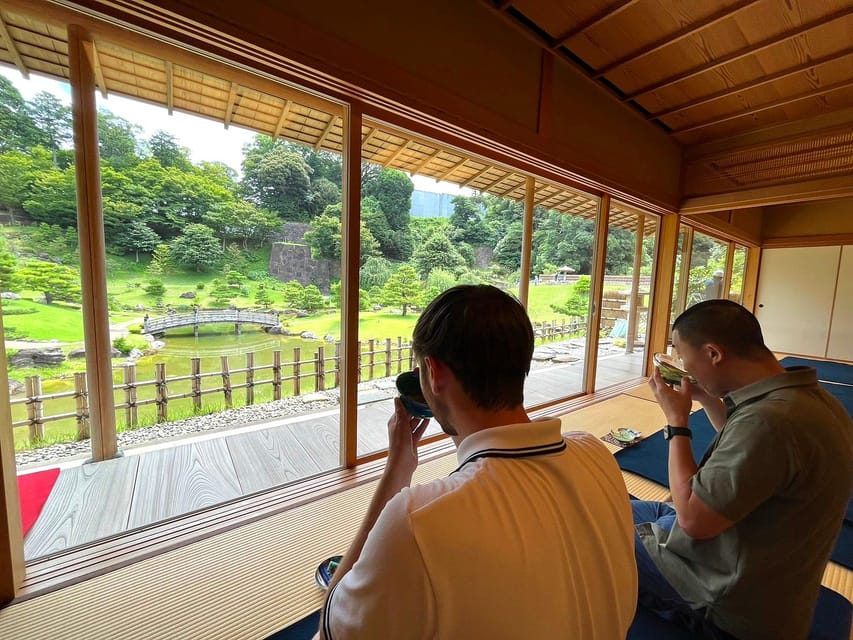
I especially like the matcha stop at Gyokusen-an, where kimono-clad staff serve tea and wagashi beside a garden and castle walls. I also like the route through back streets, including Kazue-machi, because you see more than the headline sights. The tradeoff is clear: this is a serious walking day, with some participants reporting around 12 kilometers or more than 27,000 steps. Rain, heat, snow, and slippery winter streets can make it harder.
Key points at a glance
- A full day on foot: Expect several hours of walking between Kanazawa Station, Nagamachi, the castle, Kenroku-en, and Higashi-chaya.
- Two different tea experiences: Enjoy matcha and wagashi at Gyokusen-an, then visit Shima, a preserved geisha tea house.
- Samurai life beyond the armor: Enter modest former samurai residences and learn how lower-ranking warriors lived.
- Kanazawa’s most famous garden: Kenroku-en receives about 90 minutes, enough for a guided look and some time to wander.
- Strong English-speaking guides: Guides including Mike, Akari, Gareth, Daniel, Lee, and Mohammed have been praised for clear history, flexibility, and help with questions.
- Lunch is your choice: Food is not included, but your guide can suggest places, and Omicho Market is a practical stop nearby.
Why this Kanazawa route works so well
At $156 per person, this is not a cheap orientation walk. It is a full-day experience with a live English-speaking guide, entry to Kenroku-en, entry to Shima, and a matcha experience. The value comes from the amount of ground covered and the explanation connecting each place.
Kanazawa can feel spread out if you visit its historic districts without a plan. This tour links the main sights in a sensible order, starting at the station and ending there. You do not need to work out how to connect Nagamachi, Kanazawa Castle, Kenroku-en, and Higashi-chaya by yourself.
I would particularly consider it if Kanazawa is a one-day stop on a wider Japan trip. You get a useful first look at the city before deciding where to return on your own. If you already plan to spend several days in Kanazawa and enjoy setting your own pace, the price may feel less attractive.
More Samurai and Ninja Experiences in Kanazawa
- Kanazawa: Samurai Residence Remains Nomura Family admission
★ 4.4 · 111 reviews - Full-Day Tour from Kanazawa: Samurai, Matcha, Gardens and Geisha
★ 5.0 · 68 reviews - Try Mindful Calligraphy Near Kanazawa’s Ninja Temple
★ 5.0 · 50 reviews
Meeting the guide beneath Kanazawa Station’s sumo wrestlers
The meeting point is outside the Shinkansen ticket gates, in front of the information center. Look toward the large sumo wrestler figures near the East Entrance. If you are already outside the station, go just inside the entrance and look for the same figures.
The guide wears a Snow Monkey Resorts tour tag. The stated start time is 9:00 AM, though you should check the time shown for your date when booking. This is a useful meeting point because the station’s famous Tsuzumi-mon gate is immediately outside, giving you an instant introduction to Kanazawa’s blend of old forms and modern design.
The tour finishes back at the station. That is handy if you are catching a train, though do not schedule a tight departure. A few guides have helped people with train tickets and timetable changes, but that should be treated as extra kindness, not part of the guaranteed service.
Walking from the station to Nagamachi
The first walk takes you away from the station through side streets and local residential areas. This quieter start matters. You begin to see wooden temples, ordinary homes, and smaller streets before reaching the formal samurai district.
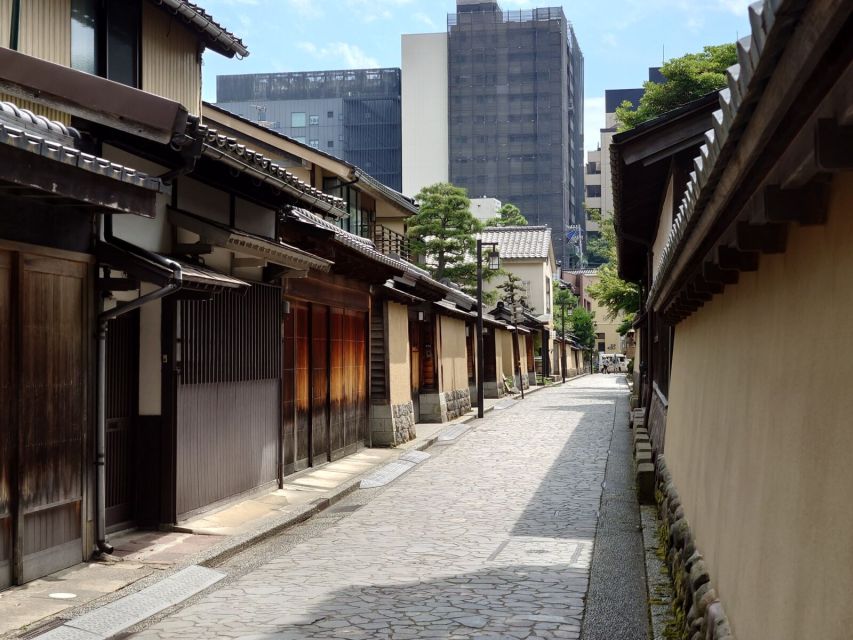
Nagamachi once housed samurai families connected with the powerful Maeda domain. The district’s crooked streets, earthen walls, and carefully preserved buildings give it a strong sense of place without turning it into a stage set.
A useful feature here is the chance to enter houses associated with lower-ranking samurai. These are not grand mansions. They help explain the gap between the elite warriors attached to the castle and samurai families of more modest means.
You also receive free time in Nagamachi to look at local crafts and wares. I would use this pause for browsing rather than rushing to buy. Kanazawa is known for traditional craft work, and this district is a better place to connect objects with the city’s old artisan culture than a generic souvenir shop.
The stop lasts about 110 minutes, making it one of the longer sections of the day. That gives the guide room to explain the district, but it also means the morning is already active. Wear shoes you can trust on uneven streets.
Oyama Shrine and its striking stained glass gate
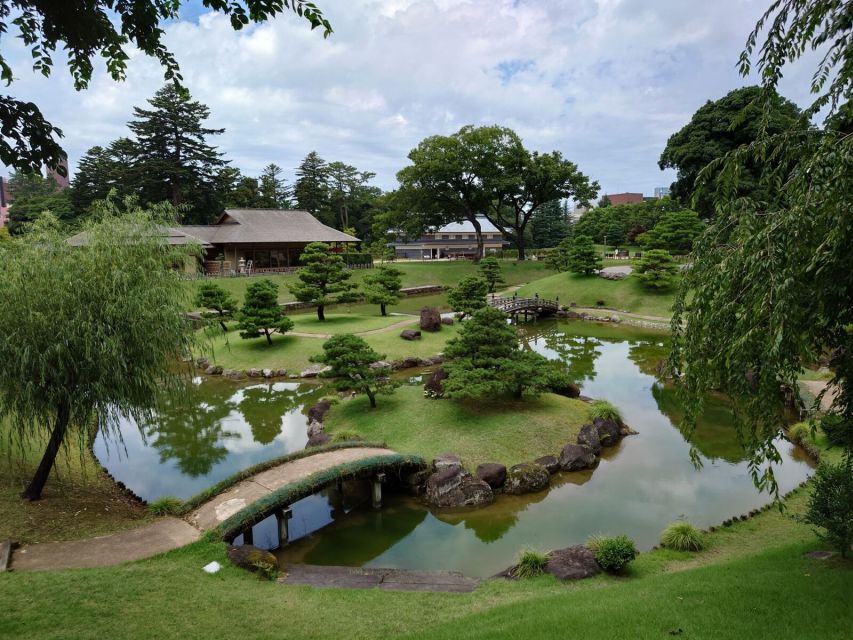
Oyama Shrine offers a sharp change in mood. Its gate combines Japanese design with Western-style stained glass, reflecting the period when Japan was rapidly absorbing ideas from abroad in the nineteenth century.
This is a short, roughly 10-minute guided visit, so do not expect a long shrine stop. The appeal is the unusual architecture and the way it shows Japan’s ability to combine old religious forms with newer influences.
Behind the shrine, the route continues past a koi pond and small garden. A path leads to a large wooden bridge, followed by an impressive gate into the Kanazawa Castle grounds. This transition is one of the pleasant details of the route. You move from a compact shrine garden into the broad setting of the former castle without needing a bus or taxi.
More samurai and ninja sessions in Kanazawa:
- Kanazawa Private Tour: Highlights of an Old Samurai Town
★ 5.0 · 46 reviews - Kanazawa: Samurai Swordsmanship Lesson at a rented temple
★ 5.0 · 21 reviews - Kanazawa Ninja Temple Half Day E-bike tour
★ 5.0 · 14 reviews - Tokyo: Samurai Restaurant Show Ticket with 2 Drinks
★ 4.5 · 1,307 reviews
Matcha beside Kanazawa Castle at Gyokusen-an
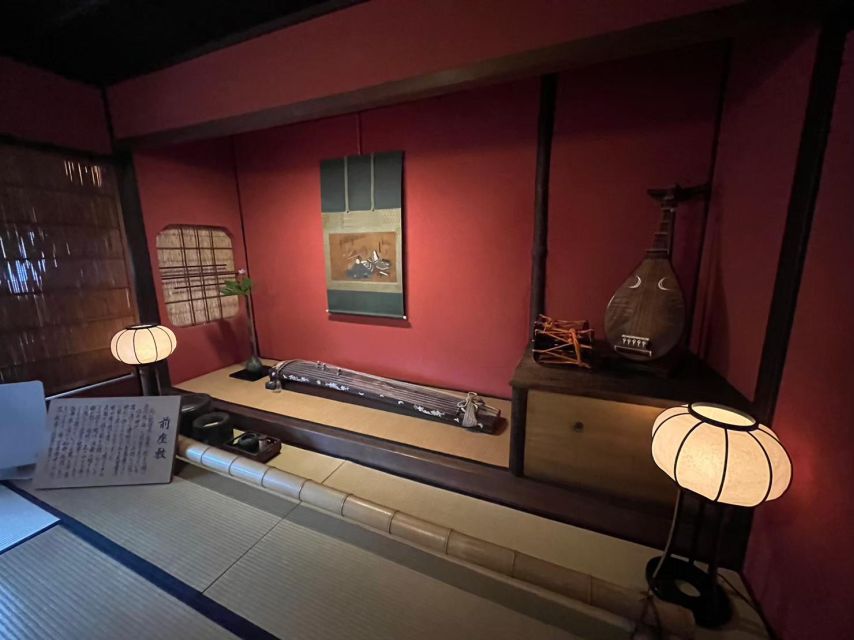
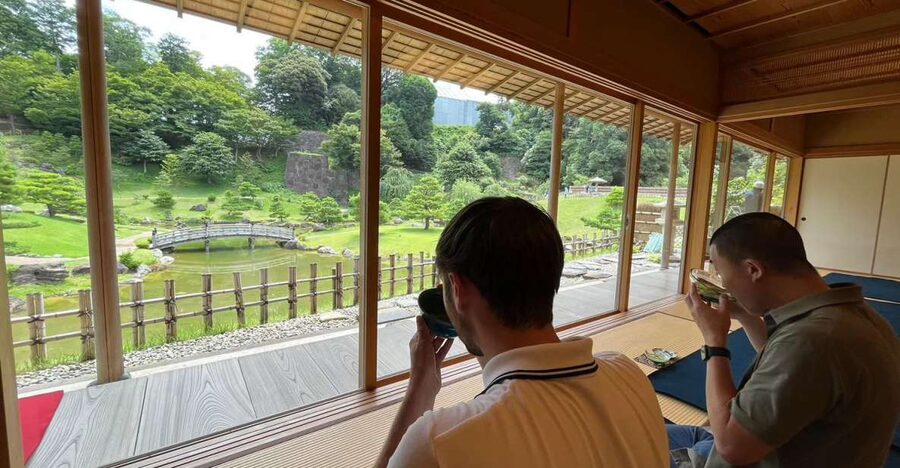
The matcha experience is one of the day’s most distinctive moments. At Gyokusen-an, you sit in a refined Japanese tea house with views toward a garden at the foot of the castle’s large stone walls.
Kimono-clad staff serve matcha with artistic wagashi sweets. Your guide explains the proper way to drink the tea, so you can take part without worrying about getting every movement right. The point is not to perform a perfect tea ceremony. It is to slow down, notice the setting, and understand a small piece of Japanese hospitality.
I like this stop because it gives the day a quiet center. After walking through the samurai district and shrine grounds, you get time to sit, taste the slightly bitter tea, and enjoy the garden. It is also a more meaningful experience than simply buying a matcha drink from a café.
The location can occasionally change if a special event occupies Gyokusen-an. In that case, the matcha tasting is held elsewhere. The tea experience remains part of the tour, but the specific castle-side setting is not guaranteed.
Kanazawa Castle and the long story of Kenroku-en
After the tea break, you continue through Kanazawa Castle grounds and cross to the entrance of Kenroku-en. The castle itself is partially restored, so this is not a visit to a completely preserved medieval fortress. Its value lies in the scale of the grounds, stonework, gates, and the way the site explains the power of the Maeda lords.
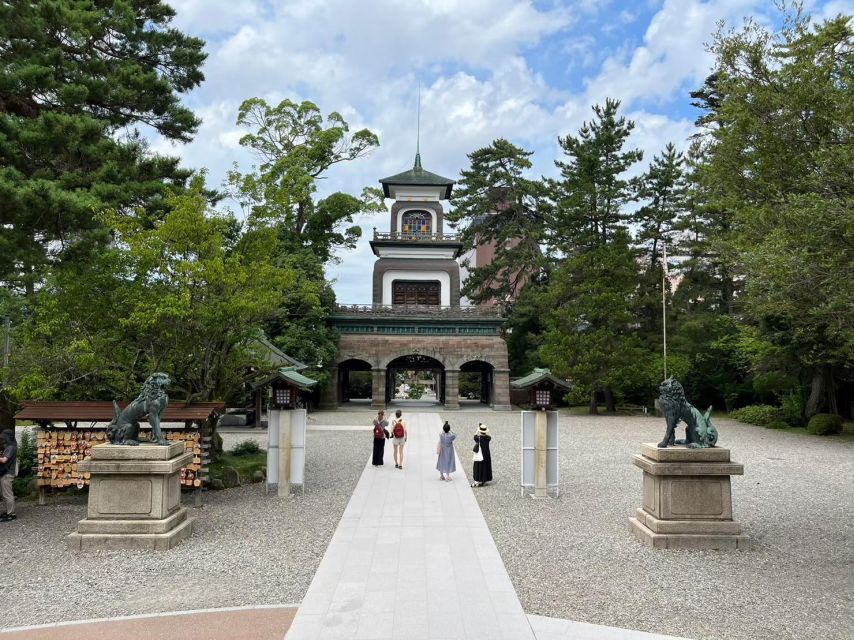
Kenroku-en is the visual centerpiece of the day. The name is linked with six qualities traditionally prized in a garden, including spaciousness, seclusion, artifice, antiquity, water, and fine views. Your guide explains how the garden developed over more than 200 years under the lords of Kanazawa Castle.
You have about 90 minutes here. That is enough for a guided circuit and time to pause for photographs, but Kenroku-en rewards a slow visit, so you may wish you had longer. The pace depends on the group and the guide, and free time is built into the day, but this is still a sightseeing route rather than a private garden study.
Weather can change the character of the visit. Rain and mist can make the castle walls and garden feel wonderfully subdued, while summer heat can make the open paths tiring. Winter visitors need warm layers and shoes with good grip. Snow and ice may be present on roads and sidewalks, and morning temperatures can approach or fall below freezing.
Lunch is flexible, not included
Lunch is not included in the $156 price. That keeps the day flexible, but it means you should budget separately and rely on your guide for suggestions.
The schedule allows time to eat near the central sights. Omicho Market is a practical place to find food, and one full-day route includes lunch there. Do not assume that a particular restaurant or market meal is included, though. Ask your guide early in the day how much time you have and which nearby options fit your appetite.
This arrangement suits people who have strong food preferences or want to control their spending. It is less convenient if you prefer a tour with every meal arranged in advance.
Higashi-chaya and the preserved Shima geisha house
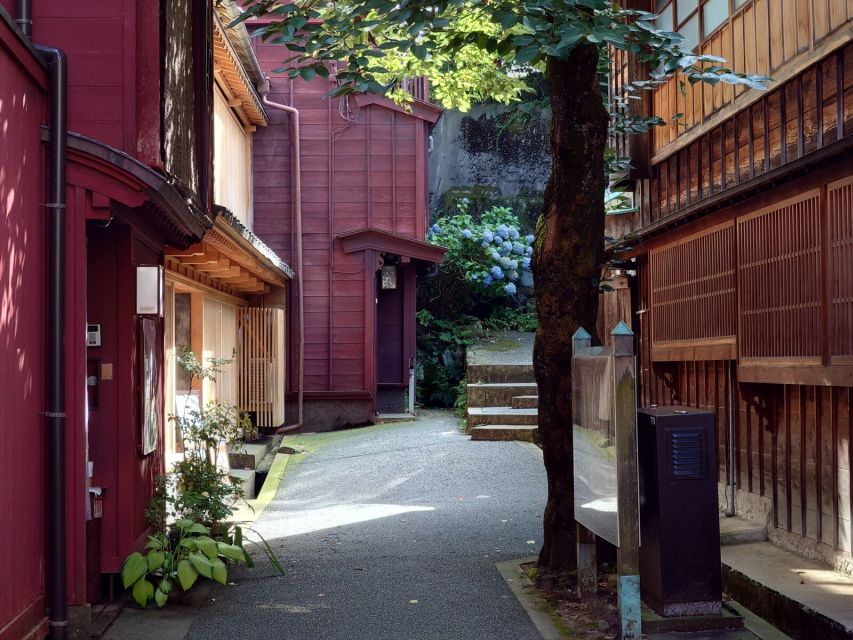
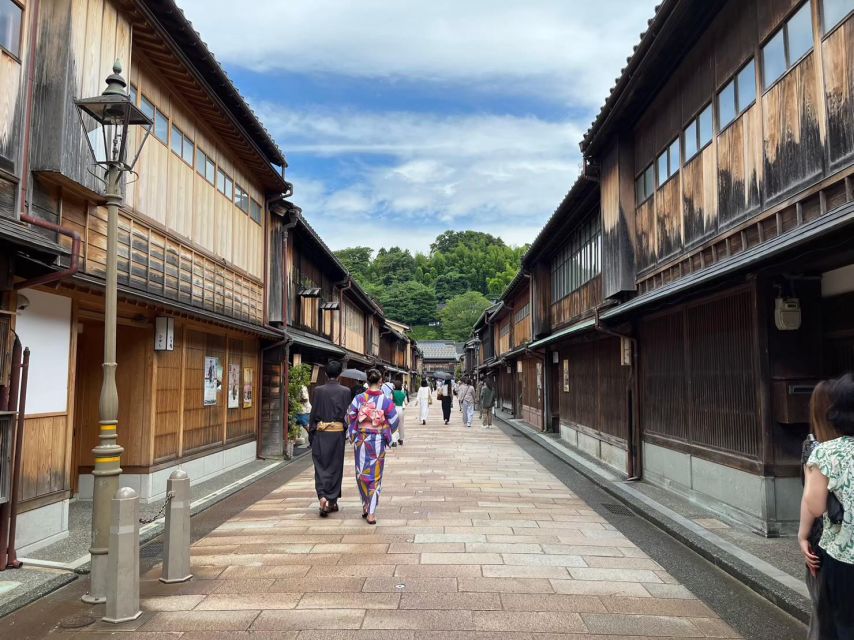
Higashi-chaya is one of Kanazawa’s signature districts. Tall, two-story wooden tea houses line the streets, and some are painted red inside, an architectural detail especially associated with Kanazawa.
The district is often compared with Kyoto’s traditional geisha quarters, but it has its own look and scale. Your guide explains how tea houses worked and how geisha entertainment fit into the city’s old social life. The streets are attractive, but the real value comes from understanding what happened behind the carefully maintained façades.
You have about 40 minutes for guided walking, free time, shopping, and photographs before visiting Shima. This is not much time for extensive shopping, so focus on the atmosphere and save detailed browsing for another visit.
Shima provides the more substantial look inside a traditional geisha tea house. The building is a heritage site with classic architecture, and the one-hour visit gives you time to see rooms and details that are easy to miss from the street.
This stop helps correct a common misunderstanding. A geisha house is not simply an old restaurant or a pretty wooden building. It was a carefully arranged social space, and the rooms, entrances, and decorative features reflected its purpose. A guide makes those details easier to read.
The return through Kazue-machi’s back streets
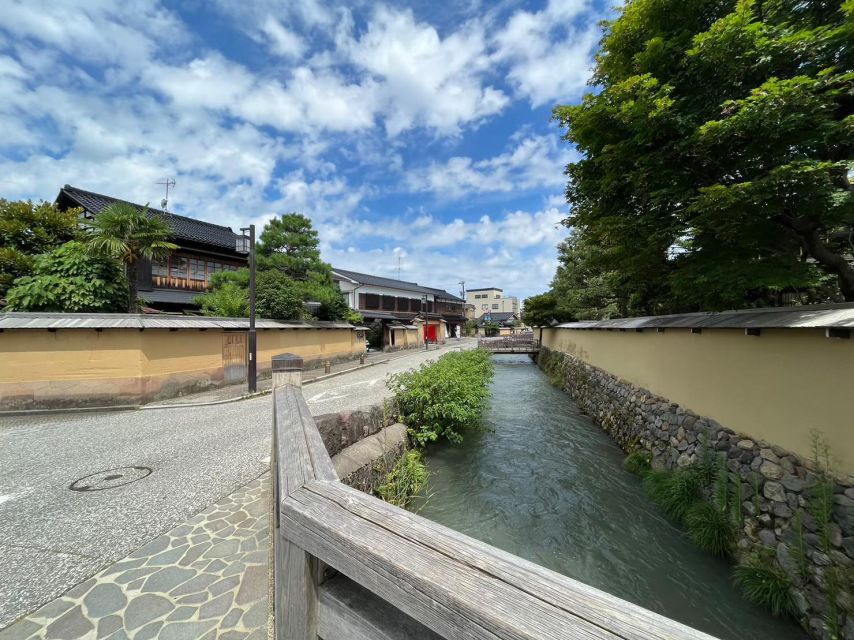
After Higashi-chaya and Shima, the group begins the return walk to Kanazawa Station. The route passes through the maze-like back streets of Kazue-machi, another traditional area along the river.
This final section is not just a way to get back. It gives you one more look at Kanazawa’s older residential fabric, away from the most photographed streets. By this point you will have spent most of the day outside, so the quiet return can feel pleasant or tiring depending on the weather and your legs.
The tour covers a lot. Some participants have counted roughly 12 kilometers, while another recorded more than 27,000 steps. Those figures vary by group, detours, and individual movement, but they make the practical point clearly: this is a walking tour in the full sense.
Guide quality and group experience
The guide can shape this tour more than any single building. The listed guide team includes Mike, Akari, Gareth, Daniel, Lee, Mohammed, Adeline, Devin, and others. Their strengths, as reflected in the experience descriptions, include clear explanations of Japanese history and culture, an easy sense of humor, patience with children, and willingness to adjust the pace.
Several guides are described as flexible when the group wants extra time or a particular stop. That matters because the day includes both formal visits and free periods. A good guide can tell the difference between a group that needs ten more minutes in Nagamachi and a group that wants to keep moving.
The tour has also worked well for mixed-age families, with one group ranging from 11 to 70 years old. Still, family-friendly does not mean effortless. Children and older adults should be ready for a long day on foot, outdoor exposure, and changing weather.
Because the tour operates in English, ask questions as you go. The strongest benefit is not just hearing dates and names. It is being able to ask why a shrine looks unusual, how samurai ranks affected housing, or what makes a tea house different from an ordinary restaurant.
Weather, clothing, and practical comfort
Bring comfortable shoes, warm clothing, socks, and weather protection. An umbrella or rain gear is important because the route spends much of the day outdoors.
For winter, dress for temperatures below 10°C, with mornings and evenings possibly near or below 0°C. Warm shoes with non-slip soles are more useful than stylish but smooth footwear. Snow and ice can make sidewalks hazardous.
In warmer weather, the mileage and humidity may matter more than the sightseeing schedule. Take advantage of the pauses at the tea house and during free time. The guide can usually tell you when you need to be back at the group meeting point, so listen carefully before wandering off.
The tour includes free time, but it is not open-ended. Keep track of the meeting location and return time. If you get lost or need help, the tour pass includes a contact number for assistance.
Is $156 a fair price?
The price makes the most sense if you want structure, context, and entry to the key sites in one day. You receive a guide, matcha, Kenroku-en admission, and Shima admission. You also avoid the time spent planning a route between districts that are not all next door to one another.
The price is less compelling if you only want photographs or prefer to spend an hour at every garden corner. Lunch and personal purchases cost extra, and the long walking route requires real energy.
For a first day in Kanazawa, I think the value is solid, especially if you have limited time. The tour gives you a broad understanding of the city, then leaves you free to return to the places that caught your interest.
Who should book this Kanazawa walking tour?
Book it if you want to connect samurai culture, castle power, garden design, tea traditions, and geisha districts in one well-planned day. It suits first-time visitors, history lovers, families able to manage a long walk, and anyone who prefers asking questions to reading plaques.
Think twice if you have limited mobility, dislike outdoor walking, need a fixed lunch plan, or want a slow, unhurried visit to each attraction. Weather is another real factor, especially in winter.
For most active visitors with one day in Kanazawa, I would book it. Choose comfortable footwear, leave room in your schedule after the tour, and treat the matcha break as a genuine pause rather than another item to tick off.
FAQ
Where does the Kanazawa tour start?
Meet outside the Shinkansen ticket gates, in front of the information center at Kanazawa Station. Look for the four large sumo wrestlers near the East Entrance and a guide wearing a Snow Monkey Resorts tour tag.
Where does the tour finish?
The tour ends back at the same meeting point at Kanazawa Station.
What language is the tour conducted in?
The tour has a live English-speaking guide.
How long does the tour last?
It is a full-day activity. Check availability for the starting time, with the stated meeting time usually at 9:00 AM.
Is lunch included?
No. Lunch is not included, but you can ask the guide for recommendations during the break near the central sights.
What admissions are included?
Entry to Kenroku-en Garden and Shima, the historic geisha tea house, is included. The matcha experience and guide are also included.
How much walking is involved?
The tour includes several hours of outdoor walking between the main sights. Some participants have covered about 12 kilometers or more than 27,000 steps, though the exact distance varies.
What should I bring?
Bring comfortable shoes, weather-appropriate clothing, warm layers in winter, socks, an umbrella or rain gear, and shoes with good grip if snow or ice is possible.
More Full-Day in Kanazawa
- Kanazawa Full Day Tour (Private Guide)
★ 5.0 · 323 reviews - Kanazawa Full Day Private Tour to Top Highlights with Local Guide
★ 5.0 · 19 reviews - Full Day Tour to Kurobe Gorge and Unazuki Onsen from Kanazawa
★ 5.0 · 17 reviews - Kanazawa Full-Day Tour Private & Personalized with a Local Guide
★ 5.0 · 16 reviews
More Geisha Experiences
- Kanazawa Half-day Tour: Curated: Gardens, Craft & Geisha District
★ 4.5 · 12 reviews - Kyoto Geisha Walking Tour: Gion District & Hidden Gems
★ 4.7 · 3,273 reviews - Kyoto: Gion Magical Night Walking Tour with Geisha Trivia
★ 4.9 · 2,393 reviews - Kyoto: Gion Geisha District Walking Tour – Stories of Geisha
★ 4.7 · 2,187 reviews
Just added around Kanazawa
- Kanazawa: Sushi & Japanese Cooking Class at a Historic School★ 5.0 · 66 reviews
- Shirakawago & Kanazawa from Kanazawa★ 5.0 · 51 reviews
- Takayama and Shirakawago/Photoshoot by professional photographer★ 5.0 · 67 reviews
- Taste of Kanazawa (Food tasting in Omicho Market & Higashi Chaya)★ 5.0 · 58 reviews
- Kanazawa private 1 day/Photoshoot by professional photographer★ 5.0 · 33 reviews
- Photoshoot session by professional photographer in Kanazawa★ 5.0 · 42 reviews
- Private Tour Kanazawa, Shirakawago, Hida Furukawa,Takayama★ 5.0 · 108 reviews
- Kanazawa private half day/Photoshoot by professional photographer★ 5.0 · 38 reviews
Kanazawa Tours, compared.
World Heritage Shirakawa-go and Experience Tours from Kanazawa
Read our review →

![[One-day bus tour departing from Kanazawa Station] Shirakawa-go and Gokayama – Two World Heritage Villages Enjoyable Bus Tour](https://media3.thejapanesetraveller.com/wp-content/uploads/one-day-bus-tour-departing-from-kanazawa-station-shirakawa-go-and-gokayama-two-world-heritage-villages-enjoyable-bus-tour-400x267.jpg)
[One-day bus tour departing from Kanazawa Station] Shirakawa-go and Gokayama – Two World Heritage Villages Enjoyable Bus Tour
Read our review →
World Heritage Shirakawa-go Perfect Guided Tour from Kanazawa
Read our review →
Browse the lists this tour appears in