
Reviewed · TOKYO TOURS
Tokyo: Shinjuku Food Tour (13 Dishes at 4 Local Eateries)
Shinjuku is easy to admire and surprisingly hard to eat well in. This three-hour tour gives you a shortcut through the district, with 13 Japanese dishes at four eateries instead of one large meal in one restaurant. You move from a food stall to an izakaya, a traditional eatery, and a gastrobar while a guide explains what is in front of you.
I like the wide range of food and the fact that tastings and two drinks are already covered. I also like the small maximum group of 12, which makes a big difference in narrow alleys and tiny restaurants. The main catch is that the guiding can vary, and Golden Gai may not always be visited even though it is listed as part of the route.
Key points to know before you book
- Four different food settings: You eat at a stall, an izakaya, a traditional Japanese eatery, and a gastrobar.
- Thirteen tastings included: The spread can include tonkotsu, pork katsu, taiyaki, raw dishes, snails, and other local fare.
- Shinjuku after dark: The route passes through Omoide Yokocho, Kabukicho, and the narrow lanes around Golden Gai.
- Guide quality matters: Guides including May, Hoshi, Igor, Agathe, Kei, and Emma have received especially warm praise for food advice and cultural context.
- A filling three hours: Come with an appetite. The number of samples adds up quickly.
- One route detail needs flexibility: Golden Gai is not guaranteed in practice, so book this for the food and neighborhood orientation first.
Why this food walk works in Shinjuku
Shinjuku can feel like several cities packed into one station area. Office towers rise beside tiny drinking alleys, department stores sit near neon-lit entertainment streets, and a restaurant entrance may be little more than a curtain and a hand-written sign.
That contrast is the reason I like this experience. You are not simply sitting down for a standard Japanese dinner. You are walking through three distinct parts of Shinjuku and seeing how food fits into each one.
The tour lasts about three hours and uses four eateries. That gives you a useful sample of the area without asking you to spend an entire evening at one table. You also avoid the awkward first step of entering an unfamiliar restaurant, studying a Japanese menu, and guessing what to order.
The guide handles the ordering and explains the food. That is particularly useful for dishes you might not choose alone. One person tried snails for the first time on the tour, while another appreciated having help with raw food served at the first stop.
The experience is capped at 12 people. That is not a private tour, but it is small enough to keep the group moving through tight streets. A group of 12 can still feel large inside a tiny izakaya, so expect a social group outing rather than an intimate meal.
More Food Tours in Tokyo
- Tokyo: Shinjuku Food Tour (15 Dishes and 4 Eateries)
★ 4.9 · 2,033 reviews - Best of Shinjuku: Izakaya Food Tour (4 Stops, 14+ Tastings)
★ 5.0 · 1,863 reviews - Tokyo Night Foodie Tour in Shinjuku – Seasonal Sushi, Wagyu Beef
★ 5.0 · 1,161 reviews
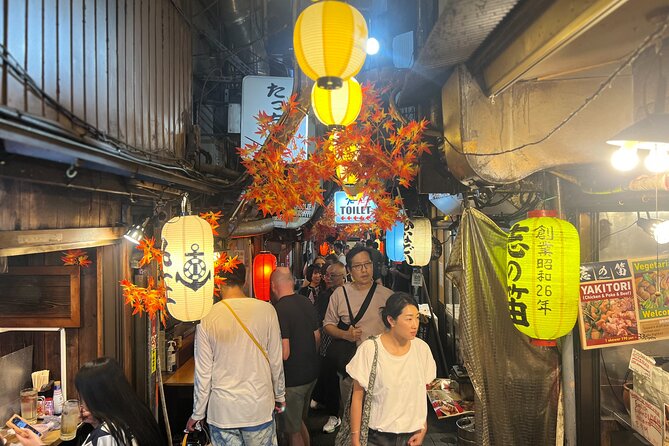
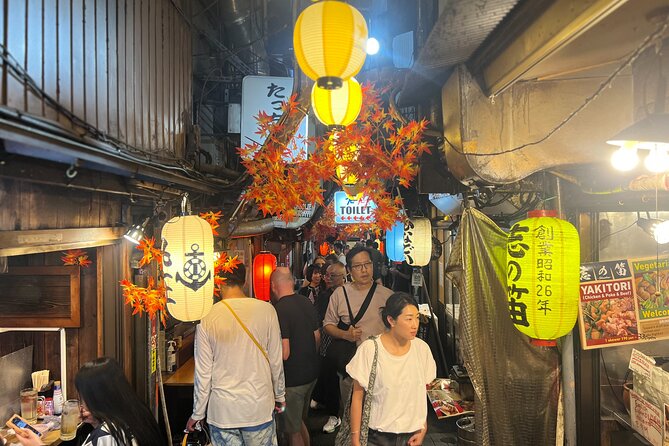
Omoide Yokocho: a narrow start with plenty of atmosphere
The first stop is Omoide Yokocho, a famous collection of narrow lanes lined with tiny izakayas and food stalls. The name is often translated as Memory Lane, though the area also carries the less romantic nickname Piss Alley, a reminder of its rough postwar beginnings.
You begin here with about an hour in the area. The important point is not only what you eat, but how the setting changes your view of Tokyo. These small restaurants have very little space, and their close tables and compact kitchens create a sharp contrast with the huge Shinjuku Station nearby.
The tour includes food from a stall, so you get a quick taste of the informal side of the district. You might find this the most visually memorable part of the evening, even if you prefer the seated meal later.
Food explanations can depend on the guide. Hoshi and Igor were praised for explaining Japanese food and customs clearly, while one participant found that a guide gave too little detail about the dishes. If you want to learn, ask direct questions about ingredients, cooking methods, and how locals usually eat each item.
Omoide Yokocho is also a place where the group may need to move carefully. The lanes are narrow, the restaurants are small, and stopping for photographs can block other people. Wear shoes you can walk in comfortably and keep your bag close.
Kabukicho: food beside Tokyo’s nightlife district
The route continues into Kabukicho, Tokyo’s best-known entertainment district. Its reputation comes from nightlife, but the tour uses it as a way to explain the many kinds of establishments packed into the area before taking you to a traditional Japanese restaurant.
This section is useful because Kabukicho can seem confusing on a first visit. Neon signs, host clubs, bars, restaurants, hotels, and entertainment venues fill the streets. A guide can give you basic context about what you are seeing and help you focus on ordinary local dining rather than simply wandering through the brightest signs.
The traditional eatery is one of the four food settings included in the price. A particularly well-liked stop served pork katsu, and the guide explained that the restaurant was known as the oldest of its kind. That sort of detail gives a familiar dish a stronger sense of place.
Do not expect every dish to suit your taste. The food is varied by design, and raw items appeared early in at least one version of the tour without enough explanation for one participant. If you have food restrictions or strong dislikes, tell the guide at the start and ask what each dish contains before eating.
The tour includes one alcoholic and non-alcoholic drink option, though the exact drinks can vary. The two complimentary drinks are a welcome touch in an area where small purchases can quickly add up.
Golden Gai: old Tokyo in a few narrow lanes
Golden Gai is known for its tiny bars, narrow lanes, and postwar character. More than 200 small bars are packed into this compact area, with many venues holding only a handful of people.
The setting is fascinating even if you do not enter a bar. The lanes preserve a form of low-rise Tokyo that feels far removed from the towers around Shinjuku Station. You get a good sense of how much the district has changed while some of its older building patterns remain.
The route allots about an hour to Golden Gai. In practice, the exact stops can change. One participant specifically booked the experience expecting to visit Golden Gai but did not reach it, so I would not make this the sole reason for booking.
That caveat does not ruin the tour, but it affects how you judge the price. If your priority is seeing Golden Gai, plan a separate visit on your own. If your priority is a guided introduction to Shinjuku food, the overall experience can still work well when the route changes.
Some guides add nearby sights while walking. One guide pointed out the giant 3-D cat, Godzilla on a building, and the red-light district. These extras are not promised as formal stops, but they show how a good guide can turn the walk between restaurants into part of the experience.
Same base, a completely different sort of day:
- Mt Fuji and Hakone 1-Day Bus Tour Return by Bullet Train
★ 5.0 · 26,383 reviews - 1-Day Tokyo Bus Tour
★ 5.0 · 14,250 reviews - Tokyo: TOKYO SKYTREE® Admission ticket
★ 4.5 · 11,192 reviews - Tokyo: teamLab Planets TOKYO Digital Art Museum Entry Ticket
★ 4.6 · 9,779 reviews
Thirteen dishes gives you a broad first taste
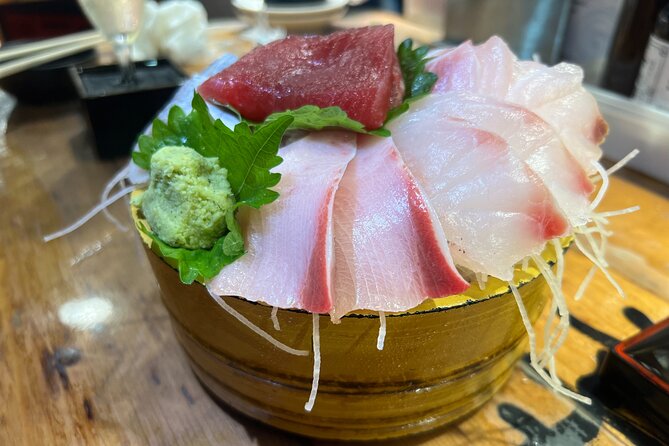
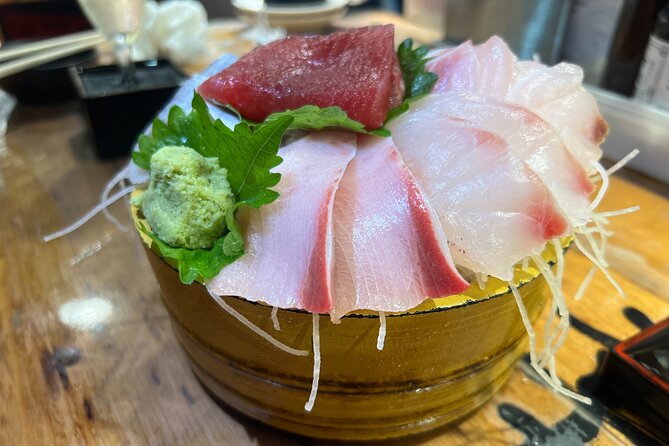
The strongest feature here is variety. You do not get one carefully chosen dish and a long lecture. You get 13 samples spread over four places, which lets you compare different types of Japanese dining in a single evening.
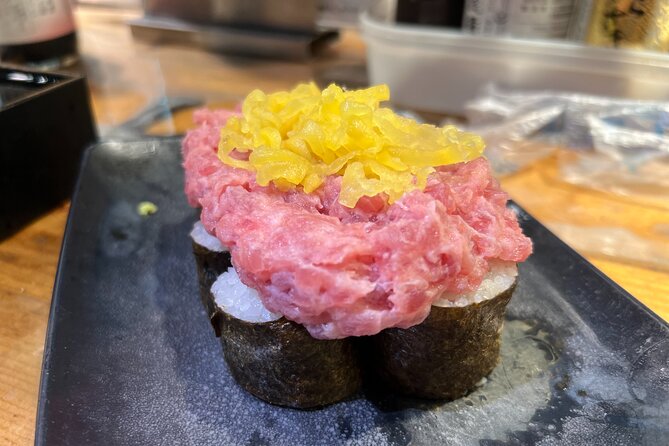
The food can include tonkotsu, a pork-broth dish, and taiyaki, the fish-shaped sweet often filled with a sweet paste or other fillings. Katsu pork has also been part of the food selection, and some groups have tried snails and raw dishes.
The exact food selection is not spelled out in advance, so you should think of the 13 dishes as a rotating introduction rather than a fixed tasting menu. That flexibility is useful for a tour company working with different restaurants, but it means you cannot book based on one favorite dish.
I like this format for first-time visitors who want to learn how to order later. After three hours, you should have a better idea of which flavors and textures appeal to you, plus a few restaurant styles you can seek out on your own.
The downside is that 13 dishes may feel more like repeated samples than a relaxed dinner. Come hungry, but do not expect to linger over every plate. The pace must allow for four stops within three hours, and the walking between them is part of the evening.
The guides shape the whole evening
Guide quality is the biggest variable. The food is paid for in advance, but the explanations, pacing, and social feel depend on the person leading your group.
May has been praised for choosing fun food stops and offering useful suggestions for the rest of a Tokyo visit. Hoshi has been singled out for excellent English and clear explanations of Japanese food and culture. Igor has received strong praise for explaining both the dishes and the background of the Shinjuku districts.
Agathe was a good fit for a solo participant, who made new connections during the tour and met up with some of the group later in the trip. Kei also made a strong impression by adding extra sights, checking food preferences, and sending food recommendations afterward.
Other guides named in positive comments include Emma, Hina, Izzy, Nathan, Paula, Daiichi, Shane, Maya, and Elena. The common thread is friendliness, practical advice, and enthusiasm for Tokyo. You should not assume you will receive one particular guide, but these names show the level of personal attention the operator can provide.
The less positive experiences focus on limited explanations. At one first stop, raw food was placed on the table without enough instruction. That is not a small issue if you are new to Japanese dining, so speak up when you need help. A good guide should explain what you are eating and how to approach it, but you can improve the experience by asking.
How much value do you get for $86.22?
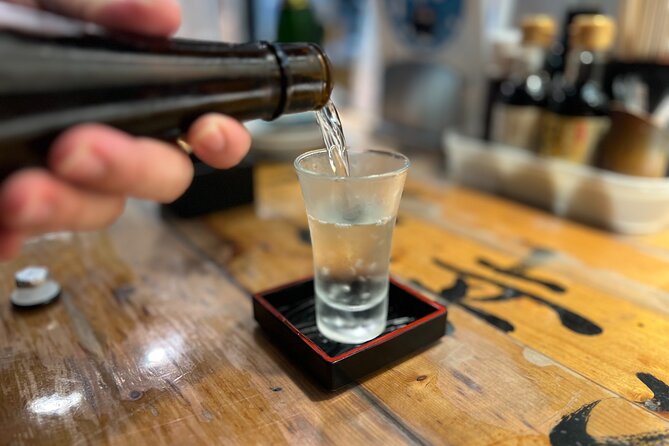
At $86.22 per person, this is not a cheap way to eat. It is also not simply a restaurant bill divided into 13 bites. The price covers four food stops, 13 Japanese dishes, two drinks, a guide, neighborhood orientation, and the convenience of having someone choose and order for you.
I see the value most clearly on a first visit to Tokyo. You are paying to reduce guesswork in one of the city’s most confusing food districts. If you entered four places alone and ordered comparable amounts, the final cost could vary widely, and you might still miss the cultural context.
The value is weaker if you already know Shinjuku well or enjoy researching restaurants. One disappointed participant felt the food could have been found independently, while another described the eateries as places they would not have had the confidence to enter alone.
The included food should fill you up, but the format is closer to a progressive tasting meal than a quiet dinner. If you want a polished fine-dining experience, this is the wrong choice. If you want to try many things and learn the neighborhood quickly, the price is easier to justify.
Walking, meeting point, and timing
The tour begins outside AOKI Shinjukunishiguchi Honten at 1-chome-8-5 Nishishinjuku, Shinjuku City. It finishes near the southeast exit of JR Shinjuku Station, which is useful if you plan to continue into the evening.
You can also ask the guide to escort you back to the Starbucks meeting point. That option may help if the station feels confusing after dark or if you want to return to where you started.
You will walk between all four food settings. The pace has been described as manageable, and one guide helped coordinate taxis for a mother with mobility issues. That is encouraging, but taxi support is not the same as a guaranteed accessible route, so contact the operator before booking if mobility is a major concern.
The tour is near public transportation, and most people can take part. Wear comfortable shoes, keep your arrival simple, and allow time to find the meeting point around Shinjuku Station, one of Tokyo’s busiest transport hubs.
The end point near the station gives you easy access to more of Tokyo, but it also means you should keep track of personal items. One guide helped retrieve a bag left at a restaurant, though it is far better not to rely on that kind of rescue.
Who will get the most from this tour?
I would recommend this experience to first-time visitors, solo diners, couples, and small groups who want an easy introduction to Shinjuku food. It is especially useful if you feel nervous about entering tiny Japanese restaurants or ordering dishes you cannot identify.
Solo visitors can benefit from the social setup. You share food, walk together, and have a natural chance to meet people without needing to organize a group yourself.
It also suits curious eaters who want variety. The tour may introduce you to raw food, snails, tonkotsu, pork katsu, taiyaki, and other dishes in one evening, with room to discover what you would order again.
I would be more cautious if you need a fixed menu, dislike surprises, want a detailed explanation of every dish, or are booking mainly for Golden Gai. The operator can accommodate preferences in some cases, as Kei did for one group, but the food and route are not fully fixed.
The overall rating is exceptionally strong, at 4.9 from 6,603 ratings, with 99 percent recommending it. That supports the tour as a reliable popular choice, while the lower scores point to two real risks: uneven guiding and possible changes to the route.
Should you book the Shinjuku food tour?
Book it if you want a filling first evening in Shinjuku, with many small tastes, two drinks, and a guide to handle the hard parts. The mix of Omoide Yokocho, Kabukicho, and local eateries gives you a useful orientation before you explore the district alone.
I would treat Golden Gai as a bonus, not a promise. Ask questions during the tour, especially before eating raw dishes, and tell the guide about dietary needs at the beginning.
Skip it if you already have a detailed Shinjuku food plan or want a slow, restaurant-by-restaurant dinner. For most first-time visitors who value convenience and variety, $86.22 is a fair price for three hours of food, walking, and local direction.
FAQ
How long does the Shinjuku food tour last?
The experience lasts approximately three hours.
How many dishes are included?
You receive 13 Japanese dishes at four different eateries.
Are drinks included?
Yes. The tour includes two complimentary drinks, with alcoholic and non-alcoholic options.
What types of places does the tour visit?
The food stops include one stall, one izakaya, one traditional Japanese eatery, and one gastrobar.
Where does the tour begin?
It begins at AOKI Shinjukunishiguchi Honten, 1-chome-8-5 Nishishinjuku, Shinjuku City, Tokyo 160-0023, Japan.
Where does the tour finish?
The tour ends near the southeast exit of JR Shinjuku Station. You can ask the guide to escort you back to the Starbucks meeting point.
How large is the group?
The maximum group size is 12 people.
Can I cancel for a full refund?
Yes. You can cancel at least 24 hours before the start time for a full refund. Cancellations or changes made within 24 hours are not accepted for a refund.
Just added around Tokyo
- Private Arrival Transfer : Narita International Airport to Central Tokyo City★ 4.5 · 12 reviews
- Narita Airport(NRT): Private Transfer to Tokyo/Yokohama 1-9pax★ 5.0 · 47 reviews
- Private Transfer from Narita Airport to Yokohama Port and City★ 4.5 · 17 reviews
- [Narita Airport Terminals 1, 2] 40-60km Sawara Itako Historic Bike Tour★ 5.0 · 13 reviews
- 3 Day Japan Highlights Tour: Tokyo, Mt.Fuji, Nara, Kyoto, Osaka★ 5.0 · 22 reviews
- Small Town in the Big City: Tasting Tokyo’s Kichijoji★ 5.0 · 195 reviews
- Small Town in the Big City: Tasting Tokyo’s Kichijoji★ 5.0 · 16 reviews
- The 10 Tastings of Tokyo With Locals: Private Street Food Tour★ 5.0 · 48 reviews
Tokyo Tours, compared.

Mt Fuji and Hakone 1-Day Bus Tour Return by Bullet Train
Read our review →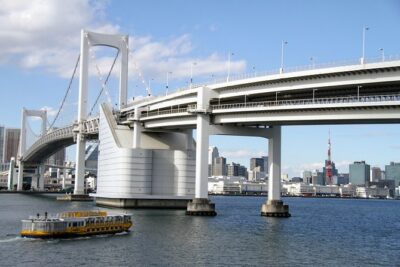
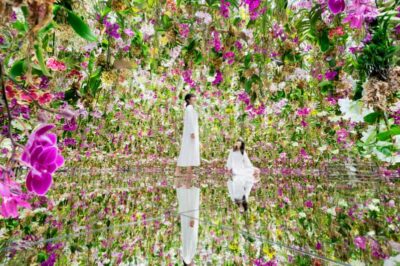
teamLab Planets TOKYO Digital Art Museum Entry Ticket
Read our review →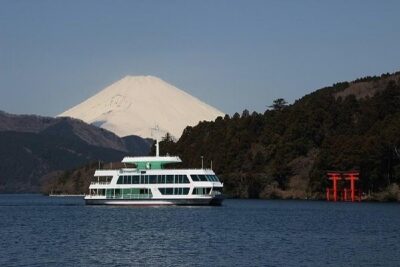
Mt Fuji & Hakone Cruise, Drum Show Bullet Train 1 Day from Tokyo
Read our review →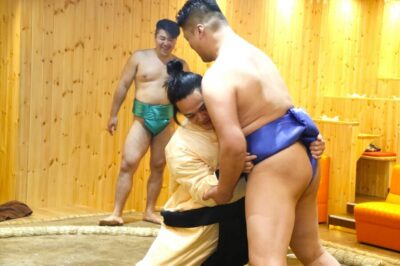
Sumo Show Experience with Chicken Hot Pot and a Photo
Read our review →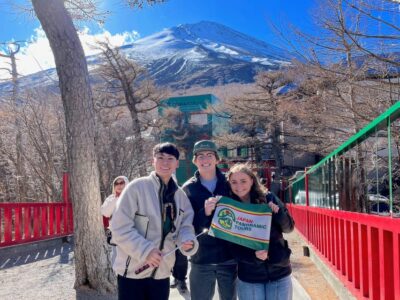
Tokyo Mt Fuji 5th St & Hakone Cruise Bus Tour w/Bullet Train
Read our review →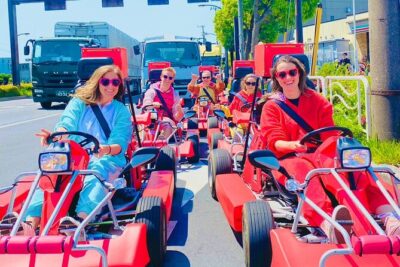
Flagship 2-Hours Official Street Go-Kart Tour – Tokyo Bay Shop
Read our review →
Browse the lists this tour appears in