Reviewed · TOKYO TOURS
Half-day Tokyo Afternoon Tour by Hato Bus
Tokyo Tower is the star here, but the real value is the mix: imperial Tokyo, old Buddhist Asakusa, and a high view over the modern city in one afternoon. I like the included 150-meter observatory ticket and the ease of riding between far-flung sights with an English-speaking guide.
I also like the practical first-day format. Guides such as Masako, Makoto, Kiki, Ayaka, and Tomoko have been praised for clear explanations and friendly help. The catch is traffic: four hours can feel tight, and the Imperial Palace stop offers an outside view rather than entry into the palace itself.
Key points to know before booking
- Tokyo Tower at 150 meters: The main observatory ticket is included, with views toward Tokyo Skytree and, in clear weather, Mount Fuji.
- Three major parts of Tokyo: You see the Imperial Palace area, Senso-ji Temple and Nakamise Street, then Tokyo Tower.
- A useful English introduction: Guides explain Japanese history and culture, with several guides praised for strong English and helpful local advice.
- Comfortable city transport: The air-conditioned and heated Hato Bus saves you from changing trains between central Tokyo and Asakusa.
- A fixed afternoon schedule: Meet at 1:50 pm and finish near Tokyo Station around 6 pm, though traffic can cause delays.
- Good value at $41.61: Transport, the guide, and Tokyo Tower admission are included, but food and the higher 250-meter observatory cost extra.
Why this four-hour tour works well on a first day
Tokyo can be easy once you understand the trains, but the first few hours can be a jumble of station maps, platform signs, and unfamiliar neighborhoods. This tour gives you a quick framework. You ride from one major sight to another, hear the basic story behind each place, and finish with a view that helps you understand the city’s scale.
I see it as a get your bearings fast tour rather than a complete portrait of Tokyo. You will not have time to linger over every garden, shop, or temple building. Instead, you get a compact introduction to three very different sides of the capital.
The bus is especially useful for anyone who wants to avoid figuring out public transport on arrival. It also helps if your group includes people who would rather not walk between stations and sights. The vehicle is air-conditioned and heated, and Hato Bus says an environmentally friendly hybrid bus is generally used, although the vehicle can change for maintenance or other unavoidable reasons.
The group can be as large as 40 people. That keeps the cost down, but it also means you need to stay aware of the meeting times and listen for instructions when leaving the bus.
A few more Tokyo half-days to weigh up
- Tokyo: A Half-Day Trip Bus Tour in the Morning
★ 4.6 · 236 reviews - Half-day Tokyo Morning Tour by Hato Bus
★ 4.0 · 220 reviews - Old and Nostalgic Tokyo: Half-Day Yanaka Walking Tour
★ 4.9 · 30 reviews
The Imperial Palace view: attractive, but limited
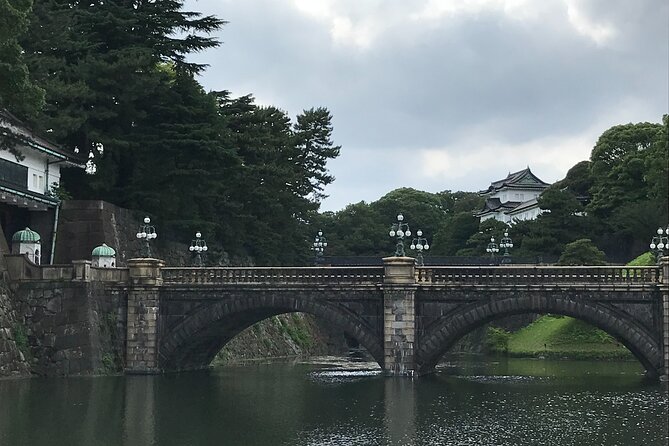
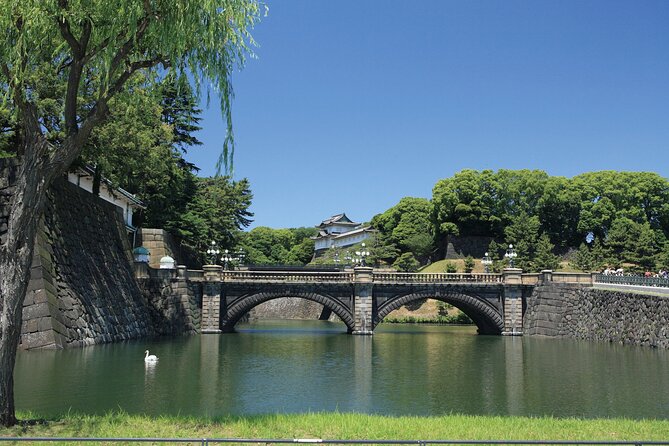
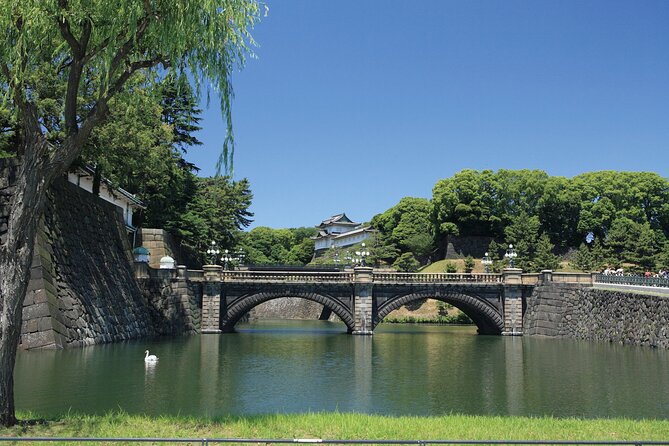
The first stop is the Imperial Palace area, where you have about 40 minutes. The focus is the view of Nijubashi Bridge, often described as the public face of the palace, along with the surrounding national garden.
This is a pleasant introduction to Japan’s imperial center. The grounds provide a pause from Tokyo’s packed streets, and the bridge makes a strong photograph. Your guide can put the palace and the imperial institution into context while you look across the grounds.
The important limitation is that you do not tour the palace interiors. In practical terms, this is an exterior sightseeing stop. One disappointing point for some visitors is that the palace itself may not be fully visible from the viewing area, so you should not book this expecting rooms, courtyards, or a long garden walk.
Road restrictions can also affect this part of the afternoon. The tour may be suspended or may not depart from the planned location if restrictions near the Imperial Palace prevent normal operation. That is unusual planning risk rather than a reason to avoid the tour, but it is worth keeping in mind if this is the only palace visit on your schedule.
Senso-ji and Nakamise: Tokyo’s old temple district
Asakusa is the most substantial stop, with about one hour at Senso-ji Temple and Nakamise Shopping Street. Senso-ji dates to AD 645 and is Tokyo’s oldest temple, making it one of the best places on this short itinerary to see traditional religious architecture and ritual.
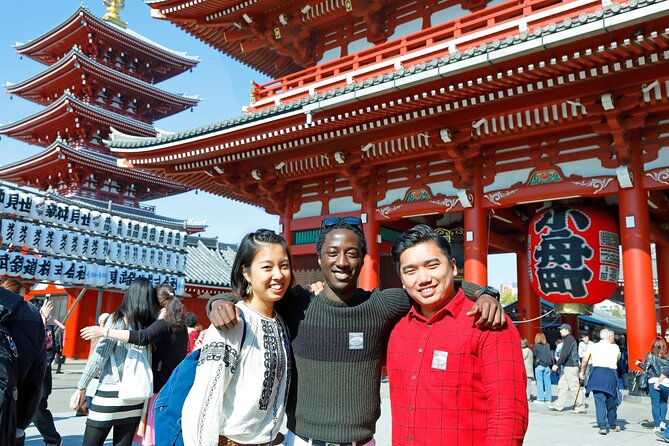
The approach begins at Kaminarimon Gate, the famous red entrance associated with the god of thunder. From there, Nakamise stretches toward the temple, lined with stalls selling souvenirs, small gifts, snacks, and traditional Japanese items. The route can be crowded, so keep your group in sight and allow time to stop without blocking the flow of people.
Inside the temple grounds, look for the strong gates, the five-story pagoda, the main temple buildings, and the gardens. The guide’s explanation adds value here because the symbols and layout are not always obvious if you are seeing them for the first time. Guides have been praised for explaining both the sites and wider Japanese customs, and some have also helped with language tips and food suggestions beyond the formal tour.
One hour is enough for a first look, a few photographs, and a quick browse through Nakamise. It is not enough for a slow temple visit or serious shopping. If you already know you want to spend half a day in Asakusa, this group schedule may feel rushed. You will have to follow the timetable instead of setting your own pace.
Asakusa is also highly visited. It is a historic part of Tokyo, but it is not a quiet discovery. The shops and crowds are part of the experience, though anyone seeking a more local, low-key neighborhood may find this stop too tourist-focused.
The Kabuki theater sighting
The route also includes a view of a classic Japanese-style theater where traditional Kabuki performances are held. The information provided does not assign a separate stop length or promise admission to a performance, so treat this as a sightseeing point rather than a theater visit.
That distinction matters. Kabuki is a major part of Japanese performing arts, but you should not expect to attend a show during this four-hour outing. The theater adds cultural context to the bus ride and gives you another recognizable piece of central Tokyo, but Senso-ji and Tokyo Tower are the places where you spend dedicated time outside the bus.
Same base, a completely different sort of day:
- Mt Fuji and Hakone 1-Day Bus Tour Return by Bullet Train
★ 5.0 · 26,383 reviews - 1-Day Tokyo Bus Tour
★ 5.0 · 14,250 reviews - Tokyo: TOKYO SKYTREE® Admission ticket
★ 4.5 · 11,192 reviews - Tokyo: teamLab Planets TOKYO Digital Art Museum Entry Ticket
★ 4.6 · 9,779 reviews
Tokyo Tower and the city from 150 meters
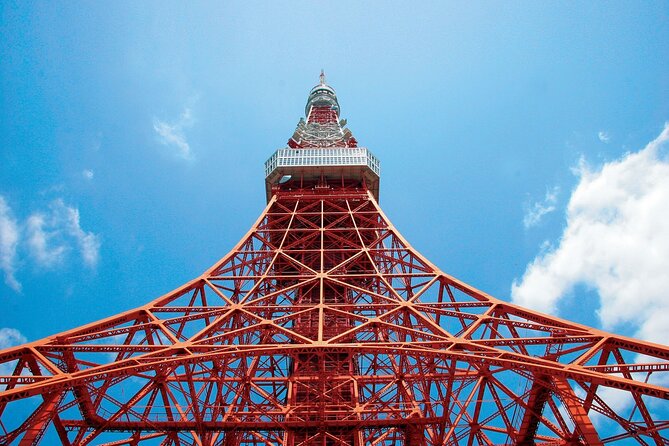
The final major stop is Tokyo Tower, with about 45 minutes and admission to the main observatory included. At 150 meters, the platform gives you a broad 360-degree view across Tokyo.
This is the tour’s clearest payoff. From above, you can pick out Tokyo Skytree and see how the city spreads far beyond the central districts. On a clear day, Mount Fuji may be visible in the distance. Weather has a real effect here, so clouds or haze can reduce the view, but the tower remains a useful way to understand Tokyo’s enormous reach.
The included ticket covers the main observatory only. The special observatory at 250 meters costs extra, and you pay that fee yourself if you want to go higher. I would not assume you need the upgrade. The 150-meter level already provides the central experience, and the tour’s fixed timing may make an additional wait or ticket process inconvenient.
Forty-five minutes is a sensible amount of time for the tower. You can look around, take photographs, and enjoy the view without turning the stop into a long visit. If Tokyo Tower is your top priority, however, a separate visit would give you more freedom to stay for sunset or explore the surrounding area.
What the guide adds to the afternoon
The guide is a key part of the experience, especially at Senso-ji and the Imperial Palace. You are not just being dropped at a gate and sent off with a map. The guide explains what you are looking at, gives directions, keeps the group on schedule, and handles the transitions between stops.
Several guides associated with this tour have received especially warm praise. Masako was described as friendly, clear, and well informed. Makoto has been appreciated for answering a wide range of questions about Japanese culture. Kiki was praised for keeping the group organized and entertained during the bus rides, while Ayaka and Tomoko were noted for their cultural explanations and personal help.
Your assigned guide may be someone else, of course, so do not book on the promise of one particular person. The useful pattern is that an English-speaking Hato Bus guide can make the first afternoon less demanding. You can ask questions as you go instead of trying to decode every sign on your own.
Guide quality can vary in delivery. Some people have found certain guides harder to understand, and some felt that the bus rides could include more historical explanation. If you want a lecture-level account of Tokyo, this may not satisfy you. If you want clear orientation, basic context, and help staying on time, it is a better fit.
Bus travel, timing, and the Tokyo traffic problem
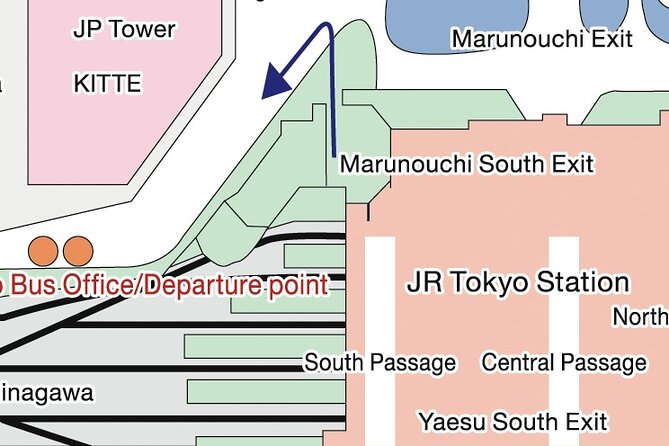
The meeting time is 1:50 pm at the Hato Bus Tokyo office, 1-chōme-10-15 Marunouchi, Chiyoda City. The tour finishes near Tokyo Station’s Marunouchi South Exit at around 6 pm.
That start and end point is convenient if you are staying near Tokyo Station or need to continue from there afterward. It also gives you an easy connection to an evening meal in Marunouchi, though you should leave room in your plans in case traffic pushes the finish later.
Traffic is the main practical weakness. Tokyo’s roads can slow sharply depending on the season, day of the week, and time of day. The itinerary order can change, and arrival at a stop may be delayed. You may spend more time on the bus than expected, particularly on a busy afternoon.
The bus still has an advantage over managing several train connections in a short window. You avoid transfers and navigation between the Imperial Palace, Asakusa, and Tokyo Tower. That convenience has a price: you trade flexibility for a fixed route and accept that the bus cannot bypass every jam.
Keep your seatbelt fastened while onboard. Groups with an odd number of people may share seats with another customer, so solo visitors and odd-numbered parties should expect seating to be assigned rather than arranged exactly as they wish.
Is $41.61 a fair price?
At $41.61 per person, the tour is priced as a convenience package. You are paying for the bus, professional guide, and Tokyo Tower main observatory admission, not simply for entry to three places.
The value is strongest if you are new to Tokyo, short on time, or uneasy about navigating the city. A good guide can save you mental energy, and the bus lets you cover a wide area in one afternoon. For a first orientation, that can be worth more than a small theoretical saving from arranging every train and ticket yourself.
The value is weaker if you already understand Tokyo’s transport system and prefer to decide how long to stay at each sight. Senso-ji and the Imperial Palace area are accessible without this tour, and independent sightseeing gives you more time for side streets, shopping, or a longer temple visit.
There is no food or drink included. Budget separately for snacks along Nakamise, and remember that the 250-meter Tokyo Tower observatory has an added fee. The main ticket is enough for most people, so the extra cost is optional rather than a hidden requirement.
Who should book this Hato Bus afternoon?
I would consider this tour a strong match for:
- First-time visitors who want a quick introduction to Tokyo
- People with only one free afternoon
- Families or older visitors who prefer a bus to multiple train transfers
- Solo visitors who want structure and an English-speaking guide
- Anyone who wants Tokyo Tower admission handled in advance
I would be more cautious if you want long, quiet visits or an independent schedule. Photographers waiting for a particular light, serious shoppers, and visitors already familiar with Tokyo may find the stops too brief.
Children up to age five can join free without a bus seat. If you need a seat for a young child, book the child rate. Anyone under 18 needs written parental permission, and children under 15 or not yet in middle school must be accompanied by a parent or guardian.
A moderate level of physical fitness is expected. You will walk around the temple and palace areas, stand during sightseeing, and move with the group between the bus and attractions.
Booking advice and the cancellation rule
The start point is at the Hato Bus Tokyo office, not simply anywhere around Tokyo Station. Tokyo Station is large, so allow extra time to find the correct Marunouchi location, particularly if this is your first day in Japan.
Confirmation arrives within 48 hours of booking, subject to availability. Free cancellation is available if you cancel at least 24 hours before the local start time. Cancellations or changes made inside that 24-hour window are not accepted for a refund.
Should you book it?
Book this Hato Bus tour if you want a low-stress first look at Tokyo and value an English-speaking guide, covered transport, and a Tokyo Tower ticket in one package. The strongest moments are the temple district in Asakusa and the wide city view from the tower.
Skip it if you want to set your own pace or already know how to move around Tokyo. The Imperial Palace viewing area is limited, Asakusa can feel crowded, and traffic may squeeze the time at each stop.
For a short visit, though, $41.61 is a reasonable buy. Schedule it near the start of your stay, keep your evening flexible, and treat it as an orientation rather than your entire Tokyo sightseeing plan.
FAQ
How long is the Hato Bus Tokyo afternoon tour?
The tour lasts approximately four hours. It starts at 1:50 pm and is expected to finish near Tokyo Station’s Marunouchi South Exit around 6 pm.
Where does the tour start?
The meeting point is the Hato Bus Tokyo office at 1-chōme-10-15 Marunouchi, Chiyoda City, Tokyo 100-0005, Japan.
Where does the tour end?
The tour ends near Tokyo Station, at the Marunouchi South Exit area.
Which sights are included?
The tour includes the Imperial Palace area, Senso-ji Temple and Nakamise Shopping Street, a view of a traditional Kabuki theater, and Tokyo Tower.
Is Tokyo Tower admission included?
Admission to Tokyo Tower’s main observatory at 150 meters is included. Access to the special observatory at 250 meters requires an additional fee paid independently.
Is food included?
No. Food and drinks are not included in the tour price.
Can children join the tour?
Children up to five years old may join free, but they do not receive a bus seat unless you book the child rate. Participants under 18 need written parental permission, and anyone under 15 or not yet enrolled in middle school must be accompanied by a parent or guardian.
Just added around Tokyo
- Private Arrival Transfer : Narita International Airport to Central Tokyo City★ 4.5 · 12 reviews
- Narita Airport(NRT): Private Transfer to Tokyo/Yokohama 1-9pax★ 5.0 · 47 reviews
- Private Transfer from Narita Airport to Yokohama Port and City★ 4.5 · 17 reviews
- [Narita Airport Terminals 1, 2] 40-60km Sawara Itako Historic Bike Tour★ 5.0 · 13 reviews
- 3 Day Japan Highlights Tour: Tokyo, Mt.Fuji, Nara, Kyoto, Osaka★ 5.0 · 22 reviews
- Small Town in the Big City: Tasting Tokyo’s Kichijoji★ 5.0 · 195 reviews
- Small Town in the Big City: Tasting Tokyo’s Kichijoji★ 5.0 · 16 reviews
- The 10 Tastings of Tokyo With Locals: Private Street Food Tour★ 5.0 · 48 reviews
Tokyo Tours, compared.

Mt Fuji and Hakone 1-Day Bus Tour Return by Bullet Train
Read our review →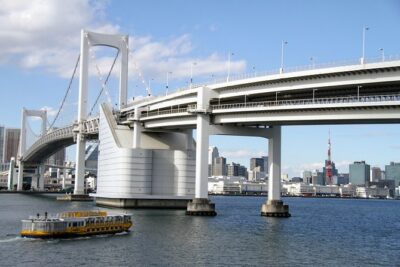
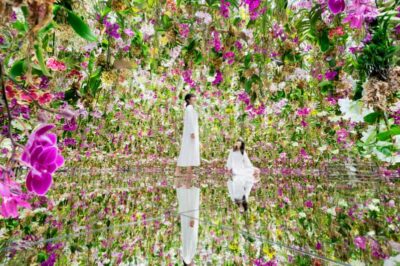
teamLab Planets TOKYO Digital Art Museum Entry Ticket
Read our review →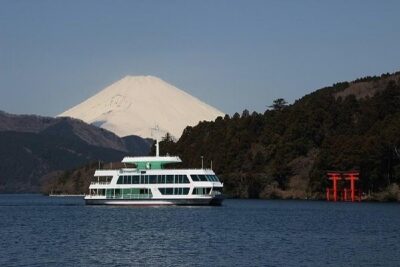
Mt Fuji & Hakone Cruise, Drum Show Bullet Train 1 Day from Tokyo
Read our review →
Sumo Show Experience with Chicken Hot Pot and a Photo
Read our review →
Shinjuku Food Tour (13 Dishes at 4 Local Eateries)
Read our review →
Tokyo Mt Fuji 5th St & Hakone Cruise Bus Tour w/Bullet Train
Read our review →